Email and CRM (Customer Relationship Management) channels are among a festival’s most valuable assets. A well-nurtured email list of attendees and followers can be a goldmine for sponsorship revenue if used correctly. The challenge is balancing monetization with subscriber experience. Festival organizers around the world—from massive events like Coachella in the US and Tomorrowland in Belgium to regional festivals in India and community events in New Zealand—have learned that overloading fans with ads can lead to email fatigue, reduced engagement, and unsubscribes. This article explores strategies to monetize festival email communications in a sustainable, audience-friendly way. By integrating sponsored content that genuinely helps attendees, carefully targeting and timing messages, and prioritizing transparency and trust, festival producers can drive new revenue streams without alienating their loyal audience.
Choosing the Right Festival CRM and Tech Stack
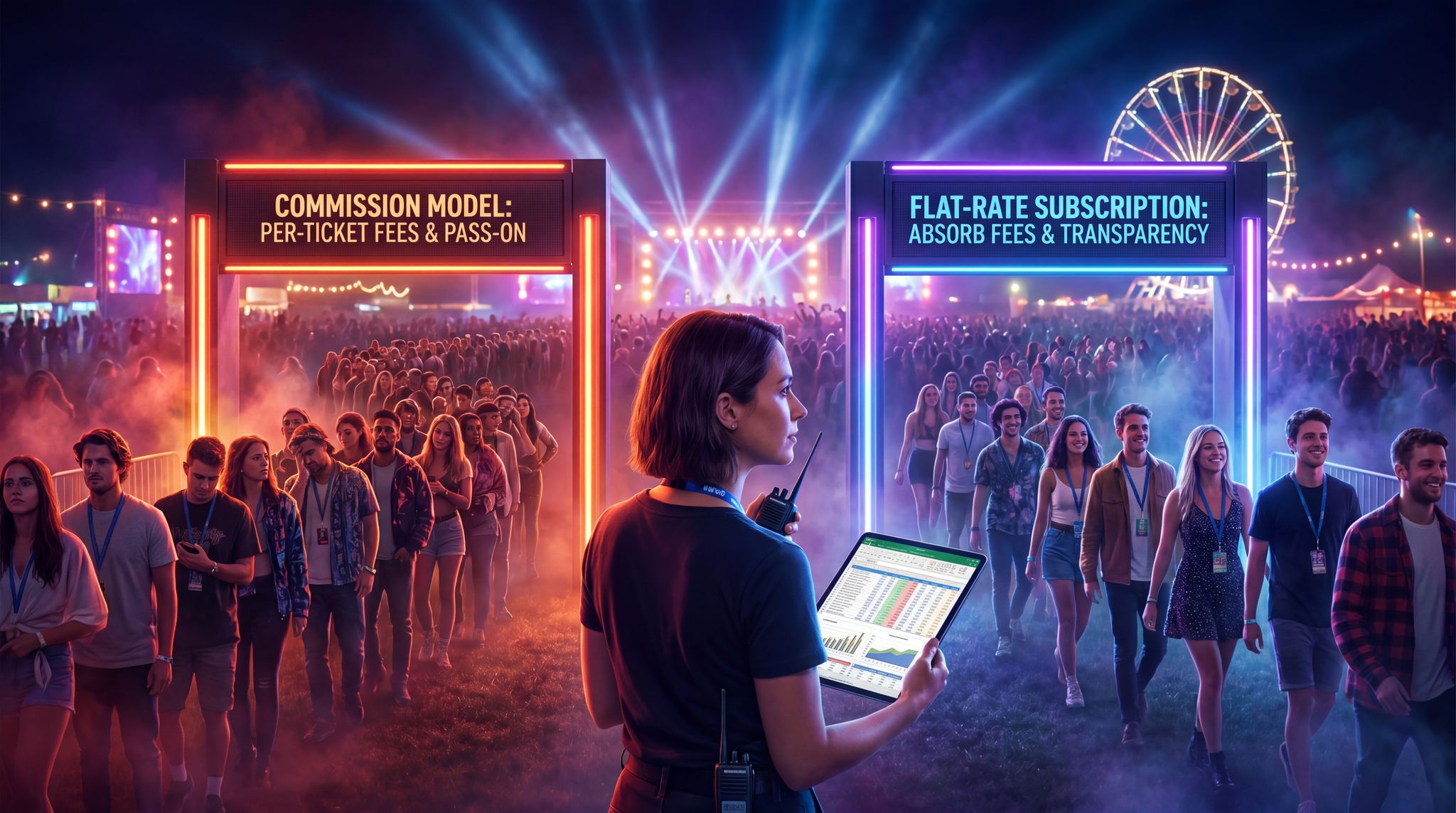
Before diving into specific content strategies, organizers must ensure their underlying technology can support these initiatives. Utilizing a robust festival CRM allows promoters to seamlessly collect, segment, and activate attendee data. More importantly, upgrading to an email infrastructure with built-in sponsorship and monetization features streamlines the entire process. Instead of manually hardcoding sponsor banners or tracking affiliate links in separate spreadsheets, modern event marketing platforms enable native ad placements, automated partner reporting, and dynamic content blocks tailored to specific ticket tiers. This foundational tech ensures that your monetization efforts scale efficiently as your event grows.
When evaluating a festival CRM, producers should look for deep integration between ticketing data and communication tools. A standalone mailing list isn’t enough; you need a system where attendee behaviors—like VIP upgrades, merchandise purchases, or early-bird registrations—automatically sync with your email infrastructure. This connectivity allows those built-in sponsorship and monetization features to trigger dynamically. For example, if a brand partner wants to target high-spending attendees, a specialized event CRM can instantly build that segment and deploy the partner’s native ad block without requiring manual data exports.
Beyond basic segmentation, adopting a dedicated partner compliance tracking software or platform ensures that all sponsorship deliverables are met accurately. When managing multiple brand activations, organizers need systems that verify ad placements, track impression guarantees, and monitor opt-in regulations. Integrating these compliance tools directly into your festival CRM safeguards your event against under-delivering on sponsor contracts while maintaining strict data privacy standards.
Built-In Email Marketing for Events
Send targeted campaigns, automated purchase confirmations, and post-event follow-ups directly from your ticketing dashboard.
Integrate Sponsors into Helpful Content
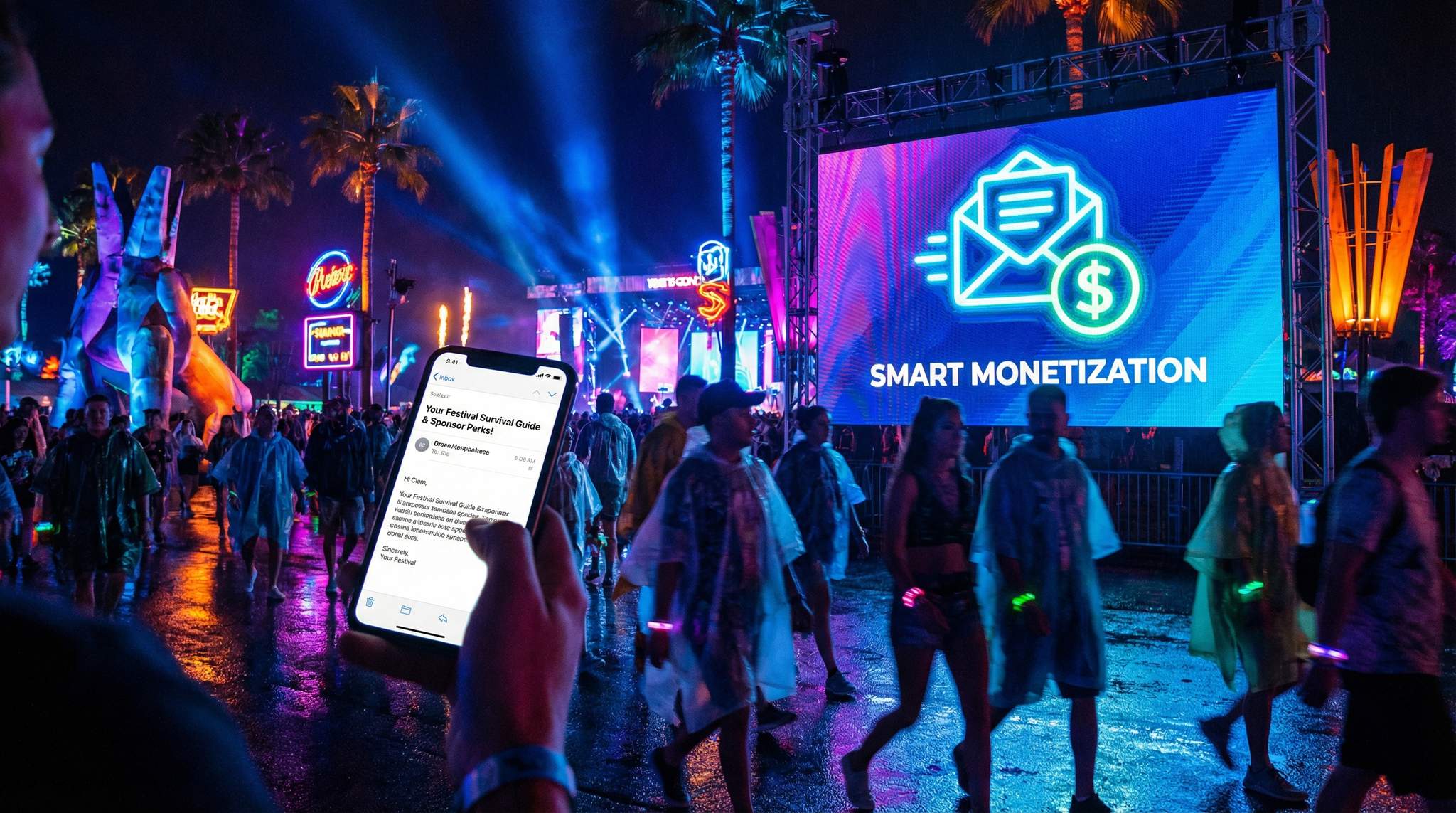
One key strategy for monetizing festival emails without causing fatigue is to make sponsored content genuinely useful. Rather than blasting attendees with generic ads, smart festivals weave sponsors into content that adds value to the reader. By aligning sponsorships with helpful information, the email feels service-oriented first and commercial second. Here are some effective examples of sponsored content that festivals have used:
-
Travel & Transportation Tips: Festivals often need to inform attendees about how to get to the venue. This presents a perfect sponsorship opportunity. For instance, a festival email can include a “Getting There” section with transit schedules, parking info, and rideshare pickup points sponsored by a transport partner. Example: Lollapalooza partnered with Uber as its official rideshare sponsor in Chicago, allowing festival emails and apps to feature special Uber promo codes and pickup guides. Similarly, Glastonbury Festival in the UK works with National Express (its official coach partner) to promote direct coach services. In practice, an email to Glastonbury ticket-holders might highlight coach travel options “brought to you by National Express”, providing convenience to fans and exposure for the sponsor.
Planning a Festival?
Ticket Fairy's festival ticketing platform handles multi-day passes, RFID wristbands, and complex festival operations.
-
Weather Forecasts & Preparation Guides: Outdoor festivals are at the mercy of the weather, so attendees appreciate timely forecasts and preparation advice. A festival email a week before the event could include a “Weather Update & What to Bring” section. This portion might detail the expected conditions (rain or shine) and suggest gear like sunscreen, boots, or ponchos. A sponsor whose product ties in—such as a sunscreen brand, outdoor apparel company, or weather app—can be featured here. Example: An Australian camping festival could offer a “Weekend Forecast” email presented by a local outdoor gear retailer, with tips like staying hydrated and links to buy last-minute supplies (with a discount code). The content is helpful (so fans read it closely) and the sponsor naturally fits into the narrative of staying safe and comfortable.
-
Site Maps, Schedules & Food Guides: Attendees love insider info that helps them navigate the festival. Emails that provide venue maps, stage schedules, or food and beverage guides are highly engaging. These too can incorporate sponsorships. A “Food Finder Map” email might be sponsored by a popular food delivery app or a beverage company, highlighting food vendors at the event and maybe including a coupon for the sponsor’s product. For example, at a large music festival in Asia, the organizers could send out a “Taste of the Festival” guide email listing notable food stalls and craft beer tents, with the guide presented by a major food delivery service or brewery. Because this content directly enhances the festival experience (fans plan what to eat or drink), they are more receptive to the sponsor message alongside it.
-
Local City Guides & Accommodation Offers: For destination festivals that attract travelers, providing local tips is a win-win. Festivals can email a brief city guide (best hotels, attractions, after-parties, or emergency info) to out-of-town ticket buyers. This guide can be created in partnership with a tourism board or a hospitality sponsor. Example: A festival in New Zealand might collaborate with the local tourism office to send an “Explore the City” newsletter to attendees, featuring recommended sights and partner hotels offering discounts. The sponsors get exposure to a targeted audience of travelers, while readers get useful advice for their trip.
In all these cases, the sponsored section is tied to content the subscriber actually wants to read. The tone remains informative and aligns with the festival’s voice. Importantly, the sponsorship is clearly disclosed (using phrases like “presented by X” or “brought to you by Y”), so it doesn’t feel sneaky. When done right, attendees may even appreciate the sponsors for helping provide the valuable content. It transforms the email from a pure marketing blast into a service-oriented update, keeping subscribers engaged rather than fatigued.
Smart Promo Codes & Presale Access
Create percentage or flat-rate discount codes with usage limits, date ranges, and ticket type restrictions. Plus unlock codes for private presales.
Frequency Capping and Smart Segmentation
Even valuable content can wear out its welcome if sent too often or to the wrong people. Successful festival email monetization requires careful control of frequency and savvy audience segmentation. These practices ensure that sponsored messages reach the people most likely to appreciate them, at a cadence that doesn’t overwhelm anyone.
1. Limit How Often You Send Promotional Emails: Festivals should resist the temptation to milk the email list with constant sponsored messages. Bombarding fans daily or even multiple times a week with ads (even useful ones) can lead to burnout. Many seasoned festival organizers impose a frequency cap on sponsor-related emails or sections. For example, you might decide that out of your weekly emails leading up to the event, only one contains a sponsored segment, while the others stick to pure editorial updates. If your festival runs year-round communications (for multiple events or community building), you might limit sponsored content to, say, one or two emails per month. By pacing out monetized emails, you give your audience breathing room. They’re less likely to tune out or unsubscribe, so when a sponsored message does arrive, it gets attention. Remember: quality and consistency matter more than sheer volume. A few well-placed, high-impact sponsored emails will generate more goodwill (and better results) than a flood of constant promotions.
Need Festival Funding?
Get the capital you need to book headliners, secure venues, and scale your festival production.
2. Target High-Intent Segments: Not every email subscriber is the same. Use your CRM data to segment the audience so that sponsors reach the most relevant recipients. This minimizes fatigue for those who might not care about certain offers. Here are a few ways to segment festival audiences for sponsorship:
- By Ticket Type or Attendee Profile: Tailor emails based on what tickets or packages someone has. For example, if a sponsor offers a VIP lounge benefit, target only the VIP ticket holders or those who showed interest in upgrades. General admission folks might not need that info. Conversely, a camping gear sponsor’s message should go only to attendees who bought camping passes for your festival.
- By Location or Travel Needs: A transportation or hotel deal is most relevant to fans traveling from out of town. If your data shows who is from out of state or country (or who opted for shipping tickets to a far address), you can create a segment for “traveling attendees” and send them sponsor content about flights, shuttles, or accommodations. Locals might not get that email at all, sparing them irrelevant info.
- By Engagement and Preferences: Pay attention to which subscribers engage with what content. Many email platforms (including features in the Ticket Fairy promoter dashboard) let you tag or segment by link clicks and past behavior. Suppose you ran a poll or had a sign-up where attendees indicated interest in afterparties, merchandise, or workshops. If a sponsor aligns with one of those, email only the interested subgroup. Similarly, your most active, engaged fans (high open/click rates) might tolerate more frequent content, whereas those who rarely open emails should be contacted more sparingly and only with top-priority info.
Segmentation ensures that people receive emails that truly resonate with them. A side benefit is that it will likely boost your email performance metrics (since targeted content gets higher opens and clicks), which in turn keeps sponsors happy. It’s better to send a sponsor offer to 5,000 highly interested subscribers and get a 50% open rate, than to blast 50,000 people and get 5% open with a bunch of annoyed unsubscribes. In short: know your audience, and send carefully.
Transparency and Respect for Opt-Outs
Maintaining subscriber trust is paramount when introducing sponsorship into emails. Transparency and respect for user choices aren’t just ethical responsibilities – they also directly impact your long-term ability to monetize. Festival organizers must make it crystal clear when content is sponsored and give subscribers easy control over their subscriptions. Here’s how:
-
Be Clear It’s Sponsored: Always label sponsored sections or emails clearly. Use language like “Sponsored Content” or “Partner Message” or a simple “[Sponsor Name] Presents:” header for that section. Many festivals incorporate sponsor logos or a different background colour in the email design to denote an advertisement. For example, if you include a weather update courtesy of a sponsor, the segment might have a tagline like “Weather forecast brought to you by WeatherPro app.” Such clarity prevents any feeling of deception. Readers shouldn’t have to guess if something is an ad – it should be obvious.
Data-Driven Event Marketing
Track ticket sales, demographics, marketing ROI, and social reach in real time. Exportable reports give you the insights to make smarter decisions.
-
Align with Your Brand and Values: Choose sponsorships that make sense for your festival’s image, and present them in a tone consistent with your usual communications. If your event is known for eco-friendliness, don’t surprise subscribers with a random gas-guzzling car ad. Instead, maybe partner with a green transportation company. When sponsored content aligns with your attendees’ values and interests, they’re far less likely to mind it. In fact, a well-aligned sponsor can even enhance the festival’s brand. (Think of a healthy snack brand sponsoring a wellness workshop at a festival – it feels natural.) Maintaining this alignment in emails will protect your goodwill with readers.
-
Honor Unsubscribes and Preferences: Every email you send, especially marketing or sponsored content, should include a visible unsubscribe link and ideally a manage preferences option. It’s not just law in many countries (e.g., CAN-SPAM in the US, GDPR in Europe) – it’s good practice for trust. Some festivals allow subscribers to opt out of purely sponsored messages while still receiving essential event updates. For instance, you might have a checkbox in your email preferences like “Send me special offers from [Festival] and partners.” If a reader unchecks this, you would exclude them from sponsor-focused mailings (or at least from the most promotional content). Even if you can’t fine-tune that much, always honor general opt-outs immediately. Never do something shady like hiding the unsubscribe link or continuing to message people who opted out – that’s a fast track to losing credibility (and running afoul of regulations).
-
Don’t Share Email Lists Without Consent: This is worth mentioning in the context of sponsorship. Never sell or give your attendee email list directly to a sponsor unless subscribers explicitly agreed to it. It’s common for festivals to get requests like “Can our beer sponsor get the list of all attendees to email them?”. The best practice is to say no; instead, offer to include the sponsor’s message in your own communications (so you control the send and frequency). If you do have any arrangement where a partner can contact attendees, it should be through an opt-in. (For example, a check-box during ticket purchase that says “I agree to receive email updates from [Sponsor]”). Protecting your community’s data and inboxes from unexpected third-party contact is critical to maintaining trust.
Being transparent and respecting user choice may slightly limit the short-term reach of a sponsored message (since some people will opt out), but it pays back massively in the long term. Subscribers who feel respected will stay on your list, engage with your content, and remain open to future sponsor messages on their terms. In contrast, if people feel a festival isn’t honest about advertising or abuses their contact information, they’ll disengage or drop out entirely – which is the opposite of monetization.
Share Real Engagement Metrics with Sponsors
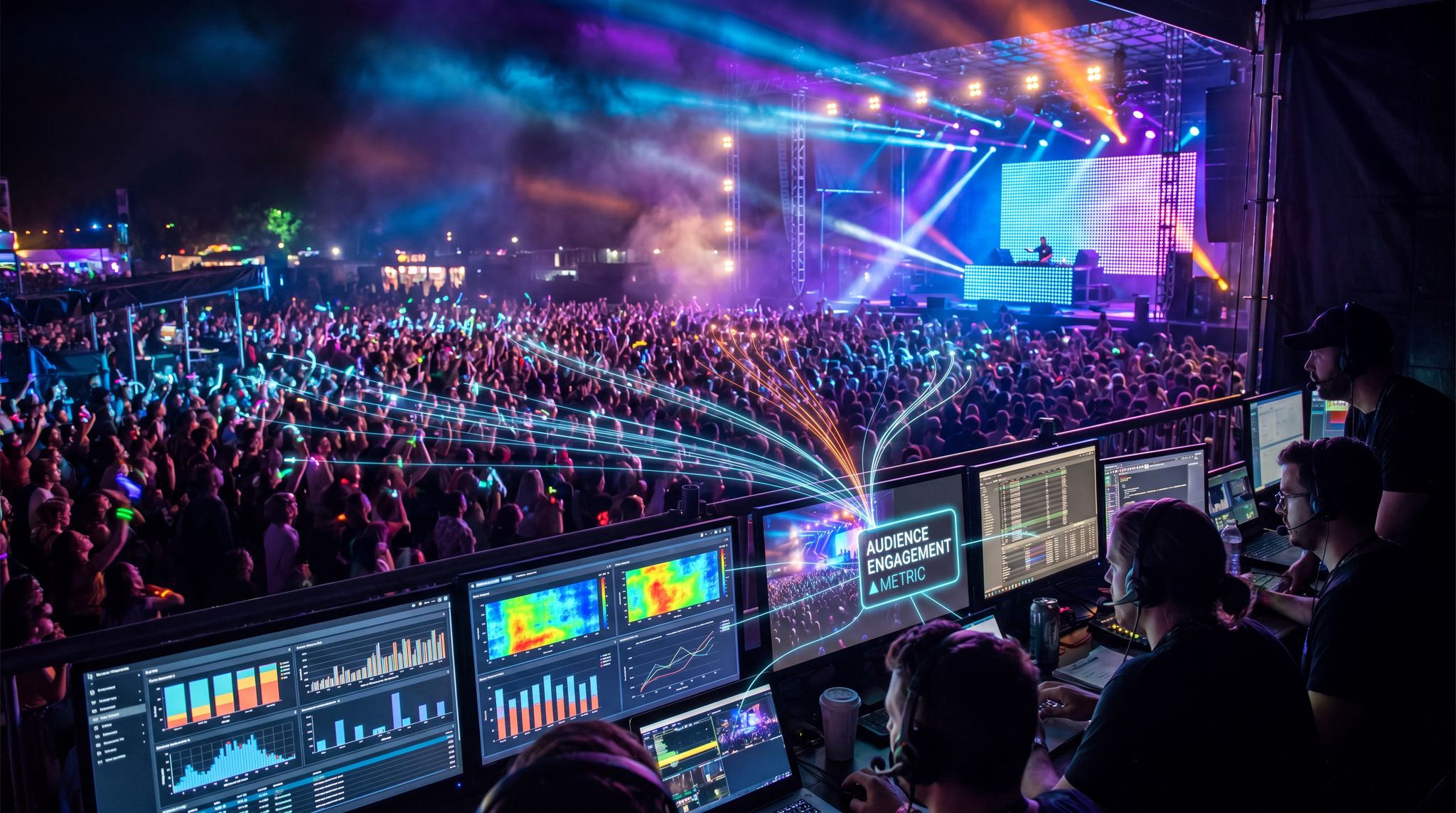
Sponsorship is a two-way street. To build lasting sponsor relationships (and keep that revenue flowing), festival producers need to demonstrate value. One mistake to avoid is focusing only on vanity metrics like the number of emails sent. Instead, share meaningful engagement data with your sponsors. This approach not only proves ROI but also shows that you care about the sponsor’s goals, not just the fee.
What metrics matter most? Firstly, open rates tell how many of your subscribers actually opened the email containing the sponsored content. A high open rate is a sign that your audience is tuned in and that your subject lines and timing are effective. Next, click-through rates (CTR) on the sponsor’s link or offer reveal how compelling the content was to readers. Did the “exclusive shuttle discount” or “food voucher” get people clicking? That’s a direct measure of interest generated. Going further down the funnel, track any redemption or conversion metrics: for example, how many people used the sponsor’s discount code or booked a service through the email. If your sponsor provided a promo code, ask them for the redemption count after the event; if you provided a tracked URL, check how many ended up taking the desired action (such as app installs or purchases).
Free Tool: Split Tickets for Max Gross
Given capacity and a target price, the optimizer proposes Early Bird / GA / VIP allocations and prices — with projected gross at 100%, 80% and 60% sell-through.
By reporting these figures, you paint a fuller picture of the sponsorship’s impact. For instance, instead of just telling a sponsor “We emailed 20,000 people about your brand,” you can say “Out of 20,000 recipients, 8,000 opened the email and 1,600 clicked through to your offer, leading to 400 redemptions of your coupon.” This level of detail impresses sponsors because it shows engagement, not just exposure. It helps justify their spend and paves the way for future partnerships. Sponsors may also appreciate qualitative feedback if available (perhaps you ran a post-event survey and some attendees mentioned appreciating the sponsor’s contribution).
To scale this level of transparency, many top-tier events rely on automated partner reporting platforms. Instead of manually pulling click-through rates and redemption codes into spreadsheets at the end of the month, these systems generate real-time dashboards for sponsors. This not only saves your marketing team hours of administrative work but also provides undeniable proof of performance, making contract renewals significantly smoother.
Another benefit of sharing engagement data is that it encourages continuous improvement. If a sponsor sees mediocre results, you can work together to adjust the approach – maybe the offer needs to be more enticing, or perhaps a different email timing or segment would work better. You move the conversation from “Did we fulfill the contract?” to “How can we optimize and do even better next time?”. This collaborative stance can turn one-off sponsors into long-term partners, which is invaluable for a recurring festival.
Remember to keep your own expectations realistic too. Not every sponsored email will result in huge clicks or sales for the partner; what’s important is to track the true response and learn from it. By focusing on authentic engagement and being transparent with those numbers, you demonstrate integrity. This honesty helps build trust with sponsors – they know you’re not just inflating figures, but are committed to delivering real value. That reputation will make sponsors more eager to work with you year after year.
Trust Keeps Your List Alive
At the heart of all these strategies is a simple truth: trust is the lifeblood of your email list. The moment your festival’s audience feels that every email is just a cash grab or that their interests are being disregarded, you risk losing them. Conversely, if you consistently respect your subscribers – by providing value, communicating honestly, and not overloading them – they will remain receptive and even thankful. That trust translates directly into a healthier list and long-term monetization potential.
Consider the lifecycle of a festival fan’s relationship with your emails. Early on, they signed up or bought a ticket and gave you permission to communicate. Each message you send is an opportunity either to reinforce that trust or to chip away at it. If you abuse the privilege (say, by stuffing every email with multiple sponsor ads, or sending irrelevant offers at odd hours), people will disengage. They might not bother to open future emails, or worse, hit the unsubscribe link (or the spam button). Not only does that person become unreceptive to sponsors, they might miss out on your important event announcements too – a loss for both sides.
Free Tool: Project Your Bar Revenue
Per-head spend benchmarks by event type turned into projected bar and food revenue, with a stock-mix estimate and gross-margin line. Free calculator.
On the other hand, when you follow the principles outlined above, you create a positive feedback loop. Subscribers learn that when they see an email from Your Festival, it’s worth opening. Maybe it contains the latest lineup news (exciting!), or useful tips for enjoying the event, or a genuinely appealing special offer from a partner. They don’t feel like they’re being taken advantage of. Over time, this trust means you can introduce monetization elements (like a sponsored section) and your audience will tolerate or even welcome it, because they know you won’t spam them and you’ve proven that sponsors are integrated in thoughtful ways. Trust built over years can be lost in an instant, so every sponsored email should be approached with that in mind.
It’s also important to remember quality over quantity in list building. A smaller email list of engaged, trusting fans is far more valuable than a huge list of people who ignore you. Sponsors would rather reach an audience that actually cares and acts. So focus on cultivating engagement and trust; monetization will naturally follow. This might mean sometimes saying “no” to a sponsorship opportunity that doesn’t fit, or holding back on an extra email send because you just emailed subscribers yesterday. Those decisions protect the relationship capital you have with your audience.
In summary, a festival’s email and CRM efforts succeed when they respect the audience’s inbox. Monetization and user experience must go hand-in-hand. By integrating sponsors in useful ways, targeting communications intelligently, staying transparent, and emphasizing engagement over pure reach, festivals can generate significant sponsorship revenue and keep their fan community happy. A trusted email list is a sustainable asset – one that will support not only your sponsorship goals but also ticket sales, word-of-mouth marketing, and the overall longevity of your event brand. Protect it, nurture it, and it will keep paying you back.
Frequently Asked Questions
What makes a festival CRM different from standard email marketing software?
A dedicated festival CRM is purpose-built for the event industry, integrating directly with ticketing platforms to pull in real-time purchase data, demographic insights, and scanning history. Unlike generic mailing tools, this specialized software allows promoters to segment audiences by ticket type, attendance history, and VIP status, making it much easier to deliver highly targeted, monetizable sponsor campaigns.
How can organizers automate sponsor reporting?
By leveraging an email infrastructure with built-in sponsorship and monetization features, event producers can automatically track open rates, click-throughs, and conversion metrics for specific partner links. These platforms often provide dedicated dashboards or exportable reports that can be shared directly with brand partners, proving ROI without requiring hours of manual data compilation.
How does a festival CRM improve sponsor targeting?
A dedicated festival CRM improves targeting by centralizing attendee data—such as ticket tiers, geographic location, and past event attendance—into a single actionable database. When this system is tied to an advanced email infrastructure, organizers can deploy highly specific sponsor messages to exact audience segments. This prevents subscriber fatigue by ensuring fans only see partner content relevant to their specific festival experience.
Why is partner compliance tracking software important for festival organizers?
Partner compliance tracking software ensures that event producers meet all contractual obligations with their sponsors, such as guaranteed email impressions, specific ad placements, and data privacy regulations. By utilizing a platform that monitors these deliverables automatically, organizers mitigate the risk of under-delivering and protect their attendee data, ultimately strengthening long-term brand partnerships.