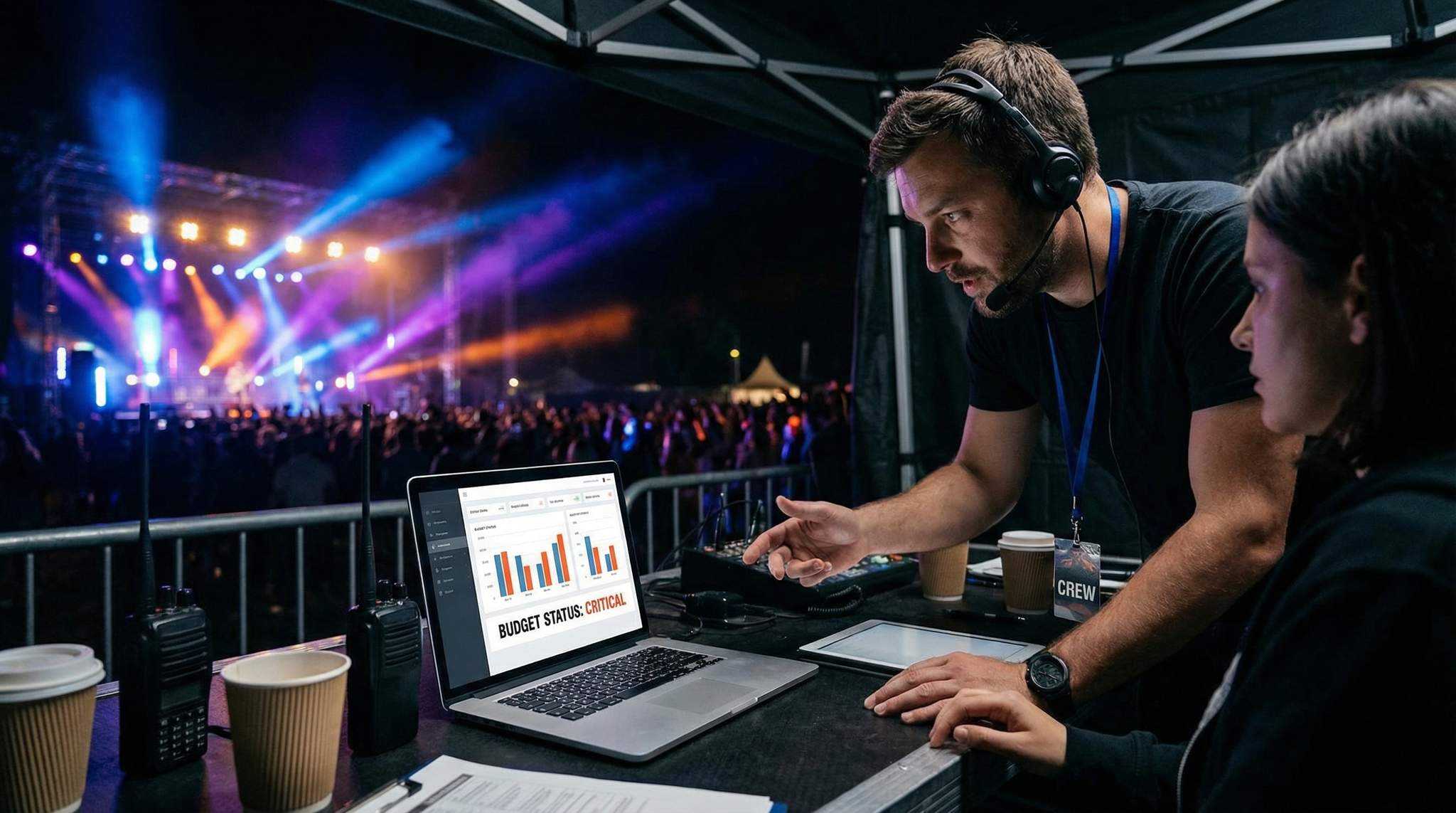
As event day dawns and the doors open, your attention is pulled in every direction – ticket sales, artist demands, on-site crises – and it’s easy to lose sight of the cash flow amidst the chaos. However, keeping a close eye on your finances during the event is just as critical as all your pre-planning. In fact, in today’s high-cost event landscape, where Global DMC Partners’ survey reveals many planners saw double-digit cost spikes in 2024, real-time financial management can make the difference between turning a profit and taking a loss. Seasoned organizers know that budgeting and finance are the backbone of control to avoid red ink. This means every promoter – whether running a local gig or a mega-festival – must track finances on event day with the same diligence used in planning.
Why bother with event-day finance tracking when you’re already juggling so much? Here are several key benefits of actively managing your money on the day of your event:
- Ensure you can cover every expense: By monitoring funds in real time, you confirm you have enough to pay vendors, rentals, staff, and other costs as they come due. For instance, if a stage technician requests an unexpected overtime fee, knowing your available budget on the spot lets you handle it without scrambling.
- Track income performance: Keeping tabs on all income streams – ticket sales, merch, food & beverage, sponsorship installments, etc. – shows how well your event is doing financially. If midday numbers show door ticket sales lagging behind forecast (a situation not uncommon as managing last-minute festival ticket buyers becomes increasingly critical), you can adjust by promoting on-site upgrades or cutting optional expenses to stay on budget.
- Spot issues early: Real-time tracking helps you catch financial problems before they snowball. For example, if extreme heat or rain dramatically reduces walk-up attendance, you’ll notice revenue falling short of expectations due to weather and can immediately pause non-essential spending. Catching a shortfall at 2 PM is far better than discovering it after the event when it’s too late to react.
- Make on-the-fly decisions with data: With up-to-the-minute finance info, you can allocate resources smartly during the event. If concessions are selling out fast and generating strong profit, you might authorize an extra supply run knowing the sales cover it. Conversely, if an entertainment element isn’t drawing the expected crowd, you could scale back its budget in real time. These informed tweaks keep the experience high-quality without blowing the budget, ensuring you deliver value despite rising costs, a tricky balance as rising operational costs continue to strain budgets.
- Create a complete financial record: Diligent event-day accounting means by the end of the night you have a detailed log of every dollar in and out. This record is invaluable for settling accounts, handling taxes, and planning future events. It provides hard data for your post-event analysis – e.g. which expenses overshot their budget – so you can refine your plans for next time.
Overall, effective financial management on event day ensures your event is a success both financially and operationally. You’ll avoid unpleasant surprises when the final bills roll in, and you’ll be able to focus on delivering a great experience to attendees and staff. On the flip side, neglecting the numbers can be disastrous.
Warning: Financial mismanagement can sink even long-running events. The 60-year-old Philadelphia Folk Festival had to cancel its 2023 edition amid severe budget troubles, and the world-famous Just For Laughs festival in Montreal scrapped its 2024 event to stave off bankruptcy. These cases underscore that no promoter is immune to financial collapse if spending isn’t kept in check – so always keep a close eye on your event’s money matters.
Understanding Event Financial Management
Experienced promoters will tell you that financial management is the backbone of event planning. It’s not just about counting cash at the end – it’s an ongoing process that starts early and continues through event day. The main components of event financial management include budgeting and forecasting, payment processing, cost tracking, and financial reporting. Let’s break down each:
Budgeting and Forecasting
Budgeting is the process of creating a detailed financial plan for your event, including all expected costs and revenues. Forecasting means estimating these figures as accurately as possible in advance. By the time event day arrives, you should have a clear budget that outlines how much you can spend on each aspect (venue, talent, equipment, marketing, etc.) and how much income (ticket sales, sponsorship, etc.) you expect. Be conservative in your estimates – industry analyses indicate nearly 90% of events overshoot their initial budgets, often by 15–30%. Knowing this, smart promoters build in a contingency fund (typically 10–15% of the budget) to handle surprises. Pro tip: Have that contingency amount set aside in an easily accessible account or cash reserve on event day – this safety net will cover unexpected expenses without derailing your budget.
Ready to Sell Tickets?
Create professional event pages with built-in payment processing, marketing tools, and real-time analytics.
Forecasting revenue is just as important as estimating costs. Are you relying mostly on ticket pre-sales, or will a lot of income come from door sales and on-site spending? By 2026, many audience members delay buying tickets until the last minute, requiring strategies for winning the waiting game with buyers, so adjust your expectations accordingly. Use data from similar past events and current sales trends (for example, use pixels or analytics tools to track event ticket sales conversions) to predict final attendance and revenue. The better your forecast, the fewer financial surprises on the day.
When a concert promoter is forecasting this year’s attendance, they must look beyond just last year’s numbers. A robust attendance forecast incorporates current market conditions, competing events in the same region, and the specific draw of the current lineup. By analyzing early pre-sale velocity and comparing it to historical pacing curves, organizers can build a highly accurate predictive model. This proactive approach to estimating crowd size directly informs how much you need to budget for variable costs like security staffing, portable restrooms, and food vendor guarantees.
Payment Processing and Security
On event day, you’ll likely be processing payments from attendees and settling payments with vendors or artists. This can include ticket sales at the gate, merchandise and food/beverage sales, artist or crew payments, refunds, and more. It’s crucial to have secure, efficient methods for each type of transaction:
- Cash: Despite the global shift toward cashless payments, cash is still common at many events (especially smaller ones or in regions where digital adoption is slower). Set up clearly marked cash registers or cash collection points. Start with a prepared cash float (ample change in various denominations) and secure cash storage like lockable cash boxes or a safe. Have at least two people (e.g. a cashier and a supervisor) present when counting large sums to ensure accuracy and prevent theft. Plan for periodic cash skims: every few hours, remove excess cash from tills and store it in the safe or deposit it off-site if possible.
- Credit/Debit Cards: In 2026, the majority of on-site purchases happen via cards or digital payments – one study of large festivals found 90% of transactions were by card (and the rest on prepaid cashless systems). Make sure you have reliable point-of-sale (POS) systems or card readers (e.g. Square, Stripe terminals) at all key sales points. Test your card readers and ensure internet connectivity (Wi-Fi or cellular) is strong at the venue; consider a backup hotspot in case the primary network goes down. Cards have the advantage of automatic digital records – every swipe or tap is logged, which makes post-event reconciliation much easier. However, be aware of processing fees and factor those into your cost calculations.
- Mobile Wallets & Contactless Payments: Many attendees now prefer using their phone or smartwatch to pay via Apple Pay, Google Pay, or other mobile wallet apps. If your POS supports it (most do), make sure staff know how to accept these. Some events also use RFID wristbands or cashless payment apps, where attendees preload money onto a bracelet or account. These systems can significantly speed up transactions and provide real-time tracking of sales across the venue. For example, when implementing a hybrid RFID + card system, one festival saw not only smoother transactions but also a clear digital paper trail for every purchase, eliminating cash discrepancies and enabling transparent and secure payment management. Pro Tip: If you adopt a cashless wristband system, encourage attendees to top-up online in advance and set up on-site top-up stations; this reduces cash handling while keeping revenue flowing.
- Checks or Money Orders: These are increasingly rare for on-site payments, but you might encounter them for specific cases (e.g. a sponsor hands over a check, or an old-school vendor insists on a money order). If you do accept checks, have a process: verify the person’s ID, note their contact info, and issue a receipt. Keep a log of any checks received and ideally deposit them immediately the next business day. Be cautious – checks can bounce, so it’s wise not to count on those funds until cleared. Money orders are prepaid and safer, but still treat them like cash in your records. In general, try to handle most transactions via more immediate methods (cash, cards, or digital) on event day and leave checks as a last resort.
For those implementing RFID technology, understanding the top-up counter meaning in a concert environment is essential. A top-up counter (or top-up station) is a designated physical kiosk where attendees can add funds to their cashless wristbands using cash or credit cards. Strategically placing these counters away from high-traffic areas like bars and merch tents prevents bottlenecks, ensuring that fans spend less time in line and more time enjoying the show.
Go Cashless With RFID Technology
Enable contactless payments, faster entry, and real-time spending analytics with RFID wristbands and NFC-enabled ticketing for your events.
All payments, once processed, should be recorded in a central system as soon as possible. Ideally, integrate your on-site sales with an accounting or event management software that updates in real time. If you’re not using an online ticketing platform that automatically logs sales, you might use a spreadsheet or an accounting app into which you (or a team member) enter each chunk of revenue and each expense on the fly. Automation is your friend: the more you can rely on tech to log transactions (scanning QR codes, swiping cards, etc.), the less you rely on memory or manual notes – and the fewer errors you’ll have. Every payment method – whether it’s a $5 cash parking fee or a $5,000 artist balance payout – needs to flow into your ledger so your books remain accurate and up-to-date.
Cost Tracking and Real-Time Budget Updates
Cost tracking means monitoring all spending against your budget in real time. Before the event, you likely created a detailed budget with cost line items. On event day, that budget becomes a live document – you should update it as actual expenses incur. A best practice is to assign one person the role of “financial controller” for the day (in a small event this might be you, the promoter; in a large event, it could be an accountant or finance manager on your team). This person’s job is to log every expenditure and cash disbursement as it happens and keep a running tally.
Grow Your Events
Leverage referral marketing, social sharing incentives, and audience insights to sell more tickets.
For example, if you budgeted $1,000 for on-site supplies and by 3 PM you’ve spent $800 of it on ice, extra cables, and staff meals, the finance controller would note that only $200 remains in that category. If a new request comes in – say the ops team needs $300 for more bottled water – you’ll immediately see that exceeds the remaining budget and you’ll need to either reallocate funds from elsewhere or decide not to authorize that expense. Real-time awareness like this is what prevents small overages from compounding into a blown budget. It’s when expenses aren’t tracked that budgets silently break.
In practice, cost tracking can be done on a simple ledger or whiteboard in the production office, but it’s far better to use a spreadsheet or budgeting software that you prepared in advance. As each receipt or expense report comes in during the event, enter it into your budget tool under the correct category. Modern event budgeting apps or even Google Sheets on a laptop (with cloud sync) can let multiple people enter data (e.g. each department lead could have access to log what they spend). Still, it’s wise to funnel all entries through one accountable person who reviews and approves each spend. Encourage team members to save all receipts and forward them to the finance controller immediately – even a quick photo sent via messaging app can work – so nothing is forgotten. By the end of the event, you should be able to generate a report of budget vs. actual for each category, giving you a crystal-clear picture of how well you managed to stick to plan.
Financial Reporting and Post-Event Settlement
Even while the event is ongoing, you might start preparing certain reports – for example, a mid-event ticket sales report (to compare projected vs actual attendance) or a running total of on-site revenue from concessions. Sharing timely financial updates with your core team can help with decision-making (e.g. announcing “we’ve hit 80% of our ticket revenue target by 5 PM” could boost staff morale, or conversely a warning that “we’re behind on revenue, so hold off any non-essentials”).
Once the event wraps up, formal financial reporting kicks in. Proper event-day finance tracking will pay off here: you’ll use the records you kept to settle all accounts. This includes paying any remaining vendor or artist balances (many artist contracts stipulate payment on the day of show, so you may be literally handing an envelope of cash or doing a same-day wire transfer – be ready and ensure you’ve tracked these in your system). You’ll also reconcile your payment processor reports (for credit cards or mobile payments) with your own sales logs to ensure they match, and count the final cash on hand to double-check against recorded cash sales. Any discrepancy needs to be investigated immediately – it’s much easier to track down a missing $100 the morning after the event, when staff can still recall details, than a month later.
Free Tool: Model Promoter Payouts
Flat-percentage, flat-per-ticket, or tiered-bonus commission structures — get per-promoter payouts and total commission as % of gross. Free calculator.
Finally, compile a post-event financial report. This might be just for your internal use, or for external stakeholders like sponsors, partners, or investors. The report should include total revenues, total expenses (broken down by category), and the resulting profit or loss. It’s also wise to calculate key metrics like per-attendee spending (e.g. $X average spent on food/merch per attendee) and budget variance (how far each category was over or under budget). These insights help you identify what worked well and where to improve. For instance, if you blew past your security budget due to unexpected overtime, you’ll plan better for that next time; if merchandise sales were far higher than expected, perhaps you under-ordered stock or under-budgeted revenue in that area.
Remember, maintaining clear financial records builds trust and credibility. If a sponsor asks how their funding was utilized, you can show them a line-item report. If tax authorities or auditors have questions, you have everything documented. Robust financial reporting also signals professionalism – it’s part of what makes partners confident about working with you again. As a bonus, having thorough financial logs means you can analyze trends over multiple events, which helps in long-term planning (see our guide on multi-year festival growth strategies for more on evolving budgets over time).
Managing Payments on the Day of the Event
Financial management isn’t just a back-office task – on event day, it happens front-and-center at your venue through each transaction. To keep your event’s finances healthy, you need to manage incoming payments (revenue) and outgoing payments (expenses or payouts) smoothly. Here’s how to handle the most common payment scenarios on event day:
Multiple Payment Methods: If you’re selling tickets or items on-site, plan for a mix of payment methods. The era of cash-only events is long gone; most promoters now use a hybrid model to cater to all attendees. Below is a snapshot of payment options and what to consider for each:
| Payment Method | Event-Day Considerations |
|---|---|
| Cash | Make sure you have enough small bills and coins for change at ticket booths and vendors. Use secure cash boxes and periodically transfer excess cash to a safe location (to prevent theft). Always have two people present during cash counts for accountability. Record every cash sale with a receipt or log entry to avoid missing income in your tally. |
| Credit/Debit Cards | Ensure POS terminals or mobile card readers are set up at all sales points (entrance, bars, merch tables, etc.) and tested. Have backup card readers and a secondary internet source ready. Keep an eye on queues – slow card processing can bottleneck sales, so if Wi-Fi falters, switch to offline mode or a backup device. After the event, cross-check the digital transaction reports from your card processor against your internal sales log for accuracy. |
| Mobile Wallets & Contactless | Many attendees will expect to pay with Apple Pay, Google Pay, or other contactless methods. Train your staff on how to accept these (often it’s the same card reader, but staff should know the process). Display signs that you accept contactless payments – it can encourage more sales as people realize how easy it is. The advantage on the back-end: these payments are logged like card sales, providing a clear audit trail. |
| Cashless Wristbands/Cards | If you use an event RFID cashless system (where attendees load money onto a wristband or card), ensure top-up stations are clearly marked and staff can guide users. Monitor the live dashboard if available – you’ll see exactly how much money is being loaded and spent in real time. Nearly 90% of transactions at major 2024 festivals were via credit card or RFID cashless methods, showing how effective these systems can be. They minimize cash handling and give you precise data on spending patterns. Just have a contingency for tech glitches – e.g. keep a few card readers or a manual paper voucher system ready in case the RFID network goes down. |
| Checks & Money Orders | Rare on event day, but you might use these for paying certain vendors or artists. If a performer’s agent insists on a check, prep it the day before and have them sign a receipt upon receiving it. Treat any check or money order received like cash – log it immediately. If you have an assistant, you can even arrange a bank run during the event to deposit large checks (especially if you need that money to cover event expenses). |
Secure Handling and Recording: For every type of payment, security and record-keeping are paramount. Assign specific individuals to handle money and make sure they understand your procedures. For example, designate a “cash manager” to oversee all cash transactions and perhaps a separate “digital payments manager” to monitor the card processing system (in smaller events, one person can do both with a careful workflow). Use receipts or tokens for transparency – if someone pays cash for a VIP upgrade on the spot, give them a receipt and keep a copy, so there’s a paper trail. If staff or volunteers are collecting money (like parking fees or donation buckets), supply them with receipt books or at least have them count and sign off when turning in the collected funds.
On the expense side, manage your payouts systematically. Common event-day expenses include paying balances to vendors (caterers, rental companies), artist fees, staff overtime, and buying emergency supplies. Avoid casually handing out cash without documentation. If you must pay an expense in cash, have a simple voucher for the recipient to sign. For any significant payment, get an invoice or written acknowledgment. Not only does this protect you, it also instills trust – vendors and crew see that you run a professional operation with financial accountability.
Data-Driven Event Marketing
Track ticket sales, demographics, marketing ROI, and social reach in real time. Exportable reports give you the insights to make smarter decisions.
Finally, keep your finance team in the loop with the production team. If the stage manager decides to rent an extra fog machine at noon, that decision needs to flow through finance so the cost is approved and recorded. Good communication can prevent a scenario where someone says “we’ll sort out the money later” – instead, you handle it now so it doesn’t become a dispute or a missing expense in the books. As one article on financial tracking during festival production notes, even well-run events can face nasty surprises when the bills come in if they didn’t track spending closely on show day. Running an event is like running a small business in a day – treat it with the same financial discipline.
Key Steps to Manage Your Event-Day Finances
By the day of the event, you should have a solid plan for your finances. But execution is everything. Here are five concrete steps every promoter should take to manage finances on event day (in addition to the big-picture practices discussed above):
For independent gig promoters organizing club shows or mid-sized venue tours, these financial controls are especially critical. Unlike massive festival corporations with dedicated accounting departments, a local gig promoter often acts as their own financial controller, settling box office numbers and paying out artist guarantees directly from the night’s revenue. Establishing a strict day-of-show financial routine ensures that independent organizers protect their margins and build sustainable businesses.
- Make a day-of budget: Before the event kicks off, review how much money is available that day and allocate it to each priority. This includes petty cash for small purchases, the amount reserved for artist or vendor final payments, and a buffer for emergencies. Essentially, you’re creating a mini budget for event day that complements your overall event budget. For example, you might decide: “We have $5,000 set aside for all on-site expenses today – $1,000 is for incidentals (fuel, extra ice), $2,000 is reserved to pay vendor balances, $500 for crew meals, etc., leaving $1,500 as contingency.” Writing this down (even on a whiteboard in the production trailer or a note in your phone) gives you a spending roadmap for the day. It helps you stay on track and avoid going over budget in the heat of the moment. If something comes up that’s outside this plan, you’ll immediately see that you need to either reallocate funds or say no to the expense.
- Keep track of expenses in real time: Throughout the event, diligently log every expense. This cannot be stressed enough – every single expense. If you send a runner to buy gaffer tape and batteries for $75, mark it down. If you hand out $200 in staff per diems, mark it down. Keeping a running total of all money leaving the cash box or your account is vital. There are many ways to do this: you can use an accounting app on your phone, a cloud-shared spreadsheet on a tablet, or even a notepad that you update and later transpose to digital. The key is consistency and immediacy: update your records as soon as an expense occurs (or as soon as the receipt is handed to you). This practice helps you avoid the common mistake of underestimating how much you spent amid the flurry. Many first-time promoters have ended event night wondering “where did all the money go?” because small purchases went untracked and added up. Don’t let that happen – knowing your exact spend at any given hour allows you to make informed decisions and ensures you won’t be hit with mystery costs after the fact.
- Use cash or a debit card for on-site spending: One simple but effective budgeting hack is to avoid putting event expenses on a credit card on the day-of, unless absolutely necessary. When you use cash or a debit card linked to your event’s bank account, you can only spend what you actually have – it forces discipline. Psychologically, seeing physical cash diminish or your bank balance update immediately after a debit purchase keeps you aware of your budget limits. In contrast, credit cards can create a false sense of security; it’s easy to swipe now and worry later, only to realize you overshot your budget by thousands once the statement arrives. If a credit card is needed (say, to secure a last-minute equipment rental), treat it like a debit: set an upper limit for credit spending in your day-of budget and track those charges. Some promoters even load a prepaid card with the day’s budgeted amount – once it’s spent, that’s it. The goal is to prevent overspending by eliminating the temptation to “just put it on the card.” By sticking to cash/debit, you’ll inherently stay within the means of your event’s finances.
- Have a backup plan for funding: Even on event day, you should be prepared for the scenario where income falls short or an unexpected cost blows through your reserve. Essentially, plan for the worst, hope for the best. If you were counting on on-site ticket sales to pay some bills, imagine what you’d do if rain cut your door sales in half. Do you have a backup source of funds? This could be a line of credit, a supportive investor or family member, or proceeds from a secondary funding source like grant money or sponsorship that you haven’t allocated yet. Some festivals secure an emergency loan or keep a credit card with a high limit on standby for true emergencies (to be used only if, say, a critical generator fails and renting a replacement costs $10k upfront). A real-world example underscores this: in late 2025, the organizers of Nashville Pride suddenly lost a major sponsor and found themselves with a $250,000 shortfall for their upcoming festival – they launched a last-minute crowdfunding campaign and raised $145,000 from the community after key corporate and grant funding fell through to keep the event alive. The lesson is to identify your financial Plan B. It might even be cutting costs on the fly – e.g., if you see ticket revenue is 30% lower than expected by mid-event, you might cancel a costly afterparty or negotiate down a vendor service to save money. Having a plan (and pre-written contingency budget) will let you react quickly and avoid panic if things go awry.
- Set up a system for handling money: Don’t wait until money is literally in your hands to decide how to deal with it. Before the event starts, establish who will handle cash and payments, how they’ll do it, and where the money will go. For example, you might assign your trusted assistant as the on-site “cashier” to collect all ticket sales and on-the-day revenues; they will have a cash box and receipt book, and will report to you every hour with updates. Meanwhile, perhaps you as the promoter handle all outgoing payments to artists and suppliers from a separate pouch or bank app. Or you hire a professional cash management service or accountant for the event (some large events do this). Also, consider using technology: if you have multiple people collecting money (merch seller, food stalls, gate sales), something like a mobile point-of-sale app that consolidates transactions can be useful. Many modern event ticketing platforms (including Ticket Fairy) offer features for on-site sales that automatically track everything – if you’re not using such a platform, you’ll need to improvise that system yourself. The system should also cover end-of-day procedures: for instance, decide when and where final cash counts will happen, and have a process to safely transport money after the event (hire security or use night deposit boxes as needed). By setting up a clear money-handling system in advance, you ensure accountability (everyone knows their role) and reduce the risk of funds getting lost or mishandled in the post-event rush.
By following these steps on the day of your event, you put yourself in control of your finances rather than letting the hectic nature of live events control you. Proper financial management on event day isn’t just about preventing loss – it actively contributes to your event’s success. You’ll be able to make confident decisions (instead of guessing if you can “afford” something), and you’ll wrap up the night with a clear understanding of your event’s financial outcome. Many top promoters say that when they review the numbers immediately after the show, there should be no surprises – and that’s only possible if you’ve been tracking diligently all day.
For anyone learning how to be a concert promoter, mastering these day-of-show financial controls is just as critical as booking the right talent. The most successful producers in the industry build their careers on reliable financial forecasting and strict budget adherence, ensuring they can weather unexpected challenges and consistently deliver profitable events.
In the end, keeping careful track of finances on event day benefits everyone: you, your team, your vendors, and even your attendees. When the fiscal side is under control, you can deliver a better experience because you’re not cutting corners blindly or worrying about money in a crisis. Plus, you’re building a reputation as a responsible promoter, which can help in securing venues, talent, and sponsors for future events (partners talk, and those who pay everyone on time and balance their books earn trust in the industry). So embrace the spreadsheets and cash counts – they’re as essential to a successful event as the stage and sound system. And once the last attendee has gone home, don’t forget to include your financial learnings in your post-event debrief steps for future success. Analyzing what your budget planned versus what actually happened will continually sharpen your forecasting skills and make the next event’s budget even more realistic. Every great promoter isn’t just a master of entertainment – they’re a master of numbers on event day too.
Let Fans Pay Over Time
Offer flexible payment plans that split ticket costs into manageable installments, making higher-priced events accessible and boosting conversions.
Frequently Asked Questions
Why is real-time financial tracking important during an event?
Real-time financial tracking ensures promoters can cover immediate expenses, monitor income streams like ticket sales, and spot issues early, such as revenue shortfalls due to weather. It allows for data-driven decisions on the fly, preventing small overages from compounding into significant losses and ensuring a complete financial record for post-event analysis.
How should promoters handle payments on event day?
Promoters should utilize a hybrid payment model accepting cash, credit cards, and mobile wallets to cater to all attendees. Secure POS systems and card readers must be tested for connectivity, while cash requires strict handling procedures like prepared floats and secure storage. Recording every transaction in a central system ensures accurate financial logs.
What are the benefits of using cashless payment systems at festivals?
Cashless systems, such as RFID wristbands or mobile apps, speed up transactions and provide real-time sales tracking across the venue. They minimize the risks associated with cash handling and offer a clear digital paper trail for every purchase. Statistics show that nearly 90% of transactions at major festivals now occur via card or cashless methods.
How can event organizers prevent going over budget on the day of the show?
Organizers should create a specific day-of budget that allocates funds for incidentals and vendor balances while maintaining a contingency fund of 10–15%. Tracking every expense in real-time using a spreadsheet or app prevents overspending. Using cash or debit cards instead of credit cards also enforces discipline by limiting spending to available funds.
What should be included in an event’s financial management plan?
A comprehensive plan includes detailed budgeting and forecasting, secure payment processing, real-time cost tracking, and post-event financial reporting. Promoters must estimate costs conservatively, as nearly 90% of events overshoot budgets, and prepare for revenue fluctuations by monitoring door sales. This structure ensures all expenses are covered and financial records remain accurate.
Why should promoters avoid using credit cards for event-day expenses?
Relying on credit cards can create a false sense of security, leading to overspending beyond the actual budget. Using cash or a debit card linked to the event account enforces financial discipline by limiting purchases to available funds. If credit is necessary, promoters should set a strict upper limit to prevent accumulating unexpected debt.
How does a concert promoter forecast attendance for the year?
When a concert promoter is forecasting this year’s attendance, they analyze historical ticket sales data, current market trends, lineup strength, and early pre-sale velocity. This predictive modeling helps organizers accurately estimate crowd size, which is essential for budgeting variable costs like staffing, security, and infrastructure.
What is the meaning of a top-up counter at a concert?
In the context of cashless events, a top-up counter is a dedicated physical station where attendees can load money onto their RFID wristbands or payment cards. These kiosks allow fans to use cash or credit to add funds on-site, keeping food and beverage lines moving quickly by separating the payment loading process from the actual point of sale.
What are the primary financial responsibilities of gig promoters on the day of a show?
Independent gig promoters are typically responsible for managing the box office float, tracking walk-up ticket sales, settling final payments with the venue, and paying artist guarantees or door-split percentages. Because they often operate without a large finance team, maintaining strict real-time ledgers and securing cash handling are critical to ensuring the show remains profitable.