In recent years, the entertainment industry has seen a significant shift in how ticket prices are set. One of the most notable changes is the adoption of dynamic pricing in theatre ticketing. Originally popularized by airlines and hotels, dynamic pricing has now firmly taken the stage in the world of theatre, from big Broadway productions to regional playhouses. The basic idea: ticket prices are no longer fixed, but fluctuate in real time based on demand and other factors. As theatres look to remain competitive and meet audience expectations, dynamic pricing is becoming an increasingly important factor in the economics of live performances.
Dynamic pricing isn’t confined to theatres alone – we’ve seen it in concerts, sports, and even nightlife. For example, major concert tours have used “Platinum” surge pricing, and even nightclubs are experimenting with demand-based ticket strategies, as covered in our guide to the impact of dynamic pricing on nightclub tickets. Now, theatre producers are leveraging similar tools to maximize revenue and fill seats. But how exactly does dynamic pricing work in a theatre context, why has it risen so quickly, and what does it mean for both producers and audiences? Let’s explore this evolving landscape in detail.
What is Dynamic Pricing?
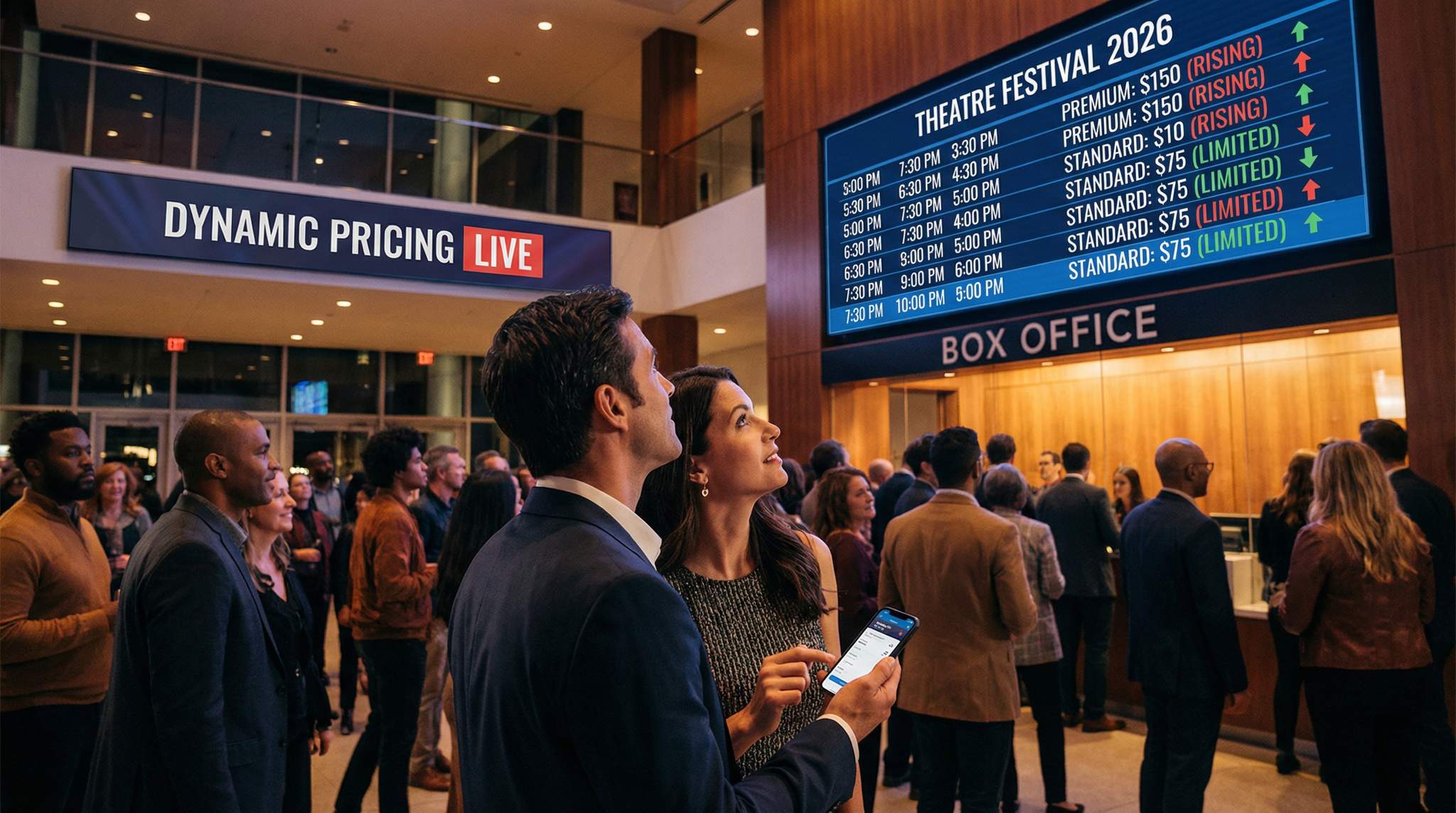
Dynamic pricing is a strategy where ticket prices for events (such as plays, musicals, or other live performances) fluctuate in real time based on various factors – demand, timing, seat location, and even audience behavior. In contrast to traditional static pricing (where a ticket price is set once and remains the same for months), dynamic pricing means the cost of a ticket can change from day to day or even minute to minute. It’s similar to how airlines adjust seat prices as flights fill up or how ride-sharing apps surge prices during rush hour. In the theatre world, this could mean that a ticket for a popular Friday night show might cost more in the afternoon than it did that morning if sales are brisk, or that a Tuesday matinee ticket could drop in price if demand is slower than expected.
This model allows theatre companies to capitalize on high demand by raising prices when a show is very popular, while also offering discounts during lower-demand times to boost attendance. The result is a more flexible pricing system that can apply to all kinds of productions – from Broadway blockbusters to local repertory theatre. Many modern ticketing systems now have built-in support for dynamic pricing adjustments, using theatre event attendee management technology, making it easier for even mid-sized venues to implement this strategy without manual price changes for every performance.
Keep Tickets in Fans' Hands
Our secure resale marketplace lets attendees exchange tickets at face value, eliminating scalping while keeping you in control of the secondary market.
Definition and Explanation
At its core, dynamic pricing means adjusting the price of a product or service continuously in response to market conditions. In the context of theatre, this means the ticket prices can go up or down in response to how tickets are selling. If a show is selling out fast, the system might raise prices for the remaining seats; if a show is underselling, prices might decrease to entice more buyers. The goal is to find the “sweet spot” where the price reflects what the audience is willing to pay at any given moment.
This concept is rooted in classic supply-and-demand economics: when demand goes up and supply (seats available) goes down, prices can rise. Conversely, if a performance has many unsold seats (high supply) and not enough buyers (low demand), prices can be nudged down until more people are motivated to buy. In practice, theatres use sophisticated algorithms and historical data to guide these adjustments. According to one theatre operations expert, “true dynamic pricing” uses data-driven algorithms to continuously recalibrate ticket prices in near real-time, reflecting a ticket’s true market value as performance dates approach, providing advice and insights on implementing dynamic pricing. Furthermore, experts note that using true dynamic pricing ensures accuracy. In other words, instead of a one-size-fits-all price, dynamic pricing creates a moving target that responds to real purchase patterns.
Ready to Sell Tickets?
Create professional event pages with built-in payment processing, marketing tools, and real-time analytics.
To provide a clear dynamic ticket pricing definition for venue operators: it is the automated, algorithmic adjustment of admission costs based on real-time market signals. When promoters ask what dynamic pricing means about ticket prices, the answer is that face value is no longer static; it becomes a fluid metric that scales upward during demand surges and downward to protect occupancy during slow periods.
For event organizers wondering exactly what dynamic pricing for tickets entails operationally, it represents a shift from static inventory management to active yield optimization. Rather than guessing the perfect face value months in advance, ticket dynamic pricing allows the market to dictate the final cost at the point of sale. This ensures that the revenue generated accurately reflects the true real-time demand for the production.
To illustrate, consider a hit musical playing in a 1,000-seat theatre:
- Traditional fixed pricing might set all orchestra seats at $120 and balcony seats at $80, no matter when or how they’re sold.
- Dynamic pricing would start with similar base prices, but if one Saturday night show starts selling out weeks early, the remaining orchestra seats might climb to $150 or more, while a Wednesday matinee performance of the same show (with slower sales) might drop many seats to $60–$70 to attract last-minute buyers.
This variability can be beneficial for theatres and, potentially, for price-sensitive audiences – but it requires careful management to avoid confusion or sticker shock.
Free Tool: Split Tickets for Max Gross
Given capacity and a target price, the optimizer proposes Early Bird / GA / VIP allocations and prices — with projected gross at 100%, 80% and 60% sell-through.
Dynamic Ticket Pricing vs Variable Ticket Pricing
Grow Your Events
Leverage referral marketing, social sharing incentives, and audience insights to sell more tickets.
For event organizers wondering exactly what dynamic pricing for tickets entails operationally, it represents a shift from static inventory management to active yield optimization. Rather than guessing the perfect face value months in advance, modern event ticketing software allows the market to dictate the final cost at the point of sale. This ensures that the revenue generated accurately reflects the true real-time demand for the production.
To illustrate, consider a hit musical playing in a 1,000-seat theatre:
- Traditional fixed pricing might set all orchestra seats at $120 and balcony seats at $80, no matter when or how they’re sold.
- Dynamic pricing would start with similar base prices, but if one Saturday night show starts selling out weeks early, the remaining orchestra seats might climb to $150 or more, while a Wednesday matinee performance of the same show (with slower sales) might drop many seats to $60–$70 to attract last-minute buyers.
This variability can be beneficial for theatres and, potentially, for price-sensitive audiences – but it requires careful management to avoid confusion or sticker shock.
Dynamic Ticket Pricing vs Variable Ticket Pricing
A common point of confusion among event organizers is the distinction between dynamic ticket pricing vs variable ticket pricing. While both strategies involve charging different amounts for different seats or times, they operate on different principles. Variable pricing is static once set; a producer decides in advance that Saturday night tickets will cost $100 while Tuesday matinees will cost $60, based on historical trends. Dynamic pricing, on the other hand, is reactive and continuous. If that Tuesday matinee suddenly experiences a surge in popularity due to a celebrity cast replacement, a dynamic system will automatically increase the price in real time. Understanding this difference is crucial for venue managers deciding whether they need a simple tiered pricing strategy or a fully automated, demand-responsive ticketing engine.
Smart Promo Codes & Presale Access
Create percentage or flat-rate discount codes with usage limits, date ranges, and ticket type restrictions. Plus unlock codes for private presales.
To further clarify, variable ticket pricing is highly effective for predictable demand curves—such as charging a premium for weekend evening shows compared to weekday matinees. However, because variable pricing relies on static, pre-determined tiers, it cannot adapt if a Tuesday matinee unexpectedly goes viral. Venue operators must weigh the simplicity of a variable strategy against the revenue-maximizing potential of a fully dynamic event ticketing system, and how it can influence access to essential event funding.
The Factors Driving the Rise of Dynamic Pricing in Theatre
Several key factors have contributed to the rapid rise of dynamic pricing in the theatre industry:
-
Advances in Technology: Modern software has made dynamic pricing both accessible and efficient. Theatres can use specialized revenue management systems that track ticket sales in real time and automatically adjust prices based on predefined rules or AI algorithms. Just as airlines have used yield management systems for decades, theatres now have tools that monitor demand and optimize pricing 24/7. This technology was once available only to big players, but now even mid-sized venues can integrate dynamic pricing features into their ticketing platforms, utilizing seamless operations for theatre events. For example, some theatres partner with pricing solution providers (like Digonex or DynamO) to automate price updates. In a recent pilot, a major comedy theatre in Hungary sold over 5,000 dynamically priced tickets in a month and found the results so convincing that they rolled dynamic pricing out for their entire season, proving that the theatre season starts with dynamic pricing. Such success stories show that the barrier to entry for dynamic pricing is lower than ever, thanks to technology, often bolstered by ticketing cash advance options.
-
Changing Consumer Behavior: Today’s audiences are increasingly accustomed to variable pricing in many aspects of life. From ride-sharing apps that implement surge pricing, to hotels and airlines that constantly tweak prices, consumers (especially younger ones) are no longer surprised to see prices that change over time. Even movie theater chains have begun experimenting with variable pricing strategies for blockbusters or prime seats, as reflected in consumer opinion on dynamic pricing fairness. This shift means less resistance in principle to the idea that a theatre ticket might not have a single fixed price. In fact, some tech-savvy consumers try to “game” dynamic pricing by timing their purchase — waiting for potential off-peak deals or jumping in early if they fear prices will climb. Online shopping habits have trained buyers to look for real-time deals and to accept that prices can fluctuate. Theatres are adopting dynamic pricing in part to meet these new expectations and purchasing patterns.
-
Increased Competition and Entertainment Options: Live theatre isn’t just competing with other live events; it’s also competing with on-demand entertainment like Netflix, gaming, and streaming concerts. With so many entertainment options (many of them relatively cheap or even free), theatres must work harder to entice audiences to buy tickets. One strategy is more flexible pricing. By leveraging dynamic pricing, a theatre can offer budget-friendly options on certain dates or seat sections (appealing to more price-sensitive patrons) while still maximizing income from die-hard fans on the high-demand shows. In essence, dynamic pricing lets theatres serve both ends of the market – offering bargains to those who need them and premium choices to those willing to splurge. This flexibility can make attending a show more appealing than staying home, especially if people perceive that they can find a ticket that fits their budget. A dynamically priced show might advertise “Tickets from $25” for the thrifty shopper, while still capturing $150+ for the best seats from the superfans. In an era of competition from digital entertainment, that adaptability is a competitive edge for live venues.
-
The Factors Driving the Rise of Dynamic Pricing in Theatre
Several key factors have contributed to the rapid rise of dynamic pricing in the theatre industry:
-
Advances in Technology: Modern software has made dynamic pricing both accessible and efficient. Theatres can use specialized revenue management systems that track ticket sales in real time and automatically adjust prices based on predefined rules or AI algorithms. Just as airlines have used yield management systems for decades, theatres now have tools that monitor demand and optimize pricing 24/7. This technology was once available only to big players, but now even mid-sized venues can integrate dynamic pricing features into their ticketing platforms, utilizing seamless operations for theatre events. For example, some theatres partner with pricing solution providers (like Digonex or DynamO) to automate price updates. In a recent pilot, a major comedy theatre in Hungary sold over 5,000 dynamically priced tickets in a month and found the results so convincing that they rolled dynamic pricing out for their entire season, proving that the theatre season starts with dynamic pricing. Such success stories show that the barrier to entry for dynamic pricing is lower than ever, thanks to technology.
Data-Driven Event Marketing
Track ticket sales, demographics, marketing ROI, and social reach in real time. Exportable reports give you the insights to make smarter decisions.
-
Changing Consumer Behavior: Today’s audiences are increasingly accustomed to variable pricing in many aspects of life. From ride-sharing apps that implement surge pricing, to hotels and airlines that constantly tweak prices, consumers (especially younger ones) are no longer surprised to see prices that change over time. Even movie theater chains have begun experimenting with variable pricing strategies for blockbusters or prime seats, as reflected in consumer opinion on dynamic pricing fairness. This shift means less resistance in principle to the idea that a theatre ticket might not have a single fixed price. In fact, some tech-savvy consumers try to “game” dynamic pricing by timing their purchase — waiting for potential off-peak deals or jumping in early if they fear prices will climb. Online shopping habits have trained buyers to look for real-time deals and to accept that prices can fluctuate. Theatres are adopting dynamic pricing in part to meet these new expectations and purchasing patterns.
-
Increased Competition and Entertainment Options: Live theatre isn’t just competing with other live events; it’s also competing with on-demand entertainment like Netflix, gaming, and streaming concerts. With so many entertainment options (many of them relatively cheap or even free), theatres must work harder to entice audiences to buy tickets. One strategy is more flexible pricing. By leveraging dynamic pricing, a theatre can offer budget-friendly options on certain dates or seat sections (appealing to more price-sensitive patrons) while still maximizing income from die-hard fans on the high-demand shows. In essence, dynamic pricing lets theatres serve both ends of the market – offering bargains to those who need them and premium choices to those willing to splurge. This flexibility can make attending a show more appealing than staying home, especially if people perceive that they can find a ticket that fits their budget. A dynamically priced show might advertise “Tickets from $25” for the thrifty shopper, while still capturing $150+ for the best seats from the superfans. In an era of competition from digital entertainment, that adaptability is a competitive edge for live venues.
-
Changing Consumer Behavior: Today’s audiences are increasingly accustomed to variable pricing in many aspects of life. From ride-sharing apps that implement surge pricing, to hotels and airlines that constantly tweak prices, consumers (especially younger ones) are no longer surprised to see prices that change over time. Even movie theater chains have begun experimenting with variable pricing strategies for blockbusters or prime seats, as reflected in consumer opinion on dynamic pricing fairness. This shift means less resistance in principle to the idea that a theatre ticket might not have a single fixed price. In fact, some tech-savvy consumers try to “game” dynamic pricing by timing their purchase — waiting for potential off-peak deals or jumping in early if they fear prices will climb. Online shopping habits have trained buyers to look for real-time deals and to accept that prices can fluctuate. Theatres are adopting dynamic pricing in part to meet these new expectations and purchasing patterns.
-
Increased Competition and Entertainment Options: Live theatre isn’t just competing with other live events; it’s also competing with on-demand entertainment like Netflix, gaming, and streaming concerts. With so many entertainment options (many of them relatively cheap or even free), theatres must work harder to entice audiences to buy tickets. One strategy is more flexible pricing. By leveraging dynamic pricing, a theatre can offer budget-friendly options on certain dates or seat sections (appealing to more price-sensitive patrons) while still maximizing income from die-hard fans on the high-demand shows. In essence, dynamic pricing lets theatres serve both ends of the market – offering bargains to those who need them and premium choices to those willing to splurge. This flexibility can make attending a show more appealing than staying home, especially if people perceive that they can find a ticket that fits their budget. A dynamically priced show might advertise “Tickets from $25” for the thrifty shopper, while still capturing $150+ for the best seats from the superfans. In an era of competition from digital entertainment, that adaptability is a competitive edge for live venues.
-
Revenue Maximization and Rising Costs: The drive to maximize revenue is a fundamental force behind dynamic pricing. Traditional fixed pricing often leaves money on the table – some shows sell out instantly (indicating tickets were underpriced relative to what fans were willing to pay), while other shows have rows of empty seats (indicating an opportunity to have charged less and filled those seats). Dynamic pricing aims to correct these imbalances by raising prices in high-demand scenarios and lowering prices to stimulate demand when needed. This is especially important as production costs for theatre continue to rise in the 2020s – from higher talent fees to increased venue and insurance costs. Theatres need to generate more income per show to stay financially healthy. As an example, on London’s West End, top ticket prices have climbed sharply: the average top-tier ticket hit £154.56 in 2024 (up 9% from 2023), and one hit musical’s premium seats topped £300 (over $370), as reported in an article on how top price West End theatre tickets rise. Dynamic pricing allows producers to capture that kind of value when the demand supports it. Notably, dynamic pricing can also incorporate segmented pricing – offering special lower rates for groups like students or seniors on certain shows – without having to set a one-size-fits-all price for everyone. In financial terms, it’s about optimizing yield: selling every seat for the best possible price that particular audience is willing to pay. In fact, Broadway has seen plays like Good Night, And Good Luck break box-office records with weekly grosses over $3 million in previews, as detailed in reports on Broadway plays breaking records, thanks in part to demand-driven pricing that pushes up the value of premium seats during peak buzz.
To establish a baseline for these revenue goals, many producers rely on a theatre ticket prices regional survey. Reviewing an industry survey to find the theater tickets mean price in a specific market allows venue operators to set realistic base rates. Once the regional average is established, dynamic algorithms can be layered on top to capture additional yield during peak demand periods.
How Dynamic Pricing Works in Theatre
Implementing dynamic pricing in theatre is a nuanced process. It’s not a random price rollercoaster; prices move according to clear variables and rules. Here are some of the key ways dynamic pricing operates in a theatre context:
-
Demand-Based Pricing: Demand is the primary driver. If a show is extremely popular – say a famous actor is headlining a limited run and all the fans are scrambling for tickets – the high demand will trigger higher prices. For instance, if opening night tickets are 90% sold a month in advance, the theatre’s system might automatically bump remaining ticket prices up by a certain percentage. It’s similar to how Ticketmaster adjusts prices under its “Official Platinum” tickets program, where the last few seats for a hot concert can cost several times the initial price due to demand. Conversely, for lower-demand performances (like a weekday matinee or a new play by an unknown writer), dynamic pricing can lower the barrier – perhaps by offering a 30% drop in price as the show date nears, if lots of seats are still open. Theatres closely watch metrics like sales velocity (how fast tickets sell after a show is announced) and occupancy percentage at various timelines. Prices are then tweaked to pace sales. The philosophy is simple: tickets are perishable inventory (once the performance date passes, unsold tickets are lost revenue forever), so it’s better to sell at a lower price than not at all. Demand-based pricing helps ensure the house is as full as possible, at the best yield for each seat.
No Hidden Fees, Just Honest Pricing
One all-inclusive fee covers the platform, payment processing, support, and every feature. Free events are always free. No setup costs, no surprises.
-
Seat Location and Sections: In theatre as in sports, not all seats are created equal. Traditionally, producers set different price tiers for different sections – e.g., orchestra, mezzanine, balcony – based on the view and desirability. Dynamic pricing takes this a step further by making even those section prices flexible in response to demand. Maybe all the front-row seats are selling out early for a hit show; dynamic algorithms might increase only those front-row prices for remaining inventory, while keeping balcony seats cheap to entice budget buyers. Conversely, if premium boxes aren’t selling, their price might quietly drop to ensure those seats don’t go unused. There’s also a timing aspect to seat-based dynamic pricing: for example, a theatre might start with a modest difference between sections (let’s say $100 vs $80 vs $50 for different tiers). But as the date approaches, if premium seats are nearly gone and balcony seats remain, the premium might widen – those last orchestra seats could rise to $130 (because a few patrons will pay extra for the best view), while balcony might dip to $40 (luring deal hunters to climb upstairs). Dynamic pricing thus continually rebalances the value of each seat based on where it is and how many similar seats are left at any given moment.
-
Time and Timing of Purchase: When you buy your ticket can significantly affect the price under dynamic pricing. The same seat could cost very different amounts at different times. Early in a show’s sales cycle (e.g., the day tickets are released), prices might start at the base rate to encourage early sales and build momentum. As the performance date gets closer, dynamic pricing algorithms factor in how sales have been: if a show is trending toward a sell-out, last-minute buyers might pay a premium (sometimes called “late surge” pricing). We’ve seen scenarios, for example, where a ticket that was $75 a month out climbs to $110 in the final days because demand stayed high. On the flip side, timing can benefit the bargain-hunter: some theatres will quietly drop prices or offer flash discounts in the final 48 hours for shows that are only half-full, to avoid empty seats once the curtain rises. Timing factors also include day of week and time of year. Holiday seasons and weekends, which are prime theatre-going times, often see dynamic price increases (a Christmas-week show may dynamically price higher than the same show in mid-February). Special performances – like opening night, closing night, or a show with the original cast before a big star’s contract ends – usually fetch higher dynamic prices due to the time-specific spike in interest. In essence, dynamic pricing ensures the ticket price on any given day reflects current market conditions**, not just a months-old guess by the producer.
-
Market Segmentation and Buyer Type: Some theatres also tweak prices dynamically based on who is buying or targeting specific segments, an approach that blends dynamic pricing with personalized marketing. While theatres aren’t going to charge you more just because they know your identity (that would raise serious fairness issues), they do use dynamic pricing in tandem with special offers for certain groups. For example, a theatre might have a lower price tier that’s always available to students or local residents – those might be fixed discounts, but the dynamic part comes in for the general public pricing, which can rise higher knowing that at least students had their chance to buy cheaper early on. Another segmentation strategy is offering loyalty club members first crack at tickets at the base price; by the time seats open to the general public, dynamic increases may already be in effect. In tourist-heavy markets (like New York’s Broadway or London’s West End), we often see higher prices during peak tourist season. Theatres know that visitors booking last-minute tickets as part of their vacation may be less price-sensitive, so dynamic pricing algorithms might automatically increase prices during summer or major holiday weeks. Meanwhile, local fans who plan ahead can secure better deals during pre-sale periods or off-peak showings. Market segmentation ensures different types of theatre-goers find options that suit them, all while the producer is balancing affordability with profitability. Done right, dynamic pricing uses segmentation to fill the house with a diverse audience – for instance, by keeping some seats accessible to seniors or community groups (perhaps via early discounts or promo codes) and recouping more revenue from the sections and times popular with tourists or corporate buyers.
Dynamic Pricing Models and Algorithms
The engine behind dynamic pricing is a mathematical model – essentially a set of rules or an algorithm that decides when and how much to change ticket prices. In simple terms, a dynamic pricing model takes into account factors like demand, supply, time to event, and even competitor or market trends, and outputs an optimal price. The most basic model might be rule-based (“if sales > 80% one month out, raise prices by 10%”), but modern systems use advanced analytics and machine learning.
Today’s dynamic pricing algorithms in theatre often look at a wide array of data points. They consider historical sales for the same show (if available) or similar shows, day-by-day pickup rates, and external factors like day of week or seasonality. Some robust systems even ingest macro data – one major theatre company, for example, mentioned factoring in macroeconomic indicators, weather, and online engagement metrics into their pricing model, analyzing data to predict daily sales. If rain is forecast on a usually slow night, maybe more locals will opt for an indoor activity like theatre, nudging up demand. Or if a sudden subway outage makes it hard to get to the venue, last-minute demand could dip. Advanced models try to account for such nuances.
AI-powered pricing is on the rise as well. Machine learning algorithms can continuously learn from each sales cycle and refine pricing rules. For instance, if an algorithm notices that whenever only 50 seats remain, there’s a group of buyers still willing to pay 20% more, it can learn to trigger that increase earlier in the next cycle. Some theatre operators call this approach “autopilot pricing” – the system is fine-tuned to respond to conditions faster than a human manager could. Of course, humans still keep an eye on things: box office managers set guardrails like a minimum and maximum price for each section so the algorithm doesn’t go rogue. The goal of the dynamic pricing model is always to maximize revenue and ensure prices stay within a range that customers perceive as fair and reasonable for the show. In practice, that means lots of testing and tweaking. Initially, theatres might set fairly tight boundaries (e.g., prices can only fluctuate within a +20%/–20% band of the base price) and then gradually expand flexibility if the data shows it can do so without backlash. Over time, the algorithm “learns” the market for each production, just as a seasoned producer can sense when a hot show can charge more or a struggling show needs a boost.
Turn Fans Into Your Marketing Team
Ticket Fairy's built-in referral rewards system incentivizes attendees to share your event, delivering 15-25% sales boosts and 30x ROI vs paid ads.
For venue operators, transitioning to automated ticket pricing represents a massive reduction in manual box office labor. Instead of staff constantly monitoring sales velocity and manually updating price tiers across multiple ticketing platforms, an automated system executes these adjustments instantly based on pre-configured rules. This hands-free approach ensures that promoters never miss a revenue-maximizing opportunity during a sudden demand spike, while simultaneously protecting the floor price during slower sales periods.
Real-World Examples Beyond Theatre
Dynamic pricing isn’t just a theoretical concept – it’s widely used across various industries. Understanding its broader use can shed light on why theatres are embracing it now. Ticketmaster, the largest ticketing company, employs dynamic pricing for major concerts and events; fans may be familiar with seeing multiple price tiers or fluctuating costs during a big on-sale for a superstar tour. In 2022–2023, some Ticketmaster concert ticket prices infamously soared (Bruce Springsteen’s tour saw some premium seats listed for over $5,000 due to dynamic “Platinum” pricing, raising concerns about maximizing revenue without losing fan trust, which sparked public backlash). Airlines and hotels have long used dynamic pricing – if you’ve ever searched for a flight, you’ve seen the price change depending on how many seats are left or how close your travel date is. Online retailers like Amazon change product prices frequently as well, sometimes multiple times a day, based on algorithms that factor in demand, competitor prices, time of day, and inventory levels. Even sports teams have largely moved to dynamic pricing: for example, most Major League Baseball teams adjust ticket prices throughout the season depending on the opponent and expected crowd size (a weekend game against a rival might cost more than a weekday game against a less popular team). And as mentioned, even nightlife and clubs have started testing dynamic pricing for event tickets or table reservations to balance out busy and slow nights. All these examples underscore a key point: dynamic pricing has become a mainstream practice in commerce. For theatres, joining this trend is partly about keeping up with the times and using every tool available to sustain their business in a competitive environment.
When looking at a theatre, cinema, and concert prices comparison, the adoption curve varies. Cinemas have traditionally relied on flat or variable pricing (e.g., cheaper Tuesday tickets), though some major chains are now testing dynamic models for opening weekend blockbusters. Concerts, as noted, are heavily dynamic, often utilizing enterprise-level algorithms to capture maximum yield. Theatres sit in the middle, increasingly transitioning from variable to dynamic models to balance accessibility with revenue optimization.
Venue managers can also draw valuable operational insights from recent experiments with dynamic pricing in movie theaters. While cinemas historically relied on flat admission rates, major chains have recently tested seat-location upcharges and demand-based pricing for opening weekend blockbusters. For live event producers, the mixed consumer reaction to these cinema pricing models underscores the importance of clear communication and perceived value when introducing algorithmic pricing to a traditionally fixed-price audience.
Benefits of Dynamic Pricing for Theatre Producers and Audiences
When done thoughtfully, dynamic pricing can offer significant benefits to both theatre producers and audiences. It’s a delicate balance, but the upside is compelling on both sides of the curtain.
Benefits for Theatre Producers:
– Maximized Revenue: Perhaps the biggest appeal of dynamic pricing is the potential to boost revenue without increasing the capacity or number of performances. By charging higher prices during peak demand, theatres can capture additional income that would be left on the table under a fixed pricing scheme. For instance, if a hit show could sell out at $150 a ticket, why willingly sell every seat for $100? Dynamic pricing ensures the theatre earns what the market bears for the hottest shows or the best seats. This extra revenue can be crucial, particularly as production costs rise. (One Broadway producer recently noted that elaborate productions have significantly higher operating costs, so ticket prices need to rise to keep up, as Live Nation’s CEO suggests concerts are underpriced.) Dynamic pricing revenue gains can help cover these costs. Importantly, this doesn’t mean every ticket is more expensive – just that the tickets in highest demand are priced closer to their true value. Meanwhile, cheaper seats or times are still available, meaning revenue goes up while more price-sensitive patrons aren’t completely priced out. Many producers report that dynamic pricing, when properly managed, increased their overall ticket income and even helped shows recoup their investments faster.
– Increased Ticket Sales and Full Houses: It sounds counterintuitive that raising some prices leads to more tickets sold, but remember dynamic pricing also lowers prices when needed. The strategy aims to fill seats that might otherwise remain empty by making them more affordable at strategic times. The result can be higher overall occupancy rates. A theatre might normally leave 15% of seats unsold for a middling show; with dynamic discounts kicking in as needed, that might drop to only 5% unsold. Every additional body in a seat not only means more revenue (even at a lower price) but also a better atmosphere and ancillary sales (like concessions or merchandise). Moreover, audiences respond to cues – if people see a show is selling out (because dynamic pricing pushed it towards full capacity), it often generates more buzz and urgency, which further drives sales through social proof. In this way, dynamic pricing can create a virtuous cycle of strong sales feeding further demand. In the long run, higher average occupancy is good for a theatre’s finances and reputation.
– Better Audience Targeting and Accessibility: Dynamic pricing is not just a blunt instrument to make tickets expensive; it’s a flexible tool that can improve accessibility when used wisely. Theatres can tailor pricing to different audience segments more fluidly than with fixed prices. For example, say a theatre’s goal is to attract younger audiences to sustain the future of theatre-going. They could use dynamic pricing to always keep a batch of tickets at an affordable level for students or under-30s (via early sales or special codes) while letting prices for last-minute corporate buyers or tourists rise. Producers can also analyze the data dynamic pricing provides to see who is buying when. They might discover, for instance, that millennial audiences tend to purchase later and are very price-sensitive – prompting them to offer targeted online promotions when dynamic algorithms predict a slower sales week. On the flip side, loyal subscribers or VIP members might be given opportunities to buy at a fixed low rate before dynamic increases happen, as a perk. By observing purchase patterns and adjusting pricing strategies for different groups, theatres can broaden their audience. A more diverse pricing structure means a more diverse crowd – from the die-hard fan who will pay top dollar for front-row on opening night, to the casual viewer who comes because they found a good deal on a weeknight. Dynamic pricing, if planned correctly, allows producers to reach wider and more diverse audiences without sacrificing the financial bottom line.Benefits for Theatre Audiences:
– Affordable Options for Early or Flexible Buyers: From the audience perspective, dynamic pricing isn’t all about higher costs – it can actually present new opportunities to save money. For many theatre-goers, particularly those on a budget, dynamic pricing offers more flexibility in what they pay. Those who can plan ahead or attend on off-peak days stand to benefit. If you jump on tickets as soon as they go on sale (or during a less busy sales period), you often lock in the lowest price before any demand surge. Similarly, if you’re willing to see the show on a Tuesday or Wednesday instead of a packed Saturday, dynamic pricing might reward you with significantly cheaper seats. For example, a patron who bought a ticket early for a moderately anticipated play might pay $50, while someone buying last-minute when reviews are hot could pay $80 for that same section. In essence, the price-conscious fan has a chance to find a deal by being strategic. This wasn’t possible under a one-price-for-all system where even a half-empty show wouldn’t drop its prices publicly. Now, those in the know can seek out bargain performances or snap up tickets the moment they sense prices might rise. It levels the playing field a bit – theatre isn’t only for those who can afford premium prices, it can also accommodate thrifty fans who time their purchase right.
– Transparency (When Communicated Well): Although dynamic pricing can confuse customers if done opaquely, many theatres are learning to add transparency to the process. For instance, some venues and ticketing platforms will indicate when prices are expected to increase or if you’re looking at a seat whose price has recently changed. A theatre might display a note like “Prices may go up based on availability – book early for the best rates,” which educates buyers about the system. In best-case scenarios, customers can actually see the pricing dynamics in action and make informed decisions (much like watching airline ticket prices – sometimes you see messages like “only 5 seats left at this price”). This kind of transparency can build trust, because people understand the reasoning behind price differences. In fact, after a major uproar over surprise price jumps for an Oasis reunion concert, Ticketmaster in the UK committed to increasing pricing transparency for fans so fans wouldn’t feel ambushed by unexpected changes. When buyers know what to expect (e.g., “matinee shows are 20% cheaper until a week before performance”), they can appreciate the fairness of the system instead of feeling tricked. Over time, if theatres communicate openly – say, through their websites, email newsletters, or box office staff – audiences may become comfortable with dynamic pricing and even plan their ticket purchases around it, the same way travelers adjust to the ebb and flow of airfare.
– Exclusive Access and Premium Experiences: On the other end of the spectrum, dynamic pricing can enhance the experience for fans who are willing and able to pay more. For theatre lovers who crave the best – best seats, special extras, a VIP touch – dynamic pricing is often what enables theatres to offer those premium options. By charging a premium on high-demand tickets, theatres can justify and fund value-added experiences. Some top-tier tickets now come bundled with perks: for example, a dynamically priced “platinum” seat might include access to an exclusive lounge or a meet-and-greet with cast members. Many venues, especially on Broadway and in major cities, have responded to big spenders by creating VIP experiences at theatre events. These can include early entry, complimentary drinks, or souvenir merchandise as part of a premium ticket package. From the audience standpoint, dynamic pricing opens the door to feeling like a VIP if you choose – you pay more, but you might get a truly memorable night out. And even for those who just want that one special night, being able to snag the very best seat in the house (because you’re willing to outbid others via higher dynamic price) is a form of empowerment. It’s similar to first-class on a plane – not everyone can or will pay for it, but for those who do, the option exists and is enhanced by the additional spend. So, dynamic pricing helps theatres cater to both bargain hunters and luxury seekers in the audience, tailoring experiences to what different patrons value.Financial Sustainability for Theatres
Beyond immediate revenue and sales, dynamic pricing can contribute to the long-term financial sustainability of theatre companies. By optimizing pricing, theatres can operate more efficiently and withstand economic ups and downs. In practice, dynamic pricing helps smooth out the extremes: it can temper an overwhelming demand (by raising prices, which brings in more revenue to cover future projects or a rainy day fund) and it can bolster weak demand (by filling seats and bringing in some revenue rather than none). This dynamic approach leads to a more resilient business model. Theatres often operate on thin margins, and dark nights or under-attended performances can be costly. With dynamic pricing, each show has a better shot at covering its costs. An added benefit is inventory management – by adjusting prices, theatres can reduce waste (empty seats) and allocate resources (like marketing pushes) more strategically. Essentially, dynamic pricing is a form of real-time feedback on how a show is performing financially. If a show isn’t selling well, the lower prices signal the marketing team to ramp up outreach or offer promotions; if a show is a hit, higher prices signal the finance team that this production might subsidize others or warrant an extension. All of this helps theatres plan their seasons and budgets with more confidence. Over the long run, the ability to maximize revenue in good times and minimize losses in lean times means a theatre is less likely to face financial crises. Of course, dynamic pricing is not a silver bullet – shows still need to be good enough that people want to buy tickets – but when paired with quality productions, it’s a powerful tool to keep the lights on and the stage thriving. Many theatre industry executives now view dynamic pricing as essential for financial health; as one European arts venue executive put it, technology ensures “the pricing of art content responds in real time to the needs and opportunities of customers,” which in turn supports the sustainability of cultural institutions through pricing.
Challenges of Implementing Dynamic Pricing in Theatre
While dynamic pricing offers many advantages, it also comes with challenges and potential downsides that theatres must navigate carefully. Pricing live theatre is not just an economic exercise – it’s also about perception, trust, and maintaining goodwill with an audience. Here are some key challenges when rolling out dynamic pricing:
-
Audience Price Sensitivity and Backlash: Theatre-goers, especially loyal patrons, can be sensitive to sudden price changes. If an audience member goes online expecting a $50 ticket and sees it jump to $80 in a week, they may feel frustrated or gouged. Rapid fluctuations (particularly upward spikes) can create a sense of unfairness if not handled transparently. In fact, consumer research consistently shows wariness toward dynamic pricing in live events – in a 2023 global survey, only about one-third of adults felt dynamic pricing was fair for concerts, while roughly half called it unfair in recent consumer opinion polls. In markets like Britain and Canada, opposition is even higher, with over 60% of respondents opposing surge pricing for live entertainment, reflecting global sentiment on pricing fairness. These sentiments likely carry over to theatre as well. The challenge for theatres is to avoid alienating their core audience. Long-time subscribers or frequent attendees might bristle if they feel they’re suddenly paying more for the same experience. There’s also sticker shock – highly publicized instances of sky-high prices can deter casual theatre-goers who think “tickets have gotten too expensive.” For example, when a much-anticipated West End revival saw its top tickets dynamically priced at £400 (about $500) for premium seats, sparking debates about expensive West End theatre tickets, it sparked debate about whether theatre was becoming accessible only to the wealthy. The last thing a theatre wants is to be trending on social media for “ridiculous ticket prices” rather than for the quality of its art. To mitigate this, communication is key (as mentioned earlier). Without clear messaging, dynamic pricing can easily be misunderstood as pure greed rather than a strategy that also creates cheaper options. Transparency and moderation in price swings are crucial to avoiding audience backlash.
-
Ticket Resellers and Secondary Market Distortions: One intended benefit of dynamic pricing – from the producer’s perspective – is to capture revenue that would otherwise go to ticket scalpers or secondary resellers. The logic is: if a ticket is truly worth $300 to someone, better that money go to the theatre than a third-party reseller. In some cases, dynamic pricing has indeed reduced the arbitrage opportunities for scalpers (who traditionally profit by buying low and selling high). However, the challenge is not entirely solved. If dynamic pricing pushes primary prices very high, it could encourage some buyers to wait and see if prices drop, at which point professional resellers might swoop in if they believe demand will spike later (for instance, after great reviews or awards). There’s also the issue that scalpers now use sophisticated bots and tools; they might still grab a large block of tickets at an early stage (before prices increase) and then resell them at just below the dynamically inflated prices, undercutting the theatre but still earning a profit. Additionally, an aggressive dynamic pricing approach might inadvertently drive more people to the secondary market. If fans assume that official prices will be too high or volatile, they may head straight to resale platforms looking for deals or certainty, which can expose them to fraud and markup risks. Theatres, therefore, have to complement dynamic pricing with strong anti-scalping measures. This includes using anti-bot technology and purchase limits so brokers can’t corner the supply. Today, AI-driven systems are deployed by ticketing platforms to detect bulk purchases and fake accounts, helping to block many scalpers at the gate by deploying technology against ticket scalping trends. Some events also partner with authorized resale exchanges that cap resale prices or verify tickets to protect consumers. The battle with resellers is ongoing, and dynamic pricing is just one front. The challenge is ensuring that dynamic pricing truly benefits the theatre and genuine fans, rather than simply giving scalpers a new angle (e.g., speculatively buying when they predict a price drop). It’s a complex cat-and-mouse game, and theatres must stay vigilant so that dynamic pricing doesn’t inadvertently fuel a “grey market” where fans end up paying even more through unofficial channels.
To combat these distortions, venue operators are increasingly deploying specific dynamic pricing strategies in ticket secondary markets. By analyzing resale data, promoters can adjust primary box office rates to close the arbitrage gap, effectively undercutting scalpers. Modern dynamic pricing ticketing platforms often integrate directly with authorized resale exchanges, allowing organizers to capture a percentage of the secondary markup while ensuring fans purchase verified, legitimate inventory.
-
Public Perception and Brand Impact: Beyond individual consumer reactions, dynamic pricing can shape the broader public perception of a theatre or production. There’s a fine line between being seen as a savvy business versus being labeled as greedy or “treating art like the stock market.” If a theatre’s dynamic pricing isn’t calibrated correctly, it could harm its brand. Take the example of recent high-profile controversies: the Oasis reunion concerts in the UK had fans and media outraged when ticket prices more than doubled within minutes of sales opening due to dynamic pricing algorithms, emphasizing the need for balancing revenue with fan trust. Around the same time, Bruce Springsteen’s use of Ticketmaster’s surge pricing led to headlines about $5,000 tickets and a wave of negative press, serving as a cautionary tale on dynamic pricing for festival tickets. Those incidents not only upset the affected fans but also became talking points about industry corruption in general. A theatre company, especially one with an educational or artistic mission, doesn’t want to be on the receiving end of such PR firestorms. Moreover, there’s the risk of eroding loyalty: a loyal patron who once felt the theatre valued their support may feel slighted if now the mantra seems to be “pay up or too bad.” An audience’s goodwill is built over years and can be lost quickly; one tone-deaf pricing move can make community supporters or long-time subscribers feel like the magic of theatre is being reduced to dollars and cents. The perception of fairness is paramount. If dynamic pricing results in two friends discovering they paid vastly different prices for the same seats just because one bought earlier, it can breed resentment unless they understand why. Some industry insiders have even dubbed aggressive dynamic pricing as “licensed touting” (i.e., legal scalping by the theatre itself), a sentiment echoed in critiques of high theatre costs. That’s a harsh characterization, but it underlines the point: theatres must manage how their pricing practices are viewed. The challenge is finding the right balance – enjoying the revenue benefits without crossing into territory that damages the theatre’s reputation or the audience’s trust.
Warning: If dynamic pricing is implemented without transparency and customer empathy, it can backfire. Fans may feel hoodwinked by sudden price jumps, leading to frustration, bad press, or even empty seats if people boycott the system. Always gauge audience sentiment and move in gradual, clearly-communicated steps to avoid a backlash.
Implementing Dynamic Pricing in Your Theatre
For theatre producers or venue managers considering dynamic pricing, a strategic approach is essential. It’s not as simple as flipping a switch – successful implementation requires data analysis, policy decisions, and ongoing management. Here are key steps and considerations for bringing dynamic pricing into a theatre’s ticketing strategy:
Steps to Implement Dynamic Pricing
- Define Your Pricing Goals: Start by clearly identifying what you want to achieve. Is the primary goal to increase overall revenue by, say, 10% this season? Or is it to improve attendance on traditionally slow nights? Perhaps you want to reduce the number of last-minute discount giveaways by selling more seats earlier through price adjustments. Your goals could be multifaceted – increase income and broaden audience demographics. Having specific targets will shape how aggressive your dynamic pricing model should be. For example, if you aim to maximize revenue on a blockbuster show, you might allow prices to rise quite high for the best seats. If your goal is more to improve average occupancy, you might focus on the downward flexibility (making sure low-demand shows get cheap enough to pull people in). Be explicit about metrics: revenue per performance, percentage of seats sold, or even customer satisfaction measures. These will help you evaluate success later.
- Collect and Analyze Data: Data is the foundation of dynamic pricing. Gather as much relevant information as possible. This includes historical ticket sales data for your venue and productions (How quickly did similar shows sell? When did sales stall? Were there patterns by day-of-week or month or certain audience segments?), as well as external market data if available (Are there seasonal tourism trends in your city? Competing events that impact demand, like a championship sports game or a major concert on the same night?). Look at your web analytics too – if your ticketing site shows many people searching for tickets to a particular show, that’s demand data. If you don’t have past data (say you’re implementing for the first time or for a brand-new show), look at analogs: how do similar theatres or shows perform? Some Broadway productions share gross and capacity data publicly which can be a reference point. Data analysis might reveal, for example, that weekends always sell out by at least two weeks prior whereas Wednesdays often only reach 60% capacity by showtime. Those insights will inform your dynamic rules. It can be very helpful to involve someone with analytical skills – a database analyst or a marketing data specialist – to crunch numbers and perhaps even run simulations. There are also now AI-driven analytics tools that predict demand curves for shows (some larger theatre organizations use these to set initial pricing tiers and dynamic parameters). In sum, the better your data, the smarter your dynamic pricing decisions will be.
- Choose a Dynamic Pricing Model/Tool: Next, decide on the mechanism for dynamic pricing. This involves both the strategy model and the technical solution. Strategy-wise, determine if you’ll use a rule-based approach (e.g., “if sales hit X by Y date, adjust prices by Z%”) or a more fluid algorithmic approach (continuous price changes based on real-time conditions). Many start with simple rules and graduate to more complex algorithms as they gain confidence. On the technical side, assess your ticketing platform’s capabilities. Does your current ticketing software (or vendor) support dynamic pricing natively? Some modern systems do, allowing you to set parameters and then the system auto-adjusts within those limits. If not, you might integrate an external dynamic pricing engine or even do it manually at first. There are companies and consultants specializing in live event dynamic pricing – partnering with them could provide a ready-made solution (at a cost, of course). For example, some venues have used services like Qcue or Digonex, which plug into ticketing systems and handle the heavy lifting of algorithmic price changes. Another consideration is whether you want a real-time dynamic model (prices change minute by minute with each ticket sold) or a more incremental model (prices change in defined stages, akin to mini “tiered” releases). Real-time models capture demand most precisely but can be harder to communicate; incremental models are easier to explain (e.g., “100 tickets left before next price increase” is something you could tell customers). Make sure whatever model you choose aligns with your goals from Step 1 and that you have buy-in from your team – including marketing, box office, and finance departments – as it will affect all of them.
- Set Price Ranges and Guardrails: One crucial implementation step is deciding on the boundaries for your dynamic pricing. Unfettered dynamic pricing could theoretically drop your prices to $0 or raise them to exorbitant levels – you don’t want that. Analyze what your minimum acceptable price is for each section (to cover costs and perceived value) and what a reasonable ceiling is (to avoid PR nightmares and unethical optics). For instance, you might decide that a balcony seat for a play should never go below $20, no matter how slow sales are – below that, you’d rather give tickets away to students or accept the empty seat than devalue the product. Likewise, you might cap premium seats at say $200 even if demand could let you charge more, because you feel anything above that would betray audience goodwill or run counter to your theatre’s mission of access. These ranges can be informed by data (what’s the most anyone has ever paid for a similar show in your market? What’s the lowest discount you’ve offered historically?) and by context (a nonprofit theatre might choose narrower ranges than a commercial producer). By setting these parameters, you basically tell your dynamic pricing system: “Feel free to play with prices, but keep them between these lines.” Early on, err on the side of caution – you can always expand the range later if you see opportunity. Also decide on increment sizes: will prices move in $5 steps? $10? Or percentage increments? Smooth, small adjustments tend to be less noticeable and more palatable to consumers than big jumps. Some theatres purposefully keep the first few changes small (so a ticket might go from $50 to $55 to $60 over time, rather than jumping straight to $75) to test the waters and avoid shocking buyers.
- Monitor Sales and Adjust in Real Time: Once dynamic pricing is live, active monitoring is essential. It’s not a “set it and forget it” scenario – think of it more like a stock portfolio that needs tracking. Assign someone (or a team) to watch ticket sales regularly, especially in the initial weeks of implementation. This means checking how quickly price changes are happening, and correlating them with sales and customer behavior. Are people still buying at the higher prices? Or did sales stall when the price went up? If you notice that after a price increase, sales freeze for days, that could be a sign the price jumped too far or too fast. You might then intervene to add a temporary promotion or step down the price a bit. Conversely, if a show blew through its cheap tickets and is still highly demanded even at your upper range, you may consider raising the cap (if it aligns with your goals and ethics) or releasing additional tickets (if possible) at high prices like premium packages. Monitoring also involves keeping an eye on external signals: for instance, if a show gets a great review in the press or a feature on TV, you might anticipate a rush and see dynamic pricing start raising prices – you could decide to preemptively adjust strategy (maybe hold a few seats aside to release at lower price for PR goodwill, or ensure your top price isn’t overshooting what local audience will tolerate). Modern systems will provide dashboards showing real-time sales curves; use these to make informed decisions. Regular team meetings (even brief daily check-ins) during on-sale periods can help everyone stay on the same page about how pricing is evolving. Remember, dynamic pricing is dynamic for the managers too – be ready to make quick calls if something isn’t working as expected.
- Communicate with Customers: Throughout the dynamic pricing process, communication can make or break its success. Internally, many theatre professionals emphasize, “if you implement dynamic pricing, don’t hide it – educate your audience.” Begin by incorporating clear messaging on your website and ticketing pages. For example, you might add a note like: “Ticket Alert: Prices may increase as performances fill up. Book early for the best prices.” This sets expectations and encourages early sales (a beneficial side effect). Train your box office staff to explain the concept in a friendly, non-technical way: “Our ticket prices adjust based on demand. That way, we can offer more affordable tickets for shows that have lots of availability, while the most popular shows help support our theatre by contributing a bit more.” Emphasize fairness and choice in your messaging – that dynamic pricing rewards early planners and keeps theatre accessible by not just setting one high price for all. For loyal subscribers or members, send a letter or email when you first introduce dynamic pricing, outlining why you’re doing it and how it works. Maybe even have a blog post or FAQ on your site (this is a great place to link to, or reference, guides on fair ticketing practices, such as our article on keeping ticket pricing fair and transparent which underscores the importance of honesty with fans, ensuring ticketing feels fair to attendees). If mistakes happen (say a price was accidentally set too high), own up to them and correct course – customers are forgiving if you’re forthright. Communication should also happen after purchase: consider notifying ticket buyers if a show’s prices dropped after they bought (maybe offer them a small credit or simply assure them they had best selection by buying early). While that might seem counterintuitive, it builds trust that you’re not trying to rip anyone off. On the flip side, avoid the optics of someone buying a ticket and then seeing the price go down later – that can agitate customers. One approach is implementing a price guarantee window: for instance, if prices drop within 2 weeks after someone bought, offer to refund the difference or give a coupon. Not all theatres do this, but it’s worth weighing as a trust-building measure. In summary, be transparent, proactive, and customer-centric in all communications around dynamic pricing.
- Evaluate and Refine: After you’ve gone through a cycle (or a few) of dynamic pricing, take time to evaluate the outcomes against the goals you set in Step 1. Look at the hard numbers: Did revenue per show increase? By how much relative to similar shows under fixed pricing? How was attendance – any improvement on historically tough nights? Also gauge softer metrics: What feedback did you receive from patrons and staff? Were there complaints about pricing fairness, or did most customers seem indifferent/accepting? It’s valuable to collect some data here – consider sending a brief survey to ticket buyers asking about their purchase experience, or have ushers casually talk to attendees about what they paid and if they felt it was reasonable. Internally, gather your team (marketing, box office, finance) and discuss what went smoothly and what was challenging. Maybe you’ll find that you set the minimum prices too low and could capture more revenue, or that you need to adjust the algorithm to be less aggressive on raising prices for matinees because those audiences are more price-sensitive. Use this information to refine your strategy. Dynamic pricing isn’t a one-and-done project; it’s an ongoing capability that you will tweak over time. You might discover you need to implement different strategies for different types of shows (e.g., musicals vs. straight plays, new work vs. classic revival) because the audience behaviors differ. Each season, recalibrate your models with the latest data. Also, stay abreast of industry trends: dynamic pricing in live events is evolving with technology (AI will play an even bigger role, for example, in forecasting demand). Perhaps join industry forums or associations (like INTIX or TRG Arts user groups) where you can learn from other theatres’ experiences. The bottom line is, treat dynamic pricing as a continuously improving practice. The more you iterate, the better you’ll get at finding that optimal balance where you’re meeting financial goals without compromising audience goodwill.
When evaluating software vendors to execute these steps, venue managers should carefully review the fee structures of various ticketing platforms. For instance, comparing standard setups against theater.com pricing enterprise plans or Ticket Fairy’s comprehensive B2B offerings can reveal significant differences in how dynamic pricing features are gated. Enterprise plans often include the advanced machine-learning algorithms required for true real-time price adjustments, whereas basic tiers might only support manual variable pricing.
For organizations scaling their operations, analyzing these enterprise pricing plans ensures that the chosen platform can handle high-volume ticket dynamic pricing without incurring prohibitive per-ticket fees. Understanding what dynamic pricing for tickets requires at an enterprise level helps promoters avoid unexpected software costs during peak on-sale periods.
Selecting the right dynamic ticket pricing software is a critical decision for venue operators. The most effective platforms go beyond basic tiering, offering automated rule sets, real-time inventory syncing, and seamless API integrations with your existing CRM or marketing tools. When comparing these specialized yield management solutions, promoters should prioritize systems that provide granular control over price floors and ceilings, ensuring that algorithmic adjustments never violate the venue’s brand standards or accessibility goals.
Staying informed on the latest dynamic pricing ticketing news is also essential for producers looking to maintain a competitive edge. As the landscape of dynamic ticketing evolves, new features—such as predictive demand modeling and automated VIP upgrades—are frequently introduced. Partnering with a forward-thinking ticketing provider ensures your venue can leverage these innovations as soon as they hit the market.
Pro Tip: Start small when rolling out dynamic pricing. Consider piloting it with one production or a segment of your house (like just the balcony seats, or just for preview performances) to test the waters. Use that trial to gather feedback and data, then expand gradually. This phased approach can help you identify the right dynamic pricing formula for your audience while minimizing risk. Additionally, set sensible “floors and ceilings” for ticket prices – for example, commit that prices won’t exceed a certain amount. Clear limits prevent runaway price surges and show customers you’ve built in fairness safeguards.
The Future of Dynamic Pricing in Theatre
As we look ahead, it’s clear that dynamic pricing will play a key role in the future of theatre ticketing – albeit with continued refinements. More theatres are adopting these models each year, learning from the early adopters and from other industries. On Broadway and the West End, dynamic pricing is increasingly the norm for big shows; one industry insider noted that “the sky’s the limit” now on Broadway pricing, as producers adjust rates on the fly to match demand, meaning the sky is the limit on pricing. London’s West End, traditionally a bit more conservative in pricing, has also jumped in – by 2024 nearly every major commercial production was using some form of dynamic or variable pricing, and even smaller venues (like the Off-West End King’s Head Theatre) have begun pilots with dynamic pricing tech partners. We can expect this trend to continue into 2026 and beyond, with regional theatres and international markets picking up the practice as well. In regions like Asia and parts of Europe where audiences showed more openness to dynamic pricing (for example, surveys show theatergoers in Hong Kong or UAE are more accepting of demand-based pricing, according to global data on dynamic pricing opinions), adoption might accelerate quickly as a cultural norm. Conversely, in markets where there is still skepticism, theatres may implement dynamic pricing more slowly or in a hybrid way, combining it with education campaigns to ease people into it.
Technology will certainly drive the future of dynamic pricing. We’ll likely see more AI-driven pricing algorithms that get smarter at forecasting demand swings – imagine an AI model that knows a year in advance which dates of a blockbuster musical will be most popular (maybe it has learned that the first weekend after a major awards show boost, or the week schools are on spring break, will spike demand) and adjusts initial pricing accordingly. Real-time data feeds, like social media sentiment or Google search trends for a show, might also feed into dynamic pricing models to make them even more responsive. The ticket buying experience for consumers might also become more personalized: with the rise of user accounts and data, it’s conceivable that in the future, dynamic pricing could factor in your relationship with the theatre. For instance, a long-time subscriber might see a slightly lower price (or get an automatic small discount applied) versus a one-time tourist who might see higher market-priced tickets – all done subtly through algorithms. That kind of personalized dynamic pricing is a bit contentious but technically possible; it would be like how some e-commerce sites offer different prices or coupons to different customer segments. Theatres will have to tread carefully there to avoid perceptions of bias or discrimination, but it could be a tool to reward loyalty and encourage desired behavior (such as early booking or package purchases).
Another aspect of the future to watch is regulation and industry self-regulation. With the increase in dynamic pricing (and some of the high-profile controversies we discussed), consumer advocacy and government oversight are likely to remain factors. Already in the U.S., the regulatory focus has been more on fee transparency and tackling monopolistic practices, similar to efforts in keeping festival pricing honest, but dynamic pricing could come under scrutiny if it’s seen as unfair or abusive to consumers. In some European countries, there have been calls for greater transparency or even caps on how much above face value primary sellers can charge. Theatres, being generally smaller scale than stadium concerts, might not get the same spotlight, but they can proactively adopt best practices to stay on the right side of public sentiment – for example, always displaying the current price clearly and never as “+ fees later,” perhaps even showing what the original base price was to highlight that some seats are cheaper than they would have been under a one-price system. Industry groups may establish guidelines on dynamic pricing ethics: e.g., recommendations like “no ticket should ever cost more than 2x its base price without added value” or “if prices are raised above a certain threshold, additional donation to a theatre development fund is suggested” – these are hypothetical, but reflect the kind of discussions that might happen as dynamic pricing matures.
From an experience standpoint, the key future challenge (and opportunity) is integrating dynamic pricing in a way that enhances the overall theatre experience rather than detracts from it. Theatres of the future will likely combine dynamic pricing with dynamic offerings – for instance, adjusting not just ticket price, but maybe bundling in extras dynamically (e.g., “Buy now, and you get a free drink coupon” for slower shows, as a dynamic incentive). They’ll get creative in ensuring that those who pay more feel they got more (hence the push for VIP experiences), and those who pay less feel grateful for the opportunity rather than feeling like second-class attendees. The overall vision is that dynamic pricing becomes just another accepted facet of live entertainment, much like booking a flight or hotel – except theatre will aim to keep a human touch. As one veteran producer said, dynamic pricing should ideally happen “behind the scenes, enhancing our ability to deliver great art, while the audience simply finds tickets at a range of acceptable prices.” In 2026 and beyond, theatres that master this balance will likely thrive, using dynamic pricing as one tool among many (alongside great programming, community engagement, and marketing) to build sustainable audiences.
A New Era for Theatre Ticketing
The rise of dynamic pricing represents a new era in how theatre tickets are sold – one that is more fluid, data-driven, and arguably more economically rational. As technology continues to evolve and consumer expectations shift, theatres will need to adapt to these changes to remain relevant and competitive. In many ways, dynamic pricing is becoming essential for theatres that want to match ticket prices with actual demand and ensure they’re not leaving seats empty or revenue untapped. By adjusting prices in real time, theatre companies can make live performances accessible to a broader spectrum of people (through strategic discounts) and generate the income needed to produce high-quality shows (through charging more when the audience values it).
That said, the success of dynamic pricing in the long run will depend on finding the right balance between revenue maximization and audience satisfaction. It’s not just about how much money a theatre can make on one show, but about maintaining a long-term relationship with theatre-goers. If a first-time attendee feels they got great value because they snagged a cheap ticket on an off-night, that could turn them into a lifelong patron. If a long-time fan willingly paid top dollar for a special performance and felt it was worth every penny, that reinforces their bond with the theatre. On the other hand, if someone feels overcharged or misled, it could sour their view of live theatre in general. Trust is the currency of any cultural institution, and dynamic pricing has to be implemented in a way that preserves trust. This means being fair, transparent, and customer-focused even as we employ sophisticated pricing strategies.
We are likely to see more theatres around the world adopting dynamic pricing in the coming years, especially as younger management teams take the helm and bring an analytical mindset to ticketing. The theatre industry often learns from its peers in music and sports, so as those sectors normalize dynamic pricing (albeit not without growing pains), theatre will follow. The endgame could very well be that in a decade’s time, the question won’t be “Are you using dynamic pricing?” but rather “What’s your dynamic pricing strategy?”, much like online retailers today all use some form of dynamic pricing by default. We might also see cross-industry collaboration on best practices – for example, Broadway producers and West End producers sharing data or guidelines on how to implement surge pricing without causing fan revolt (given both have confronted that issue). Organizations like the International Ticketing Association (INTIX) and European theatre councils are already hosting panels on dynamic pricing, which helps spread knowledge and ethical standards.
In conclusion, theatre ticketing is evolving to be more dynamic, data-informed, and interactive. For audiences, this evolution offers more choices – you can spend a little or a lot, go early or wait and see, opt for peak nights or off-peak deals – it’s a more personalized journey now. For producers, it offers more control over their financial destiny – done right, no seat should ever go unsold for lack of the “right” price. Of course, the magic of theatre remains in the storytelling, the performance, the communal experience of a live show. Dynamic pricing is a behind-the-scenes change, and when executed well, it empowers those on stage and those backstage to keep doing what they do best. As the industry adapts, one thing is certain: the future of theatre ticketing will be more dynamic than ever, in more ways than one. By embracing these changes thoughtfully, theatres can ensure that this new era of ticketing benefits both the producers creating the magic and the audiences experiencing it – keeping live theatre vibrant, accessible, and sustainable for years to come.
Frequently Asked Questions
What is dynamic pricing in theatre?
Dynamic pricing in theatre is a strategy where ticket costs fluctuate in real time based on demand, timing, and seat location. Unlike traditional fixed pricing, costs rise for popular shows to maximize revenue and drop during lower-demand times to fill seats. This model mirrors airline and ride-share pricing strategies.
How does dynamic pricing work for theatre tickets?
Theatres use algorithms to adjust ticket prices based on variables like sales velocity, remaining inventory, and performance dates. If a show sells quickly, prices for remaining seats increase to capture value. Conversely, prices may decrease for weekday matinees or slow-selling productions to stimulate demand and ensure a full house.
Why are theatres adopting dynamic pricing strategies?
Theatres adopt dynamic pricing to maximize revenue amidst rising production costs and to compete with digital entertainment. This strategy optimizes yield by charging premium rates for high-demand shows while filling empty seats through discounts. Advances in ticketing technology and changing consumer habits regarding variable pricing have made this transition easier for venues.
Can audiences save money with dynamic pricing?
Flexible and early buyers often secure lower prices under dynamic pricing models. While high-demand tickets may cost more, theatres frequently lower prices for off-peak performances or unsold inventory closer to showtime. This structure allows budget-conscious patrons to find affordable options by choosing less popular dates or purchasing tickets well in advance.
How can theatres implement dynamic pricing successfully?
Successful implementation involves defining clear revenue goals, analyzing historical sales data, and choosing an appropriate algorithmic model. Theatres must set price guardrails—minimums and maximums—to maintain fairness. Crucially, venues should communicate transparently with customers about price fluctuations and monitor sales in real time to adjust strategies and avoid audience backlash.
What are the main challenges of dynamic pricing in theatre?
The primary challenges include potential audience backlash over perceived unfairness and sticker shock from sudden price spikes. Theatres also risk fueling the secondary resale market if official prices become too volatile. To mitigate damage to their brand reputation and loyalty, venues must balance revenue generation with transparency and customer trust.
What is the difference between dynamic ticket pricing and variable ticket pricing?
Variable ticket pricing involves setting different, fixed prices in advance based on expected demand (e.g., charging more for weekends than weekdays). Dynamic ticket pricing, by contrast, adjusts prices continuously in real time based on actual, unfolding market demand and inventory levels.
Do enterprise ticketing plans include dynamic pricing features?
Yes, most advanced ticketing platforms include automated dynamic pricing tools within their enterprise tiers. When comparing options—such as Ticket Fairy or theater.com pricing enterprise plans—venue operators should verify whether the software supports real-time algorithmic adjustments or only manual variable ticket pricing.
What features should venue operators look for in dynamic ticket pricing software?
When evaluating dynamic ticket pricing software, venue operators should prioritize real-time inventory syncing, automated algorithmic rule sets, and robust data analytics. The best platforms allow promoters to set strict price floors and ceilings, ensuring that automated adjustments maximize yield without alienating audiences or violating accessibility standards.
How do dynamic pricing strategies impact ticket secondary markets?
By utilizing dynamic pricing strategies in ticket secondary markets, promoters can adjust primary inventory prices to match real-time resale demand. This closes the arbitrage gap, reducing the profit margins for unauthorized scalpers while keeping more revenue within the venue’s ecosystem.
What should promoters look for in a dynamic pricing ticketing platform?
A robust dynamic pricing ticketing solution should offer real-time inventory syncing, automated algorithmic adjustments, and strict controls over price floors and ceilings. Staying updated with dynamic pricing ticketing news can also help organizers identify platforms that regularly release new yield management features.
What does dynamic pricing mean for base ticket prices?
For venue operators and promoters, implementing dynamic pricing means that the initial base ticket price acts as a starting floor rather than a fixed cap. As demand increases, the ticketing algorithm automatically adjusts the face value upward, ensuring the production captures the true market value of the seat without relying on manual price changes.
What are the operational benefits of automated ticket pricing?
Automated ticket pricing eliminates the need for manual box office adjustments by using algorithms to update face values in real time. For venue operators, this reduces labor costs, prevents missed revenue opportunities during sudden demand surges, and ensures pricing rules are executed consistently across all sales channels.
How does dynamic pricing in movie theaters compare to live events?
While live events have widely adopted algorithmic pricing, dynamic pricing in movie theaters is a newer concept, often focusing on premium seat locations or blockbuster opening weekends. Live event organizers can learn from cinema experiments by observing how audiences react to variable pricing in traditionally fixed-cost environments, highlighting the need for transparent communication.
-