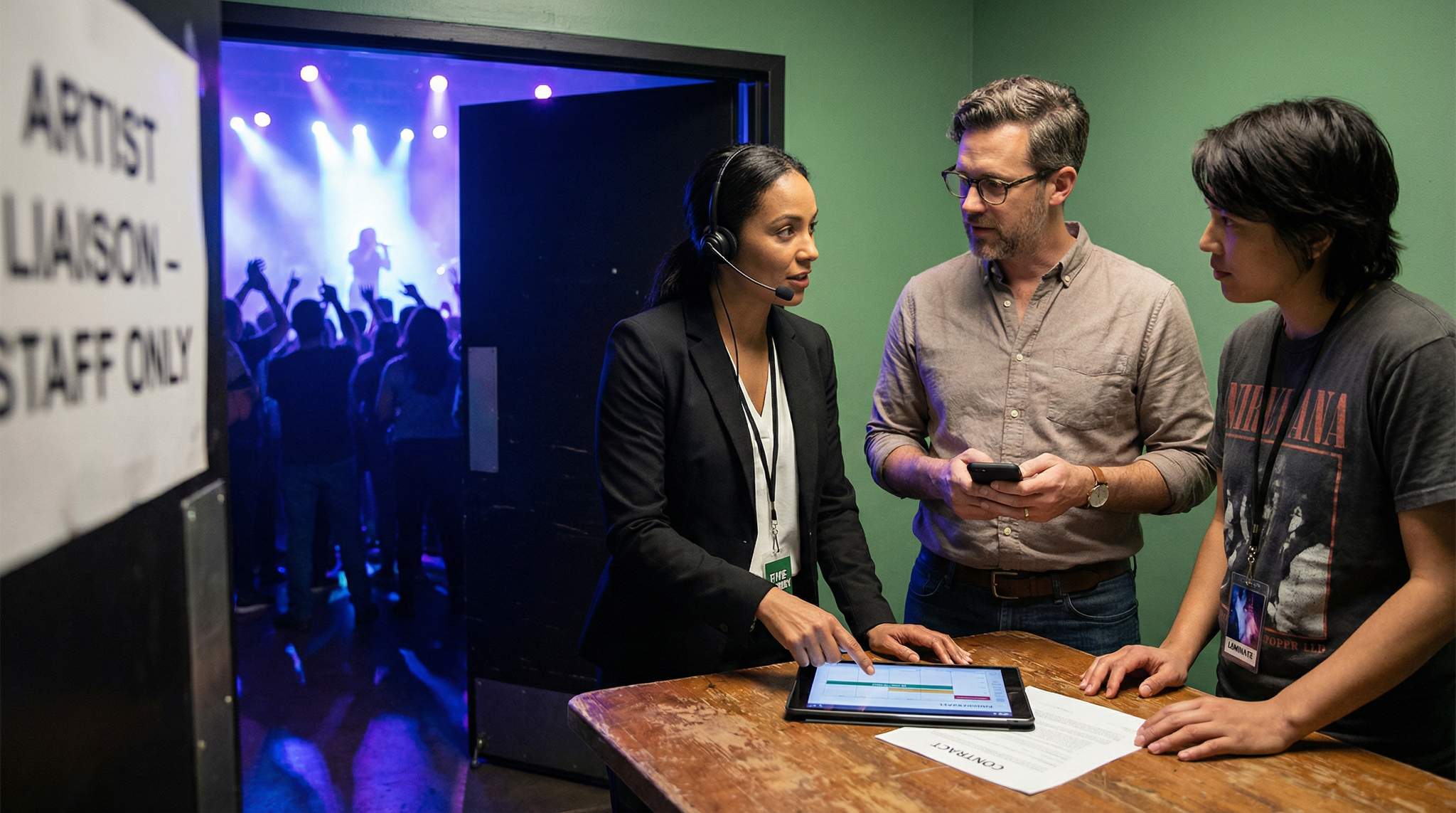
Stage management forms the cornerstone of successful live performances, from intimate theater productions to massive music festivals. This refreshed guide provides updated information and resources for stage managers in the current landscape. As we navigate through 2026, the role of stage managers continues to evolve dramatically, incorporating new technologies and methodologies while upholding the timeless principles that make live events magical. Whether you’re an aspiring stage manager or a seasoned professional, this comprehensive guide covers everything you need to know about modern stage management, with real-world examples and data-driven insights.
Understanding Stage Management: The Foundation of Live Performance
Stage management is the intricate art of coordinating all aspects of a live performance, ensuring seamless execution from initial planning to the final curtain call. Modern stage managers serve as the vital link between performers, technical crews, production teams, and front-of-house staff. They effectively manage the entire company – including cast and crew members – to orchestrate the countless elements that bring a show to life. A stage manager’s presence might be behind the scenes, but their impact is front and center in every successful show.
For promoters and producers asking exactly what is a stage manager in today’s complex event ecosystem, the answer goes beyond simply calling cues. A modern stage manager acts as the chief operational executive of the performance space, translating the creative vision into a highly structured, safe, and repeatable technical reality. Their stagemanagement expertise ensures that multi-million dollar festival stages and intimate theater venues alike run on strict timelines, protecting the promoter’s bottom line by preventing costly delays.
For example, imagine a major festival where a sudden equipment failure threatens the show. It’s the stage manager who swiftly communicates with audio and lighting teams, rearranges the set schedule, and keeps the audience informed — all without missing a beat. This ability to adapt and problem-solve under pressure is what makes stage managers indispensable. To ensure you have everything covered before the curtain rises, reviewing your essential stage manager checklist is a vital step in the preparation process.
Free Tool: Model Promoter Payouts
Flat-percentage, flat-per-ticket, or tiered-bonus commission structures — get per-promoter payouts and total commission as % of gross. Free calculator.
Core Functions of Stage Management
The foundation of stage management begins with pre-production planning. Professional stage managers develop detailed production schedules, coordinate with various departments (from directors and designers to technical crews), and establish clear communication channels across the entire organization. During the rehearsal phase, stage managers take on the crucial role of organizing and managing rehearsals — overseeing schedules, meticulously tracking script and blocking changes, and maintaining comprehensive production documentation like the prompt book (the master script with all cues and notes).
When it comes to performance execution, the stage manager becomes the backbone of the show. They call cues with precision (a large musical can have 200–300 cues that must be perfectly timed), manage backstage operations (ensuring actors, props, and set pieces are all in position), and handle any unexpected issues calmly in real time. Post-show responsibilities round out their duties, including coordinating the strike (tear-down of the set), writing detailed show reports for the production team, and leading post-production meetings to review what went well and what could be improved for next time. In essence, the stage manager oversees the entire lifecycle of a production, from first rehearsal to the final performance and beyond.
Ready to Sell Tickets?
Create professional event pages with built-in payment processing, marketing tools, and real-time analytics.
Pro Tip: Keep an up-to-date stage management binder (physical or digital) with all vital information — contacts, schedules, cue sheets, and contingency plans. In a crisis, having everything at your fingertips can save the day, allowing you to respond quickly and confidently.
Pre-Production and Rehearsal Process
The pre-production and rehearsal phases are critical to the success of any live performance. During pre-production, stage managers lay the groundwork for the entire production by coordinating with directors, designers, and technical leads to develop a comprehensive plan. This phase involves creating detailed rehearsal schedules, organizing production meetings, and ensuring all departments share the same vision and timeline for the show’s development. Seasoned stage managers know to build in buffer time for the unexpected – from set construction delays to last-minute script revisions – so that surprises during production are minimized.
In the rehearsal phase, stage managers act as meticulous organizers and communicators. They oversee the daily rehearsal schedule, enforce call times, and document any changes to the script or blocking in real time. It’s during rehearsals that stage managers compile the calling script (prompt book) with all technical cues noted, prepare ground plans of the set, and create run sheets that detail each crew member’s duties during the show. Modern stage managers often share digital rehearsal reports at the end of each day so everyone – from producers to designers – stays informed of progress and issues. By the time the production reaches tech rehearsals, the stage manager has a deep understanding of every scene and transition. This groundwork ensures that when the show moves onto the stage for technical runs, every lighting cue, sound effect, set change, and performer entrance is coordinated for a seamless performance.
Modern stage managers leverage a variety of tools and software to streamline these pre-production and rehearsal processes. From digital calendars for scheduling to advanced communication apps for instant updates, technology helps ensure that every aspect of the production is meticulously planned and executed. By utilizing these resources (which we’ll explore more below), stage managers can focus on creative and logistical challenges – like fine-tuning scene changes or adjusting pacing – rather than getting bogged down in paperwork. The result is smoother rehearsals and a final performance that’s ready to wow the audience from opening night.
Data-Driven Event Marketing
Track ticket sales, demographics, marketing ROI, and social reach in real time. Exportable reports give you the insights to make smarter decisions.
Stage Management Trends and Innovations in 2026
Keeping up with the latest stagemanagement methodologies is no longer optional for top-tier festival producers. As production scales increase, promoters are standardizing their backstage operations to ensure that every touring act experiences the same high level of technical support. This unified approach to stage direction and crew coordination minimizes changeover delays and maximizes the efficiency of the entire production ecosystem.
When analyzing current theater production trends, technical directors and venue operators are noticing a distinct shift toward modular stage designs and interoperable show control networks. These developments dictate that venues must upgrade their digital infrastructure to accommodate touring companies that expect plug-and-play connectivity for their advanced lighting and spatial audio rigs. By staying ahead of these shifts, promoters can attract higher-tier theatrical tours and reduce the friction typically associated with complex load-ins.
Grow Your Events
Leverage referral marketing, social sharing incentives, and audience insights to sell more tickets.
Digital Revolution in Stage Management
The digital transformation has completely revolutionized how stage managers operate, introducing sophisticated tools that streamline workflows and enhance efficiency. Communication that once took place in person or via paper notes now happens in real time across devices. For instance, obtaining detailed information about sound cues or lighting designs is easier than ever – designers can upload cue sheets or design plots to shared cloud folders for the stage manager to access instantly. Modern production management software has evolved significantly, offering real-time production timeline management with AI integration, mobile access, and even biometric capabilities (such as digital sign-in for crew). Some high-end systems support mixed reality elements, allowing stage managers to integrate virtual or augmented reality components into the show plan.
Technical integration tools have reached new heights of sophistication as well. Cutting-edge developments in lighting control consoles, show control software, and live audio systems have fundamentally changed how stage managers approach their daily operations and long-term planning. For example, many productions now use networked show control – a stage manager’s “GO” button can trigger multiple systems at once via MIDI or OSC signals, ensuring lights, sound, and even automation cues stay in perfect sync. These advancements mean stage managers must be more tech-savvy than ever, comfortable with everything from programming a cue sequence in QLab to troubleshooting a timecode issue between audio and lighting rigs. Embracing the digital revolution allows stage managers to manage increasingly complex productions with confidence.
To illustrate the shift, consider how key tasks have changed from the past to today:
| Stage Management Task | Traditional Approach (pre-digital) | Modern Approach (2026) |
|---|---|---|
| Scheduling & Calendars | Paper calendars, printed schedules | Cloud-based calendars with real-time updates |
| Rehearsal Notes & Updates | Handwritten in prompt book; physical copies for team | Shared digital documents (e.g. Google Docs) updated instantly for all |
| Team Communication | Phone calls, paper memos, face-to-face meetings | Messaging apps (Slack/Teams) and video calls for remote collaborators |
| Cue Tracking & Timing | Stopwatches and handwritten cue sheets | Cue software (e.g. QLab) with automated timers and synchronized cues |
| Set Design & Blocking | Physical scale models; tape on floor | 3D digital models (SketchUp, CAD) and AR visualizations of the stage |
| Show Documentation | Thick binder prompt book; printed show reports | Digital prompt book on a tablet; cloud-saved show reports emailed to the team |
As this table shows, nearly every aspect of stage management has a modern tech-enabled counterpart. The explosion of new digital tools can be overwhelming, so it’s important to focus on technology that genuinely adds value and to skip gimmicks that overcomplicate the workflow. For further guidance on picking the right event tech tools, see our guide on choosing the right tech without overwhelm.
Collect Any Attendee Data at Checkout
Add custom registration fields to your checkout — dietary needs, t-shirt sizes, company names, and more. Conditional logic and per-ticket-type fields.
Stage Management Tools and Software
In today’s digital age, stage managers have a wide range of tools and software at their disposal to streamline their workflow and improve communication within the production team. Here are some essential stage management tools and software making an impact in 2026:
- Stage Management Software: Programs like StageWrite, StagePlot, and Showbiz Software offer comprehensive platforms for managing rehearsals, performances, and production details. These applications provide features such as scheduling, contact management, cue tracking, and performance reports, allowing stage managers to keep every detail of the production organized in one place. Using a dedicated stage management app means less time flipping through spreadsheets and more time addressing creative or technical issues.
- Communication & Collaboration Tools: Collaboration platforms like Slack and Microsoft Teams enable real-time communication among the production team, reducing the delays of phone tag or email. Project management tools such as Trello or Asana help stage managers assign tasks and track progress on everything from prop building to costume fittings. These tools ensure everyone stays on the same page and that nothing falls through the cracks, especially in fast-moving productions.
- Script Analysis & Notation: Software like Scriptation or digital script readers help stage managers analyze scripts, make annotations, and track changes or actor cues with ease. By digitally flagging themes, quick scene changes, or complex character tracks, a stage manager can anticipate technical needs (like a quick light cue or sound effect) well in advance. These tools provide valuable insights into the script’s demands and help in developing a solid show flow during rehearsals.
- Props, Set Design & Blocking Tools: Programs like SketchUp, AutoCAD, or even mobile apps like Pocket CW allow stage managers and designers to create 3D models of sets and stage layouts. Visualizing the set digitally helps in planning scene changes and communicating with the design team. Some stage managers also use tablet apps to map out blocking (movement patterns) for actors, replacing the old pencil-and-paper ground plans with shareable digital diagrams. This ensures the final set and staging meet the production’s requirements and that everyone from directors to crew understands the spatial plan.
- Sound and Lighting Control Software: Tools such as QLab for audio and Lightwright or EOS Family software for lighting enable stage managers and their operator teams to program, adjust, and execute cues with precision. These programs allow the creation of complex soundscapes and lighting sequences that can be triggered at the press of a button. A stage manager works closely with sound and lighting operators to integrate these tools so that during a show, each cue happens at exactly the right moment. The ability to automate and pre-program technical elements reduces the chance of human error and ensures consistency across performances.
- Cloud Storage & Backup: Utilizing cloud-based systems like Google Drive, Dropbox, or OneDrive has become standard practice. Stage managers maintain all critical documents – from cue sheets and contact lists to rehearsal videos – in shared folders accessible to the team. This not only facilitates collaboration but also acts as a backup. If a production laptop dies an hour before showtime, the stage manager can retrieve the latest files from the cloud on another device and keep the show on track.
For dedicated performing arts spaces, investing in specialized theatre production management software has become a baseline requirement. Unlike generic project management tools, theatre management platforms are purpose-built to handle the unique cadence of theatrical runs, from tracking complex rehearsal schedules to managing costume fittings and prop inventories. Technical directors and production managers rely on these systems to centralize communication across departments, ensuring that lighting, sound, and scenic teams are always working from the most current script revisions and technical drawings.
Choosing the right stage manager software is a critical decision for technical directors and festival producers. The ideal stage management software acts as a centralized hub, bridging the gap between the creative team’s vision and the venue’s technical capabilities. When evaluating these platforms, look for solutions that offer offline functionality for remote festival sites, robust API integrations with your existing ticketing or credentialing systems, and intuitive mobile interfaces that freelance crew members can adopt instantly without extensive training.
When evaluating stage management software for your venue or upcoming festival, it is crucial to prioritize platforms that integrate seamlessly with your existing production tech stack. The best stage software solutions in 2026 offer cloud-based collaboration, allowing venue managers, technical directors, and the core stagemanagement team to access real-time updates simultaneously. Look for stage manager software that includes robust permission settings, offline capabilities for venues with spotty internet, and intuitive interfaces that reduce onboarding time for freelance crew members.
By leveraging these tools and software, stage managers can optimize their workflow, reduce errors, and focus more on the creative aspects of the production. These technologies enhance efficiency and also add a layer of resilience – for example, if an actor loses a paper script, the stage manager can send them the latest digital script in seconds. In fact, many stage managers who have transitioned to mostly digital workflows report significant benefits; one noted that their all-digital process was faster, cheaper, and more collaborative than the old paper-heavy approach, as discussed in this analysis of greener theatre. Embracing the right mix of tech tools empowers stage managers to deliver high-quality performances that captivate audiences, without getting bogged down by administrative chaos.
Warning: Introducing too many new apps or systems at once can overwhelm your team. It’s best to select a few key platforms that everyone is comfortable with and ensure proper training ahead of time. And always have analog backups (like printed cue sheets or a hard copy of the script) for critical show information in case a device crashes or an app fails unexpectedly. Technology is a huge boon to stage management, but nothing replaces a good backup plan!
Remote and Hybrid Event Management
The landscape of live events has expanded beyond traditional in-person shows, and stage managers have adapted to master remote and hybrid event formats. In fact, a 2024 industry survey found that nearly 70% of event organizers believe hybrid events will remain a lasting part of the event world. This means stage managers must be adept at coordinating productions that happen across physical and digital spaces simultaneously.
One key skill is proficiency with virtual event platforms and broadcast technology. Stage managers now might find themselves calling cues not just to an in-house crew, but also to a team of technicians in a broadcast control room or to a moderator on a livestream. Managing a hybrid event could involve cueing a live performer on stage while also cueing a remote speaker appearing via a high-speed video link or hologram. The ability to run a Zoom or Teams call for rehearsals, or to use specialized software for live streaming, has become part of the stage manager’s toolkit.
The rise of digital-first and globally broadcasted events has birthed the specialized discipline of virtual stage management. Unlike traditional on-site roles, a virtual stage manager orchestrates the digital run-of-show. This involves coordinating virtual green rooms, cueing remote keynote speakers, and managing complex livestream overlays. For festival producers and corporate event organizers, investing in dedicated virtual stage management ensures that online attendees experience the same flawless transitions and high production value as a live audience, preventing dead air and technical glitches that can derail a digital broadcast.
Virtual and augmented reality are also emerging in audience engagement. Some concerts and theatrical productions experiment with augmented reality (AR) overlays for audiences at home or in the venue, and stage managers need to understand the timing and technical needs of these digital elements. Likewise, mastering new types of communication – like coordinating across multiple time zones for an international virtual event – is now a reality. Stage managers often act as the hub for global teams, setting up clear schedules that sync crews in Los Angeles, New York, London, and Tokyo, for example.
To ensure show continuity across platforms and locations, stage managers implement robust backup systems. High-speed internet backups, redundant show control systems, and encrypted communications are standard for hybrid events to guard against technical failures or security breaches. If the primary livestream feed fails during a hybrid conference, a well-prepared stage manager will have a backup feed ready to go. Security and reliability are paramount when your show might be taking place in a theater and on thousands of screens worldwide at once.
Ultimately, remote and hybrid event management requires stage managers to blend classic show-calling skills with broadcast production savvy. The core principles still apply – meticulous planning, clear communication, and quick problem-solving – but they are executed through new mediums. As hybrid events have proven their staying power, today’s stage managers are truly becoming multi-platform directors, ensuring an engaging experience for both in-person audiences and remote viewers. For a deeper dive into feasibility, it is worth exploring five important considerations for hybrid events to see if this format suits your specific audience.
No Hidden Fees, Just Honest Pricing
One all-inclusive fee covers the platform, payment processing, support, and every feature. Free events are always free. No setup costs, no surprises.
Sustainable Stage Management Practices
Environmental consciousness has become integral to modern stage management. As events and productions seek to reduce their carbon footprint, stage managers are adopting sustainable practices behind the scenes. A major initiative is the move toward paperless operations – using tablets and laptops for scripts, schedules, and reports instead of printing reams of paper. One stage management team calculated that going all-digital for a show’s documentation saved them over 80% in paper and printing costs (about $42 in software versus $278 in printing), according to sustainable production data, not to mention that every piece of paper saved is less waste after the show. Stage managers now commonly use e-ink devices or tablets for their prompt books, and productions often provide digital programs to audiences to cut down on printed materials.
Another sustainable practice is implementing energy-efficient technology. Lighting and sound equipment have seen a green overhaul. Traditional incandescent stage lights are being replaced with LED fixtures that use 40–80% less energy than older lamps, based on stage lighting energy statistics, dramatically reducing power consumption and heat output. Stage managers work with lighting designers to schedule “lighting focus” sessions efficiently and ensure that lights are powered down or in eco-mode when not in use. Similarly, newer sound systems and amplifiers are designed to be more energy-efficient and often have standby modes. Some venues even use solar power or battery systems to run parts of a show, requiring stage managers to carefully manage power loads and charging times.
Sets, props, and costumes present another opportunity for sustainability. Eco-friendly productions now use sustainable materials like bamboo or recycled plastics for set construction. Stage managers collaborate with designers to track these materials and sometimes facilitate their reuse after a show closes (for example, donating sets to schools or breaking down materials to be recycled). Advanced waste reduction strategies involve internal recycling programs backstage – clearly labeled bins for wood, fabric, paper, and more – so that much of the material from a strike is recycled instead of tossed. Some innovative productions even experiment with modular set pieces that can be reconfigured for future shows, extending their life and reducing waste.
A concept gaining traction is the “carbon-neutral” or even carbon-negative production. This means any carbon emissions from the show are offset by other actions (like planting trees or investing in renewable energy) to result in a net zero or net positive impact. Stage managers play a role by implementing carbon-conscious choices in operations – such as reducing idling time for generators, optimizing rehearsal hours to save venue power, and encouraging cast and crew to use public transport or carpools. There are even guidelines now, from organizations like Julies Bicycle in the UK, that help stage management teams calculate emissions from things like rehearsal travel and materials.
By embedding sustainability into stage management, productions not only help the planet but often find cost savings too. Using less paper and power can trim budget expenses. More importantly, it sets a positive tone: cast, crew, and audiences notice when a show “walks the talk” with green practices. The stage manager, as the operations linchpin, ensures these sustainable practices are executed consistently – from the first rehearsal to the final strike, leaving behind just great memories and as little waste as possible. And for further reading on eco-friendly event tech, check out our article on sustainable event technology innovations that are making events greener.
Essential Skills for Modern Professional Stage Managers
Technical Proficiency
The modern stage manager’s technical skill set is deeper and more varied than ever. It’s no longer enough to know how to run a lighting board or tape down a cable (though those skills are still important!) – today’s stage managers need a working understanding of advanced technologies powering live events. This includes being comfortable with computer networks and show control systems, basic coding or scripting for automation, and troubleshooting complex hardware setups. For example, many large-scale tours now use digital audio networks and time-coded lighting sequences; a stage manager should understand these systems well enough to diagnose why a synchronized cue might have failed or how to reset a networked lighting console in a pinch.
Let Fans Pay Over Time
Offer flexible payment plans that split ticket costs into manageable installments, making higher-priced events accessible and boosting conversions.
Expertise in emerging technologies is increasingly expected. Knowledge of holographic projection systems, spatial audio, and mixed reality tech can set a stage manager apart. As virtual concerts and AR-enhanced theater productions become more common, stage managers may find themselves calling cues for elements that have no physical presence (like a hologram of an artist on stage) while coordinating those with live performers. Likewise, familiarity with wireless technology is critical, since nearly everything from microphones to intercoms runs on wireless frequencies. A stage manager should know the basics of RF coordination – ensuring that all the wireless mics, headsets, and backstage communication devices are on clear frequencies and what to do if there’s interference. (If you’ve ever seen a stage manager calmly swap out a performer’s mic pack mid-song without the audience noticing, it’s a testament to their technical and composure skills.) To understand the broader impact of connectivity, consider how wireless technology leads events to success by ensuring seamless communication.
In addition, stage managers are starting to tap into the power of AI and smart software as part of their technical toolkit. Some forward-thinking productions use AI-driven scheduling assistants or predictive tools that help anticipate crew staffing needs based on the complexity of a show. While these tools are in early stages, it’s not far-fetched that a stage manager might use an AI program to suggest the optimal scene change order or to analyze past performance reports for patterns. Understanding the basics of data analysis can help – for instance, reviewing RFID scan data to see how audience flow might affect an immersive theater piece’s timing. The bottom line: a strong technical foundation enables stage managers to effectively utilize and troubleshoot the advanced systems that power contemporary productions, ensuring the show runs smoothly no matter what technology is involved.
Soft Skills and Leadership
While technology is important, the human element remains absolutely crucial in stage management. Stage managers are leaders and communicators at heart. They need multi-dimensional communication strategies – meaning they must communicate effectively with individuals ranging from artistic directors to stagehands, often acting as a translator between “artistic language” and “technical language.” For example, if a director says, “This scene change feels too slow,” the stage manager translates that into actionable notes for the crew: maybe the scenery team needs an additional person to strike a set piece, or the lighting cue needs a tweak to distract the audience during the change.
Emotional intelligence and conflict resolution are key soft skills. In the high-pressure environment of live shows, conflicts can arise (creative differences, personality clashes, cultural misunderstandings in international productions, etc.). A great stage manager is often the calming presence who mediates issues and keeps the team focused on the end goal. With productions now frequently involving international tours or diverse teams, stage managers also benefit from cultural sensitivity – understanding how to work with people from different backgrounds and with varying communication styles. Leading a crew that speaks multiple languages, for instance, might mean using more visual cues and double-checking understanding.
Stage managers also serve as motivators and morale-keepers. In rehearsals, especially long technical rehearsal days that can stretch 10-12 hours, fatigue and frustration can set in among the cast and crew. A savvy stage manager finds ways to keep the energy positive – whether it’s organizing a well-timed break, providing words of encouragement, or even bringing in snacks to boost morale. This leadership extends into virtual or hybrid work environments too. When part of the team is remote (say, a choreographer joining via video call), the stage manager has to ensure that remote participants feel included and heard, and that communication lines stay open.
Another modern leadership aspect is decision-making augmented by data and AI. Some stage managers now use digital tools to help make informed decisions – for instance, an AI scheduling tool might suggest the optimal order to rehearse scenes for efficiency. Ultimately, though, the stage manager’s judgment rules. Trustworthiness is built by consistently making fair, safe, and show-centric decisions. If an unexpected crisis hits – say an actor falls ill or a piece of equipment fails – the stage manager must quickly decide whether to hold, cancel, or adapt the show, all while keeping everyone calm. This kind of crisis management is a skill honed by experience and preparation. Many stage managers run through “what-if” scenarios (like what if the power goes out) so that when something actually goes wrong, they have a plan ready.
Automated Waiting Lists for Sold-Out Events
Capture demand when tickets sell out and automatically notify waitlisted buyers when tickets become available through cancellations or resale.
Technology even plays a role in the human side: tools like instant crew messaging and digital incident reporting help stage managers respond to issues faster. For example, AI-driven crowd management cameras might alert the team to an overcrowding issue in one area of a festival. The stage manager, in tandem with security, can then take immediate action to pause the show and make a safety announcement or direct people to more space, a necessity as hybrid and live event safety protocols evolve. In this way, a stage manager today blends old-fashioned leadership (staying calm, giving clear directions) with leveraging tech for real-time awareness. The goal is always the same: to keep everyone safe, informed, and working together to deliver the best performance possible.
Organization and Planning
Organization is the bread and butter of stage management, and modern productions put this skill to the ultimate test. Today’s stage managers excel through mastery of advanced planning tools and methods. Predictive scheduling is one such method – using historical data and experience to predict where you might need extra rehearsal time or where a show could run into bottlenecks. For instance, if past experience or data from similar shows indicates that Scene 5’s set change is particularly challenging, a stage manager will allocate additional time and crew resources to it in advance. Some production teams are even experimenting with simulation software that can model scene changes or entire performances in a virtual environment to identify issues before they happen (think of it as a “digital twin” of the show for rehearsal planning).
Resource allocation has also gotten smarter. With limited budgets and time, stage managers often rely on project management software to map out every task, deadline, and responsible person – essentially a giant Gantt chart of the production. This level of detail, often augmented with reminders and dependency tracking, ensures that if one piece of the puzzle slips (like a shipment of costumes is delayed), the stage manager can quickly adjust other tasks (maybe reschedule the costume parade or adjust tech rehearsal plans) to keep the overall production timeline on track.
Risk assessment and contingency planning are areas where stage managers truly shine. In 2026, there are even AI-assisted risk tools that can help identify potential “trouble spots” in an event (for example, an outdoor festival’s software might flag that two big stages are scheduled too close in time, risking crowd congestion). Whether using high-tech tools or simply their own well-honed intuition, stage managers meticulously plan for the “what ifs.” They create backup plans for critical show elements: an understudy is prepped in case a lead can’t perform, a second set of essential props is on standby, and a generator is rented for an outdoor show in case of power failure. During the production of a large festival, it’s often the stage manager who has mapped out the chain of command and communication if severe weather hits – who decides to pause the show, how to alert attendees, and where to shelter if needed.
This level of organization extends to minute-by-minute show calling scripts as well. Stage managers produce extremely detailed cue sheets and run-of-show documents that list every cue, timing, and contingency note. Nothing is left to memory alone; everything is documented. An old saying goes, “The stage manager is the first to arrive and the last to leave.” Indeed, they often arrive before anyone else to double-check setups, and they stay after the show to make sure everything is wrapped up and noted. It’s that dedication to thorough planning and follow-through that allows modern stage managers to juggle the complexity of shows that are bigger than ever.
Finally, planning for people is just as important as planning for technical elements. Stage managers organize crew rotations, meal breaks, and days off in compliance with labor regulations – a task that requires fairness and foresight to prevent burnout. They also plan the integration of new technology or procedures by scheduling training sessions and dry runs. For example, if a production is using a new RFID access control system for backstage entry, the stage manager will plan an orientation so that crew and cast know how to use their RFID badges (tying in with event security practices discussed in guides like Biometric Entry & AI Surveillance: The 2026 Toolkit for Event Security).
All these organizational capabilities allow stage managers to maintain precise control over increasingly complex productions. When done right, the audience and even the performers may never realize how many moving parts were flawlessly coordinated – which is exactly the point. A well-organized show appears effortless, and that is the hallmark of great stage management.
Theater Venue Management Best Practices for 2026
For venue operators and technical directors, aligning stage operations with broader facility protocols is essential. The top theater venue management best practices in 2026 emphasize interoperability between the stage management team and front-of-house staff. Venue managers should establish standardized digital communication channels, ensuring that any delays or technical holds on stage are instantly relayed to ticketing and ushering teams. Additionally, modern venue management requires proactive infrastructure updates, such as installing dedicated high-speed networks exclusively for production use, which prevents guest Wi-Fi from interfering with critical stage software and show control systems. By fostering a cohesive environment where stagemanagement seamlessly integrates with venue operations, producers can guarantee a safer, more efficient experience for both touring crews and attendees. Implementing these stage management tips at the venue level significantly reduces turnaround times between complex touring productions.
Looking ahead, the most effective theater venue management best practices for 2025 and 2026 revolve around data integration and sustainability. Venue operators are increasingly adopting unified dashboards that connect stage manager software directly to building management systems. This allows the production team to automatically trigger HVAC adjustments or lobby lighting changes based on the show’s real-time progress. Implementing these best practices for theater venue management in 2025 or 2026 not only elevates the guest experience but also significantly reduces overhead costs for the facility.
Career Development and Resources for Stage Managers
As a stage manager, continuous career development is crucial to stay up-to-date with industry trends, best practices, and evolving technologies. The field is always changing, and those who invest in growing their skills and network will find more opportunities and success. Here are some top resources and strategies for stage managers looking to advance their careers:
- Professional Associations: Joining professional organizations like the Stage Managers’ Association (SMA) in the U.S. or the Stage Management Association in the U.K. can be enormously beneficial. These associations offer access to networking events, online forums, job listings, and educational resources. Members often share real-world advice and even gig opportunities. Notably, the Stage Management Association in the UK revived its National Stage Management Awards in 2024, highlighting the SMA’s recognition of excellence, showing how the industry is recognizing and celebrating excellence in this field. Being part of such organizations keeps you connected to the community and signals your commitment to the profession.
- Workshops and Conferences: Attend workshops, seminars, and conferences focused on stage management, theater production, or event management. Major events like the USITT (United States Institute for Theatre Technology) Conference have dedicated sessions for stage managers, where you can learn about the latest tools or techniques (for instance, a demo of a new cueing software or a panel on managing mental health in production). There are also specialized gatherings, such as the annual Broadway Stage Management Symposium, which offer sessions led by Broadway stage managers and production professionals. These events are golden opportunities to gain new skills, observe best practices, and ask questions directly to experts.
- Online Courses and Tutorials: In the era of online learning, there are many courses available for those who want to deepen specific skills. Websites like Coursera, FutureLearn, or even specialized theater education sites offer courses on project management, technical theater, or software training (for example, a course on using Vectorworks for set design or a tutorial series on Show Cue Systems software). Many are self-paced, allowing you to build skills like budgeting, scheduling, or conflict resolution on your own time. Don’t overlook tutorials and webinars offered by stage management pros on platforms like YouTube or theater blogs – these can provide practical tips on everything from organizing your paperwork to calling particularly challenging shows.
- Mentorship Programs: One of the best ways to grow is to learn directly from experienced stage managers through mentorship. Programs like the USITT Stage Management Mentor Project pair early-career stage managers with veteran mentors during major productions or conferences. These mentorships provide invaluable hands-on experience and feedback. In fact, one participant in the USITT mentor program described it as “nothing short of life-changing” in applications for the Stage Management Mentor Project. Many regional theaters and educational institutions also have mentorship or apprenticeship opportunities – essentially on-the-job training under an accomplished stage manager. If you can’t find a formal program, consider reaching out to a respected stage manager in your area for an informational interview or shadowing opportunity. Most seasoned professionals are happy to help the next generation.
- Industry Publications and Media: Stay current with industry news and discussions by following publications and podcasts relevant to stage management and live events. Magazines like Lighting & Sound America, Protocol, or Stage Directions often contain articles on new technology or case studies of productions from the technical side. For broader live events industry trends (attendance numbers, new venue tech, etc.), sites like Pollstar or IQ Magazine are useful. Additionally, reading books like “The Stage Management Handbook” or the more recent “Stage Manager’s Toolkit” can solidify fundamental knowledge and also teach modern practices. Even social media can be a resource: there are Facebook and Reddit communities (e.g., r/techtheatre) where stage managers share advice and solutions. Being knowledgeable about industry trends – whether it’s the latest safety protocol or a new piece of stage tech – not only makes you better at your job but also marks you as an expert among peers and employers.
By investing in career development and staying connected with the stage management community, you can expand your skill set and open doors to new opportunities. The most successful stage managers often cite their willingness to keep learning as a key to their longevity. The industry is ever-evolving – just think how different things are now compared to a decade ago – so continuous learning isn’t just encouraged, it’s essential. Whether through formal education, networking, or plain old trial-and-error on the job, every bit of experience and knowledge you gain will help you run better shows and have a more rewarding career.
The Future of Stage Management
As we move through 2026 and look toward the coming years, stage management continues to straddle the line between tradition and innovation. The core mission remains the same – to deliver seamless live performances – but the tools and contexts are expanding in remarkable ways. We’re entering an era where stage managers might soon integrate with technologies that sounded like science fiction not long ago. For instance, experiments are underway with neural interface technology that could one day allow technicians (or even stage managers) to control certain systems with brain-computer interaction. While such tools are in early stages, it’s a hint of how the next frontier might evolve.
More tangible in the near future is the impact of ultra-fast connectivity and advanced computing. With 5G now common in large cities and 6G connectivity on the horizon, the reliability and speed of wireless communication at events will improve dramatically. This could enable near-instant feedback loops – imagine smart sensors on stage that detect a performer’s precise position and automatically adjust a spotlight, all in a fraction of a second. Stage managers will be coordinating these kinds of intelligent systems, working in tandem with AI co-pilots that assist with monitoring and decision-making. It’s conceivable that a stage manager might have an AI-driven assistant listening to the show, ready to prompt if a cue is missed or to suggest a correction if an actor skips ahead in the script.
In terms of creative possibilities, mixed reality productions are likely to become more common. We’re already seeing concerts and theater performances that blend live actors with digital environments or characters. For example, some festivals have experimented with hologram headliners – virtual performers who appear via holographic projection on stage alongside live musicians, as explored in our piece on hologram headliners at 2026 festivals. For stage managers, this means learning to call shows where the “performer” might be a computer-generated image that still needs timing cues, coordination with lighting, and even interaction with live performers or audience in real time.
International collaboration in real time is another aspect of the future. We saw hints of this during the pandemic when theaters did joint performances via livestream across continents. Going forward, with robust virtual production studios and low-latency networks, a stage manager might literally be managing a production team spread across multiple countries at once. This could be a “global theater premiere” where scenes in different cities are woven together into one cohesive live stream. It’s a thrilling concept, but one that will demand impeccable coordination and clarity from stage management to succeed.
Sustainability will also define the future. By 2030, many in the industry aim for carbon-neutral or carbon-negative operations. Stage managers will be at the forefront of implementing green policies, from how we handle power usage (maybe scheduling daytime rehearsals to use solar energy) to waste management (perhaps every production having a sustainability officer working with the stage manager). The push for sustainable practices isn’t just a trend but likely to become a standard part of a stage manager’s planning checklist.
Finally, even as technology and scale change, the essence of stage management will remain rooted in strong leadership, organization, and adaptability. The tools might look different – holograms instead of just actors, AI analytics instead of solely gut instinct – but they augment rather than replace the stage manager’s role. The best stage managers of the future will be those who can balance these cutting-edge innovations with the timeless interpersonal and organizational skills that the job has always required. They’ll be equally comfortable reviewing an audience data dashboard and taking care of a performer who’s having opening night jitters.
The modern stage manager stands at the intersection of tradition and innovation. It’s a role that requires a commitment to continuous learning and an openness to whatever changes come next. Whether managing a classic theatre production, an immersive mixed-reality event, or a groundbreaking virtual concert, stage managers remain the essential force behind successful live entertainment, shaping the future of performance one show at a time.
For practical implementation, learning how to use RFID for on-site event payments can enhance efficiency. You can also prepare for upcoming trends by facing the future of event technology through immersive experiences. Finally, discover how revolutionizing events with hybrid formats provides more opportunities for promoters.
Frequently Asked Questions
What are the core responsibilities of a stage manager?
A stage manager coordinates every aspect of a live performance, serving as the vital link between performers, technicians, and production teams. Their duties include creating detailed schedules during pre-production, calling hundreds of technical cues during the show, managing backstage operations, and resolving unexpected issues in real time to ensure seamless execution.
What software tools do modern stage managers use in 2026?
Modern stage managers streamline workflows using specialized apps like StageWrite for blocking and Showbiz Software for production details. Communication relies on platforms like Slack, while technical execution uses QLab for audio and Lightwright for lighting. Cloud storage ensures real-time access to cue sheets and scripts, replacing traditional paper binders.
How do stage managers handle hybrid and remote events?
Managing hybrid events requires coordinating live stage cues alongside remote broadcasts and virtual participants. Stage managers utilize virtual event platforms to sync in-house crews with broadcast technicians and implement backup systems like redundant internet feeds. This approach ensures a seamless experience for both the physical audience and viewers watching via livestream.
How can stage management practices be more sustainable?
Stage managers implement sustainable practices by transitioning to paperless workflows, which can reduce printing costs by over 80%. They also collaborate on energy efficiency by using LED lighting fixtures that consume 40–80% less energy and coordinate the use of sustainable set materials like bamboo to minimize the production’s carbon footprint.
What technical skills are essential for stage managers today?
Essential technical skills include proficiency with networked show control systems, basic coding for automation, and troubleshooting complex hardware like digital audio networks. Stage managers must also master RF coordination for wireless devices and utilize data analysis tools to optimize scheduling and anticipate production needs based on historical performance data.
Why is pre-production planning critical for live events?
Pre-production establishes the foundation for a successful show by allowing stage managers to coordinate with directors and designers on a comprehensive plan. This phase involves creating detailed schedules, organizing production meetings to align the team’s vision, and building in buffer time for unexpected delays, minimizing surprises once rehearsals begin.
How do I choose the best stage management software?
When selecting stage manager software, prioritize cloud-based platforms that offer real-time collaboration, offline access, and seamless integration with your existing audio and lighting control systems. Venue operators should also look for intuitive interfaces to minimize training time for freelance crews.
What are the top theater venue management best practices for 2026?
Key best practices include establishing unified digital communication between backstage and front-of-house teams, upgrading venue infrastructure with dedicated production-only networks, and ensuring all stage management protocols align with the facility’s overarching safety and crowd control strategies.
What is a stage manager’s role in a festival environment?
In a festival setting, a stage manager acts as the operational hub for a specific stage, coordinating rapid changeovers between bands, managing complex audio/visual requirements, and ensuring strict adherence to the promoter’s master schedule to prevent sound curfews from being breached.
What are the latest stagemanagement trends for large-scale festivals?
The latest stagemanagement trends focus on cloud-based collaboration, real-time data integration with venue systems, and standardized digital communication. Festival organizers are increasingly adopting unified software platforms that allow technical directors, promoters, and stage crews to coordinate complex changeovers and monitor show progress simultaneously.
What features define the best theatre production management software?
Top-tier theatre production management software offers specialized features like dynamic rehearsal scheduling, integrated prompt book creation, and real-time cue tracking. For venue operators and technical directors, the best platforms also include robust inventory management for props and costumes, alongside secure cloud-based collaboration tools that keep all production departments aligned throughout a show’s run.
What is virtual stage management?
Virtual stage management is the process of coordinating and executing the technical and creative elements of a digital or hybrid event. This specialized role involves managing virtual green rooms, cueing remote speakers, triggering digital overlays, and ensuring seamless transitions across livestream platforms to maintain high production value for online audiences.
What are the most impactful theater production trends for venue operators?
Current theater production trends emphasize the integration of modular set designs, spatial audio networks, and interoperable show control systems. For venue operators and technical directors, adapting to these trends means upgrading digital infrastructure to support plug-and-play connectivity, which ultimately attracts high-tier touring companies and streamlines the load-in process.