Navigate Festival Budgeting in 2025 – From Creation to Execution
Key Takeaways
* Establish clear event goals and desired outcomes before you start budgeting.
* Accurately forecast all income streams (tickets, sponsors, merch) and itemize every cost.
* Secure sponsorships and alternative funding to supplement ticket revenue.
* Identify your target audience and use cost-effective digital marketing to reach them.
* Implement smart ticket pricing (early-birds, group deals, VIP tiers) to maximize sales.
* Negotiate with vendors, suppliers, and talent agents to get the best value deals.
* Prioritize spending on essentials first and trim non-essentials to stay within budget.
* Always allocate a contingency reserve (around 10%) for unexpected expenses or overruns.
As an event planner, managing a festival or event budget can be a challenging yet rewarding task. In 2025, rising production costs and high artist fees make budgeting more critical than ever, according to Pollstar’s analysis of the changing market. An integral part of festival planning, budgeting for your music festival correctly will ultimately determine the financial success of your event. A well-planned budget is the difference between a festival that thrives and one that struggles to break even.
To get started, it helps to understand how to create a festival production budget step-by-step.
Music festival budgeting requires careful planning and organization to ensure that every dollar is spent in the most efficient way possible. With the right strategies, you can make the most of your event budget and maximize your return on investment. In fact, veteran producers often say that a detailed budget is the backbone of any successful festival – without a solid financial plan, even the best ideas can crumble, which is why mastering your festival budget creation is essential.
Free Tool: Split Tickets for Max Gross
Given capacity and a target price, the optimizer proposes Early Bird / GA / VIP allocations and prices — with projected gross at 100%, 80% and 60% sell-through.
What Is a Festival Budget and What Does It Include?
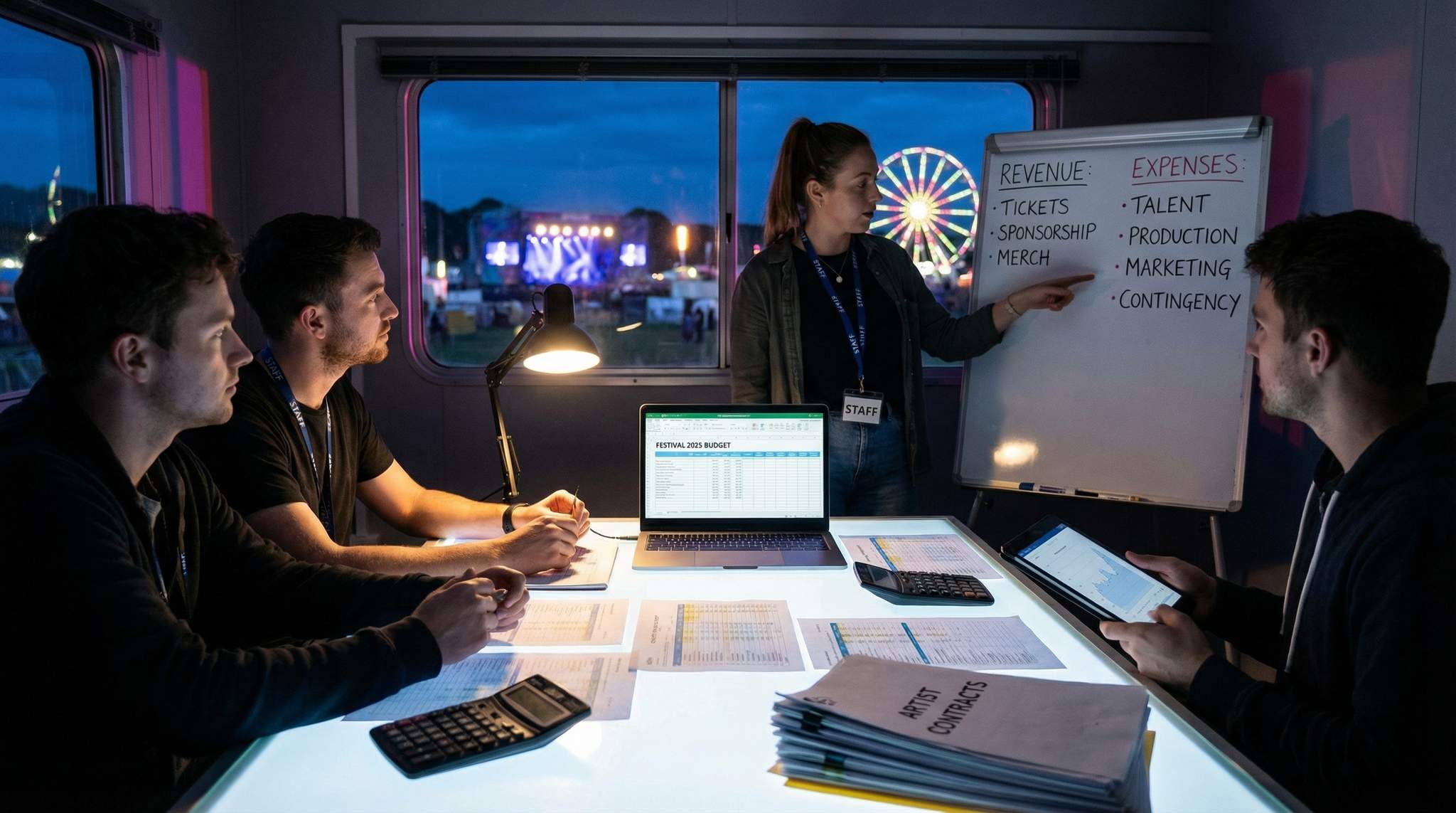
A festival or event budget is a comprehensive financial plan that outlines all the expected incomes and expenses for producing a music festival. This includes major cost categories like artist fees, venue or site rental, staging and equipment, production staff wages, marketing and promotions, insurance coverage, permits, and even a contingency fund for surprises. Essentially, your budget is an essential tool to ensure that all costs before, during, and after the event are accounted for, and that the festival can be executed within the resources available.
Budget management’s importance cannot be overstated. It’s crucial for any event organizer to keep finances in order and allocate funds in the most effective way possible. Knowing where to pull the strings, when to bring in sponsorships, and how to close deals are all essential skills for a festival organizer looking to make the most of limited funds. Poor budgeting can sink an event even if ticket sales are strong – for example, a recent study in France found that music festivals face fragile economics, with two-thirds running at a loss in 2024 despite healthy attendance. This stark figure shows how vital sound financial planning is. By contrast, a well-managed budget helps you control costs and avoid nasty surprises.
Ready to Sell Tickets?
Create professional event pages with built-in payment processing, marketing tools, and real-time analytics.
Beyond cost control, learning innovative ways to boost ancillary revenue is crucial for financial health.
Before we discuss ways to spend your budget efficiently, you need to actually create that budget. Here are a few key steps to consider when building a festival budget:
Steps to Create Your Festival Budget
- Determine your event goals: What do you want to achieve with your festival? (e.g. raise money for a charity, showcase local talent, or provide entertainment for the community) Knowing your core goals will help determine which costs are truly necessary and which expenses can be minimized or cut. For instance, a charity benefit concert might aim to minimize expenses to maximize donations, whereas a commercial music festival might invest more in big-name talent to drive ticket sales, a common area where festivals often get budgeting wrong.
- Estimate your income: List all the potential revenue sources for the festival. This will likely include ticket sales, sponsorships, vendor fees, parking or camping fees, and merchandise sales. Research realistic figures for each source – use past event data or comparable festivals as a guide. Be conservative in your estimates to avoid overestimating how much money will come in. If you expect 5,000 attendees at a $50 ticket, budget for slightly less than $250,000 in ticket revenue to be safe. It’s better to surpass a modest revenue forecast than fall short of an optimistic one.
- Identify your expenditures: Make a detailed list of all the costs required to organize the festival. This will include venue rental, artist and entertainment fees, stage production (sound, lighting, video), staffing and security, marketing, insurance, permits, food and beverage provisions, and more. Don’t forget less obvious expenses like portable toilets, fencing, generators, or artist hospitality. If you have an event budget template or a previous festival’s budget, use it as a starting point to avoid common financial planning mistakes. Prioritize the must-haves versus optional nice-to-haves. You can learn more about creating and optimizing the production budget for in-depth tips on identifying expenses.
- Create a budget plan: Once you have estimated income and listed out all expenses, do the math. Subtract your total expected expenses from your total projected income. This simple calculation shows whether your plan is financially viable or if you’ll be in the red. If expenses outweigh income, you’ll need to adjust – whether by cutting costs, raising ticket prices, or finding additional funding. Many festival organizers use a spreadsheet or budgeting software to map this out as a Profit & Loss statement, ensuring they haven’t overlooked anything. For a step-by-step walkthrough, refer to our guide on optimizing your music event production budget.
- Monitor your budget: As you plan and execute the festival, continuously track all expenses and compare them against your budget. Set up a system (even a shared Google Sheet or a project management tool) where team members log every cost. Regular monitoring will help you stay on track and quickly flag any area where you’re overspending. It also allows you to make real-time adjustments – for example, if production costs are coming in higher than expected, you might reduce spending on decorations to compensate. Every promoter should understand the importance of tracking finances on event day to catch last-minute expenditures.
When mapping out these steps, utilizing dedicated event budgeting software can streamline the process significantly compared to static spreadsheets. These platforms often include a built-in music festival budget example or template, allowing you to plug in projected ticket sales against line items like staging, talent, and site operations. For specialized gatherings, such as determining how much you should charge people for an art show or a boutique food festival, software tools help you run break-even analyses to find the perfect ticket price.
When calculating exactly how much to charge attendees for an art exhibition or gallery event, promoters must factor in unique costs not found in standard music events. These include specialized fine art insurance, climate-controlled venue requirements, and artist commission structures. A successful pricing model balances these high overheads with the local market’s willingness to pay, often utilizing VIP preview nights to subsidize lower-priced general admission days.
No Hidden Fees, Just Honest Pricing
One all-inclusive fee covers the platform, payment processing, support, and every feature. Free events are always free. No setup costs, no surprises.
Investing in specialized festival budget software takes this a step further by offering features tailored specifically to live events. Unlike generic accounting tools, top-tier festival budgeting platforms allow promoters to track multi-currency artist offers, manage complex vendor deposits, and forecast break-even points based on real-time ticket sales data. By centralizing your financial data, your production team can collaborate seamlessly without the version-control nightmares of traditional spreadsheets.
If you are organizing a single-day show rather than a multi-day event, utilizing a dedicated concert budget spreadsheet is often the most practical starting point. While a full-scale festival requires complex line items for camping, multi-day site security, and extensive infrastructure, a standard concert budget focuses heavily on venue rental, single-night talent guarantees, and localized marketing. Promoters frequently use these streamlined spreadsheets to run quick break-even analyses before committing to a venue or artist offer.
Grow Your Events
Leverage referral marketing, social sharing incentives, and audience insights to sell more tickets.
By following these steps, you’ll create a budget framework that sets the stage for a financially successful music festival. Next, let’s look at how to truly understand and optimize that budget.
Understanding Your Budget
The first step in managing your event budget is fully understanding it. Identify the total amount you have to work with and set realistic financial goals based on that constraint. Make sure to account for every potential expense and factor in extra costs that may arise (such as last-minute equipment rentals, emergency repairs, or additional marketing pushes if ticket sales are slow). A clear financial picture from the start will guide all your decisions.
Things you should consider when setting a budget include:
* Past budgets of similar events: Look at historical data from your own prior festivals or industry benchmarks from comparable events. Past budgets can inform line-item costs and reveal categories that tended to go over-budget.
* Projected attendance numbers: The number of attendees directly affects many costs (more people means more toilets, security, staff, bigger venue, etc.) and income (ticket sales, concessions). Budget for a realistic attendance figure, not an overly optimistic one.
* Venue and production expenses: Calculate all costs for the venue (rent, permits, city services) and production (staging, sound, lighting, power, fencing) before, during, and after the event. This includes setup and teardown costs as well as any required restoration or cleanup after the festival.
* Marketing and promotion: Determine a marketing budget for advertising, influencers, street teams, and social media. Digital marketing can be very cost-effective, allowing you to target ads specifically to likely attendees (e.g. fans of similar artists or festivals) without breaking the bank.
* Sponsorships and partnerships: Consider any funding or in-kind support from sponsors that can offset costs. A sponsor might cover your staging in exchange for branding, for example. Also, think of ways to save money through partnerships (e.g. a local radio station promoting your event in exchange for on-site presence).
* Artist and performer fees: Talent fees are often one of the largest expenses. These can vary widely based on the popularity of the act. Remember to include not just performance fees, but also riders (artist hospitality), accommodations, and transport if you’re covering those.
* Insurance and safety costs: Event insurance premiums, medical services, and safety measures (like barricades or crowd management infrastructure) are essential budget items. Insurance costs in particular have been rising sharply – some festivals saw premiums jump 50–100% in recent years, requiring strategies for managing rising festival insurance premiums – so get quotes early and factor this in.
* Unexpected last-minute costs: No matter how thorough you are, unexpected expenses will pop up. Permit delays, weather-related needs (like rain ponchos or tents), or equipment failures can all necessitate unplanned spending. Budget a buffer for these surprises (more on contingency below).
While standard music festivals typically reserve around 10% for unexpected overruns, the recommended contingency percentage for arts event budgets or highly experimental immersive shows can sometimes stretch to 15% or 20%. This higher buffer accounts for specialized installations, delicate art transport, and unique venue insurance requirements that are harder to forecast than standard stage rentals.
Let Fans Pay Over Time
Offer flexible payment plans that split ticket costs into manageable installments, making higher-priced events accessible and boosting conversions.
Once you have a clear understanding of your overall budget, you can strategize how to spend it efficiently. But first, recognize how that budget is typically distributed. In truth, a few big categories tend to make up the lion’s share of festival spending, and knowing where festivals get budgeting wrong helps you prepare. The main ones are usually talent, production/infrastructure, operations (staff, security, site services), and marketing. If any one of these balloons beyond expectations, it can jeopardize the whole event. For example, many festivals end up earmarking around 40% of their entire budget just for talent, a risky move if financial planning is not handled correctly – because over-paying for big headliners leaves less money for everything else (and if those headliners don’t drive ticket sales as hoped, the budget can collapse).
To avoid budgetary disaster, experienced organizers build in buffers and keep a close watch on spending from day one. Industry analysis suggests almost 90% of events end up spending more than initially projected, highlighting common budgeting and finance errors with typical budget overruns in the 15–30% range. Knowing this, it’s prudent to include a healthy contingency fund (often around 10% of your budget) to help with recession-proofing your festival budget and to track costs diligently from the start.
Pro Tip: Allocate your contingency funds in a separate account or category and treat it as untouchable except for true emergencies. This discipline prevents the common mistake of spending the rainy-day fund on “nice to have” upgrades before the event. If the contingency isn’t needed by festival day, you just boosted your profit margin or have seed money for next year!
As you plan, keep the scale of your festival in perspective. A community festival for 1,000 people might have a total budget of under $100,000, whereas a major international festival could run into the tens of millions. For context, the iconic Glastonbury Festival’s 2023 edition cost around £62 million (~$72 million) to stage, proving that proper budgeting and finance management is vital at all levels – even a sold-out mega-festival can lose money if costs aren’t controlled. It’s no surprise that industry veterans discuss budgeting challenges frequently at conferences like ILMC and Pollstar Live, sharing how they adapt to rising costs.
If you are wondering exactly how much does it cost to put on a festival beyond those extreme ends of the spectrum, the answer depends entirely on your specific production values and target capacity. A small, boutique community event for 500 attendees can often be produced for $20,000 to $50,000, assuming heavy reliance on local talent and grassroots marketing. A mid-sized regional festival drawing 5,000 to 10,000 fans typically requires a budget ranging from $250,000 to $750,000 to cover professional staging, mid-tier touring artists, and comprehensive site infrastructure. Meanwhile, launching a major multi-day destination event for 20,000+ attendees will easily push your baseline costs into the $2 million to $5 million range before a single ticket is sold. Understanding exactly how much a festival costs at your specific tier is the first step in determining your break-even point and securing the necessary investment.
Even festival producers at entertainment giants stress the need to balance costs with fan experience. Shawn Gee, President of Live Nation Urban (producer of major events like Roots Picnic and Broccoli City), recently explained that providing value is more important than ever, as noted in Pollstar’s 2025 music festival special: “I cannot let costs – whether it’s supplier cost, production cost or talent cost – get out of hand. I have to manage my ticketing, my prices and over-deliver the experience to the fan.” In other words, understanding where every dollar is going, and why, is key to putting on an unforgettable event without breaking the bank.
Boost Revenue With Smart Upsells
Sell merchandise, VIP upgrades, parking passes, and add-ons during checkout and via post-purchase emails. Increase average order value by up to 220%.
Now that you have a handle on the makeup of your budget, let’s explore strategies to make the most of that budget and ensure every dollar works toward your festival’s success.
Strategies for Making the Most of Your Budget

Making the most of your event budget requires clever planning, creativity, and strategic decision-making. Knowing when and where to tighten the purse strings is an important skill for any event organizer looking to make their budget work for them. This often means leveraging personal relationships with vendors, seeking out sponsorships, and hunting relentlessly for savings or efficiencies. For example, you might find a venue that fits both the budget and the needs of your event, but perhaps it lacks parking – so does your budget allow for renting an auxiliary parking lot and shuttle service? Every logistical choice has budget impacts, and trade-offs are often required.
Invest time in research and comparisons. Task your team to gather quotes and information for each aspect of the festival. Knowledge is power: the more you know about real costs and market rates, the more accurately you can project your budget and negotiate good deals. Every piece of information you gather will contribute to a more realistic budget and help avoid nasty surprises. Remember, “measure twice, cut once” applies to budgeting too – double-check your assumptions early.
Before diving into specific tactics, consider these smart ways to cut festival costs without sacrificing quality.
There are several tactics music event organizers can use to stretch their budget further. (You may even find it helpful to refer to an event budget template from a previous event, or one available online, as a guide.) Some effective strategies include:
- Creating a budget and sticking to it: The most important strategy is to actually follow the budget you created! This requires discipline, careful planning, and a thorough understanding of each cost involved in the event. Once your budget is set, resist the temptation to make unplanned splurges. If you allocated $5,000 for marketing, for example, stick close to that number – don’t suddenly spend $10,000 on last-minute ads without cutting something else. Use your budget as a roadmap and hold your team accountable for staying within their lines.
- Securing sponsorship deals: Work with businesses and organizations to secure sponsorships that can provide additional funding or in-kind support (like free products or services) for the event. A well-aligned sponsor can significantly offset costs – for instance, a beer brand might supply your event cups and bartenders, saving you money on beverage operations. Craft sponsorship packages that offer partners clear benefits and ROI, as outlined in our Festival Sponsorship Strategies playbook. A good deal benefits both parties, so understand both the sponsor’s goals and your event’s needs before finalizing agreements.
- Using a specialized festival ticketing platform: The right festival ticketing platform can help you maximize revenue and streamline operations. Modern ticketing systems (like Ticket Fairy) offer built-in marketing tools, real-time sales analytics, and even dynamic pricing features. These can reduce your marketing spend and increase ticket sales automatically. Plus, a reliable platform prevents lost revenue from technical issues or ticket fraud. It’s an upfront cost that often pays for itself through higher sales and efficiency.
- Closing deals through savvy negotiations: Strong negotiation skills can save you thousands. This applies to booking talent, where negotiating with agents when booking talent is crucial to securing big names within your budget. It also applies to dealing with vendors for staging, tents, lighting, and more. Come prepared by researching competitors’ prices and knowing the market rates. Don’t be afraid to politely ask for a discount or added value – many vendors have some wiggle room, especially if you’re a repeat customer or can offer them something in return (like sponsor exposure or a multi-year contract). When booking artists, negotiating things like routing dates, hospitality riders, or accommodation can sometimes trim the fee.
- Leveraging digital marketing and social media: You don’t need a fortune to market your event effectively. Use social media and other digital marketing tools to promote the festival and reach a large audience at a relatively low cost. Focus on the platforms where your target attendees spend time – whether that’s Instagram, TikTok, YouTube, or niche forums. Engage fans with behind-the-scenes content, artist announcements, and interactive challenges. Encourage attendees to share their excitement on social media, creating organic buzz (user-generated content is free promotion!). By utilizing analytics, you can target ads to specific demographics or locations to avoid wasting money on broad, inefficient campaigns, a common challenge cited in PCMA’s analysis of event planner challenges. In today’s world, a clever TikTok video can sometimes drive more interest than a pricey billboard.
- Being strategic with ticket pricing: Smart ticket pricing strategies can significantly boost your revenue without extra cost. Consider offering early bird tickets at a discounted rate to drive initial sales and gauge interest. Implement tiered pricing (as tiers sell out, prices increase) to encourage buyers to act early. You can also include bundle deals – for example, “buy 3 tickets, get 1 free” group offers or add-ons like merch packages or drink vouchers. These tactics not only increase cash flow upfront but also reward your fans. Use data from previous years or similar events to find the sweet spot for pricing – too high and you deter people, too low and you leave money on the table. It may take some A/B testing and surveys to get it right.
- Negotiating with vendors and suppliers: Just as with talent, be sure to negotiate with all your suppliers (equipment rental companies, catering, tent providers, etc.). Vendors often expect some negotiation. Get at least three quotes for major expenses to benchmark prices. If a vendor knows you’re considering other options, they are more likely to sharpen their pencil to win your business. Look for creative ways to reduce costs: could a staging company sponsor a small stage in exchange for a discount? Can you partner with a local food truck collective instead of a pricier catering firm? Every dollar saved on a deal is a dollar freed up for something else in your budget. Pro Tip: When negotiating, maintain a friendly, long-term relationship mindset – you want your vendors to feel valued so they’ll go the extra mile for you and possibly offer better rates for future editions.
- Being mindful of location and timing: Your choice of event date and location can greatly impact costs. Venues in major cities or resort areas may charge a premium, and popular holiday weekends might mean higher vendor and labor rates. If possible, be flexible with timing – for example, hosting your festival just before or after the peak season could save money on venue rental and accommodations for artists. One festival organizer saved 20% on venue and city service costs by adapting to inflation and economic uncertainty and moving from a holiday weekend to an off-peak weekend, as local authorities offered discounts to attract events in a quieter period. Additionally, consider the geographic location: a site with existing infrastructure (built-in stage, power, bathrooms) will cost less to equip than an empty field where you must bring in everything. Balance the ideal vision of your festival with the practical cost implications of where and when it takes place.
Additionally, consider the financial reality of your attendees. With economic pressures rising, many fans are actively looking for ways to enjoy festival season on a budget. As an organizer, you can capture this audience by offering flexible payment plans, volunteer-for-ticket exchange programs, or affordable bundled camping options. By structuring your ticketing to accommodate cost-conscious attendees, you maintain high attendance figures and boost secondary on-site spend, proving that attendee affordability can directly support your event’s bottom line.
Free Tool: Model Promoter Payouts
Flat-percentage, flat-per-ticket, or tiered-bonus commission structures — get per-promoter payouts and total commission as % of gross. Free calculator.
Promoting these cost-saving initiatives is just as important as creating them. When your marketing team highlights how your event helps fans navigate the festival season economically—such as promoting carpool discounts or early-access payment plans—you build immense brand loyalty. Attendees who feel the organizer respects their financial constraints are far more likely to return year after year, transforming a short-term discount into long-term customer lifetime value.
By applying these strategies, you’ll stretch your budget and ensure money is spent where it matters most. For example, if you’re running a small boutique festival on a shoestring budget, focus on creative low-cost tactics and personal touches rather than expensive productions – see our guide on boutique festivals delivering big magic on small budgets for inspiration. On the flip side, if you’re producing a 100,000-person mega-event, efficiency at scale and strategic partnerships will be key (check out how top producers handle large-scale festivals of 100k+ attendees for insights). The goal is to get the maximum impact for every dollar spent.
Tips for Budget Management

After developing a solid budget and employing tactics to stretch it, the real challenge becomes managing that budget in real time as your festival plans progress. Strong budget management will ensure that all your careful planning actually results in a successful, on-budget event.
Here are some practical tips to keep you on the right track:
* Plan ahead with timelines: Create a detailed timeline for all key planning tasks (booking vendors, paying deposits, launching marketing campaigns, etc.) and mark when payments are due. By scheduling these in advance, you avoid last-minute scrambles that can lead to rushed (and often more expensive) decisions. Early planning also gives you the chance to secure early-bird discounts or take advantage of offseason pricing for services.
* Prioritize essential expenses: Allocate funds first to the absolutely critical elements that directly impact safety or the core experience – like stages, sound, security, and talent. Only then budget for extras like deluxe decor, special effects, or luxury add-ons. If cuts become necessary, you’ll know which items can be trimmed with minimal impact on attendee experience. It’s often said in production that you should “fund your needs before your wants.”
* Assign budget owners: For larger festivals, consider breaking the budget down by department (e.g. Production, Marketing, Talent, Operations) and assign a team lead to each with a clear spending limit. For example, give your marketing director a set budget for promo and let them allocate it. This creates accountability and ensures someone is keeping a close eye on each category. Department leads should report regularly on their spending so you can catch overruns early.
* Track expenses in real time: Keep a living document of all expenditures and update it continuously. This could be a spreadsheet or specialized event budgeting software. Record not just the amount, but also the budget category, date, and vendor. Regularly compare actual spending vs. your budget projections. If you see, say, the production budget 80% spent while you’re still a month out from the festival, that’s a red flag to investigate and adjust other areas. Meticulous bookkeeping is your best defense against budget surprises.
* Hold regular budget meetings: Set a cadence (weekly, bi-weekly, etc.) to review the budget status with your core team. In these meetings, review what has been spent, what big expenses are upcoming, and adjust allocations if needed. These check-ins also keep everyone mindful that budget is a priority. Encourage an environment where team members feel comfortable reporting that they might come in over-budget – it’s better to address it early than to hide the issue. Quick course corrections (like finding a new vendor or scaling back an order) can keep the overall festival on budget.
By following these budget management practices, you significantly increase your festival’s chance of staying in the black. Planning ahead, prioritizing essentials, delegating budget oversight, and closely tracking every expense are habits that set top-tier festival organizers apart. It’s all about financial discipline and agility in responding to the unexpected.
Warning: A common mistake is relying on overly optimistic revenue projections or underestimating costs. Avoid the trap of assuming “everything will work out” financially. Always err on the side of caution – budget for lower income and higher expenses than you actually expect. If you think sponsorship might bring in $100k, base your budget on $70–80k to be safe. If an artist quote seems likely to be $20k, set aside $25k. This conservative approach ensures that if something goes wrong (weather issues, lower ticket sales, a sponsor backs out), your festival can still stay afloat. Many new festivals have failed because they banked on best-case numbers that never materialized.
In summary, a strong festival budget isn’t just a document you create and forget – it’s a living blueprint that guides every decision from day one until the last invoice is paid. By creating a realistic budget, squeezing the most value out of every line, and managing it diligently, you empower your festival to be both unforgettable and financially sustainable. With each year’s experience, you’ll get better at forecasting and controlling costs, ensuring your festival venture remains profitable and grows over time. Now go forth and produce that festival of your dreams – with your budget as your trusty roadmap to success!
You May Also Like:
* Read our guide on music festival marketing strategies.
* Explore the latest trends in music festival attendance.
* Review essential terms for festival producers.
Frequently Asked Questions
What expenses should be included in a music festival budget?
A comprehensive festival budget includes major cost categories such as artist fees, venue rental, stage production, staff wages, marketing, and insurance coverage. It must also account for permits, security, and essential infrastructure like fencing and portable toilets. Additionally, organizers should allocate a contingency fund to cover unexpected costs or emergencies.
How do you create a successful festival budget plan?
Start by defining event goals and estimating income from tickets, sponsorships, and merchandise. Next, itemize all necessary expenditures, prioritizing essentials over optional upgrades. Subtract total expenses from projected income to ensure financial viability. Finally, continuously monitor actual spending against this plan using a spreadsheet or budgeting software throughout the planning process.
Why is a contingency fund important for festival planning?
A contingency fund, typically set at around 10% of the total budget, is crucial because nearly 90% of events end up spending more than projected. This financial buffer covers unforeseen expenses like weather-related needs, equipment failures, or permit delays without jeopardizing the event’s overall financial health or requiring cuts to essential services.
How can ticket pricing strategies maximize festival revenue?
Smart pricing strategies like tiered tickets and early bird discounts encourage fans to buy early, improving upfront cash flow. Offering group bundles, such as “buy three, get one free,” or VIP upgrades can significantly increase total sales volume. These tactics help gauge attendance interest early while maximizing revenue through dynamic price increases as the event approaches.
What are effective ways to cut music festival costs?
Organizers can stretch budgets by negotiating with vendors and talent agents for better rates or added value. Utilizing cost-effective digital marketing instead of expensive traditional advertising also reduces spend. Furthermore, being flexible with the event location and date can lead to significant savings on venue rentals and city service fees during off-peak times.
How should event planners manage a festival budget in real time?
Effective management requires tracking every expense in a shared living document or software immediately as costs occur. Assigning specific budget owners to departments like marketing or production creates accountability. Regular team meetings to review actual spending against projections allow for quick adjustments, ensuring the festival stays on track and avoids financial surprises.
What are the benefits of using event budgeting software?
Dedicated event budgeting software helps organizers track expenses in real time, automate profit and loss calculations, and manage vendor invoices in one centralized platform. Unlike basic spreadsheets, these tools often provide a music festival budget example or template to ensure no hidden costs—like permits or specialized insurance—are overlooked.
How do you determine ticket pricing for an art show or boutique event?
Determining how much you should charge people for an art show depends on your break-even point, which includes venue hire, artist commissions, and marketing. Calculate your total projected costs, factor in the recommended contingency percentage for arts event budgets (often 15-20%), and divide by your expected realistic attendance to find a baseline ticket price. From there, you can create tiered pricing to maximize revenue.
How does a concert budget differ from a multi-day festival budget?
A standard concert budget is typically more streamlined than a multi-day festival plan. While festivals require extensive line items for camping, multi-day infrastructure, and complex artist routing, a single-day concert budget spreadsheet focuses primarily on venue rental, one-off talent guarantees, local marketing, and single-shift staffing. Both, however, require a strict contingency fund and accurate break-even analysis.
What features should organizers look for in festival budget software?
Top-tier festival budget software should include real-time expense tracking, multi-department collaboration tools, and dynamic profit and loss forecasting. Look for platforms that integrate seamlessly with your ticketing system and offer specialized templates for live events, allowing you to manage complex line items like artist guarantees and vendor deposits in one centralized dashboard.
How can promoters help fans enjoy festival season on a budget?
Organizers can support cost-conscious attendees by implementing flexible ticket payment plans, offering volunteer programs in exchange for entry, and creating affordable group packages. Providing transparent pricing without hidden fees also builds trust, ensuring that fans looking for ways to enjoy festival season on a budget can still participate and contribute to on-site ancillary revenue.
How much does it cost to put on a festival?
The total cost to put on a festival varies drastically by scale. A small boutique event (under 1,000 attendees) might cost between $20,000 and $50,000. A mid-sized regional festival (5,000 to 10,000 attendees) typically requires $250,000 to $750,000. Large-scale, multi-day events for over 20,000 fans generally demand a budget of $2 million to $5 million or more to cover top-tier talent, extensive infrastructure, and comprehensive marketing.
What does a typical music festival budget example look like?
A standard music festival budget example typically allocates 35-40% to talent and artist hospitality, 25-30% to production and site infrastructure, 10-15% to marketing, 10% to security and operations, and 10-15% for administration, insurance, and contingency funds. This baseline helps organizers benchmark their spending.