The 2026 Landscape of VIP Suites
Evolving Role of Premium Seating
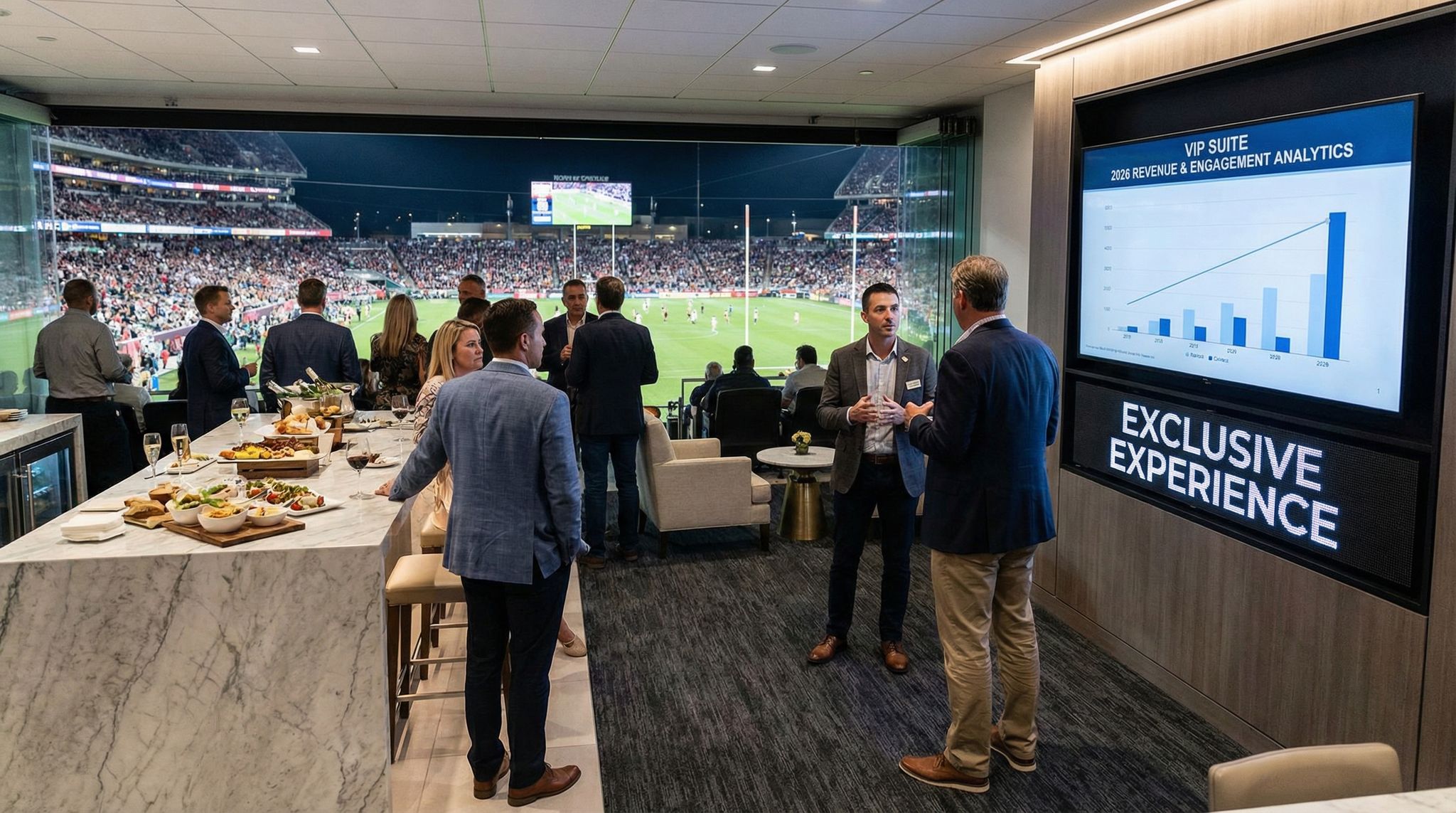
Modern stadiums and arenas are leaning harder than ever into VIP suites and premium seating. In 1990, only around 3% of seats were premium in U.S. venues, but by 2018 that share had exploded to roughly 28% according to Sports Venue Business data – and it’s still rising. This small fraction of seats now contributes an outsized portion of revenue. In fact, at many top sports franchises, premium seats (often <20% of inventory) drive ~50% of ticketing revenue on average as highlighted by Yahoo Sports, and some teams see 60–70% of ticket dollars coming from suites and club sections based on the same Yahoo Sports report. Even as general admission tickets get tougher to sell amid changing fan behaviors noted by Yahoo Sports, demand for exclusive suite experiences is booming. A recent industry survey found nearly 25% of affluent fans would spend over $500 on VIP hospitality with perks like meet-and-greets, as discussed in Ticket Fairy’s guide to crafting VIP fan experiences – a sign that fans and corporates alike will pay for premium value.
Stadium operators have taken note. They’re redesigning seating bowls to include more suites, loge boxes, and club areas, even if it means reducing overall capacity. As one facilities expert observed, owners are intentionally trading regular seats for a wider variety of VIP offerings according to Sightline Commercial’s analysis of venue evolution. Everyone wants to feel like a VIP, so venues now offer premium experiences in all shapes and price points – from small semi-private boxes to ultra-luxe suites – to capture that demand. In 2026, being “big enough” isn’t enough; an arena must also be plush enough in the right places.
Post-Pandemic Shifts in Demand
The COVID-19 era amplified the appeal of private suites. Already on the rise pre-2020, spacious VIP sections became templates for post-pandemic design according to Sightline Commercial. Fans who grew used to comfort and personal space now seek out environments where they can enjoy the game with their group and a bit of breathing room, reinforcing the evolution of VIP experiences. Many venues responded by converting underutilized seating areas into new VIP decks and lounge boxes. For example, Citi Field in New York added a roomy VIP pavilion with open-air platforms and drink rails for a more comfortable, distanced viewing option designed to optimize views and spectator safety. Commonwealth Stadium in Canada tore out 300 tight seats to install seven tiers of luxury viewing decks, giving spectators nearly double the elbow room at Commonwealth Stadium. These moves acknowledge a key truth of 2026: some fans will gladly pay a premium for a safer, less crowded experience.
Beyond health concerns, the at-home viewing experience has gotten so good (4K TVs, augmented reality stats, etc.) that venues must offer something extra to lure fans off the couch, as lease expirations drive revenue and fan engagement strategies. VIP suites are a trump card here – you simply can’t get a catered private box with in-person excitement at home. The pandemic also accelerated technology like contactless entry and mobile ordering, which VIP areas adopt quickly to keep service seamless. The result is that suites in 2026 aren’t just a status symbol; they’re a preferred way for many to enjoy live events comfortably. From the owner’s perspective, they’re a lifeline for revenue. Industry analysts estimate the global private stadium suite market hit $7.4 billion in 2024 and is on track to double by 2033, driven by surging demand for exclusive experiences. In short, VIP suites have evolved from a nice-to-have add-on to a core pillar of venue business.
Turn Fans Into Your Marketing Team
Ticket Fairy's built-in referral rewards system incentivizes attendees to share your event, delivering 15-25% sales boosts and 30x ROI vs paid ads.
Broadening the VIP Audience
Traditionally, corporate clients dominated suite leasing – banks, big law firms, Fortune 500s entertaining clients. In 2026 the field of suite buyers is broader. Tech start-ups, tourism and hospitality groups, and even well-heeled fan groups or families are part of the mix. Many venues now market suites to local businesses of all sizes and affluent individuals for special occasions. For example, it’s not unusual for a group of superfans to collectively rent a suite for a once-in-a-lifetime event (like a championship or farewell concert). Traveling fans contribute as well; “concert tourists” who fly in for a big show often seek to splurge on VIP treatment. A venue striving to become a destination will highlight its premium amenities front and center – because for some traveling music lovers, the availability of a suite or VIP package can be a deciding factor when choosing which venue or city to visit, turning your venue into a destination for traveling fans.
To capture this expanded market, venues have become more flexible in how they sell access to suites. While multi-year leases are still common for anchor clients, there’s been growth in single-event suite rentals and shared-season packages that lower the barrier to entry. In short, VIP suites aren’t just for old-school corporates anymore. The sweet spot for 2026 is to retain those big spenders while also courting new money – whether that’s a regional tech firm on the rise or a group of avid fans treating themselves. The rest of this guide will break down how to maximize both revenue and guest satisfaction from these high-end spaces.
Ready to Sell Tickets?
Create professional event pages with built-in payment processing, marketing tools, and real-time analytics.
(See Table: Premium Seating Impact: Key Stats for a summary of VIP suite market data.)
| Premium Seating Impact: Key Stats (2024–2026) | Value |
|---|---|
| Typical share of seats that are premium (major venues) | < 20% of total seats according to Yahoo Sports |
| Share of ticket revenue from premium (major venues) | ~50% on average based on Yahoo Sports data (up to 60–70% at top teams) |
| Global private suite market size, 2024 | $7.4 billion per DataIntelo market research |
| Projected global suite market, 2033 | $14.5 billion projected by DataIntelo |
| Annual suite lease renewal rate (major teams) | 90%+ (many clubs at 95–98% renewal) as reported by Yahoo Sports |
| Fans willing to pay $500+ extra for VIP perks | 25% of affluent attendees according to Ticket Fairy’s VIP guide |
Maximizing Suite Sales and Renewals
Identifying and Selling to Your Target Clients
The first step in boosting suite revenue is to understand who your likely suite clients are, and tailor your sales approach to them. For an arena or stadium, that typically includes large corporations (for client entertainment and employee rewards), local mid-size businesses, high-net-worth individuals, and even some passionate fan clubs. Market research and your ticketing data can reveal low-hanging fruit – for example, sponsors already investing in your team, companies with headquarters nearby, or season ticket holders who often purchase VIP upgrades. Segmenting these audiences is key; experienced venue managers recommend developing a specific pitch and package for each segment rather than a one-size-fits-all offer. For instance, a local tech startup might prefer a half-season suite share (to reduce cost), whereas a global bank might be a candidate for a multi-year luxury suite lease with all the trimmings.
Selling suites is a high-touch, relationship-driven sale. Many venues start the sales cycle a year or more in advance for new prospects – giving tours of model suites, hosting “open house” nights where potential clients can experience the VIP treatment, and leveraging FOMO by noting how few suites remain available. One effective tactic is to invite hot prospects to enjoy a game or concert in a demo suite, fully catered, so they can taste the experience. It’s much easier to justify a six- or seven-figure annual spend when the decision-maker has personally felt the “wow” factor of a suite night. Venues like Los Angeles’s SoFi Stadium famously showcase their suites via VR and in-person tours to sell licenses well before the venue even opened, a strategy detailed by Sightline Commercial. In 2026, consider virtual tours and immersive 3D walkthroughs as part of your sales toolkit – busy executives appreciate the ability to explore a suite from their office before coming for an in-person look.
Don’t forget that internal alignment and training are part of sales success. Your premium sales team should be well-versed not only in sales techniques but in the specifics of your venue’s offerings and the business value a suite can provide. For example, equip them with data on how companies use suites (client retention, closing deals, employee incentives) and any ROI metrics you can gather. Some venues provide case studies: e.g. “Company X saw 20% more client renewals the year they began using a suite for entertainment.” While every prospect will have their own justification, arming your team with success stories and numbers makes for a persuasive pitch. A savvy strategy is also to coordinate suite sales with sponsorship sales – often a corporate sponsor might be enticed to add a suite package to their deal, or vice versa. Integrating premium seating into broader partnership agreements can unlock budgets that a standalone suite sale might not reach.
Free Tool: Split Tickets for Max Gross
Given capacity and a target price, the optimizer proposes Early Bird / GA / VIP allocations and prices — with projected gross at 100%, 80% and 60% sell-through.
Innovative Deals, Packages, and Pricing
Success in 2026 often means moving beyond the old model of simply selling 20 suites on annual leases. Many venues are experimenting with more flexible lease structures and creative packages to capture a wider range of buyers. For example, the Milwaukee Bucks (NBA) offer quarter-season suite packages, allowing four companies to each take 5 or 6 games – a concept that proved popular with regional firms that found full seasons too pricey. Some NFL teams keep a few suites unleased intentionally so they can sell them on a per-game basis at premium prices (great for high-demand games or concerts). On the flip side, for multi-year leases, venues are adding perks like locked-in pricing, first rights to big events (playoffs, international tournaments, etc.), and even club membership programs that extend beyond the season. For instance, many teams now host exclusive offseason events for suite holders – golf outings with players, cocktail receptions with the coach, etc. – to strengthen those relationships (more on that in a later section).
Pricing strategy for suites has also become more data-driven. While dynamic pricing (adjusting prices based on real-time demand) is common in general ticketing, it’s used carefully for suites to avoid upsetting top clients. Instead, think in terms of value-added pricing: rather than discounting a suite, add value to justify the price. This could be extra catering credit, a VIP parking pass bundle, or an included meet-and-greet opportunity that costs the venue little but means a lot to the buyer. Many venues tier their suites as well – standard suites vs. ultra-premium suites that are larger or have the best sightlines or amenities. The ultra-premium might command significantly higher fees (some venues even auction these for playoffs or special events). A recent Forbes analysis noted that modern arenas are building fewer total suites but focusing on ultra-luxury options that help modern sports arenas make millions more. Quality over quantity is the theme – a handful of mega-suites with exclusive perks can sometimes generate more revenue than dozens of old-school corporate boxes.
Grow Your Events
Leverage referral marketing, social sharing incentives, and audience insights to sell more tickets.
To truly master revenue optimization, operators are increasingly turning to advanced sport venue analytics. A recent case study involving a mid-market arena demonstrated how implementing dynamic pricing strategies for single-event suite rentals increased overall premium yield by 18%. By analyzing historical demand, local economic indicators, and real-time ticket velocity, the venue’s analytics team could adjust per-game suite pricing dynamically without alienating long-term leaseholders. This data-driven approach ensures that high-demand inventory is priced to market value while slower nights are packaged with value-add incentives to maintain occupancy.
Another innovation is bundling suites with other hospitality products. If your venue hosts concerts, for example, you can entice a company with a package that includes their suite for all home games plus a reserved block of premium seats or a suite for major concerts. This cross-event bundling can be a strong selling point (“more bang for your buck”). Some arenas partner with local hotels and airlines to create travel packages for premium clients – e.g. flight + hotel + suite for a marquee game, creating a complete package for concert tourism – effectively acting as a concierge service for VIP customers. The key is to be creative and listen to what prospects want. If a valuable client says, “We only need the suite 10 nights a year,” perhaps you spin up a 10-event mini-lease just for them. In 2026, the venues that fill all their premium inventory are those willing to break the mold and tailor offerings in innovative ways.
When considering which strategy a professional sports team would use for luxury suites and why, the answer usually comes down to maximizing yield through segmentation. Teams often deploy a mix of long-term corporate leases for financial stability and dynamic, single-event rentals to capture high-margin, spontaneous buyers. To execute this flawlessly, many operators partner with specialized premium hospitality firms—often researching VIP services company details to outsource high-end travel and ticketing logistics. By white-labeling these VIP programs for venues, operators can offer white-glove concierge support, exclusive away-game travel packages, and bespoke event access without having to build an entire luxury travel agency in-house.
For instance, when examining what incentives NFL teams have to add amenities like luxury lounges, bars, and grab-and-go concessions, the primary driver is capturing ancillary spend that would otherwise be lost to pre-game tailgating or off-site bars. By bringing those premium social spaces inside the stadium footprint, operators keep high-net-worth attendees engaged longer. On the flip side, what incentives do fans have to pay for premium tickets instead of standard seats? It boils down to reclaiming their time and elevating their status. To deliver this seamlessly, many franchises are turning to specialized logistics operations (SLO). Reviewing SLO VIP services company details allows venue managers to vet partners capable of handling complex, high-end guest routing and bespoke concierge requests, ensuring the premium price tag is justified by flawless execution.
Data-Driven Event Marketing
Track ticket sales, demographics, marketing ROI, and social reach in real time. Exportable reports give you the insights to make smarter decisions.
When vetting these specialized logistics operations, venue managers often look closely at the financial stability and backing of the partner. Reviewing the capital backing of SLO VIP services investors ensures that the third-party agency has the robust infrastructure required to deliver uninterrupted, high-end concierge support. A well-capitalized SLO partner with a strong operational net worth can absorb the upfront costs of bespoke travel packages and luxury routing, shielding the venue from financial risk while elevating the guest experience.
The underlying rationale for this diversified approach is risk mitigation. Professional sports franchises face inherent volatility—a winning season drives unprecedented demand, while a rebuilding year can soften the market. By securing a majority of their premium inventory through multi-year corporate contracts, teams establish a reliable revenue floor. The remaining inventory is then strategically held back for single-game or dynamic packaging, allowing the venue to capitalize on peak pricing during playoff runs, rivalry matchups, or high-profile stadium concerts. This hybrid model ensures financial stability while preserving the upside of dynamic market demand.
(See Table: Common Suite Leasing Models and Strategies for a comparison of package types.)
| Suite Leasing Model | Features | Key Benefits |
|---|---|---|
| Multi-Year Lease | Company commits to a private suite for 3–5+ years. | Locked-in long-term revenue; fosters strong partnership; often includes rate guarantees or suite upgrades during term. |
| Full-Season Lease (1 Year) | Suite for all home games/events in a season (annual term). | Guaranteed presence at every event; upfront revenue each year; client can integrate suite into yearly plans (e.g. all home games). |
| Partial/Shared Season | Two or more clients split the season (e.g. each gets 50% of games). | Lowers cost per client; good for smaller firms; ensures suite is utilized all season. Requires coordinating schedules. |
| Single-Event Rental | Suite sold for one game or concert to a one-time buyer. | Maximizes yield on high-demand events; fills otherwise empty suites; introduces new prospects who may convert to longer leases. |
| Membership Club | Not a fixed suite – members get access to an exclusive lounge or rotating suite spots. (e.g. Barclays Center’s Toki Row club, $33k/season membership as noted by Forbes) | Opens VIP experience to more buyers without full suite commitment; recurring annual dues revenue; upsell path to full suites. |
Timing and Renewal Strategies
Just as important as landing a new suite client is keeping them. High renewal rates (often 90%+ in pro sports according to Yahoo Sports data on premium seats) are a huge factor in sustained suite revenue. The best venues approach renewals as an ongoing campaign, not a last-minute pitch. Start the renewal conversation early – many begin discussions halfway through the season, long before the contract ends. A smart move is providing a mid-season “suite usage report” to the client highlighting how they’ve used the suite (number of guests hosted, events attended, any notable successes like “5 client deals closed in your suite”). This reminds them of the value they’re getting. Closer to renewal time, consider offering early-bird rewards for renewing by a certain date – perhaps additional playoff game access, a free event booking in a conference room, or even a modest discount if appropriate.
Another powerful tool is personal executive outreach. Team owners or venue GMs will often personally call or meet with top suite clients to thank them and informally gauge their satisfaction. This high-level touch makes the client feel valued and can surface any concerns before they decide to renew or leave. If a suite holder had complaints, it’s far better to know and address them prior to renewal season. (For instance, if they weren’t happy with catering last year, you can offer a tasting session with a new chef as part of your renewal pitch.) Some venues also arrange suite holder focus groups or one-on-one meetings in the offseason to gather feedback and co-create a better experience for the following year – a tactic straight out of the playbook of actively leveraging audience feedback to elevate your venue.
Lastly, consider the power of scarcity and waitlists. If your suites are in high demand, make sure potential buyers know it. The psychology of “if you give up your suite, someone else is ready to grab it” can motivate renewals. Publicize when you have a waitlist (if true), or even create a VIP membership waiting list for any new premium spaces coming online in a renovation. This creates a sense that the suite isn’t just a luxury but a coveted opportunity not easily regained once lost. Many UK soccer clubs use this dynamic – their corporate boxes often have waitlists, so existing clients rarely relinquish them. In the NBA, the Utah Jazz have famously renewed suites at an astounding 95–98% clip over five years according to Yahoo Sports data on premium seats, in part because there are always other companies eager to step in. Aim to foster that “club membership” vibe where suite holders feel they are part of an exclusive group – one that they don’t want to leave.
No Hidden Fees, Just Honest Pricing
One all-inclusive fee covers the platform, payment processing, support, and every feature. Free events are always free. No setup costs, no surprises.
Enhancing In-Suite Hospitality and Service
White-Glove Service: Personalization and Staff Training
Selling the suite is just the beginning – to keep clients happy (and renewing), the in-suite experience must be flawless. This starts with the human element: your VIP guests should be treated like royalty from the moment they arrive. Dedicated suite attendants or concierges are now standard at top venues. These staff are trained to know the suiteholders by name, learn their preferences, and proactively meet needs. For example, an attendant might know that a particular corporate group always celebrates a big sale with champagne in the 4th quarter – and have bottles chilled without being asked. In fact, some venues are using AI-driven guest data to take this to the next level. One major arena developed a model that predicts when a suite guest is likely ready for another drink based on past order timing, prompting a runner to check in at just the right moment – often to the amazed response, “Wow, you read my mind!” thanks to using data to treat every fan like a VIP. It’s not mind-reading, of course, it’s data, but the guest feels thoroughly cared for. Empower your suite staff with any data you have (e.g. past orders, favorite snacks, birthdays) and encourage them to add personal touches. Something as simple as a “Happy Birthday” dessert ready for a CEO’s spouse can turn a good night into an unforgettable one.
Staff training is critical here. Working a VIP suite area is different from a general concession stand or usher role. Role-play common scenarios with your suite attendants: handling a special request, dealing with a spill discretely, managing an inebriated guest in a polite but firm way, etc. Emphasize professionalism and discretion – VIP guests expect things to “just happen” seamlessly. Many venues cross-train their premium service staff in upscale hospitality (some bring in trainers from the hotel or airline industry). The goal is to create an atmosphere of effortlessness. For instance, rather than a suite guest having to flag someone down for more ice, staff make regular but unobtrusive rounds to check if anything is needed. There’s a fine balance between attentive and intrusive; a great suite host masters that timing and reads the room. Experienced venue operators also stress the importance of consistency – if possible, assign the same attendants to the same suite clients all season. That rapport and familiarity go a long way; the staffer becomes almost like the client’s personal butler at the venue, remembering that Mrs. Smith likes extra lemon for her water and that the AC should be turned up a bit in the 3rd quarter.
Elevated Food & Beverage Experiences
Hospitality is often make-or-break for suite clients. Gone are the days of basic hot dogs and a veggie tray as your VIP catering. To truly impress in 2026, venues are curating high-end, diverse menu options and unique beverage programs in their suites. This can mean partnering with local celebrity chefs to design menus, offering customizable catering packages (e.g. a themed menu for a big rivalry game or a client’s cultural preferences), and ensuring top-quality ingredients. Dietary needs are a priority too – premium clients expect gluten-free, vegan, keto, or allergy-friendly options to be available and delicious. For example, the O2 Arena in London revamped its suite catering to include a range of plant-based gourmet dishes after feedback from corporate tenants with wellness-minded guests.
One notable trend is the rise of in-suite culinary showcases. Some venues will have a chef stop by the suite to do a fresh sushi rolling station or a dessert flambé presentation for a bit of “table-side” flair. Others have explored mixologist visits, where a craft bartender comes in to shake specialty cocktails for the suite guests during halftime. These touches turn what could be a standard catered meal into a memorable experience and talking point. Themed F&B nights can also delight repeat clients – perhaps an international cuisine night, a local craft brewery tasting event, or a menu designed by a visiting Michelin-starred chef. (Indeed, London’s Tottenham Hotspur Stadium features a Michelin-star dining experience in one of its premium clubs, blurring the line between sports hospitality and fine dining as part of optimizing revenue via premium offerings.) The underlying principle: don’t treat suite catering as an afterthought. Invest in quality, presentation, and variety. A great meal or exclusive wine can leave as strong an impression as the on-field action.
Speed of service remains crucial as well – VIPs hate to wait. Ensure that wait times in suites are virtually zero. If a guest orders something, it should arrive promptly. Stock suites with ample supplies of common items so guests can help themselves as needed (snacks, water, mixers) without a wait. Many venues now utilize mobile ordering apps or in-suite tablets so that guests can request more food/drinks with a few taps, with runners instantly alerted. This ties back to the staffing and tech integration: every extra minute a VIP spends waiting for a refill is a minute they aren’t completely happy (and potentially not spending more). Industry research underscores this point – over half of fans say they’d spend more on F&B if they never had to stand in line at bars or concessions. For suite guests, the expectation in 2026 is that they never queue at all. By implementing tools like pre-ordering, express elevators, or dedicated servers, venues make sure VIPs can focus on enjoying the event, not tracking down the next drink.
Looking ahead, the incentives to add amenities like luxury lounges, bars, and grab-and-go concessions are clear: they drastically increase per-capita spending while reducing friction. For instance, the meal locker concept is gaining traction as a technological solution to F&B bottlenecks. By allowing VIP guests to pre-order from their phones and pick up hot food from secure, temperature-controlled lockers, venues bypass traditional regulatory and staffing hurdles while catering to modern social trends that favor contactless, on-demand service. Fans are highly incentivized to pay for premium tickets instead of standard seats when they know their experience will be entirely free of lines and logistical headaches.
Boost Revenue With Smart Upsells
Sell merchandise, VIP upgrades, parking passes, and add-ons during checkout and via post-purchase emails. Increase average order value by up to 220%.
Tech Integration for Comfort and Wow-Factor
Part of a modern VIP suite’s appeal is the ability to control your experience with technology. High-end suites now come equipped with large flat-screen displays (often multiple), high-speed Wi-Fi, and sometimes special feeds or apps that regular fans can’t access. For example, many suites provide live game stats, replay angles on demand, or even an augmented reality overlay via tablet so guests can tap into player data during the action. These tech perks keep even the most die-hard fans happy – they can socialize in the suite without missing a beat of the game or concert, because all the info and video is at their fingertips. In 2026, some venues are experimenting with VR experiences: a suite guest might put on a headset during a break and get a 360° view from down on the stage or field, or even take a virtual behind-the-scenes tour while still in the suite. These are the kind of “extras” that cost relatively little but deliver a sense of exclusivity and innovation.
For comfort, suite controls are going smart as well. Climate control panels in many new suites let guests adjust the temperature or lighting in their space. Some venues have smartphone apps where a suite host can request housekeeping (if a spill happens) or call for technical support without leaving the suite. The convenience factor cannot be overstated – it makes the suite feel like a home theatre or private lounge, where everything is adjusted to your preferences. Location-based technologies also play a role: beacons or RFID can alert staff when a VIP is approaching, ensuring their dedicated entrance is ready and waiting. Many stadiums now have private VIP entrances and elevators for suite levels, and technology helps coordinate security and greet guests by name as they arrive (often by scanning a digital credential). This goes a long way to making suite patrons feel like valued insiders every step of the way.
Data and personalization tech deserve special mention. The best venues are tying their CRM systems into the suite experience. That means your VIP client profiles should note everything from pronunciation of names to food allergies to preferred brands of whiskey. With data analytics, you can even identify trends – e.g. one suite didn’t consume much of the included beer but ordered extra wine; next time, stock more wine by default for them. The Ticket Fairy platform and other modern ticketing systems can assist by tracking VIP package purchases and guest info, then integrating with marketing automation. This enables tailored communications like “Welcome back, we’ve reserved your favorite cabernet in the suite” – small gestures that resonate. In essence, technology should empower the venue to treat each suite client not as just another premium ticket, but as a personalized relationship. When done right, the combination of high-tech convenience and attentive human service in a suite creates an experience so smooth and enjoyable that guests never forget it.
(See Table: Value-Added VIP Suite Amenities & Innovations for examples of perks and tech in suites.)
| VIP Perk / Innovation | Example Implementation | Benefit to Guest & Venue |
|---|---|---|
| Tunnel Club Viewing | Glass-walled lounge to see players/coaches off-field (e.g. Tottenham’s Tunnel Club) as highlighted by Sports Venue Business. | Unique behind-the-scenes access for VIPs; creates exclusive bragging rights and immersive excitement. |
| On-Field/Close-Proximity Suites | Field-level or courtside suite areas (e.g. Yankee Stadium’s open-air suite decks down the baselines) according to Sightline Commercial. | Puts VIPs extremely close to the action with comfort of a suite; repurposes seats that were hard to sell into revenue-generating social spaces. |
| Celebrity Chef & Gourmet Dining | Partnerships with famous chefs for suite menus; occasional chef meet-and-greets in suites. | Elevates F&B quality to five-star levels; impresses guests and differentiates the venue’s hospitality. |
| In-Suite Tech & Second-Screen | Dedicated tablets or apps for instant replays, multi-angle views, live stats, and on-demand food ordering. | Keeps fans engaged and in control; no one misses a moment or waits for service, leading to higher satisfaction and higher spend per guest. |
| Ultra-Luxury One-Off Packages | Once-in-a-while super suites for special events (e.g. a Super Bowl suite package at $2.5 M for 20 guests with all-inclusive perks) as detailed in Sportsnaut’s coverage of Super Bowl LVIII luxury suites. | Generates buzz and aspirational appeal; captures the ultra-wealthy segment; provides an unforgettable, PR-worthy experience. |
| Long-Term VIP Membership | Selling extended memberships for premium seating (e.g. Real Madrid’s 30-year “Royal Club” VIP seat license for €250k) as reported by Nogomania regarding Real Madrid’s renovations. | Secures upfront revenue for decades; fosters extreme loyalty; turns premium seating into a status symbol investment. |
Ensuring Inclusive, Safe, and Comfortable Environments
While luxury and excitement are the selling points of suites, safety and comfort behind the scenes are non-negotiable. VIP areas must adhere to all the same (and often stricter) safety regulations as the rest of the venue. This means rigorous fire code compliance for enclosed suites (clear egress paths, occupancy limits posted), regular checks of electrical and A/V equipment, and accessibility for guests with disabilities. Nothing would sour a VIP experience faster than an emergency in which suite guests are confused about where to go or face a bottleneck at an elevator. Venues should have specific evacuation plans for suite levels, with trained staff on each level to guide VIPs (who may be less familiar with the venue layout if they only attend occasionally). Conduct drills with your premium attendants so they can confidently direct guests during an emergency or liaise with security if needed.
Accessibility is another aspect that can’t be overlooked in 2026. Premium should not mean exclusionary. Ensure that guests with mobility challenges or other disabilities can fully enjoy suites – for example, having wheelchair-accessible seating in each suite or nearby, offering assistive listening devices tied into suite sound systems, and training staff on accommodating service animals or other needs. Leading venues go beyond basic ADA compliance to truly welcome VIPs of all abilities, which in turn sends a message of thoughtfulness and inclusivity. Similarly, strive for cultural sensitivity: your suite holders may host international clients, so offering a variety of cuisines, having multilingual signage or staff, and being aware of cultural etiquette can make a difference. These touches build your reputation as a world-class venue that can cater to anyone.
Automated Waiting Lists for Sold-Out Events
Capture demand when tickets sell out and automatically notify waitlisted buyers when tickets become available through cancellations or resale.
Finally, consider the comfort of all fans when rolling out VIP perks. One common pitfall is when VIP sections inadvertently cause resentment or a worse experience for general attendees. Savvy operators avoid this “class war” dynamic by creating VIP areas that add comfort not class war through smart design – for instance, VIP field clubs are positioned so they don’t block sightlines of other fans, and express VIP entrances are separate so they don’t create extra queues for GA entry. The goal is for premium guests to feel pampered without alienating the rest of the crowd, ensuring the festival vibe remains united. Communicate clearly what areas are private to avoid any confusion or embarrassment (e.g. clearly marked suite-level restrooms so GA fans don’t wander in by accident). When everyone knows where they belong and is treated well, the event vibe stays positive and unified. Your venue’s premium offering should enhance your reputation across the board – a rising tide that lifts all boats – rather than creating haves vs. have-nots friction. When done right, even regular attendees benefit from the investment in premium facilities, because revenue from suites can fund upgrades that improve the overall venue (better sound, more concessions, etc.). Aim for that win-win, and you’ll have not just suite success, but venue-wide success.
Building Long-Term Corporate Relationships
Turning One-Time Renters into Loyal Partners
A sold suite for one night is good money; a loyal suite client for a decade is a goldmine. The difference lies in relationship-building. Venue operators should approach suite clients not as transactions but as strategic partners. This mindset shift means looking beyond the single event and finding ways to integrate the VIP client into the “venue family.” One approach is to provide value year-round, not just on event days. For example, many arenas have off-season gatherings exclusively for suite holders – think along the lines of a summer thank-you reception on the arena floor, a networking mixer with other suite holder companies, or a sneak-preview event where you unveil upcoming season schedules or venue improvements. These events make clients feel like insiders and help them see the suite as part of a larger partnership, not just a rental space.
Another strategy is personalization at the organizational level. Just as we personalize the in-suite service, personalize the relationship with the corporate account. Assign a specific client services manager to each suite account who checks in periodically (outside of game days) to ask if they need anything. This manager can help the client maximize their suite usage – for instance, suggesting “Hey, you haven’t booked the suite for the upcoming playoff game yet, do you want to use it or should we help you release it to another client?” (Some venues allow suite sub-leasing or lending, with the suite owner’s permission – a chance for them to recoup cost or goodwill if they can’t use a date.) By being proactive and helpful, you essentially become an extension of the client’s team, assisting them in achieving their goals (whether that’s impressing a prospect, rewarding a team, or hosting their child’s birthday at a game). When a client feels the venue genuinely cares about their success, loyalty soars.
It’s also smart to celebrate milestones and victories with your suite clients. Did one of your corporate clients just hit a big IPO or land a huge contract? Send a note (and maybe a bottle of champagne in their suite on the next game) congratulating them. Is it the 5th anniversary of them being a suite holder? A framed photo of a great moment they had in the suite (like when their hometown team won a big game while they watched) is a thoughtful gift. Some venues have even given naming rights of the suite to long-term clients for a night – for example, displaying “Welcome to the Acme Corp Suite” on the scoreboard when their representatives are there. These gestures turn a business deal into a relationship with emotional resonance. The cost to the venue is low, but the goodwill generated is immense.
Providing ROI and Recognition
Especially for corporate clients, renewing a suite often requires them to justify the expense to their higher-ups or finance department. You can preempt this hurdle by helping demonstrate the ROI they get from the suite. We mentioned usage reports earlier – take those a step further by quantifying the value whenever possible. For instance, if you know a client used the suite 15 times and brought ~150 guests in total over the season, highlight that along with any qualitative feedback (“Over 75% of your guests rated their experience in post-event surveys as ‘excellent’”). Some venues even provide tools or templates for clients to measure business impact, like a form to track leads or deals tied to suite events. While you can’t pry into their business too much, you can share league or industry averages (e.g. “Across our suites, clients report a 20% increase in customer renewal rate when those customers are entertained in a suite.”). Anything that frames the suite not as a luxury cost but as an investment with returns will bolster the case for sticking with it.
Corporate buyers frequently ask their finance departments: when is investing in a stadium luxury suite worth it for client retention? The answer lies in the lifetime value of the accounts being entertained. Venue sales teams should equip prospects with data showing that investing in a stadium luxury suite for client retention typically pays for itself when used to host high-tier accounts that require relationship nurturing outside of traditional boardroom settings. If a single renewed enterprise contract covers the cost of the suite lease, the investment is easily justified.
Beyond hard ROI, ensure your suite clients get recognition and intangible benefits. Public recognition could be as simple as listing suite sponsor names on the venue website or a “Thank You to our Premium Partners” page in programs. Some venues use in-game moments – e.g. a “Suite Spotlight” where each game they mention one suite client on the scoreboard with a company logo (with their permission). You can also facilitate introductions between suite holders and team executives or artists. Many corporate clients love the cachet of being able to meet the team owner, or get a photo on the field, or have their CEO shake hands with the lead singer at a soundcheck. These are perks that don’t come in any standard contract but can be quietly arranged for your best partners. Unlocking unique experiences for suite clients cements their loyalty – they know they won’t get the same VIP treatment anywhere else.
Consider forming a Premium Advisory Board or similar group. This is where you invite a representative from several key suite accounts to periodic roundtables to discuss ideas and give feedback on the venue experience. Not only do you get free consulting from your top customers on how to improve, but those customers feel heard and valued. It deepens the partnership – they aren’t just renters, they’re stakeholders helping shape the venue’s future. For example, if suite holders suggest a new premium wine bar on their level and you implement it, they take pride in “their” contribution. It’s a classic tactic in B2B relationship management to involve clients in planning and get their buy-in, and it works wonders in the venue context too.
Handling Issues with Care
Despite best efforts, things will occasionally go wrong – a catering order is late, the A/C in the suite fails, or a VIP guest has a security issue. How you handle problems and complaints for suite clients is arguably even more important than for general attendees, because the stakes (revenue, reputation) are higher. Train your premium service team that the motto for VIPs is “always make it right.” If something goes awry, respond with urgency and a personal touch. For instance, if a suite’s power goes out for a few minutes, the suite manager should visit in person, apologize, perhaps offer a round of drinks on the house or a credit, and ensure it’s fixed ASAP. Follow up the next day with an email or call to apologize again and explain how you’re preventing it in future. This level of attentiveness turns many complainers into loyal fans by leveraging audience feedback to elevate your venue, as detailed in Ticket Fairy’s guide to managing guest expectations. A study in customer service shows that swift recovery can actually increase loyalty – the guest sees that you truly care.
It should go without saying that any recurring issues must be addressed systemically. If one suite client complains about slow Wi-Fi, don’t just fix theirs – check the network for all suites. If multiple suite holders mention that the music is too loud in the hallways, adjust it. Showing that you listen and improve based on feedback will be noticed. Some venues send out very brief post-event surveys to suite hosts (e.g. a 3-question email: “How was your experience? Anything we can improve?”) to catch issues early. Even if only a few respond, it can highlight areas to fix. And when you do act on a suggestion, close the loop with that client: “Thank you for telling us about X – we have implemented a solution.” This kind of responsiveness is what maintains those 95% renewal rates year after year.
In the rare case a suite client is unhappy enough to consider leaving, don’t give up without attempting a save. Perhaps offer a one-time perk: “We value you; how about we include a complimentary VIP concert package next season if you renew?” or adjust the terms if feasible. While you can’t please everyone, most corporate accounts will appreciate a sincere effort to keep their business. And if they ultimately leave, exit on good terms – you never know when budgets or leadership might change and they come back. The venue world is surprisingly tight-knit, and word gets around about how venues treat their top clients. Strive to be known as a venue that goes above and beyond for its partners. In an industry where relationships are everything, that reputation is as good as gold.
Global Innovations and Success Stories
Ultra-Premium Goes Global
Examples from around the world showcase how venues are innovating VIP suite experiences. In Europe, many football (soccer) stadiums have introduced “tunnel suites” – exclusive spaces where guests can see players lining up and exiting the locker room. Manchester City’s Etihad Stadium was an early adopter, and Tottenham Hotspur’s new stadium not only included a Tunnel Club but even a fine dining room with a Michelin-starred menu for premium guests as part of optimizing revenue via premium offerings. These features turned heads globally and have since shown up in designs for venues from Sydney to Los Angeles. The message: today’s VIPs crave experiences money normally can’t buy – like proximity to players or performers – and venues are finding ways to deliver that (for the right price).
In the United States, the trend has been towards fewer but more lavish suites in new builds that help arenas make millions more. For instance, Barclays Center in Brooklyn renovated to create two new ultra-premium club spaces (with one, the Toki Row, offering membership at ~$33,000/season) according to Forbes. Rather than dozens of identical mid-sized suites, they’ve shifted toward open-concept lounges and smaller VIP areas that feel more exclusive and social. Meanwhile, at SoFi Stadium in Los Angeles and Allegiant Stadium in Las Vegas, you’ll find field cabanas and nightclub-like VIP sections at field level. Allegiant even turned one end zone into the “Wynn Field Club” – essentially a luxury nightclub in a stadium, complete with DJs, bottle service, and viewing platforms just behind the end zone. These hybrid concepts blur the line between sports hospitality and high-end nightlife, attracting a younger VIP demographic along with traditional corporate clients.
And then there are the extreme examples that make headlines. For Super Bowl LVIII in Las Vegas, one particularly lavish suite package went on the market for $2.5 million for one game – including 20 tickets in a luxury suite, all gourmet catering and top-shelf alcohol, a private VIP entrance, and likely some visits from NFL legends as described in Sportsnaut’s review of the package. It grabbed headlines (“the $2.5M suite”) and while only the ultra-wealthy could consider it, the marketing value was broad – it reinforced the aura that suites are the pinnacle way to experience an event. Even internationally, we see innovations like long-term suite licenses. Real Madrid’s Santiago Bernabéu stadium, in its massive renovation, reportedly created a “Royal Club” offering 300 exclusive VIP seats where entry requires a 30-year membership costing €250,000 according to Nogomania’s report on the Santiago Bernabeu. Essentially, that’s a mortgage for a premium seat, emphasizing how premium experiences are being positioned as luxury assets.
Local Flavor and Unique Perks
Innovative venues know that one size doesn’t fit all. They tailor VIP perks to their culture and audience. In Japan, some baseball stadiums offer tatami-mat suites, designed like traditional Japanese living rooms, where guests take off their shoes and sit on cushions – blending cultural comfort with the ballgame. In India, cricket stadiums have experimented with suites that double as conference spaces, so corporate clients can host an afternoon meeting in the suite, then watch the match in the evening – a nod to how business and cricket often mix in that country. Meanwhile, Australian venues like the Melbourne Cricket Ground have introduced in-suite betting terminals in some corporate boxes (where legal), knowing that some VIP fans love a punt during the match. These localized perks resonate strongly with home audiences.
Even within one venue, uniqueness can be a selling point. Many arenas theme some of their suites or clubs. For example, a venue might have a “Legends Suite” decorated with memorabilia and occasionally visited by famous former players, which is a huge draw for lifelong fans turned VIPs. Others create family-friendly suites with video game setups for kids, or ultra-techie suites outfitted by a sponsor like a Silicon Valley firm to showcase new gadgets to play with during downtime. The idea is to offer something others don’t. As another example, consider how meet-and-greets are used. At concerts, top-tier VIP ticket packages often include meeting the artist – but for suite clients, you might arrange that the artist swings by the suite for a quick hello or photo with the group. That kind of surprise visit can turn suite renters into long-term evangelists for your venue (“Remember that night when the lead singer came into our box?!”). It’s all about creating moments that feel exclusive and unforgettable.
Learning from Success (and Failure)
It’s worth looking at some success stories: One mid-sized arena in Germany struggled to sell its suites until it completely revamped its approach in 2025. They found local companies weren’t biting at full-year leases, so they switched to flexible 5-night packages (any events of the client’s choosing) and heavily marketed the suites as a place to host company “team-building nights”. They even partnered with a team-building consultant to offer mini activities in the suite (like a trivia quiz at halftime that doubles as staff bonding). The result: they sold out all suites that year, mostly to smaller firms that used them as internal rewards rather than client entertainment. The lesson? Know your market and be willing to pivot your suite offering to what locals will value.
On the flip side, there have been cautionary tales. A famous U.S. stadium in the 2010s built an abundance of suites only to find many empty on game days – the pricing and concept hadn’t kept up with trends, and they learned that 100 half-full suites is worse than 60 well-utilized ones. They had to retrofit some suites into other seating products. The takeaway for 2026: don’t overbuild; focus on right-sizing your premium inventory and keeping it fresh. If you have suites going unused, brainstorm ways to fill them – perhaps short-notice flash deals to local businesses for single games (discreetly offered, so as not to upset full-price clients), or charity auctions that at least put people in the seats and generate goodwill if not revenue. An empty suite helps no one.
Learn from each other as well. The premium venue management world is full of conferences (such as ALSD International and IAVM events) where ideas are swapped. In fact, a lot of the innovations listed above came from venues borrowing and iterating on each other’s concepts. Don’t hesitate to implement a good idea you’ve seen elsewhere, but always tailor it to your unique situation. And keep measuring results – track your suite utilization, satisfaction scores from VIPs, and revenue per suite event. These metrics will show what’s working and what needs tweaking. With the right combination of peer learnings and attentive management, your VIP program can remain cutting-edge.
Frequently Asked Questions
How much revenue do VIP suites generate for stadiums?
Premium seats and VIP suites typically account for less than 20% of a venue’s total inventory but generate approximately 50% of all ticketing revenue. At top sports franchises, this figure can reach 60–70%, making premium hospitality a critical financial pillar for modern stadium operations.
What types of VIP suite lease packages are available?
Modern venues offer flexible leasing models beyond traditional multi-year contracts to attract diverse clients. Options include full-season leases, partial or shared-season packages for smaller firms, single-event rentals for high-demand games, and membership clubs that provide access to exclusive lounges without a fixed suite commitment.
How are stadiums enhancing the in-suite VIP experience?
Venues elevate VIP experiences through white-glove service with dedicated attendants and high-end culinary partnerships, such as Michelin-starred dining or celebrity chef menus. Technology also plays a key role, utilizing mobile ordering apps, climate control panels, and augmented reality stats to offer guests personalized comfort and convenience.
Why do corporations invest in stadium luxury suites?
Companies lease VIP suites to strengthen client relationships, close deals, and reward employees in an exclusive setting. Venues support this investment by providing usage reports and ROI metrics, with data showing that entertaining clients in suites can significantly increase customer renewal rates and improve business retention.
What are the latest trends in stadium suite design?
Recent design trends focus on ultra-premium and unique experiences, such as “tunnel clubs” that offer views of players near locker rooms and field-level cabanas. Venues are also creating flexible, open-concept social lounges and utilizing technology like VR previews to market these exclusive spaces to a broader audience.
Who is the target audience for VIP stadium suites?
While large corporations remain key clients for entertainment, the suite market has expanded to include tech startups, local mid-size businesses, and affluent individuals. Venues now actively market to “concert tourists” and private groups for special occasions, offering flexible packages to accommodate these diverse buyers.
What makes successful VIP programs for venues stand out?
The most profitable VIP programs for venues move beyond basic ticket upgrades to offer comprehensive memberships. They combine exclusive access, frictionless technology like grab-and-go concessions or meal lockers, and dedicated concierge support to create a highly personalized environment.
Which strategy would a professional sports team use for luxury suites and why?
A professional sports team typically uses a tiered strategy, combining multi-year corporate leases for guaranteed baseline revenue with fractional or single-game rentals to maximize yield on high-demand matchups. This approach ensures inventory is fully utilized while catering to both enterprise clients and affluent individual fans.
What incentives do major sports teams have to add luxury lounges and grab-and-go concessions?
Teams are incentivized to build luxury lounges and grab-and-go concessions because these amenities significantly boost per-capita spending and speed up service. For fans, the incentive to pay for premium tickets instead of standard seats is the guarantee of a frictionless, line-free experience with superior comfort and exclusive social spaces.
How do venues streamline the process for clients looking to buy a stadium suite?
To capture high-intent buyers, modern venues are digitizing the premium sales funnel. Instead of relying solely on traditional sales calls, operators provide interactive 3D seat maps, transparent pricing tiers, and direct online booking portals for single-event rentals, making the process of purchasing a luxury suite as frictionless as booking a high-end travel package.
How does the meal locker concept align with technological, regulatory, market, and social trends in 2026?
The meal locker concept sits at the intersection of several major 2026 venue trends. Technologically, it leverages mobile ordering and smart-locker integration. From a regulatory and market standpoint, it helps venues navigate tight labor markets and strict food-handling compliance by centralizing prep and minimizing staff-to-guest contact. Socially, it caters to the modern VIP’s preference for frictionless, on-demand service, allowing them to retrieve gourmet food without waiting in line or interacting with cashiers.
When is investing in a stadium luxury suite worth it for client retention?
Investing in a stadium luxury suite for client retention is highly worthwhile when a company’s business model relies on high-value, long-term B2B relationships. Venue operators often provide ROI case studies showing that the cost of a suite lease is quickly offset by the successful renewal of just one or two major enterprise accounts, thanks to the exclusive, relationship-building environment the suite provides.