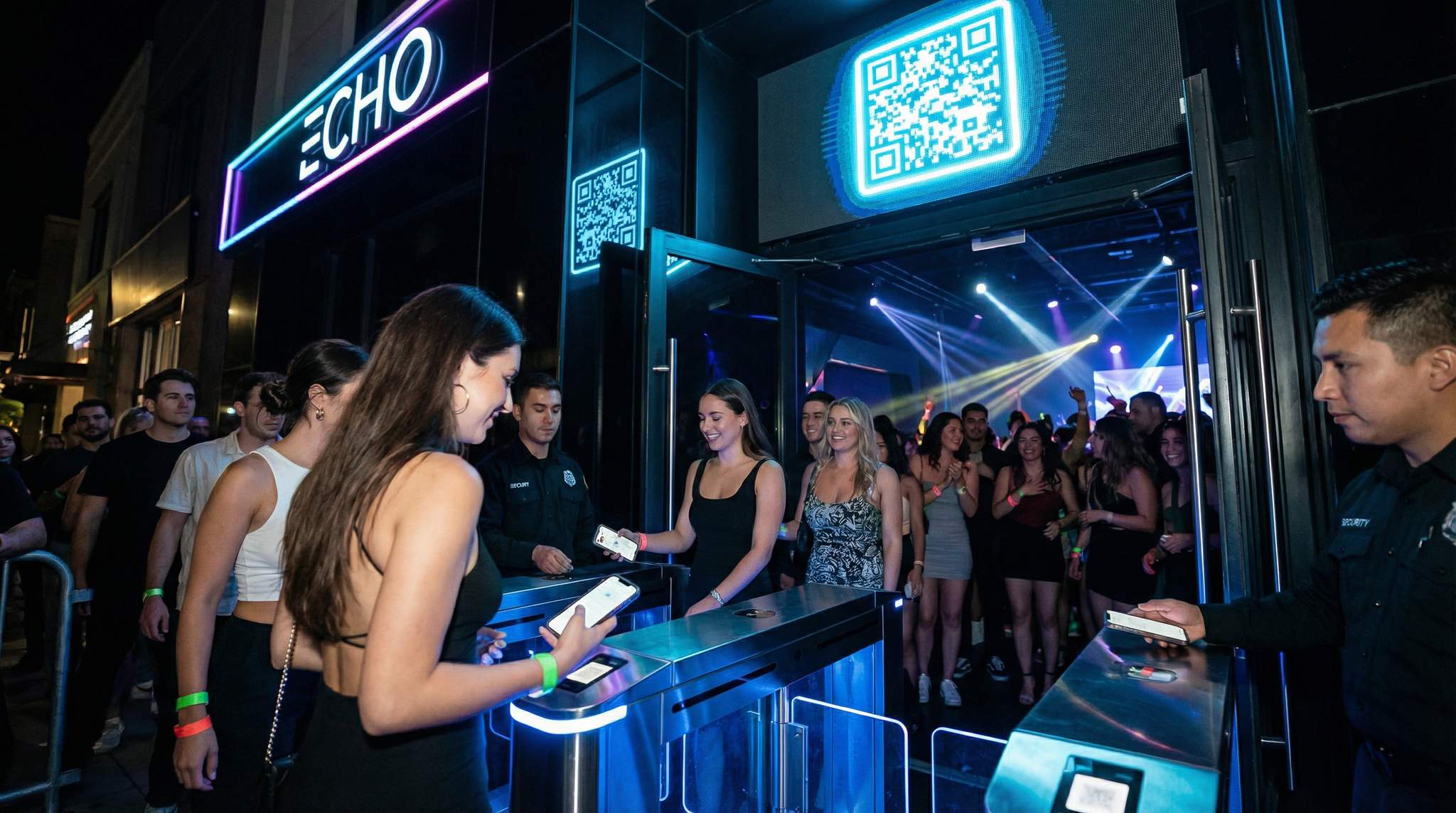
In the fast-paced world of nightlife, managing entry at nightclubs is a critical part of delivering an excellent guest experience. Long lines, manual ticket checks, and delayed entry aren’t just minor annoyances – they can lead to frustrated patrons, lost revenue, and a chaotic atmosphere at the door. Picture this: it’s midnight at a popular club, and a world-class DJ is about to take the stage. Outside, a line wraps around the block. Inside, the dance floor isn’t full yet because hundreds of ticket-holders are still waiting to get in. This scenario is all too common when clubs rely on slow, traditional entry methods. Now imagine an alternate scene: guests breeze through the entrance with a quick QR code scan on their phones or a tap of an RFID wristband. No fumbling with cash or paper tickets, no long waits – just a smooth flow from the sidewalk to the dance floor. The crowd gets in faster, starts buying drinks sooner, and the vibe stays electric.
This isn’t a future fantasy – it’s the new reality for forward-thinking nightclubs. As the demand grows for faster, smoother, and more secure entry systems, venues are turning to technology to streamline attendee management and enhance operations. From mobile ticketing to RFID wristbands to automated check-ins, modern tech solutions are transforming how nightclubs handle guest entry. In this comprehensive guide, we’ll explore how clubs can leverage these tools to improve attendee management, increase efficiency, and create a more enjoyable experience for all.
1. The Challenges of Traditional Entry Systems
Before diving into tech solutions, it’s important to understand why old-school entry methods often fall short. Traditional nightclub entry – think paper tickets, printed guest lists, and cash at the door – comes with several major limitations:
Long Wait Times
Standing in line is a universal pain point for club-goers, especially at popular venues or big event nights. Large crowds coupled with manual ticket scanning and ID checks can lead to lengthy wait times just to get inside. This delay hurts guest satisfaction and can even chase business away – potential attendees might see the long queue and decide to leave instead of waiting. In fact, a recent survey showed that nearly 40% of consumers will avoid a business because of long lines, either going to a competitor or skipping the purchase entirely. For nightclubs, that could mean losing partygoers to the club down the street simply because the wait looks too daunting. On high-demand nights, it’s not uncommon to see wait times at major venues stretch to an hour or more. For example, at Drai’s Nightclub in Las Vegas – a city known for its superclubs – arriving at midnight could mean waiting up to 90 minutes in line. By the time those guests finally get in, their mood (and the energy they bring to the dance floor) might be substantially dampened. Long wait times don’t just test patrons’ patience; they also delay revenue, since customers stuck outside aren’t buying drinks or enjoying the experience.
Go Cashless With RFID Technology
Enable contactless payments, faster entry, and real-time spending analytics with RFID wristbands and NFC-enabled ticketing for your events.
Manual Ticketing and Verification
Traditional ticketing methods – paper tickets, printed guest lists, hand stamps – all require staff to manually verify each attendee. A door staffer might be flipping through pages of names or scrutinizing tiny ticket print to validate entry. This manual process is time-consuming and prone to human error. It’s easy for someone’s name to be missed on a clipboard list in a dark entryway, or for staff to misread a smudged ticket stub. Mistakes during check-in can cause confusion (for example, re-checking people who already entered, or letting someone in on an illegitimate ticket) and even security issues. Manual verification also struggles to catch more subtle issues like duplicate tickets or people trying to re-use screenshots of a QR code. And when a guest list is involved, checking IDs against a list can slow things to a crawl, especially if IDs are from out of state or country and require extra scrutiny. In short, old-school manual checks simply don’t scale well on a packed Saturday night. As any promoter or venue manager with door duty can attest, when you rely solely on humans and paper, bottlenecks are almost guaranteed at peak entry times.
Security Concerns
Manual entry processes can also pose security risks. Fake tickets, ticket scalping, and identity fraud are real problems for popular events. Without robust verification, someone with a high-quality counterfeit paper ticket might slip through. Or consider the common issue of one person buying a ticket, then trying to reuse the same QR code or confirmation email to get friends in – a disorganized door might not catch that in time. Moreover, traditional guest list or ticket methods make it difficult to enforce bans or track “problem patrons.” If someone was removed for bad behavior last week, a simple name on a list or a new paper ticket might not flag that person when they return. There’s also the risk of ticket scams targeting your event. Scammers have been known to create fake Facebook event pages or fraudulent e-tickets to sell to unsuspecting fans. Club owners often don’t realize how common these schemes are – until a crowd of people shows up with counterfeit confirmations that your door staff must turn away. This not only causes frustration and potential confrontations at the entrance, but it can also damage your club’s reputation if angry would-be attendees mistakenly blame the venue. Modern ticketing can help combat these scams (more on that later), but relying on manual checks alone leaves gaps. Identity verification is also tougher with traditional methods. A paper ID check might miss a clever fake ID, whereas more advanced systems can flag such issues. Ensuring that all attendees are properly vetted and that only genuine ticket-holders get in is critical for the safety and integrity of the event.
Ready to Sell Tickets?
Create professional event pages with built-in payment processing, marketing tools, and real-time analytics.
Data Management
Another hidden drawback of manual entry: lack of useful data. In the digital age, data is gold for marketing and operational decisions. But if you’re still using paper tickets or a simple clicker at the door to count heads, you’re missing out on insights. Tracking guest data manually (say, collecting email addresses with a clipboard signup or trying to tally demographics from observations) is cumbersome and often inaccurate. It’s hard to answer even basic questions like, “How many people came through between 10 and 11 PM?” or “Which marketing channel brought in the most Friday night guests?” when your systems are analog. Without reliable entry data, clubs lose the ability to analyze attendance patterns, measure the success of promotions, or segment their audience for future offers. And any data that is collected (like a stack of paper waivers or business cards dropped in a fishbowl for a raffle) requires extra work to digitize later – if it ever gets used at all. In short, traditional entry systems leave nightclub managers “in the dark” about their audience. In an era where personalized marketing and customer insights are key to staying competitive, that’s a significant disadvantage. Modern technology offers solutions to all of these challenges, turning entry from a pain point into a smooth first touchpoint of the club experience.
2. The Role of Technology in Streamlining Entry
Modern technology has revolutionized how nightclubs manage guest entry, enabling faster, more efficient, and more secure processes. By digitizing and automating key steps, clubs can eliminate the bottlenecks of the past. Here are some key technological solutions that nightclubs are implementing to transform the entry experience:
Mobile Ticketing and Digital QR Codes
One of the simplest and most effective ways to streamline nightclub entry is by adopting mobile ticketing systems that allow patrons to purchase tickets online in advance and receive a scannable code on their phone. Instead of printing a paper ticket or giving their name at the door, guests get a QR code or barcode sent to their email or stored in an app/digital wallet. At the venue entrance, they just pull up the code on their smartphone and have it scanned in seconds.
- Fast, Easy Entry: With a mobile ticket, the check-in process becomes as simple as point and scan. Guests flash their QR code (on their phone screen or a printout if they prefer) to a scanner held by the door staff or mounted at the entrance. Verification happens instantly – the system checks that the code is valid and not already used, and lets the guest proceed. This eliminates long waits and manual lookup; a well-trained staff member can scan dozens of people per minute. For the guest, it’s nearly frictionless: no fumbling with cash or IDs right at the door (since age can be pre-verified through the purchase process or quickly confirmed visually alongside the e-ticket). Especially for sold-out or high-demand events, mobile ticketing can be the difference between a 15-minute wait and a 45-minute wait at the door.
- Reduced Fraud: Mobile tickets and dynamically generated QR codes are much harder to counterfeit than traditional paper tickets. Each code is unique and tied to the purchaser’s account. Once scanned, reputable systems will mark it as used, preventing the same code from being reused by another person. This dramatically reduces the chance of fake or duplicated tickets gaining entry. It also helps clamp down on illicit resale – if someone screenshots a ticket and tries to sell copies, the first scan invalidates the rest. Many mobile ticket platforms also allow organizers to update tickets in real time (for instance, to void a ticket that was reported stolen or refund a duplicate order), adding layers of security that paper can’t match.
- Convenience and Data Collection: From a marketing standpoint, mobile ticketing is a goldmine. When guests buy online, clubs can capture valuable data like the attendee’s name, age, email, zip code, and ticket purchase history before they even walk through the door. This opens opportunities for targeted promotions (for example, sending a promo code for an upcoming event to everyone who bought a ticket last Friday) and deeper insight into your audience. Plus, mobile tickets make it easy to send out updates or reminders (“Tomorrow night: show this code at the door by 11 PM for free entry!”). The convenience extends to guests too – they can often save the ticket to their Apple Wallet or Google Pay for one-tap access, and they appreciate the eco-friendly aspect of paperless entry. Many clubbers today expect a digital ticket option; for the smartphone generation, an event that doesn’t offer online tickets can feel behind the times. Embracing mobile ticketing not only speeds up lines, it aligns your venue with how modern consumers prefer to operate.
When operators ask how to effectively speed up venue entry, transitioning to a fully digital ecosystem is often the most impactful first step. Because mobile tickets eliminate the need for physical exchanges, door staff can maintain a continuous, rapid scanning rhythm. This operational shift not only clears the sidewalk faster but also allows security personnel to focus on safety and ID verification rather than deciphering smudged paper stubs or searching through printed guest lists.
Smooth Entry With Mobile Check-In
Scan tickets and manage entry with our mobile check-in app. Supports photo ID verification, real-time capacity tracking, and multi-gate coordination.
RFID Wristbands
RFID (Radio Frequency Identification) wristbands have made waves in the festival world for years, and now they’re becoming a popular option for clubs looking to streamline entry and enhance the guest experience. An RFID wristband is a bracelet embedded with a tiny electronic chip that can be scanned via radio waves. When linked to a ticket purchase or guest profile, it becomes both a high-tech ticket and a personal identifier. Here’s what RFID can do for a nightclub:
- Fast, Contactless Entry: RFID wristbands allow for quick, tap-and-go entry at the door. Instead of scanning a barcode, guests simply tap or wave their wristband near an RFID reader at the entrance. The system instantly verifies the wristband’s unique ID and checks in the guest. This can be even faster than scanning a QR code, since it doesn’t require aiming a scanner – multiple people can be processed in parallel as they walk past readers. In fact, well-implemented RFID entry systems have been shown to reduce wait times by up to 70% compared to conventional ticketing methods. That means shorter lines and a much smoother flow of people into the venue, even at peak arrival times.
- Enhanced Security & Anti-Fraud: RFID wristbands are extremely difficult to duplicate or forge. Each one has a unique encrypted code. Unlike a paper ticket that can be photocopied or a QR code that can be screenshotted, the chip can’t be cloned easily (especially when the system is set to deactivate any reported lost wristbands). This adds a strong layer of security – you can be confident that each wristband at the gate corresponds to a legitimate sale or invitation. Many RFID systems also allow real-time monitoring of entries, so security staff can see how many people have entered and even who (if the wristbands are registered to individuals). This can help quickly spot any irregularities. Additionally, an RFID can be tied to a specific person’s account or ID – if someone is removed or banned, you can deactivate their wristband remotely.
- Cashless Payments & VIP Perks: One exciting benefit of RFID wristbands is that they enable cashless transactions inside the venue. Guests can preload their wristband with credit (or link it to a card) and then buy drinks or merchandise with a simple tap at the bar. This speeds up bar service (no fumbling with cards or cash), reduces theft risk, and often leads to higher spending per head since it’s so convenient. For VIP guests or table service clients, wristbands can be coded with special access – tap to enter the VIP lounge or your reserved table area – and even perks like complimentary drinks. This makes your best customers feel like true VIPs and ensures exclusivity in restricted areas. It’s a seamless experience: their wristband is their ticket, wallet, and VIP pass all in one. Some clubs even let regular patrons keep their wristbands as souvenirs or for reuse on future visits (building loyalty and a sense of belonging).
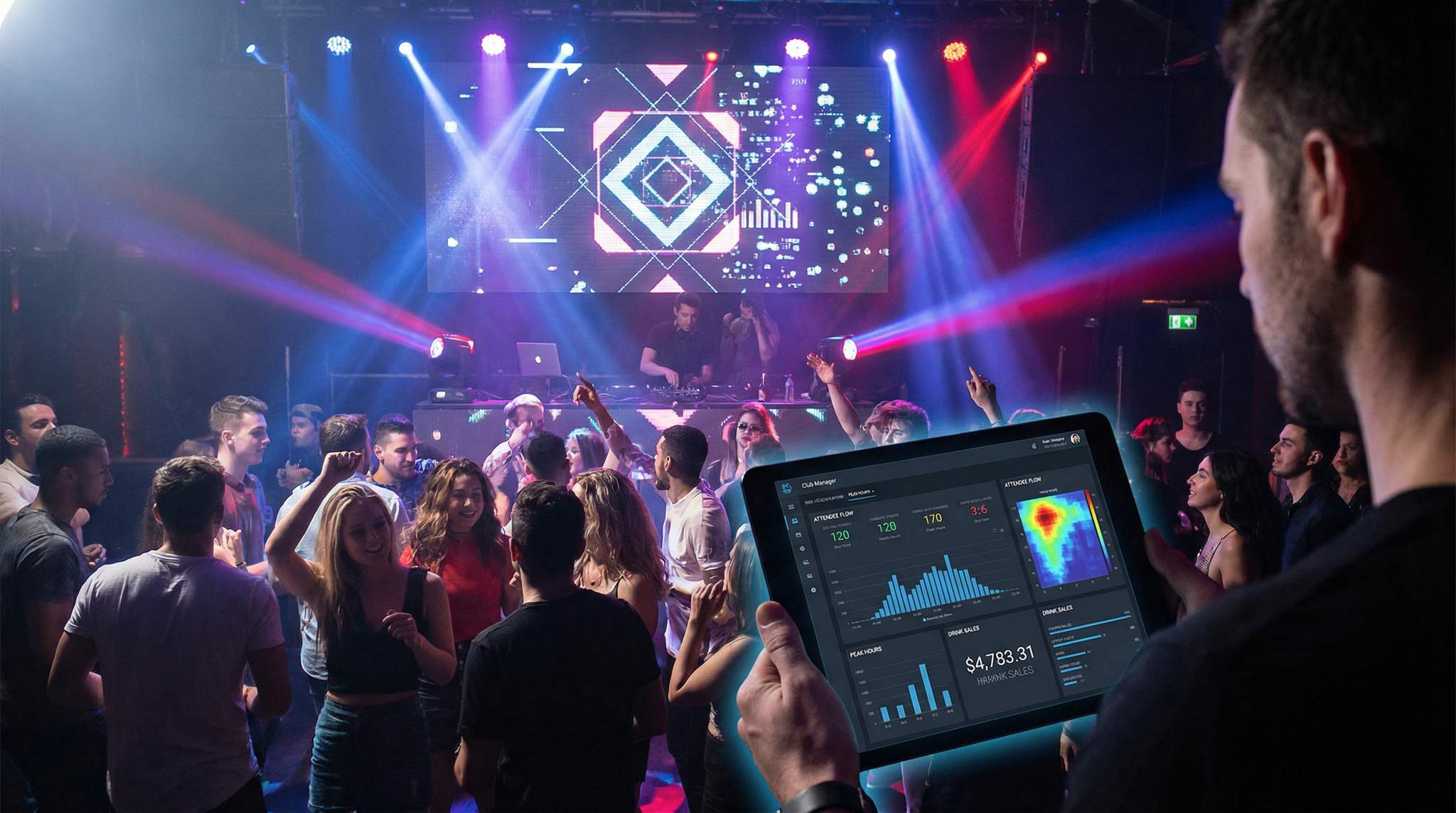
- Real-Time Analytics: RFID systems can feed a lot of data into your management dashboard. You’ll know exactly how many people have entered at any given time and can often see patterns like what time peak entry occurred, or how people move if you’re tracking them between areas (for larger venues). While some of these advanced uses are more common at festivals or multi-zone events, even a single-room nightclub can benefit from the insights: for example, noticing that a large portion of attendees tapped in during a short window might prompt you to adjust staffing or opening times. Overall, RFID wristbands bring a combination of speed, security, and versatility that can significantly elevate a nightclub’s entry process and beyond.
Beyond high-tech RFID options, deploying custom nightclub wristbands remains a highly effective strategy for visual access control. Whether utilizing durable Tyvek, woven fabric, or silicone materials, color-coded wristbands allow security personnel to instantly identify VIP guests, verify age for alcohol service, or manage access to exclusive multi-room areas. When branded with the venue’s logo, these bands also serve as a subtle marketing tool that patrons often wear long after the event concludes.
Grow Your Events
Leverage referral marketing, social sharing incentives, and audience insights to sell more tickets.
Automated Check-In Systems
Automated check-in kiosks and self-service entry devices are another tool clubs can use to streamline the door. These are essentially digital kiosks or turnstiles that allow guests to check themselves in upon arrival, using an interface that ties into your ticketing system or guest list. Think of it like the self-checkout at a grocery store, but for event entry. Here’s how they contribute to efficiency:
- Self-Service Convenience: An automated check-in station can scan mobile tickets or RFID wristbands, look up reservations, and even verify IDs in some cases – all without direct staff involvement in each transaction. For example, you might have a touchscreen kiosk at the club entrance where guests scan their QR code, the system finds their ticket order, and a message flashes “Welcome, enjoy the night!” along with unlocking a turnstile or printing a wristband. This reduces the need for staff to manually process every guest, allowing one or two staffers to oversee multiple kiosks. Guests often find it empowering and quick; they don’t have to wait for an attendant to be free, they can just follow the prompts.
- Integrated ID and Security Checks: Advanced check-in kiosks can integrate with ID scanners or cameras for age and identity verification. For instance, a guest might scan their driver’s license at the kiosk which instantly verifies their age and matches the name to the ticket. Some systems even use facial recognition (with consent) to match the person to a photo on file. This can significantly speed up the age verification process at venues where everyone must be 18+ or 21+. It also adds a layer of security by automatically flagging IDs that are fake or on a banned list (if you have such a database). Automated systems don’t get tired or distracted, so they apply the same standard to every person – making entry fairer and more consistent.
- Personalized Experience: Because kiosks are essentially computers tied into your event database, they can display personalized messages or information that adds a nice touch to the guest experience. Imagine a returning patron checks in and the screen says, “Welcome back, Alex! Your favorite DJ goes on at 12:30AM.” Or for a birthday booking, “Happy Birthday, enjoy your celebration!” These little things are possible when the system pulls data from profiles or notes in the ticketing system. Personalization can elevate the customer’s feeling of being valued. Meanwhile, the club benefits from reduced workload on staff – instead of 3-4 people frantically flipping through lists or scanning tickets, you might have those staff acting as greeters and problem-solvers while the kiosks handle the routine check-ins. As a bonus, accuracy goes up – no illegible handwriting or forgotten comp list entries; the system is the single source of truth.
- Reduced Staffing Pressure: In an era where many hospitality businesses face staffing challenges, automated check-ins are a force multiplier. One staff member can monitor several entry points, intervening only when an issue arises (like an unrecognized ticket or a guest who needs to purchase a ticket on the spot). This can be a lifesaver on nights when you’re short on experienced door personnel. It’s no wonder that many events in 2026 are embracing self-service scanning at the gates – it’s a trend making festivals and clubs more self-sufficient despite labor shortages. Of course, it’s wise to always have a human nearby for exceptions or tech hiccups (like someone whose phone died and can’t pull up their QR code), but overall kiosks dramatically speed up normal entry flow and let your staff focus on customer service and safety rather than routine tasks.
Biometric Verification
Biometric verification technology – such as facial recognition or fingerprint scanning – is an emerging trend in the nightclub and events industry for enhancing security and expediting entry. It might sound futuristic or something out of a spy movie, but biometric entry is becoming more accessible and has already been piloted in venues ranging from sports stadiums to some forward-thinking clubs. Here’s what this technology entails and how it can be applied:
- Face or Finger = Ticket: Biometric entry means a guest’s physical characteristics become the proof of their entry permission. For instance, a club might allow patrons to enroll their facial image or fingerprint in advance (perhaps via a secure app or at a registration kiosk) along with their ticket purchase. When they arrive at the club, a camera at the door scans their face or a device scans their fingerprint, quickly matches it to the stored data, and confirms identity and ticket validity. The benefit here is obvious – no need to show or scan a ticket at all. Your face essentially is your ticket. This can make entry as simple as walking past a camera, with virtually zero friction when it works correctly. It’s the ultimate in streamlining: a guest could be recognized and welcomed in about a second, hands-free.
- Lightning-Fast, Secure Identification: High-quality biometric systems can verify a person’s identity almost instantaneously, even in a crowd. This not only speeds up the entry process (imagine being able to let in five people in the time it used to take to scan one ID/ticket), but also heightens security. Because biometric traits are unique to each individual, the system can prevent someone from gaining entry with a copied credential or someone else’s ticket. It’s also very useful for VIP members or regulars – for example, a members-only nightclub could allow facial recognition entry for approved members so they skip the line entirely. In a controlled test, sports stadiums using facial authentication found that dedicated biometric lanes allowed fans to enter significantly faster than manual check lanes. Nightclubs are experimenting on a smaller scale with VIP programs that use similar tech to let elite guests breeze in through a special entrance. The security benefit is that it’s extremely hard for an impostor to fool a biometric scan (unlike handing someone else’s ID to a busy bouncer, which sometimes works).
- Privacy and Perception: It’s worth noting that biometric systems do raise important privacy considerations and can be controversial if mishandled. Club owners should be aware of local laws (for instance, Europe’s GDPR has strict rules on biometric data) and the need for guest consent. Some early adopters have faced pushback – in London, a few nightclubs started using facial recognition to flag known troublemakers, which raised concerns about surveillance and accuracy. The key is transparency and making it opt-in. If you implement a facial recognition entry for speed or VIP perk, it’s wise to clearly communicate how the data is used, stored, and protected, and always offer an alternative (like a standard QR ticket for those who don’t want to participate). When done right, though, many customers appreciate the futuristic convenience. They can walk up to the door and be greeted by name as the system recognizes them, which adds an upscale touch. For clubs with a focus on exclusivity and security, biometrics might be the next frontier – ensuring that every face inside is a known, paying (or authorized) guest and keeping out those who aren’t supposed to be there. As the technology continues to improve and become more affordable, we can expect to see more nightlife venues carefully adopting biometric options for seamless and secure entry.
Queue Management Software
Even with speedy ticket scanning and high-tech entry methods, popular clubs can still end up with lines – whether due to sudden crowd surges at peak hours or just the physics of many people arriving at once. That’s where queue management software comes into play. These solutions help venues manage crowd flow in real-time and even rethink what “waiting in line” looks like. Implementing queue management tools can turn a potential customer service issue into a more controlled, even pleasant, experience:
- Real-Time Crowd Monitoring: Queue management systems often come with dashboards or apps that show real-time metrics like how many people are in line, estimated wait times, and entry rate. For club managers and security teams, this information is incredibly valuable. If the wait time at 11 PM spikes to 30 minutes, the system might alert you, and you could decide to momentarily open a second entry point or send an extra staffer to assist with ID checks to speed things up. Essentially, you can adjust staffing and operations on the fly based on live data, rather than reacting once people start getting annoyed. Some smart queue tools can even predict crowd buildup if, say, a lot of tickets were just scanned on the parking lot shuttle (for larger venues) or if a nearby event is ending and sending people your way. Staying ahead of bottlenecks is key to preventing them, and these systems give you the eyes and ears to do so.
- Virtual Queues and Remote Check-In: One innovative feature some clubs and events are adopting is the virtual queue. Instead of forcing guests to stand in a physical line, you allow them to check into a digital queue via their phone (often by scanning a QR code when they arrive at the venue or using an app to “join line”). The guest then receives updates on their phone about their wait or an alert when it’s their turn or when they’re near the front. This means attendees can wait comfortably nearby – maybe at an outdoor patio or even in their car on a cold night – until they’re notified to walk to the entrance. For example, a nightclub could say “join our virtual line and we’ll text you when you can head straight to the door.” Over half of consumers now say they prefer waiting digitally over standing in a physical line. Virtual queues reduce crowding at your doorstep and extend hospitality beyond the door (some venues even send a discount code for a drink if the wait is longer than 15 minutes, easing irritation). By the time the notification pings, the guest walks straight in with minimal delay.
- Entertainment and Communication: Even if you maintain traditional lines, queue management tech can help make waiting more bearable. Some systems enable SMS updates: e.g. a text could go out to those in line if there’s an unexpected delay (“We appreciate your patience – we’ll have you inside in just a few minutes!”) which keeps people informed and less frustrated. Others integrate with digital signage, so a screen by the line might display fun content, live DJ cam footage from inside, or approximate wait times. Progressive clubs are treating the line as part of the experience – after all, the night starts the moment the guest arrives, not only when they get inside. With data from queue software, you can deploy staff to offer water to people in line on a hot night, or have a roaming entertainer engage those waiting if things slow down. It’s all about crowd psychology – a well-managed line can actually build excitement and camaraderie (everyone is hyped for the same event), whereas a poorly managed line breeds frustration, as noted in insights on festival queue science and crowd psychology. In terms of data, queue software can capture when people arrive and how long they waited, which is great feedback for improving operations. You might discover, for instance, that a huge chunk of your audience shows up within the same 30-minute window (common when a headliner goes on at midnight), prompting you to open doors earlier or send “come early” incentives.
- Safety and Control: A final but crucial point: effective queue management isn’t just about happier guests, it’s also about safety. We’ve sadly seen incidents at venues where overcrowding or chaotic lines led to dangerous situations. By monitoring and controlling the queue, nightclubs can avoid overcrowding outside, maintain clear fire exits and public walkways, and ensure security personnel have a handle on the crowd. Virtual queues can prevent the sidewalk from turning into a pushing crowd, and real-time capacity monitoring can help you pause entry if inside areas need to clear out a bit (for example, if coat check is backed up, you can slow the flow until it’s resolved). The software essentially gives you a traffic control tower view of your venue’s entry pipeline, contributing to a safer, calmer entry process for everyone.
3. Nightclub Ticketing Solutions
Technology offers a myriad of tools, but choosing the right ticketing solution and platform is key to tying it all together. A nightclub’s ticketing system isn’t just about selling tickets – it’s the backbone that supports marketing, entry management, and even on-site operations. Whether you’re selecting a ticketing platform or evaluating your current one, there are some key features to look for that can make a huge difference in your ability to optimize ticket sales and guest experience:
Data-Driven Event Marketing
Track ticket sales, demographics, marketing ROI, and social reach in real time. Exportable reports give you the insights to make smarter decisions.
Even with speedy ticket scanning and high-tech entry methods, popular clubs can still end up with lines – whether due to sudden crowd surges at peak hours or just the physics of many people arriving at once. That’s where queue management software comes into play. These solutions help venues manage crowd flow in real-time and even rethink what “waiting in line” looks like. Implementing queue management tools can turn a potential customer service issue into a more controlled, even pleasant, experience:
- Real-Time Crowd Monitoring: Queue management systems often come with dashboards or apps that show real-time metrics like how many people are in line, estimated wait times, and entry rate. For club managers and security teams, this information is incredibly valuable. If the wait time at 11 PM spikes to 30 minutes, the system might alert you, and you could decide to momentarily open a second entry point or send an extra staffer to assist with ID checks to speed things up. Essentially, you can adjust staffing and operations on the fly based on live data, rather than reacting once people start getting annoyed. Some smart queue tools can even predict crowd buildup if, say, a lot of tickets were just scanned on the parking lot shuttle (for larger venues) or if a nearby event is ending and sending people your way. Staying ahead of bottlenecks is key to preventing them, and these systems give you the eyes and ears to do so.
- Virtual Queues and Remote Check-In: One innovative feature some clubs and events are adopting is the virtual queue. Instead of forcing guests to stand in a physical line, you allow them to check into a digital queue via their phone (often by scanning a QR code when they arrive at the venue or using an app to “join line”). The guest then receives updates on their phone about their wait or an alert when it’s their turn or when they’re near the front. This means attendees can wait comfortably nearby – maybe at an outdoor patio or even in their car on a cold night – until they’re notified to walk to the entrance. For example, a nightclub could say “join our virtual line and we’ll text you when you can head straight to the door.” Over half of consumers now say they prefer waiting digitally over standing in a physical line. Virtual queues reduce crowding at your doorstep and extend hospitality beyond the door (some venues even send a discount code for a drink if the wait is longer than 15 minutes, easing irritation). By the time the notification pings, the guest walks straight in with minimal delay.
- Entertainment and Communication: Even if you maintain traditional lines, queue management tech can help make waiting more bearable. Some systems enable SMS updates: e.g. a text could go out to those in line if there’s an unexpected delay (“We appreciate your patience – we’ll have you inside in just a few minutes!”) which keeps people informed and less frustrated. Others integrate with digital signage, so a screen by the line might display fun content, live DJ cam footage from inside, or approximate wait times. Progressive clubs are treating the line as part of the experience – after all, the night starts the moment the guest arrives, not only when they get inside. With data from queue software, you can deploy staff to offer water to people in line on a hot night, or have a roaming entertainer engage those waiting if things slow down. It’s all about crowd psychology – a well-managed line can actually build excitement and camaraderie (everyone is hyped for the same event), whereas a poorly managed line breeds frustration, as noted in insights on festival queue science and crowd psychology. In terms of data, queue software can capture when people arrive and how long they waited, which is great feedback for improving operations. You might discover, for instance, that a huge chunk of your audience shows up within the same 30-minute window (common when a headliner goes on at midnight), prompting you to open doors earlier or send “come early” incentives.
- Safety and Control: A final but crucial point: effective queue management isn’t just about happier guests, it’s also about safety. We’ve sadly seen incidents at venues where overcrowding or chaotic lines led to dangerous situations. By monitoring and controlling the queue, nightclubs can avoid overcrowding outside, maintain clear fire exits and public walkways, and ensure security personnel have a handle on the crowd. Virtual queues can prevent the sidewalk from turning into a pushing crowd, and real-time capacity monitoring can help you pause entry if inside areas need to clear out a bit (for example, if coat check is backed up, you can slow the flow until it’s resolved). The software essentially gives you a traffic control tower view of your venue’s entry pipeline, contributing to a safer, calmer entry process for everyone.
3. Nightclub Ticketing Solutions
Technology offers a myriad of tools, but choosing the right ticketing solution and platform is key to tying it all together. A nightclub’s ticketing system isn’t just about selling tickets – it’s the backbone that supports marketing, entry management, and even on-site operations. Whether you’re selecting a ticketing platform or evaluating your current one, there are some key features to look for that can make a huge difference in your ability to optimize ticket sales and guest experience:
Implementing dedicated ticketing software for nightclubs allows operators to centralize these functions seamlessly. When evaluating online ticketing for nightclubs, it is crucial to prioritize platforms built specifically for the high-volume, fast-paced nature of nightlife rather than generic event registration tools.
Key Features to Look For
When evaluating the landscape of event technology, identifying the right ticketing features for nightclubs is essential for maximizing both operational efficiency and revenue. A robust platform should go beyond basic admission, offering specialized tools tailored to the unique demands of nightlife venues.
- User-Friendly Interface: Both your staff and your customers will interact with your ticketing software constantly, so it needs to be intuitive and easy to use. A clean, straightforward user interface on the ticket purchase page means fewer abandoned carts and less confusion. (After all, if it’s hard for someone to figure out how to buy a ticket on your site, they might just give up – and that’s lost revenue.) On the backend, a user-friendly dashboard for your team means quicker training and fewer mistakes when you’re managing events or checking sales. In the middle of a busy club week, you don’t want to be wrestling with a clunky system. Simplicity and clarity can significantly boost ticket sales by reducing friction in the purchase process.
- Robust Performance and Scalability: Nightclubs often deal with surges in ticket demand – for example, when you announce a big-name DJ or open sales for a New Year’s Eve event, you might get thousands of hits in a short time. Your ticketing platform must be able to handle high volumes of traffic and sales without crashing. Look for a solution with a proven record of uptime and scalability. A robust system will prevent the nightmare of a ticketing website crash just when demand peaks. Reliability is also crucial on the night of the event: door staff should be able to scan tickets or look up orders in the system even if there’s spotty internet (an offline mode is a big plus). Essentially, the platform should be battle-tested for the live event environment. If it can handle a festival or concert on-sale, it can handle a Saturday club night. Downtime or slow processing can cost you sales and create a poor customer experience, so robustness is a must.
- Payment Gateway Integration and Mobile Wallets: Ensure the system integrates smoothly with popular payment gateways and offers multiple payment options to buyers. Many ticketing solutions will connect with processors like Stripe, PayPal, or Adyen to accept credit/debit cards. But beyond that, modern audiences appreciate support for mobile wallets such as Google Pay and Apple Pay, which allow one-tap purchasing on mobile devices. The more convenient and trusted payment options you provide, the easier it is for people to complete their purchase. For instance, a customer on their phone can literally use their thumbprint or face (via Apple Pay) to buy a ticket in seconds – a much faster process than pulling out a card and typing numbers. Removing payment friction is proven to increase conversion rates. Additionally, if your club attracts international guests or a younger demographic, consider support for other payment methods like Venmo, WeChat Pay, or cryptocurrency (if that fits your brand). The key is making checkout seamless and secure for everyone.
- Customizable Event Pages: Your event ticketing page is effectively a marketing landing page for each event – so it should look appealing and on-brand. Look for a ticketing platform that lets you customize the page with rich content: images, videos, GIFs, and stylized background themes. Being able to embed a hype video of last week’s party or a DJ teaser mix can increase excitement and drive more ticket purchases. Customization also means branding the page with your club’s logo and colors, so the customer feels confidence they’re in the right place. Some advanced platforms even let you tailor the layout or add interactive elements (like seat or table selection for venues that offer that). A visually engaging ticketing page can set your event apart from the myriad of plain listings out there. It’s about creating an immersive experience from the moment a customer considers buying a ticket. As a bonus, a well-made page with key info (lineup, dress code, timings, refund policy) also reduces customer support questions.
- Customer Referral System: Few marketing methods are as effective as word-of-mouth – especially in nightlife, where people love to roll out with their crew. A ticketing platform with a built-in referral or ambassador system can supercharge your event promotion. This feature allows ticket buyers to get a personal referral link or code to share with friends, often with an incentive attached. For example, you might offer “Give your friend 10% off and earn $5 credit for each referral.” By incentivizing attendees to spread the word, you turn your fans into promoters. Look for systems that track these referrals automatically and maybe even gamify it (like showing a leaderboard of top referrers). According to industry insights, referral programs can significantly boost ticket sales by tapping into social networks and offering exclusive access and merchandise. If 100 attendees each invite one friend, that’s a potential doubling of your sales – all through your existing customer base. The key is ease of use: the platform should make it one-click simple for someone to share their referral link to Instagram, WhatsApp, etc., and to reward them when it leads to a sale. This not only sells more tickets but also increases engagement and loyalty, as attendees feel like part of the event’s success.
- Backend Integration with Marketing APIs: In today’s digital marketing landscape, data integration is power. A great ticketing solution will offer integrations with marketing and social media platforms, such as Meta (Facebook/Instagram) APIs or Google Analytics and Ad pixels. Why does this matter? Suppose someone clicks an Instagram ad for your event and buys a ticket; with proper integration, you can record that conversion and retarget similar audiences or measure ROI accurately. Or, imagine being able to automatically add ticket buyers to a custom audience for future ads (“everyone who bought a ticket to our techno night gets promos for the next techno event”). Direct integration with Meta’s API could enable features like auto-creating a private Facebook event for ticket holders, or verifying attendees through their social profiles for a more personalized check-in. Even email marketing tools (like Mailchimp, etc.) are great to integrate – your list of ticket buyers can flow into your newsletter list for follow-up engagement. In short, a ticketing system that plays nicely with other marketing and CRM tools will save you time and unlock sophisticated promotion strategies. This is especially crucial for venues that rely heavily on targeted ads and social media buzz. Instead of manually exporting and importing lists, integrations keep everything in sync behind the scenes, so you can focus on strategy.
- Dynamic Pricing Options: As the demand for popular events fluctuates, some clubs are starting to adopt dynamic pricing models – where ticket prices can adjust based on demand, time remaining, or inventory. A robust nightclub ticketing platform should support options for dynamic pricing (or at least easy manual price tiers). For example, you might start with early bird pricing, then automatically increase to a higher tier when those sell out or when the event date is closer. Or even real-time dynamic pricing where the system increments price as certain sales thresholds are hit (similar to airline tickets). This can maximize revenue and also incentivize fans to buy early before prices rise. However, dynamic pricing needs to be done transparently to avoid customer confusion or backlash. The right system will let you configure rules and clearly display when prices will change or how many tickets are left at the current price. If you’re interested in this approach, make sure to choose a platform that supports it and read up on strategies (e.g., check out our guide on how dynamic pricing impacts nightclub tickets for tips on doing it right). When executed well, dynamic pricing can boost both urgency and revenue, ensuring you’re not leaving money on the table for in-demand events.
- Membership and Subscription Management: Venue operators frequently explore how to use ticketing software for membership-based access to cultivate a loyal VIP base. Advanced platforms support recurring subscriptions and exclusive member tiers directly within the main system. By issuing digital membership cards—often stored in mobile wallets—clubs can grant expedited entry, waive standard admission fees, or unlock hidden ticket allocations for high-demand nights. This capability transforms standard online ticketing for nightclubs into a comprehensive loyalty engine, ensuring top patrons experience frictionless access while the venue secures predictable, recurring revenue.
- Secure, Encrypted Transactions: Last but absolutely not least, security underpins everything. You’ll be processing a lot of personal and payment data through your ticketing system, so it must use industry-standard encryption and security practices. Look for mentions of PCI compliance (for credit cards), SSL encryption for all web pages, and perhaps even features like CAPTCHA or fraud detection to prevent bots and scalpers from abusing your ticket sales. In an age of frequent data breaches, patrons are becoming more conscious of how their data is handled. A secure platform protects your customers’ sensitive information (names, emails, credit card numbers) and by extension protects your venue’s reputation. Additionally, consider what anti-fraud measures the platform has for the tickets themselves – watermarking PDFs, generating rotating QR codes, one-device mobile ticket rules, etc., to ensure one ticket equals one entry. Building trust with your audience is crucial; they should feel safe buying tickets directly from you. When you can confidently say “our ticket provider keeps your data safe and transactions encrypted,” it removes another barrier to purchase. Beyond customer comfort, security features also thwart malicious actors (like scalper bots grabbing all your tickets in seconds, or hackers trying to intercept transactions). Choose a ticketing solution that invests in top-notch security – it’s the foundation of a trustworthy ticket buying experience.
Beyond these core features, operators must consider how their chosen platform handles the perception of exclusivity. For instance, patrons often wonder if it is hard to get into high-demand venues like Club Space. As an operator, you can leverage advanced ticketing software to manage this demand gracefully—using tiered releases and VIP allocations to maintain an exclusive brand image while ensuring the actual door operations remain orderly. Furthermore, having granular control over your night club ticket price allows you to adjust on the fly, balancing accessibility with premium positioning.
By focusing on these features when evaluating nightclub ticketing solutions, venue owners and managers can select a platform that not only meets operational needs but actively helps sell more tickets and enhance marketing efforts. The right system becomes a one-stop-shop: handling everything from online ticket sales to on-the-door scanning, feeding you rich data, and integrating with your promotion channels. In essence, it’s like adding a high-powered engine to your event operations, driving efficiency and revenue to new heights.
Smart Promo Codes & Presale Access
Create percentage or flat-rate discount codes with usage limits, date ranges, and ticket type restrictions. Plus unlock codes for private presales.
4. Efficient Booking Process
Selling tickets is one thing – but what about reservations and bookings that go beyond general admission tickets? Many nightclubs deal with table bookings, guest list reservations, package deals (like a birthday package that includes tickets and a table), and so on. Streamlining the booking process for all these elements is essential to keep operations smooth and cash flowing. An efficient booking process ensures that whether a customer is buying a GA ticket, reserving a VIP table, or both, it’s all handled seamlessly in one system. Here are strategies to make your nightclub’s booking and reservation process as smooth as possible:
Streamlining Reservations and Bookings
- Integrated Ticketing System: Aim to have one integrated system that can handle both online and in-person ticket sales, as well as reservations. This means your website’s ticket widget, your promoter’s ticket link, and your on-site door sales are all feeding into the same inventory in real time. When everything is integrated, you eliminate double-booking and confusion. For instance, if you sell out of early bird tickets online, your door staff won’t accidentally keep selling them at the old price – they’ll see the updated status instantly. Integration also helps with composite bookings: say someone buys 4 tickets and also reserves a VIP table with bottle service through your site – all those details should appear together in your system so that at the door, you can welcome them and escort them to their table without hiccups. A great example of integration payoff is during special events: customers might snatch up tickets online until the last minute, and with an integrated solution, your team at the door is always working off the latest info. No more “sorry, we’re actually full” mix-ups due to a lag in communication. It caters to both the planner who buys in advance and the spontaneous clubber who walks up to pay at the door.
- Box Office Sync: If your venue operates a physical box office or ticket counter, ensure it’s tightly synchronized with your online sales. Modern club ticketing software often has a Box Office app or interface for door sales that directly deducts from the same ticket allotment. This way, whether someone buys from their couch on Thursday or at the door Saturday night at 10 PM, it’s all counted in one place. By having this synchronization, you reduce the risk of overselling or overbooking. It also simplifies accounting – all sales end up in one report. We’ll talk more about box office management in the next section, but in terms of the booking flow: a staff member should be able to use the system to quickly sell any available tickets or table reservations on the spot, with all the customer details captured digitally. The goal is a unified sales funnel: different channels, one database.
- Multiple Payment Options: Just as with online ticket sales, offering multiple payment methods for bookings can boost conversion. If someone is reserving a $500 table package, they might want to use a specific credit card or a payment plan if you offer it. Make it easy – accept cash, card, and mobile payments on-site, and consider letting people pay online in advance for things like table deposits. Many clubs now allow you to book a table online with a deposit payment, which secures the booking and then the remainder can be settled at the venue. This not only locks in the sale, it also provides the club with commitment (reducing no-shows). Integrating options like Google Pay and Apple Pay online can also expedite bookings for users who prefer those. The less friction in payment, the more likely a customer completes the booking. Also, offering international payment options (like accepting international cards or alternate methods like AliPay for Chinese tourists, for example) can open your doors to a wider audience, especially in destinations with global visitors.
- Customer Data Management: Use a customer relationship management (CRM) approach for your bookings. Every time someone buys a ticket or reserves a table, your system should record their name, contact, what they purchased, and any relevant preferences. Over time, you build a database of your clientele – extremely valuable for targeted marketing and service personalization. For instance, your data might show that a certain customer has booked a rooftop table three times in the last 6 months for corporate outings. Come New Year’s Eve or another big event, you could reach out early with a special offer for them. Or note if someone always comes for a particular DJ genre night – you can directly invite them when a similar event is coming up. Efficient data management often involves tagging or segmenting customers (e.g., “VIP big spender,” “birthday party booking,” “regular GA attendee”) so that you can tailor your communication. Also, by analyzing booking data you might discover patterns – maybe your table service is mostly bought by groups celebrating something, which tells you to create more “party packages.” On an operational level, a good system will let you pull up a customer’s history at check-in, which can impress them (e.g., “Welcome back, I see you booked with us for your birthday last year – thanks for coming again!”). All in all, centralizing customer data and using it smartly is a hallmark of an efficient booking process.
- Simplified Booking Steps: Whether it’s online or in person, keep the booking workflow as short and straightforward as possible. If online, minimize the number of pages or clicks to complete a purchase. Research shows that about 70% of online shoppers abandon their carts before completing the purchase, often due to too much friction or complexity in checkout. Don’t let that happen to your event sales. For example, don’t force an account creation before purchase (offer a guest checkout with just email, then encourage account creation after, if at all). Only ask for information that’s truly needed – lengthy forms will turn people off. On the door side, train staff to use quick options like swiping a card to process payment rather than manually typing a bunch of info. Time is money when a line is building up. If your system supports it, use QR codes or short links on your promotional materials that lead directly to the ticket or table booking page, bypassing any confusing navigation. The mantra is keep it simple: clear event selection, clear pricing, clear options (maybe a combo selector for “General Entry or Table Packages” with descriptions). Each extra step or uncertainty can cause someone to drop out, especially for impulse club-goers. By streamlining the steps, you’ll see more completed bookings and ultimately higher revenue.
- Real-Time Reporting and Analytics: After implementing the above, make sure you’re actually monitoring the results in real time. A solid ticketing/booking system will have a dashboard where you can see how many tickets are sold, how many tables reserved, revenue so far, etc., at any moment. This is crucial for managing cash flow and logistics. If an event is in two days and you see only 20% tickets sold, you might decide to boost promo or send a last-minute email blast. If it’s 90% sold out a week early, maybe you can confidently increase the ticket price for the final batch or start a waitlist. Real-time data helps with those quick decisions. Additionally, analytics after the fact – like knowing what times people bought tickets (maybe most sales happen after 8 PM when people are off work), or which promotion code was used the most – will help refine future booking processes. For example, if you notice a lot of people are buying tickets on mobile devices (likely the case these days), you ensure your mobile booking experience is flawless. Or analytics might show most of your table reservations are coming through a specific concierge partner – information that could lead you to nurture that partnership. The bottom line: use the reporting tools to constantly optimize. An efficient booking process isn’t set in stone; it evolves based on what the data tells you about your customers’ behavior.
5. Box Office and Ticket Sales
The box office – whether it’s a literal ticket window, a podium at the club entrance, or simply your front-of-house staff with a tablet – plays a pivotal role in managing ticket sales and ensuring a smooth entry process. It’s where all the preparation meets reality as guests arrive. A well-organized box office can be the difference between a snarl of confusion at the door and a quick, pleasant welcome for patrons. Let’s explore how focusing on box office operations can enhance nightclub entry and overall event success:
- Centralized Ticket Management: A modern box office setup should serve as the central nerve center for all ticketing activity during the event. This means that your on-site ticket sales, will-call pickups, guest list check-ins, and any customer service issues (like lost tickets or name changes) are handled in one place (or a coordinated set of places) with a unified system. By using the integrated platform we discussed earlier, your box office staff can see all tickets that have been sold (online and in-person) up to that minute. For example, if someone bought a ticket online 10 minutes before arriving, the system reflects that and the box office can quickly find their booking. Centralization ensures up-to-date information – no more awkward “Our list doesn’t show your name” moments because someone bought their ticket last-minute. It also means if a VIP list guest decides to buy extra tickets for friends at the door, the system accounts for it in real time. All transactions funnel into the same database, giving you accurate counts and preventing oversights.
- Streamlined On-Site Sales: Despite the trend toward pre-sales, many clubs still sell a significant number of tickets at the door. A well-run box office can handle these walk-up sales efficiently. Equip it with a fast point-of-sale system (tablet or computer + card reader + maybe even a QR code for PayPal/Venmo payments) to process transactions quickly. The goal is to minimize any queue at the ticket booth so people can transition into the entry line proper (or directly inside) as fast as possible. Use signage to clearly indicate ticket prices, accepted payment methods, and options (e.g. “General Admission $20, Express Entry $35, VIP Table – inquire inside”). This lets guests have their payment ready, speeding up the process. Having a separate line for “Tickets Already Purchased / Guest List” vs “Buy Tickets Here” with clear directions can also maintain order. An organized and fast box office means guests spend less time fumbling with purchases and more time enjoying the event, which reflects positively on your venue from the first interaction.
- Enhanced Customer Experience: The box office is often the first point of human contact a guest has with your event on the night. A well-trained, friendly staff member who can quickly find a reservation or resolve an issue sets a welcoming tone. Quick and efficient service at the box office – like a will-call line that moves rapidly because IDs and tickets are matched in seconds – significantly reduces stress for guests. Think of it from the attendee perspective: showing up to a chaotic front door with a confused staff is a frustrating start, whereas a smooth check-in or purchase feels professional and puts them at ease. One way to enhance experience is to equip staff with information at their fingertips. For instance, they should be able to see notes like “Jane Doe – birthday package, 10 guests, complimentary champagne included” so they can give Jane the right drink vouchers and a “happy birthday!” wish. Another example: if someone’s ticket isn’t scanning, staff can quickly look up the name and see the purchase, then resolve it (perhaps the person bought multiple tickets and forwarded one to a friend incorrectly – your staff can check them in manually and mark that ticket as used). By solving problems quickly and keeping the line moving, you ensure that guests’ excitement stays high. A well-managed box office also demonstrates professionalism and trustworthiness – people feel confident that the event is legitimate and well-run when the front-of-house is orderly.
- Increased Cash Flow Efficiency: Efficient ticket sales management leads to better and faster cash flow. Every ticket sold (whether days in advance or at the door) is revenue, but how and when you collect it matters for operations. By streamlining sales with technology, nightclubs can often collect revenue faster – for instance, online ticket funds might be deposited directly into the club’s account even before the event happens, improving cash flow for event prep expenses. On the night of, a speedy electronic sale (card or mobile pay) gets funds settled quickly rather than dealing with large amounts of cash that require counting and safekeeping (and can be prone to error or even theft if not handled carefully). If you do handle cash, a good box office process will incorporate frequent skims and safe storage so that the night’s take is secure. Also consider dynamic pricing at the door: as the venue fills up, if demand is still high, your box office could raise the door price later in the night (many clubs do “more at the door after midnight” for example). A nimble ticketing system lets you do that on the fly and capture additional revenue from latecomers. All these practices ensure that your event’s income is maximized and that you have the money in the bank when you need it. Plus, reduced errors and discrepancies mean fewer refunds or disputes later – protecting the revenue you earned.
- Real-Time Updates and Communication: Integration between the box office and entry staff (and even security) is crucial. With real-time updates, as soon as the box office sells the “last ticket” available, that info is relayed to the scanning staff so they know the event is at capacity. This prevents awkward situations where a door person might otherwise keep letting people in not knowing the count. Modern systems can even show a live tally of how many people have entered vs tickets scanned. If capacity is legally limited (as many cities require, e.g., a 500-person cap), this helps avoid going over the limit – a safety and compliance matter. Real-time data also means if an issue crops up (like someone is flagged as already checked in but insists they haven’t entered, which could indicate a duplicated ticket), the box office can investigate immediately while that person is held aside, rather than causing a backlog at the gate. Communication tools – even something simple like a walkie-talkie or WhatsApp group between the door team – paired with real-time data ensure everyone is on the same page. For instance, if the box office notices 50 people who bought online haven’t shown up by 11:30, they might communicate to management whether to start allowing some at-door sales beyond initial allocation (some venues oversell slightly, knowing some percentage no-show or arrive very late). Data-driven decisions like this, informed by your ticketing system’s live feed, let you optimize the night in real time. And when the night’s over, the centralized data from the box office can generate a clear report: how many tickets sold, how many comped, how many actually attended – all of which feed into evaluating the event’s success and planning the next one.
Integrating comprehensive ticketing software for nightclubs directly into your box office workflow also empowers staff to make smarter pricing decisions on the fly. When walk-up demand spikes, operators can instantly adjust the night club ticket price across all point-of-sale devices. This ensures that online ticketing for nightclubs and physical door sales remain perfectly synced, preventing revenue leakage and maintaining a consistent brand experience even during the busiest hours.
In summary, giving attention to box office operations – and empowering it with integrated tech and trained staff – yields benefits throughout the nightclub. It’s the hub where sales, service, and entry merge. By making that hub robust and efficient, you improve the throughput at the door, the satisfaction of your guests, and the accuracy of your event management. A smart mantra for any club is: “The party starts at the box office.” If you treat the box office not as a last-minute necessity but as a strategic part of the nightlife experience, you’ll set the stage for smoother nights and happier crowds.
6. The Benefits of Technology for Nightclub Ticketing and Entry
Integrating technology into your nightclub’s ticketing and entry process isn’t just about being flashy or “up with the times” – it delivers tangible benefits that directly impact your bottom line and the satisfaction of your patrons. Let’s recap and highlight some of the major benefits clubs can enjoy by embracing modern ticketing and entry systems:
Increased Efficiency
One of the most immediate benefits of using technology at the door is speed. Simply put, digital systems process entries faster than manual methods. Scanning a QR code or tapping an RFID takes a second or two – much quicker than flipping through paper lists or making change for cash. Multiply that time savings by hundreds of guests, and the difference becomes dramatic. For example, a single staff member with a scanning app can admit perhaps 600 people in an hour (10 people a minute or more), whereas manually checking IDs against a list might only handle a fraction of that. The overall throughput of your entry points can double or triple, meaning you clear lines faster and get guests inside promptly. This efficiency shows itself in shorter wait times (like we discussed, going from a 30-minute queue to a 10-minute one is a huge improvement) and in more consistent flow. It also allows you to handle late surges better – if 100 people show up at 11 PM, a tech-enabled door can process them in short order, whereas a traditional door might be overwhelmed. Efficient entry isn’t just nice to have; it has ripple effects like reducing street congestion outside your venue (neighbors and local authorities appreciate that) and ensuring that hype and energy aren’t killed by a tedious wait. Additionally, efficiency extends to internal operations: fewer staff can manage more people. You might need 3 door staff instead of 6 because each person is more effective with the right tools. This can be a significant cost saving over time, or it frees up budget to deploy staff in other roles (like roaming security or an extra bartender to handle the influx of people who got in quicker). It’s the classic example of working smarter, not harder, and it pays off every single event.
Turn Fans Into Your Marketing Team
Ticket Fairy's built-in referral rewards system incentivizes attendees to share your event, delivering 15-25% sales boosts and 30x ROI vs paid ads.
Enhanced Experience for Ticket Buyers
Every club owner knows that setting the right vibe is essential. Part of that vibe is shaped before a patron even steps onto the dance floor – it begins at entry. By streamlining entry, you’re giving guests a smoother, more enjoyable experience from the get-go. No one enjoys standing in a slow, shuffling line or dealing with a mix-up at the door. When a person buys a ticket online easily, then arrives and gets that ticket scanned in seconds, it creates a frictionless journey that leaves them feeling good. Instead of thinking “finally, we’re in… that was a hassle,” they think “wow, we walked right in with no issues!” This positivity translates into a better mood, which means they’re likely to have more fun inside (and possibly spend more on drinks, etc.). A great entry experience is also something they’ll remember and share: people are quick to tell friends if “that new club has an amazing system, we got in super fast even though it was packed.” It becomes a selling point, especially when contrasted with other venues that might be infamous for long waits or disorganization. Modern touches like mobile tickets also cater to guest preferences. Today’s partygoers are glued to their phones; letting them use what’s in their pocket as the key to entry is naturally convenient. Features like receiving an event reminder or a QR code in their email or Apple Wallet with event details add to their anticipation. And on the club side, because tech reduces check-in errors and egos at the door (no power-tripping doorman holding the list clipboard), guests are treated more fairly and consistently. In short, less hassle = happier customers. They can focus on enjoying the music and atmosphere, which is why they came in the first place. The result is a more enjoyable overall experience, from door to dance floor, which increases the likelihood they’ll come back again.
Improved Security
Modern ticketing tech significantly ups the security game at nightclubs. With solutions like mobile QR codes, RFID, and biometrics, it becomes far easier to ensure that only authorized, paying guests get in. This reduces problems like gatecrashers or people sneakily re-using tickets. For instance, the risk of counterfeit tickets plummets when you use dynamic QR codes or RFID wristbands, because these aren’t trivial to copy like a paper ticket or hand stamp. We mentioned earlier how some clubs deal with rampant fake tickets on big event nights – digital systems all but eliminate that headache. Security staff can focus less on scrutinizing ticket authenticity and more on monitoring crowd behavior, because they trust the system to flag invalid entries. Another aspect is being able to track entries in real time. Knowing exactly how many people are inside isn’t just a logistic matter – it’s a safety issue, ensuring you’re within capacity and not overcrowded. Tech solutions give you accurate counts at any moment, whereas manual clickers can fail or be miscounted. Also, features like linking tickets to identities (e.g., requiring each mobile ticket be in an individual’s name) can deter troublemakers. If someone is banned or on a watch list, advanced systems can automatically prevent a ticket purchase or flag their ticket at scan time. Biometric verification takes this to an even higher level by virtually guaranteeing that Jane Doe is really Jane Doe when she enters, not someone borrowing her pass. Plus, cashless payments (like via RFID wristbands inside) reduce theft and cash handling issues, indirectly improving overall event security. By tightening entry control, tech aids in keeping out illicit elements, whether that’s preventing unauthorized vendors, curbing sneaking in alcohol, or just keeping track of who is in the venue at any given time (useful in emergencies). Many clubs also integrate their ID scanning with systems that alert them to fake IDs or underage attempts. All told, technology helps create a safer environment by ensuring those who shouldn’t be in your club don’t get in, and by providing oversight and data to quickly respond to any situation. Patrons, in turn, feel safer and more relaxed knowing the venue has solid entry control and security measures.
Better Data Collection and Insights
We live in a data-driven world, and nightclubs that leverage data have a competitive edge. By using digital ticketing and entry systems, you automatically generate a wealth of information about your events and attendees. Every ticket purchase can tell you something: the time it was bought, the type of ticket (GA vs VIP), how the buyer found the event (if you use tracking links or promo codes), etc. Every check-in at the door logs an entry time and matches to a ticket buyer profile. Over time, this adds up to powerful attendee analytics. For example, you might learn that a large segment of your audience always buys tickets last-minute on the day of the event, which could inform how you structure pricing (maybe keep day-of prices slightly lower to not scare them off, or emphasize urgency in marketing to change behavior). You can see which DJs or event themes draw the most pre-sales versus door sales. Perhaps your data shows that 75% of your attendees for Latin Night are female, or that people who buy VIP tickets also tend to buy more drinks (if you integrate POS data). These insights help in tailoring experiences and promotions. Leading venues worldwide are using data to curate better lineups and even adjust operations on the fly. You can reward your most loyal customers (e.g., those who attended 5 events in the last 3 months) with a free drink or early access. You can identify lapsed customers and send them a “we miss you” discount. On the operational side, data like peak entry times can help with staff scheduling (ensure more hands on deck at 10-11 PM if that’s rush hour). And reporting to stakeholders (owners, city regulators, sponsors) becomes easier when you can quantify your audience – “We had 1,200 attendees, 60% bought in advance online, attendees averaged 3.5 hours at the club,” etc. All this is possible when your systems are capturing and organizing data. Instead of guessing, you can make data-driven decisions. Moreover, sharing anonymized stats can help cross-promotion (like telling a DJ – our data shows your show had attendees from three different states, which might interest their agent). In essence, tech turns the once elusive club crowd into understandable patterns and trends, allowing you to continuously improve your offerings. This not only boosts marketing effectiveness but can improve customer retention, because you’re learning what your crowd loves and giving them more of it.
Cost Savings
It might seem paradoxical that adding technology (which has an upfront cost) can save money, but in many cases it does, especially in the long run. First, consider labor costs. Automated systems and streamlined entry mean you might need fewer staff on the door and in the ticketing backend. For instance, rather than paying six security staff to manage a disorganized crowd and check every ID manually, you might run a tighter ship with four staff using scanners and an ID-check device – the line still moves faster, and you save on hourly wages. Over time, those savings can be significant. Next, pre-sales and online sales improve cash flow and reduce uncertainty, which has financial benefits (like less need for expensive last-minute marketing blasts or overtime hours to push ticket sales). Pre-sales also typically come with processing fees (often paid by the customer) that cover the transaction cost, whereas at-door sales by cash might incur accounting overhead and potential shrinkage. Speaking of cash, having less of it on site lowers the risk of loss or theft – saving you from unfortunate financial hits and higher insurance or security costs. Technology can also cut material costs: printing thousands of physical tickets or guest list sheets every week costs money and time, whereas digital tickets are essentially free to reproduce. If you implement RFID wristbands, there is a cost per band, but you often recoup that through increased spending (stats from festivals have shown higher average spend per attendee with cashless RFID systems, which likely translates to clubs in terms of more bar sales due to convenience). Additionally, fewer ticketing errors means fewer accidental freebies – no more people sneaking in with duplicate tickets or unverified +1s, which protects your revenue. Let’s not forget about marketing spend: with better data and targeted promotion, you can spend your marketing budget more efficiently, potentially reducing wasteful broad ads and focusing on what brings ROI. Lastly, while the tech systems do involve fees or investments, competition in the event tech space has grown by 2026, which means more affordable and scalable solutions for venues of all sizes. You might find that the per-ticket fee of an online system is offset by higher sales (since more people buy due to convenience) and by not having to hire an external ticketing service at high cost for special events. Over time, the initial tech investment often pays for itself in these combined savings and additional revenues captured. And let’s not overlook the cost of negative experiences – long lines and entry problems can cost you repeat business. By investing in a smooth entry, you’re indirectly saving future revenue that might have been lost if first-timers decided not to return due to a bad door experience. So from various angles, technology can indeed trim expenses and bolster the financial health of a nightclub.
Implementing Technology for Entry: Best Practices
Adopting new ticketing and entry tech is not a magic wand – it needs proper implementation and management to deliver on all the promises we’ve discussed. The following are best practices nightclub managers should follow to maximize the benefits of technology while ensuring a smooth transition and operation:
- Test Systems Before the Event: This might sound obvious, but it’s amazing how often it’s overlooked in the rush of event planning. Always run thorough tests of all tech components well before doors open. If you’re using a new scanning app, do a mock check-in with your team (have some sample QR codes, scan them, simulate problems like duplicate scans). If deploying RFID, test the readers and wristbands in the venue environment – check that they read properly when people walk at normal speed, even under club lighting or when multiple tags are nearby. Test internet connectivity for cloud-based systems; if Wi-Fi at your door is spotty, have a backup like a mobile hotspot or an offline mode ready. A dry run can reveal issues like a slow tablet, a printer not pairing for will-call tickets, or a database syncing issue. It’s far easier to fix these in an empty venue at 3 PM than with 300 people waiting outside at 10 PM. Additionally, test the integration between components: for instance, if your online ticketing is supposed to sync with your scanning app, verify that a test ticket purchase instantly shows up on the scanner device. Consider this mantra: “No surprises on show night.” With solid testing, you ensure the tech actually speeds up entry instead of causing any delays.
- Train Staff on New Systems: Even the best technology will falter if the people using it aren’t comfortable with it. Invest time in training your team – both your permanent staff and any temporary workers or promoters – on how to use the ticketing and entry systems. This includes everything from selling a ticket on your new iPad point-of-sale, to scanning techniques (e.g., “hold the phone 6 inches under the scanner and wait for the beep”), to troubleshooting common issues. For example, teach them what to do if a QR code won’t scan (perhaps manually look up the name or reference number), or how to replace an RFID wristband that’s not reading. Make sure security staff at the door know the flow as well: if you have separate lines or a VIP entrance, all staff should know who goes where and how their tickets are handled. The first night you roll out tech, maybe put your savviest crew members at the front to set the pace and have a supervisor floating to answer questions. Emphasize to the staff why the new system is beneficial – if they understand it’s making their job easier in the end (less manual work, less conflict with guests), they’ll be more enthusiastic and attentive. Also, encourage a culture where staff report issues and feedback. They’re the ones hands-on; if something is confusing or not working, you want them to flag it so you can adjust the process or get further training from the vendor. Finally, consider having a cheat sheet handy – a one-pager of key steps and contacts (like tech support line, or a manager’s number) in case something goes wrong. Well-trained staff can handle hiccups gracefully and ensure guests hardly notice any issue.
- Offer Multiple Entry Options: Cutting-edge entry tech is great, but flexibility is still important. Not all of your guests will be equally tech-savvy or prepared. Some might show up without having downloaded their QR code, or with a nearly dead phone battery, or simply be confused by an RFID wristband if they haven’t encountered one before. To accommodate everyone and not create a new kind of bottleneck, provide multiple entry options. For example, even if most people have mobile tickets, have a small “will call/assistance” station for those who need help – maybe someone who lost their phone or whose code isn’t pulling up. If using biometrics on a voluntary basis (e.g., an express lane for face-scan entry), ensure there’s a regular lane for those who didn’t opt in. Essentially, technology should complement, not completely replace traditional methods overnight. You might still allow printed tickets for a transitional period, or continue to maintain a guest list clipboard as a backup. Similarly, keep some human element available: an usher who can manually check an ID and a name on a list if needed, a supervisor who can override the system to let someone in if there’s an error and then sort it out later in the logs. Offering options also means thinking about accessibility – maybe an attendee can’t use a fingerprint scanner due to a disability, so have an alternative way for them to verify. By being flexible, you ensure no guest is left frustrated at the gate due to a one-size-fits-all process. Over time, you might find you need the old methods less and less, but it’s wise (and customer-friendly) to have a safety net especially in the early stages of new tech adoption.
- Stay Flexible and Have Backups: Technology is fantastic – until it isn’t. Power outages, internet downtime, device malfunctions… things happen. A hallmark of a trustworthy operation is preparedness for when tech hiccups occur. Always have a backup plan. For example, keep a few portable battery packs on hand in case a scanner or tablet battery dies unexpectedly in the middle of the night. Print out a hard copy of the guest list or tickets sold as of just before doors open – it might not be fully up-to-the-minute, but in a pinch (say your network goes down), at least you have something to refer to. If you’re using RFID, have a stash of spare wristbands and a way to quickly activate them if one fails. If your system is entirely cloud-based, consider how you’d operate if the Wi-Fi went out: maybe you could use a mobile hotspot or have an offline mode where scanners still work and sync later. In training, empower staff to not panic and switch to manual mode if needed. It can be as simple as saying, “If all else fails, check IDs and use a paper list to let people in, and inform a manager immediately.” Also, assign someone to be “on-call” for tech issues – this could be an internal person familiar with the system or a direct line to the vendor’s support if they offer event-night assistance. Transparency with guests can help too; if there’s a technical delay, a staff member explaining “we’re switching to our backup system, thanks for bearing with us” can calm nerves more than leaving people in the dark. Ultimately, flexibility also means keeping the human touch. Technology should enhance hospitality, not replace it. Friendly staff guiding people, signage explaining what to do with that QR code, even music playing in the entry queue to keep mood up – those human elements combined with tech efficiency create the best experience. And if an unforeseen glitch comes up, your team’s adaptability will ensure it doesn’t derail the night.
- Respect Privacy and Compliance: When implementing advanced tech like biometrics, RFID tracking, or even just collecting personal data from ticket sales, it’s crucial to handle these practices responsibly. Always respect patron privacy and comply with laws. For instance, if you’re in a region with GDPR or similar data protection laws, you need to inform attendees what data you’re collecting and why, possibly obtaining consent (especially for something like facial recognition). Be transparent in your communications: if facial recognition is used for entry, let people know ahead of time and give them an opt-out or alternative. The last thing you want is attendees accusing the club of being creepy or invasive – that could hurt your trustworthiness. Data security is part of this too. Ensure that any personal data (names, emails, biometric data, purchase history) is stored securely. Work with reputable tech providers who have strong security measures and who anonymize or encrypt sensitive info. Also, only collect what you actually need – don’t ask for a home address or other excessive info on a ticket form if it’s not going to be used for something valuable to the user. Regularly purge data that you don’t need to retain. And train your staff on data privacy basics – for example, box office staff shouldn’t be shouting out full names or credit card info in earshot of others. Another angle is fairness and non-discrimination: if using analytics and data-driven decisions, ensure you’re not unintentionally profiling or excluding certain groups (this is a deeper topic, but worth keeping in mind as you use data). In summary, showing that you take guests’ privacy seriously is part of being a trustworthy venue. It will encourage more people to adopt your tech features if they feel their information is safe. Plus, avoiding legal pitfalls keeps your operation running smoothly. When guests trust you with their data (be it an email or their fingerprint for VIP access), and you handle it respectfully, you strengthen the overall club-guest relationship.
Pro Tip: Start small and phase in new technology rather than doing a complete overnight overhaul. For example, introduce mobile ticket scanning on your quieter weeknights before using it on a packed Saturday, or pilot RFID wristbands for VIP guests only before expanding to the whole club. This phased approach lets you work out kinks and gather feedback in low-pressure situations. As your team and regulars get comfortable with the changes, you can scale up the tech. A gradual rollout can lead to smoother adoption and fewer surprises, ensuring every step forward with technology is a win.
Warning: Don’t let the excitement of new tech make you complacent on the basics. Even with advanced systems in place, continue to enforce your entry rules consistently (IDs for age verification, dress code checks, etc.) and maintain human vigilance. Technology should assist your security and door staff, not replace their judgment. Over-reliance on tech without human oversight can backfire – for example, a facial recognition error or a borrowed phone ticket might slip someone through who shouldn’t be there. Always keep a balanced approach: high-tech tools paired with experienced staff who are ready to step in if something doesn’t seem right.
By following these best practices, nightclub operators can ensure that the integration of technology into ticketing and entry achieves its intended goals – faster lines, elevated experiences, and better data – without unintended disruptions. When done right, technology becomes an invisible hand that helps orchestrate a great night out: guests will just remember that everything “felt easy” and that your club runs like a well-oiled machine. Behind the scenes, you’ll know that’s thanks to careful planning, smart tools, and a team prepared to wield them effectively. In the ever-competitive nightlife industry, that edge in efficiency, reputation, and insight can make all the difference in keeping the crowds coming back. So, embrace the tech, but do so thoughtfully, and you’ll usher in a new era of convenience and excitement at your venue.
With the right systems in place, nightclub operators can finally say goodbye to tediously long lines and clunky manual processes, and hello to a new age of efficiency and convenience. Technology – from online ticketing to at-door innovations – is truly a game-changer for nightclubs aiming to streamline entry and enhance the overall guest experience. As we’ve explored, these tools make nightclub entry faster, more secure, and more enjoyable for everyone involved. Promoters and venue owners gain rich insights and smoother operations, while partygoers get more time on the dance floor and less time waiting outside. The end result is a win-win: a safer, smarter club night that retains the electric atmosphere while stripping away the logistical headaches.
Importantly, adopting these technologies signals to your audience that your club is evolving with the times. In a world where people can order a rideshare with a tap and mobile payments are second nature, they’ll appreciate that your venue is equally convenient and modern. It builds confidence that your events are well-managed, which in turn can boost word-of-mouth and loyalty. And this is not the end of the evolution – as we look to the future, even more innovations (from AI-driven personalized offers to blockchain-based VIP tickets) are on the horizon, shaping the nightlife experience. By establishing a solid tech foundation now, you’ll be ready to explore those emerging trends (perhaps even holographic performers or AR-enhanced club environments) with credibility and ease when the time comes.
Ultimately, the heart of nightlife remains the music, the people, and the memories made on the dance floor. Technology’s role is to amplify those joys by removing friction: getting the business of entry and ticketing out of the way so that the pure fun can take center stage. Nightclubs that leverage their experience and expertise, backed by authoritative tools and trustworthy practices, will thrive in delivering unforgettable nights out. So here’s to a streamlined entry and an efficient attendee management – your staff will thank you, and your guests will love you for it. Now, let the music play and enjoy the party!
You May Also Like:
* Nightclub Ticketing for Special Events: How to Sell Tickets to DJ Performances, Themed Nights, and More
* The Impact of Dynamic Pricing on Nightclub Tickets: What You Need to Know
* Boost Nightclub Profits: Table Service Secrets Revealed
Free Tool: Split Tickets for Max Gross
Given capacity and a target price, the optimizer proposes Early Bird / GA / VIP allocations and prices — with projected gross at 100%, 80% and 60% sell-through.
Frequently Asked Questions
How do RFID wristbands improve nightclub entry efficiency?
RFID wristbands streamline nightclub entry by enabling fast, contactless tap-and-go access that can reduce wait times by up to 70% compared to traditional methods. These wristbands contain unique encrypted chips that prevent duplication, enhance security, and allow for cashless payments and seamless access to VIP areas inside the venue.
What are the benefits of mobile ticketing for nightclubs?
Mobile ticketing eliminates long lines by allowing guests to scan a unique digital QR code on their smartphone for instant verification. This system significantly reduces fraud by preventing ticket reuse, captures valuable attendee data for targeted marketing, and provides a convenient, paperless experience that aligns with modern consumer expectations.
How does biometric verification work for nightclub security?
Biometric verification uses facial recognition or fingerprint scanning to instantly confirm a guest’s identity and ticket validity without physical passes. This technology speeds up entry by processing up to five people in the time of one manual check and prevents unauthorized entry by ensuring tickets cannot be transferred or stolen.
What features should I look for in nightclub ticketing software?
Effective nightclub ticketing software must feature a user-friendly interface, robust scalability to handle demand surges, and integration with mobile wallets like Apple Pay. Key capabilities include customizable event pages, built-in referral systems to boost sales, and marketing API integrations that allow venues to retarget audiences and track conversions accurately.
How do virtual queues manage nightclub crowds?
Virtual queue systems allow guests to check into a digital line via their phone and wait comfortably nearby instead of standing in a physical queue. The system sends real-time notifications when it is the guest’s turn to enter, which prevents sidewalk overcrowding and improves safety by controlling the flow of traffic.
Why is integrating box office sales with online ticketing important?
Integrating box office operations with online ticketing creates a centralized system that prevents overbooking by syncing inventory in real time. This synchronization ensures door staff have immediate access to updated guest lists, streamlines on-site sales, and provides accurate financial reporting by combining cash and digital revenue streams into a single dashboard.
What are the core features of the best ticketing software for nightclubs?
The best ticketing software for nightclubs includes robust performance for high-demand on-sales, seamless integration with mobile wallets, dynamic pricing capabilities, and real-time box office synchronization. These platforms are specifically designed to handle the fast-paced environment of nightlife operations.
How does online ticketing for nightclubs improve revenue?
Online ticketing for nightclubs improves revenue by capturing advance sales, reducing no-shows, and allowing operators to adjust the night club ticket price dynamically based on real-time demand. It also provides valuable attendee data for targeted future marketing campaigns.
What role does ticketing software for nightclubs play in managing venue capacity?
Specialized ticketing software for nightclubs provides real-time data synchronization between online sales and the physical box office. This allows venue operators to monitor exact capacity levels, adjust the night club ticket price dynamically based on demand, and prevent overcrowding, ensuring a safe and exclusive experience for all guests.
What are the most critical ticketing features for nightclubs?
The most critical ticketing features for nightclubs include real-time box office synchronization, dynamic pricing capabilities, seamless mobile wallet integration, and robust VIP or table booking management. These tools empower venue operators to handle high-volume entry smoothly while maximizing revenue and capturing valuable attendee data.
How can clubs use ticketing software for membership-based access?
Nightclubs utilize advanced ticketing platforms to create and manage exclusive membership tiers and subscription programs. These systems allow operators to issue digital member passes, automate recurring billing, and offer perks like expedited entry or waived admission fees. By integrating membership management directly into the primary entry software, door staff can instantly verify a patron’s VIP status with a quick scan, ensuring a seamless experience for loyal guests while streamlining front-of-house operations.
How do custom nightclub wristbands improve venue operations?
Custom nightclub wristbands provide a reliable, visual method for access control and age verification. By using color-coded or branded bands, security staff can instantly distinguish between general admission, VIP guests, and underage attendees in dimly lit environments. This reduces bottlenecks at restricted access points and minimizes the need for repeated ID checks at the bar.
Are mobile tickets faster to process at venue entry?
Yes, mobile tickets significantly speed up venue entry by replacing manual list checks and physical ticket handling with instantaneous digital scanning. This allows door staff to process attendees in seconds, maintaining a continuous flow that clears lines faster and reduces bottlenecks during peak arrival times.