Drawing on decades of global venue management experience, this guide explores how to craft a thriving 2026 venue event calendar. From mixing marquee headliners with rising local stars to filling weeknights with creative events, smart booking is the key to maximizing attendance and revenue while managing risk. Venue operators in 2026 face a dynamic landscape – post-pandemic audience booms, intense competition for talent, and pressure to keep every night profitable. The strategies below will help venues of all sizes curate a balanced, diverse lineup and negotiate smarter deals, ensuring your stage stays busy (and your books stay in the black) all year long.
Understanding the 2026 Live Event Landscape
Post-Pandemic Boom & Evolving Fan Habits
Live events have roared back in the mid-2020s. Global concert tour revenues hit a record $9.5 billion in 2024, nearly double pre-pandemic levels, according to global live music revenue statistics. Fans are eager for experiences – surveys show one in three US consumers plans to spend more on live music next year, reflecting robust consumer spending plans for live music. This surge means huge opportunity for venues: there’s a growing audience hungry for shows. However, fan behavior has shifted. Many ticket buyers now wait until the last minute to commit to shows, a trend detailed in guides on adapting your event marketing strategy for late buyers, a habit formed by pandemic uncertainty. Venue managers can’t assume a slow early onsale means a flop – late ticket surges are the new normal. Successful calendars in 2026 build anticipation early but remain ready with agile marketing for procrastinator crowds. In short, demand is high, but audiences are booking on their own terms – often later and seeking unique, compelling experiences over routine nights out.
Surging Talent Costs & Competitive Pressure
The flip side of booming demand is fierce competition for artists. Tours by mega-stars are shattering records – for instance, one pop superstar’s 2023–24 tour grossed over $2.2 billion, illustrating how festivals cope with soaring artist fees – and top artists now often favor stadiums or festivals where they can earn more in one night than a week of club gigs. As a result, headline talent fees have surged 30–40% since 2020, creating a significant impact of rising talent costs on booking. Large promoters and festivals are scooping up big names, forcing venues to get creative to attract acts without breaking the bank. Independent venue operators especially feel the squeeze: they can’t always outbid corporate players, so they must compete by offering great artist experiences and building relationships. The live industry’s rebound also means a packed field – if you’re trying to book a buzzy artist, chances are multiple venues and festivals are vying for the same date. In 2026’s “talent wars,” a savvy booking approach and strong agent relationships (built on trust and reputation) are often the deciding factor in securing a show. As veteran promoters put it, trust is currency in talent booking – building trust with booking agents to secure talent can give you an edge when budgets can’t. Furthermore, unlocking your festival’s dream lineup through relationships allows you to navigate last-minute challenges effectively.
Tight Margins & Venue Survival Challenges
Despite high demand, many venues face razor-thin margins in 2026. Inflation and rising costs are eating into profits even on sold-out nights. For example, in the UK a 2024 study found 38% of grassroots music venues operated at a loss, with grassroots music venues operating at a loss as rent and utility costs soared ~37%. Across the Atlantic, U.S. data echoes the strain – only 37% of independent venues were profitable in 2024, and 64% reported financial instability, according to independent venue financial instability reports. In this environment, every dark night is a costly missed opportunity. Fixed overhead (rent, staff, utilities) doesn’t stop on Mondays, so an empty venue still racks up expenses, necessitating strategies for turning off-nights into paydays with private rentals. As veteran operators emphasize, maximizing venue utilization is as critical to financial health as selling out a Saturday show, a concept central to boosting venue revenue through asset utilization. Many independent venues survived the pandemic with emergency grants; now they’re back to living show-to-show, with far less cushion for surprises, requiring independent venue survival strategies for financial challenges. Crucially, navigating post-pandemic financial realities means applying lessons learned during the crisis. This makes strategic booking not just important, but essential – a well-programmed calendar can be the difference between keeping the lights on or closing up shop. The financial pressure also means operators must consider new event types and revenue sources (from rentals to merch) to supplement ticket sales. We’ll dive into those tactics, but the takeaway is clear: 2026 is no time for complacency in programming.
Data-Driven Event Marketing
Track ticket sales, demographics, marketing ROI, and social reach in real time. Exportable reports give you the insights to make smarter decisions.
Why Strategic Programming Matters More Than Ever
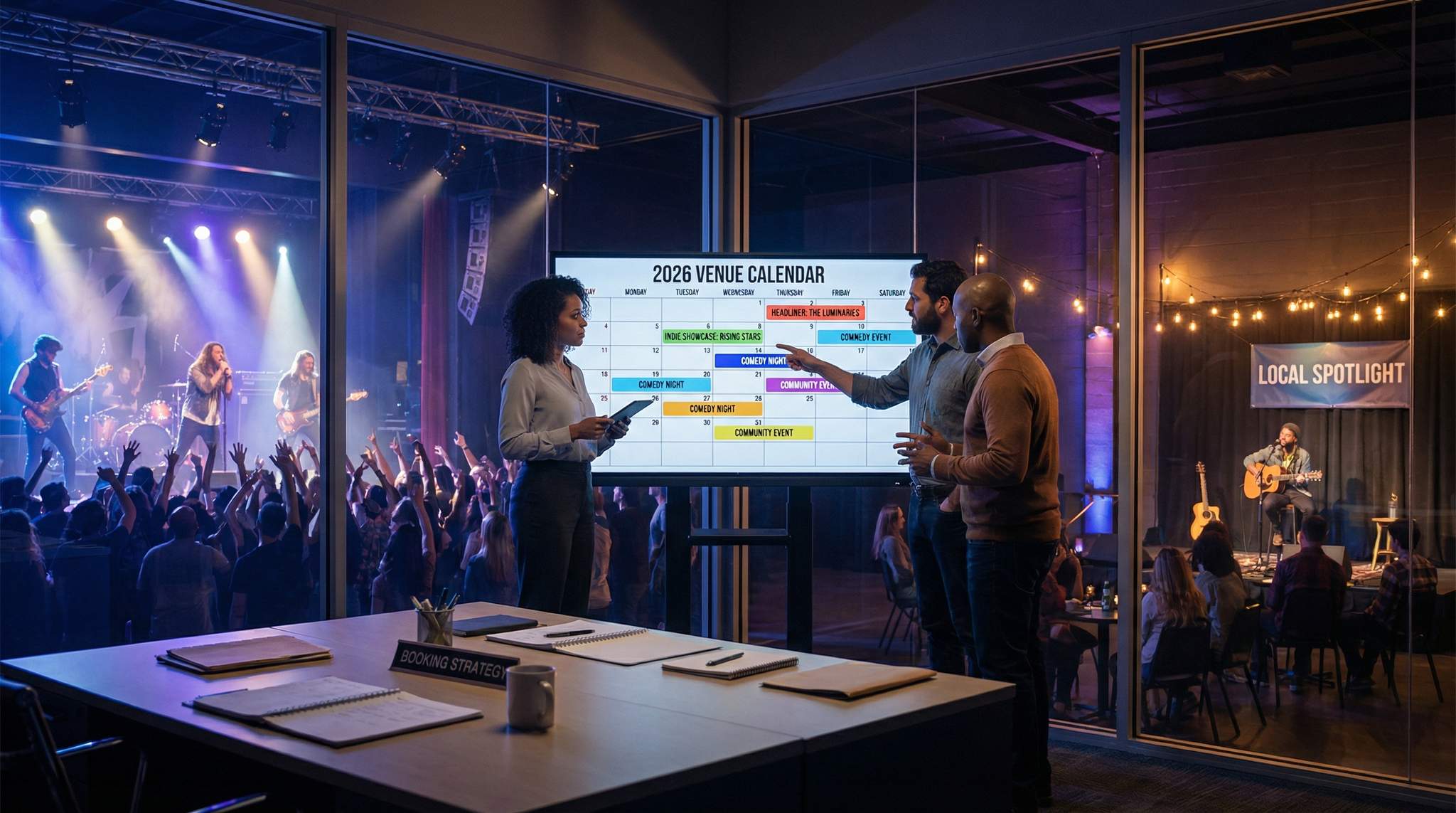
All these factors – booming demand, pricey talent, and tight finances – underscore one point: a smart booking strategy is mission-critical in 2026. Gone are the days when a venue could rely on a couple of big tours and coast through slower periods. Today, you need a proactive approach to curate an engaging, balanced calendar that draws crowds consistently. This means mixing high-profile events (to drive revenue and buzz) with filler events and creative bookings on off nights (to ensure you aren’t “dark” and losing money). It also means planning further ahead, leveraging data insights, and staying agile with last-minute opportunities. Booking isn’t just an art – it’s now very much a data-informed science as well. Experienced venue managers describe a juggling act of satisfying audience demand while staying on budget – a core survival skill for modern venues, as discussed in reimagining venue booking strategies for survival. The following sections break down how to achieve that balance, with practical strategies for venues large and small. By understanding your market and thoughtfully programming your venue’s calendar, you can create a 365-day buzz that keeps fans coming back and your bottom line healthy.
Leveraging Established Stars and Rising Talent
Headliners as Tentpoles for Attendance and Buzz
Big-name artists can be the anchors of a venue’s calendar. A few marquee headliner shows sprinkled through the year will reliably pack the house, generate buzz, and drive significant revenue from tickets, bar sales, and merch. These shows – whether it’s a famous band’s tour stop or a legendary DJ’s one-off – are tentpole events you can plan other programming around. However, landing headliners requires early planning (often booking many months in advance) and, in many cases, paying substantial guarantees or competing with larger venues. It’s crucial to choose headliners wisely: look for acts with a strong local fanbase or tours aligned with your venue size. For example, a 2,000-seat theater might target popular indie rock bands that can sell out that capacity, rather than chasing pop superstars who are arena-bound. Once secured, treat headline shows as special occasions – leverage them for marketing (season announcements or press releases) and consider adding VIP packages or afterparties to maximize their impact. Also be mindful of costs: veteran venue operators warn against over-reliance on pricey headliners. One or two high-profile concerts can uplift your venue’s profile, but the bulk of your calendar can’t be A-list acts – and that’s where emerging talent comes in.
Ready to Sell Tickets?
Create professional event pages with built-in payment processing, marketing tools, and real-time analytics.
Spotlighting Emerging Talent and Local Acts
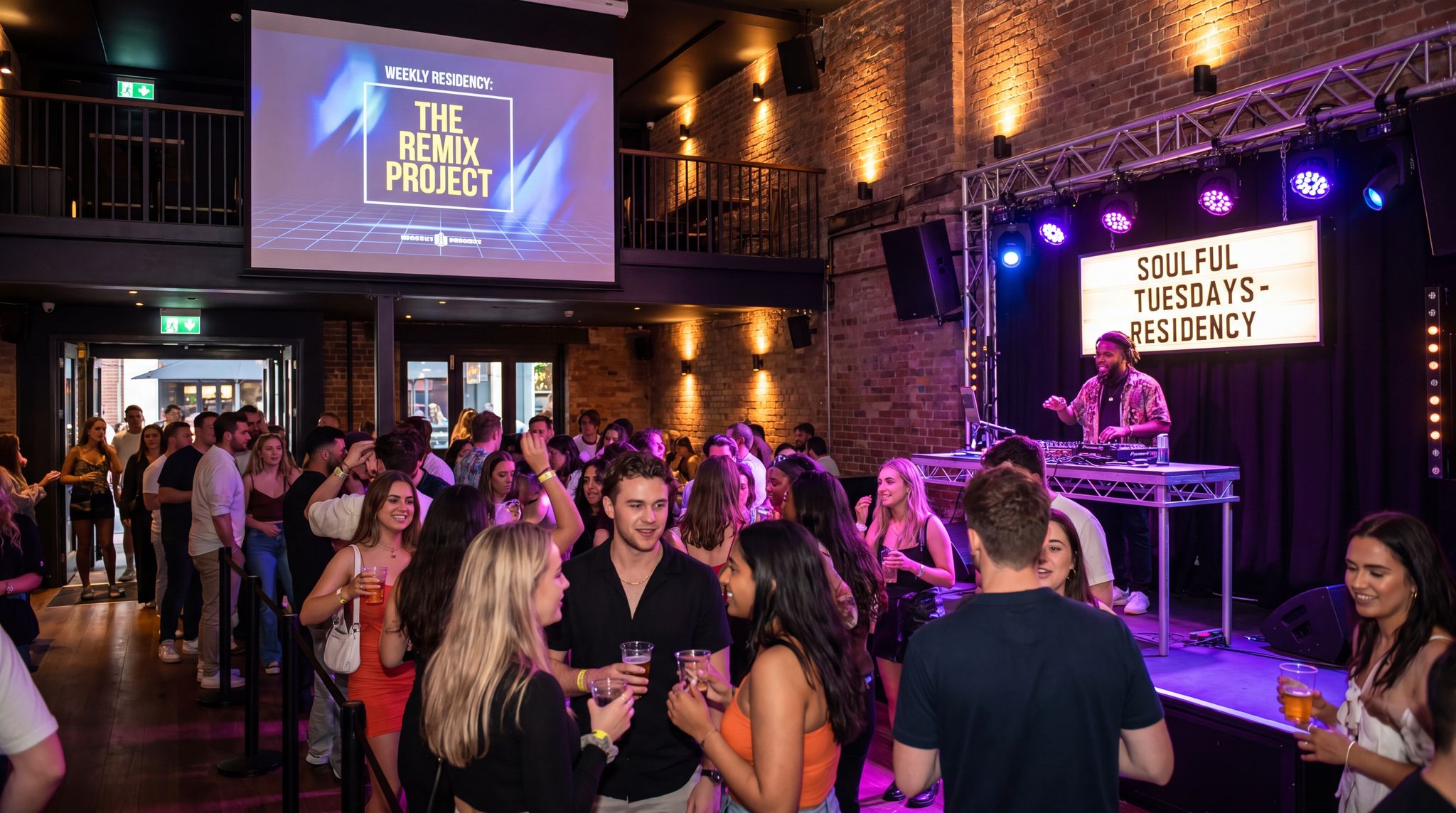
Filling your schedule with emerging artists and local talent is a savvy way to keep the venue buzzing without blowing out your budget. Up-and-coming bands, DJs, and performers are often eager for exposure and will play for moderate fees or door splits. Booking these acts, especially on weeknights, serves multiple purposes: it fills otherwise dark nights, draws their core followers (introducing new patrons to your venue), and helps build the careers of artists who may become tomorrow’s headliners. Many successful small venues mix in developing artists regularly – the key is balance. As one survival guide notes, independent clubs thrive by hosting a few high-demand acts to pack the place, plus plenty of developing or local artists to fill the gaps, a strategy for balancing high-demand acts with developing artists. For example, a 500-cap club might host big regional draws on weekends, but devote Tuesdays to a local band showcase series. These showcase nights can feature 3–4 local bands or DJs sharing one bill, pooling their fanbases to boost attendance, effectively collaborative booking strategies for local bands. It’s a low-risk format – even if each act has a small following, together they can draw a decent crowd, and the combined event creates a sense of community. Residencies are another powerful tool: consider giving a popular local act a monthly residency (e.g. the first Wednesday of each month) or a DJ a weekly slot. This not only guarantees you a known draw on those nights, but also helps the artist build a following (and loyalty to your venue). Some venues also collaborate with music schools or talent competitions to host “battle of the bands” or artist development nights, fostering new talent and engaging younger audiences.
Balancing Star Power with Risk Management
Every booking is essentially an investment – in artist fees, marketing, production – with the return being ticket sales and F&B revenue. A shrewd venue manager balances the risk and reward across their lineup. Established stars come with higher costs but more predictable draw; emerging acts are cheaper (and sometimes excited just to play your stage) but might only pull in a modest crowd. The goal is to craft a mix where the blockbusters subsidize the experimental shows, and no single flop can sink your month. For instance, if you splurge on one expensive headliner this quarter, surround it with several lower-cost local shows to cushion the financial risk. Always calculate your breakeven point on a show – know roughly how many tickets need to sell at what price to cover the artist fee and expenses. Avoid betting the farm on unproven acts with large guarantees. Independent venue veterans advise negotiating flexible deals whenever possible for mid-level talent – rather than a heavy flat guarantee, opt for door splits or smaller guarantees with profit-sharing, a key tactic in negotiating flexible deals and profit-sharing models. This way if the turnout is less than expected, the fee automatically adjusts and you’re not left in a deep hole. It also aligns the artist’s incentives with yours to promote the show. Another tactic seasoned bookers use is tracking an artist’s momentum data (social media, local streaming stats, prior draw in your market) to inform how much risk to take. If a buzzworthy new artist has 50,000 monthly Spotify listeners in your city but hasn’t played a show there yet, it might be worth offering a higher fee or a weekend slot – you could be catching a rising star on the way up by using streaming data for talent discovery. Furthermore, analyzing artist momentum indicators can reveal artist preferences and potential draw. On the other hand, if an artist’s popularity seems to have peaked or their last show in town underperformed, negotiate more conservatively. By continually balancing big names with new faces, you not only control risk, but also keep your calendar interesting – offering audiences both the excitement of famous acts and the thrill of discovering fresh talent.
Building Your Venue’s Reputation through Talent Development
Over the long term, consistently showcasing emerging talent can turn your venue into a launchpad that artists and fans love. Many iconic venues earned their reputation by giving now-famous artists early opportunities. (For example, the Troubadour in Los Angeles cemented its legend in part by hosting then-unknowns like Elton John and Guns N’ Roses before they blew up in the mainstream.) When your venue is known as a place where “you saw them first,” it attracts musically adventurous audiences and talent scouts, and it builds goodwill with artists’ teams. Acts who get their start on your stage may remain loyal as they grow – occasionally returning for underplay shows or secret gigs – and they’ll speak highly of your venue to others. This reputation also helps in booking: agents might send developing acts your way because they know you treat artists well and cultivate a supportive crowd. Treating emerging artists like headliners – with fair deals, hospitable green room treatment, and decent sound – goes a long way toward reducing booking complexity through artist hospitality. It’s not just the right thing to do; it makes business sense. Happy artists talk, and your venue will become a preferred stop on small tours, building a reputation for fair artist treatment. Additionally, an eclectic, discovery-rich lineup can become a selling point in itself. Some venues brand their programming (“New Music Mondays” or “Indie Showcase Series”) so that fans show up knowing they might find a new favorite even if they haven’t heard of the night’s acts. In 2026, where social media buzz can break an artist quickly, being the venue that consistently breaks artists can bring significant clout. Just remember to balance innovation with consistency – introducing new genres or untested artists is great, but maintain some continuity (in quality and style) so your core audience trusts your curation. As one expert put it, you can’t be everything to everyone, especially with limited resources, so focus on developing coherent programming strengths. It’s wise to carve out a niche or a few core strengths (be it punk, jazz, comedy, etc.) and build around that, rather than randomly booking acts that don’t fit your venue’s identity. Diversity within a coherent vision will serve you better than chaos. Next, we’ll explore that idea of diversified programming in more detail.
Diverse Programming for Broad Appeal
Mixing Genres to Expand Your Audience
One of the smartest ways to boost attendance is ensuring your venue’s calendar appeals to multiple audiences. If you only book one genre (say, only rock, or only EDM), you’ll likely hit a ceiling with that fanbase and also face nights where that audience has other options (e.g. a competing show) and your venue sits empty. Instead, aim to mix genres and event styles throughout the month. A broad genre mix – rock, hip-hop, electronic, comedy, even a classical night – can draw different crowds who keep your venue busy across the week. For example, maybe your venue leans indie-rock, but you start hosting a Latin music dance party on Thursdays that brings in a whole new community. Or if you run a civic theater primarily for plays and concerts, you might program a couple of stand-up comedy nights or podcast tapings for variety. Not only does genre diversity widen your ticket buyer pool, it also enhances your reputation as an inclusive, vibrant cultural space. That said, curation is key: you don’t want to alienate your core patrons or confuse your brand. Many venues succeed by finding a through-line among genres – for instance, focusing on “great live performance” whether it’s jazz, folk, or world music, or becoming known as the spot for “high-energy nightlife” whether that’s hip-hop or EDM. The idea is to avoid monotony without straying so far that your regulars don’t recognize the programming. A good practice is to monitor the demographics of different events (age groups, subcultures) and ensure each feels welcomed. By alternating genres thoughtfully, you might get fans of one style sampling another. (E.g. some venues find success offering ticket bundle deals or a “membership” that encourages patrons to attend multiple genres of shows.) The result of genre-diverse booking is a more resilient calendar – if one style’s audience has a slow season, other styles keep the venue traffic flowing.
Turn Fans Into Your Marketing Team
Ticket Fairy's built-in referral rewards system incentivizes attendees to share your event, delivering 15-25% sales boosts and 30x ROI vs paid ads.
Different Event Formats (Concerts, Comedy, Film & More)
Beyond music genres, consider varying the format of events you host. Many music halls are increasingly acting as multi-purpose venues, flipping their space for all kinds of gatherings. Hosting non-concert events can unlock new revenue and keep off-nights busy. For example:
- Comedy Nights: Laughter can fill a Tuesday night! Comedy shows usually require minimal setup (a mic and lights), and comedians often have loyal local followings. A monthly comedy night can draw people who might not come to concerts, broadening your audience.
- Theater and Spoken Word: If your stage and acoustics permit, try a spoken word poetry slam, a podcast live recording, or a small theater production. These can attract niche audiences and often occur on off-peak nights.
- Film Screenings: Setting up a projector for cult classic films, music documentaries, or local indie films can turn your venue into a part-time cinema. Some venues do “Sunday night movie + live soundtrack” events, or partner with film festivals as a screening site.
- Community and Cultural Events: Embrace events like local awards ceremonies, cultural dances, or hobbyist meet-ups (e.g. a citywide DJ scratch battle or a cosplay costume contest). They may not be your main business, but they bring in rentals or bar revenue and introduce your space to new groups.
- Live Streams and Hybrid Events: In 2026, hybrid events (part in-person, part livestream) are still around. You could host an album listening party or streaming watch party for a big concert happening elsewhere, selling tickets for the in-venue experience with big sound and communal vibe.
Many large venues already excel at this format mix. For instance, the Sydney Opera House might host a rock concert one night, a ballet the next, and a tech conference that weekend. On a smaller scale, an urban 500-cap club could be a nightclub on Saturday, a punk show on Friday, and then transform for a Sunday record fair. The key is operational flexibility – ensure your staff and tech setup can handle the switches. (We’ll touch more on operations later, but things like movable seating, good sound dampening, and versatile lighting go a long way.) If you’re worried about confusing your branding, look at how optimizing multi-purpose venue operations can help market these spaces. They often create sub-brands or series (e.g. “XYZ Theater Presents: Comedy Night” distinct from “XYZ Concert Series”) to signal the different event types clearly. Ultimately, embracing multiple formats helps maximize your venue’s use – you’re not limited to just live music fans, but can tap into multiple entertainment markets in your city.
Grow Your Events
Leverage referral marketing, social sharing incentives, and audience insights to sell more tickets.
Serving Diverse Communities and Cultures
A truly thriving venue calendar reflects the diversity of the community it serves. In practice, this means being mindful to include different cultures, ages, and accessibility needs in your programming. Culturally diverse booking might involve hosting events for specific communities – for example, a Lunar New Year music and dance night, a Diwali celebration concert, or a reggae fest for the local Caribbean community. These events often draw huge turnouts from communities that may be under-served by mainstream nightlife, and they build goodwill with local leaders. Partnering with cultural organizations or promoters can help ensure authenticity and reach the right audience. All-ages or family-friendly events are another consideration: while much of your calendar might be 18+ or 21+, consider an occasional weekend daytime show or a Sunday matinee that allows younger fans (or families) to attend. Many all-ages shows have an early curtain (e.g. a 5 PM Sunday indie concert) and can bring in a whole segment of fans who normally can’t go to your night events. Similarly, think about accessible and inclusive programming – for instance, some venues now do “sensory-friendly” concerts (with moderated volume, quiet zones, and lighting accommodations) for neurodiverse or sensitive patrons. Others host specific LGBTQ+ night events or disability community open mic nights, going beyond compliance to truly welcome everyone. By elevating venue accessibility and inclusion beyond compliance, you not only do the right thing but also tap into loyal audiences who deeply appreciate those efforts. Just ensure you promote these events through the appropriate channels so the intended groups know about them. The big picture: venues that embrace their role as community hubs tend to thrive. When your calendar has something for everyone – from the jazz aficionados to the young EDM crowd to families – you build a broad support base. And importantly, you buffer yourself against trends: if one scene slows down, another keeps humming. Diversity in programming = stability in the long run, as long as you maintain quality and intention behind each event.
Keeping a Coherent Identity Amid Variety
With all this talk of mixing it up, it’s worth reiterating the importance of a cohesive venue identity. Your programming should be diverse but not haphazard. A completely random calendar (punk show one night, opera the next, kiddie puppet show after that) might confuse people about what your venue is about. Instead, strive for an identity like “that mid-sized venue that always has cool [fill in: live music/comedy/local culture] events.” You want patrons to trust that, even if the genre varies, an event at your venue will be something they’d enjoy or find interesting. Curate with intention: perhaps your through-line is simply “high quality” or “up-and-coming talent” or “great sound.” Communicate your programming philosophy on your website and socials so fans get it. Also, logistically, maintain consistency in how events run – ticketing process, door times, seating policy – so even if the crowd is different, the venue experience feels familiar. Some venues keep variety while preserving identity by hosting recurring themed nights. For instance, you might brand your monthly comedy night distinctly, or have a known “Saturday Night Dance Party” series that changes themes but is always a dance-focused event. This helps people navigate your schedule and pick what suits them. Finally, always get feedback. If you experiment with a new genre or format, solicit input from attendees (informally or via socials) and from your regular staff. If it didn’t click, learn why – maybe the timing was off or the pricing was wrong for that audience. If it did succeed, figure out how to repeat and build on it. Remember, diversity doesn’t mean abandoning what made your venue special in the first place; it means extending your venue’s appeal in a thoughtful way. Many indie venue operators find that a diverse-but-coherent approach not only boosts revenue but also earns support from local arts councils and sponsors who value inclusivity (a nice bonus to help your bottom line, as seen in strategies for securing sponsorship through inclusive programming).
To visualize a balanced programming mix, consider a hypothetical monthly event breakdown:
| Event Type | Frequency (per month) | Role in Calendar | Example |
|---|---|---|---|
| Major headliner concerts | 2–4 | Anchor events for ticket revenue, press buzz. Typically scheduled on weekends. | Big touring band on a Friday; Popular DJ on Saturday. |
| Emerging/local artist shows | 4–6 | Regular weeknight content to develop talent and maintain consistent engagement. Low to mid ticket price. | Local band showcase every Tuesday; Indie singer-songwriter night. |
| Niche genre/theme nights | 2–3 | Adds variety and attracts niche audiences on off-nights. Can be experimental. | Jazz & cocktail Thursday; 80s music dance night. |
| Non-music events | 1–2 | Fills gaps with alternative programming; introduces new revenue streams. | Monthly stand-up comedy night; Cult film screening Sunday. |
| Private rentals/closed events | 1–3 | Monetize otherwise dark dates with guaranteed income. Often mid-week daytime or evenings. | Corporate workshop on Wednesday; Wedding rental on off-weekend. |
Table: An example of how a mid-size venue might balance event types in a month. Your exact mix will vary based on venue size and market, but the goal is a healthy blend, not over-reliance on one category.
Free Tool: Project Your Bar Revenue
Per-head spend benchmarks by event type turned into projected bar and food revenue, with a stock-mix estimate and gross-margin line. Free calculator.
By having a mix like the above, you ensure each week has a “tentpole” and supporting shows. The big shows anchor your revenue, the smaller ones keep the lights on and build community, and the alternative events and rentals squeeze value from otherwise idle times. Next, let’s talk about how to schedule all this effectively across the calendar.
Smart Calendar Scheduling and Optimization
Venue Activation and Calendar Development
At its core, effective venue programming is about more than just booking acts; it’s a comprehensive approach to venue activation and calendar development. When overseeing a multi-room complex in London early in my career, we didn’t just look at open dates—we looked at how to activate every square foot of the property simultaneously. Strategic calendar development requires a holistic view of your space’s potential, mapping out primary concerts, secondary room club nights, and daytime corporate rentals to ensure the building is constantly generating revenue and engaging different demographics.
Successful calendar development requires treating your venue as a living ecosystem. Rather than simply plugging dates into a spreadsheet, holistic venue programming looks at the entire month’s narrative. Are you activating the rooftop bar for a pre-show mixer? Can the lobby host a local art pop-up while the main hall is being reset? By layering these secondary activations alongside your primary bookings, you maximize the footprint of your property and create a more immersive experience for attendees, which ultimately drives higher per-head spending.
Peak Nights vs. Weeknights – Optimizing the Weekly Rhythm
Not all days of the week are equal in live events. Fridays and Saturdays are prime time – people are off work and ready to go out, so these nights are your best bet for high-demand concerts, club nights, or any marquee event. You’ll typically schedule your biggest acts or most popular recurring parties on weekends to maximize turnout. In fact, many venues treat weekend dates as precious real estate, holding out for acts that can truly draw a crowd. On the flip side, Mondays through Wednesdays are traditionally tougher. But dark Mondays and Tuesdays are no longer a given – smart venues now treat weeknights as opportunities rather than write-offs. The strategy is to tailor the content to the night. For example, a low-priced or even free-entry event (like an open mic or local artist showcase) can work well on a Monday, when people aren’t necessarily planning big outings. Trivia nights, karaoke, and other casual formats can also succeed, driving bar revenue even if ticket sales are minimal. On Wednesdays and Thursdays (“pseudo-weekend” nights for many young adults), you might book mid-tier touring acts or popular local bands who can draw 100–200 fans. These events warm up the venue for the weekend and can create a loyal mid-week following. Keep an eye on local patterns too – e.g., if your city’s college students party on Thursdays, treat that as a weekend night in your booking plan. The key is to allocate talent according to expected demand, and scale production costs to match (you wouldn’t spend the same on staging for a Tuesday open mic as you do for a Saturday concert). Think of it like a restaurant: weekends are fine dining (premium menu), weekdays are happy hour specials and comfort food. You still deliver quality, but at the right scale for the crowd.
One useful tactic is to actually advertise your weekly rhythm so audiences know something is always happening. For instance, promote that you have “Live Music Every Wednesday through Sunday” or label weeknights with catchy series names (“Tuesday Jam Sessions”, “Local Legends Thursdays”). This sets audience expectations that even on “off” nights, there’s a reason to come out. Operationally, plan staffing accordingly – lighter crews on Monday for a small event, full hands on deck for Saturday’s sold-out show. By optimizing each night’s content and operations, you’ll squeeze much more value out of the 5–7 nights a week your venue could be active, instead of only focusing on weekends.
Seasonal and Annual Scheduling Patterns
Just as days of week have patterns, so do seasons of the year. Understanding the annual live event cycle helps in long-term booking strategy. Here’s a seasonal snapshot for many markets (Northern Hemisphere):
Grow Your Social Following With Every Sale
Require social media follows, shares, or playlist adds to unlock presale access or special pricing. Turn every ticket purchase into audience growth.
| Season / Period | Industry Pattern | Venue Strategy Tips |
|---|---|---|
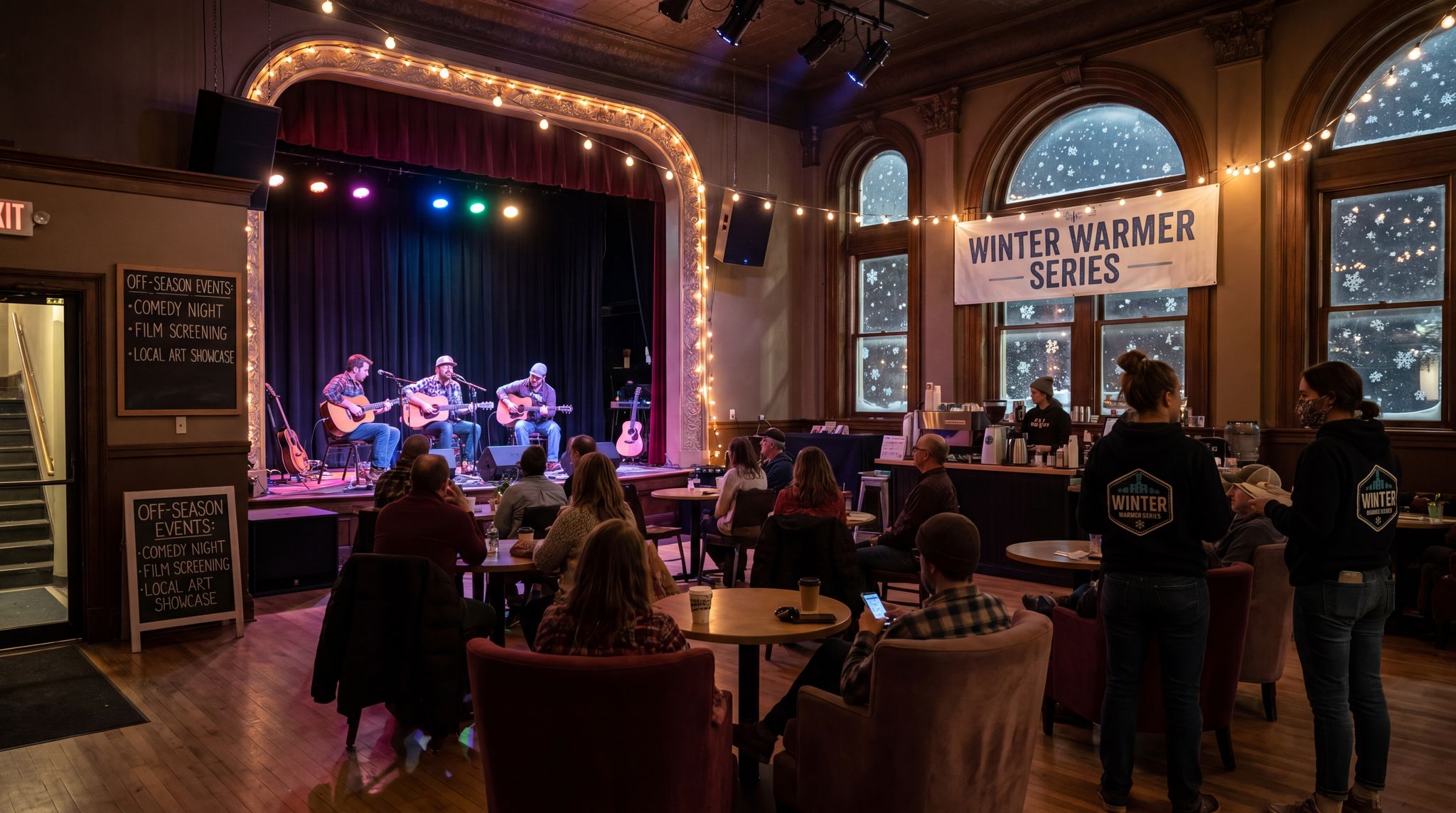
| Winter (Dec–Feb) | Holiday shows and New Year’s events drive Dec; January is a slow touring period (post-holidays, bad weather in many regions). | Host special holiday-themed concerts (seasonal showcases, Xmas gigs) and lucrative New Year’s Eve events. Use January for local talent nights, lower-risk shows, or venue maintenance. Consider targeting corporate kick-off meetings or private rentals in the winter lull to generate income. |
| Spring (Mar–May) | Spring tours ramp up (artists often release albums in Q1/Q2 and hit the road). Festival lineups announced – buzz builds. College towns peak before summer break. | Book spring tours early – popular artists’ calendars fill up. Plan for album release shows and college end-of-year events (e.g. April parties). Coordinate with festival season: when major festivals happen (Apr/May in US, etc.), consider booking artists touring through your region en route. Afterparties for those festivals can draw crowds too. |
| Summer (Jun–Aug) | Peak festival season and big outdoor concerts. Many major tours, but mostly in amphitheaters/stadiums. Club attendance might dip if people prefer outdoor events; some venues face slow summers (except in tourist areas). | Partner with festivals – host official after-parties or pre-parties for big festivals in your area. Book touring acts between festival weekends (many international bands have open weekdays while in region). Capitalize on tourists if applicable (summer travelers looking for nightlife). If your market quiets down, use summer to do venue upgrades or staff training, and focus on local community events or niche nights that loyal regulars will attend despite the heat. |
| Fall (Sep–Nov) | Major touring picks up again after festival season. Fall is a strong season for concerts and events, with many tours hitting theaters and clubs. Students are back (if college town). Weather drives audiences indoors. | Maximize fall bookings – this is often the busiest concert season. Try to lock in a few big names for Sept/Oct when people are energized for shows. Also great timing for multi-artist mini-festivals or venue anniversary events. Leverage back-to-school: host welcome week concerts or collaborate with universities in Sep. As holidays approach, consider Thanksgiving weekend reunions shows or seasonal charity events to end the year on a high note. |
Table: General seasonal trends and suggested venue booking strategies. Regions vary – e.g., an Australian venue’s “summer” peak is Dec-Feb, and some cities have unique tourism seasons – so adjust this template to your local calendar.
The seasonal view helps with big-picture planning. For instance, you might decide your venue’s annual budget expects slim profits in winter but makes up for it with a packed fall. Or you may run a special summer series to counteract the festival drain on attendance. Always watch for anomalies: Is a major sporting event or political convention coming to town one season? That could either be an opportunity (more visitors to entertain) or a scheduling conflict (local audience attention diverted). Adjust accordingly – maybe schedule more locals during the Olympics year if big acts avoid your city then, or conversely book a huge show when the city is full of tourists for a championship game. Also, keep an eye on other venues’ calendars and coordinates where possible. Independent venues in some regions even coordinate to avoid booking the same genre on the same night, a practice of coordinating booking calendars with regional venues – for example, two 500-cap rock clubs might agree to space out their punk shows so they don’t split the audience. Cooperation can improve business for everyone (plus it builds goodwill with fellow operators). Lastly, incorporate off-season maintenance into your schedule: earmark a couple of dark days or a week in the slowest period for repairs, deep cleaning, or system upgrades. Using seasonal lows for improving the venue ensures you’re in top shape when the crowds return.
If you’re wondering how industry leaders keep their facilities fully booked year-round, the secret lies in proactive pipeline management rather than reactive booking. In my experience overseeing multi-room complexes, top-tier operators never just wait for touring agents to call; they actively curate a 12-month rolling calendar. By layering primary concerts with secondary corporate rentals, community partnerships, and recurring themed residencies, successful managers create a resilient schedule that withstands seasonal touring lulls. This 365-day approach ensures that even during traditionally slow months, the building remains activated, staff stay employed, and the venue continues generating revenue.
Avoiding Conflicts and Capitalizing on Local Events
A crucial part of scheduling is situational awareness – knowing what else is happening that might impact your events. Before finalizing a date, consider:
- Competing Shows: Check if a major artist is playing in town the same night, especially if it’s the same genre. You might not want your indie rock show the same night a legendary indie band is at the arena, as it could cannibalize your audience. Sometimes you can’t avoid conflicts, but be strategic – maybe lean into a counter-programming (offer something completely different from the big event) or make your show an “after-show” late event if times allow.
- City Events & Holidays: Big cultural or sports events (World Cup matches, citywide parades, elections, etc.) can hurt or help. If something like a championship game will occupy everyone, it might be best to go dark or host a viewing party rather than a concert. On the other hand, if 50,000 people will be downtown for a parade that ends by evening, schedule an early show or promotion to draw some of that crowd once the parade is over. Also consider payday cycles and holidays (a gig on a payday Friday or a bank holiday eve can perform great; a show on the night before a major exam or religious holiday, maybe not so much).
- Local Audience Habits: Dig into your ticketing data (or ask around) for patterns. Perhaps your city’s audience heavily goes to the coast on summer weekends – so maybe Thursday becomes the hot night in July because folks leave town Friday. Or in rainy season, mid-week might pick up since indoor activities increase. One venue reported that in their town, Thursday became the new Friday for club nights due to a large student population with light Friday schedules. Knowing these quirks lets you schedule marquee events on the true peak nights for your specific market.
- Artist Routing Opportunities: This is a proactive approach – keep an eye on tour announcements and industry chatter. If you see that a big festival or a major city near you has a certain artist on Saturday, you can try to book that artist on Friday or Sunday at your venue (a common tactic when artists are in the region). This requires good relations with agents and quick action, but landing a “side show” can be huge. For instance, if a popular band is playing a festival on a weekend, they often have an open date either side; a savvy venue can nab a club show that week. Being part of these unofficial circuits (like afterparties or warm-up shows) can significantly elevate your calendar.
In many cities, venue operators form informal networks to text or email each other about potential conflicts or opportunities – consider joining such circles or even starting one. Rather than pure competition, view other venues and promoters as part of an ecosystem; collaboration (or at least communication) can lead to mutually beneficial scheduling. For instance, if two venues realize they booked similar indie-rock acts on the same night, they might coordinate set times so one show becomes the afterparty of the other, encouraging fans to attend both (assuming walking distance or staggered times). Or they might simply coordinate future bookings to avoid it happening again. This collaborative scheduling strategies for independent venues approach can be vital. It’s also wise to maintain a master calendar for yourself that includes not just your gigs but other major events in town, so you can spot conflicts a month or two out.
On the flip side of avoiding conflicts is embracing synergy: Can you create mini “festival weeks” in your venue? For example, if there’s a citywide Jazz Week, load up your schedule with jazz acts and cross-promote as part of the theme – even if unofficial. Aligning with wider happenings (arts weeks, Pride week, etc.) can attract attendees who are generally out looking for things to do in that theme. Ultimately, meticulous scheduling is about maximizing your slice of the attention pie. It’s a puzzle of many pieces – but when you get it right, your venue will be the place to be, no matter the night or season.
Smart Promo Codes & Presale Access
Create percentage or flat-rate discount codes with usage limits, date ranges, and ticket type restrictions. Plus unlock codes for private presales.
Leaving Room for Flexibility and Surprises
While planning ahead is vital, savvy bookers also build flexibility into their calendar. Opportunity knocks unexpectedly in the live music world – an artist might blow up on TikTok and suddenly tour last-minute, or a big name might announce a surprise small-venue tour with only a few weeks’ notice. If your schedule is 100% packed with no wiggle room, you could miss these golden chances. That’s why many venue operators hold back a few dates or maintain a policy of not filling every single night too far in advance. For example, you might intentionally leave one Thursday each month unbooked until nearer the date, giving you a slot to plug in something hot that comes up. Or keep “first hold” on a couple of prime nights per quarter for potential big shows – if nothing materializes, you can always fill it with a local event later. Last-minute bookings can be risky for attendance (since you have less time to market), but if it’s a buzzy artist or a no-brainer act, people will show up on short notice. Think of those secret shows that sell out in hours, or artists routing a stop between festivals spontaneously – fans flock when it’s special.
Flexibility also helps with rescheduling and backups. In 2026, illness cancellations or travel issues still happen (we learned to expect the unexpected after 2020). Try to have contingency plans: if a headliner cancels, could you quickly book a popular local act to salvage the night? Many venues keep a shortlist of local bands or DJs who can step in if needed (sometimes turning a disappointment into a cool “local heroes to the rescue” story). Budget for this possibility – maybe allocate a small fund for emergency bookings or offer those local acts a sweet door deal to jump in last-minute. Fans appreciate when a venue doesn’t just cancel outright but offers something in place, even if it’s a free admission with drink specials and a DJ, for example.
Another tip: doubleheaders. If demand is off the charts for a show, consider adding a second performance. This could be a late show on the same night (common in comedy and theater – e.g., 7 PM and 10 PM sets – and occasionally in concerts if the artist agrees). Or it could mean adding a second night. Always gauge artist willingness and audience demand – you don’t want two half-full shows, but if the first one sold out instantly with waitlists, a second can double your revenue with minimal extra marketing. In negotiations, you can even build in an option: e.g., the contract might state the artist will hold the next night as a potential add-on if the first sells out in X days. This way you secure the date early. Just be mindful of not overextending (the added show should be profitable on its own, not just to appease a few extra fans). And check local regulations or union rules – some venues have curfews or labor constraints that limit two shows in one day.
In summary, treat your schedule like a living document. Plan ahead, but revisit and tweak it constantly as new information arises. A static calendar set in stone 12 months out might look good on paper, but a calendar that breathes – with room for late-breaking trends, hot opportunities, and contingency maneuvers – will keep your programming fresh and resilient. By blending foresight with flexibility, you’ll navigate 2026’s fast-changing live scene much more effectively.
Advanced Scheduling: Combinatorial Methods for Multi-Venue Entertainment
For operators managing complexes with several rooms, performing arts centers, or multiplexes, scheduling becomes exponentially more complex. This is where combinatorial methods for managing showtimes in multi-venue entertainment come into play. Rather than relying on trial and error, advanced programmers use combinatorial optimization—mathematical approaches and specialized software—to handle scheduling showtimes across multi-venue theaters or cinemas. By analyzing variables like room capacity, changeover times, shared staff availability, and peak lobby traffic, these methods prevent crowd bottlenecks and ensure that a high-energy show in Room A doesn’t bleed noise into an acoustic set in Room B. Whether you are coordinating a multi-stage indoor festival or daily theater scheduling, applying these algorithmic methods allows you to maximize daily event counts and optimize labor costs without compromising the guest experience.
Applying these algorithmic approaches is particularly transformative for cinema or theater scheduling, where turnaround times are tight and lobby traffic must be carefully managed. By utilizing combinatorial optimization, multiplex operators can stagger intermissions, align VIP lounge access with premium showtimes, and ensure that high-decibel action films don’t bleed audio into adjacent quiet dramas. This level of precise, data-backed venue programming ensures that every screen or stage operates at peak efficiency without degrading the patron experience.
Free Tool: Will the Room Actually Be Full?
Forecasts expected attendance from ticket type, event type and day of week. Calculates safe over-book count for free-RSVP events. Free estimator.
Filling Dark Nights and Off-Peak Periods
Turning “Empty” Nights into Opportunities
Every venue has historically had those “dark nights” when no public events are scheduled – often Mondays or Tuesdays, or seasonal lulls. In the past, they were simply accepted as downtime. But in 2026’s challenging economy, smart venues see dark nights as untapped opportunities. The reality is your venue space is a valuable asset every day of the week, not just when shows are on. You’re paying rent 7 days a week, so why not monetize as many of those days as possible? Start by identifying your truly low-demand times (it might be early-week nights, or Sundays, or perhaps winters) and get creative about what could happen then. Could you host a different type of event that doesn’t cannibalize your main programming? Often the answer is yes, and it might even bring new revenue streams.
One effective approach is to treat off-night programming and rentals as a core part of your business, not a side gig, a mindset shift toward treating off-night programming as core business. That mindset shift can motivate your team to actively pursue and plan these events. Instead of saying “We’re closed Mondays,” start saying “Mondays are available for private bookings or specialty events” – and promote that. The good news is, demand for non-traditional event spaces (like music venues) is growing, reflecting a shifting demand for non-traditional event spaces. Companies, promoters, and communities are often looking for cool spaces for their gatherings on dates traditional concerts don’t occupy. By positioning your venue as the place to be even on off-nights, you not only earn more, but also strengthen your venue’s brand as an always-happening destination.
Private Rentals: From Corporate Events to Weddings
One of the most lucrative ways to fill a dark night is through private event rentals. These include corporate meetings, product launches, holiday parties, industry mixers, weddings, charity galas, film/TV shoots, and more, such as hosting corporate meetings and business functions and generating revenue from film and photoshoot rentals. The beauty of private rentals is that they often happen on weekdays and daytime hours, times your venue would otherwise sit empty. Companies might book a Tuesday conference or a tech talk in your concert hall. Couples might leap at a Thursday night wedding in a funky music venue (often at off-peak pricing). Importantly, these clients pay a rental fee – effectively guaranteed income that’s not dependent on ticket sales. Many venues have reported that a single corporate rental mid-week, with minimal production needs, can bring in more net profit than a standard concert once you factor in bar sales and ticket splits.
To succeed with rentals, market your venue’s flexibility. Create a rentals page on your site showcasing different setups (theater seating, banquet style, empty floor). Highlight features attractive to event planners: capacity, A/V system, stage, catering or bar options, even parking or nearby hotels. It helps to provide packaged options (e.g. “Weeknight Corporate Event Package” that includes basic staffing and equipment for a flat fee). Pricing strategy for rentals can vary, but research what similar venues in your region charge, using benchmarking and tiered pricing for venue rentals. You might offer a lower rate for Monday–Wednesday to entice bookings on those days, since they don’t interfere with your prime concerts. Make sure to account for labor and any wear-and-tear – some venues require clients to use their in-house tech (for an extra fee) or preferred caterers, etc., which can further drive revenue.
Real-world example: The Fox Theatre in Atlanta (a historic 4,500-seat theater) primarily hosts concerts and Broadway shows, but also actively markets itself for corporate galas and private events to generate income on open dates, exemplifying historic theaters hosting modern corporate galas. Even smaller clubs do this: The Leadmill in Sheffield (UK), a 900-cap indie venue, began opening its early-week nights for private bookings – turning formerly dead Monday nights into steady income with events like university functions and rehearsal space rentals, a case study in pivoting small clubs to steady rental income. By transforming off-nights into paydays through private rentals, these venues improved their financial resilience dramatically.
The types of private events to target will depend on your space and local market. Some ideas:
- Corporate meetings/seminars: Especially if you have seating and A/V. Many companies love hosting talks or team-building in a trendy venue instead of a hotel ballroom.
- Launch parties or brand activations: Your venue’s stage, sound, and bar make it ideal for product launches, fashion shows, or influencer events on weeknights when the brand can take over the space.
- Weddings and receptions: Music venues can make fantastic unique wedding venues for music-loving couples. If you go this route, be ready for weekend daytime bookings (e.g. a Saturday afternoon ceremony before your concert load-in) or some off-night Fridays. It requires more coordination but can be lucrative, creating opportunities for capitalizing on weddings and social celebrations.
- Film/TV shoots: An often overlooked one – production companies frequently need concert scenes, club backdrops, or theater settings for movies, series, commercials, and photoshoots, making marketing venues for film and TV production a smart move. Register your venue with location scouting directories or film commissions. Shoots can pay very well for daily rental, though be mindful of scheduling around them (they might need a full day or multiple days).
Creative Community Programming (Low-Cost, High-Goodwill)
Not every off-night event will be a big money-maker – some may be more about community engagement or long-term benefits. But those have value too. Consider hosting community and non-profit events occasionally. For example, you could offer your space for a local music school’s end-of-year recital on a Monday, or host a charity fundraiser gig on a Wednesday where artists volunteer and proceeds go to a cause. These kinds of events might not fill your coffers that night, but they build immense goodwill. They introduce new people to your venue (parents, press, local officials) who might support you later. And they strengthen your case when seeking grants or sponsorships by showing you give back to the community. Managing costs to stay alive against odds is crucial, and analyzing unprecedented cost spikes helps inform these decisions. If you do a benefit show, you might still earn bar revenue and you’ve filled an otherwise empty date while doing something positive.
Other creative ideas to fill off-peak times:
- Workshops or Classes: Have local experts run music workshops, dance classes, or industry panels in your venue during the early evening. A two-hour “intro to DJing” class on a Tuesday uses your stage and gear in a new way and can bring in a small fee from attendees (plus bar sales if you open it).
- Open Jam or Open Mic Nights: These are classic for a reason. An open mic (for music, comedy, poetry, etc.) on a slow night costs almost nothing to host (just a staffer and basic P.A.) but brings in performers (who bring friends). Even if attendance is modest, you’re at least selling some drinks and maybe discovering new talent to book on a real gig later. It also positions your venue as accessible and supportive of new artists, which helps your standing in the scene.
- Themed Bar Nights: Perhaps your layout allows for using just the bar area for a smaller-scale event when you don’t want a full concert. Trivia quizzes, board game nights, “vinyl listening” parties, or DJ takeovers can happen without full production. Patrons come for the vibe and drinks, and you didn’t have to hire a full band or crew.
- Partnership Events: Team up with local organizations – e.g., a brewer’s association for a “beer tasting social” with live acoustic music, or the library for a “storytelling slam.” These partners often help promote the event to their networks, boosting turnout on a night you’d otherwise be dark.
One point to manage: if you focus heavily on private rentals and outside events, ensure it doesn’t disrupt your core programming or alienate your regular crowd, a balance discussed in balancing private rentals with core programming. For instance, if you normally have a weekly band night, don’t cancel it too often for private parties or your regulars will lose trust. Try to schedule rentals far enough out so you’re not bumping advertised shows. And when a private event is in the house, keep sound checks or load-ins for the next show in mind, as coordinating calendar management for mixed use is key so one event doesn’t interfere with another’s setup. Many venues successfully juggle this by clearly separating the two: e.g., public events on Thu–Sat, private events on Mon–Wed only. Or if a private client wants a prime night, perhaps it’s booked on a floor or room that doesn’t disturb the main stage schedule.
The bottom line: every empty night is a chance to get creative. Whether for profit (rentals) or community engagement (open mics, fundraisers), filling those gaps strengthens your venue’s financial foundation and community ties. As one industry saying goes, “you can sleep when you’re dead – or at least when you’ve sold the venue!” In 2026, idle venues are a luxury few can afford, so calculating the cost of an idle venue is essential; make those Mondays work for you. Even if you just break even on an off-night event, you’ve kept staff employed, the bar flowing, and momentum going – all of which contribute to the vitality and reputation of your venue.
Marketing Off-Night Events and Incentives
An off-night event, be it public or private, sometimes needs an extra push to get folks through the doors. This is where savvy marketing and incentives come in. First, identify the unique selling point of the event and target the likely audience. Your regular Friday concert-goer might not automatically show up on a Tuesday, but if Tuesday’s event appeals to a different crowd, make sure they know about it. Use segmented marketing (email lists or social channels focused on specific communities) to promote niche events – for example, post the open mic night details in local musician forums and college bulletin boards, whereas your synthwave DJ night might be promoted in retro music Facebook groups and on Instagram where that demo hangs out. Calculating the cost of an idle venue and maximizing venue utilization for financial health are critical considerations. Tailoring the message is especially important when venturing outside your usual programming; people need to realize “oh, that place I go for rock shows is also doing a comedy night – and it sounds fun.”
Consider ticketing and pricing strategies for off-peak events. Lower price points, “pay what you can” entry, or free with RSVP (and then monetize via bar) can reduce the barrier for a midweek outing. Some venues do bundle deals: e.g., a weeknight pass that grants entry to all Tuesday events in a month for one price, or loyalty punches (attend 4 Wednesday shows, get the 5th free). These can incentivize repeat attendance on nights people usually stay home. Promotions like drink specials, themed cocktails, or partnerships (“Trivia Night presented by X Brewery – $2 off all X beers”) can also lure the after-work crowd. Make the experience cozy and rewarding – maybe a small perk like free popcorn during movie night or a raffle giveaway at open mic – little touches that make people glad they came out on a Monday.
Leverage your weekend audiences to cross-promote the weekdays. For instance, during a packed Saturday show, have your MC or a slide mention the upcoming Tuesday comedy night. Or offer flyers/coupons as people exit: “Enjoy coming here? Come back Wednesday for Jazz Night – show this flyer for 2-for-1 tickets.” Since those folks already like your venue, some will bite. Also exploit social media during peak nights – if your venue has an IG or Snapchat filter or people are checking in on Facebook, push out posts about the next events early in the week (“Don’t let the fun stop – we’ve got events every night at [Venue]!”).
One more tip: timing and experience. Off-night events often benefit from slightly earlier timing. A 7 PM start and done by 10 PM on a Tuesday is appealing to working folks or students, versus a late-night affair that they might skip. Ensuring these events run on time and smoothly is vital; you’re trying to convince people it’s worth going out when they normally might not. If an event fails to meet expectations (e.g., badly organized, starts an hour late), those attendees might not risk another weeknight. So treat these as seriously as your weekends in terms of execution quality. Over time, if you can establish certain off-nights as reliably enjoyable – people will come habitually. For example, if every Wednesday jam session is known for awesome surprise musicians and a chill vibe, you’ll get a dedicated mid-week crowd. It won’t happen overnight, but consistency builds habit.
In essence, filling dark nights requires programming imagination backed by solid promotion. Success might start small (a couple dozen people at first) but can grow steadily. And even when attendances are modest, remember the bigger picture: you’re still generating revenue (or goodwill), utilizing your space, and providing employment on nights that previously had none. Those wins add up over a year. Many indie venue operators cite off-night programming as a lifesaver in the 2020s – it’s the difference that made previously marginal businesses sustainable, as noted in discussions on maximizing venue utilization for financial health. By mastering the art of off-peak events, you’re essentially adding dozens more “shows” to your annual calendar, which is like expanding your venue’s capacity without moving an inch.
Negotiating and Structuring Booking Deals
Know Your Deal Types: Guarantees, Splits, and More
Booking shows isn’t just about who plays when – it’s also how the money is arranged. Understanding common deal structures is crucial for venue operators to manage risk and relationships with artists and promoters. The main types include:
- Guarantee (Flat Fee): You agree to pay the artist a fixed amount no matter how ticket sales go. This provides certainty to the artist but puts all the financial risk on the venue/promoter. Big artists typically demand hefty guarantees upfront.
- Door Split (Revenue Share): You pay the artist a percentage of ticket sales (often after basic expenses or taxes). For instance, a typical split might be 80% of net door revenue to the artist, 20% to the venue, though it’s negotiable and could be 70/30, etc. In this scenario, if attendance is low, the artist gets less, protecting you from a large loss. If it’s high, the artist benefits from the upside along with you.
- Versus Deal (Guarantee vs Percentage): A combination where the artist gets a minimum guarantee or a percentage of sales, whichever is higher. For example, $500 vs 70% means the artist is guaranteed $500 but if 70% of the door exceeds $500, they get the higher amount. This ensures the artist a baseline and rewards a good turnout, while you cap your downside a bit compared to a big flat guarantee.
- Promoter Rental: In some cases, an external promoter rents your venue for a set fee and puts on the show. Here, the promoter takes the risk on ticket sales and pays you (the venue) a rental fee (plus usually covers production costs or buys out your services). This can be low-risk for the venue financially, but you relinquish some or all of the event’s upside and control.
Each deal type has its place. Flat guarantees are often necessary to secure high-demand artists – they want to lock in their earnings. If you’re confident a show will sell out (like a famous comedian’s one-night tour stop), a guarantee can work fine since you’ll cover it and then some. But for many mid-level or developing acts, a door split or versus deal is smarter, especially for independent venues with tight margins, a key strategy in structuring deals for mid-level artists. It shares the risk and can foster a team mindset: both you and the artist have incentive to promote the show to maximize turnout.
A quick comparison of deal types and when to use them:
| Deal Type | How It Works | Risk to Venue | Best Used For |
|---|---|---|---|
| Guarantee (Flat Fee) | Set $$ to artist regardless of sales. | High – you pay full amount even if sales are poor. | Major acts that demand it; shows you expect to sell very strongly (low risk of loss). |
| Door Split (Revenue Share) | Percentage split of ticket sales (after agreed expenses). | Low – payout scales with revenue; if few tickets sold, you owe little. | Emerging/local artists, co-promotes, uncertain draws. Aligns risk and reward for both parties. |
| “Versus” Deal (Guarantee vs %) | Smaller guarantee plus a % if sales exceed a threshold. | Medium – you guarantee some pay, but not exorbitant; if sales are good, artist gets more. | Mid-tier artists; when artist wants security but is open to sharing upside. Helps avoid overpaying if show underperforms. |
| Venue Rental (Promoter buys date) | Promoter/organizer pays you a rental fee; they handle tickets and artist payment. | Very Low – you get paid regardless of ticket sales. (Main risk is reputational if event runs poorly.) | External promoter events, private concerts, or genres you don’t normally book. Great for filling calendar without financial risk, but you give up control of show curation. |
Table: Common booking deal structures, their risk profiles, and appropriate usage.
In practice, hybrid deals abound. There are also variations like bonuses (artist gets extra $ at X sold tickets), or multi-show deals (package pricing for booking an artist multiple times or across venues). As a venue operator, always run the numbers before agreeing. Use the capacity and ticket price to project breakeven point for each deal. For instance, if an artist wants a $5,000 guarantee and you think you can price tickets at $25, you need 200 paid attendees to break even (not counting costs) – is that realistic for a Tuesday night? If not, negotiate lower or structure as versus.
Negotiating Win-Win Terms with Artists and Promoters
Negotiation is an art in itself. The goal should be a win-win: the artist feels valued and fairly paid, and the venue isn’t overexposed to loss. Here are some negotiation tactics and considerations:
- Leverage historical data: If the artist has played your venue or market before, use that intel. “Last time you drew 300 people at $20, so a $6k gross – we can’t guarantee you $10k now unless ticket prices or draw will substantially increase.” Having facts can justify your offer structure. Conversely, if the artist sold out instantly last time, you might proactively offer a bit more or discuss a second show (showing you’re invested in their success, not just lowballing).
- Highlight the total offer, not just cash: Especially for emerging acts, emphasize the package – quality sound, built-in crowd (if you’ve cultivated an audience that comes to shows), hospitality, and marketing support. For instance, maybe you can’t pay a huge guarantee, but you offer a strong percentage plus you’ll professionally live-stream the show or record it for them, or you’ll put them in front of a full house by pairing with local support acts. These value-adds make your venue attractive beyond dollars. Agents and artists appreciate when you help build their artist’s fanbase. Some venues even negotiate flexibility like, “We’ll do a door deal, but if you sell out, we’ll throw in an extra $500 bonus,” which shows goodwill.
- Be clear and honest: As noted in festival booking guides, establishing transparency from first contact builds trust. If you truly have a tight budget, sometimes agents will appreciate candor: “Look, we’re a 400-cap independent venue with no outside promoter backing. The best we can do is $X vs 80%. We will treat your artist like gold and push hard to sell it out.” Agents might take a lower offer if they believe you will put on a great show and not mess around on payment or production. Making sure to never break promises (like providing the agreed backline or hospitality) also builds a rep that can compensate for less cash, a key to building reputation by following through on promises. Conversely, don’t agree to terms you can’t fulfill just to land a show – a burned relationship from a broken deal or missing payment will haunt you far more than one lost booking opportunity.
- Know when to walk: Sometimes an act’s asking price just doesn’t make sense for your room. Maybe an agent quotes $10k for an artist who, realistically, might draw 150 people in your town (which would gross nowhere near $10k). In those cases, respectfully counteroffer based on your numbers, but if they can’t budge, it’s okay to pass. Better to let a money-losing show go (or let a bigger promoter take it) than to have your venue take a huge hit. Agents will often come back later if the date remains open or the artist really wants to play – and they’ll know you gave a realistic offer. This ties into knowing your value and setting boundaries – your venue has to protect its business.
- Creative deal points: Money isn’t the only chip on the table. You can negotiate on production or hospitality too. For example, if an artist’s fee is slightly high, perhaps you can say, “We can meet that guarantee, but then instead of the full rider, how about we provide a simpler hospitality buyout” (if the rider was expensive). Or negotiate who covers advertising – sometimes an artist will take on some promotional effort in exchange for a higher potential payout. Revenue shares beyond tickets can be part of discussions too: e.g., a merch sales split or bonus, though many venues simply take a standard merch cut (if any). Some venues waive merch fees for small artists as a gesture (goodwill that can be mentioned in negotiation – “we won’t take any cut of your merch, so that’s extra earnings for you”). If you have in-house accommodation (rare, but some venues have band apartments), offering lodging can reduce the artist’s expenses and effectively increase the value of your offer.
Working with external promoters is another negotiation aspect. If a promoter wants to rent your venue for a show, negotiate things like who handles ticketing fees, who covers security or cleanup, and what happens if there’s damage. Typically, a promoter rental will have you charging a flat rent plus requiring them to use your in-house staff for certain roles (or at least your venue manager and required tech). Make sure contracts with promoters are clear – including insurance and deposits – because you don’t want to be left holding the bag if their show flops or if they cancel last-minute. Collaborating with promoters can be very fruitful (they bring content to fill your calendar at no risk), but choose reputable ones with a track record if possible, or start them on low-stakes nights to build trust.
Navigating Local Regulations and Union Requirements
An often under-appreciated factor in booking deals are the local labor rules, taxes, and regulations that can affect your costs. These vary widely by country and even city, but as a venue manager, you need to bake these into deal-making. For example, in some major cities and venues, union labor rules dictate minimum crew calls, overtime, and staffing ratios for production. If your venue is unionized for stagehands, you might have to pay a minimum 4-hour call even if a band’s setup takes 1 hour. If a show runs past 11 PM, maybe overtime kicks in for sound and lighting techs. These costs should be factored into whether a deal makes sense financially. It might even influence scheduling (e.g., avoiding super late encores on weeknights to dodge overtime). When negotiating with artists or promoters, you can sometimes explain these costs to justify your expenses or offers: “We have to budget $X for mandatory union crew, which is why we’re proposing a slightly different split…” Usually, agents understand normal expense ranges, but communication is key if something unusual applies.
Similarly, consider local taxes and legal requirements. Some jurisdictions have amusement or ticket taxes (a percentage of gross ticket sales goes to the city). Who pays that in your deal? Often the promoter/venue pays it out of gross before splitting revenue, but make sure it’s clear. For international artists, there may be withholding taxes or visa fees. For instance, the U.S. and many countries require withholding a portion of a foreign artist’s fee for tax purposes – clarify if your offer is inclusive or plus any taxes. If you’re in Europe booking a U.S. act, they might need a visa and you or the promoter might handle or pay for that. These nitty-gritty details can add a few hundred or thousand in costs, so they’re important in budgeting and communication.
Insurance and permits are another angle: ensure you have proper event insurance and any required licenses (liquor, live music permits, etc.) up to date so they don’t suddenly derail a booking. Some cities require special permits for all-ages shows serving alcohol (meaning extra security or barriers); if you plan such events, include those costs. Noise ordinances might limit how late you can go – promise an agent a midnight slot when the law says 11 PM curfew, and you’ll have trouble. So always align bookings with local noise and curfew rules (and inform touring acts – many outdoor shows in Europe, for example, end early due to strict city ordinances, which artists must accept). To maintain good community relations, you may also self-impose certain limits. For instance, if your venue is in a residential area, you might avoid booking extremely loud genres on Sunday nights, or always end by 10 PM on weeknights, to keep neighbors (and authorities) happy .
In short, when crafting and negotiating deals, remember that it’s not happening in a vacuum. The city, the venue staff, and a web of external factors play a role. By being aware of these and baking them into your deal calculations and conversations, you’ll protect your venue from surprises. Moreover, artists and agents will view you as a professional operator who dots i’s and crosses t’s – which ultimately boosts your authoritativeness and trustworthiness in their eyes (and likely gets you better bookings). There’s a reason experienced venue managers meticulously document every show’s financial settlement: transparency and accuracy in settlements build a reputation that “you can trust XYZ Venue; they pay correctly and on time.” That reputation can become your competitive advantage in attracting talent, sometimes even over higher-paying offers that come with worry or hassle.
Building Long-Term Partnerships (Agents & Promoters)
The live music business runs on relationships as much as on numbers. Developing strong, long-term partnerships with booking agents, managers, and promoters will pay dividends in your programming success. Earlier we mentioned trust as currency – it’s worth expanding on that. Agents talk to each other and have memories like elephants. If your venue over-delivers consistently – say you always provide the agreed hospitality plus a little extra local treat, you settle payments the night of the show without being asked, and you handle any artists’ concerns promptly – that goodwill spreads. Agents are more likely to send you more acts, perhaps even give you first dibs on a hot developing artist or a heads-up on upcoming tour plans so you can get in early. One festival booking article highlighted how securing dream lineups through agent relationships works, and leveraging trustworthy reputations for better bookings is equally applicable to venues.
Tips for great agent/manager relations:
- Always honor holds and offers professionally. If an agent holds a date for you, communicate clearly if you need to release it or if another offer is pressuring it (the famous “challenge/confirm” process). Being straight-up and not playing games builds respect.
- Advance shows thoroughly. Make the agent/manager’s job easy by advancing all details with the tour manager well ahead of time – tech specs, schedule, directions, etc. A smooth advance leading to a smooth show = happy artist and happy agent. Agents love venues that make their artists happy (because it makes the agent look good to their client), a concept known as delivering a great artist experience.
- Pay promptly. This cannot be stressed enough. If the deal is a guarantee, have that check ready when the tour manager walks in (or whatever timing was agreed). If it’s a door deal, do the settlement quickly after the show. Don’t make them chase you for payment – it’s a top complaint agents have when things go wrong. Venues that always pay the night-of or next business morning, and accurately per the contract, gain a sterling reputation.
- Go the extra mile for artists. Little touches like a welcome sign, local snacks, or accommodating a last-minute request (within reason) really stand out. We’re not saying blow your budget on crazy riders, but do show that you care about the artist’s experience. It often gets back to the agent (“hey, that venue had the best greenroom spread on the tour!”). As noted in one guide, how artist experience impacts agent relationships indirectly benefits the agent too – it makes them look wise for booking their artist there.
- Stay in touch year-round. Don’t only email agents when you need something. Share updates: if your venue upgraded the sound system or won an award, let your booking contacts know. Attend industry conferences or local meetups (join associations like NIVA or Music Venue Trust and go to their events) to network with agents and promoters in person. Even social media interactions (congrats to an agent on a big tour announcement, etc.) can keep relationships warm. One internal tip from festival producers is maintaining year-round industry relationships – the same holds for venues. It’s easier to ask for a favor or a better deal from someone you have a rapport with.
- Build trust through honesty. If a show bombed, be upfront about what happened and maybe toss in a gesture (like a slightly higher split on merch or an offer to bring the artist back for a better date). If it wildly exceeded expectations, don’t gloat – but do celebrate mutual success and perhaps use it to pitch the next show (“We sold out 2 weeks in advance – clearly there’s demand, let’s do a two-night stand next time!”). Agents appreciate straight shooters. Nothing destroys trust faster than misreporting ticket numbers or hiding issues; it’s far better to own up and solve problems collaboratively.
Also, fostering local promoter relationships can help fill your calendar with less effort on your end. If there are reputable independent promoters in town (who book specific genres or scenes), cultivate those connections. Invite them for a coffee or show them around your venue. If they like working with you, they might bring more shows to your venue instead of others. Often, promoters have the artist connections but need good venues to host in – you can become their go-to space. Just ensure expectations are clear: who covers what costs, how the bar revenue is handled, etc. A good local promoter can effectively act as a programming partner, feeding you events while they handle talent booking and marketing. Leveraging promoter networks for calendar filling can lighten your load and keep your calendar full.
Finally, protect your reputation by being ethical and consistent. Don’t cancel on an act because a “better” one came along for the same date (unless perhaps you offer a suitable alternative date and make amends). Word travels fast if a venue is flaky or tries to strong-arm newcomers while bending over backward for big names. Treat everyone fairly according to their deal. Many agents represent both small and big artists – if you anger them on the small one, you won’t even get a chance at the big one. Conversely, when you build a rep as a venue that’s fair, organized, and all about the music, you’ll find agents sending more talent your way without you even asking. In the long run, those relationships mean you spend less effort scrambling for bookings – the great shows come to you first.
Leveraging Data and Technology in Booking
Using Data to Identify Trends and Fan Preferences
In 2026, data is a venue booker’s friend. You no longer have to rely solely on gut instinct or word-of-mouth to guess what might draw a crowd – you likely have a trove of information at your fingertips to guide decisions. Start with your own venue’s data: ticket sales history, attendance patterns, bar sales by event type, etc. Analyze which shows sold above average and what they had in common – was it a genre, was it the artist’s first time in the market, was there a certain opener that drew? For instance, maybe you notice synth-pop acts consistently sell 20% more tickets than other shows at similar marketing spend. That’s a clue to book more synth-pop or related artists, because your local audience has an appetite. Or you might find that whenever you book a particular local opener, that show does better – perhaps that opener has a strong local following, and you could elevate them to a headline or use them frequently to boost newer touring acts.
Also tap into external data sources. Streaming statistics and social media metrics are goldmines for talent discovery. Look at platforms like Spotify, SoundCloud, YouTube – are there artists trending upward in popularity in your region? Some tools (Chartmetric, Songkick, Bandsintown) show you artists’ follower trajectories and where their listeners are. If you find an emerging artist has, say, 50,000 monthly Spotify listeners in your city but they’ve never played there live, that’s an opportunity to start using Spotify data for talent discovery. You could potentially be the first to book them and capitalize on that pent-up fan interest. Likewise, monitor local charts or viral trends – perhaps a genre like K-pop or Afrobeat is suddenly spiking in mainstream interest; maybe time to dip into booking that if you haven’t before.
Social media can indicate fan engagement. Check what local people are buzzing about – are there fan groups begging for a certain band to come to town? If you see an artist’s show in a neighboring city got a huge response on social media, consider reaching out to book them next time. Direct fan feedback is useful too: polls or questions on your venue’s Facebook/Instagram (e.g. “Which artist would you travel 100 miles to see?”) can yield both engagement and insight. Some venues use surveys in their newsletter to ask attendees what genres or specific acts they want – a simple way to gather signals.
Crucially, data can help you spot trends early. A veteran festival producer might use analytics to catch an act on the upswing and lock them in cheaply before they blow up, a strategy for using data to identify lineup opportunities. At the venue level, you can do the same. If you see a young band’s streaming numbers doubling each month, or a TikTok song driving sold-out small shows in cities like yours, consider reaching out to their agent now. By the time they’re a hot headline name, you may not afford them, but if you booked them on the way up, you benefited from the buzz and perhaps forged a relationship. Many venues pride themselves on that A&R aspect – basically using data and scouting to “find the next big thing.” It’s not foolproof, but data tilts odds in your favor beyond just gut feeling.
Analyzing Sales and Attendance for Smarter Booking
After each event, post-mortem your numbers. This is where having a good ticketing and reporting system (like Ticket Fairy’s analytics tools) is invaluable. Look at the breakdown: How many tickets sold in advance vs at the door? What was the demographic or ZIP code spread (some systems can tell you this)? Did you see a spike after a certain promo or announcement? This info can refine future booking. For example, if you notice shows announced 3 months out don’t sell much until 3 weeks out, you might realize your market has a short sales cycle – so you won’t freak out if early sales are slow, and you might allocate marketing closer to the event date for efficiency. Or if you see that supporting acts actually drove a lot of sales (e.g., a local opener had 100 friends buy tickets, visible via referral tracking or promo codes), that tells you their draw – maybe next time they could headline a smaller weekend gig themselves.
Pattern analysis: Do metal shows always seem to underperform on Wednesdays but kill on Saturdays? Adjust booking accordingly. Does attendance plummet in July for indoor gigs? Then don’t overbook your July with important shows – save them for the fall. Also analyze no-show rates; high no-shows might indicate certain events that sold well weren’t as appealing at showtime (could be weather, could be type of event like free RSVP vs paid ticket). If free RSVP events have 50% no-show, you’ll know to over-ticket those to hit desired attendance.
Modern ticketing platforms (including Ticket Fairy) often have audience insight features – use them. They can show you what other events your customers attended, utilizing audience insight features for booking. For instance, your data might show a significant overlap between people who attended your recent techno DJ night and those who attended an indie dance rock show. That crossover could encourage you to market future indie dance events to the techno list, or even book a genre-blending act that caters to both. Or you might find your venue has “clusters” of patrons – one cluster goes to all the jam-band and reggae shows, another goes to all the punk nights. With that knowledge, you can target each segment with tailored content and also schedule events to avoid unintended conflicts (don’t book two shows on the same night that a single segment would want to attend both – you’d force them to choose, hurting one event). Data can thus inform not only what to book but how to arrange it on the calendar.
On the finance side, track how different event types contribute to revenue. Maybe comedy shows have lower ticket sales but way higher bar per cap than all-ages pop shows. So the total revenue might be comparable. That means don’t judge an event’s success by ticket sales alone – a 100-person free entry open mic that leads to a packed bar can be as profitable as a 200-ticket concert with light drink sales. If you quantify these, you can justify continuing certain off-night programs or adjusting your focus. Some venues create a simple model: for each event, compute total income (tickets + F&B + merch cut + any sponsorship) vs direct costs (artist payment + extra staffing + marketing) to see net profit. You’ll learn which types of events yield the best margins. Perhaps those monthly Latin dance parties only draw 150 people but they drink a ton and have minimal artist fee (just a DJ) – a gold mine. Whereas that expensive touring indie band that drew 250 might net less after big guarantee and production cost. These insights help you prioritize the kind of events to seek out more.
Embracing Tech Tools for Booking and Scheduling
The year 2026 offers a plethora of tech tools to make programming and venue operations more efficient. Booking management software can be a lifesaver once you’re juggling dozens of holds, offers, and confirmed shows. Tools like Prism, Master Tour, or even shared calendars like Google Calendar with color-coded holds can keep you sane. Using a centralized system, you can avoid double-booking and have a clear view of your calendar and avails to share with agents. Some tools also integrate with talent databases, so you can search for artist routing availabilities or see who’s touring when – streamlining the hunt for acts.
When searching for the best theater venue booking calendar management system with ticketing integration for 2025 and 2026, operators must prioritize platforms that eliminate data silos. A top-tier solution seamlessly connects your box office sales with your back-of-house scheduling. For instance, if you evaluate the event management company TicketWeb on event calendar guide features, or compare it to comprehensive B2B solutions like Ticket Fairy, the true differentiator is how effortlessly ticketing data flows into your operational timeline. Fully integrated systems automatically convert tentative holds into confirmed, ticketed events on your master calendar, instantly updating availability across all departments and preventing the dreaded double-booking.
When determining how to choose attraction ticketing and booking system criteria for 2025 or 2026, venue operators must look beyond basic transaction processing. The ideal platform should offer robust API integrations, real-time capacity management, and dynamic pricing capabilities tailored to modern audience behaviors. Key selection criteria include mobile-first checkout flows, comprehensive B2B reporting dashboards, and seamless CRM synchronization. Whether you are managing a multi-room concert hall or a hybrid entertainment attraction, evaluating these software requirements ensures your technology stack can scale with your programming ambitions rather than bottlenecking your operations.
For specialized spaces like civic theaters and symphony halls, identifying the best venue management software for performing arts in 2025 and 2026 requires looking at niche functionalities. Performing arts centers deal with complex season subscriptions, donor management integrations, and intricate assigned seating charts that standard club ticketing platforms simply cannot handle. The top-tier systems for these environments combine robust CRM capabilities with dynamic calendar tools, allowing operators to seamlessly manage multi-week theatrical runs alongside one-off orchestral performances. When evaluating these specialized platforms, prioritize those that offer deep integration between box office operations, front-of-house staffing, and back-of-house technical scheduling.
AI and automation have started creeping in as well. While booking is largely relational, you can use AI for tasks like demand forecasting (some software can predict how a show might sell based on history and comparables) or for personalization in marketing (like implementing AI-driven ad targeting strategies to fans of certain artists). Chatbots on your website can handle common questions (show times, age limits) and free up your time, effectively using automation to prevent operational cracks, indirectly letting you focus more on curating the calendar instead of fielding phone calls. In operations, AI-driven analytics might help with staffing decisions (predicting crowd size for bar staffing) or dynamic pricing (though dynamic pricing is controversial, as a venue operator you might more subtly use it by watching ticket pace and maybe releasing a few late tickets at higher prices for a hot show, but carefully – keep fan trust in mind, as discussed in scaling venue operations with data-driven technology).
Don’t overlook integrations: ensure your ticketing system, marketing platforms, and even accounting software talk to each other. For example, if Ticket Fairy (or whichever ticket system) can integrate attendee data into your CRM or email tool, you can automatically email past attendees of Genre X when a new similar show is announced (with their opt-in, of course). This kind of integrated ecosystem means less manual work and faster outreach – essential for short-notice events or when trying to boost a slow-selling show with a targeted campaign, aiding in curating shows with integrated marketing tools.
Technology can also assist in curation itself – though one should be cautious delegating taste decisions to algorithms, there are recommendation engines that suggest artists similar to ones that have done well for you. Even simply using Spotify/Apple Music algorithms personally can surface artists to check out. Social listening tools might alert you that a particular local band is gaining followers faster than others – maybe time to book them. For multi-purpose venues, event management software might offer specialized modules (for example, handling floor plan changes or rider checklists for different event types), explaining why grassroots venues are turning to digital tools.
However, with all the data and tech, remember the human element. As a veteran, you know the gut instinct is still critical. Data can tell you a thousand things but knowing your city’s vibe, sensing an artist’s X-factor, or feeling that a certain lineup combination just makes sense for a great night – those intuitive calls set great programmers apart. In fact, industry pros often stress balancing gut instinct with big data decisions and interpreting data that doesn’t pass the eye test. The numbers might say one thing, but your gut might notice something the data doesn’t – maybe a band’s music just really connects live even if their streams are low. The ultimate approach is using data as a highly informative tool, but then applying your experienced judgment to make the final call – a theme echoed by top festival bookers who note that identifying issues that data might miss is a key human skill.
Continuous Improvement: Feedback and Adaptation
The final piece of a data-driven strategy is feedback loops. Don’t just set-and-forget your programming approach – continually refine it. After each show or series, get qualitative feedback: talk to the artists (“How was the crowd? Would you play here again?”), talk to attendees (“How did you hear about the show? What’d you think of the new lights or the genre mix?”), and certainly talk to your staff (“Bar was slammed during that opener – maybe we need a third bartender for Latin nights” or “People kept asking for earplugs at that metal show, we should stock up.”). These firsthand insights, combined with your stats, give a full picture to adjust going forward.
If something fails, treat it as a lesson, not just a loss. Low turnout? Analyze if it was due to timing, inadequate promotion, pricing too high, or maybe just the wrong act for the market. If you identify the reason, you can either fix it next time or avoid similar bookings. If something wildly succeeds, dissect why so you can replicate it. Maybe you discover Sunday matinees for all-ages pop-punk are a huge hit – so do them quarterly now.
Keep an eye on macro data too: industry reports, Pollstar charts, what’s happening globally. Perhaps reports show a surge in demand for nostalgia acts or that certain genres like K-pop are investing in more world tours. This can shape your future booking strategy by anticipating what’s coming down the pipeline. Saving live music through fan growth and using data to identify lineup opportunities are critical components of this forward-looking approach. Another example: data might show that festival lineups are increasingly including hybrid digital experiences – an indicator venues might start to incorporate AR/VR elements or live streaming for fans at home. Being ahead of such curves can differentiate your venue.
Ultimately, embracing data and tech is about making smarter decisions faster. It helps reduce the guesswork and can reveal opportunities that a human might miss (like a latent fanbase or an off-night pattern). But combining it with the wisdom of on-the-ground experience – that’s the formula for a truly unbeatable booking strategy. You, as a seasoned venue operator, have the context to interpret what the data means and the connections to act on it. When you align the two, you’ll find you can refine your calendar year over year, steadily improving results and fan satisfaction. Booking transforms from a gamble into an informed game plan – and in 2026, that’s a major competitive edge for building a thriving venue calendar.
Frequently Asked Questions About Venue Programming
What is the difference between basic booking and strategic venue activation and calendar development?
Basic booking simply fills available dates with talent. Strategic venue activation and calendar development involves a holistic approach to venue programming, where operators intentionally curate a mix of genres, utilize secondary spaces (like lounges or patios), and map out a long-term schedule that maximizes revenue, community engagement, and brand identity throughout the year.
How do combinatorial methods help with cinema or theater scheduling?
When managing showtimes in multi-venue entertainment complexes, combinatorial methods use mathematical algorithms to optimize the schedule. This approach accounts for variables like room capacity, film runtimes, cleaning changeovers, and shared staffing resources, ensuring that multiplexes and performing arts centers run smoothly without lobby bottlenecks or audio bleed between adjacent rooms.