The Low-Budget Challenge in 2026
Every event marketer dreams of a sell-out, but what if you only have £5,000 or less to promote your event? In 2026, rising ad costs and crowded feeds make it daunting to get noticed on a shoestring. Yet small budgets can still achieve big impact with the right approach. Even major festivals that spend millions devote roughly 5–15% of budget to marketing – a small festival might spend 10% (around $20,000) on ads and social, a figure that highlights key factors in a music festival marketing budget, but many local promoters work with far less. The key is adopting a low-budget marketing mindset: every pound must pull its weight.
Embrace ROI-First Thinking
With limited funds, a ruthless focus on return on investment (ROI) is non-negotiable. Experienced event marketers know to calculate the cost of acquiring each ticket buyer (CAC) and the revenue each channel drives. For every tactic, ask: Will this directly lead to ticket sales, or just “buzz”? Prioritize channels with track records of high ROAS (Return on Ad Spend) and measurable conversions. For example, if you spend £1 and get £5 back, that’s a 5x ROAS – exactly the kind of outcome a shoestring budget needs. Email marketing famously delivers about £36 for every £1 spent on average, according to HubSpot’s ultimate list of email marketing stats, making it a star in ROI terms. By contrast, broad billboard campaigns might look impressive but often burn budget without a clear return for small events.
Set Clear Goals and KPIs
Define what success looks like before spending a penny. Is your goal to sell 500 tickets? To build a mailing list for future shows? Setting specific targets lets you allocate budget strategically. Break down the big goal into Key Performance Indicators (KPIs) like website clicks, email sign-ups, and ticket conversions. For example, a new promoter might aim to drive 5,000 website visits, convert 10% to ticket page views, and achieve a 5% purchase rate – yielding ~25 ticket sales, then amplify via word-of-mouth. Tracking these KPIs guides your spend: if a social ad yields lots of link clicks but few sales, you can adjust targeting or shift funds elsewhere. In a privacy-first era of limited tracking, getting comfortable with first-party data and direct attribution is crucial, especially since 88% of consumers trust word-of-mouth recommendations. Use unique discount codes or tracking links for each channel to measure what’s actually working.
Know Your Audience (Intimately)
When money is tight, waste is fatal. You can’t afford to advertise to people who won’t care about your event. That’s why smart segmentation is a shoestring marketer’s best friend. Start by defining your ideal attendee: their age, interests, location, and online behavior. Then concentrate your efforts where those specific people are most active. Tailor your messaging to speak directly to their motivations. Personalization dramatically boosts results – segmented email campaigns, for instance, can see 100% higher click rates than generic blasts, proving that segmenting your event marketing strategy drives success. Experienced promoters often carve out a niche audience (e.g. “drum & bass fans age 18–25 in Bristol”) rather than trying to be everything to everyone. By niching down, you’ll spend only on the people most likely to convert, which maximizes the impact of every pound.
Turn Fans Into Your Marketing Team
Ticket Fairy's built-in referral rewards system incentivizes attendees to share your event, delivering 15-25% sales boosts and 30x ROI vs paid ads.
Leverage Free Assets First
Before you dip into that £5K, exhaust the zero-cost channels at your disposal. Tap into any existing owned media: your event’s social pages, your email contacts, even the performers’ networks. For example, if you’re booking a local band with 5,000 Instagram followers, coordinate with them to announce the show on their feed (free promotion!). Many seasoned promoters start with an organic hype phase – social media teasers, a “save the date” email to past attendees – before spending on ads. This primes the pump so when you do run paid campaigns, there’s already awareness and interest. Likewise, ensure your event listing on your ticketing platform is compelling and SEO-optimized with relevant keywords (date, location, genre) – so people can discover it through search without any ad spend. If you’re using a robust platform like Ticket Fairy, take advantage of built-in marketing tools (like referral tracking links, social sharing incentives, and email blasts) at no extra cost. These platform features essentially give you free marketing leverage, letting you turn attendees into promoters with minimal effort.
By adopting a resourceful mindset – focusing on ROI, targeting precisely, and using free tactics – you’re already setting the stage for an effective low-budget campaign. Next, let’s get practical about where to (and not to) spend that precious £5,000.
Ready to Sell Tickets?
Create professional event pages with built-in payment processing, marketing tools, and real-time analytics.
Allocating a £5,000 Budget for Maximum Impact
With a lean budget, every pound has a purpose. A smart allocation plan will prevent overspending on low-yield tactics. Generally, you’ll want to invest in a mix of high-ROI digital channels, a few creative low-cost tactics, and a contingency for last-minute boosts. Below is an example of how a £5,000 event marketing budget might be allocated:
| Channel/Strategy | Allocation (%) | Amount (GBP) | Purpose & Notes |
|---|---|---|---|
| Social Media Advertising (Meta, TikTok) | 40% | £2,000 | Highly targeted Facebook/Instagram and TikTok ads to reach your core audience and retarget interested users. |
| Google Ads (Search & YouTube) | 10% | £500 | Search ads for high-intent keywords (people actively looking for events like yours); YouTube ads if relevant for visuals. |
| Email Marketing & SMS | 5% | £250 | Email platform or SMS costs (if any) and maybe a small contest prize – an owned channel that often converts at very low cost. |
| Influencers & Partnerships | 10% | £500 | Micro-influencer collaborations (often in exchange for free tickets or a modest fee); cross-promotions with local businesses. |
| Content Creation (Design/Video) | 15% | £750 | Creation of engaging content – e.g. promo video, graphics, artist interviews. Can include hiring a freelancer or buying editing tools. |
| Grassroots (Flyers, Local PR) | 10% | £500 | Printing flyers/posters, decor for guerilla marketing stunts, or costs to engage a street team. Also covers any spend on press release distribution or local radio promo. |
| Contingency & Last-Minute Push | 10% | £500 | Reserve for unforeseen opportunities or a final ad push close to the event (e.g. a short flash sale campaign or extra retargeting if needed). |
Allocation will vary based on your event and what you can get for free. For instance, if you have volunteer designers or in-kind sponsorships covering print materials, you can reassign that £750 content budget to ads or something else. The big idea is to prioritize digital ads and content (where you get broad reach and engagement) while still dedicating a slice to grassroots efforts that can directly touch your local community.
Core vs. Experimental Spending
A helpful rule many marketing veterans use is the 70-20-10 rule: allocate ~70% of budget to proven “core” channels, ~20% to new strategies that have worked for others, and ~10% to experimental ideas. For a £5K budget, that means about £3,500 on things you know will drive ticket sales (say, targeted social ads and email campaigns you’ve seen work before), £1,000 on newer tactics you strongly suspect will perform (perhaps a TikTok campaign because you saw a similar event go viral), and £500 on a wild-card idea (maybe a guerrilla PR stunt or a new platform like a niche local app). This approach ensures you cover bases that reliably sell tickets, yet still have room to test innovative tactics that could become your secret sauce. Many small events have discovered breakout strategies by dedicating a tiny portion of budget to experiments – for example, spending just £200 on a Reddit promoted post or a street art stunt that unexpectedly blows up.
Phased Campaign Spend
Don’t drop your whole budget at once. Instead, align spending with the event timeline to maximize urgency and sustained interest. Early on, you might spend only a small portion on teasers and announcements. The bulk of your budget should kick in when tickets are on sale and the purchase decision is imminent. Here’s a typical phased approach for a small event campaign:
Smart Promo Codes & Presale Access
Create percentage or flat-rate discount codes with usage limits, date ranges, and ticket type restrictions. Plus unlock codes for private presales.
| Campaign Phase | Timing | Focus | % of Budget (approx) | Spend (approx) | Key Actions |
|---|---|---|---|---|---|
| Teaser & Build-Up | 8–6 weeks before event | Hype and awareness | ~10% | ~£500 | Announce the event on social media and via email; drop teaser content (e.g. lineup hints, behind-the-scenes). Collect early RSVPs or email sign-ups. Leverage free posts and artist shares before ad spend. |
| On-Sale Launch | 6–4 weeks before event | Ticket launch and early sales | ~20% | ~£1,000 | Launch targeted Facebook/Instagram ads to your core demographic. Use Google Search ads for “[Event Name] tickets” queries. Offer early-bird pricing or bonuses to drive urgent first sales. Engage micro-influencers to spread the word now that tickets are available. |
| Mid-Campaign Push | 4–2 weeks before event | Steady promotion & content | ~40% | ~£2,000 | Release compelling content regularly (artist spotlights, venue sneak peeks). Continue social ads with refreshed creatives; expand targeting if needed (lookalike audiences, etc.). Send segmented email updates highlighting selling points. Implement a referral program so fans earn rewards for each friend they bring in. Use some budget for a mid-point boost – e.g. a “halfway to sell-out” promo. |
| Last-Minute Blitz | Final 2 weeks | Urgency and conversion | ~30% | ~£1,500 | Intensify the message that time is running out: “Last chance” ads and emails. Retarget anyone who clicked or added to cart but didn’t buy (high-ROI spend here). Push out daily social countdown posts. If tickets are nearly gone, trumpet the scarcity (“only 50 tickets left!”). Consider a flash 24-hour offer to fence-sitters. Personal outreach from influencers or community ambassadors can hit home in this window. |
This timeline ensures you’re front-loading effort, not budget – you build awareness early mostly with low-cost methods, then deploy larger spends when they’re most likely to convert into sales. Many 2026 ticket buyers procrastinate, making strategies like turning fans into ambassadors via referral programs essential, so saving a healthy chunk of budget for that last-minute blitz can snag those late deciders. The phased strategy also lets you adjust on the fly: if early ads underperform, you can pivot messaging by mid-campaign; or if early-birds nearly sold out the event, you might save later budget or redirect it to enhancing the attendee experience.
Adjusting for Different Event Types
Your exact spending mix should reflect the nature of your event. A regional EDM festival might put more into pre-event content creation (because visuals and lineup drops drive FOMO), whereas a small B2B conference might invest more in LinkedIn ads or email webinars early on to educate prospects. Know where the persuasion hurdle lies for your audience. If you’re promoting a nightclub gig to college students, grassroots tactics like campus flyering and TikTok challenges may outperform Google Ads (since students aren’t searching Google for “DJ night tickets” – they’re discovering on social media or word-of-mouth). By contrast, a niche industry workshop might sell mostly via email invitations and LinkedIn groups, so ad spend could be minimal. Allocate your £5K where it naturally aligns with audience behavior.
Grow Your Events
Leverage referral marketing, social sharing incentives, and audience insights to sell more tickets.
No matter the event type, always leave a small buffer. Low-budget campaigns have to be nimble – if an ad is killing it with a 10x ROAS, you’ll wish you held £200 in reserve to fuel it longer. If a certain channel flops, you can reassign that money to a better channel mid-stream. This flexibility is an advantage of being small and scrappy; you’re not locked into huge media buys, so pivot your pounds to wherever you see traction.
When managing a cultural event marketing budget, the allocation often shifts heavily toward community partnerships and localized PR rather than broad digital ad spends. Cultural festivals, art exhibitions, and heritage events thrive on institutional support and grassroots credibility. For these specific gatherings, organizers frequently dedicate a larger percentage of their funds to printed collateral distributed at allied cultural institutions, or to co-hosting preview nights with local influencers, ensuring the budget directly engages the most relevant community stakeholders.
Furthermore, a well-planned cultural event marketing budget should always set aside a small contingency for localized print media. While digital dominates most sectors, heritage festivals and fine art exhibitions still see strong conversion rates from strategically placed advertisements in regional arts and lifestyle magazines.
Up next, we’ll dive deeper into the specific marketing channels and tactics that deliver outsized results for little cost. From ultra-targeted Facebook ads to old-school flyers, here’s how to squeeze maximum juice from minimal spend.
Built-In Email Marketing for Events
Send targeted campaigns, automated purchase confirmations, and post-event follow-ups directly from your ticketing dashboard.
Digital Advertising: High ROI on a Tight Budget
Paid digital ads can be intimidating with a tiny budget – but they can also be your ticket-selling powerhouse if used wisely. The secret? Laser-focused targeting and efficient formats. In 2026, digital ad platforms have leveled the playing field so that even £50 can generate real ticket sales when optimized correctly. Instead of broad campaigns, you’ll run hyper-targeted ads that reach the people most likely to buy tickets, and use algorithmic tools to your advantage. Let’s break down the top digital ad options for shoestring event marketing:
If you find yourself asking, “How do I set up a budget-friendly digital ad campaign for my event?”, the answer lies in strict audience parameters and clear conversion tracking. Making event marketing more efficient with a limited budget requires treating every ad dollar as an investment that must yield measurable attendee registrations.
Facebook & Instagram Ads: Precision Targeting for Pennies
Meta’s Facebook and Instagram remain go-to channels for event promotion – and they can work wonders on small budgets if you narrow the focus. Rather than blasting £500 on a general ad to “music fans,” you might run ten micro-campaigns at £50 each, each tailored to a specific audience slice (e.g. 18–24 year-olds in London who like House Music). Advanced targeting options let you drill down by location, interests, even behaviors like engagement with event pages. Use Facebook’s Custom Audiences to retarget people who have interacted with your past events or website, and Lookalike Audiences to find new fans similar to your existing ones. In fact, lookalike audiences built from high-quality seeds (like past ticket buyers) often lower acquisition costs by 20–40%, a benefit of mastering Facebook and Instagram ads for event promotion, stretching your budget further. Seasoned advertisers also leverage Facebook’s algorithm with tools like Campaign Budget Optimization (CBO) – essentially letting Meta auto-distribute your small budget to whichever ad set is performing best. This ensures no money is wasted on under-performing targets.
Tips for Meta ads on a shoestring: Use eye-catching creative that stops the scroll (short videos or bold graphics work well) and a clear call-to-action (“Book Now for £5 Off!”). Run ads on both Facebook and Instagram placements to maximize reach. Limit your timing to when tickets are on sale and urgency is high – there’s little point paying to promote too far ahead of on-sale date. Crucially, cap your daily spend and monitor results closely. If one ad set yields a £2 cost-per-click and another £0.50, shift your limited funds toward the better performer quickly. Meta’s real-time metrics make it easy to optimize in-flight. Many small promoters find success bidding for conversions (ticket purchases) even with low budgets – the algorithm will try to spend where it can get you actual sales. Set a reasonable target (say, £5–£10 per purchase) and let it run for a few days; if the ROAS looks good (e.g. each £1 returns £5), you can scale up the spend gradually with confidence.
Understanding current industry averages is crucial when planning these micro-campaigns. For instance, when reviewing Facebook ads cost per signup benchmarks in 2026, event registration campaigns typically see acquisition costs ranging from £2 to £8 ($2.50 to $10) depending on the genre and location. If you are testing the waters with a strict budget of around $200 (roughly £150), you can realistically expect to drive 20 to 60 initial signups by targeting warm audiences. This $200 threshold is an excellent testing ground: it provides enough algorithmic data to see which ad creative converts best before you commit the rest of your £5,000 budget.
Looking at broader 2026 trends for Facebook ads, promoters pushing high-volume, lower-priced entry passes are seeing massive success with frictionless checkout integrations. One of the most effective marketing strategies for ticket sales in this category involves keeping the user on the social platform as long as possible. By utilizing native lead generation forms or direct-to-cart social integrations, organizers selling low-ticket inventory—like £10 early-bird club entries or discounted student passes—can drastically reduce drop-off rates. This seamless approach capitalizes on impulse buys, making it a highly reliable tactic for driving volume on a restricted ad spend.
Full Pixel & Analytics Integration
Install Meta Pixel with Conversions API, Google Analytics, TikTok Pixel, Reddit Pixel, and Spotify Pixel on your event pages. Server-side tracking for accurate attribution.
Google Ads: Capturing High-Intent Searchers
When people are actively looking for events like yours, Google is where you want to be. The great thing about search ads is you’re reaching users who have intent – they’re searching “[Your City] concerts this weekend” or “[Artist Name] tickets”. That means a higher likelihood of conversion, making Google Ads a smart use of limited funds. Even a small campaign (think £300–£500) targeting a handful of relevant keywords can deliver a steady trickle of ticket buyers. Prioritize brand and event-specific terms (like your event name, headliners, venue) so competitors or scalpers don’t steal that traffic. Bidding on your own event name is usually cheap and ensures that the official ticket link is the top result. Also target obvious generic terms a passionate fan might search – e.g. “best indie gigs in Manchester” – but avoid ultra-broad terms that eat budget (don’t bother with one-word bids like “concert” or “festival”).
Leverage Google’s geographic and schedule settings: show your ads only in regions you realistically draw from, and perhaps only during peak browsing hours to maximize impact. A well-crafted Google ad should highlight the event’s key selling point and include a callout like “Official Tickets” or “Limited £5 Early-Bird” to encourage clicks. Pair search ads with Google Display retargeting if possible – those are cheap banner ads shown to people who already visited your site. For a few pounds, you can follow interested folks around the web with a “Don’t miss out – tickets selling fast!” reminder.
Why invest in Google at all? Consider that over 80% of purchase journeys begin on search engines, underscoring the importance of mastering Google Ads for event promotion. If you’re invisible on Google, you’re potentially missing a huge chunk of interested ticket buyers who heard about your event but need to search for details. Some promoters assume social media will cover them, but as industry data shows, an over-reliance on one channel leaves money on the table, which is why reaching high-intent ticket buyers via search is vital. By capturing those high-intent searches, you convert warm interest into sales efficiently. Keep bids modest and track results: if a keyword isn’t converting after £50–£100 spent, pause it. With careful pruning, Google Ads can deliver a strong ROI (often 5x or more) even on a modest spend by laser-targeting the people actively looking to attend events like yours.
TikTok & Short-Form Video: Viral Reach on a Budget
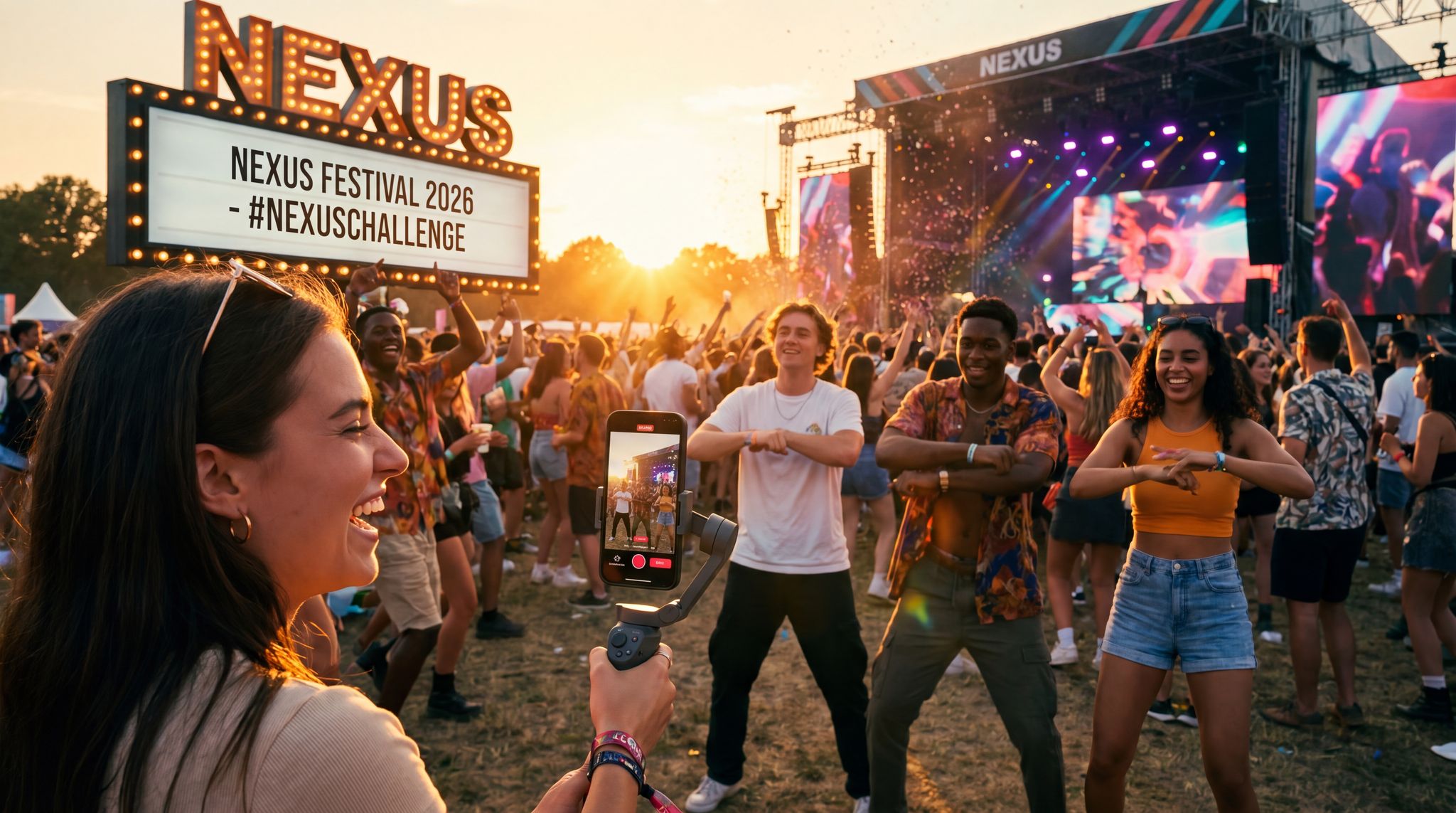
TikTok has emerged as a wildcard channel where creativity can beat cash. One engaging video – even shot on your phone – can potentially reach millions thanks to TikTok’s algorithmic discovery. For promoters on a budget, this is gold: you can get huge exposure for free or a few quid. Create short, trendy videos around your event: maybe a behind-the-scenes of festival setup, a viral dance challenge with your headliner’s song, or fans reacting to the lineup announcement. Use relevant hashtags (e.g. #DanceFestival2026) and jump on trending sounds to boost visibility. TikTok’s audience skews young (Gen Z and Millennials), so adapt your content to be fast-paced, fun, and authentic – polished commercials don’t fare as well as raw, relatable clips here.
You can also try TikTok’s ad platform, which is surprisingly accessible for small budgets. Even £50–£100 in TikTok Ads can yield results if the content resonates. The platform’s targeting is less granular than Facebook, but you can focus by interests (music genres, for example) and location. TikTok’s own case studies show strong performance for events: Hideout Festival’s TikTok campaign netted 13 million video views as detailed in TikTok’s festival success stories and a 49% lower CPA (cost per acquisition) compared to other platforms, showing how TikTok drives efficient event conversions – meaning TikTok brought in ticket buyers nearly twice as cheaply. For your campaign, consider using TikTok’s Spark Ads (which boost organic posts) to give a successful video extra reach. If one of your TikToks starts gaining traction organically, putting even £20 behind it could amplify it to a viral hit that drives serious clicks to your ticket page.
The key with TikTok (and Instagram Reels, by extension) is that content quality and trend alignment matter more than ad spend. A clever idea can outperform a big budget. Mix it up: maybe stage a quick flash mob in a public place and film it for TikTok, or have your crew do a comedic skit about “things event promoters say” – whatever might catch on. These short-form videos not only promote your current event but also build your brand’s following for the future, all at minimal cost. Just remember to include a call-to-action in captions (e.g., “Ticket link in bio!”) since you can’t always put links directly in TikTok posts unless you have certain account privileges. By making TikTok part of your shoestring strategy, you tap into massive organic reach that money truly can’t always buy.
Data-Driven Event Marketing
Track ticket sales, demographics, marketing ROI, and social reach in real time. Exportable reports give you the insights to make smarter decisions.
Retargeting Ads: Convert the Interested, Cheaply
One of the highest-ROI uses of digital ad budget – big or small – is retargeting. These are ads shown to people who have already interacted with your event in some way: visited your ticket page, engaged with your social post, or clicked an email. Because these folks have shown interest, they’re much more likely to convert, and retargeting ads serve as timely reminders. The great news for a tiny budget: retargeting audiences are usually fairly small, so you can reach them with just a modest spend. For instance, let’s say 1,000 people visited your event page after your initial promotion wave; putting £100 into a Facebook retargeting campaign could repeatedly reach those 1,000 with “Still thinking of coming? Don’t wait!” messages and drive a chunk of them to finalize the purchase.
To set up retargeting, you’ll need to have tracking set up (Facebook Pixel, TikTok Pixel, or Google Analytics/GA4 with conversion trackers). This is a must-do early on, because you want to be building these custom audiences from the start of your campaign. Then, as sales season progresses, allocate some budget specifically to remind and close the deal with interested people. You can retarget on multiple platforms: Facebook/Instagram, Google Display Network, YouTube pre-roll ads, etc. Even small festival promoters find retargeting invaluable – it’s like a safety net that catches those who showed interest but got distracted or hesitated. Crucially, it’s cost-efficient: the audience is warm, so click-through and conversion rates are higher, meaning you pay less per sale. In essence, retargeting ensures the money you already spent to get people aware doesn’t go to waste – a second or third touch can seal the sale.
Flexible Digital Coupon Campaigns
When upfront capital is scarce, utilizing pay-as-you-go digital coupon campaigns for tight budgets offers a low-risk way to drive ticket sales. Instead of paying flat fees for promotional software or massive ad blasts, promoters can deploy performance-based discount strategies. For example, you can distribute unique digital promo codes through local partners, micro-influencers, or targeted SMS blasts, only incurring costs—via the discounted ticket price or a small affiliate commission—when a buyer actually redeems the code. This flexible approach is highly effective for niche gatherings, such as managing a cultural event marketing budget where community partnerships are strong but traditional ad spend is minimal. By leveraging ticketing platforms that support dynamic, trackable discount links, organizers can launch highly targeted coupon initiatives that scale naturally with ticket sales, ensuring you never spend more than the revenue you bring in.
Prioritizing Budget in Digital Ads
To recap the digital ad game plan for a £5K budget: first, cover the basics with low-cost, high-intent search and retargeting ads (so you capture hot prospects on Google and remind interested folks on Facebook/Instagram). Next, allocate a healthy portion to Meta social ads targeting your core demographic with compelling creatives – this is your broad reach and awareness driver. Then, pepper in TikTok or other platform campaigns if your audience frequents those, especially for their viral potential. Always keep an eye on performance metrics like cost-per-click (CPC) and cost-per-acquisition (CPA). If Facebook is giving you a £10 CPA and TikTok only £5, shift more budget to TikTok, for example. Use the flexibility of digital to continually optimize allocation across platforms.
One more pro-tip: take advantage of any ad credits or discounts. Sometimes platforms offer free ad credit to new advertisers (e.g., “Spend £25, get £25 free”). Also, if you’re a non-profit event or community initiative, Google’s Ad Grant program might give you free search ads. These can effectively expand your budget beyond £5K without costing a thing. And if you can’t get more credits, simply let the data tell you where each additional £1 yields the most ticket sales. Digital marketing for events is very data-rich in 2026 – even on a small scale – so lean on that data to be surgical with your spending.
Leveraging Owned Media: Email, Content, and SEO
When budget is limited, owned media channels are your best friend. These are the platforms you control – like email lists, your website/blog, and social media pages – where reaching your audience costs little to nothing. By investing time and creativity into owned media, you can drive significant ticket sales with minimal spend. Let’s explore how to make the most of email marketing, content marketing, and organic social/SEO on a shoestring budget.
Grow Your Social Following With Every Sale
Require social media follows, shares, or playlist adds to unlock presale access or special pricing. Turn every ticket purchase into audience growth.
Email Marketing: Small Cost, Big Returns
Email is arguably the highest ROI channel for event promotion, especially on a low budget. You’re messaging people who have already shown interest (subscribed or past attendees), so they’re primed to convert. The cost? Maybe a monthly email service fee (often free for small lists) and a bit of time crafting messages. The payoff? Potentially huge. Industry research routinely finds email yielding £30–£40+ for every £1 spent, based on benchmarks from HubSpot’s email marketing stats – far outshining most paid ads. For an event marketer, this means don’t sleep on email! It can drive sales essentially for free once you’ve built a list.
If you have past attendees’ emails, start there. Send a compelling announcement about your upcoming event, perhaps with a loyalty perk (“As a past guest, here’s early access to discounted tickets!”). Personalize the content – use the attendee’s name and mention their past event if possible. Personalization boosts engagement; in fact, segmented email campaigns can double the clicks of generic ones, reinforcing why one-size-fits-all marketing strategies fail. If your list is small, focus on quality: even a 200-subscriber list can convert well if it’s full of genuinely interested people. Encourage those folks to buy and to spread the word (you might include a “forward this to a friend for a discount” note, effectively turning email into a mini-referral system).
For new promoters without a list, consider quickly building one by creating a simple pre-registration or RSVP form on your site or using your ticket platform’s waitlist feature. Promote that for free on social (“Join our mailing list for a shot at VIP upgrades!”) to gather contacts. That way, you have an owned audience to email when tickets go on sale.
Email content strategy on a budget: Plan a drip sequence of several emails leading up to the event. Example: 1) Announcement/On-sale email with all key details and a buy link; 2) a follow-up a week or two later highlighting a unique selling point (“Top 5 Reasons to Attend” or a short testimonial from a past attendee); 3) a “last chance” urgency email when tickets are nearly sold out or a deadline approaches. Keep emails concise, mobile-friendly, and action-oriented (big “Buy Tickets” buttons). Use engaging subject lines – perhaps A/B test two variations even in a small send, as it costs nothing and you might learn one phrasing gets a 5% higher open rate.
Don’t forget SMS marketing if you have phone numbers and appropriate consent. Text messages have incredible open rates (95%+), and while you don’t want to spam phones, a well-timed SMS blast (“Tickets 80% sold – grab yours now: [short link]”) can nudge a lot of indecisive people. SMS costs a bit (a few pence per message) but with a small local event list, you might only spend £20 to text everyone – worth it if it sells those final 50 tickets. Many email platforms offer SMS integration now or you can use inexpensive tools for this purpose.
In short, treat your email list like gold. It’s essentially free to use and reaches people directly without fighting algorithms. If you nurture that list with useful, exciting updates (not just constant sales pitches), it will grow over time through referrals and sign-ups, becoming a cornerstone of your marketing that makes future event promotion even cheaper and easier. Many experienced promoters cite their email newsletter as the unsung hero behind their sold-out shows year after year.
Content Marketing & SEO: Get Discovered Organically
Content marketing may not deliver instant ticket sales like an ad, but it builds organic visibility and trust that can pay off hugely with minimal monetary investment. The idea is to create valuable, relevant content related to your event that draws people in – through search engines, social shares, or word-of-mouth – without requiring ad spend. This content could be blog posts, videos, infographics, podcasts – whatever plays to your strengths and interests your target audience.
Start with your event website and listings: ensure the basics of SEO (Search Engine Optimization) are covered. That means your event page should include keywords people might search (band names, “live in [City] 2026”, etc.), a good meta description, and information that Google can pick up (date, location, price). If your event is listed on a ticketing platform like Ticket Fairy, fill out all the descriptive fields – many promoter blogs find that a well-filled listing can rank on Google and drive organic traffic for free. Additionally, list your event on free event discovery sites and local forums; this not only increases chances of organic discovery but often provides backlinks that boost your SEO.
Next, consider writing a few short blog articles or guest posts related to your event’s theme. For a minimal cost (just your time), you could publish pieces like “Top 10 Underground Techno Artists to Watch in 2026” if you’re doing a techno event, or “How to Prepare for Your First Hackathon” if it’s a tech event. These can rank in search and subtly plug your event (“By the way, you can catch many of these artists at our upcoming event – tickets here.”). Content that educates or entertains also gives you material to post on social media and mention in emails, keeping people engaged without always saying “buy now”. It’s a longer-term play, but one or two well-performing articles could drive consistent traffic. Just don’t overspend here – leverage free platforms (Medium, LinkedIn articles) or your own site, and promote the content organically. If writing isn’t your forte, perhaps do a quick interview with one of your performers or a behind-the-scenes live stream – content doesn’t need to be polished in 2026, just authentic and interesting.
Crucially, use AI tools to punch above your weight in content creation. Even with no budget, you can harness free or cheap AI like ChatGPT to brainstorm catchy social captions, draft blog outlines, or generate promotional imagery ideas (with tools like DALL-E or Midjourney). Many savvy promoters are already doing this to streamline event marketing on a budget – it’s like having a virtual assistant for content. For example, you can ask ChatGPT to “Write a fun 100-word event description in an excited tone” and then tweak it to your voice. This saves time and helps overcome creative blocks without hiring copywriters. Just be sure to fact-check and humanize any AI-generated copy so it feels genuine.
When evaluating what AI marketing tools actually deliver ROI for scrappy teams with tight budgets, focus on platforms that automate time-consuming tasks rather than just generating novelty content. For event promoters, tools like Jasper or Copy.ai offer high returns by rapidly scaling ad copy variations for A/B testing, while Canva’s Magic Studio provides budget-friendly, professional-grade graphic design without needing a freelance designer. Additionally, AI-driven email marketing assistants can optimize send times and subject lines, directly increasing open rates and ticket conversions. By investing a few pounds a month into these targeted automation and creation suites, small event teams can execute campaigns that look and perform like they were built by a massive agency.
To ensure these organic efforts actually drive ticket sales, you must track your core SEO KPIs. For event organizers, the most critical metrics include organic traffic growth to your ticketing page, keyword rankings for your specific event type and city, and the conversion rate of that organic traffic. Monitoring these key performance indicators prevents you from wasting time on content that doesn’t convert.
Another low-cost content hack: user-generated content (UGC). Encourage your audience to create content that promotes the event for you. Launch a hashtag challenge (“#DanceOffForTickets” where fans post dance clips to win a free pass) or ask a question in your Facebook event like “What’s your favorite memory of last year’s festival?” and compile the responses into a feel-good collage post. UGC not only spreads awareness to new people (friends of those who post) for free, but it also gives you a library of authentic content to reshare. People love seeing their own content highlighted by an event – it builds community and hype at zero cost.
Organic Social Media: Engage Your Community
While paid social ads require budget, organic social media costs only time and creativity. True, organic reach on platforms like Facebook isn’t what it used to be, but you can still galvanize local supporters and past attendees through consistent, genuine engagement. Focus on the social platforms where your target attendees hang out. For a music event it might be Instagram and TikTok; for a professional seminar, maybe LinkedIn and Twitter. Optimize your profiles (clear event info, ticket links in bio) and then start conversations.
Post regular updates and vary the content to keep it interesting: video clips, artist shoutouts, throwback photos, attendee testimonials, countdown graphics, polls (“Which cocktail should be our special at the event?”). These interactive posts can boost engagement – and the more people engage (like, comment, share), the more the algorithm will show your posts to others for free. Going live on Instagram/Facebook to showcase preparations or do a Q&A with an artist can also spike interest without spending a dime.
One often-overlooked tactic: community management. Respond to every comment and message promptly. Thank people for excitement, answer questions publicly so others see it, and generally act as the friendly face of the event. This builds goodwill and may turn casual commenters into ticket buyers. Also join relevant groups or subreddits where your potential audience is. Is there a local music lovers Facebook group or a Reddit thread for things happening in your city? Participate there (without being spammy) – answer someone’s question about “what’s cool this weekend” with a mention of your event if appropriate, or share genuinely useful info. Being part of the community dialogue can drive interest organically.
Don’t underestimate event discovery features on social platforms. Ensure you create an official Facebook Event and invite people; many users browse local Facebook events to decide their plans. Use relevant hashtags on Twitter or Instagram so people searching can stumble upon your posts (e.g., #LondonNightlife, #TechMeetup). If you get any media coverage or artist shout-outs, amplify them on your socials – a retweet from a popular DJ or a local news mention can lend credibility and get you in front of their audience as well.
Finally, consider partnerships for content amplification. If you have a £0 promo deal with a local radio station or influencer, coordinate some content with them. For instance, a popular local blogger might interview your keynote speaker on Instagram Live – that’s engaging content for their followers and promotes your event without formal ad spend. Or a sponsor could host a ticket giveaway on their social feed (they cover the prize, you get exposure). These win-win arrangements extend your reach by tapping into someone else’s audience, effectively giving you more “impressions” at no cost. The goal of organic social is to create a snowball of chatter and sharing. With diligent, creative effort, even a brand-new event page can grow from zero to a few hundred engaged followers before the event, and those are free ambassadors spreading the word.
In summary, owned media channels like email, content, and organic social are where small budgets can act big. You control the narrative, you don’t pay per click, and the time you invest can continue to yield results as content and posts get shared around. By building up these channels, you’re not just marketing one event – you’re creating assets (a mailing list, a content library, a follower base) that make the next event cheaper and easier to promote. That’s true shoestring strategy: think long-term, leverage what you own, and turn attendees into your marketing team through engagement and great experiences.
Grassroots & Guerrilla Marketing: Old-School Hustle, New Results
When budgets are tiny, sometimes the street-level, boots-on-the-ground tactics can make a surprisingly big difference. Grassroots marketing means tapping into local communities and doing things that don’t scale globally – but can have high impact in your specific niche or region. These methods often cost more sweat equity than cash, and in 2026, that can be a winning formula for small events. Let’s explore some guerrilla marketing and grassroots approaches that can drive ticket sales without draining your wallet.
Flyers, Posters, and Street Teams
It may sound antiquated in the digital age, but printing flyers and posters is a low-cost staple for local event promotion. For perhaps £100 in printing (or less, if black-and-white or you have a print sponsor), you can disseminate hundreds of tangible reminders of your event around town. Focus on high-traffic, relevant areas: music shops, record stores, campus bulletin boards, coffee shops, community centers – anywhere your target audience frequents. Many cities have free poster boards in neighborhoods or allow flyers in certain zones. A well-designed poster with a bold headline (event name, date, headliner) and a clear call-to-action (short URL or QR code for tickets) can grab eyeballs. Even if the viewer doesn’t buy immediately, it plants a seed and works in tandem with your digital efforts (“Oh, I saw a poster for that, it looked cool!”).
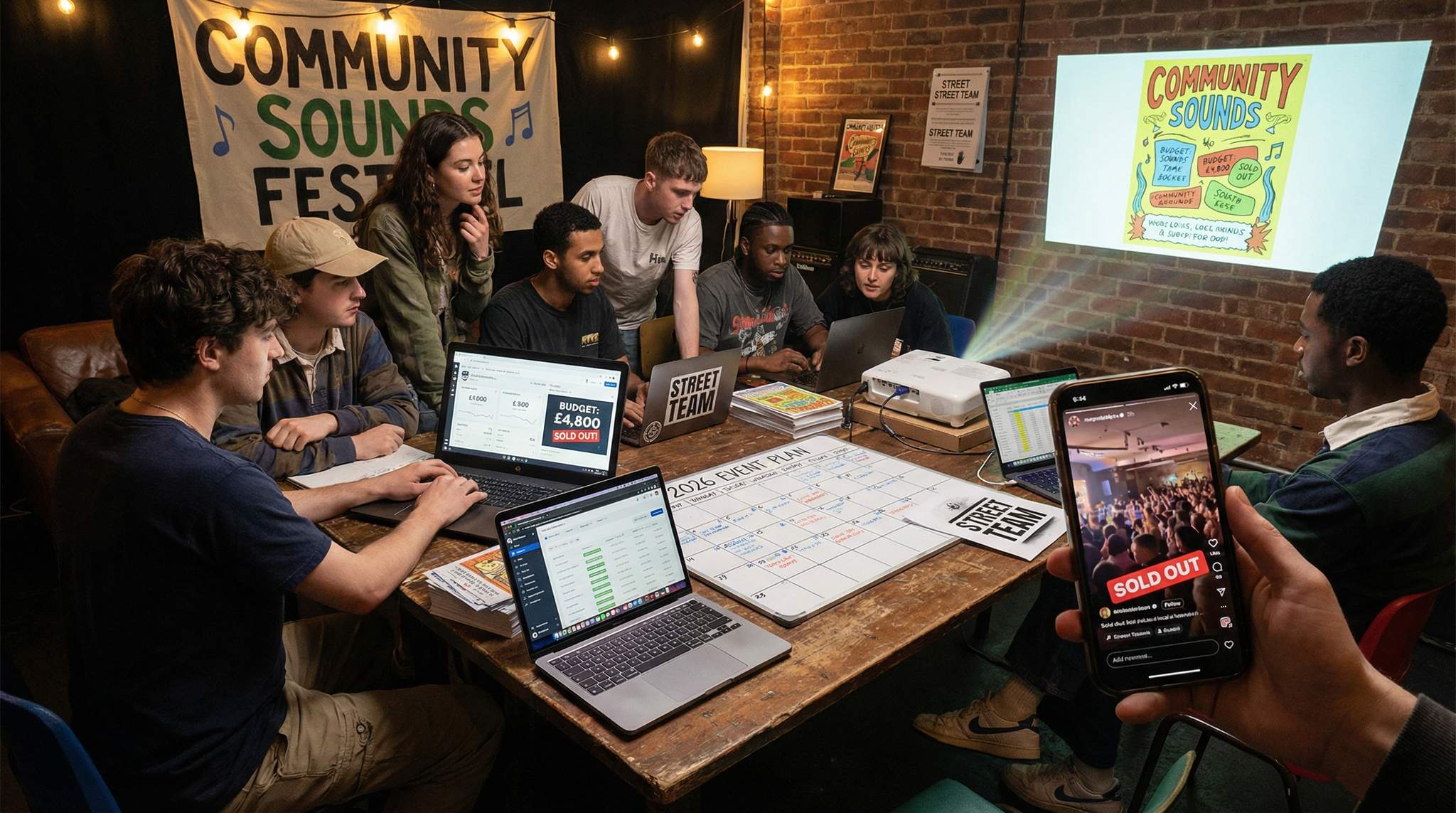
Street team promotion amplifies this effect. If you have volunteers or friends of the event, equip them with flyers to hand out at complementary events or busy pedestrian areas. A personal invitation – “Hey, check out this event I’m helping with, here’s a flyer” – can be much more persuasive than an impersonal ad. For example, promoters of indie concerts often stand outside bigger artists’ gigs as they end, handing flyers to fans filing out (knowing those fans like similar music). It’s grassroots targeting at its finest. The cost is just printing and maybe buying your street team a pizza to say thanks. Some events create a game or incentive around flyering: e.g., give your street team members a unique discount code to put on their flyers, and reward the one whose code sells the most tickets (turning it into a friendly competition).
If your budget allows a bit, you can hire promo staff for a weekend to hit the streets – but often passionate volunteers are available, especially if you offer a free ticket or merch in exchange. Make sure anyone representing you is briefed with key talking points (date, location, why it’s going to be awesome, how to buy tickets). Friendly, enthusiastic outreach can convert people on the fence or who hadn’t heard of your event at all. And importantly, grassroots efforts create a local presence – when people see your event poster at their cafe, a flyer in their hand, and then an online ad later that night, the multiple touchpoints reinforce each other.
Local Media Outreach (Earned PR)
Getting coverage in local media can provide a huge boost without spending on advertising. A single write-up in the city’s cultural magazine or a 2-minute segment on local radio can expose your event to tens of thousands of potential attendees – essentially free advertising wrapped in editorial credibility. To harness this, invest a bit of time into public relations outreach. Write a concise, compelling press release about your event: highlight any newsworthy angles (e.g., “First LGBTQ+ film festival in our town” or “Band X’s reunion show after 5 years” or even human-interest angles like “Local charity benefit concert with up-and-coming teen musicians”). Journalists are more likely to bite if there’s a story, not just “Event happening.”
Identify local newspapers, blogs, radio shows, and even TV news segments that cover community events or entertainment. Send your press release with a short personalized pitch: explain why their audience would care about this event. Keep it very accessible – include a link to photos or a video teaser, and of course the ticket link. Even smaller blogs or niche sites can drive sales; a popular local food blog featuring your upcoming food truck festival, for instance, can rally foodies to buy tickets. Don’t forget community event calendars (often run by city websites or tourism boards) – submitting your event details there is usually free and can funnel interested locals your way.
One guerrilla PR trick: if your event has a visual stunt or charitable aspect, invite the media to witness it. Maybe you organize a promo stunt like a flash mob dance in a public square or a pop-up acoustic performance on a train – something fun that might get filmed and shared. If you tip off local news or it goes viral on its own, that’s massive exposure at virtually no cost. Just ensure any stunt is safe, legal, and on-brand (and ideally, include your event hashtag or some branding so viewers can trace it back). A quirky story can travel far; for example, a small town’s haunted house event once released a humorous “zombie escape” video that local news picked up, equating to thousands of pounds worth of free publicity.
Even reaching out for a brief radio mention can help. Local radio DJs often plug upcoming concerts or weekend happenings if you give them a heads-up. It might be a 10-second shoutout, but that could reach commuters who aren’t on Facebook to see your ads. The common thread here is leveraging existing media channels by providing them something interesting to share. It costs only your time to do the outreach. Be polite, provide all necessary info up front, and respect that media folks are busy – a follow-up email or call is fine, but don’t badger if they’re not interested. Land even a couple of media hits, and you’ll get a surge in awareness and credibility that no £5K ad budget could buy outright.
Community Partnerships and Cross-Promotion
Another cost-effective strategy is teaming up with local businesses or organizations whose audience overlaps with yours. Partnership marketing can take many forms, all mutually beneficial. For instance, if you’re hosting a tech conference on a shoestring, approach a local co-working space or startup association – they might help promote your event to their members (email blasts, posters in their venue) in exchange for a few free tickets or just because it adds value for their community. A nightclub promoter might partner with a local craft brewery: the brewery displays your event poster and maybe brews a special beer for your show, you promote the brewery at the event – both gain exposure at essentially no cost.
Look for win-win scenarios. Local retailers could offer a discount to your ticket holders to sweeten the event experience, which gives you a selling point (“Show your event ticket at X Store for 10% off – exclusive perk!”) while the store gets foot traffic. In return, the store can put a “Proud Partner of [Your Event]” sign or flyers at their cash register. If you have zero budget for printing, see if a print shop or office supply store might sponsor by printing flyers for free – you’ll put their logo on it as a supporter. Many small businesses are open to in-kind partnerships like this; you don’t know until you ask.
Don’t forget student organizations and local clubs. If your event appeals to students or hobbyists (music genres, gaming, sports, etc.), connecting with those groups is gold. A university music club, for example, might help promote your gig on campus or volunteer as staff for experience, and you could acknowledge them or donate a portion of proceeds to their club fund. Community bulletin boards, church groups, meetup.com groups – these micro-communities often have their own newsletters or chats where an event recommendation goes a long way. Grassroots doesn’t scale nationally, but that’s okay; you only need to reach the people likely to attend.
One particularly potent tactic is a referral partnership: find a complementary event or organization and agree to cross-promote each other. Perhaps there’s another event organizer with a similar audience but a different night – you can each plug each other’s events in your emails or socials (“Our friends at X are doing Y next month, check it out if you like ABC”). It might seem odd to promote another event, but when budgets are low, allies beat competition. By sharing audiences, both parties expand reach. There’s a reason many indie promoters form networks or coalitions – scratching each other’s backs is far more effective than going it alone on limited resources.
For organizers of local athletic competitions wondering about effective strategies to engage in sports marketing without big sponsorships or massive budgets, the answer lies in hyper-local business partnerships. Instead of chasing national brands, approach neighborhood gyms, physical therapy clinics, or local sporting goods stores. Offer them grassroots visibility—such as naming rights to a specific tournament bracket or a branded hydration station—in exchange for cross-promoting the event to their existing client base. This localized approach builds community goodwill and drives targeted registrations without requiring a massive financial outlay.
Guerrilla Branding and FOMO Tactics
Guerrilla marketing is all about making a splash in unexpected ways. It often requires more creativity than money. One idea: create a bold visual in the city that gets people talking. Maybe a street art mural appears overnight featuring your event artwork (seek permission or use chalk for something temporary & legal). Or a giant countdown billboard “Only 5 Days to [Event]” could be drawn on a campus free-speech wall or hung as a banner (again, ensure it’s allowed). The goal is to create buzz – even if someone doesn’t immediately buy a ticket, they become aware and intrigued.
Another shoestring FOMO tactic is leveraging scarcity and urgency in a playful way. For example, print a limited run of “golden ticket” style invites (maybe 50) and drop them at hip cafes or sneak them into related events’ programs. Each has a code for a small discount or free drink at the event. Now people who find them feel special and are more likely to attend – and post about it (“Look what I found!”). It’s a low-cost gimmick that can generate word-of-mouth. Similarly, use your social media to create mini-frenzy moments: “The next 10 people to comment get a promo code” or “First 5 shares get upgraded to VIP”. These cost you very little (maybe a few drinks or merch as VIP perks) but can spark engagement and viral spread as people scramble not to miss out.
Memes and humor can also be part of guerrilla marketing. If you can create a funny meme about your event or a trending topic, it could catch fire online with zero ad spend – essentially free advertising as people tag friends. One small comedy show famously made a meme “attendance flowchart” (“Will you be bored on Friday? ? Yes ? Come to our show. No ? Must be nice, still come to our show.”) that went locally viral and filled the room. In 2026, relatability and shareability often trump polished ad creatives. So don’t be afraid to lean into authentic, grassroots vibe in your marketing – it might resonate more than a slick campaign.
Lastly, always track the impact of these efforts where you can. Use unique URLs or simple promo codes for flyers vs. partners vs. press to see what’s driving ticket sales. Grassroots tactics sometimes have indirect effects (like general buzz or multiple touchpoints contributing), but if you notice, say, 50 tickets came from the campus flyer code, you know to double down on that next time. Conversely, if an elaborate stunt didn’t move the needle, you learned and can reallocate that energy elsewhere. Guerrilla marketing is part art, part science – you iterate to see what crazy idea actually pays off.
By mixing these grassroots strategies into your plan, you tap into audiences money can’t always buy – local enthusiasts, community leaders, and curious passers-by who can become some of your most loyal attendees. And you achieve it through ingenuity and hustle rather than big spends. Many iconic events grew from just this kind of groundwork, translated to modern times. It shows that even in 2026, a passionate promoter with £0 in their pocket can still pound the pavement (literally or digitally) and pack a venue.
Unconventional Shoestring Marketing Ideas
If you are looking for highly actionable shoestring marketing ideas that cost next to nothing, consider these proven tactics. First, host a “ticket scavenger hunt” by hiding physical tickets in well-known local spots and dropping clues on your Instagram Stories. Second, partner with a local charity where attendees can donate a small item (like canned food) at the door in exchange for a discount code, which often secures free local press coverage. Finally, utilize “chalk marketing” by stenciling your event’s date and website on permitted public sidewalks near college campuses or nightlife districts. These ultra-low-cost concepts generate outsized word-of-mouth buzz.
Influencers and Ambassadors: Amplify Through People Power
One of the most powerful marketing assets is other people spreading the word for you. In the era of social media, leveraging influencers, artists, and your own attendees as ambassadors can dramatically extend your reach with minimal cost. The key is to focus on authenticity and mutual value – fancy celebrity influencers with hefty fees are usually out of reach (and often not as effective for niche events anyway). Instead, cultivate a network of micro-influencers and passionate fans who genuinely love what your event is about. Here’s how to drive ticket sales through people power:
Micro-Influencers: Niche Reach, Authentic Voice
Micro-influencers (think 1,000 to 20,000 followers in your region or scene) can be a godsend for low-budget promotion. These are local bloggers, Instagram personalities, TikTok creators, or community figures who have trust with a specific audience. For example, a popular local food vlogger could hype your food festival, or a niche YouTube DJ could mention your club night. Micro-influencers often charge little or nothing if they truly align with your event – many are happy with free tickets, VIP access, or small perks in exchange for promotion, rather than monetary payment. And their audience engagement tends to be high (often higher percentage than mega-influencers) because they feel like friends or peers to their followers.
Approach micro-influencers with a personal touch. Show that you know their content and explain why your event fits their vibe. Maybe invite them to be an official content partner – they can do a takeover of your social media for a day or get an exclusive first look to share with their followers. Provide them with shareable assets: discount codes they can offer, behind-the-scenes clips to post, or a unique hashtag just for them. This not only flatters their sense of importance but also lets you track the impact. For instance, give Influencer A a code “JOHN5” for £5 off – you’ll see how many sales John drove, and he can brag about that success too. Keep in mind, authenticity rules: audiences these days are skeptical of ads and endorsements. In fact, only about 37% of consumers trust influencer content more than brand ads, according to Buyapowa’s word-of-mouth trust statistics, meaning you and the influencer should aim for a genuine approach. Micro-influencers tend to naturally be more genuine (they can’t afford not to be), so let them post in their voice. A candid Instagram Story saying “You all know I love underground techno – I’m honestly excited for this event next month” can carry far more weight than a formal scripted promo.
Also consider artists and speakers as influencers. The talent at your event often has its own following. Even if they’re not superstar famous, their personal endorsement can mobilize their fans. Encourage and equip your lineup to promote the show: provide them with easy-to-share graphics, a ticket link, and perhaps an incentive (like “if you help us sell out, we’ll book you again next year!” or simply the promise of a great crowd). Most artists want a full house – it makes for a better atmosphere – so it’s in their interest too. You’d be surprised how a mid-tier DJ or a panel speaker enthusiastically posting about their upcoming appearance can drive their loyal followers to buy tickets just to see them.
Fan Ambassador Programs: Turn Attendees into Sellers
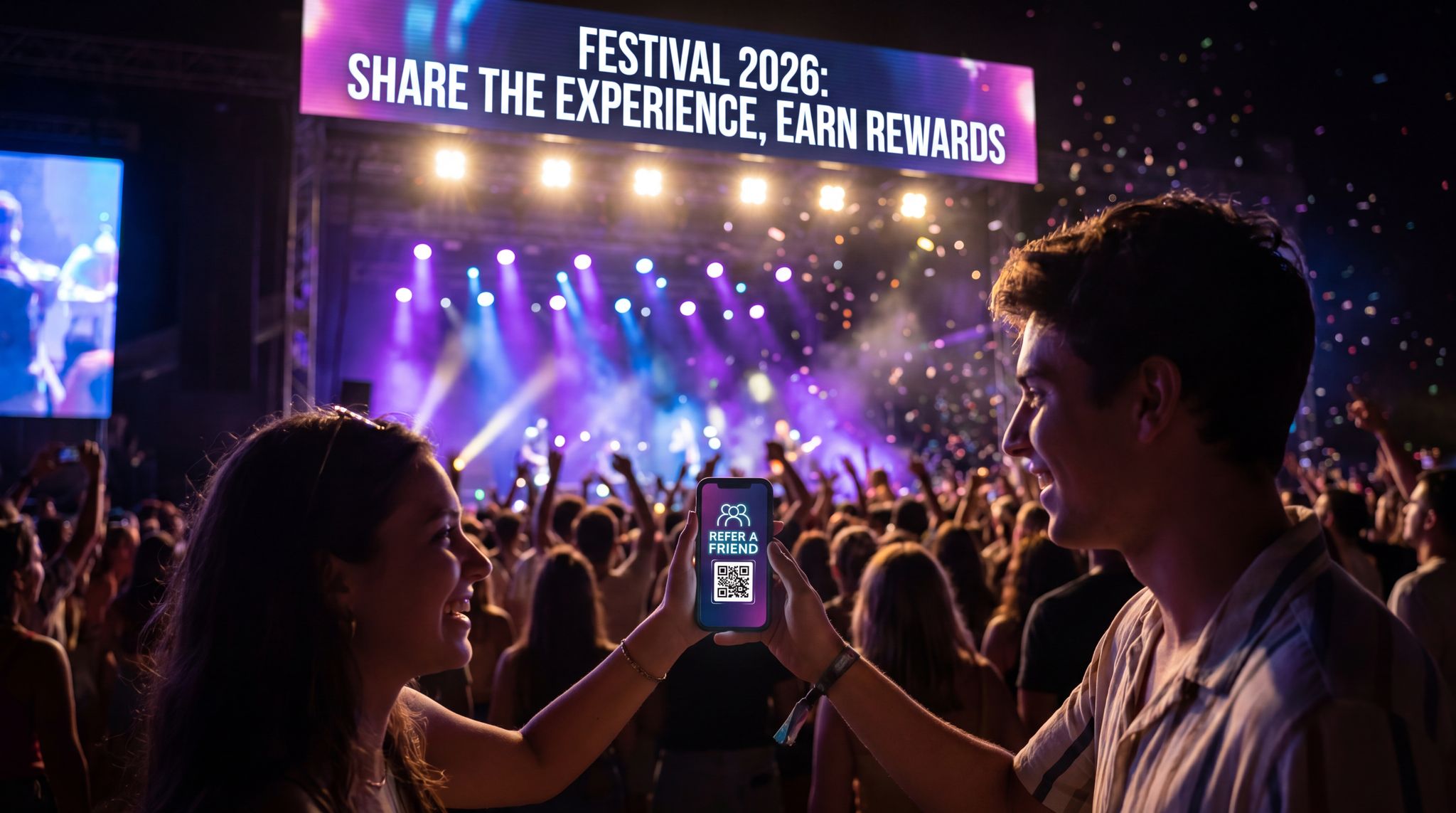
Your existing fans can become a grassroots sales force through referral and ambassador programs. The concept is straightforward: recruit enthusiastic would-be attendees (or people who already bought tickets) to actively promote the event in exchange for rewards. Those rewards could be small (merch, drink tokens) or big (free ticket, meet-and-greet with an artist, VIP upgrade) depending on how many new attendees they bring in. Thanks to technology, setting up these programs is easier than ever – many ticketing platforms (Ticket Fairy included) have built-in referral tracking that gives each fan a unique link or code. When someone buys using that link, the system attributes the sale to the fan, so you can automatically reward them.
Why do this? Because word-of-mouth is king. A global Nielsen survey found 88% of consumers trust recommendations from people they know more than any channel, a fact highlighted in recent consumer trust research. When a friend says “Come to this event with me, it’ll be awesome,” it carries unparalleled weight. We’ve seen events where a modest formal marketing budget was dwarfed by the sales driven through peer invites and referral incentives. For example, Boom Festival credited its community ambassadors for bringing in attendees from all over, demonstrating how referral programs drive ticket sales. That’s a huge endorsement of the power of fan-driven promotion.
To implement your own program on a shoestring: identify a group of 10–20 super fans or just willing friends who’ll serve as your first “ambassadors.” Give them each a referral code/link and maybe a small starter reward (like a free T-shirt or a shoutout on your socials to make them feel special). Clearly communicate the reward structure: e.g., “Bring 5 friends, get your ticket refunded; bring 10 friends, earn a backstage meet-and-greet,” etc. Make the goals achievable and the rewards something desirable that you can afford (remember, giving free access or experiences often costs you less than cash). Then, hype up the program – create a private group or chat for ambassadors where you share tips, celebrate their progress, and stoke friendly competition.
An example of success: one small venue’s ambassador program helped them sell out weeks earlier than usual and even grew their email list from all the new sign-ups, giving fans the chance to win unique rewards. They gamified referrals with a leaderboard, and people got really into it. The key is to keep it fun and social. Ambassadors aren’t hired salespeople, they’re fans who like a challenge or want to help make the event great (while picking up a perk or two). Publicly recognize top referrers (“Ambassador of the Week” spotlight posts) to keep motivation high. This strategy essentially turns your attendees into micro-influencers – tapping into all those trust networks at the cost of a few free tickets or perks. When budget is low, that trade-off is a no-brainer.
Contests, Giveaways, and Virality
Another way to let people do your marketing for you is through well-crafted contests and giveaways. People love winning stuff, and if the contest is structured right, you get a flood of free promotion as participants complete tasks like sharing posts or tagging friends. For instance, run a “2 Free Tickets Giveaway” on social media: ask entrants to follow your page, like the post, and tag a friend in the comments (each tag could be an entry). This kind of contest can dramatically boost your visibility as it reaches friends-of-friends (each tag is essentially an endorsement of your event to a new person). The cost to you is just the value of the tickets, which for a low-budget event might be negligible compared to ad spend reaching the same number of people. Tools like Gleam or Rafflecopter can help manage multi-platform contests cheaply, or you can do it manually if it’s straightforward.
Be creative with contest ideas so they also generate content. For example, a photo contest – “Post a photo of you in your best festival outfit, use our hashtag, and the winner gets free entry plus a merch bundle.” Now fans are creating content hyping up your event on their profiles. You not only gain reach, but you also gather user-generated content (those photos) to repost and build hype. Another idea: a trivia contest about your event’s theme, held in Instagram Stories or via email, that gets people engaged and talking. The prize could be an upgrade at the event or sponsor-provided goods (if you can snag a sponsor to donate something, even better!).
Influencers can help here too. Perhaps partner with a micro-influencer to host a giveaway on their channel (“My followers can enter to win two tickets to X event – here’s how”). The influencer gets engagement, you get exposure to their audience, and the cost is again just comp tickets. Importantly, ensure any contest complies with platform rules and local regulations (some places have laws on contests). Keep it simple to enter, and promote the heck out of the winner’s excitement – that itself markets your event as something people are excited about.
Authenticity Over Hype
A recurring theme in influencer and ambassador marketing is authenticity. Modern audiences, especially younger ones, have a finely tuned BS-meter. They’ll scroll right past a post that feels like an ad, but will pay attention to a genuine recommendation from a peer or a relatable figure. Data backs this up: consumers are far more likely to trust real friend referrals, as shown in data on consumer trust in marketing, and a vast majority express skepticism about influencer promotions that don’t seem authentic, reinforcing that consumers don’t trust information from influencers blindly. So as you mobilize people to promote your event, make sure they truly believe in it and allow them to speak honestly.
Instead of providing strict scripts to your micro-influencers or ambassadors, give them leeway. Maybe one volunteer will write a heartfelt Facebook post about how they’ve been to your past events and had an incredible time, encouraging others to join – that’s worth more than a generic ad copy paste. Another might make a silly TikTok about “5 types of people you’ll meet at [Your Event]” – entertaining content that also plugs the event. Embrace these diverse voices. Yes, you should arm them with accurate info and key points (and correct any egregiously off-message claims), but otherwise let the human shine through. Genuine enthusiasm is infectious.
Keep your asks reasonable too. Don’t overload your ambassadors or influencers with too many deliverables – they’re doing you a favor (even if incentivized). A couple of dedicated posts and some casual story mentions might be plenty. If you maintain good relationships, these folks will be willing to promote your next event as well, maybe even more than you ask because they feel like part of the team. Many events cultivate a “family” of repeat ambassadors who grow with the event, some eventually joining the staff or formal street team as it scales. That continuity can become a secret weapon, effectively giving you a loyal marketing workforce that grows organically as your event grows.
In summary, harnessing influencers and ambassadors lets you punch above your weight in reach and credibility. It turns marketing into a social, distributed effort instead of a one-way blast from a tiny budget. By selecting the right people – those who genuinely align with your event and speak to the audience you want – and motivating them with fair rewards and recognition, you’ll create a buzz that no paid ad could replicate. It’s the digital word-of-mouth machine at work, proving that even with limited funds, people trust people, and thus people promoting to people is often the smartest strategy of all.
Measuring Success and Optimizing Every Pound
When resources are scarce, constant optimization is your savior. You can’t afford to let underperforming tactics linger or miss an opportunity to double down on what’s working. That’s why measurement isn’t an afterthought – it’s baked into everything from Day 1 of your campaign. The beauty of many low-budget tactics is that they’re highly trackable in the digital realm, and even offline efforts can be gauged with a bit of creativity. Here’s how to measure success and make data-driven tweaks to maximize ROI.
Set Up Tracking from the Start
Before your campaign even launches, ensure you have the tools to capture data in place. This means installing pixels (Facebook, TikTok, etc.) on your ticket landing page, enabling Google Analytics or equivalent, and using UTM parameters on links. For emails, use tracked links to see click-through and conversion. Issue unique promo codes for each channel (e.g., SOCIAL5 for Instagram, FLYER5 for flyers) – that way, every ticket sold can be traced back to a source when the code is used at checkout. Ticket Fairy’s platform, for instance, allows event promoters to generate custom tracking links and discount codes on the fly, which is extremely handy on a shoestring because you get clear attribution without expensive analytics software.
Don’t worry if you’re not a data scientist – focus on a few key metrics that align with your funnel. Common ones include: Impressions (how many saw your message), Clicks/Visits (how many showed interest), Conversion Rate (what % of those bought a ticket), and Cost Per Acquisition (CPA) if you spent money to get that buyer. Also track Engagement for organic efforts (likes, shares, comments) as a leading indicator of interest, and Email Open/Click Rates for your email campaigns. Even with free analytics tools, you can monitor these easily. Create a simple spreadsheet if needed, logging weekly results so you can spot trends.
Identify What’s Working (and What’s Not)
As data rolls in, actively analyze it. Which Facebook ad audience is yielding clicks at £0.20 versus another at £0.50? Pause the expensive one and put more into the cheap one. Did your email blast result in 50 ticket sales within two days? Great – maybe schedule another email sooner than planned, or segment the list and try a targeted message to those who didn’t open it the first time. Are you seeing a lot of traffic from Instagram but not many conversions? Perhaps your landing page isn’t mobile-optimized or the Instagram crowd needs more information to convince them (you could add an FAQ or reviews section to the page, for example).
Be especially mindful of your Cost Per Acquisition (CPA) on any paid channel. If you spent £100 on Google Ads and sold 10 tickets from it, your CPA is £10. Compare that to your ticket price and profit margin. If you’re making £30 per ticket, a £10 CPA is okay; if tickets are £15, that’s likely not profitable (ignoring lifetime value, which for one-off events is less relevant unless you plan repeat events). Reallocate budget to channels with the lowest CPA. It’s common to find that one platform vastly outperforms others – maybe your audience is just more active there. For example, perhaps TikTok brought a flood of site visits but few purchases, whereas Google Search brought fewer but they almost all converted. In that case, you’d put more into Google and adjust your TikTok strategy (or pause TikTok ads and focus on organic TikTok content instead, since it’s not costing you).
Also, track the timeline of sales relative to your actions. Did you see a spike in ticket purchases the day after a particular promotion? If 30 tickets sold following the local radio mention, that’s huge – consider going back to the station with a follow-up story, or replicating that tactic in another market. Conversely, if the entire week of heavy flyering only moved 5 tickets, maybe your distribution spots were wrong or the messaging on the flyer didn’t click. Use that insight to tweak the flyer or shift where you hand them out (perhaps try campuses instead of cafes, etc.).
Adapt Quickly – The Shoestring Advantage
Large events with massive budgets often have longer planning cycles and bureaucratic approval chains that make quick changes hard. As a small event marketer, agility is your advantage. If something’s not working, pivot fast without pride or politics. Didn’t get any traction with influencer A? Thank them and move on to influencer B or another channel entirely. Notice your Facebook event page has a lot of questions from interested people? Maybe it’s worth hosting a quick live Q&A or adding more info to address those questions – anything to remove purchase hesitations.
Keep an eye on your pacing too. If you’re halfway to the event date and only 20% of tickets are sold, that mid-campaign slump needs a jolt, perhaps by leveraging the power of micro-influencers to promote your event – perhaps a flash sale or a mid-course correction in strategy. The earlier you catch a lag, the more options you have (like adjusting messaging or calling in extra help from partners/press) so you’re not scrambling in the final days. On the flip side, if you’re selling faster than expected, leverage that success: use “tickets selling fast!” messaging to fuel FOMO, or maybe release a small batch of additional tickets (if venue capacity and budget allow) to capitalize on the demand.
Make it a habit to review your metrics at least weekly (daily during critical periods). It need not be a burden – it could be a quick morning check of your dashboard and jotting notes. Over time, you’ll gain instincts for what the numbers are telling you. Campaign veterans often say they can “feel” when an ad creative is getting stale because click-throughs dip, or when a certain post resonated because they see unusual site traffic at 10pm that night. Develop that sixth sense by staying close to your data.
Utilize Low-Cost Analytics Tools
The good news is you don’t need fancy software or expensive subscriptions for solid marketing analytics. There are plenty of free or cheap tools ideal for a shoestring budget:
- Google Analytics (free) – Use it to see traffic sources, set up conversion goals (e.g., reached checkout page), and user behavior on your site.
- Facebook Events Manager (free) – Comes with the pixel; lets you track conversions from FB/IG ads and even do offline event matchback if you upload sales data.
- Spreadsheet + ticket sales data (free) – Download your ticket sales data and sort by promo code, date, etc. This manual analysis can show which pushes corresponded to sales.
- Link shorteners with analytics (free/cheap) – Use bit.ly or Rebrandly to create short links for print materials or different campaigns; their click analytics will tell you how many people typed in or scanned that link from a flyer, for instance.
- Promo code tracking (free with Ticket Fairy or similar platforms) – Generate unique promo codes for each channel/partner and simply check how many uses each code got.
- Social media insights (free) – Built-in Instagram Insights, Twitter Analytics, etc. show you which posts got the most engagement or profile clicks. Correlate those dates with your ticket sales.
- Surveys (free) – Post-event (or even during sales), use a free Google Form or Twitter poll to ask how people heard about the event. It’s informal data but can highlight, say, that “a lot of folks heard from friends or via WhatsApp” – validating your word-of-mouth efforts.
One advanced but powerful approach as third-party cookies and easy tracking fade is focusing on first-party data and attribution, a shift necessitated by changing consumer trust and privacy landscapes. That means using your own data (from ticketing and email) to see patterns. For example, you might notice those who bought via your email link spent more on average (maybe they bought add-ons or merch) than those from a generic ad. This could inform you to invest even more in email cultivation next time. Also, consider using the ticketing platform’s insights: Ticket Fairy’s dashboard, for instance, can show you real-time sales and referral sources if set up, and even the ROI of any integrated ad campaigns if you connected them. Take advantage of these if available – they’re essentially free with the service you’re already using.
Learn and Iterate
Finally, treat this campaign as a learning experience for continuous improvement. Even if certain tactics didn’t fully pay off in pure ROI, the insight you gain might be worth its weight in gold for your next event. Did a particular audience segment engage but not buy? Perhaps the price was a barrier for them – next time you could consider a lower price tier or targeted discount for students, for example. Did an experimental TikTok video go nowhere? Maybe the lesson is to collaborate with a content creator next time rather than DIY, or that your core buyers just aren’t on TikTok. Conversely, if a unlikely channel blew up (say, your Reddit post attracted massive interest), you’ve uncovered a vein to mine deeper in the future.
Document what you learn. It could be as simple as a one-page recap: which channels sold the most tickets, CPA by channel, any notable spikes and what caused them, and ideas for next time. This transforms your shoestring campaign from a one-off effort into part of a growing knowledge base. And that knowledge is a compounding asset – it means each subsequent event you promote can achieve more with the same or even smaller budget because you’re not starting from scratch, you’re iterating on a proven playbook.
Measuring and optimizing might not be the flashy part of marketing, but it’s where good campaigns become great. It’s how you ensure not a single pound goes to waste and how you justify the spend you did make with solid results. For the skeptical client or boss asking “Why should we spend anything on marketing?”, you’ll have the data to show: “We spent £1,000 here and got £5,000 in ticket sales – let’s do more of that!” Ultimately, a data-driven approach turns your low-budget campaign into a precision-guided mission, continually honing in on the target of a sold-out event.
A Guide to Event Monetization in 2026: Strategies and Tools
While keeping marketing costs low is crucial, maximizing the revenue generated from every attendee is equally important. For promoters operating on a shoestring, treating your event as a multi-stream revenue engine can offset tight promotional budgets. A comprehensive guide to event monetization in 2026 strategies and tools reveals that organizers are moving beyond basic ticket sales to integrate digital and on-site upselling seamlessly.
Top Monetization Strategies
Modern monetization relies on offering enhanced experiences and convenience. Consider implementing tiered ticketing, where a small premium grants early entry or access to a dedicated VIP bar. Another highly effective strategy is pre-selling merchandise, drink tokens, or parking passes directly during the checkout flow. By capturing these add-on sales when buyer excitement is highest, you secure revenue upfront, which can then be reinvested into your last-minute marketing blitz.
Essential Tools for Revenue Growth
To execute these strategies without adding operational overhead, you need the right technology. Ticketing platforms like Ticket Fairy offer built-in tools for add-on sales and VIP upgrades at no extra upfront cost. Additionally, utilizing cashless payment systems at the venue can increase on-site spending by up to 20%, as attendees tap-to-pay without worrying about carrying cash. By combining smart upselling strategies with frictionless payment tools, you can significantly boost your event’s overall profitability, making that initial £5,000 marketing investment stretch even further.
Summary Table: Channel Impact vs. Cost
To wrap up our exploration of channels and tactics, here’s a quick reference comparing their typical costs, effort, and ROI potential for a low-budget event. Use this as a cheat sheet when deciding where to focus your energy and limited funds:
| Marketing Channel | Out-of-Pocket Cost | Effort Required | ROI Potential | Notes (2026 context) |
|---|---|---|---|---|
| Facebook/Instagram Ads | Flexible (£50+ to your cap) | Moderate (setup, targeting, creatives) | High if well-targeted (5–10× ROAS possible) | Still the broadest reach; use advanced targeting and lookalikes for best results. |
| Google Search Ads | Flexible (pay per click; ~£1–2 CPC for niche terms) | Low-Moderate (keyword research, set bids) | High (captures ready-to-buy users) | Great for high-intent fans searching; ensure you bid on your event/brand keywords. |
| TikTok/Reels (Organic) | Free | High (content creation takes time) | Very High (viral potential, unpredictable) | Huge reach if content clicks; trend-driven, so be creative and timely. |
| TikTok Ads | Flexible (low entry, can start ~£50) | Moderate (need catchy video ad) | Medium-High (lower CPM, but lower intent) | Good for awareness with young audiences; creative content is key to conversion. |
| Email Marketing | Low (often free up to X contacts, or £10–£50/mo) | Moderate (writing, list management) | Extremely High (up to £36 per £1 spent) | Best for conversion of interested audience; segment for even better results. |
| Influencer Marketing | Low (free tickets or <£200 for micro-influencers) | Moderate (finding & coordinating) | High if authentic (trust drives sales) | Leverages trust networks; micro-influencers often willing to post for experiences instead of cash. |
| Referral/Ambassador Prog. | Low (cost of rewards like free tickets or merch) | Moderate (setup tracking, manage community) | High (word-of-mouth has ~10× influence) | Turns fans into marketers; a well-run program can drive 20–30% of sales or more. |
| Organic Social Posts | Free | High (consistent engagement needed) | Medium (indirect ROI via awareness) | Essential for presence; algorithm limits reach but great for community building and announcements. |
| Content Marketing/SEO | Free (your own blog) or Low (occasional freelance help) | High (creating valuable content) | Medium (slow burn, builds brand & SEO) | Boosts discovery and trust over time; not immediate sales, but improves conversion funnel. |
| Flyers & Posters | Low (£50–£200 printing) | High (distribution labor) | Low-Medium (local impact) | Good for local awareness, especially for community or campus events; works best paired with personal outreach. |
| Press/PR Media | Free (just your time) | Moderate (writing pitches, networking) | Medium-High (if you land coverage) | One article/radio mention can equal thousands in ad spend; credibility boost is a bonus. |
| Partnerships & Cross-promos | Free (in-kind swaps) | Moderate (relationship building) | Medium (expanded reach in niche) | Leverages others’ audiences; success depends on partner’s audience quality and enthusiasm. |
| Guerrilla Stunts | Low (£0–£100 for props) | High (creativity, planning) | Medium-High (if it goes viral) | Can generate buzz and media coverage; hit-or-miss, so don’t over-invest in complex stunts. |
(ROI Potential is relative; actual results will vary. “High” ROI channels tend to produce direct trackable sales, whereas “Medium” might contribute more to awareness and engagement that indirectly lead to sales.)
Use the above as a guideline to allocate your limited resources. Typically, focus on a few High ROI channels (social ads, email, referrals) as your core, support them with Medium ROI tactics (organic social, partnerships, local PR) for added reach and credibility, and sprinkle in a creative stunt or two if you have the bandwidth for potential big payoffs. And always be measuring and ready to rebalancing your efforts as the campaign unfolds!
Frequently Asked Questions
What are the most effective shoestring marketing ideas for new event promoters?
The most effective low-cost tactics include leveraging micro-influencers in exchange for VIP access, launching fan ambassador referral programs, utilizing grassroots street teams, and maximizing owned media like email lists and organic short-form video content.
How do I set up a budget-friendly digital ad campaign for my event?
Start by allocating a micro-budget (e.g., $150 to $200) to test highly targeted Meta or TikTok ads aimed at warm audiences, such as past attendees or website visitors. Once you identify which ad creative yields the lowest cost per acquisition, reinvest your remaining funds into the top-performing ad sets.
How can I make event marketing more efficient with a limited budget?
Efficiency comes from strict ROI tracking and eliminating waste. Focus entirely on high-intent channels like search ads and retargeting, use first-party data to segment your email lists, and pause any campaigns that do not directly result in measurable ticket sales.
How can I run digital coupon campaigns on a tight budget?
Event organizers can utilize pay-as-you-go digital coupon campaigns by generating trackable promo codes through their ticketing platform and distributing them via owned channels, local partners, or micro-influencers. This performance-based approach ensures you only incur a cost (via the discount or affiliate fee) when a ticket is actually sold, making it a highly efficient strategy for limited budgets.
What are the best event monetization strategies and tools for 2026?
A modern guide to event monetization in 2026 highlights strategies like pre-selling merchandise, offering VIP upgrades during checkout, and utilizing cashless payment systems. The best tools include ticketing platforms with built-in add-on capabilities and seamless point-of-sale integrations that maximize attendee spend without increasing operational overhead.
What AI marketing tools actually deliver ROI for scrappy teams with tight budgets?
For event organizers operating on limited funds, the highest-ROI AI tools are those that replace expensive outsourced labor or automate repetitive tasks. AI copywriting platforms help generate multiple ad variations quickly, while AI design features (like Canva’s Magic Studio) allow promoters to create professional event graphics for a fraction of the cost of a designer. Additionally, utilizing the built-in AI optimization features of your email or ticketing platform can significantly boost conversion rates without requiring a standalone software subscription.
What are the most reliable marketing strategies for ticket sales on a low budget?
The most reliable marketing strategies for ticket sales when funds are tight involve prioritizing high-ROI digital channels, such as targeted Meta ads and search engine marketing, alongside robust owned media efforts like segmented email campaigns. Additionally, leveraging fan ambassador programs and micro-influencer partnerships can exponentially increase your reach without requiring significant upfront capital.
What are effective strategies for engaging in sports marketing without big sponsorships or budgets?
For local athletic events or tournaments, the most effective low-budget sports marketing strategies involve hyper-local partnerships. Instead of seeking large corporate sponsors, collaborate with neighborhood gyms, local sporting goods stores, or wellness clinics. Offer them grassroots visibility—such as branding a hydration station or a specific competition bracket—in exchange for promoting your event to their customer base.