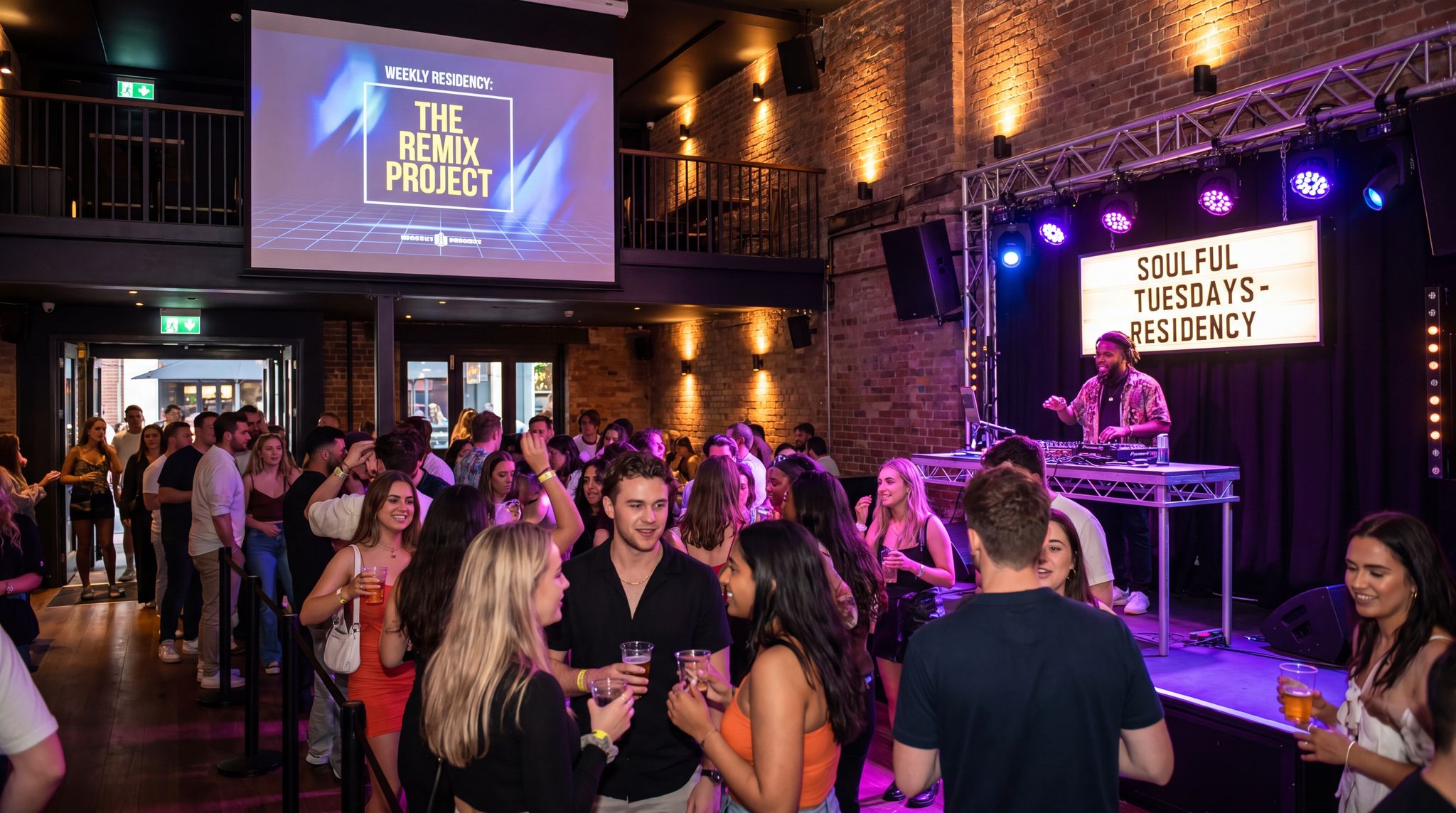
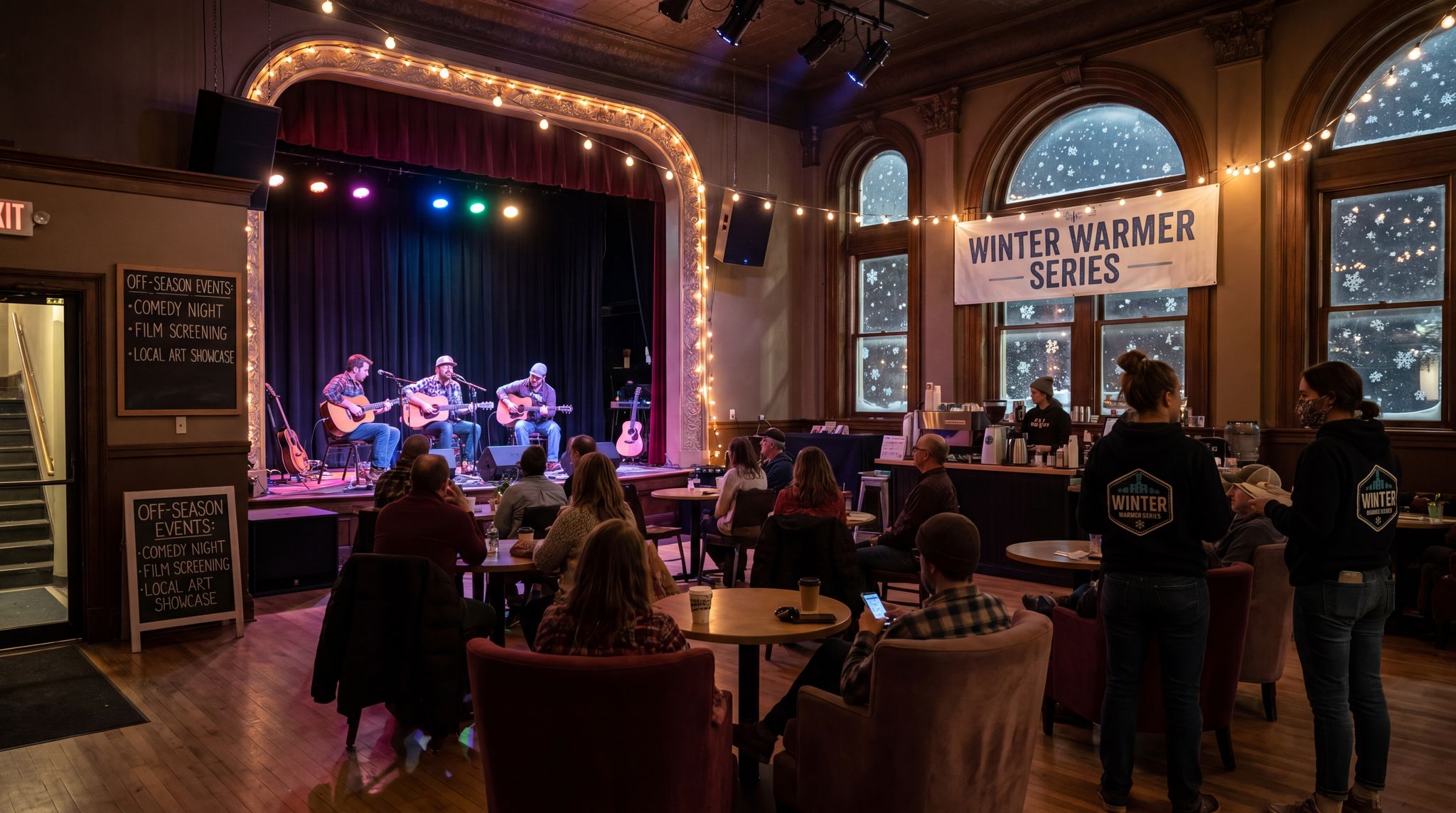
Every time music echoes through your venue – whether it’s a live band covering a classic hit, a DJ spinning the latest track, or even a background playlist – you enter the realm of music licensing. In 2026, savvy venue operators know that playing music publicly isn’t just about entertaining guests; it’s a legal obligation to ensure songwriters get their due. Overlooking these requirements can lead to costly fines or lawsuits that no venue can afford. This comprehensive guide breaks down how to keep your venue fully licensed and royalty-compliant, with practical steps, global examples, and insider tips so you can keep the music playing legally while supporting the creators behind the songs.
Understanding Music Licensing Basics
What Is a Public Performance?
When you play music in a venue open to the public – be it a club, theater, bar, restaurant, or festival site – it counts as a public performance of that music. Owning a personal copy of a song (on a CD, MP3, or streaming account) doesn’t give you the right to broadcast it in public. The copyright law in virtually every country grants songwriters and publishers the exclusive right to public performance of their works. This means venues must obtain permission (via licenses) to play or perform music for an audience. Whether the music is live (a band playing covers or original songs) or recorded (a DJ set, playlist, or even a radio/TV broadcast in your bar), the same principle applies – permission is required from the rights holders.
When Do Venues Need a License?
In short: almost always, if music is involved. Any time music is more than just a private listening experience (i.e., it’s audible to the public or patrons in your venue), you likely need a license. That includes:
– Live concerts – bands, solo artists, or orchestras performing songs (including their own songs or cover versions).
– DJ performances – a DJ playing tracks (from Spotify, MP3s, vinyl, etc.) to a crowd on a dance floor.
– Background music – playlists in a lobby, restaurant dining room, or pre-show/interval music in a theater.
– Karaoke nights – patrons singing popular songs with instrumental tracks (a common source of risk, as one Providence bar learned when a few karaoke songs led to a lawsuit reported by The Boston Globe).
– Music videos or TV – if you show music videos or even a TV broadcast with music in it, that counts as a public performance of music.
The only scenarios that might be exempt are very narrow (for example, in the U.S., a small business under a certain square footage playing radio/TV might qualify for a limited “homestyle” exemption). However, those exceptions are extremely limited and risky to rely on. If you have any sort of regular music at your venue, assume you need a license. It’s far better to be safe (licensed) than sorry.
Let Fans Pay Over Time
Offer flexible payment plans that split ticket costs into manageable installments, making higher-priced events accessible and boosting conversions.
Composition vs. Recording Rights
It’s important to understand which rights you’re actually licensing as a venue operator. Music generally has two key copyrights:
– Song Composition – the underlying musical work (lyrics, melody) created by songwriters and composers. Public performance of the composition requires permission from the composer/publisher.
– Sound Recording – a specific recorded version of a song, owned by a record label or artist. Public performance of the recording can also require permission, but the rules vary by country.
For venue operators, the primary concern is the composition’s performance right. When a band plays a cover song live, or a DJ plays a track, you are publicly performing the composition, so you need a license for that composition. In many countries (including the US), traditional in-person performances of sound recordings (like a DJ playing a track over loudspeakers) do not require a separate license for the recording owner – you just need the composition license. In other regions (for example, the UK, Canada, Australia, much of Europe), you do need to also clear rights for the sound recording when using recorded music. This typically means obtaining an additional license to cover playing the actual recordings (more on that in the global section below).
Ready to Sell Tickets?
Create professional event pages with built-in payment processing, marketing tools, and real-time analytics.
Don’t worry – you usually don’t have to negotiate with every songwriter or label individually. That’s where Performance Rights Organizations (PROs) come in. These organizations administer public performance rights on behalf of thousands of songwriters and publishers, offering venues a one-stop “blanket” license to legally play millions of songs. With the right blanket licenses, you can cue up anything from the latest pop hit to classic rock anthems without chasing individual permissions.
Legal Obligations and Why Licensing Matters
Copyright Law: Your Venue’s Legal Duty
Music may feel ubiquitous and free, but it’s protected by copyright law just like films, books, or software. Under these laws (nearly universal worldwide), venues have a legal duty to license the music they use. In practice, this means signing up with the appropriate PROs and paying annual license fees so that songwriters can earn royalties whenever their music is performed at your establishment. It’s not an optional courtesy – it’s the law.
Venue managers should treat music licensing the same way they treat fire codes or liquor licenses: as an essential compliance issue. Just as you wouldn’t host events without regard to fire safety or proper ID checks to enforce age restrictions, you shouldn’t host music without the proper licenses. In 2026, enforcement is as strict as ever. PROs have legal teams and even field investigators who monitor businesses – no venue is “too small” to be noticed. A case in point: in 2024, ASCAP filed a lawsuit against a small Providence restaurant after an investigator caught just three unlicensed karaoke songs being performed, as detailed in coverage of the federal lawsuit. If music is part of your business, assume you are on the radar.
The High Cost of Non-Compliance
Choosing to “play dumb” or hope you won’t get caught is a dangerous gamble. If you use music without the necessary license, you risk copyright infringement liability. The penalties can be severe. In the United States, statutory damages range from $750 up to $30,000 per song – even for a first-time infringement, according to Cloud Cover Music’s guide to fines. If a court finds you willfully ignored the law, the fines can shoot as high as $150,000 per infringed song, a risk highlighted in licensing liability overviews. It only takes a few songs to potentially bankrupt a small venue. Similar damages apply in other countries, and PROs worldwide have shown a willingness to take legal action when needed.
Data-Driven Event Marketing
Track ticket sales, demographics, marketing ROI, and social reach in real time. Exportable reports give you the insights to make smarter decisions.
Beyond the fines, the legal process itself is costly and disruptive. Lawsuits mean attorney fees, negative publicity, and stress – not exactly what you need when running a venue. It’s much cheaper and easier to pay for licenses upfront than to get caught in a legal battle later. PROs typically do try to work with venues before suing. In many documented cases, organizations like ASCAP or BMI will send multiple notices, calls, or even representatives to explain licensing options. (In that Providence case, ASCAP reportedly attempted to contact the venue over 80 times to offer a license and educate the owner before finally resorting to a lawsuit, a timeline confirmed by The Boston Globe’s investigation.) By ignoring those overtures, venues signal willful infringement – at which point PROs feel they have no choice but to prosecute.
In short, skipping licenses is a lose-lose proposition. You save a bit of money in the very short term, but you accrue huge legal and financial risk that can explode without warning. It’s simply not worth it. As one veteran venue operator put it, “Unlicensed music is the easiest lawsuit to avoid – just get the license and focus on running great shows.”
Grow Your Events
Leverage referral marketing, social sharing incentives, and audience insights to sell more tickets.
Paying Royalties Supports Creators
There’s another side to music licensing beyond avoiding penalties: it’s about doing right by the people who create the music that powers your events. Songwriters (and composers and publishers) often earn their living from royalties. Every time you play their song, it has real value – it enhances your atmosphere, entertains your crowd, and keeps customers coming back. Paying licensing fees is how you compensate those creators for the value their work brings to your venue, a principle emphasized in reports on music industry lawsuits.
Think of it this way: if a band played live at your venue, you’d pay them a performance fee. But if you play that band’s recorded song over the speakers, the band’s songwriters also deserve to get paid – just via royalties. Performance rights organizations collect those fees and distribute them to the creators. This system ensures that the thousands of artists whose music fills venues (even when they’re not physically present) get a share of the economic pie.
Industry leaders stress that this isn’t just a legal checkbox, but an ethical one. “Music is enormously valuable to bars and restaurants, creating an emotional connection with patrons and the right ambience to attract and retain customers,” noted ASCAP’s licensing VP, adding that well-run venues recognize paying music creators is both the lawful and right thing to do, as noted in Hypebot’s coverage of venue compliance. By budgeting for and paying your license fees, you’re contributing to a sustainable music ecosystem. You’re helping ensure songwriters can keep writing the hits and hidden gems that make live events magical. In the long run, supporting creators means more great music for you to showcase at your venue.
Consider the financial realities on the other side of the stage. The cost of producing songs for public release in 2026 has shifted significantly, with independent artists often self-funding their own studio time, mixing, mastering, and promotional campaigns. When your venue pays its PRO fees, you are directly supporting the ecosystem that allows these musicians to recoup those expenses and keep creating the very tracks that keep your dancefloors packed.
No Hidden Fees, Just Honest Pricing
One all-inclusive fee covers the platform, payment processing, support, and every feature. Free events are always free. No setup costs, no surprises.
Furthermore, while independent musicians might utilize digital distribution services—carefully weighing factors like an iMusician starter plan commission in 2026 to get their tracks onto streaming platforms—those platforms primarily handle mechanical royalties and digital sales. The performance royalties generated by your venue’s PRO blanket license represent an entirely separate, and often crucial, revenue stream that keeps these grassroots creators afloat.
Finally, showing respect for intellectual property can boost your reputation. Artists and agents prefer to work with venues that are professional and fair. Knowing you’re a venue that “takes care of business” (including royalties) can strengthen your relationships in the music community. It’s one more way to build goodwill – not just with artists and songwriters, but also with your audience who cares (even subconsciously) about artists being treated fairly.
Global Performance Rights Organizations (PROs)
Every country has its own system for music licensing, but the core idea is the same: a centralized body (or bodies) that grant licenses and collect royalties for public music use. These bodies are generally known as Performance Rights Organizations (PROs), or sometimes Collective Management Organizations (CMOs). As a venue operator, you’ll be dealing with these organizations to stay legal. Let’s break down how PROs work in different regions:
The PRO Landscape in the US and Canada
The United States is a bit unique because it has multiple PROs for compositions. The big ones are ASCAP (American Society of Composers, Authors and Publishers) and BMI (Broadcast Music, Inc.), which are both non-profits representing huge repertoires (ASCAP and BMI each cover millions of songs). Additionally, there’s SESAC (a for-profit PRO, smaller but representing certain catalogs) and Global Music Rights (GMR) (a newer boutique PRO representing a select roster of popular artists). A U.S. venue typically needs to secure licenses from all of these PROs to be fully covered – because each one has exclusive rights to different songs. For example, if you only license ASCAP and BMI, but a DJ plays a GMR-represented song, you could be infringing GMR’s repertoire. The good news is each offers a blanket license, and together they give you permission to play on the order of 15–20 million songs. (ASCAP alone mentions its license covers over 18 million works, according to pricing analysis by The Pricer.)
A frequent point of confusion for new operators is the ASCAP vs BMI license debate. Many assume they only need to choose one, treating them like competing service providers. In reality, they are not mutually exclusive alternatives; they represent entirely different catalogs of songwriters. ASCAP might represent the writers of a pop hit, while BMI represents the writers of a country anthem—and often, a single song is co-written by writers affiliated with both. Therefore, comparing an ASCAP versus BMI agreement isn’t about finding the better deal; it’s about recognizing that you need both to legally play a diverse mix of music without risking infringement.
How about sound recording rights? In the U.S., venues currently do not have to pay a separate “public performance” license for sound recordings. Copyright law in the U.S. does not require bars, clubs, etc. to pay record labels/artists when they play a CD or mp3 (that’s why your DJ or background music only needs the composition license). The only public performance rights for sound recordings in the U.S. apply to digital transmissions (like webcasts or satellite radio), which are handled by a different entity (SoundExchange). So for on-site events, focus on ASCAP/BMI/SESAC/GMR.
Grow Your Social Following With Every Sale
Require social media follows, shares, or playlist adds to unlock presale access or special pricing. Turn every ticket purchase into audience growth.
Canada, on the other hand, does require licensing for both composition and sound recording performances. Historically, SOCAN (Society of Composers, Authors and Music Publishers of Canada) handles compositions and Re:Sound handles recording rights. If you play recorded music in a public setting in Canada, you needed licenses from both. To simplify this, in 2019 the two organizations formed a joint venture called Entandem. Through Entandem’s one-stop licensing system, venues and businesses can get a single music license that covers the obligations to both SOCAN (songwriters) and Re:Sound (recording artists/labels). This simplifies life for venue owners – one application, one payment, and you’re legally covered to play virtually any music.
How Licensing Works in the UK & Europe
The UK also uses a dual-organization approach. PRS for Music (PRS) represents songwriters/composers for compositions, and PPL (Phonographic Performance Limited) represents record labels and performers for sound recordings. For decades, UK venues had to deal with both separately. Now, like Canada, the UK offers a combined solution known as “TheMusicLicence.” This joint license (administered by PPL PRS Ltd) covers both PRS and PPL rights in one go. If you operate a venue in the UK – whether a music club, pub, theater, or even a shop that plays background music – TheMusicLicence is usually the product you’ll need. You pay a unified fee and the agencies split the royalties behind the scenes, ensuring both songwriters and recording artists get paid.
Elsewhere in Europe, most countries have a primary PRO that covers compositions, and a separate organization for recordings. For example:
– Germany: GEMA handles composers/authors, while GVL (Gesellschaft zur Verwertung von Leistungsschutzrechten) handles sound recording performers and producers. Businesses might need both licenses.
– France: SACEM covers composers, while SPRE (and others like SCPP/ADAMI) cover sound recordings and performer rights.
– Italy: SIAE covers compositions; SCF covers sound recordings. A venue with recorded music would deal with both.
– Spain: SGAE covers compositions; AGEDI/AIE cover recordings.
That said, many European countries simplify things for general venues by bundling fees or having reciprocal arrangements. The European PROs also often operate under reciprocal agreements, so a license with, say, GEMA in Germany will allow you to play music from UK or US catalogs too (GEMA will send the royalties abroad accordingly). The key is to contact your national PRO(s) and explain your venue’s music use – they will outline which licenses you need. The EU also has organizations and directives to help standardize and ease multi-territory licensing, but those are more relevant to digital services than to local venue operators.
For quick reference, here is a snapshot of major music rights organizations in key markets and what a venue needs to do:
| Country | Composition Rights PRO(s) | Recording Rights Org(s) | Combined License Available? |
|---|---|---|---|
| United States | ASCAP, BMI, SESAC, GMR | (None for in-venue use) | No – venues typically license each PRO separately |
| Canada | SOCAN | Re:Sound | Yes – Entandem provides one-stop licensing |
| United Kingdom | PRS for Music | PPL | Yes – TheMusicLicence covers both PRS+PPL |
| Australia | APRA AMCOS | PPCA (for recordings) | Yes – OneMusic Australia covers both (since 2019) |
| Germany | GEMA | GVL | Not combined – separate licenses needed |
| Japan | JASRAC | JASRAC (separate division) | Not combined – single org manages comp; limited rights for recordings |
| India | IPRS (resurgent since 2018) | PPL India (for labels) | Not combined – separate, but IPRS handles most public performance now |
Note: This is not an exhaustive list – virtually every country has one or more PROs. If you’re touring or operating internationally, always check the local requirements. The good news is that the general concept is consistent globally: get the proper licenses from the local rights bodies, and you can play all the music you need legally. Also, PROs worldwide are accustomed to helping businesses figure out what licenses they require – many have guides or customer service specifically for venue owners and event organizers.
Free Tool: Size Your Festival Site
Zoned capacity planning for arena, campsite, parking and entry lanes — against UK Purple Guide and NFPA density standards. Finds your bottleneck zone.
Music Licensing in Other Regions
Beyond North America and Western Europe, the same principles apply with local nuances:
– Australia & New Zealand: As noted, OneMusic in Australia (a joint venture between APRA AMCOS and the PPCA) and OneMusic NZ in New Zealand make it straightforward. A single license covers both song and recording rights for venues, with tiered pricing based on factors like venue size and music use. An Australian nightclub, for example, can get a OneMusic license that legalizes DJ performances, background tracks, and live music under one agreement.
– Asia: Various countries have their own PROs – for instance, JASRAC in Japan (one of the world’s largest PROs), KOMCA in South Korea, MCSC in China, MACP in Malaysia, FILSCAP in the Philippines, etc. Some countries may not have a separate organization for recordings, or public performance of recordings might not be as strictly enforced. However, the trend in Asia is moving towards stronger enforcement of music rights as the live entertainment industry grows. If you operate in Asia, connect with the local PRO or regional offices of organizations like APRA AMCOS (which covers Australian and some Southeast Asian territories). They can guide multi-country licensing if you host touring acts.
– Latin America: Countries like Mexico (SACM), Brazil (ECAD), and others have their own rights organizations. Many Latin American PROs handle a broad range of rights (sometimes including recordings) or have reciprocal deals with U.S./European PROs. Still, a venue in, say, Brazil would go through ECAD for a blanket license for live or recorded music.
– Middle East & Africa: PRO coverage varies widely. Some regions have well-established systems (e.g., SAMRO in South Africa, which covers regional rights), while others are still developing. If you’re in a country without a clear licensing body, you may need to consult with international PRO representatives or local music industry associations for guidance. In such cases, never assume you’re exempt – often, venues still need to license through neighboring country PROs or via agreements that cover multiple territories.
The key takeaway for any region is: do your homework and get in touch with the relevant organizations early. Setting up the right licenses may involve some paperwork and fees, but it ensures you can host music worry-free. Many veteran venue operators note that building a good relationship with your local PRO reps can be beneficial; they can keep you updated on any changes, help with reporting, and sometimes even connect you with resources (like seminars or support programs for venues) in the music community.
Securing the Right Licenses for Your Venue
Blanket Licenses vs. One-Time Event Licenses
For most venues, a blanket license is the way to go. A blanket license is an agreement that covers all music usage at your venue for a set period (usually one year). By paying an annual fee (or quarterly installments), you get the right to play any music from the PRO’s catalog as often as you want. This is by far the most common arrangement for clubs, music venues, bars, and theaters that have regular events. It’s convenient and comprehensive – you don’t have to worry about which specific songs are played on which night; everything is covered.
However, there are scenarios where a one-time or event-specific license might make sense. These are usually for organizers or venues that host music very infrequently. For example, if a convention center normally doesn’t have music but is hosting a one-off gala with a live band, they might obtain a single-event license. Some PROs offer per-event licenses calculated based on factors like ticket sales or attendee count. In the U.S., ASCAP and BMI have forms for one-time events if you’re not an annual licensee. Similarly, in countries with centralized systems, you can often report a single event and pay just for that usage.
That said, if you have recurring music events (even seasonal), the blanket license is usually more cost-effective and administratively easier. One-time licenses could also be used by a promoter renting an unlicensed space for a special event – but if you own or manage a dedicated venue, you’ll almost certainly want the blanket coverage. It’s worth noting that blanket licenses often come with minimum annual fees, so even if you have just a few events a year, you might end up paying the minimum which could be close to an annual fee anyway.
In short: evaluate your needs. If music is a core part of your business (weekly or nightly events), secure annual blanket licenses with the relevant PROs. If it’s truly occasional, discuss one-time licensing options with the PRO – but remember that multiple one-time events can quickly exceed an annual fee, so plan accordingly.
Smart Promo Codes & Presale Access
Create percentage or flat-rate discount codes with usage limits, date ranges, and ticket type restrictions. Plus unlock codes for private presales.
When structuring music licensing for events that take place outside traditional brick-and-mortar spaces—such as pop-up festivals, outdoor block parties, or warehouse raves—organizers must secure specialized promoter or single-event permits. These agreements ensure that temporary activations remain fully compliant without requiring a year-round venue contract.
For independent promoters, managing music licensing for events often means coordinating with multiple PROs simultaneously to cover diverse festival lineups. Unlike a permanent club operator who pays a flat annual rate, an event producer must factor these variable royalty costs directly into their per-show budgeting. By establishing clear communication with licensing representatives early in the planning phase, organizers can accurately forecast these compliance expenses and avoid unexpected post-show royalty invoices.
When evaluating the types of music licenses for commercial use explained in recent 2026 regulatory updates, operators must distinguish between public performance, mechanical, and synchronization rights. For a physical space, the public performance right is your primary concern. Securing an ASCAP venue license, for instance, grants your business legal authorization to publicly perform any of the millions of musical works in their specific repertory. This agreement is strictly for the physical or digital public performance within your space, not for reproducing the track or syncing it to a promotional video.
Steps to Get Licensed
Obtaining a music license is not a daunting task – PROs actually make it fairly straightforward, since they want businesses to comply. Here’s a step-by-step roadmap:
1. Identify the PROs you need – Based on your country and the info from the previous section, make a list of organizations to contact. (For a U.S. venue this means contacting ASCAP, BMI, SESAC, and possibly GMR. In the UK, it means contacting PPL/PRS for TheMusicLicence. In other countries, it might be just one entity.)
2. Reach out and fill out an application – Most PROs have online portals or PDF forms for new licensees. You’ll provide info like your venue name, address, venue type (bar, concert hall, nightclub, etc.), capacity, whether you charge admission, how often you have live music or DJs, and what kind of music usage (live, recorded, audio-only or audiovisual, etc.). This helps determine the correct license and fee structure. For example, a restaurant that only plays background streaming music might use a different rate schedule than a live rock club – so be accurate and honest in describing your usage.
3. Review the license terms and fees – The PRO will quote you a fee or send a contract. Make sure you understand how the fee is calculated (flat rate vs. percentage of ticket sales, etc.), what it covers (usually all songs in their catalog), and any reporting requirements. Most venue licenses are one-year term, renewing annually. If you have questions or the terms seem off, don’t hesitate to get on the phone with the licensing representative – they are typically quite willing to explain the details. Remember, the terms are usually standardized, especially for smaller venues – PROs often publish rate sheets openly, so you’re likely getting the same deal as any similar venue.
4. Sign the agreement and pay the fee – Once you’re satisfied, execute the contract. Many PROs allow e-signatures and online payment. Some offer payment plans if the fee is large (e.g., quarterly payments). Upon payment, you’ll receive a license certificate or number. Keep this documented, so you can prove you’re licensed if needed.
5. Rinse and repeat for other PROs – In regions with multiple PROs (like the U.S.), repeat the process for each. There’s unfortunately no “unified application” for ASCAP/BMI/etc. Each must be done separately. The upside is that once set up, renewals in following years are simpler (often automatic unless your usage changes drastically).
6. Display or file your licenses – While not always required, it’s a good idea to keep evidence of your licenses at the venue. Some venues frame their ASCAP/BMI license certificates on the office wall as a reminder to staff that music use is accounted for. At the very least, have digital copies accessible. If a PRO inspector ever visits and inquires, you can quickly demonstrate that you’re properly licensed – avoiding any potential confusion.
Overall, PROs really do want you to be licensed without hassle. In 2026, most have modernized the signup process – you can do it all online in many cases. For example, PRS in the UK and SOCAN in Canada both have user-friendly online portals. ASCAP and BMI have dedicated reps for regions/territories in the US who you can call for help. Take advantage of those resources. The initial setup might take a few hours of your time to fill forms and calculate your usage, but once done, you’ll sleep much better knowing your venue is 100% legal on the music front.
Covering All Bases: Multiple PROs and Parties Involved
A crucial aspect of “securing the right licenses” is making sure no gap exists in your coverage. Many venues mistakenly believe that having one license (say with ASCAP) is enough, only to get a nasty surprise when another PRO’s inspector comes knocking. To avoid that scenario:
– If your country has more than one PRO for compositions, get licenses from all major ones. In the US, that means ASCAP, BMI, SESAC, GMR. In some countries like India, the Indian Performing Rights Society (IPRS) is the main body for compositions and works with PPL for recordings – so one license through IPRS might suffice for both compositions and recordings. Know your country’s setup.
– Don’t assume obscure music is exempt. Even if you host niche genres or underground artists, be careful. For instance, a techno DJ might play only white-label tracks, but many of those producers are still affiliated with a PRO. Similarly, a local band playing “all originals” could still be registered with BMI to collect royalties on those originals. So it’s safest to license the venue regardless of how indie or “off the grid” the music is. (And if truly none of the music is registered with any PRO – which is rare – having licenses won’t hurt, and it covers you if that changes.)
– Communicate with event promoters and tenants. If you rent out your venue to third parties or promoters who run their own nights, clarify who is handling the music license. In most cases, if you as the venue have the blanket license, that covers any events on your premises. Sometimes a promoter might insist on obtaining their own one-time license (especially if the venue isn’t normally licensed). To avoid duplication or, worse, a gap where each assumes the other took care of it, have a clause in your rental agreements about music licensing. For example: “Venue will maintain appropriate music performance licenses (ASCAP/BMI/SESAC/etc.) covering all music use on site.” If a promoter needs to handle it instead (uncommon, but maybe in special cases), get proof that they did.
– Don’t forget neighboring rights when applicable. If you operate in a territory where sound recordings require a license (like PPL in the UK, Re:Sound in Canada, etc.), ensure those are part of your plan. Often it’s combined as discussed, but double-check that you haven’t, say, paid PRS but forgotten PPL – or paid SOCAN but not Re:Sound. The combined licensing schemes (TheMusicLicence, Entandem, OneMusic, etc.) exist to prevent this kind of oversight, so use them when available.
One practical tip from veteran venue managers: keep a simple checklist or spreadsheet of your licenses – who they’re with, what term they cover, and any key conditions. This way you can clearly see “Yes, I renewed ASCAP for 2026, BMI for 2026…” and so on, in one place. It reduces the chance of forgetting one piece of the puzzle. With all bases covered, you can confidently host any artist, any DJ, any playlist knowing you’re on solid legal ground.
Managing Licenses and Reporting Setlists
Getting licensed is step one – but maintaining compliance is an ongoing process. Thankfully, it’s not too arduous, but it does require a bit of organization and diligence. Beyond simply paying the renewal fees each year, venues should integrate license management into their regular operations. This not only keeps you legal but also maximizes the accuracy of royalty payouts to creators.
Keeping Licenses Current and Accessible
Once you have your PRO licenses, mark your calendar for renewals. Many licenses auto-renew, but typically you’ll still receive an invoice or notice. Missing a payment could lapse your coverage and put you back in violation. Treat the renewal dates like you would an important permit expiration – set reminders a month or two in advance. Budget accordingly so you’re never caught off guard when the fee comes due (we’ll talk budgeting in the next section). If your business changes (expands capacity, starts having more music events, etc.), update the PRO as required – your fees might adjust, but it’s better than being out of spec on your agreement.
It’s also wise to keep documentation handy. Keep a folder (physical or digital) with all your license agreements and correspondence. Train your venue management team that if any official-looking letter comes from a PRO, it should be addressed promptly. Sometimes PROs send out reminders or even update terms. Quick responses keep you in good standing and show good faith.
Another aspect of maintaining compliance is being prepared for inquiries. PRO representatives do sometimes visit venues, especially if a new venue pops up or if they haven’t seen your payments. If an agent comes by or calls, you should be able to confidently say, “Yes, we’re licensed with your organization – our license number is X, and it’s paid through the end of this year.” This immediately establishes your credibility and usually that’s the end of the conversation. Front-of-house staff should know to direct any such queries to management, and management should know the status of all licenses offhand. By staying organized and current, you turn what could be stressful encounters into routine checks.
Capturing and Submitting Setlists
One commonly overlooked responsibility is reporting the music that’s been played, especially live performances. Why does this matter? Because the fees you pay to PROs get pooled and then distributed to songwriters – and PROs need data on what songs were performed to allocate the money correctly. If your venue hosts live shows, the setlists (i.e. which songs were played, and by which songwriters) become extremely important for royalty distribution.
Different PROs handle this in various ways:
– In many cases, the performers or their managers are expected to report setlists of the live show. For example, ASCAP has a program called ASCAP OnStage where artists can submit their own setlists from gigs to get paid. BMI has BMI Live with a similar concept. So, a touring band might log into an app after the show and input the songs they played at your venue. That triggers the PRO to pay out from the license fees you’ve paid.
– In other cases (and in some countries like the UK), venues or promoters file “performance returns.” PRS for Music provides forms (and an online portal) for promoters/venues to report what songs were played at a concert. In fact, PRS explicitly states that “reporting your setlists is quick and simple and means getting paid what you’re owed for your live shows,” on their live performance reporting page – it encourages songwriters to ensure their songs from each gig are reported.
– For general music use like DJ sets or background music, often sampling and surveys are used by PROs rather than requiring every track to be reported. PROs know it’s impractical to have a bar list every playlist song each day. Instead, they might periodically sample which songs are played (sometimes via technology or by having a sample of DJs report their sets) to figure out distribution. However, if your venue uses a curated playlist service, providing that playlist to PROs upon request can help ensure accuracy.
So, what should a venue operator do? Facilitate and remind, at minimum. If you’re hosting bands, especially local or emerging acts, they might not know about reporting their setlist. It’s a great practice to have your stage manager or event rep gather a copy of the setlist (even a photo of the handwritten setlist or a quick email from the band after the show) and keep those on file. You can then forward those to the PRO or encourage the artists to submit them. Some venues include in their artist advance or post-show checklist: “Please submit your setlist to your PRO (e.g., ASCAP/BMI/PRS) so that songwriters get paid. If you need assistance, we can help.” This not only helps the artists/songwriters, but also demonstrates to the PROs that your venue is conscientious.
For DJ events, consider asking DJs to log their key tracks. Many professional DJs use software (like Serato, Rekordbox, Traktor) that can generate a history of played tracks. While you don’t necessarily need to send that to a PRO regularly, having it means if there’s ever a question or an opportunity to contribute data to a PRO, you can. In the future, we may well see more automated recognition (some venues are piloting devices that recognize music to feed data to PROs), but until then, manual or artist-driven reporting is the norm.
Bottom line: while reporting setlists isn’t as heavily enforced as the licensing itself, doing so adds to your venue’s reputation as a creator-friendly space. It ensures the fees you pay end up in the right hands – potentially even the pockets of local bands who wrote songs and performed them on your stage. Encourage performers to do their part, and assist when you can by keeping records of what music was played at your events.
Working with Artists and Promoters on Licensing
So, what should a venue operator do? Facilitate and remind, at minimum. If you’re hosting bands, especially local or emerging acts, they might not know about reporting their setlist. It’s a great practice to have your stage manager or event rep gather a copy of the setlist (even a photo of the handwritten setlist or a quick email from the band after the show) and keep those on file. You can then forward those to the PRO or encourage the artists to submit them. Some venues include in their artist advance or post-show checklist: “Please submit your setlist to your PRO (e.g., ASCAP/BMI/PRS) so that songwriters get paid. If you need assistance, we can help.” This not only helps the artists/songwriters, but also demonstrates to the PROs that your venue is conscientious.
For DJ events, consider asking DJs to log their key tracks. Many professional DJs use software (like Serato, Rekordbox, Traktor) that can generate a history of played tracks. While you don’t necessarily need to send that to a PRO regularly, having it means if there’s ever a question or an opportunity to contribute data to a PRO, you can. In the future, we may well see more automated recognition (some venues are piloting devices that recognize music to feed data to PROs), but until then, manual or artist-driven reporting is the norm.
Bottom line: while reporting setlists isn’t as heavily enforced as the licensing itself, doing so adds to your venue’s reputation as a creator-friendly space. It ensures the fees you pay end up in the right hands – potentially even the pockets of local bands who wrote songs and performed them on your stage. Encourage performers to do their part, and assist when you can by keeping records of what music was played at your events.
Working with Artists and Promoters on Licensing
It’s worth explicitly noting the dynamics between venues, artists, and outside promoters when it comes to licensing and royalties:
– Artists and bands generally do not need to obtain any license to perform their own music or cover songs on stage – that’s on the venue or promoter. However, artists do need to be members of a PRO (and have their works registered) to receive royalties. Seasoned musicians will often ask “Is the venue licensed with ASCAP/BMI/etc.?” because they want to ensure they’ll get their performance royalties for the show. Being able to say “Yes, we have all the necessary licenses” makes you look professional and artist-friendly. It also doesn’t hurt to remind the artist to register the show with their PRO (especially if they’re small and might forget). A friendly tip like “By the way, don’t forget to submit your setlist to PRS so you get paid for tonight’s show” can go a long way in building rapport.
– Promoters and event organizers managing events who rent your venue should likewise be informed of your music licensing status. Ideally, your blanket license covers their event and they don’t need to do anything on that front – one less item on their to-do list. Make it clear in your rental agreement or discussions: “Our venue is fully licensed for live and recorded music with all major PROs, so your event’s music is covered under our licenses.” This assures them and might even be a selling point for why they should work with your venue versus an unlicensed location. If for some reason you don’t hold a license and expect the promoter to handle it (again, not typical for a venue that regularly hosts events), then you must communicate that explicitly and well in advance so they can secure a license for their event.
– Education and transparency: Many people outside the venue management sphere simply aren’t aware of music licensing intricacies. They might assume the band has to cover it, or the DJ’s music is “already paid for.” Take opportunities to educate gently. Some venues put a note on their website or event materials: “
Occasionally, emerging artists may ask venue management for advice on how to collect their performance royalties. While your primary responsibility is maintaining the BMI venue license and other PRO agreements, it helps to be knowledgeable about the creator side. For instance, you might inform a local opening act that the bmi songwriter registration fee official 2026 update maintains free registration for individual writers (though setting up a publishing entity carries a cost). Pointing them toward official PRO resources not only builds immense goodwill but also reinforces your reputation as an operator who genuinely champions the music ecosystem.
In summary, maintaining licenses and reporting isn’t something you have to do alone in secret – it works best when it’s an integrated, transparent part of how you run events. Communicate with artists and promoters, keep good records, and foster a culture where everyone involved in your events understands that supporting music creators is part of doing business. This approach not only keeps you legal but also enhances your standing in the live music ecosystem.
Budgeting for Royalty Fees
How Performance Royalty Fees Are Calculated
One of the first questions venue owners ask is, “How much is this going to cost me?” The answer: it varies, based on several factors. Understanding how PROs calculate fees will help you budget properly and even strategize to minimize costs if needed. Key factors include:
– Venue type and capacity: Many PRO rate schedules use your venue’s size (seating or occupancy capacity) as a baseline for fees. Larger venues generally pay more because their potential audience (and impact of the music) is bigger. For example, in the U.S., ASCAP’s base license for a small bar (under 100 capacity) might be a few hundred dollars a year, whereas a 1,000-seat theater will be in the thousands per year. There are often tiers or formulas – e.g., one common ASCAP formula is occupancy × a dollar factor (one source noted about $3.33 per person for certain venue types), as seen in The Pricer’s cost analysis.
– Music usage and frequency: How you use music matters. A restaurant that only plays background music from the radio will have a different tariff than a nightclub with nightly DJ sets and live acts. PROs usually have separate rate categories: one for background/ambient music (often a flat fee depending on size and whether you use TV/radio or your own playlists), another for live music events (sometimes charged per event or as a flat yearly fee if you have regular live shows), and another for venues with dancing (some PROs charge a bit more if music is the main draw for dancing, etc.). If you use music in multiple ways, you might pay multiple components. Combined licenses (like UK’s TheMusicLicence) will ask you to report all the categories of use (live, recorded, karaoke, etc.) to calculate the final fee.
– Admission charges or not: Another big factor is whether you charge an entry fee or not. Many PROs charge higher fees if you are profiting directly from music (like ticket sales or cover charge) versus if music is free for patrons. For instance, a café that has free acoustic music in the corner might pay less per event than a concert hall selling $50 tickets, even if capacity is similar, because the revenue model differs. In the U.S., ASCAP and BMI have percentage of gross revenue options for festival and event ticketing – often around 0.8% to 1% of gross ticket sales for small venues, with the percentage dropping for higher sales volumes, according to standard blanket concert license rates. They also sometimes impose minimum fees per event or per year. For example, if 0.9% of your ticket sales for the year comes out to less than $360, they’ll charge the minimum $360 (hypothetical example).
– Number of events or hours of music: Some blanket licenses for live music are unlimited (you pay one fee and can have as many shows as you want). Others might be tiered by number of nights with music. A bar that has live music 7 nights a week might pay more than one that has it only on weekends. The same goes for how many speakers/TVs or hours of background music – more music means higher fees in many schemas.
– Negotiated vs. standard rates: For the vast majority of small-to-midsize venues, you’ll be paying standard rates – PROs have published tariffs approved by their governing bodies or negotiated through industry consent decrees (in the U.S. case). Big concert promoters or chains sometimes negotiate custom deals directly with PROs (for instance, a massive festival might have a unique arrangement). But as an independent venue operator, expect to pay the off-the-shelf rates. The good news is those tend to be reasonably scaled to your size.
To make this concrete, here are a few illustrative examples (for demonstration purposes – always get an official quote for accuracy):
| Venue Type & Size | Typical Annual License Cost (USD) | Notes (U.S. context for composition PROs) |
|---|---|---|
| Small Bar/Café (capacity ~50, no admission fee) | ~$400 – $600 per PRO (around $1,000 total for ASCAP+BMI+SESAC) |
Low volume usage; often just background music or occasional live sets. May qualify for minimum flat rates. |
| Mid-Size Club (capacity 300, regular live music with tickets) | ~$1,000 – $1,500 per PRO (roughly $3,000 – $4,500 total) |
Higher use venue. For ticketed shows, PROs might charge ~1% of gross sales. E.g., if club grosses $150k/year in tickets, 1% = $1,500 (to each PRO), as per The Pricer’s ASCAP cost breakdown. |
| Large Theater (capacity 2,000, ticketed events) | Percentage of ticket sales (0.5% – 1%) (often $5,000+ annually total) |
Often calculated on revenue. For example, if annual gross ticket sales are $1 million, 0.8% to ASCAP = $8,000. BMI similar, etc. Scaled down by capacity as needed. |
| Major Arena (capacity 20,000, big tours) | Percentage of ticket sales (0.1% – 0.3% per PRO) (tens of thousands annually) |
Big venues benefit from lower percentage rates for large capacities, but due to huge sales volume, total fees are significant. These might be directly negotiated at corporate level. |
To make this concrete, here are a few illustrative examples (for demonstration purposes – always get an official quote for accuracy):
| Venue Type & Size | Typical Annual License Cost (USD) | Notes (U.S. context for composition PROs) |
|---|---|---|
| Small Bar/Café (capacity ~50, no admission fee) | ~$400 – $600 per PRO (around $1,000 total for ASCAP+BMI+SESAC) |
Low volume usage; often just background music or occasional live sets. May qualify for minimum flat rates. |
| Mid-Size Club (capacity 300, regular live music with tickets) | ~$1,000 – $1,500 per PRO (roughly $3,000 – $4,500 total) |
Higher use venue. For ticketed shows, PROs might charge ~1% of gross sales. E.g., if club grosses $150k/year in tickets, 1% = $1,500 (to each PRO), as per The Pricer’s ASCAP cost breakdown. |
| Large Theater (capacity 2,000, ticketed events) | Percentage of ticket sales (0.5% – 1%) (often $5,000+ annually total) |
Often calculated on revenue. For example, if annual gross ticket sales are $1 million, 0.8% to ASCAP = $8,000. BMI similar, etc. Scaled down by capacity as needed. |
| Major Arena (capacity 20,000, big tours) | Percentage of ticket sales (0.1% – 0.3% per PRO) (tens of thousands annually) |
Big venues benefit from lower percentage rates for large capacities, but due to huge sales volume, total fees are significant. These might be directly negotiated at corporate level. |
When reviewing these estimates, remember that typical music licensing fees are designed to scale proportionally with your business model. A 200-capacity basement club won’t pay the same rate as a purpose-built 10,000-seat amphitheater. By understanding these baseline costs, venue operators can accurately forecast their annual overhead without experiencing sticker shock when the invoices arrive.
Note: The above are ballpark figures to illustrate how costs scale. Actual fees depend on detailed factors and regional differences. The key is that music licensing is usually a small single-digit percentage of your overall event revenue. For most venues, it’s far less than talent fees, production costs, or even bar stock costs – yet it is a mandatory line item to protect that revenue from legal risk.
If you are specifically wondering how much a BMI music license costs, the baseline minimum for a small commercial space in 2026 typically starts around $300 to $400 annually. However, for dedicated live music venues, BMI calculates the exact rate using a mix of your official capacity, the frequency of live entertainment, and whether you charge a cover. For ticketed concerts, BMI’s rate is often a fraction of a percent of gross ticket sales. When reviewing the types of music licenses for commercial use explained in their fee schedules, you will notice distinct categories: background music, live performance, and dancing/nightclub use. Selecting the correct commercial classification ensures you aren’t overpaying while remaining fully compliant.
Planning and Budgeting for License Costs
Now that you have an idea of cost structure, how do you incorporate this into your financial planning? Here are some tips:
– Treat licensing fees as fixed overhead. The safest approach is to consider your PRO licenses as non-negotiable annual expenses, much like rent, utilities, or insurance. Budget for them annually. If you’re making a yearly budget, plug in the known amounts (or estimates if you’re new). For example, allocate $X for ASCAP, $Y for BMI, etc., and maybe a buffer for any variables (like “if we host 10 more shows than last year, our percentage-based fees might increase a bit”). By baking it into your cost structure, you won’t be tempted to skip or delay it. Some venues categorize it under “Licenses and Permits” in their accounting.
– Use data-driven forecasting. If you have historical data, use it to predict your licensing costs. For instance, if your ticket sales grew 20% this year and you expect another jump next year, remember that your PRO fees may rise correspondingly (if on a percentage model). The same goes for adding new programming – e.g., adding a weekly DJ night might increase your fees. Just as leading venues use data-driven financial planning to forecast revenue and control costs to avoid surprises, you should anticipate how changes in programming will affect your royalty obligations.
– Take advantage of combined licenses or associations. We mentioned combined license schemes like Entandem, TheMusicLicence, OneMusic. These not only simplify paperwork but can sometimes be cheaper than separate licenses. Make sure you’re using the most cost-efficient licensing option available in your region. Additionally, check if you belong to any industry associations that have negotiated discounts. For example, in some countries, a bar or restaurant association membership can reduce your PRO fees by a small percentage. PROs do this to encourage membership and goodwill. It might only save ~5-10%, but that’s something. The savings might cover your association dues in some cases!
– Monitor your usage patterns. As an ongoing practice, monitor how often and in what ways you’re using music and see if your license still matches your needs. If you drastically cut back on live music nights, you might be eligible for a lower tier license the following year – but PROs won’t automatically know to lower your fee; you’d have to communicate that change. Conversely, if you increase music usage, don’t hide it – it’s better to proactively inform the PRO and adjust the license (showing honesty) than to underpay and get a retroactive bill or worse. PROs can audit your venue (they occasionally check schedules and promos to see if you had unreported events), and you’ll owe back fees if caught under-reporting.
– Plan for growth. If your venue is successful and growing, factor in incremental rises in licensing costs as “good news” – it likely means you’re doing more business. For instance, moving from a 200-cap room to a 500-cap venue will increase your license fees, but it also means you can sell more tickets or have more patrons, which should more than cover it. Budget for that increase when scaling up. (As noted in operational guides for scaling venues, every aspect of operations, including compliance costs, will scale as you grow.)
In practical budgeting terms, many venues roll music license fees into their Cost of Goods Sold for events or their general administrative expenses. Some promoters even factor it per ticket – e.g., “we expect to pay 1% of ticket gross to PROs, so that’s like $0.50 of each $50 ticket” – similar to how one might budget for credit card fees or ticketing fees. However you do it, don’t let it be an afterthought. The goal is that when the invoice arrives (or when you’re ready to renew), the money is sitting in your account, already planned for. No surprises, no scrambling.
To further smooth out cash flow, pay close attention to your specific billing cycles. For example, managing the BMI payment schedule in 2026 often allows qualified venues to break their annual licensing fees into quarterly installments. As a veteran operator, I always recommend aligning these quarterly royalty payments with your venue’s peak seasonal revenue—ensuring that the cash is readily available when the invoice drops, rather than taking a hit during your slower months.
Exploring Savings and Value
While you can’t exactly haggle down the price of a music license in most cases, you can maximize the value you get and avoid unnecessary costs:
– Ensure you’re on the right license type. This is crucial. If you’re a small venue mainly doing background music, but accidentally signed up for a “live concert venue” license, you might be overpaying. Double-check the categories. PRO representatives will usually help you choose the cheapest category that still legitimately covers your use – they’re not looking to overcharge unfairly, but they rely on your info. Review your license description: if it doesn’t match your actual use, call them and clarify. For example, if you stop having live bands and only have DJs, let them know – they might switch you to a different tariff (though note: DJs often count as “live” usage in many tariffs anyway since it’s an event with an audience, even if not “live musicians”).
– Capacity vs. attendance. Some venues have a license based on capacity, but they rarely fill the place. Unfortunately, PROs usually charge on potential capacity or ticket sales, not actual headcount at each show (except in the percent-of-gross model, which inherently is based on actual sales). You can’t usually claim “but we only had 50 people in a 200 cap room most nights” to reduce a fee that’s capacity-based. However, if you reduce or legally change your capacity (say you reconfigure and the fire marshal downsizes your official capacity), report that, as it could lower your tier.
– Consider licensed music services for background music. If you’re paying PROs directly for background music and finding it a hassle or expensive, one alternative is to use a commercial background music service. Services like Soundtrack Your Brand, Cloud Cover Music, or Mood Media provide curated music with the necessary public performance licenses bundled in (usually covering at least the composition rights, and often the sound recording via deals they have). You typically pay these services a subscription fee. The benefit is convenience and sometimes cost: for a small shop or restaurant, a music service might cost $30-50/month, which could be less than the combined PRO fees annually. The downside is you’re locked into their platform for music. Many venues prefer having a direct relationship with PROs so they can play whatever they want (including live bands). But for pure ambient music in a cafe or lobby, it’s an option to weigh. Just ensure the service explicitly says it’s licensed for business use. (Never assume a personal Spotify playlist is legal for public use – it’s not!)
– Use music to drive revenue. This is more about value than saving, but if you’re paying for the licenses, make the most of the music. Promote your live music nights, build a reputation for great playlists or DJ sets, etc. Think of it as: you’re investing in the ability to use virtually any music – so leverage that to enhance customer experience and profit. For instance, a well-crafted playlist might keep patrons in your bar longer (buying more drinks), or a popular cover band night might boost ticket sales. When you see the revenue that good music programming brings in, the license fees feel like a very worthwhile investment. In essence, the ROI on music is high when done right. Licensing is just the ticket to play.
A final note on budgeting: always err on the side of caution. It’s better to slightly over-budget and have a little money left than to under-budget and be tempted to delay payment. Some expert venue accountants set aside a small contingency fund for “compliance costs” which covers things like music licenses, venue permit renewals, etc. If one line comes in slightly under expected cost, the surplus can cover another that was over. The goal is zero surprises. By treating music royalties as a standard cost of doing business (like paying your staff or your electric bill), you integrate it into your financial model and ensure your venue’s financial health and legal health go hand in hand.
Special Scenarios: DJs, Covers, and Background Tracks
Not all music use is created equal. Different modes of performance can raise specific questions about licensing. Let’s explore a few common scenarios and clear up how to handle each:
Live Bands Playing Cover Songs
If your venue features live bands – whether local acts or touring artists – you may wonder who is responsible for licensing when the band plays a cover song (someone else’s copyrighted song). The short answer: the venue (or promoter) still needs to have the performance license, not the band. Some bands mistakenly think if they perform covers, they need to get permission. But public performance licenses for the composition are generally the venue’s responsibility (since you’re the one hosting the public performance). As long as your venue is licensed with the PRO that covers the song, the band can play any cover tune freely – the songwriters will get their royalties via your license fees.
This is why it’s crucial to have all major PROs covered. If a band unexpectedly plays a hit song that happens to be represented by, say, GMR and you only licensed ASCAP/BMI, you’d technically be in infringement at that moment. Cover songs are a staple of many live shows (even big artists often throw in a cover or two), so blanket coverage is the only safe approach.
What about tribute bands or themed cover nights? These are fully covered by the normal blanket license as well. If you run a Beatles tribute night, you don’t need special permission from the Beatles’ publishers – your PRO licenses have it handled (the songs of Lennon/McCartney are represented by PRS/ASCAP depending on the catalog, for instance). However, note that some famous bands (like The Beatles or Led Zeppelin estates) may not allow their original recordings to be played in certain commercial contexts without extra licensing – but that’s about recordings (masters) or theatrical use, not a live band covering the songs. For live covers in a venue, the PRO blanket is sufficient.
One more scenario: what if bands only play originals? If a band plays 100% original material that they wrote, one might think no license is needed because they could directly give permission. However, in practice, if those songs are registered with a PRO (which many serious musicians do to collect any radio/streaming royalties), then technically the PRO’s blanket license still covers it, and the band cannot waive the requirement because they’ve signed their rights to the PRO for administration. If it’s truly a case of a small local band not affiliated with any PRO, and they only play their own songs, the legal need for a license is arguably not triggered (since there’s no third-party songwriter who needs paying). But how would a venue verify or enforce that? It’s impractical. You’d have to trust that band’s word and also ensure they don’t slip in a single cover tune. For simplicity and safety, venues should license themselves regardless of such claims. It also avoids any awkwardness or misunderstandings – you never want to be in a spat with an artist about whose responsibility something was.
In summary: live performances of any songs, covers or originals, are covered by your venue’s performance licenses. Make sure you have them. Then encourage bands to play whatever will best entertain the crowd (legally!).
DJs and Electronic Music Performances
Electronic music and DJ-driven events have exploded in popularity, and they bring a few licensing questions of their own. The core rule remains: the venue must be licensed for the public performance of the music the DJ plays. Whether the DJ is spinning vinyl, playing MP3s off a USB stick, or using streaming, the compositions need to be licensed via PROs just like with live bands.
A common misconception among new promoters is the idea of a standalone “DJ license” that travels with the performer. In reality, while some countries offer specific permits for digital dubbing, the burden of the public performance right falls squarely on the physical space. The venue must hold the appropriate agreements to cover whatever the DJ spins.
A few specific considerations for DJ events:
– Remixes and Mashups: DJs often play unofficial remixes or mashups that may not be formally released. Even in these cases, the songs being sampled or mixed are usually copyrighted. If a DJ mixes two tracks, you potentially have two (or more) compositions being publicly performed. Fortunately, your blanket license doesn’t require you to parse that complexity – it covers the underlying compositions regardless of form. As long as those original songs are in the PRO’s repertoire (which most are), you’re fine. If a DJ plays a self-produced track that contains a sample not cleared, that’s on the DJ/producer from a copyright standpoint (sample clearance is a different right – mechanical/synchronization – not typically the venue’s liability). The public performance of the resulting track is still on the venue. Again, you can’t realistically vet every DJ set for only 100% legal content, so the best you can do is have your PRO licenses and perhaps contractually require that DJs warrant they have rights to use any special content. But that’s rare; usually venues don’t police DJ sets beyond ensuring they’re licensed for performance.
– All-Original DJ sets: If you have a producer/DJ who only plays their own created music, similar logic as the band scenario applies. If they’re not registered with a PRO, one could argue no license needed (for those songs). But in practice, most professional DJs/producers are affiliated with PROs (they get royalties from club/festival performances and radio play of their tracks). So you likely still need the license. Plus, DJs often throw in a few popular tracks by others unless it’s a very specific show. Best to assume music from various sources will be played.
– Live electronic performances vs DJ sets: Sometimes artists perform electronic music live with gear – effectively playing their tracks in real time rather than mixing records. From licensing perspective this is no different than a band playing their originals or covers. It’s a live performance of compositions – license covers it. The distinction between a “live PA” and a DJ doesn’t matter to PROs; both are public performances of music.
– DJ streaming services: A new wrinkle circa mid-2020s is DJs using streaming services (like Beatport LINK, or even Spotify in some cases) to play music. Caution: consumer streaming services (Spotify, Apple Music, etc.) are not licensed for public performance or for commercial DJ use. In fact, it violates their terms to use them in a venue. There are specialized DJ pools and streaming services that have some arrangements where the DJ can legally use the tracks in a performance. Regardless, as the venue you still need the PRO license. But also be aware of the source: if you’re providing a house playlist or expecting DJs to use only legal content, you may choose to explicitly forbid using personal Spotify accounts for the gig. Not only is it against Spotify’s terms, but it also can jeopardize sound recording rights issues (though, again, in the U.S. that’s not a public performance right for the venue – but in other countries it might involve the recording licenses). The safest path: DJs should use legally purchased/downloaded music or legitimate DJ subscription services, and you maintain the venue’s performance licenses.
Lastly, consider encouraging your DJs to log their tracklists like we discussed. While not mandatory, a few forward-thinking clubs have started partnering with PROs or researcher companies to monitor what DJs play (using tech or manual reports) so that the often-overlooked writers of dance tracks get paid. It’s something to keep an eye on as a trend. For now, from a compliance standpoint, securing your blanket licenses covers DJ events fully. No different license is needed for a DJ versus a band – it’s all the same public performance rights.
Background Music & Streaming at Your Venue
Many venues (and other businesses) use background music to set the mood. This could be a curated playlist you made, a streaming radio station, a cable music channel, or just the local radio broadcast playing in the bar. It seems innocuous, but it absolutely requires licensing like any other public music use.
Some pitfalls and best practices for background music:
– Avoid consumer streaming accounts. Services like Spotify, Apple Music, YouTube, etc., are licensed for private listening only. Using them in a commercial setting is against their terms and doesn’t cover the required public performance license. Even if you have your PRO license, using a personal streaming account can get your venue in trouble with the service provider or the record labels (especially if you’re essentially re-broadcasting it). Instead, if you want to stream music, subscribe to a business music service (many streaming companies offer a “for business” version that comes with a higher fee but proper licensing, or use specialized services as mentioned earlier). These services often bundle the sound recording performance rights (where applicable) and sometimes even provide a blanket for compositions via deals with PROs. Regardless, you should still hold a PRO license as backup because not all services cover every PRO’s repertoire perfectly.
– Terrestrial radio or TV usage. If you play a radio station or show MTV on the TV screens, note: the broadcaster (radio/TV station) has a license to broadcast the music, but once you amplify it in your venue, you are performing it to the public. Most countries require a music license for this scenario too. In the US, an exemption exists for small restaurants/bars using a radio/TV of a certain size, but it’s very limited (e.g., under 4 speakers, not a live performance, etc.). Many businesses don’t qualify because they have multiple speakers or a big TV. The PROs do monitor pubs that use radio/TV in their audio system. So, yes – even if you’re “just playing the radio,” you likely need a license (PRS/PPL definitely charge for this in the UK, as do others). Budget accordingly. If you’re large enough to have a sound system, you’re probably past the “small exemption.”
– Karaoke and open mic nights. These are a hybrid of live and recorded music. Karaoke typically involves playing an instrumental track (a recording) of a popular song while someone sings the lyrics. From a rights perspective, it’s like a DJ playing a track (the instrumental is a sound recording, which in many countries implicates the sound recording license too) combined with a live performance of the composition (the singer performing the lyrics/melody). Your PRO license for compositions definitely covers the song itself. If you’re in a country where sound recording rights need a license (like PPL in UK), be aware that karaoke tracks are usually commercial recordings or custom tracks that might fall under those rights. Venues that host regular karaoke often have to pay a slightly higher fee or an additional fee because it’s considered a form of live music event. Check your PRO’s tariff – many have a specific category for karaoke or charge it as part of the “featured music” offerings. As for open mic nights: if performers are just strumming guitars and singing their own or others’ songs, treat it like any live music night. Just ensure covers are licensed (they are, by your blanket). If they use backing tracks, that’s essentially karaoke under another name. No extra steps beyond what we’ve covered: just have all your licenses set.
– Multiple areas and secondary uses. If your venue has different spaces (e.g., a lobby with background music, a main hall with live concerts, a rooftop lounge with a DJ), typically one license can cover all if it’s the same business, but you might need to report each use. Some PRO forms ask, “Do you have more than one room with music? How many nights in each?” etc. Be thorough in describing this to the PRO so you’re fully covered. If you have separate venues under one roof (like a hotel that has a bar and a nightclub operating as different entities), sometimes separate licenses are needed. Clarify the structure with the PRO rep to avoid gaps.
For dedicated karaoke venues, securing public performance licenses from ASCAP, BMI, and SESAC is non-negotiable. Because karaoke libraries span decades of hits across multiple publishers, relying on just one PRO leaves you exposed. Furthermore, if your venue hosts theatrical productions or musicals, be aware that standard blanket licenses typically exclude “grand rights” (dramatic performances of music). You will need to negotiate directly with the theatrical licensor for those specific events.
The overarching principle is consistency: no matter the format – live band, DJ, playlist, radio, karaoke – if music is heard publicly at your venue, make sure it’s licensed. Incorporate that mindset into your planning for any new activity. For instance, if you decide to start a weekly trivia night and want to play intro music and a victory song for winners, remember that’s a public performance too. Fortunately, if you already have your blanket licenses, you’re covered for spontaneous uses like that as well! The blanket license is very liberating – it lets you be creative with music in your venue without worrying about each specific song’s permission, as long as you uphold your end by maintaining the license.
Leveraging Technology and Trends in 2026
It’s 2026 – technology is increasingly part of every solution, and music licensing is no exception. While the fundamentals of licensing haven’t drastically changed (a public performance still requires human oversight to license and report), there are emerging tools and practices that can make compliance easier and more efficient for venue operators. Keeping an eye on these trends can give your venue an edge in staying legal without as much manual effort.
Digital Tools for Licensing Compliance
PROs themselves have been modernizing. Long gone are the days when everything was paper forms and snail mail. In 2026, you’ll find:
– Online license management portals: Most major PROs offer online accounts where you can manage your licenses, update your venue info, and sometimes even calculate fees. For example, BMI and ASCAP have web portals for licensees to renew and make payments. PRS in the UK has an online account system as well. Logging in annually to renew or verify details has become as easy as paying any other bill online. Take advantage of these – they often send email reminders, and some even allow you to download reports of your payments (handy for accounting).
– E-communications: PROs increasingly communicate via email for routine notices. Make sure they have an up-to-date email contact for your venue. If you prefer physical mail, that’s fine, but email tends to reach you faster (and you can easily forward it to others in your team). Add PRO domains to your safe-senders list to avoid missing important notices in spam.
– Mobile apps for setlist reporting: On the artist side, PROs have developed mobile solutions (like ASCAP’s app or PRS’s online setlist reporter) to simplify setlist submissions. Encourage performers to use these – it literally can be done on their phone right after the show. From the venue side, you might not be directly inputting data into an app (since usually the artist does), but be aware these tools exist. If a band says “I’ve never done setlist reporting,” you can point them to “just download the free app and submit – it takes 2 minutes.” This increases compliance with reporting, which in turn strengthens the whole royalty system.
– Integrated venue management systems: Some holistic venue management or ticketing platforms are beginning to include features to help with compliance. For example, a platform might keep track of your events and provide a space to note what music was played or integrate with performance royalty reporting. While not extremely common yet, as a forward-looking operator you can ask your software providers (ticketing, event management systems, etc.) about any such features. Even something as simple as a calendar plugin that reminds “Submit setlist for last night’s show” could be beneficial. If you’re using robust event management software, check if they offer reports that could be useful (like a list of all events that had music in a given quarter, which you could cross-reference when doing any required filings).
For multi-venue operators and festival brands, keeping track of these digital tools is critical. We frequently see how large marketing teams manage music licensing compliance across regions by centralizing their PRO accounts into a single corporate dashboard. By monitoring global music licensing news and regulatory updates, these teams ensure that promotional events, pop-up activations, and regional venue franchises maintain uninterrupted legal coverage without duplicating administrative work.
Evaluating Commercial Platforms and Enterprise Solutions
As operations scale, many operators seek a definitive music licensing for commercial use comparison guide 2026 to weigh traditional PRO blanket licenses against all-in-one digital platforms. For single-location independent clubs, direct agreements with ASCAP, BMI, and SESAC remain the gold standard for live performance flexibility. However, when looking at the best music licensing options for enterprise businesses 2026—such as multi-venue hospitality groups or national festival brands—centralized commercial background music services offer compelling advantages. These enterprise-grade solutions often bundle composition and sound recording rights into a single predictable subscription, mitigating the shadow IT risks of staff using personal streaming accounts.
Implementing these systems requires adhering to music licensing platform best practices 2026. Top operators recommend establishing strict internal governance: lock down audio hardware so staff cannot connect unauthorized devices, mandate the use of approved commercial playlists, and conduct quarterly audits of your digital licensing dashboards. By consolidating vendors and standardizing playback technology across all locations, enterprise businesses can achieve clear ROI, predictable compliance costs, and a unified brand soundscape without the administrative bottleneck of managing dozens of localized PRO contracts.
Automatic Music Recognition & Monitoring
One of the more exciting (and sometimes contentious) developments in music licensing is the use of audio recognition technology. Similar to how apps like Shazam can identify songs from a snippet, companies have developed systems to monitor music usage in public spaces automatically. In 2026, this tech is still emerging for venues, but it’s on the horizon:
– Pilot programs for live music detection: PROs and tech companies have been experimenting with placing devices in clubs and venues that can listen to the music being played and identify the songs (via acoustic fingerprinting). The goal is to capture exactly which songs are performed and feed that data back to PROs for accurate royalty distribution. Some clubs in Europe have tested this for DJ sets, for example. If this becomes mainstream, it could relieve artists from manual setlist reporting and ensure even obscure songs played at 2am in a nightclub get recognized for royalties. As of 2026, this isn’t widespread, but venue operators should be aware of it. In the future, PROs might approach you to install a monitoring device (especially if you’re a big dance music venue) – cooperating with these trials can position your venue as a leader in supporting fair royalty distribution.
– Streaming and broadcast monitoring for venues: If you live-stream your events or if your venue is one that gets featured on radio/TV broadcasts, recognition tech is heavy in use there. Companies like BMAT, SoundMouse, and Gracenote track music usage across media and can track your live streams too. Ensure any live streams have the proper additional licenses (webcasting rights, etc., which are separate from what we’ve discussed) – that’s beyond scope here, but worth noting. The recognition of songs in streams mostly benefits rights holders, but being aware that “big brother tech” is out there means you know that even if you thought a song went under the radar, it might not. The safest stance, again, is full licensing compliance so that it doesn’t matter who hears or recognizes the music at your venue – you’re covered.
– Data analysis for usage and negotiation: On the flip side of tech, venues now have access to more data about their operations than ever, which can sometimes be used in discussions with PROs. For instance, if you have detailed attendance figures, music usage logs, etc., you might use that data if there’s ever a discrepancy or if you think your fees should be in a different tier. PROs base fees on general schedules, but if you could show, say, that you only use music X hours a week versus the standard assumption, they might adjust something (this would be rare and at their discretion, but data empowers you to ask). Also, industry reports (like annual Pollstar or VenuesNow venue data) might give context for whether your licensing costs as a percentage of revenue align with norms. If something seems off, talk to the PRO.
Ultimately, technology is making the administration of licensing smoother. The legal requirement isn’t going away – if anything, tech makes it easier for PROs to enforce and track. So staying on the cutting edge of these tools can only help your venue. By adopting digital reporting, cooperating with new monitoring methods, and using organizational tech, you minimize the time spent on licensing chores and maximize the accuracy of royalty payments.
One-Stop Solutions and Future Outlook
In response to venue and business feedback, the trend in licensing has been consolidation and simplification. We already discussed how multiple entities formed joint ventures like Entandem and TheMusicLicence. Looking forward:
– Staying ahead of regulatory shifts: Keeping up with music licensing news in 2026 is essential for venue operators who want to anticipate changes before they impact the bottom line. Whether it’s updates on AI-generated music rights, new digital reporting mandates, or changes to international reciprocal agreements, keeping an ear to the ground helps you adapt your compliance strategy proactively.
– More joint licensing ventures: It wouldn’t be surprising to see other countries follow suit with one-stop licenses. The U.S. is a tougher nut to crack because of the multiple PRO system and legal constraints (the PROs there operate under consent decrees that prevent too much collusion). However, there have been talks in the past about simplifying things for licensees – for instance, proposals of having a single portal where a venue could pay ASCAP, BMI, SESAC in one go (even if behind the scenes the organizations remain separate). By 2026 this hasn’t materialized on a broad scale, but pressure from businesses could eventually yield easier centralized payment systems. Venue associations and advocacy groups (like NIVA – the National Independent Venue Association in the U.S., or the Music Venue Trust in the UK) continue to push for clearer, fair licensing frameworks that don’t unduly burden small venues.
– Dynamic pricing vs. fixed rates: An interesting development to watch is how license fees might evolve with dynamic data. Some industry experts envision a world where licensing could even be usage-based in real-time (like paying per song or per attendee via some automated system). Right now, the flat or percentage models prevail because they’re simpler. But with technology, perhaps in the future a venue might opt to pay precisely for what was played (a bit like how streaming services pay per song streamed). This could benefit venues who, for instance, have lots of music on some nights and none on others – they’d pay proportionally. It’s speculative, but keep an eye on any pilot programs or new licensing products that offer more flexibility.
– Education and support: The good news is that awareness of licensing obligations is gradually improving. In 2026, more and more venue managers come into the business knowing that PRO licenses are a standard operating requirement (much more so than decades ago when many were caught off guard). This is partly due to education initiatives. Many PROs now provide guides targeted at new businesses – for example, articles on “Do I need a music license for my venue?” on their websites. Additionally, organizations like the International Association of Venue Managers (IAVM) and local music industry bodies often include licensing in their training sessions. Staying plugged into these resources ensures you’re not only compliant but also can share knowledge with peers.
– Balancing act with artists and fans: A final trend to note is that fans and artists are increasingly vocal about fair compensation. The post-2020 period saw a lot of discussions about how musicians earn money, especially when touring or when venues benefit from their work. While music licensing fees might seem like a pure business transaction, they’re part of that larger ecosystem of supporting artists. Some venues have started advertising that they are “licensed and artist-friendly” as a badge of honor. Considering incorporating such messaging into your brand – it can turn a compliance point into a marketing positive, showing your venue’s values. For example, a line on your website or event program that “
In essence, the future of music licensing for venues looks to be more convenient technologically, but still essential. The venues that thrive will not only grudgingly pay these fees, but embrace them as part of the cost of delivering great musical experiences. By staying ahead of the curve with tech and industry best practices, you can keep your venue both compliant and culturally respected.
Conclusion: Keeping It Legal, Keeping It Fair
Music is the heartbeat of your venue – and licensing is the framework that keeps that heartbeat strong and legal. For venue operators in 2026, navigating performance rights and royalties is just another part of the job, like managing staff or maintaining equipment. The difference is that getting this part wrong can silently undermine everything you’ve built, leading to legal trouble and financial loss. But as we’ve detailed, getting it right is very achievable with a proactive approach:
- Be informed: Know your obligations in your country/region. This guide has given you the broad strokes; the next step is reaching out to your local PROs and confirming the specifics. Knowledge truly is power – once you demystify licensing, it stops being scary and just becomes another line item and checklist in your planning.
- Be organized: Treat your licenses and royalties management with the same professionalism you’d treat taxes or payroll. Mark due dates, keep records, and integrate reporting into your event workflow. A well-run venue in 2026 isn’t just about great sound and lighting – it’s about back-office excellence too, including compliance.
- Be proactive: Don’t wait for a PRO inspector or a lawsuit to force your hand. If you’re opening a new venue, get your licenses sorted before the first show. If you’re already operating and haven’t addressed this, make it the very next thing you do. The cost of compliance is far, far lower than the cost of infringement.
- Be proud of doing the right thing: Rather than viewing royalties as a nuisance, consider them part of the virtuous cycle that sustains the music scene. Your venue’s fees help the songwriters who create the setlist of our lives. That’s something to feel good about. In an industry built on creativity and passion, supporting the creators is absolutely in line with the ethos of live music.
By keeping your venue legal with proper music licensing, you also keep it sustainable. You eliminate a major risk, you build better relationships with artists, and you foster goodwill in the community. Plus, you’ll never have to flinch when a song starts to play, worrying if you’re allowed – you’ll know you are. That peace of mind is worth every penny of the license fees.
As the curtain falls on this topic, remember: silence might be golden in some places, but at a live venue it’s the music that turns moments into memories. With smart licensing practices, you can let the music play freely – and everyone involved, from the venue to the artist to the fan, walks away better off.
Frequently Asked Questions
When do venues need a music license for public performance?
Venues require a public performance license whenever music is audible to the public, including live concerts, DJ sets, karaoke, and background playlists. Copyright law grants songwriters exclusive performance rights, meaning bars, clubs, and restaurants must obtain permission through Performance Rights Organizations (PROs) to avoid copyright infringement liability.
What are the penalties for playing unlicensed music in a venue?
Operating a venue with unlicensed music risks severe copyright infringement penalties. In the United States, statutory damages range from $750 to $30,000 per song for first-time offenses, escalating to $150,000 per song for willful infringement. Beyond fines, venues face costly legal fees and potential lawsuits from PROs like ASCAP or BMI.
How can venue operators obtain a music license in 2026?
Venue operators must identify the relevant Performance Rights Organizations (PROs) for their region, such as ASCAP and BMI in the U.S. or PPL PRS in the UK. Most PROs offer online applications where owners submit venue details like capacity and music usage to secure an annual blanket license covering millions of songs.
Is it legal to use personal streaming accounts like Spotify for business background music?
Personal streaming accounts on services like Spotify or Apple Music are licensed only for private listening and cannot legally be used for public performance in a business. Venues must either secure PRO licenses directly or subscribe to commercial background music services that bundle the necessary performance rights for business use.
How are music licensing fees calculated for venues?
Licensing fees depend on factors like venue capacity, frequency of music, and admission charges. Small bars might pay flat annual rates around $400–$600 per PRO, while ticketed venues often pay a percentage of gross ticket sales, typically between 0.8% and 1%. Larger venues with higher occupancy generally incur higher fees.
Do venues need a license if a live band plays cover songs?
Venues are responsible for obtaining public performance licenses for any cover songs performed on their premises. The venue, not the band, holds the legal duty to license the composition rights through PROs. A standard blanket license covers live performances of covers, ensuring songwriters receive royalties for their work.
How much does a BMI music license cost for a venue?
The cost of a BMI music license depends on your venue’s capacity, whether you host live or recorded music, and if you charge admission. In 2026, a small bar playing background music might pay a minimum annual fee of around $300 to $400. For larger concert venues, BMI typically charges a small percentage of gross ticket sales, which can scale into the thousands annually.
What are the typical music licensing fees for an independent venue?
Typical music licensing fees vary widely based on your room’s capacity, the frequency of live entertainment, and whether you charge a cover at the door. A small neighborhood cafe might pay $400 to $600 annually per PRO, whereas a mid-sized dedicated music club could see combined annual fees ranging from $3,000 to $5,000 across all required organizations to remain fully compliant.
What is the difference between an ASCAP vs BMI license, and do I need both?
When comparing an ASCAP vs BMI license, the key difference lies in the specific songwriters and publishers each organization represents. They are not competitors you choose between; rather, they manage different catalogs of music. Because most venues play a wide variety of genres—and many popular songs have co-writers registered with different PROs—you almost always need both licenses (along with SESAC and GMR in the U.S.) to ensure your venue is fully covered against copyright infringement.
What does an ASCAP venue license cover?
An ASCAP venue license provides legal authorization for a business to publicly perform any of the millions of musical works within the ASCAP repertory. This blanket coverage applies to live bands, DJs, and background music, protecting the venue from copyright infringement while ensuring songwriters are compensated.
Can venues pay their PRO fees in installments?
Yes, many organizations offer flexible billing. For instance, the standard BMI payment schedule in 2026 allows eligible commercial venues to pay their annual licensing fees in quarterly installments, which helps operators better manage their cash flow throughout the year.
What are the best music licensing options for enterprise businesses in 2026?
For enterprise businesses and multi-venue operators, the best options often involve centralized commercial music platforms that bundle public performance and sound recording rights into a single subscription. This approach simplifies governance, provides predictable costs, and ensures brand consistency across multiple locations compared to managing individual PRO licenses per venue.
Does a DJ need their own license, or does the venue cover it?
In most jurisdictions, there is no universal “DJ license” that covers public performance rights for the tracks they play. The legal responsibility to hold public performance licenses rests with the venue or the event promoter. As long as the venue holds active blanket agreements with the major PROs, the DJ’s set is legally covered.
What licenses do karaoke venues need?
Karaoke venues must secure public performance licenses from all major PROs—including ASCAP, BMI, and SESAC in the U.S.—because karaoke catalogs feature a vast array of songwriters and publishers. Additionally, depending on the jurisdiction, they may need specific rights to display synchronized lyrics.
How does music licensing for events differ from permanent venue coverage?
While a standard venue agreement provides year-round blanket coverage for a fixed physical location, music licensing for events is tailored specifically for temporary activations, festivals, and pop-ups. Promoters must secure single-event or festival-specific permits from PROs, which are typically calculated based on the specific gathering’s gross ticket sales and attendance rather than a building’s permanent capacity.