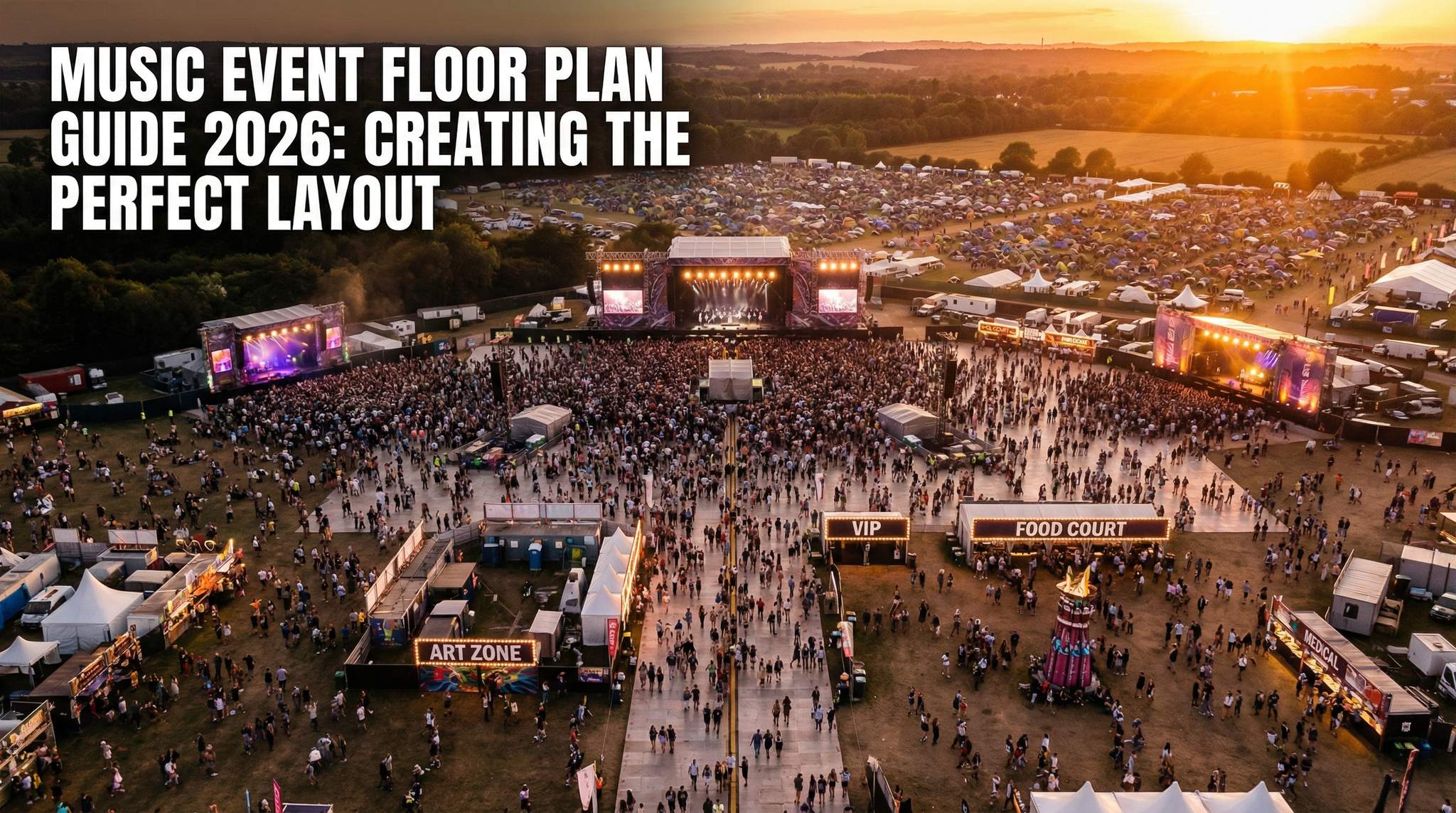
Planning a successful music event in 2026 requires meticulous attention to detail, and perhaps nothing is more crucial than developing a well-thought-out event layout. In fact, 2024 was live music’s biggest year ever – Live Nation alone reported 151 million concertgoers across 50,000 events, as detailed in Live Nation Entertainment’s full-year financial reports – and the concert boom continues into 2026. With such high stakes and massive crowds, your floor plan serves as the blueprint for the entire event’s success. This comprehensive guide will walk you through the essential elements that must be included in your music event floor plan to ensure both safety and enjoyment for all participants.
At the same time, don’t overlook how you’ll keep attendees informed and engaged. Real-time updates, clear signage, and social media promotions play a huge role in guiding your crowd through the event. A great layout coupled with strong communication ensures that attendees not only stay safe, but also fully experience everything your event has to offer.
Planning and Preparation
Define Event Objectives and Activities
Defining clear event objectives and activities is the cornerstone of successful event planning. Your event objectives are the specific goals you aim to achieve, while the activities are the elements that will engage your attendees. By establishing these early on, you create a cohesive, purposeful experience that aligns with your overall vision.
When setting your event objectives, ask yourself:
Free Tool: Size Your Festival Site
Zoned capacity planning for arena, campsite, parking and entry lanes — against UK Purple Guide and NFPA density standards. Finds your bottleneck zone.
- What is the primary purpose of the event? Is it to entertain, educate, celebrate a milestone, or promote a cause?
- What key outcomes or takeaways should attendees experience? Are you aiming for increased brand awareness, fundraising targets, networking opportunities, or simply an unforgettable night of music?
- How will the event contribute to broader goals for your organization or brand? For example, will it drive ticket sales for future shows, boost community engagement, or elevate your reputation in the music scene?
For event activities, consider:
- What type of entertainment and programming will resonate most with your audience? Live bands, DJ sets, interactive workshops, panels, or a mix of formats?
- What food, beverage, and merchandise options will be available? Will you feature local food trucks, craft beer vendors, branded merchandise stands, or themed cocktails that fit your event’s vibe?
- How will you facilitate attendee interaction and engagement? Will there be meet-and-greet sessions, VIP lounges, dedicated chill-out zones, or social media integration?
By clearly defining your objectives and activities up front, you ensure every element of the event is purpose-driven. For instance, if one objective is to raise awareness for a charity, you might include informational booths in the floor plan. If your goal is to create an immersive festival atmosphere, you might plan art installations or experiential zones accordingly. Starting with solid objectives keeps the entire planning process on track.
Ready to Sell Tickets?
Create professional event pages with built-in payment processing, marketing tools, and real-time analytics.
Holistic Music Experience Planning
Beyond simply placing stages and barricades, modern promoters must engage in comprehensive music experience planning. This approach looks at the event through the lens of the attendee journey—from the moment they step off the transit system to their final exit. Effective experience design integrates sensory elements, interactive art installations, and seamless operational flow to create a cohesive atmosphere. By mapping out these experiential touchpoints alongside your technical floor plan, you ensure that the physical layout actively enhances the emotional and cultural impact of the festival or concert.
Choose the Right Event Venue or Space
Selecting the perfect venue or space is a critical decision that lays the foundation for your floor plan. The right venue accommodates your attendees comfortably, enhances the atmosphere, and aligns with your event’s theme and objectives. Concert halls, clubs, outdoor fields, and festival grounds each come with unique considerations – but the fundamentals of choosing a venue remain the same, as outlined in strategies for selecting venues for touring artists.
When evaluating an event venue, focus on:
Capacity: Ensure the venue’s capacity suits your expected crowd. Cramming 1,000 people into a 500-person space is a recipe for discomfort and safety issues, whereas a 5,000-capacity park with only a few hundred attendees can feel empty. Know your anticipated attendance and choose a venue that can comfortably hold that number (with room for movement). Remember that venue capacity isn’t just about square footage – it also involves fire code limits and safe egress (exits) in emergencies.
Free Tool: Split Tickets for Max Gross
Given capacity and a target price, the optimizer proposes Early Bird / GA / VIP allocations and prices — with projected gross at 100%, 80% and 60% sell-through.
Amenities and Infrastructure: Check what facilities the venue provides. Are there enough restrooms, or will you need to rent portable toilets? Is there on-site parking or public transit access? Look for venues with built-in stages, sound and lighting systems, and reliable power supply if possible – this can save costs and headaches. Also consider backstage facilities like green rooms or loading docks (more on these later). If the venue lacks something essential (for example, no Wi-Fi or limited restroom capacity), factor in the cost and logistics of bringing those in.
Layout and Flexibility: Assess the venue’s layout shape and how flexible it is for your design. An open flat field offers a blank canvas but might require you to build everything (stage, shelters, etc.), while an indoor arena has fixed stage and seating areas that you must work around. Identify any structural pillars, low ceilings, or sightline obstacles. If you’re touring with artists, confirm the stage and rigging points can support their production. For example, a pop artist’s tour might need a venue with a high ceiling for aerial performers or heavy lighting rigs – make sure your chosen space can accommodate that.
Grow Your Events
Leverage referral marketing, social sharing incentives, and audience insights to sell more tickets.
Theme and Vibe: The venue should complement your event’s theme and brand. A historic theater might lend elegance to an acoustic showcase, while a gritty warehouse suits an underground techno rave. The environment contributes to the experience. Don’t be afraid to decorate or transform a space, but picking a venue that naturally fits your aesthetic gives you a head start. Consider outdoor vs. indoor as well – outdoor venues bring a festival feel and fresh air, but you’ll need contingency plans for weather.
Location: Convenience matters. A venue in the city center with ample transit options and hotels will likely draw a bigger crowd than a remote location that’s hard to reach. Weigh the pros and cons of urban versus remote settings. Urban venues offer accessibility and nearby amenities, while remote or unique locations (like a beach or mountain park) can create a one-of-a-kind atmosphere if travel and lodging are managed. Also check local regulations or noise ordinances; some cities enforce strict sound curfews that could cut your concert short.
By carefully evaluating these factors, you can choose a venue that meets the logistical needs of your event and contributes to a memorable experience. For a deeper dive into venue specifics, consider reviewing the ultimate guide to selecting venues for touring artists.
Pro Tip: Always conduct a site visit with your team before finalizing a venue. Walking through in person lets you spot subtle issues (like poor acoustics in certain corners, or limited wheelchair access in some areas) that aren’t obvious on a floor plan or website.
How to Set Up a Music Venue for Optimal Flow
Understanding how to set up a music venue—whether you are retrofitting an industrial warehouse or building out a greenfield site—requires a strategic approach to infrastructure. A successful setup goes beyond just placing a stage; it involves mapping out power distribution, rigging points for lighting, and establishing secure perimeters. For operators transforming non-traditional spaces, your initial concert layout must account for load-in pathways for heavy production equipment and dedicated zones for front-of-house (FOH) audio and lighting engineers. Getting these structural elements right early on prevents costly operational bottlenecks on show day.
Principles of Effective Music Venue Design
Whether you are working with a massive outdoor arena or focusing on small music venue design, the core principles of spatial planning remain the same. Effective music venue design prioritizes the relationship between the performer and the audience while ensuring safe, efficient operational flow. For intimate club spaces, this means maximizing sightlines without sacrificing acoustic quality, often utilizing strategic acoustic treatments and elevated staging. When you need to prepare the ground for a live music venue—especially in temporary or greenfield sites—you must account for soil stability, drainage, and load-bearing capacity for heavy staging and production vehicles before any structures are erected.
When approaching the broader scope of design for entertainment venues, operators must look beyond the immediate stage area to the entire patron journey. Modern venue architecture and temporary event builds alike require a holistic approach that integrates ticketing ingress, merchandise flow, and VIP hospitality zones seamlessly. Whether you are managing a historic theater or a multi-purpose arena, successful entertainment space planning hinges on adaptable layouts that can pivot from a high-energy electronic music show one night to a seated acoustic performance the next.
Plan Attendee Communication and Wayfinding
A great layout isn’t just about physical structures – it’s also about how information flows to your attendees. Long before guests arrive, you should plan how they will navigate and receive updates during the event. Clear communications and signage can dramatically improve crowd flow and reduce confusion, which in turn enhances safety and enjoyment.
Start with the event map and informational materials. Will you provide a printed program or map at the entrance? In 2026, many organizers opt for digital event apps that include an interactive map and schedule. If you use an app, encourage attendees to download it in advance and push important alerts (like schedule changes or emergency announcements) through push notifications. Even with a digital map, consider large physical map boards or ‘You Are Here’ signs at key points on-site so people can get oriented without pulling out their phones.
Plan a signage strategy as part of your layout design. Every important zone – stages, exits, restrooms, first aid, food areas, etc. – should be indicated with visible, easy-to-read signs. Use universally understood icons (e.g., fork/knife for food, ‘P’ for parking, wheelchair symbol for accessible routes) and consider multilingual signs if you expect an international audience. Place directional signs along pathways (‘Main Stage this way’ or arrows to exits) especially in larger festival grounds where attendees can get turned around. Good wayfinding signage reduces the workload on staff answering basic questions and prevents bottlenecks caused by lost wanderers.
Smooth Entry With Mobile Check-In
Scan tickets and manage entry with our mobile check-in app. Supports photo ID verification, real-time capacity tracking, and multi-gate coordination.
Also, integrate audio and visual announcements into your communication plan. Ensure your MC or stage host periodically shares useful info (like ‘Band X starts in 10 minutes on the Side Stage’ or ‘Hydration stations are located near Gate 2’). If you have video screens, use them for not just performances but also messages like schedule reminders or safety tips. Some events in 2025–26 even employ LED info towers or scrolling text boards in the venue that can be updated in real time.
Finally, coordinate your social media and live updates. Designate a team member to monitor social channels for attendee questions or issues during the show – attendees often tweet about long lines or problems in real time. Prompt responses or on-the-fly adjustments (for example, opening an extra entry gate if someone flags a bottleneck) can turn a potential negative into a win. Keeping the communication flowing smoothly ensures that your carefully crafted floor plan doesn’t go to waste – attendees will actually notice and use all those elements you planned for their convenience.
The Art and Science of Event Layout, Stage Layout, and Artist Zones
The stage area forms the heart of any music event, serving as the focal point that captures your audience’s attention. Designing the stage layout is both an art and a science – it requires creative vision and technical precision. When planning your stage area, consider the venue’s natural acoustics and sight lines to maximize the impact of the performance. A well-placed stage allows the music to project clearly and gives every attendee a good view of the performers.
Start with stage positioning. The stage should be positioned to provide clear visibility from as many audience vantage points as possible. In a smaller indoor venue, this often means placing the stage at one end of the room so the crowd faces one direction. In outdoor festival settings, a slight elevation or a built stage platform is critical to help sound travel over the crowd and to ensure people in the back can see. Account for the sun’s position too if your event is outdoors – nobody (including the artists) wants to be staring into direct sunlight during sunset sets, so orient stages accordingly when possible.
Next, size the stage appropriately. The stage dimensions should be proportionate to your venue and crowd size. Too small, and performers will feel cramped or be unable to set up all their gear; too large, and you lose the intimate connection between artist and audience. As a rule of thumb, a local club show might work with a stage just a few feet high and wide enough for a four-piece band, whereas a festival main stage might be several tens of meters wide with towering line arrays of speakers. Work with the artists’ technical riders – if a headliner requires a 60-foot wide stage to fit their lighting and video screens, ensure your stage meets that spec or inform them well in advance if it doesn’t.
Integrating your concert stage floor plan into the broader site map is critical for technical execution. A comprehensive concert venue floor plan doesn’t just outline where the audience stands; it details the exact footprint of the stage deck, monitor world, guitar tech stations, and the cable runs connecting to the front-of-house mixing desk. Mapping these technical zones prevents last-minute spatial conflicts during load-in.
Keep Tickets in Fans' Hands
Our secure resale marketplace lets attendees exchange tickets at face value, eliminating scalping while keeping you in control of the secondary market.
A meticulously planned concert stage layout also dictates the efficiency of changeovers between acts. By incorporating rolling risers, dedicated monitor mix wings, and clearly defined tech corridors into your overall concert layout design, production managers can seamlessly transition from a solo acoustic opener to a massive headlining band without stalling the show’s momentum.
Don’t forget acoustics and sound design. Every venue has its quirks – reflective walls, bass traps, echo-prone corners. Use speaker systems and acoustical treatments to your advantage. Outdoor stages often require delay towers (additional speakers placed further back in the crowd, timed to the main sound) so the music doesn’t fall off in volume for distant attendees. Indoors, heavy curtains or baffles might be needed to tame echo. A great stage layout isn’t just the physical stage, but the whole auditory experience zone around it. To ensure every detail is covered, you can explore seven essential steps behind the perfect event stage.
Behind the scenes, thoughtfully planned artist zones are crucial for an efficient event. These backstage areas – green rooms, dressing rooms, and equipment storage – might be out of sight to attendees, but they have a huge impact on how smoothly the show runs and how happy your performers are. A well-appointed green room gives artists space to relax and prepare, so include comfortable seating, mirrors with good lighting for makeup, power outlets, and some refreshments. Ideally, each act has a private room or at least a sectioned-off area. If your event is smaller or at a venue with limited rooms, consider creating one large shared backstage lounge with partitions for privacy.
Plan the backstage flow from the green room to the stage. Performers should have a secure, quick route to get to the stage without having to push through crowds or long corridors. This might mean arranging a dedicated pathway or using bike rack barricades to section off a route if the backstage path crosses public areas. Security is paramount here – limit access to the backstage with credentials or wristbands, and station security personnel at entry points. The last thing you want is an overzealous fan or an unauthorized person wandering into the artist zone.
Equipment storage and loading areas need careful layout planning as well. If you’re dealing with bands, DJ gear, or stage props, designate a corner of the stage or a side area as the tech zone for spare instruments, cases, and crew tools. Ensure there’s a clear path from the loading dock (or trucks) to the stage so that load-in and load-out of gear can happen efficiently. Many venues have official loading docks or doors – keep those zones clear of any obstacles or attendee traffic. If it’s an outdoor event, you might need to create a temporary gated service road into the site for trucks. Clearly mark these areas and keep them off-limits to the public for safety. For those focusing on the operational side, the ultimate stage management guide for 2025 covers tools and best practices.
Pro Tip: Coordinate with the artists’ tour managers in advance to understand any special backstage needs. Top-tier performers may have detailed riders (e.g., specific catering, a private restroom, or a quiet meditation space) that require floor plan adjustments. Fulfilling reasonable requests not only shows professionalism but can also help artists deliver their best performance.
Concert Venue Design and Floor Plan Strategies
When approaching concert venue design, promoters and operators must balance aesthetic appeal with rigorous safety standards. A well-executed floor plan for a concert acts as the operational roadmap for your entire production team. Whether you are mapping out a temporary greenfield site or optimizing an existing indoor space, your design must account for crowd circulation, sightlines, and emergency egress. Advanced planning tools now allow organizers to simulate crowd movement, ensuring that the physical layout supports both the artistic vision and the logistical realities of high-capacity events.
For operators managing more intimate spaces, developing a small concert hall floor plan requires maximizing every square foot. Even in compact environments, you must establish the club minimum venue sections layout: a dedicated entrance or ticketing vestibule, a clear main viewing floor, accessible restrooms, and a secure backstage or green room area. Without these foundational zones, crowd flow bottlenecks quickly, and the operational integrity of the space is compromised.
Executing the Physical Concert Setup
Transitioning from a digital floor plan to the physical concert setup requires a meticulously phased production schedule. For venue operators and promoters, a successful concert set up begins long before the artists arrive, starting with the “mark out” phase where the stage footprint, front-of-house (FOH) positions, and safety perimeters are physically drawn onto the venue floor or festival grounds. Following this, the rigging team installs overhead trusses for lighting and line-array audio systems before the main stage deck is even built. By sequencing the build from the ceiling down and the stage out, production managers ensure that heavy equipment load-ins do not obstruct subsequent technical installations, keeping the entire event preparation on schedule and within budget.
Design a Backstage Area
A well-designed backstage area is essential for events featuring live performances or multiple speakers. This behind-the-curtain zone should be a comfortable and functional environment where performers and crew can prepare, and it should operate like a mini HQ for your event staff. The performers’ experience backstage often affects their mood on stage – a chaotic, cramped backstage can lead to stressed artists, whereas a calm and well-equipped area sets everyone at ease.
When designing a backstage area, consider the following:
Space and Layout: Ensure there is ample space for everyone who needs to be back there. This includes artists, their entourage (managers, technicians), and event staff or volunteers. Create distinct areas if possible – a dressing room or green room for artists, a production office for staff with work tables and chargers, and perhaps a crew break area. If space is tight, use pipe-and-drape partitions or pop-up tents (in outdoor settings) to carve out private zones. Avoid overcrowding the backstage; people should be able to move around without tripping over cables or bumping into each other.
Boost Revenue With Smart Upsells
Sell merchandise, VIP upgrades, parking passes, and add-ons during checkout and via post-purchase emails. Increase average order value by up to 220%.
Amenities: Provide all essential amenities. At a minimum, this means restrooms (or portable toilets exclusively for backstage use), mirrors and proper lighting for wardrobe/makeup, and a stocked refreshment table (water, coffee, snacks). Comfortable seating is a must – artists often have downtime between sets, and having a sofa or chairs where they can unwind is appreciated. Little touches like a few warm meals, a rack for hanging costumes, or even a steamer for outfits can demonstrate your expertise and care. If your event involves quick changes or multiple band setups, a small backline area for instrument tuning or gear setup is valuable.
Security and Privacy: The backstage should be a secure sanctuary. Implement access control such as wristbands, laminates, or a dedicated security checkpoint to ensure only authorized personnel enter. Post security guards or volunteers at the entry. This not only protects artists but also secures valuable equipment stored backstage. In 2026, privacy expectations are high – artists might be wary of unauthorized filming or social media from backstage, so consider a no-photos rule backstage unless approved. Make sure your security team knows the artists’ schedule (e.g., escorting a singer from dressing room to stage at the right time) and can also politely handle any VIPs or guests with backstage access.
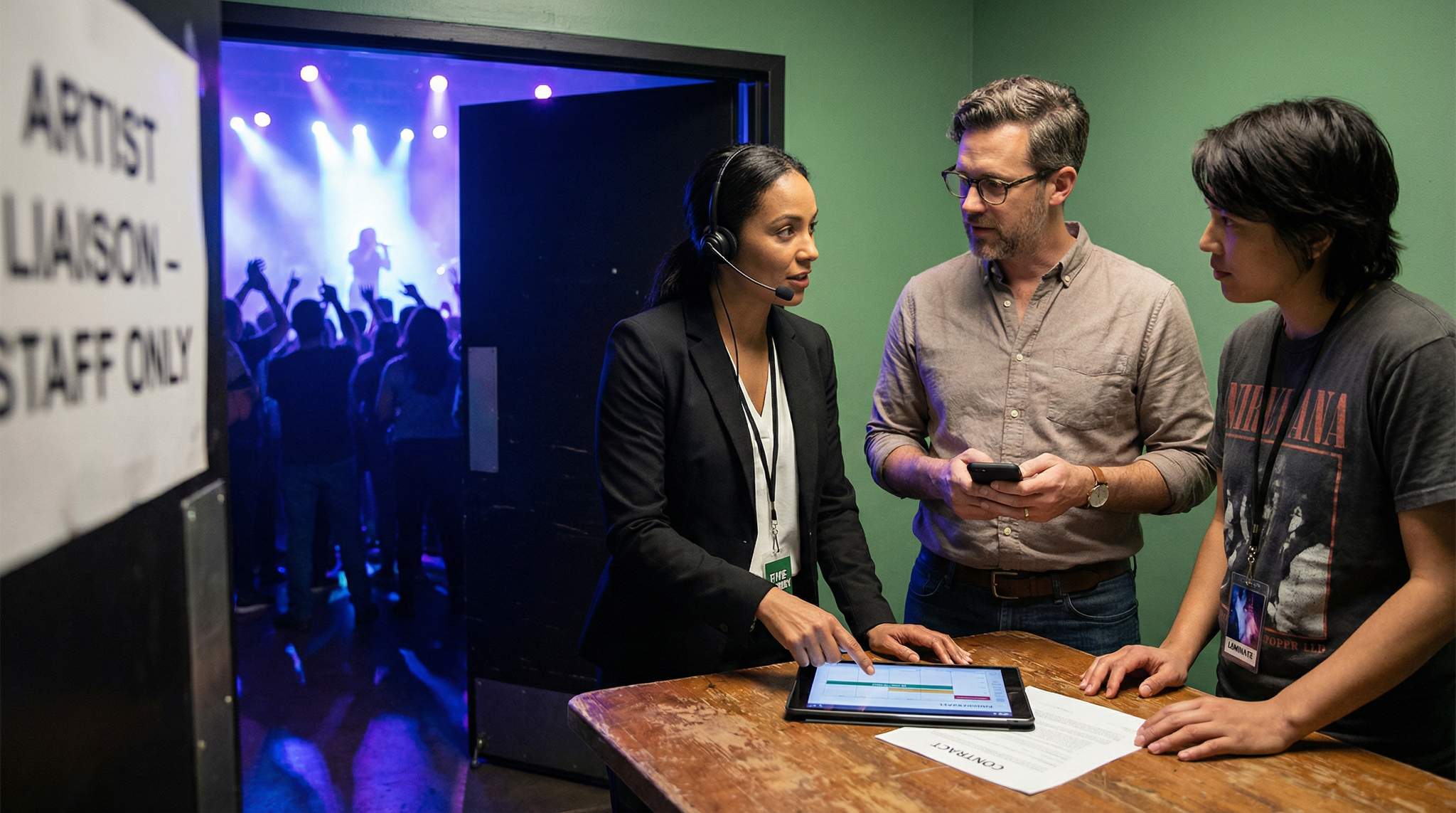
Communication: Establish a clear comms system between backstage and the main stage/front of house. Equip your stage manager and backstage coordinator with radios or intercom headsets linking to the sound/lighting desk and security team. This way, if there’s a delay or an issue (like an artist running late or a technical problem), everyone gets the message immediately. It’s wise to have a show run sheet posted backstage – a big printout of the schedule with set times, so artists and crew can self-service information on what’s happening when. If you plan an artist meet-and-greet session with fans after the performance, set up a separate area (away from the private green rooms) where this can take place securely, a concept further explored in guides on creating the perfect music event layout.
By thoughtfully designing the backstage area, you ensure performers, speakers, and staff have a positive, productive experience, which in turn translates to a better show out front. When artists feel taken care of, they’re more likely to give an energetic performance or want to work with you again. As veteran tour managers often say, smooth backstage, smooth show. Remember that backstage essentials at every successful festival contribute significantly to the overall vibe.
Maximizing Audience Comfort Through Strategic Event Space Planning
The audience experience is heavily influenced by how you plan their space within the venue. This goes beyond simply deciding between general admission or assigned seats – it requires understanding crowd behavior and designing a space that keeps people comfortable and safe. Effective space planning considers varying attendee preferences (standing vs. seated, active dancing vs. relaxing) and anticipates crowd movement patterns.
For seated events, incorporate a variety of seating options and good layout practices. If you have different ticket tiers (VIP, general, etc.), plan their sections carefully. For example, VIP tickets might include access to a reserved front-center section with premium seats, or even cocktail tables. In the main seated area, avoid just cramming chairs together; provide adequate legroom and aisles. Industry norms for concerts often suggest at least 36 inches (91 cm) between rows for comfort. Use tiered or raised seating platforms for farther sections so that those in the back can still see over those in front. Check sight lines by walking the room or using software – ensure no support pillars or hanging speakers block the view of the stage from any seat you sell. Also, consider designated ADA seating areas for wheelchair users and companions in several spots (not just in the furthest corner).
Interactive Seating for Every Venue
Let fans pick their perfect seat with interactive venue maps. Supports reserved seating, section-based pricing, and real-time availability.
When executing a theater set up event, precision in your seating arrangement is everything. Many modern promoters now utilize ticketing platforms that offer a 3D seat view concert experience, allowing attendees to see exactly what their vantage point will be before purchasing. Integrating these digital floor plan concert models into your ticketing strategy not only boosts premium seat sales but also helps your production team identify and resolve potential sightline obstructions during the planning phase.
Wide aisles and multiple exit routes in seated sections are a must. Place aisles every 10–15 seats or so, so people can get in and out without forcing an entire row to stand up. These aisles also serve as emergency exit pathways. If possible, have ushers or signage to guide people to their blocks of seats to avoid confusion that clogs up entryways. Little touches like numbering rows and seats clearly, and providing seat maps at entry points, can make a big difference in getting everyone seated efficiently.
For standing-room events, space planning is even more crucial due to the potential for high-density crowds. The importance of space per person cannot be overstated – not just for comfort, but for safety. As a guideline, fire safety codes like NFPA suggest about 5 square feet per person as a baseline for standing crowd areas, according to festival capacity planning and crowd density calculations. That translates to roughly 2 people per square meter. In practice, many modern concert organizers aim for 6–8 sq ft per person in general admission areas to ensure a comfortable experience, as noted in guides on managing crowd density. This means if you have a 10,000 sq ft open floor, you’d cap the crowd around 1,250–1,600 people in that space. These figures can vary with crowd demographics and music genre (a mosh pit at a metal show might see tighter crowding than a classical concert), but the key is to avoid dangerous crowd density. After some tragic incidents in recent years, promoters are particularly cautious about not overselling GA floor space, especially following reports on lawsuits and injury claims aimed at improving outdoor concert safety.
To manage a standing crowd, consider creating natural sections within the space. Barriers or railings (like the front-of-stage barrier) not only keep performers safe, they can also serve as crowd breakpoints – for example, a secondary barrier 50 feet from the stage can prevent the entire crowd from surging forward at once and gives security a walkway to assist fans. Use platforms or risers toward the back as viewing decks for attendees who prefer hanging back but still want a sightline; this also encourages some people to disperse to the back instead of everyone pressing forward. If you have multiple stages or attractions, position them in different corners of the site so crowds also naturally spread out.
Keep different attendee behaviors in mind. At a festival, you might have an area near the stage for high-energy fans who want to be close to the action, while further back there are more relaxed spaces with picnic blankets or lawn chairs. Designate those zones proactively: perhaps mark a “dance floor” area in front and a “chill zone” at the rear with some benches or shade. Communicate it on your map or signage so people know where they’ll be most comfortable.
One often overlooked factor in audience comfort is climate and environment. If your event is outdoors in hot weather, plan for shade structures, misting tents, or at least ample water stations in your layout. A simple shade canopy near the back or side can give people a place to cool down. Conversely, for a winter outdoor show, consider heat lamps or a fire pit area (if the venue allows) where attendees can warm up. I once worked on a summer festival where a sudden heatwave struck – thankfully we had included misting stations and a shaded lounge area in the plan, which ended up preventing many potential heat exhaustion cases among the crowd. That experience reinforced the value of building climate contingencies right into the floor plan.
Finally, crowd flow is an integral part of comfort. Think about how people will move through the space: entering, exiting, going to the bar or restroom, coming back to the viewing area. Map out a few primary “routes” or pathways where people will walk, and keep those clear of obstructions. For instance, you might leave an open walkway along the perimeter of a field so attendees can circulate without pushing through the densest part of the crowd. This also aids security and medical personnel in reaching any point in the audience quickly when needed.
For more insight on calculating safe capacities and managing crowd density, see our guide on festival capacity planning and crowd density calculations. Balancing audience energy with room to breathe is a challenge, but it’s key to an event where fans can dance hard and feel safe. Understanding crowd psychology for designing safer festivals helps balance audience energy with room to breathe.
Warning: Resist the temptation to pack in ‘just a few more’ attendees beyond what your space comfortably allows. Overcrowding isn’t just uncomfortable – it can become dangerous in a heartbeat. It’s far better to sell out at a lower number and have fans raving about how enjoyable the event was, than to squeeze people in and risk a safety incident or a slew of complaints.
Create an Event Map for Outdoor Events
For outdoor concerts and festivals, an event map is an indispensable tool that helps attendees navigate the event space and locate various amenities and activities. A well-designed map enhances the attendee experience by providing clear and concise information at a glance.
When creating an event map, keep the following in mind:
Accuracy and Scale: Ensure the map is approximately to scale and accurately represents the event space. This helps attendees gauge distances and navigate more effectively.
Clarity: The map should be easy to read, with clear labels and symbols. Use color coding and icons to differentiate between various areas and amenities.
Information: Include all necessary information, such as the locations of stages, food vendors, restrooms, and emergency services. Highlight key points of interest and any special zones like VIP areas or first aid stations.
Distribution: Plan how the map will be distributed to attendees. Consider providing physical copies at entry points and making a digital version available on your event website or app.
By creating a clear and informative event map, you help attendees navigate the event space with ease, enhancing their overall experience and ensuring they can fully enjoy all the activities and amenities your event has to offer.
Designing the Ideal Layout for Outdoor Concert Events
When developing the ideal layout for outdoor concert events, promoters must account for environmental variables that indoor spaces naturally control. A robust outdoor concert venue layout integrates weather contingencies, such as reinforced staging for high winds and strategic placement of shade structures or hydration stations. Furthermore, effective concert layout design in open-air settings requires mapping out heavy machinery access routes that remain completely isolated from pedestrian pathways, ensuring safe load-ins and load-outs even while the site is active.
Scaling Up: The Complexities of a Music Festival Layout
Transitioning from a single-stage concert to a multi-day, multi-stage event introduces entirely new logistical challenges. A comprehensive music festival layout must account for massive crowd migrations between stages, dedicated camping zones, and extensive vendor villages. When designing these expansive sites, promoters need to map out primary arteries for pedestrian flow, ensuring that bottlenecks don’t form when two major acts finish their sets simultaneously. Additionally, your festival site plan should incorporate strategic placement of VIP compounds, sponsor activations, and heavy-duty access roads for production vehicles that remain completely separated from attendee pathways.
Strategic Placement of Food Vendors and Beverage Services
Food and beverage services are not just perks at music events – they’re essential for keeping your audience energized and hydrated, and they can generate significant revenue. The strategic placement of these services can make the difference between smooth operations and frustrated attendees waiting in long lines.
When planning food service areas, create multiple nodes throughout the venue rather than concentrating all options in one location. This helps distribute crowds and reduces wait times. Position food vendors along the periphery of main traffic areas, creating natural queuing spaces that don’t interfere with general crowd flow. For outdoor events, consider arranging dedicated food courts with shared seating areas, making it easier for groups to enjoy meals together while maintaining cleanliness and order.
Beverage service requires special consideration, particularly when alcohol is being served. Position bars in easily accessible locations but away from high-traffic thoroughfares to prevent congestion. Include dedicated ID check stations at bar entry points or use a wristband system for age verification to streamline the process. This way, attendees can get a wristband once (proving they are of legal drinking age) and then make purchases at any bar without repeated checks, speeding up service.
Ensure adequate lighting and clear signage for all food and drink areas so attendees can find them easily. Place plenty of trash and recycling bins nearby to keep the area clean, and schedule staff or volunteers to manage waste and wipe down surfaces regularly. If your event is large, you might even implement a mobile ordering system or app for concessions to reduce lines – a trend that has grown in popularity by 2026 for big festivals.
Essential Facilities for Event Attendees: Restroom Planning and Maintenance
Proper restroom planning is crucial for event success, yet it’s often overlooked in the initial stages of layout design. The number and location of restrooms can significantly impact attendee satisfaction and overall event flow. When planning restroom facilities, aim to exceed the minimum requirements based on your expected attendance – it’s better to have too many facilities than too few.
For permanent venues, ensure existing restrooms are easily accessible from all areas and clearly marked with visible signage. For outdoor events or venues requiring supplemental facilities, position portable restrooms in multiple locations throughout the space, keeping them away from food service areas but still convenient for attendees. Include both standard and accessible units to accommodate all guests.
Consider creating separate restroom areas for VIP sections and for staff/performers to reduce strain on public facilities. Provide hand-washing stations and hand sanitizer dispensers near all restroom areas to promote hygiene. Plan for regular maintenance and cleaning throughout the event, with a dedicated crew assigned to monitor and service restrooms to prevent shortages of supplies or unsanitary conditions.
Comprehensive Safety and Emergency Planning
Safety considerations should form the foundation of your floor plan, informing every decision from layout to crowd flow. A well-designed safety plan not only helps prevent incidents but also ensures quick and effective response if something does occur. Your floor plan should incorporate multiple layers of safety features while still maintaining the event’s atmosphere and enjoyment.
Start with clear, unobstructed emergency exits positioned strategically throughout the venue. These should be easily accessible from all areas and well-marked with illuminated signage. Create multiple evacuation routes that can handle large crowds quickly and safely, and ensure staff are trained to guide attendees in an emergency. Include emergency lighting systems that automatically activate if primary power fails.
Position first aid stations in accessible locations, ensuring medical staff can quickly reach any area. Dedicate space for emergency vehicles to access the venue, keeping these routes clear at all times. For larger events, consider multiple first aid posts and a central command center for security and medical teams to coordinate.
Security personnel placement requires careful thought. Station security staff at key points, such as stage fronts, entry gates, and roaming teams through the crowd. Maintain clear sight lines for security and establish communication methods (like two-way radios and a shared channel) so they can respond swiftly. Implement security checkpoints at all entrances, with enough space for bag checks and smooth queuing. Design buffer zones between different sections of the venue (e.g., general admission vs. VIP, or crowd vs. stage barrier) to help control movement and prevent unauthorized access to restricted areas.
By designing your layout with safety in mind at every step, you create an environment where attendees can enjoy themselves with peace of mind. Regularly review your safety plan with local authorities and update it with the latest best practices. Remember, a successful event isn’t just about fun – it’s one that everyone gets home safely from, too.
Conclusion
A successful music event floor plan requires careful consideration of numerous elements, all working together to create a safe and enjoyable experience for everyone involved. By taking the time to plan each aspect properly – from stage layout to emergency exits – you establish the foundation for an event that runs smoothly and maximizes enjoyment for attendees.
Flexibility is key; your floor plan should be able to adapt to changing circumstances while maintaining its core functionality and safety features. With thorough planning, current knowledge, and attention to detail, you can create an event space that elevates the musical experience while ensuring the comfort and safety of all participants.
To further enhance your event planning, consider exploring onground event technology for music concerts emerging in 2025. Additionally, a comprehensive guide to planning a music festival in 2025 can provide broader context. Finally, protecting your revenue and attendees is crucial, so reviewing essential anti-scalping measures for event management is highly recommended.
Frequently Asked Questions
What factors should I consider when choosing a music event venue?
Selecting the right music event venue requires evaluating capacity for crowd comfort, existing amenities like restrooms and power, and layout flexibility. Organizers must consider the site’s theme, acoustic suitability, and location accessibility. Checking for built-in infrastructure, such as stages and lighting systems, can significantly reduce production costs and logistical challenges.
How much space per person is recommended for standing concert crowds?
Modern concert organizers recommend allocating 6 to 8 square feet per person in general admission areas to ensure attendee comfort and safety. While fire safety codes like NFPA often suggest a baseline of 5 square feet per person, providing extra space prevents dangerous overcrowding and allows for safer crowd movement and enjoyment.
How should I design the stage layout for a music event?
Designing an effective stage layout involves positioning the stage to maximize visibility and sizing it proportionately to the venue and crowd size. The plan must account for acoustics, potentially using delay towers for outdoor settings, and ensure efficient backstage flow. Secure pathways for artists and clear loading zones for equipment are also essential.
What essential amenities are required for a functional backstage area?
A functional backstage area requires private dressing rooms or green rooms equipped with comfortable seating, mirrors, proper lighting, and power outlets. Essential amenities include dedicated restrooms, refreshment stations, and a secure environment with controlled access. Effective communication systems, such as radios linking to the main stage, ensure smooth coordination between artists and crew.
Where is the best location to place food vendors at a music festival?
Food vendors should be positioned in multiple nodes along the periphery of main traffic areas to distribute crowds and reduce congestion. Creating dedicated food courts with shared seating helps maintain order, while keeping lines away from high-traffic thoroughfares ensures smooth crowd flow. Beverage stations require separate placement with efficient ID check systems to streamline service.
What safety features must be included in a music event floor plan?
A comprehensive music event floor plan must include clearly marked emergency exits and wide evacuation routes capable of handling large crowds. The layout should designate accessible locations for first aid stations and clear paths for emergency vehicles. Additionally, strategic placement of security personnel, checkpoints, and buffer zones helps control crowd flow and prevent unauthorized access.
What are the first steps in setting up a new music venue space?
When figuring out how to set up a music venue, the first steps involve assessing the site’s power capabilities, structural rigging points, and emergency egress routes. From there, organizers should draft a comprehensive concert layout that designates clear zones for the stage, front-of-house production, attendee circulation, and backstage operations to ensure a safe and efficient event flow.
What are the key elements of successful music venue design?
Successful music venue design balances acoustic performance, audience sightlines, and operational efficiency. Whether planning a massive arena or focusing on small music venue design, operators must prioritize safe crowd flow, strategic placement of front-of-house production, and robust infrastructure like power and rigging points. For outdoor sites, it also involves preparing the ground to support heavy production equipment safely.
How does a detailed floor plan improve concert operations?
A detailed floor plan for a concert serves as the master blueprint for all operational teams. It aligns concert venue design with practical logistics, ensuring that load-in pathways, crowd circulation zones, and emergency exits are clearly mapped out before the build begins, ultimately reducing on-site friction and enhancing safety.
What are the key components of a successful music festival layout?
A successful music festival layout requires strategic zoning for multiple stages, vendor villages, and attendee amenities to ensure safe, continuous crowd flow. Organizers must design wide pedestrian arteries to handle mass migrations between sets, separate heavy machinery access roads from public areas, and integrate clear wayfinding signage across the expansive site.
What are the core principles of design for entertainment venues?
Effective design for entertainment venues focuses on optimizing the patron journey, ensuring safe crowd flow, and maintaining flexible spaces that can adapt to different event types. Key elements include strategic placement of ingress points, clear sightlines, robust acoustic treatments, and scalable infrastructure to support varying production sizes.
What are the essential sections needed in a club venue layout?
Even in compact spaces, the club minimum venue sections layout must include a dedicated ticketing vestibule, an unobstructed main viewing floor, accessible restrooms, and a secure backstage area. Establishing these foundational zones prevents bottlenecks and ensures smooth operational flow.
How do you design a small concert hall floor plan?
Designing a small concert hall floor plan requires maximizing limited square footage while prioritizing sightlines and acoustics. Operators should focus on strategic stage placement, efficient crowd routing, and ensuring that technical areas like the front-of-house mixing desk do not obstruct audience views or emergency egress.
What makes an ideal layout for outdoor concert events?
The ideal layout for outdoor concert events prioritizes environmental adaptability and safe crowd dispersion. It must include reinforced staging, strategic placement of weather-relief zones like shade tents or hydration stations, and dedicated, isolated access roads for heavy production vehicles to ensure safe and efficient site operations.
What are the critical phases of a physical concert setup?
A professional concert setup follows a strict sequence to ensure safety and efficiency. It typically begins with marking out the floor plan, followed by overhead rigging for lighting and audio. Next, the stage deck is constructed, which allows for the installation of backline equipment and LED video walls. Finally, the front-of-house mixing stations and audience barricades are positioned, completing the concert set up before soundchecks begin.
What is involved in music experience planning for live events?
Comprehensive music experience planning goes beyond basic logistics to map out the entire attendee journey. It involves integrating sensory touchpoints, interactive zones, and seamless crowd flow into the physical floor plan, ensuring that the venue layout actively enhances the emotional and cultural impact of the concert or festival.