Introduction
The rise of podcasts has been nothing short of explosive – and smart event marketers are tuning in. From fan-centric festival series to industry talk shows, podcasts have become a powerful medium to promote events in 2026. Why? Podcast audiences are highly engaged, loyal, and niche-focused. A well-placed podcast feature or an event-run podcast can feel like a personal recommendation rather than an ad, building trust that drives ticket sales. This guide explores two key strategies: creating your own event podcast (e.g. behind-the-scenes interviews or artist spotlights) and collaborating with existing podcasters through guest appearances or sponsored segments. We’ll walk through how to identify the right podcasts for your audience, craft pitches that hosts can’t resist, and weave audio content into your overall marketing mix. By tapping into the intimate world of podcasts – where communities of listeners hang on every word – event promoters can build deeper connections, reach niche audiences, and ultimately sell more tickets in a cost-effective, authentic way. Let’s dive into how to amplify your event’s reach through audio in 2026.
Why Podcast Marketing is a Game Changer for Events in 2026
The 2026 Podcast Boom: From Niche to Mainstream
Podcasting has transformed from a niche hobby into a mainstream channel by 2026. There are now over 580 million podcast listeners worldwide, and in the US a record ~115 million people tune in every week. In fact, more than half of Americans (12 and older) listen to podcasts at least monthly – a clear sign that podcasts have become a everyday media habit. This boom is fueled by the ubiquity of smartphones and in-car streaming, making on-demand audio a convenient companion during commutes, workouts, and downtime. For event marketers, this means your potential attendees are very likely listening to podcasts regularly. Moreover, podcast advertising is booming in parallel – global podcast ad spend is projected around $4.5 billion in 2025 – indicating that brands see real marketing value here. Simply put, podcasts are where audiences are at in 2026, and savvy promoters are following suit.
But it’s not just the sheer numbers – it’s the quality of engagement that sets podcast audiences apart. Unlike the fleeting glance at a social ad or a quick radio scan, podcast listeners are actively choosing content that interests them and often devoting 30–60 minutes of focused attention to each episode. This deep engagement opens a golden opportunity to tell your event’s story without the usual distractions competing for eyeballs.
Intimate Medium, Deep Audience Trust
Podcasts are an intimate, spoken medium – and that intimacy builds trust. Listeners form strong bonds with their favorite podcast hosts, almost like friends. As a result, around 70% of podcast consumers listen to most or all of each episode. That completion rate is far higher than typical engagement with video or text content, indicating listeners are truly hooked and paying attention. For event promoters, this captive attention is invaluable. A host chatting enthusiastically about your upcoming festival or a guest segment featuring your keynote speaker will likely be heard start-to-finish by thousands of dedicated fans.
Smart Promo Codes & Presale Access
Create percentage or flat-rate discount codes with usage limits, date ranges, and ticket type restrictions. Plus unlock codes for private presales.
Equally important, audiences tend to trust what they hear on their chosen podcasts. There’s a credibility that comes from a host’s authentic endorsement or a genuine conversation, compared to a traditional advertisement. Research shows that 92% of consumers trust earned media (like editorial content or organic mentions) over paid ads. In other words, if your event gets talked about organically on a respected podcast, that message carries far more weight than a standard promo spot. Experienced promoters know this trust is marketing gold. Listeners often view podcast recommendations as personal suggestions from a friend, not as intrusive advertising. This credibility can dramatically boost an event’s reputation and tip undecided prospects into buying tickets.
Niche Communities with Outsized Influence
One of the biggest advantages of podcast marketing is access to highly niche communities. There are popular podcasts on virtually every topic and subculture – from K-pop fandoms to blockchain tech, vegan fitness to vintage punk rock. Each of these shows cultivates its own tight-knit audience. While the listener numbers for a niche podcast might be smaller than a national radio show, the relevance is much higher. For example, imagine you’re promoting a craft beer festival – a podcast dedicated to craft brewing or homebrewing will deliver an audience where nearly everyone is a potential attendee, even if it’s only 5,000 listeners. Those 5,000 craft beer enthusiasts are far more likely to convert than 50,000 general radio listeners with only a passing interest in beer.
Ready to Sell Tickets?
Create professional event pages with built-in payment processing, marketing tools, and real-time analytics.
Reaching these niche groups can dramatically improve your marketing efficiency. It’s like speaking directly to a room full of your target superfans. Podcasts effectively aggregate communities by interest, geography, or profession. There are local city-focused talk podcasts, genre-specific music shows, industry panel podcasts for every profession, and fan podcasts following specific artists or sports teams. Whatever the theme of your event, chances are there’s a podcast (or ten) that cater to people who’d love to attend. Event marketers in 2026 leverage this by partnering with podcasts that map closely to their event’s topic or demographic sweet spot. By aligning with a podcast that your ideal attendees already follow, you gain a built-in seal of approval from a host those listeners trust.
Authentic Promotion That Cuts Through Ad Fatigue
Modern audiences are bombarded with advertising – to the point of ad-fatigue. This is where podcasts shine: promotions delivered via podcasts tend to feel more organic and authentic than traditional ads. Often, they’re woven into the content as conversations, interviews, or host-read endorsements, rather than interruptive commercials. A passionate discussion between a podcast host and your event’s organizer about what makes the upcoming event special doesn’t come across as “advertising” – it comes across as storytelling. It’s informative and entertaining in its own right. Listeners appreciate this authenticity; they’re getting insider insight or valuable tips (like a sneak peek of the lineup or behind-the-scenes stories) instead of a generic sales pitch.
Because of this, podcast-based event promotions can break through the noise. When a listener hears an excited host say, “I’m genuinely stoked for this convention next month – I interviewed the keynote speaker and they shared some incredible previews!”, it registers completely differently than a banner ad screaming “Buy Tickets Now!”. The podcast approach taps into FOMO and curiosity in an ethical way, using real dialogue and genuine enthusiasm. And since most podcasts have only a few sponsors or featured segments per episode (unlike radio with lengthy ad breaks), your message isn’t lost in a crowd of commercials. In short, podcast marketing lets you convey your event’s value proposition in a credible voice, at a length and depth that traditional ads can’t match – all while listeners are relaxed and receptive.
Two Main Approaches: Create Your Own or Partner Up
To leverage podcasts for event promotion, you can take two complementary paths: start your own event-focused podcast or partner with existing podcasts. Each approach has its role, and many events do both. Creating your own podcast gives you full control over the content and messaging, effectively acting as a direct channel to engage your audience over time. Collaborating with established podcasts, on the other hand, taps into their audience and credibility, giving you exposure to new listeners who might never have heard of your event otherwise. Let’s break down the key differences:
Grow Your Social Following With Every Sale
Require social media follows, shares, or playlist adds to unlock presale access or special pricing. Turn every ticket purchase into audience growth.
| Podcast Marketing Approach | Description & Content | Reach & Audience | Effort & Resources | ROI Potential |
|---|---|---|---|---|
| Event-Run Podcast (your own) | You produce a podcast for your event – e.g. behind-the-scenes chats, artist/speaker interviews, updates. Your event is the focus. | Builds a dedicated following over time (likely your existing fans first, then grows). Audience is highly interested in your event/theme but starts smaller. | Requires ongoing effort to plan episodes, record, edit, and promote. You control quality and schedule. Low monetary cost, but significant time investment. | Strengthens connection with core fans, provides rich content for marketing. Direct ticket promos to listeners can yield high conversion of loyal fans. Long-term asset (can reuse content). |
| Guest Appearances on podcasts | You (or your artists/speakers) appear as a guest on someone else’s podcast to talk about interesting topics related to your event (not just a plug). | Leverages the podcast’s established audience. If chosen well, reaches a niche that aligns with your target attendees. Audience trust host and gives you an implicit endorsement. | Effort in pitching and prepping for the appearance. Little to no cost (usually free if it’s a mutually beneficial interview). Need good spokesperson skills to deliver value. | Can drive immediate interest from a highly relevant audience if you impress them. Great for credibility. ROI can be strong, especially for niche events – one good interview can spike ticket sales or social follows. |
| Sponsored Segments/Ads | You pay for a sponsored message or segment on an existing podcast. Could be a host-read ad, a short interview, or a branded segment about your event. | Reaches the podcast’s audience (scale depends on show popularity). Less “personal” than a guest spot but still more native than traditional ads. Host’s tone gives it authenticity. | Monetary cost involved (CPM or flat fee) but minimal time effort beyond providing ad copy or doing a quick interview. Ensure the podcast’s audience is a match. | Quick way to get in front of many listeners. ROI varies – if the content is compelling and the offer/timing is right, expect solid ticket clicks. If it’s a poor fit, it can fall flat. Trackable links/codes are key to measure results. |
| Official Podcast Partnerships | Deep collaboration: a podcast becomes a media partner for your event. They might do special episodes or live recordings at your event, run contests, or be “presented by” your event. Often involves exchange of promotion (they promote you on multiple episodes, you feature them at event, etc.). | Access to the podcast’s fanbase with repeated touchpoints. Listeners get ongoing content about your event (e.g. series of episodes). Can significantly raise awareness in that community. | High coordination effort. May involve a formal deal (sponsorship trade, contracts). You’ll invest time and possibly money or cross-promotion resources (free tickets, exclusive content for them, etc.). | Can be very impactful: essentially an extended word-of-mouth campaign. Great for festivals or big events – keeps fan buzz high over a season. Harder to measure exact ROI, but expect boosts in engagement and steady ticket sales rather than one-time spikes. |
As the table above shows, creating your own event podcast is a longer-term play that can continuously engage your fan base, whereas partnering with existing podcasts (through guest spots, ads, or media partnerships) can rapidly expand your reach to new audiences. An experienced event marketer will often use both tactics: for example, launch a limited-run podcast series for die-hard fans and line up a few guest interviews and sponsored mentions on other popular shows. In the sections below, we’ll explore each approach in detail – starting with tips for successfully launching your own event podcast, then diving into strategies for collaborating with established podcasters.
Launching Your Own Event Podcast: Engaging Fans Through Audio
Starting an official podcast for your event can be a game-changer for fan engagement. It gives you a platform to tell your event’s story in depth, showcase the personalities behind it, and keep the hype alive year-round. You don’t need a studio or a big budget – just valuable content and consistency. Here’s how to make an event-run podcast that truly amplifies your promotion.
Grow Your Events
Leverage referral marketing, social sharing incentives, and audience insights to sell more tickets.
Set a Clear Vision and Goal for Your Podcast
Before hitting record on Episode 1, clarify why you’re creating a podcast and who it’s for. Is your goal to drum up early excitement for ticket sales? To deepen loyalty with existing ticket holders? Perhaps to establish your event brand as an authority in a certain domain? For example, a conference might start a podcast to discuss trends in the industry and quietly build interest in the annual meetup. A music festival might have a “Road to Festival” podcast counting down to the event with artist interviews.
Identify your target listener: are they current fans who already bought tickets, or new audiences who like your event’s genre but may not know about your specific event yet? This will shape your content. An experienced event marketer will create listener personas similar to attendee personas. For instance, if you run a comic-con, your podcast might target hardcore pop culture enthusiasts globally (to build brand worldwide) or focus on local cosplay and fan communities (to drive regional attendance), depending on your growth strategy.
Next, decide on the podcast format that aligns with your goals. Common event podcast formats include:
- Behind-the-Scenes Series: Give listeners an insider peek at how the event is coming together. Share planning challenges, funny anecdotes from team meetings, or how you secured a big headliner. This humanizes your team and builds anticipation as fans feel included in the journey.
- Artist or Speaker Spotlights: Interview the performers, speakers, or special guests who will appear at your event. These episodes serve as personal introductions – attendees get to know the artists’ personalities and stories, increasing their excitement to see them live. (Bonus: the featured guests often share these episodes, spreading your reach).
- Topic Deep-Dives: If your event revolves around a theme or niche (say sustainability, or a certain music genre), create episodes exploring those topics with experts – with your event as the contextual backdrop. You subtly position your event as a thought leader hub for that topic.
- Fan Stories and Q&A: Involve your audience directly – invite superfans or past attendees to share their favorite memories, or answer fan questions about the upcoming event. This user-generated angle can amplify word-of-mouth and make listeners feel like part of a community.
- Mixes or Performances: For music events, consider episodes that are exclusive DJ sets or live recordings from last year’s festival. For a literary event, perhaps short readings by authors. This content gives a taste of the experience you’re selling.
Crucially, plan an episode schedule and timeline relative to your event date. Many event podcasts are limited series (e.g., 8 weekly episodes leading up to the event). Others might be year-round if the event has a strong brand community. Consistency is key – listeners should know when to expect new content. Even a biweekly show for the 3 months pre-event can work well. Tie your content calendar into your marketing calendar: for example, drop an episode the week before tickets go on sale to stoke interest, or schedule a finale episode just before event week as a last push.
Turn Fans Into Your Marketing Team
Ticket Fairy's built-in referral rewards system incentivizes attendees to share your event, delivering 15-25% sales boosts and 30x ROI vs paid ads.
Content Ideas that Resonate with Fans
When producing your own event podcast, remember that it’s not an infomercial – it’s a show. To keep listeners coming back, offer content that is entertaining, informative, or inspiring in its own right. Here are proven content ideas that event audiences love:
- “Meet the Lineup” Episodes: Feature one performer or speaker per episode. Dive into their background, play clips of their work, and discuss what they’ve got planned for your event. For example, a festival podcast might chat with a band about their craziest tour story, then mention “catch them live on our stage next month.” Listeners get invested in the lineup on a personal level.
- Behind-The-Scenes Diaries: Take a particular aspect of event production (say stage design, or menu tasting for a food festival) and dedicate an episode to it. Bring on the production manager or the chef to discuss how they’re creating something special for attendees. The passion and effort that comes through will make fans appreciate the event more. Hearing the voices behind the festival – a headlining artist sharing what fans can expect, or a veteran producer talking about the event’s mission – adds a personal touch that builds trust and connection, effectively spotlighting local festival talent. Your event stops being just a date on a calendar and becomes a story people are following.
- Countdowns and Highlights: Use episodes to recap best moments from past events (top 5 historic performances, funniest Q&A moments, etc.) or to count down excitements for this year (“10 reasons this year’s festival will be unforgettable”). Nostalgia and anticipation are powerful emotional hooks. A storytelling segment about a legendary past attendee experience can spark FOMO in new listeners.
- Theme Discussions: If this year’s event has a theme or unique element, devote an episode to it. For instance, if you’re emphasizing sustainability on-site, host a discussion with your sustainability coordinator and a local environmental activist. Not only do you underscore your event’s values (great for brand-building), but you appeal to eco-conscious listeners who are likely to support an event aligned with their interests.
- Interactive Segments: Consider doing occasional live or interactive episodes – e.g., Instagram Live that you later release as a podcast, or field voice notes from fans with questions and play/respond to them in an episode. Interactivity makes your audience feel heard and invested. You could even run a contest via the podcast (e.g., a trivia question about your event, with a chance to win merch or an upgrade for those who answer, using an email or hashtag to respond).
Throughout every episode, subtly weave in your event’s CTA (Call to Action) in a natural way. Because it’s your own podcast, you can mention your event frequently – but do it conversationally. For example, at the end of an interview: “Thanks to DJ Spectrum for those juicy hints about her set. We can’t wait to see her live at SummerSounds Festival. If you haven’t snagged tickets yet, we’re about 80% sold – grab yours on our site before they’re gone!” This feels more like friendly advice than hard selling.
Pro Tip: Maintain a consistent tone and branding in your podcast that matches your event. If your festival’s vibe is light and quirky, let the podcast be playful and fun. If your conference is high-brow and professional, keep the podcast tone expert and polished. This alignment reinforces your overall brand positioning across channels.
Practical Production Tips on a Budget
Worried that producing a podcast is too technical or expensive? Fear not – you can achieve great quality with minimal gear in 2026. Here’s how to set up and maintain your event podcast professionally without breaking the bank:
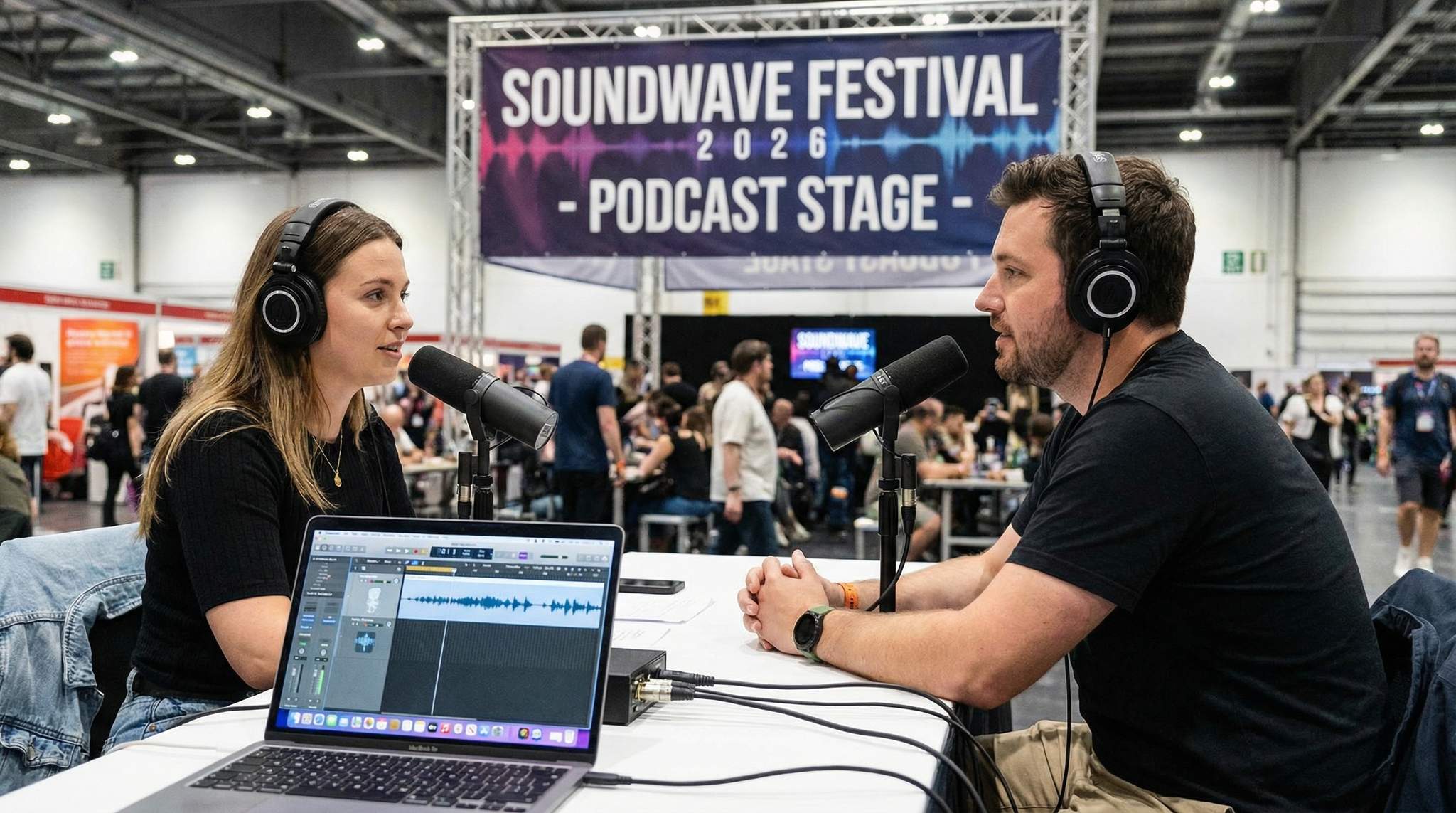
- Basic Gear: Invest in a decent USB microphone (there are good options in the $100–$150 range) and headphones. This alone will dramatically improve audio quality over a laptop mic. If you have multiple hosts/guests in one room, a couple of mics and a simple audio interface might be needed, but there are affordable bundles. Recording in a quiet, non-echoey space (a carpeted room or even a closet with clothes) can substitute for fancy studio acoustics.
- Recording Setup: Platforms like Zoom, Riverside.fm, or Zencastr allow easy remote recording if you’re interviewing someone not on-site. They record high-quality audio from each participant. For in-person, software like Audacity (free) or GarageBand (free for Mac) works for basic recording and editing. Many event podcasters also use all-in-one podcast apps that simplify editing with noise reduction and level balancing automatically.
- Editing & Music: Aim for a clean, well-paced episode but don’t overthink the editing. You’re not producing NPR – a few umms or minor audio quirks make it feel real. Do trim out any big stumbles or long off-topic tangents. Adding a little intro music or theme (maybe a snippet of a past performance or a sponsor’s jingle) at the start and end can give a professional touch. Just ensure you have rights to any music (many festivals use their own artists’ tracks – a win-win promotion). Keep episodes reasonably timed; 20–40 minutes is a sweet spot for many listeners unless your content is exceptionally riveting.
- Consistency & Frequency: It’s better to start modest (e.g., one episode every two weeks) and actually stick to it, rather than launching with a weekly schedule and burning out after three episodes. Consistency builds an audience. Use automation where possible – many podcast platforms let you schedule release times. Record a few episodes before you announce the podcast, so you have a buffer. During busy pre-event weeks, you’ll be thankful you have an episode queued up!
- Team Roles: If you have a team, delegate roles. Maybe one person books and coordinates guests, another handles the technical editing, another writes episode show notes and publishes. If you’re a one-person show, consider using AI tools or interns for help. In 2026, even AI can assist with transcribing your audio (for free show notes content) or leveling audio. Just remember to review everything for accuracy.
- Branding: Treat your podcast professionally in terms of branding. Design a nice cover image (your event logo plus “Podcast” might do, or something thematic). Write a clear description for podcast directories that makes it obvious it’s connected to your event but also highlights what value listeners get (e.g., “Weekly backstage interviews with the artists of XYZ Festival – get insider stories and exclusive previews”). This helps attract listeners who might find it via search on podcast platforms.
Above all, maintain good sound quality and clear audio. Listeners will forgive a lot if they can hear you clearly and the content is good. But if your audio is crackly or volumes wildly inconsistent, they’ll drop off no matter how interesting the talk. Do a test recording and listen on headphones to ensure your setup is solid.
Promoting Your Podcast and Growing Your Audience
Once you have your event podcast up and running, you need listeners! Fortunately, you can cross-promote your podcast on all your existing marketing channels to drive your event’s fans to tune in:
Data-Driven Event Marketing
Track ticket sales, demographics, marketing ROI, and social reach in real time. Exportable reports give you the insights to make smarter decisions.
- Email Blasts: Announce the podcast launch to your email list. In newsletters, highlight recent episodes (“Hear our exclusive interview with headliner John Doe on the Event Podcast – listen now”). If you do segmented emails, target known super-engaged fans with the podcast content; they’re likely to become your first subscribers. Tip: Include a direct link to the podcast (on Spotify, Apple, etc.) and encourage people to subscribe.
- Social Media: Post about each new episode on your social profiles. Use short video/audio clips if possible – a juicy 30-second snippet of the episode can entice fans to click through. Tag any guest or artist you featured; they’ll often reshare to their followers, increasing your reach. Consider using relevant hashtags (e.g., #podcast, or topic-based tags) to catch interest beyond your follower base. You can also do Instagram Stories or Twitter Spaces related to the episode topic to funnel people to the full podcast.
- Your Event Website: Create a section for your podcast on the event’s website or ticketing page. You can embed a web player or at least list episodes with links. People visiting to buy tickets or get info might notice and give it a listen. Also, adding podcast show notes or transcripts as blog posts on your site can boost SEO (people searching for your guests or topics might land on your site and discover the event). Repurposing podcast content into written articles on your site is a double win: it extends the content’s life and improves search rankings for your event.
- On-Site and Other Events: If you have smaller lead-up events or a booth at a expo, promote the podcast there (“Subscribe to our podcast for the latest updates and behind-the-scenes!”). At the event itself, you could even do a live recording or mention the podcast on stage, to convert attendees into year-round listeners (which helps you retain them for next year’s event).
- Listings and Directories: Make sure your podcast is listed on all major platforms (Apple Podcasts, Spotify, Google Podcasts, etc.). In 2026, Spotify and YouTube are huge for podcast discovery – consider uploading episodes to YouTube (audio with a static image or simple waveform visual) because many people actually “listen” via YouTube. Also leverage any podcast communities: e.g., if there are Reddit threads or Facebook groups for your event’s genre (music fandoms, industry groups), share your podcast there when appropriate as free content resource.
- Encourage Sharing and Reviews: Ask your listeners to rate and review the podcast on platforms, and to share episodes they enjoyed. You might say on-air, “If you liked this artist interview, go ahead and send it to a friend who needs to be at the show with you!” Personal endorsements from listeners will help your podcast (and event) reach new ears.
Growth might be slow at first – that’s normal. But even a modest podcast audience can be incredibly influential. If 200 hardcore fans listen to each episode, that’s 200 brand ambassadors who are now deeply informed and excited about your event and will likely bring friends along. And as new episodes roll out, you’ll see listenership snowball if the content is strong. Keep an eye on your podcast analytics to learn which episodes or topics spike interest (you might find, for example, that episodes focusing on a certain subgenre get double the downloads – a clue that there’s high interest there you can capitalize on in marketing).
Turning Listeners into Ticket Buyers
An event podcast isn’t just about feel-good engagement – ultimately, it should contribute to ticket sales. How do you convert podcast listeners into paying attendees without turning your show into one long ad? A few effective tactics:
- Exclusive Offers: Reward your podcast listeners with special perks. For instance, share a promo code during the episode that gives a small ticket discount or early access to lineup announcements. You might say, “As a thank-you for listening, use code PODCAST10 for 10% off tickets this week.” Listeners get a sense of insider privilege, and you get a trackable conversion tool. (Use unique codes for each episode or series so you can measure how many sales you drive from the podcast). Experienced promoters often use memorable vanity URLs or codes in audio channels to gauge response in an otherwise “dark” channel.
- Urgency & FOMO Cues: While you don’t want to hammer listeners with sales talk, it’s fair game to mention when tiers are selling out or deadlines are approaching – in a factual, excited tone. E.g., “We’re down to the last 100 early bird tickets – and we wanted our podcast family to hear it first. If you haven’t gotten yours, now’s the time!” This creates a sense of urgency exclusively delivered via the podcast, which can spike immediate action. It also makes listeners feel they’re getting timely insider updates not everyone knows.
- Compelling CTAs: Make sure that each episode includes a clear call-to-action related to your event – whether it’s buying tickets, RSVPing, visiting the website for new info, etc. Because you have a listener’s attention for a long stretch, you can contextually link the CTA to content. For example, after a guest speaker discusses the hot topics they’ll cover at your conference, the host can add: “If you’re intrigued by these ideas, come join us in person to hear Dr. Nguyen’s full talk – check out the registration page (link in the show notes) and grab your pass.” By framing it as a helpful nudge, you maintain an editorial feel while guiding listeners down the funnel. Pro tip: Always include the next step in the show notes and have the host verbally mention where to go. Many podcasts will say something like “Check the episode description for the ticket link” – and indeed, ensure your show notes on each platform include a clickable ticketing link or event site link for convenience.
- Testimonials & Social Proof: Use your podcast to highlight attendee stories and testimonials, essentially letting your satisfied customers do the selling. A quick segment like, “Mailbag: Why We’re Excited – This week we got a voice message from Sara, who’s coming back to the festival for the third year…[play clip of Sara saying how last year was life-changing].” This kind of peer voice can gently convince a listener on the fence. It’s marketing, but wrapped in genuine community content. It can be especially effective for converting those who love the content but haven’t attended the event before – hearing a relatable fan rave about it might push them over the line.
- Consistency and Patience: Not every podcast listener will buy a ticket immediately, and that’s okay. Some might tune in casually because they find the discussions interesting, and maybe later decide to attend once they feel a strong connection. With your own podcast, you’re playing a long game of relationship-building. Track over time if podcast growth correlates with things like early ticket sale surges or increased social media engagement – those are indirect signs it’s working. You can also directly ask during event checkout “How did you hear about us?” and include “Our Podcast” as an option to gather data on conversions.
In practice, an event podcast often serves as both a nurturing tool (keeping warm leads engaged) and a conversion tool (driving last-mile sales with offers and enthusiasm). A great real-world example: a music festival saw a noticeable jump in ticket sales the day after they dropped a podcast episode revealing the daily stage schedules – fans listened, got excited mapping out their favorite acts, and many went straight to purchase tickets for the days they were most hyped about. The lesson: deliver value and excitement first, and the sales will follow.
Now that we’ve covered running your own podcast, let’s explore the other side of the equation: leveraging other people’s podcasts to amplify your event promotion. If creating a podcast sounds daunting or you simply want to cast a wider net, collaborating with established podcasts can yield big results – often faster.
Partnering with Established Podcasts: Expanding Your Reach
Not every event needs to host its own podcast to tap into the audio revolution. Often, the quickest way to break into the podcast space is by partnering with shows that already have your target audience’s ears. Appearing as a guest, sponsoring a segment, or forming a media partnership with an existing podcast can rapidly expand your event’s reach. The key is finding the right podcasts and crafting a collaboration that feels organic. Here’s how event marketers can team up with podcasters for mutual benefit.
Identifying Podcasts That Align with Your Audience
The first step is research: you want to target podcasts whose listeners closely match your event’s target demographics and interests. Bigger isn’t always better here – relevance is paramount. In fact, as many influencer marketing veterans will tell you, it’s wiser to choose alignment over raw size: a niche podcast deeply trusted in your scene can drive more ticket sales than a massive show with a mismatched crowd, creating authentic partnerships that drive ticket sales. So how do you find these ideal podcasts?
Built-In Email Marketing for Events
Send targeted campaigns, automated purchase confirmations, and post-event follow-ups directly from your ticketing dashboard.
- Tap into attendee insights: Look at your existing community. What podcasts do your attendees talk about or share? You could poll your social followers (“What podcasts are you loving lately?”) or check if any registrants came from referrals that hint at podcast origins. If you have a Facebook Group or Discord for your event, pose the question there. Sometimes the most relevant shows are not obvious national hits but local or genre-specific gems that your core fans are already into.
- Podcast charts and directories: Use podcast discovery tools. Apple Podcasts and Spotify charts can be filtered by category (e.g., “Music Interviews” or “Tech News”). See which podcasts consistently appear in categories related to your event (for a food festival, maybe Food and Leisure charts; for an anime convention, maybe Pop Culture or subculture charts). Also consider using search – type keywords relevant to your event into podcast apps (e.g., “EDM music podcast” or “blockchain tech podcast”) and see what shows up. Read descriptions and reviews to judge fit.
- Social media & communities: Pay attention in online communities – Reddit threads, Facebook groups, Twitter conversations – around your event’s theme. People often mention or recommend podcasts there. For example, an event targeting startup entrepreneurs might find that many in a founder forum rave about a particular business strategy podcast. That’s a clue it has your desired audience. Also note which podcasters are active on social media in your domain; a lot of hosts cross-promote on Twitter or LinkedIn if it’s B2B, etc.
- Consider scope (local vs global): If your event is local/regional (say a city wine festival), prioritize podcasts with a local listener base. That might mean a city-oriented culture podcast or local radio morning show that’s also released as a podcast. On the flip side, if you’re promoting a global virtual summit, a worldwide industry podcast is fair game. Align the geography: a small comedy club in London would benefit more from a UK comedy podcast than a globally-dispersed one, even if the latter has higher downloads.
- Audience demographics: Podcasts often have media kits or can provide listener demographics (age, gender, etc.) especially if they sell sponsorships. Don’t be afraid to ask for this info from podcast producers – you want to ensure, for example, that the “tech trends” show you’re eyeing isn’t mostly listened to by a demographic outside your ticket-buyer profile. Many shows also publicly share milestone stats like “2 million downloads” or “50,000 listeners per episode” – use those as rough gauges of reach, but always filter through relevance.
Make a shortlist of podcasts that check the boxes. Ideally, you become a listener yourself (at least sample a couple of episodes) to double-confirm the content and tone align with your brand. You’ll also get a feel for their typical segments and how they might incorporate an event mention. For instance, does the host do interviews? Do they banter about upcoming events or news? That intel will help you shape your approach.
Guest Appearances: Share Value, Not Just Promotion
One of the most effective (and cost-free) ways to work with an existing podcast is through guest appearances. This means you, or someone from your event (like the founder, artistic director, or a notable speaker/artist), goes on the podcast as an interviewee or co-host for an episode. The goal here is to provide genuine value or interesting content to the podcast’s audience, while organically plugging your event.
To succeed with guest spots, shift your mindset from “I need to promote my event” to “What story or expertise can I share that this podcast’s listeners will find fascinating?”. For example:
– If you run a major festival, you might guest on a music industry podcast to talk about how you discover emerging talent – sharing insights and anecdotes (with naturally a mention of your festival and its lineup in context). This positions you as an expert and makes listeners curious about your event without a hard sell.
– If you’re promoting a tech conference, you (or one of your keynote speakers) could appear on a popular tech trends podcast to discuss the future of AI or a hot topic – effectively giving a mini-preview of the thought leadership your conference offers. Listeners get valuable info and will associate your brand with that high-level discussion.
– For a community or cultural event, share compelling stories: maybe the podcast episode is about the local arts scene rebirth and you as the event organizer discuss how your upcoming event is part of that movement. It’s inspiring content first, promotion second.
Craft a pitch to the podcast host that emphasizes this value. When reaching out (more on pitching in the next section), frame you or your spokesperson as someone who can cover X, Y, Z interesting points that align with the podcast’s theme. Also highlight any unique hook: perhaps you can offer a scoop or exclusive during the episode (e.g., “I’d love to share the first public sneak-peek of our festival lineup on the show, plus behind-the-scenes stories about how we put it together”). Podcast hosts love exclusives that make their content special, so offering one is a great way to turn your event into a headline sensation. Offering one is a great way to both entice the host and ensure your event mention is baked into the conversation in a natural way.
When on the air, keep the conversation engaging and not overly self-promotional. The host will usually give you an opportunity to talk about your event, but you should avoid turning the whole interview into an advertisement. Listeners will tune out if they sense a sales pitch. Instead, focus on storytelling: share funny or insightful anecdotes, lessons learned from past events, or your commentary on trends (relevant to the podcast’s focus). Your event will come up organically – maybe through a question like “Tell us how you got into this business” or “What inspired this festival?” – use that as a springboard to convey your passion and what makes your event unique.
Always end by graciously mentioning the event details: e.g., “It’s been great chatting! If anyone wants to experience what we talked about first-hand, The XYZ Festival is happening on July 18–19 in Nevada, and we’d love to see you there – you can find info at our website.” Most hosts will actually prompt you for such details (“Where can listeners learn more?”). This is your moment for a friendly plug. Keep it concise and clear – date, name, and where to get tickets or info. Because it’s at the end, interested listeners can note it down or act on it, and it doesn’t feel intrusive.
Free Tool: When Should You Announce?
Pick your event date and genre — the free planner outputs a recommended announce, presale, on-sale and reminder schedule anchored to how your audience actually buys.
A successful guest appearance can yield tremendous word-of-mouth. Listeners often feel like they “discovered” your event through that in-depth conversation, rather than an ad. They may share the episode with friends (“hey, check out this interview with the guy behind that new festival, it’s cool what they’re doing”). The credibility-by-association with the podcast host pays dividends too – it’s like a trusted friend introducing your event to their circle.
Real-world example: A B2B marketing conference saw a 20% uptick in web traffic and a notable increase in ticket registrations the week after their director appeared on a well-known marketing podcast, sharing tips on event marketing ROI (and subtly mentioning the upcoming conference). Listeners appreciated the advice and many decided to check out the conference itself as a next step. The key is that the content drew them in; the event promotion rode along naturally.
Sponsored Segments and Creative Collaborations
If a guest spot is like earning media exposure, sponsored segments are buying it – but when done right, they still feel organic. Most podcasts (especially larger ones) offer sponsorship or advertising opportunities. This could range from a 30-60 second host-read ad about your event, to a longer sponsored segment where perhaps the host interviews you or one of your artists in a more structured way as part of the episode. In 2026, host-read ads are common and effective, because they blend into the show’s fabric (often the host speaks in their own style, lending your event their voice of approval). In fact, roughly 55% of podcast ad revenue comes from host-read ads which shows how much brands value that authentic touch.
To maximize ROI from sponsored placements:
– Insist on host-read or integrative style: A generic pre-recorded commercial inserted into a podcast break is the least engaging option. Whenever possible, opt for the host talking about your event in their own words. Provide them bullet points – the what, when, where, one key selling point like the headliner or unique feature, and a call-to-action (URL or code) – and let them riff so it sounds like a personal recommendation. For example, a host might say, “You guys know I love discovering new indie bands – that’s why I’m excited for RockOut Fest coming up in August. They just announced their lineup and it’s killer… If you’re in the Chicago area, might be worth checking out – and hey, they gave me a code to share for 10% off: use ROCKOUT at checkout.” This flows much like the podcast’s normal content and listeners pay attention.
– Match the content to the show: Some podcasts will do sponsored interview segments or dedicated episodes. If you go this route, make sure to tailor the content to suit the show’s audience interest. For instance, on a food culture podcast, you could sponsor a segment where the host interviews a chef who’s participating in your food festival – the conversation is about foodie topics, with subtle plugs about the festival throughout. This way the sponsored piece still delivers entertainment or info, not just promotion. One festival in Singapore creatively partnered with a popular regional podcast to have DJs on its lineup do guest mixes and chats about their upcoming sets; listeners got exclusive music content and simultaneously were reminded to catch these artists live at the event, creating media partnerships that move festival tickets. It didn’t feel like an ad, it felt like bonus content.
– Use trackable offers: Just as with your own podcast, employ unique promo codes or URLs for each podcast you sponsor. For example, create a landing page like myparty.com/podcast or a discount code like PODCASTVIP. Mention it in the ad copy (“use code PODCASTVIP for $5 off”). This lets you directly measure how many ticket sales or site visits each podcast ad generates. If one show’s audience is highly responsive, you’ll see it in code redemptions and know to possibly double-down or renew sponsorship with them. Conversely, if a code barely gets used, it’s a sign that channel or message didn’t click, and trackable offers allow you to measure results.
– Timing and frequency: Coordinate the timing of your sponsored spots with your event sales cycle. As a general rule, start advertising on podcasts roughly 4-8 weeks before your event (earlier if it’s a major festival with longer on-sale period). Many podcasts publish weekly; negotiating a package of multiple episodes over consecutive weeks can reinforce your message. If listeners hear about your event several times, it builds recognition (without the annoyance of traditional repetitive ads, because in podcasts it’s spaced out and often phrased freshly each time). Also try to synchronize with your big announcements – for instance, run a sponsored spot the same week you drop your lineup or when early-bird tickets go live, so the buzz aligns.
– Creative extras: Some podcasts might be open to more creative collaborations if you propose them. Perhaps you sponsor a giveaway for their listeners (e.g., the podcast runs a contest to win free tickets to your event, with winners announced on the show). That engages the audience and gives your event a nice plug. Or maybe the host could record an episode live from your event (if timing allows) – providing them content while giving you coverage. Think outside the box: a national magazine’s podcast once did a “Road to Festival” quiz series in partnership with a music festival – weekly episodes quizzed listeners on festival history and lore, and winners got merch and tickets, showcasing media partnerships that move festival tickets. This creative approach kept the festival in listeners’ minds for weeks in a super engaging way.
The tone of sponsored content should always match the podcast’s vibe. Work with the host to make sure the language and style of the ad or segment will resonate. Authenticity is king – if at any point it sounds like the host is reading a stiff script they don’t care about, podcast listeners will sense it and tune out. It’s worth providing talking points but also encouraging hosts to “make it their own.” Many experienced podcasters will even proactively do this, because they know it maintains trust with their audience.
When executed well, paid podcast promotions can deliver excellent results. For example, a mid-sized conference on digital marketing sponsored 5 episodes of a popular marketing podcast with an audience of 15,000 per episode. The host integrated a 60-second enthusiastic blurb in each episode. The campaign yielded hundreds of site visits and about a 5% conversion to registrations – a strong ROI compared to other ad channels they used. The success was attributed to the host’s genuine-sounding endorsement and the highly targeted audience fit. It’s all about the right message hitting the right ears.
Official Media Partnerships with Podcasts
For larger events or festivals, you might consider forging an official media partnership with a podcast or even a network of podcasts. This is a more comprehensive collaboration that goes beyond a simple ad buy. It often involves trading assets and co-promoting over a longer period. For instance, you designate a popular podcast as an “Official Podcast Partner” of your festival. In exchange for them providing extensive coverage, mentions, or special episodes about your event, you provide them with perks like on-site broadcasting access, VIP tickets to give away, branding on your marketing materials, etc. Essentially, it’s similar to partnering with a radio station or media outlet – but tailored to the podcast world.
Consider this route if the podcast appeals strongly to your target demo and has a loyal following that overlaps with potential attendees. Some ways a podcast media partnership can work:
- Exclusive Episodes or Content: The podcast might produce one or multiple episodes focusing on your event – e.g., artist interviews, behind-the-scenes peeks – branded as special content leading up to the event. They might even release a live episode or daily updates from the event if you grant access. For example, a festival in Singapore partnered with a music podcast to run a mid-season interview series featuring local performers on the lineup, which rekindled fan interest during a ticket sales lull. Listeners got cool content about artists they love, while the festival maintained momentum.
- Regular Mentions and Ads: As a partner, the podcast would commit to mentioning your event in every episode (perhaps a brief shoutout like “This episode is sponsored by X Festival, coming this August…”). Because it’s part of a partnership, the tone can be more enthusiastic and less transactional than a normal ad read, and it might include dynamic content like ticket sale updates (“Only two weeks until X Festival – we’ll be there recording live!”). The repetition across many episodes helps ensure maximum reach. You’ll want to coordinate the schedule so that mentions intensify as the event nears.
- Audience Engagement Tie-ins: Leverage the podcast’s community by running contests or promotions. An official partner podcast could host a giveaway of festival passes exclusively for its listeners, or perhaps run a fan contest (like “submit a question for the headline artist, if your question is picked you win free tickets and get it asked on our live podcast from the festival”). This deepens listener involvement and blurs the line between the podcast community and your event community, forging a powerful connection.
- On-Site Presence: Give the podcast a space or opportunity at your event. They might do a live taping, have a small booth, or roam the grounds recording attendee reactions. Not only does this reward them (content and prestige), but it generates post-event coverage and buzz. For instance, a festival might arrange for the official podcast to interview artists backstage and later release a “Festival Special Episode” – great content for them and great PR for you. Australia’s Triple J radio (a bit of a hybrid radio-podcast approach) famously broadcasts live from festivals like Splendour in the Grass, with artist interviews and performances – the same concept can extend to pure podcasts in 2026.
- Cross-Promotion in Marketing: As part of the partnership, you include the podcast’s logo or name in your marketing collateral (“Official Podcast Partner of X Event”) and they likewise mention the partnership on their channels. It’s a two-way endorsement. This can boost the podcast’s profile (they get credibility by affiliating with a big event) and signal to potential attendees that your event is culturally relevant and plugged into media they trust.
When striking such deals, be specific in the deliverables on both sides. How many episodes or mentions will the podcast do? What exactly do they get from you (number of passes, marketing inclusion, etc.)? Also, define KPIs if possible – maybe you agree on an expected reach or a target number of contest entries, etc., to ensure both sides feel it’s equitable. It’s wise to put the agreement in writing once settled.
The beauty of media partnerships is that they can transform a one-off blip of promotion into a sustained narrative. Instead of just an ad here or there, the podcast is actively telling the story of your event over weeks or months. For example, in the run-up to a large food festival, a foodie podcast partner might do a monthly segment “Countdown to FeastFest” featuring different chefs each time, then broadcast on-site, then do a post-event recap. Listeners almost live the journey, and by the end, the event is firmly on their radar (if they didn’t attend, they’ll want to next time). Just remember: hold your media partners accountable with data wherever possible. If part of the deal was social media posts or website features, ask for those engagement stats; if a particular podcast episode underperformed in views or traffic, discuss adjustments for future segments. It’s a partnership, so both can openly strategize how to make each activation a win.
In summary, partnering with established podcasts – whether via simple guest chats, paid spots, or full-fledged collaborations – allows you to piggyback on existing communities and trusted voices. It’s one of the fastest ways to amplify awareness among the people most likely to buy tickets, especially if your event caters to a specific interest group. Next, we’ll get into the nitty-gritty of approaching and pitching podcasts to secure these valuable opportunities.
Pitching to Podcast Hosts and Producers (Getting to “Yes”)
Securing a podcast collaboration – be it a guest slot or a sponsored integration – often comes down to your pitch. Podcasters, especially popular ones, get a lot of inquiries. How you approach them can make the difference between being ignored versus scoring a spot on their next episode. Drawing from decades of PR and media outreach experience, here’s an advisory on crafting compelling pitches that podcast hosts can’t resist.
Research and Personalize Your Outreach
Just like you’d tailor a press pitch to a journalist’s beat, you must customize your podcast pitch to each show and host. Generic “Dear Podcast, can we come on your show to promote our event?” emails won’t cut it. Demonstrate that you understand their content and audience.
Start by listening to a couple of episodes (at least) of the podcast you’re targeting. Note the format, tone, and what excites the host. Are they heavy on interviews? Do they enjoy banter and humor, or is it a straight informational style? Also note if they’ve ever featured events or people like you before. Perhaps they did a live podcast at a festival last year, or the host mentioned attending a similar conference. These are clues you can reference.
When reaching out, address the host by name and mention something specific you appreciate about their podcast. For example: “Hi Maria, I loved your recent episode on sustainability in fashion – the guest’s story about upcycled couture was fascinating.” This opening shows you’re not spamming dozens of shows with the same script; you genuinely follow their content.
Then, succinctly explain who you are and suggest a segment that aligns with their show’s theme. Focus on the value to their listeners, not just the benefit to you. For instance: “I’m the organizer of the upcoming GreenFuture Expo. Given your podcast’s focus on sustainable innovations, I thought your audience might enjoy hearing how we’re making this expo a zero-waste event – including some surprising mistakes and lessons along the way. I also have connections to a few of our keynote speakers (like the CEO of EcoTech) who could join the conversation. This could be a great behind-the-scenes look at sustainability in action.” See how this pitch frames a story/angle (zero-waste event planning with candid lessons) that matches the podcast’s niche? It’s not just “let me promote my expo,” it’s offering content that listeners would find cool, with the expo as the context.
Be clear about what format you envision: Do you propose to be an interview guest? A co-host for a topic? Suggest it politely: “If you do guest interviews, I’d love to join for a segment or full episode – whatever fits best. I can share [X, Y, Z] topics…”. If pitching a sponsored segment, mention you’re open to discussing sponsorship details but still frame it around the interesting content you’d bring.
Keep it brief and punchy. A few short paragraphs is ideal. Bullet points can help highlight key talking points you’d cover. Busy podcasters should grasp in 30 seconds what you’re offering and why it’s a fit. If you have any notable credibility or connection, slip it in: e.g., “I noticed you had Chef Anton on episode 15 – he’s actually one of our vendors this year, small world!” or “FYI, our festival was just featured in Billboard as one of 2026’s must-attend events.” These little credibility boosts can pique interest, but don’t overdo it to where it sounds like bragging.
Importantly, time your pitch well. If your event is months away, you might reach out 6-8 weeks ahead of when you’d ideally like the episode to air (many podcasts plan their editorial calendar at least a month out or more). If a podcast is topical with current events, giving a shorter lead time can work. But avoid contacting a show the week before your event hoping to squeeze into their schedule; that shows poor planning and likely won’t work unless they miraculously have a last-minute opening.
Craft a Compelling Story Angle
At the heart of your pitch is the story angle. This is where a lot of event promoters make a misstep – they pitch the event itself as the story (“Big festival coming, lots of stages!”). A podcast, however, needs an angle that translates into an interesting episode, not an event advert. So ask: What’s special about our event that would make for a great conversation or narrative?
Potential angles could be:
– Human interest stories: Did you overcome a crazy challenge to make this event happen (e.g., venue crisis, a near-cancellation, a heartfelt community effort)? Podcasts love behind-the-scenes tales of resilience or innovation. A story like “How our tiny team pulled off a sold-out show against the odds” can be intriguing, with the event as the setting of the drama.
– Expert insights or trends: If you or someone on your team is knowledgeable about a subject relevant to the podcast’s focus, pitch that expertise. “Our founder can discuss the broader trend of e-sports events blowing up in 2026 – we’re running one, but we have industry insight beyond just our event.” This positions you as a thought leader, giving the podcast valuable content while subtly plugging your event as a case study of the trend.
– Educational value: Perhaps you can share tips or advice. For a business event, maybe “5 lessons on organizing virtual conferences that attendees actually love,” or for a music event, “how we curate a lineup to balance legends and up-and-comers.” You become a source of useful information. Audiences appreciate learning something new, and by teaching, you indirectly highlight your event’s quality. According to marketing experts, content that educates builds trust – and trust can translate into attendance.
– Exciting exclusives: We touched on this – offering the podcast first dibs on an announcement or exclusive content. “I’d love to reveal our final headline DJ on your show – your listeners would be the first to know, even before we press-release it.” This can be a strong hook. Just ensure the timing aligns and the host is interested in breaking news format content. Some might prefer deeper discussions over announcements, but if it’s a big name or juicy reveal, many will bite.
– Relevance to recent news: If there’s something happening in the news or pop culture that you can tie into, use it. For instance, a week after a major climate report, a climate action podcast might be keen to hear how events (like yours) are implementing green practices. Or if a celebrity attached to your event is trending, mention you have a connection to speak about them or with them. Podcasts often look for timely hooks to boost interest.
Frame the angle in your pitch title or subject line if emailing. E.g., subject: “Podcast idea: Behind the scenes of a zero-waste festival (organizer’s perspective)” or “Guest pitch: How a comic-con is adapting to the anime boom (Event director insight)”. This immediately signals a topic, not just self-promotion. It answers the podcast producer’s internal question: “What will our listeners get out of this?”
When you get to the actual interview or segment, lead with the story, not the event. Seasoned event marketers in PR mode often recommend using the event as context rather than the focus, especially since content creators operate like mini journalists. For example, start by sharing a compelling anecdote or viewpoint (“Last year, we found ourselves with 10,000 hungry attendees and a power outage in the food court…here’s what happened”). Once you’ve hooked the audience, you can weave in “that was at our festival, which we’re now gearing up for again – by the way, we’ve invested in backup generators this time!” – cue laughter. It’s an art to naturally segue into talking about the event’s details after establishing a narrative or valuable discussion.
Offer Mutual Value and Be Flexible
Remember that you’re asking for space on someone’s platform. Emphasize the mutual benefit in your communications. It’s not just “feature me so I get ticket sales.” It’s “I have something that will entertain or enlighten your listeners, and in return I get to mention my event.” If you’re proposing a sponsorship or contest, articulate how it’s a win-win: the podcast gets a cool giveaway for their audience, you get exposure; the podcast gets supporting sponsor dollars, you get promotion, etc. Show that you understand the podcast’s goals too (whether it’s growing their audience, monetization, or enhancing content quality) and how your collaboration helps further those goals.
Be prepared to provide resources to make it easy. This could mean high-quality photos or clips the podcast can use on their website or socials to promote the episode, a free press pass if they want to attend and cover your event, or quick follow-up info for their show notes (like all the relevant links, your bio, etc.). If a host needs you to record at an odd hour or using a specific tool, be accommodating – showing you’re easy to work with will make them more likely to feature you (and perhaps invite you back).
Also, be open to the host’s direction. Maybe you pitched talking about XYZ topic, but they counter that their schedule is full until after your event – would you be open to doing a shorter segment or a post-event recap instead? Or they love your idea but want to include another guest to debate/discuss with you on air. If the alternative still nets you quality exposure, it’s worth considering. Flexibility can lead to yes where a rigid ask might get a no. One conference organizer pitched to a podcast to be a guest; the host replied that they were interested but had already covered that conference on a previous episode. Instead, the host offered, “Would you like to do a quick 10-minute update from the conference floor that we can tag onto our next episode?” The organizer jumped on it – it wasn’t the full interview they hoped for, but those 10 minutes still got their key messages out to thousands of listeners and forged a relationship with the podcaster for future opportunities.
Lastly, follow through on what you promise. If you say you can bring a notable speaker as a co-guest, ensure that happens. If you commit to an exclusive announcement, don’t leak it elsewhere first. Delivering on your word will build trust with the podcast team – which could evolve into ongoing partnerships or word-of-mouth between podcasters (they do talk to each other). The events industry is surprisingly small in many niches; building a rep as a great podcast guest or sponsor will make future pitches much easier.
Timing Your Outreach for Maximum Impact
In the world of events, timing is everything – and that applies to podcast marketing too. To maximize the impact of your podcast promotion efforts, sync them strategically with your event marketing timeline. Here are some timing tips:
- Pre-Sales and Announcements: If your event has key milestones like the lineup drop, tickets going on sale, or early-bird deadlines, aim to have podcast appearances or ads airing just before or during those times. For instance, if you know tickets launch March 1, try to get on a relevant podcast in mid/late February hyping the event (and mention that tickets are coming soon). This way, excitement is fresh and listeners can act immediately when sales open. If you wait until after early-bird ends, you might miss a pool of potential buyers who would have converted earlier.
- Avoid Last-Minute Rush: Many podcasts record days or weeks in advance of release. Don’t assume you can book a spot the same week you need it. Plan backward: if you want an episode out the week before your event as a final push, you probably need to record 2-4 weeks prior. Initiate contact even earlier to allow for scheduling. It’s common courtesy too – podcasters hate being asked for “urgent” favors (“Could you squeeze us in next week?”) unless you have an extremely timely, can’t-miss story.
- Consider Podcast Release Schedules: Some shows publish daily, others weekly, others in seasons. Align with their cycle. If a show is on a seasonal break during your ideal window, you may need to pivot to a different outlet. If a podcast only releases on Mondays, and your event is on a Friday, you might want your spot the Monday 1-2 weeks before the event (to give listeners a little lead time to make plans or purchase). Discuss with the host or producer what episode date would be optimal once they agree to have you.
- Multiple Touches: People often need to hear about something a few times before acting. If possible, don’t rely on a single podcast appearance. Combine a couple of tactics – say an interview on one show and a sponsored ad on another, timed a week or two apart. Or the same show might allow multiple mentions (e.g., a short teaser mention, then a full segment later). Stagger and repeat your message in the lead-up to the event for reinforcement. One mention might raise awareness; the next one prompts action.
- Post-Event Opportunities: Timing doesn’t only mean before the event. Plan for after the event too. Podcasts can be part of your post-event marketing – doing a debrief or success story interview can keep your event in people’s minds (great for driving loyalty, getting feedback, or even early sign-ups for next time) and show the earned media value. For example, if your festival breaks an attendance record or does something newsworthy (like a big charity donation), pitching that story to a podcast after the event can extend your media coverage and give credit to your team and sponsors. It also sets the stage for the event’s return next year. Don’t vanish from the podcast sphere once your event ends; use the momentum.
In summary, approach pitching as a two-way street: focus on telling a great story or offering valuable content that aligns with the podcast, and articulate that clearly and courteously. Pair that with savvy timing, and you’ll greatly increase your chances of landing those coveted podcast spots that can amplify your event’s reach.
With solid marketing channels and collaborations in place, the next piece of the puzzle is ensuring all these efforts translate into tangible results. Let’s look at how to integrate podcasts into your broader marketing mix and measure the impact on ticket sales.
Integrating Podcasts into Your Event Marketing Mix
Podcast marketing shouldn’t exist in a silo. To get the best results, weave it into your omnichannel event marketing strategy so that all channels reinforce each other. When your podcast efforts are aligned with social media, email, PR, and paid ads, you create a cohesive campaign where each touchpoint amplifies the others, ensuring integration with marketing. This section covers how to synchronize podcasts with your overall plan, repurpose content across platforms, and track the outcomes to prove ROI.
Align Podcast Promotions with Your Campaign Timeline
Think of podcast marketing as another gear in your campaign machinery – it should turn in sync with all the others. Start by mapping out your event’s promotional timeline (from initial announcement to on-sale, lineup drops, reminders, last-chance pushes, etc.). Then schedule podcast activities at key milestones. For instance:
- Announcement Phase: Around the time you publicly announce the event or lineup, schedule podcast appearances to discuss “what’s new” or “the making of this year’s event.” This serves as a narrative supplement to your press release and social posts. The podcast appearance can dive deeper into the news, adding context and excitement that formal channels might not convey. (And you might drop an extra tidbit exclusively on the podcast to incentivize listening).
- Early Bird Sales: If you have an early bird ticket window, ensure some podcast promotion hits during that period. It could be a sponsored shoutout saying “early pricing ends soon” or a guest mention reminding folks to act. According to veteran marketers, timing promotions with sales cycles is crucial – media spots synced with your ticketing timeline can create timely urgency that drives conversions, emphasizing the importance of timing promotions with sales cycles. Don’t let your podcast ads run after a promo code has expired; coordinate them precisely.
- Mid-Campaign Lulls: Many events see a dip in sales after the initial rush and before the final surge. Podcasts are a great tool to re-ignite momentum in those lulls. Plan a interesting content drop – maybe a second wave announcement (additional artist or speaker revealed via a podcast), or a storyline like “behind the scenes check-in: how planning is going” in the middle of the campaign. For example, one festival partnered with a podcast to release mid-season artist interviews to rekindle interest during the lull. It kept the event in the conversation and translated to a noticeable uptick in inquiries and engagement.
- Final Countdown: In the last 1-2 weeks before the event, align any remaining podcast activity with your “last chance” marketing. This might be a final guest spot that drops a week out where you emphasize only a few tickets remain or share day-by-day highlights to nudge fence-sitters. If a podcast ad or mention can coincide with your last call email, the multi-channel touch may push someone to purchase (“Oh, I heard about that on my favorite podcast too, maybe I should go!”).
- During and After Event: If you have live podcast tie-ins or coverage during the event (some media partners might do this), coordinate their posting with times that also drive social media buzz. After the event, integrate podcast content (like recap episodes or thank-you mentions) with your post-event thank you emails and afterglow social posts. This synergy deepens impact – e.g., an attendee sees a thank-you tweet, then sees a podcast recap link in an email, reinforcing the positive experience and maybe encouraging a share or a testimonial.
Keeping a unified calendar that includes podcast content alongside other channel activities will help avoid duplication or gaps. Treat podcasts as an integral part of the mix, not an afterthought. When you have marketing team meetings, include podcast status updates: which episodes are coming up, what message they carry, etc., so your social media manager or PR rep can cross-reference or follow up accordingly. For instance, if you mention a specific hashtag or contest on a podcast, ensure your social team is ready to handle any traffic or engagement from that.
Cross-Promote Podcast Content on Social, Email, and Website
To maximize the reach of every bit of podcast coverage you get, amplify it through your owned channels. Don’t assume everyone who follows your event will magically hear the podcast; you often have to drive your community to it. Some effective cross-promotion tactics:
- Social Media Teasers: Create short clips or audiograms from your podcast appearances (there are tools in 2026 that easily turn audio snippets into captioned videos with waveforms). Post these on Twitter, LinkedIn (if it’s professional content), Instagram, TikTok – wherever your audience hangs out. Include a caption like “Hear the full interview on X Podcast where we chat about [topic]. Link in bio or story.” Tag the podcast and host – they’ll likely repost or share, boosting visibility further. Native video content is more engaging on social feeds than plain links, so use that to draw people in.
- Live Social Tie-Ins: If the podcast recorded video or if it’s being livestreamed (some do live YouTube recordings), announce it and treat it like a mini-event. “Our founder will be live on the Design Thinking Podcast YouTube at 3pm – tune in to ask questions in the chat!” This can create real-time engagement and get your fans involved, which also makes the podcast episode livelier for the host. It essentially blends your communities for a bit.
- Email Newsletters: Did a great podcast interview drop this week? Feature it in your email newsletter or a dedicated blast: “In The News: Our CEO on the EventTech Podcast”. Summarize some key insights from the talk (to entice clicks) and link out to it. If the podcast is on platforms like Apple/Spotify, you might link to a simple landing page or blog post on your site that then provides the play links (since not everyone uses the same platform). You can also embed a web player in the email if available (some email services allow Spotify embed or similar, or just a screenshot with a play button that links to the audio page). The Ticket Fairy blog itself suggests that unified multi-channel promotion unifies messaging and captures maximum audience segments – so apply that principle here: bring your podcast message to those who may have missed it.
- On Your Website/Event Page: Maintain a section for “In The Media” or “Latest Buzz” on your event website. Include links or embedded players for any notable podcast episodes featuring your event. New visitors might click out of curiosity and get sold by what they hear. Also, it’s a trust indicator – seeing that a popular podcast or media outlet featured your event gives it credibility (social proof). Keep it updated; don’t list a “coming soon on X podcast” and forget to replace with the actual link after it airs.
- Leverage Host and Guest Accounts: If you had a speaker or artist join you on a podcast, coordinate with them to share it too. When a performer tells their followers “I talked about my upcoming set at Festival Y on this podcast, check it out,” you get exposure to all their fans. Provide them a ready-made post or story to share – make it easy and they likely will. This way, a single podcast episode can get broadcast through multiple networks: the podcast’s own channels, your event’s, and the guest’s.
- Interactive Follow-ups: Use the momentum from a podcast to spark interaction on other mediums. For example, if in the podcast you posed a question or polled (“We’re debating which classic game to include at the con – what do you think?”), you can turn that into a Twitter poll or an Instagram question sticker, referencing “As heard on our recent Podcast X interview… weigh in with your vote!” This not only engages your base but also signals to those who didn’t listen that something interesting went down on that podcast, perhaps motivating them to check it out.
The core idea is to treat podcast content as content marketing assets. Just like you’d repurpose a blog or video across channels, do so with podcast appearances. A great quote from your founder on a podcast can become a graphical quote on Instagram or LinkedIn. A fun anecdote told on the podcast can be paraphrased into a Facebook post. Repetition across formats helps imprint your message and reaches people in the way they prefer consuming content.
Repurpose Podcast Discussions into Other Content
One beautiful thing about podcasts is the rich, long-form discussions they contain. That’s a goldmine for content repurposing. By extracting and reusing pieces of podcast content, you can extend its lifespan and value far beyond the audio itself. Some repurposing ideas:
- Transcribe and Blog It: Consider transcribing your podcast interviews or segments (AI transcription in 2026 makes this quick). You can then edit the transcript into an article for your blog or LinkedIn. Title it like “5 Key Takeaways from [Podcast Name] Interview with Our Event Director” or “Q&A: Our Founder on [Topic]”. Not only does this provide content for those who prefer reading, but it’s great for SEO – your event site might rank for relevant keywords mentioned in the conversation. Be sure to link back to the podcast or embed the episode for those who want to listen. Tip: If the podcast covered multiple distinct topics, you could even split it into a short blog series (e.g., sustainability at events, booking talent, community building – each as its own post drawn from one interview). Always credit and thank the podcast within the text (“This insight originally shared on the ABC Podcast”) – it’s polite and network-strengthening.
- Social Video Snippets: As mentioned, create short videos from the recording (if you have video) or audiograms if audio-only. These 30-60 second snippets should capture the juiciest or most intriguing moments – maybe a bold statement, a quick funny exchange, or a concise tip. Post these over time, not just all at once right after the podcast airs. You might use one snippet immediately as promotion, another a couple weeks later as a throwback (“remember when we talked about X? It’s now reality at our event!”). This keeps gleaning value from one interview.
- Use Quotes in Graphics: Pull memorable quotes from the podcast – especially if the host or a guest said something quotable about your event or mission. For example, if the host said “XYZ Fest is shaping up to be the Coachella of coding conferences,” that’s a fantastic endorsement to splash on marketing materials (with attribution). Make a simple, eye-catching graphic with the quote and share it on social, in press kits, or even on your event homepage (“As seen on ABC Podcast: ‘…’”). Likewise, any insightful quote by your team on the podcast can be used in thought leadership articles or speaker intros.
- Internal Learnings: Sometimes, podcast conversations highlight ideas or improvements for your event. Treat the recording as content you can mine for internal use too. Did an audience question on a live podcast reveal a common confusion about your event? Feed that into your FAQ or customer service training. Did your own articulation on the podcast about your event’s mission strike a chord? Maybe that phrasing should be adopted in your official messaging. In essence, use the podcast as a reflective tool to sharpen your overall communications.
- Email Drip Content: If you run an email nurture sequence for leads (like people who signed up to waitlists or indicated interest), incorporate clips or quotes from the podcast as part of that automated content. For instance, “Tip of the Week from our Podcast chat: [insert 1-minute soundbite].” It gives a multi-media touch to your emails and leverages content you already have rather than writing from scratch. According to email marketing experts, incorporating multimedia and external content can increase engagement rates in email campaigns, as long as it’s relevant and not too large to load.
- Sponsor & Partner Relations: Share relevant podcast content with your event sponsors or partners. If, say, on the podcast you talked about how you’re integrating a sponsored activity or thanked a partner, clip that and send it to them: “Hey, we gave you a shoutout on X Podcast – thought you’d like to hear it!” They’ll appreciate the promotion and possibly share it themselves, and it helps reinforce the value you’re giving them. This can strengthen sponsor relationships, showing that you’re actively boosting their exposure through channels like podcasts.
By repurposing, you ensure the effort spent securing that podcast spot keeps paying dividends. It’s the classic “pillar content” approach – a single piece of long content (the podcast) can spawn many smaller pieces. This is efficient and maintains content consistency across your marketing. Just make sure to tailor each piece to the platform’s norms; e.g., a casual podcast joke might not fit a serious LinkedIn article without context. Edit appropriately for tone and clarity when moving between formats.
Use Unique Links and Codes to Track Conversions
As with any marketing channel, you need to measure the impact of your podcast efforts on the bottom line: ticket sales and engagement. Podcasts can be tricky because they’re audio – you can’t click a link while listening in your car (at least not safely!). But there are ways to track influence. The key is to use unique identifiers for your podcast promotions:
- Promo Codes: Create a special ticket discount or offer code for each significant podcast mention. Even if it’s a small perk (5% off or a free drink at the event), it gives listeners an incentive to use that code when buying. Since that code only exists on that podcast, every redemption is directly attributable. For example, if you sponsor “The Indie Music Hour” podcast, use code INDIE for their listeners. If 50 people use it, you know 50 sales came from that channel. Make the code easy to remember (ideally something the host can say once and it’s clear – shorter is better). And track it diligently on your ticketing platform.
- Custom URLs: Similarly, set up custom landing pages or URL redirects for podcasts. You can use a short URL service or your own domain. Eg: www.yourevent.com/podcast1 could redirect to your main ticket page but with UTM parameters (for Google Analytics tracking) specific to Podcast1. Mention that URL in the podcast ad read or interview. Some marketers prefer custom URLs over codes because it doesn’t require the user to input a code at checkout – the tracking is seamless if they just follow the link. Downside: listeners have to remember or note the URL. One approach is to use both: mention the easy URL which then auto-applies a code to the cart.
- Tracking Pixels & Attribution: If you advertise on podcasts through programmatic platforms (like dynamically inserted audio ads), you might have access to more analytics on impressions and reach. Some platforms can even give device-level metrics or use surveys (“how did you hear about us?”) but those are less direct. Focus on what you can control – your links and codes, and check if users from those channels behave differently (do they buy certain ticket types? come earlier/later?). This might inform future target tuning.
- Monitor Web Traffic Spikes: Keep an eye on your web analytics around the time a podcast episode drops. Do you see a lift in direct or organic traffic shortly after a big podcast appearance? Even if those visitors don’t use the vanity URL, you might infer they searched your event due to hearing about it. If a major podcast feature goes live Monday morning and your site traffic jumps 30% that day versus the typical, that’s a strong signal of impact. You can corroborate by checking Google Trends for your event name or branded terms around that date – podcasts can cause noticeable search upticks if the audience is large and engaged.
- Survey Attendees: Include a field in post-event or ticket purchase surveys asking “Where did you hear about this event?” and list podcast/radio as options (even better, name the specific podcast if you had one big partnership). While recall can be imperfect, if you see a notable number of responses citing podcasts, that validates your efforts. This was mentioned earlier as well but is worth reinforcing in measuring ROI. Combine this qualitative data with the quantitative code usage to get a fuller picture.
- Calculate CAC/ROAS for Podcast Channel: Once you have conversion data, compute rough Customer Acquisition Cost (CAC) or Return on Ad Spend (ROAS) for your podcast activities. For example, if you spent $500 sponsoring a podcast and got 25 ticket sales directly from it, you can gauge cost per sale. But also consider halo effects (did they maybe influence others who didn’t use the code?). Anecdotally, many marketers find podcast ads drive higher-quality leads even if quantity is smaller, due to the trust factor – these buyers might have higher average spend or retention. Try to track if those acquired via podcast codes come back next year or engage more on social. That could factor into the true ROI beyond immediate sales.
By tracking diligently, you can justify the investment in podcast marketing to stakeholders with hard numbers. If a certain show yields great results (low CAC, lots of buzz), you know to re-up or expand with them next event. If another delivered crickets, you either rethink the content or drop it. Over time you’ll develop benchmarks – e.g., “Podcast promos typically drive 5-10% of our ticket sales” – and you can set goals to improve that, or decide if it’s worth scaling up. In 2026’s data-driven marketing arena, even the more “editorial” channels like podcasts need to be measured and optimized.
One more tracking pointer: share results back with the podcast hosts (if positive). Let them know “hey, we saw 100 people use your code – thanks to your awesome endorsement!” They’ll be happy to hear their content delivered tangible value, and it sets the stage for future partnerships or maybe even negotiating better rates if you continue (because you have proven results in hand). It’s also just a gracious way to close the loop with partners – building trust and goodwill.
Budgeting and Resource Allocation for Podcast Marketing
Integrating podcasts into your marketing mix naturally raises the question: how much budget and time should you allocate here versus other channels? The answer will vary by event and where your audience is, but some guidelines can help you plan:
- Start Small and Test: If you’re new to podcast marketing, you don’t need to allocate a huge portion of budget upfront. Treat it like you would a pilot campaign on a new ad platform. Maybe divert a few percent of your ad budget (or PR budget) to try out one or two podcast sponsorships or content projects. Monitor results (using the tracking methods above). If you see a strong ROI or qualitative buzz, you can justify increasing it. As one low-budget strategy guide notes, even events with tiny marketing spend can achieve big impact by focusing on a few high-ROI channels – podcasts might be that if the fit is right.
- Leverage “Free” Opportunities: Guest appearances and earned media on podcasts usually cost you nothing but time, making them extremely cost-effective. In your marketing team, assign someone (or yourself) to PR outreach which includes podcast pitching. That might fall under the PR/media relations category of the budget (which often is more time investment than hard costs). If you lack internal capacity, consider hiring a freelance publicist or marketing agency with experience in booking podcast tours – but ensure they understand your story well, you don’t want generic pitches. The ROI of a few hours of writing personalized emails can be huge if it lands you on a show with 20k listeners essentially for free.
- Sponsorship Costs: Podcast ad rates in 2026 range roughly $15-$50 CPM (cost per thousand listens) depending on the show’s popularity and niche. Niche and B2B podcasts might charge higher because of more targeted audiences with higher conversion value. If an episode gets 10k listens, a mid-roll host-read might cost $200-$400 at those rates. Consider how that compares to what you’d spend to reach 10k targeted people on social ads or search. Often, it’s quite competitive, especially given the engagement level of podcast audiences (people aren’t multitasking across content – they’re locked in). Also, some podcasts might do package deals or trades (like media partnerships where cash outlay is lower but you provide in-kind value). Negotiate if you can – e.g., offer some event tickets they can give away, or cross-promote the podcast on your channels in exchange for a rate break. If you can demonstrate you’re a cool event their listeners would love, some smaller podcasters might even cut a deal because they’re excited to be associated.
- Production Costs: If you create your own podcast for the event, factor in production needs (mic, software, possibly hiring an editor if you can’t do it in-house). But compared to video, podcast production is relatively low-cost. It might be just part of staff duties. You will invest non-monetary resources: time to plan episodes, coordinate guests, etc. That’s an opportunity cost trade-off: maybe you produce one less YouTube video in favor of doing a podcast series. Always gauge what medium is giving you better engagement or unique reach. If your Facebook Lives get 50 concurrent viewers, but a podcast could reach 500 listeners weekly, you might reallocate your content team accordingly.
- Budget by Channel: As you evaluate podcast performance vs. other channels, you might adjust the mix. Some events find that, for example, instead of spending $5,000 on one extra billboard, they’d rather sponsor 5-10 podcast episodes in their genre, because they reach more genuinely interested people for the same cost. Focus on cost per acquired attendee as your guiding light. If podcasts bring in attendees cheaper (or of higher lifetime value, i.e., likely to become repeat attendees) than another channel, increase that spend next year. An insights report might show, for example, influencer marketing cost you $30 per conversion, while podcast marketing cost $15 – in that case, doubling down on podcasts is rational.
- Don’t Overlook Time Investment: Budget isn’t just money. Consider the time your team spends on podcast-related tasks (writing pitches, being a guest, editing your own podcast). Make sure that time is yielding results. If it’s taking a big chunk of your bandwidth with little return, regroup and refine your approach. Perhaps you need to target different podcasts or change your messaging. Or maybe outsource some tasks – e.g., hire an audio editor on a gig basis so your marketing head isn’t stuck tweaking sound levels for hours.
On a practical note, include podcast initiatives in your marketing plan and budget proposals explicitly so it’s recognized. For instance, in your media spend breakdown, add a line for “Podcast Ads/Collaborations” rather than lumping it under miscellaneous. This transparency helps internally to track it year over year. It’s a new-ish category for many, but as soon as you treat it with the same rigor as “social ads” or “PR events,” it gains legitimacy and focus.
In conclusion, integrating podcasts fully into your marketing mix means syncing with your campaign, amplifying content across channels, reusing material widely, tracking what happens, and allocating resources wisely. Done right, podcast marketing becomes a powerful pillar in your strategy – one that not only drives ticket sales but also enhances your brand’s narrative and community connection.
Next, to illustrate all these principles in action, let’s explore a few real and hypothetical success stories of events that effectively amplified their reach through podcasts, and what we can learn from them.
Examples and Success Stories: Events Amplified by Podcasts
Theory is great – but how does podcast marketing play out in practice for events? In this section, we’ll look at a few telling examples from different types of events that successfully leveraged podcasts to promote themselves. By examining these cases, you can gather inspiration and see concrete results achieved. We’ll also note some stumbles or lessons learned, because not every attempt is a home run. These stories span conferences, music festivals, and community events, showing that whether your audience is B2B professionals or indie music fans, the right audio strategy can make a significant impact.
TechXPO Conference: Boosting Signups via a Podcast Feature
Case: TechXPO 2026 – a mid-sized technology expo targeting startup founders and investors in Canada – saw surprisingly strong results from a simple podcast guest appearance. The conference’s director of marketing managed to secure a 20-minute guest segment on a well-known Canadian startups podcast (one that typically covers tech news and interviews founders). Instead of overtly plugging the conference, the director spoke about “The latest trends in startup growth in 2026”, sharing valuable insights. During the chat, she naturally mentioned, “We’re excited to explore these themes more at TechXPO next month,” and the host followed up by asking a bit about the event – which allowed her to highlight a couple big speakers and mention the date and city. Importantly, the podcast host also invited one of TechXPO’s keynote speakers onto a special episode ahead of the event, where that speaker discussed industry challenges and casually plugged his upcoming talk, which lent credibility to the conference. All of this felt like content, not advertising, to listeners.
Results: The TechXPO team had set up a unique promo code for podcast listeners (offering 15% off tickets). Within a week of the episodes airing, they saw a notable spike in registrations – enough to sell out their startup demo floor for the first time ever. Around 40% of those new signups used the podcast code, but even more telling was an open-ended question on the registration form (“How did you hear about TechXPO?”): dozens of responses explicitly named that podcast. The conference also observed a more diverse audience profile coming in – many from outside their usual circles – suggesting the podcast expanded their reach to fresh ears. The director noted that many attendees told her on-site, “I heard about this on that podcast and it sounded worth checking out.” The partnership effectively lent TechXPO the credibility of the podcast host (a respected figure in the community) and framed the conference as the place to continue the conversation listeners enjoyed on the podcast. This example shows how a targeted, authentic podcast feature can directly drive ticket sales and brand trust – turning casual listeners into attendees.
Why It Worked: TechXPO’s approach succeeded because it aligned content with audience interests first. By discussing startup trends (value) and not just hawking tickets, they engaged listeners genuinely. The choice of podcast was spot-on: its audience matched the event’s target demographic (startup enthusiasts). Plus, the execution was well-timed, coming out about 3-4 weeks pre-event, which allowed interested listeners to act but was close enough to the date to catch them in decision-making mode. The use of an exclusive code and trackable mentions provided clear attribution. Finally, having a speaker involved in the podcast content not only gave that speaker a promotional boost but reinforced the event’s appeal (listeners thought: if this big-name is going to speak at TechXPO, maybe I should be there). It was effectively a double-endorsement – from the host and the keynote speaker – rolled into one media hit.
Lesson: When pitching a conference or B2B event, lead with thought leadership. Let the event plug come second. That way you intrigue your professional audience enough that when you mention the conference, it feels like a natural extension of the value you’re already providing – not a commercial break.
Festival X: Podcast Partnerships Ignite Mid-Campaign Buzz
Case: Festival X (a hypothetical composite of several real indie music festivals) had a challenge: after early-bird tickets sold out and the lineup was announced, sales plateaued. The event was still a few months away, and they needed to maintain momentum to hit a sell-out. To reignite fan excitement, the festival turned to podcast partnerships. They identified two niche music podcasts – one focusing on the local scene in their region and another popular genre-specific show (aligning with their festival’s genre). Instead of traditional ads, Festival X struck a content partnership. The local podcast became an “Official Media Partner” of the festival, agreeing to air a weekly 10-minute segment in the month leading up to the event. In these segments, the podcast host interviewed a different local artist from the festival lineup each week (essentially four mini-episodes featuring Festival X artists). They chatted about the artist’s background, played a snippet of their music, and the artist would mention how excited they were to perform at Festival X. The host closed each segment with a quick reminder to listeners about festival dates and a discount code. Meanwhile, the genre-specific national podcast did a one-off “Festival X Special” episode: a longer interview with the festival’s booking manager, who shared how they curated the lineup and a few crazy behind-the-scenes stories of dealing with artist bookings. This gave die-hard genre fans insight into the festival and teased some surprise elements. The episode organically plugged the festival multiple times in context.
Results: These podcast collaborations paid off with clear spikes in engagement and ticket sales. The local podcast segments created a lot of chatter in the community; online forums saw fans discussing which featured local band they were most excited to see, effectively leveraging hometown pride. Ticket sales in the region ticked upward each week a new segment aired – executing that idea of sustaining buzz through a lull. Some fans explicitly said they discovered new bands through those podcast interviews and bought tickets to see them live. The national genre podcast episode, on the other hand, drove a flood of traffic to Festival X’s website on the day it released – their web analytics showed one of the top referral sources was the podcast’s site and show notes. The “booking manager tell-all” angle resonated with music nerds, who then shared those stories on social media, inadvertently promoting the festival by talking about it. In terms of hard metrics, Festival X saw a roughly 8% uptick in ticket sales directly attributed to podcast promo (via code usage and surveys) and possibly more indirectly. They ultimately sold out two weeks before the event – a first for them. The festival’s organizers credited the podcast strategy with “keeping the fire burning” during the mid-campaign and reaching dedicated music lovers who might not respond to typical ads but do devour music content.
Why It Worked: Festival X’s approach succeeded because it integrated seamlessly into content that fans were already consuming and trusted. The local podcast partnership is a prime example of leveraging community media – by giving local artists a spotlight, the festival gave the podcast fresh content and earned goodwill from listeners who felt the festival truly supported the scene. It wasn’t a hard sell; it was showcasing exactly what makes the festival special (up-and-coming local talent). Additionally, by having multiple weeks of presence on that podcast, Festival X stayed consistently in the conversation (repetition without ad fatigue). On the national level, tapping into a genre podcast positioned the festival among the “inside baseball” of the music industry, likely appealing to superfans who travel to events. The booking manager’s candid stories not only humanized the festival brand but also dropped intriguing tidbits that functioned as marketing hooks (e.g., hinting at a secret guest or special collaboration at the festival). It flipped FOMO switches without overtly saying “buy tickets”. Both cases show how embedding your event’s narrative into ongoing stories can be far more engaging than standalone ads.
Lesson: Use podcasts to tell the stories around your event – of your artists, your planning, your values. Listeners will connect with those narratives, and the event itself becomes something they’re emotionally invested in, not just another ticket purchase. Also, don’t underestimate “smaller” local media – their audiences might be modest in size but are often highly passionate and influenceable.
Big Promoters’ Podcasts: Building Year-Round Engagement
Case: Some of the world’s largest event promoters have recognized the power of owning their own media channels. A notable real example is Insomniac, the company behind Electric Daisy Carnival (EDC) and many EDM festivals. Insomniac’s CEO Pasquale Rotella has for years hosted “Night Owl Radio”, a weekly podcast/radio show (Night Owl Radio) that features guest mixes from DJs, new music, and festival news. Similarly, the organizers of a major global conference (imagine something like SXSW) started an official Weekly Sessions Podcast, where they release recorded talks and interviews with upcoming speakers (Weekly Sessions Podcast). These aren’t one-off promotions but ongoing content. What’s the effect? These promoters have essentially built always-on engagement with their fanbase. For instance, Rotella often uses Night Owl Radio to premiere artist lineups for festivals (announcing which DJs are playing via a mix of their songs) – an exciting reveal strategy that doubles as a huge marketing moment. Fans tune in religiously to get the news first, boosting the show’s popularity and creating a ritual around festival updates. By hearing Rotella’s voice weekly, talking about the scene and the events, the audience feels a personal connection to the brand. They get inside hints (“We might be coming to a new city soon…”), exclusive ticket giveaways live on air, and shoutouts. It turns the act of promoting events into entertainment itself.
Results: The impact of these long-term podcast/radio content strategies is evident in fan loyalty and brand strength. Electric Daisy Carnival sells out 100,000+ tickets regularly, often before the lineup is even announced, which insiders attribute in part to the strong community Insomniac has cultivated via Night Owl Radio and online content. Fans feel like they are part of a family – they hear directly from the head promoter, they engage with content all year (not just when an event is upcoming), and they stay hyped even in off-season. When announcements or on-sales do happen on the podcast, the response is immediate. For example, when lineup reveal episodes air, social media floods with tracklists guesses, artist taggings (“can’t wait to see you at EDC!”), and of course surges in ticket purchases as fans buy solely based on the curated mix they heard. The SXSW Sessions podcast likewise keeps the huge conference’s audience engaged beyond the event – by releasing compelling talks from last year, they remind people why SXSW is valuable and tease what might come next year, likely influencing their decision to attend again. It also vastly extends the reach of their on-site content to global audiences who maybe couldn’t attend – effectively marketing the event to them for next time.
Why It Worked: These promoters demonstrate the power of consistent, branded podcast content as a community-building tool. By providing entertainment and information regularly (not just when they want to sell something), they build trust and a habit among their audience. It’s the ultimate content marketing – give value first (music, knowledge, fun), and when you ask for something (buy our festival ticket), the audience is already sold emotionally. Moreover, these podcasts utilize interactive elements (listener messages, song requests, giveaways), making fans active participants. That two-way engagement deepens loyalty. When an organizer personally addresses fans, it humanizes the event; attendees come to feel the event cares about them. So when it’s time to spend money or choose between events, they stick with the one that feels like a community they’re part of. On a practical level, owning a podcast channel also frees these promoters from relying solely on external media. They can get their message out exactly how and when they want (dropping news at the optimal moment on their own show), which is a huge strategic advantage.
Lesson: If you have the resources and commitment, building your own podcast or regular audio content can yield tremendous long-term payoff. It’s not an overnight ticket boost, but a strategy to cultivate a passionate fanbase that will sustain your events for years. Consistency and authenticity are key – you can’t fake it or treat it purely as an ad channel, or listeners will drop off.
Common Threads and Takeaways from the Examples
Looking across these stories – from the TechXPO conference to indie Festival X to major promoters’ shows – a few common themes emerge:
- Authenticity and Value First: Every success involved delivering real value or story to the audience, not just saying “buy, buy, buy.” The content was either informative, entertaining, or exclusive. Audiences responded by aligning themselves with the event (either via purchases or increased engagement) because they gained something from the interaction beyond an ad.
- Audience-Channel Fit: Each example targeted podcasts that matched their audience. A tech expo went on a tech startups podcast, a local festival plugged into local music podcast, EDM promoters talk directly to EDM fans via their own EDM show. This seems obvious, but it’s worth stating: identify where your potential attendees are already listening. Niche is often better than massive reach if that niche is your sweet spot. The festival targeting a specific genre podcast likely got more ROI than if they had gotten a generic entertainment podcast of larger size.
- Storytelling and Personalization: Using personal voices (whether the event organizer, the artists, or the host’s perspective) made the promotions feel personal. It’s storytelling – about the event’s creation, the artists’ journey, the behind-the-scenes – that pulls listeners in and creates emotional resonance. People buy tickets when they feel something compelling, not just because an ad told them to. Podcasts are an ideal medium for this because they are literally voice-based and conversational. As seen, listeners often recount stories they heard on a podcast (like the booking story) and that spreads word-of-mouth in a much richer way than an ad tagline would.
- Integration into the Marketing Plan: None of these were one-off random acts. They were integrated into the broader plan. TechXPO timed the podcast around its sales push. Festival X used weekly segments to maintain an ongoing campaign presence. Insomniac uses its radio show as a linchpin for announcements. Even if listeners don’t connect those dots explicitly, internally the marketers did – and thus they maximized synergy with other efforts (like following a podcast lineup drop with immediate social media blasts and ticket links ready to go). The through-line: treat podcasts as a core part of strategy, not an afterthought, and coordinate accordingly.
- Measurable Impact: Each case, the event teams looked at metrics (codes, traffic, surveys, sell-out timing). And they saw results that justified doing it again. Importantly, they also learned. Perhaps TechXPO will now aim to always do that podcast each year. Festival X might allocate more budget to creative content collabs after seeing this buzz. Insomniac obviously continues its weekly show because it works. Learning what resonated (and even what didn’t – maybe some segments were less listened to and they adjust content) is how you refine your podcast marketing over time.
These examples collectively show that when done thoughtfully, podcast marketing can yield concrete benefits: increased ticket sales, expanded audience reach, stronger community engagement, and brand loyalty. The medium allows events to shine in a way that traditional ads often can’t – through voices, stories, and sustained presence.
As you think of applying these insights to your own event, consider what unique stories you have, which podcasts (or your own) can best tell them, and how to weave that into your overall promotion plan. In the next and final part, we’ll distill all these learnings into key takeaways you can carry forward.