Introduction: The Resurgence of Offline Buzz in 2026
Digital Fatigue, Real-World Impact
Even in 2026’s hyper-digital landscape, offline marketing is making a comeback. Audiences scroll past countless social ads each day, leading to growing digital fatigue. This means a clever real-world campaign can feel like a breath of fresh air. Experienced event promoters know that old-school street marketing can still pack venues in 2026 – in fact, these tactile experiences often cut through where online ads get ignored. When someone encounters your event via a striking billboard or a live stunt on their morning commute, it engages the senses and emotions in ways a banner ad can’t. Research supports this: the Out of Home Advertising Association found that digital out-of-home advertising drives consumer action, showing how real-world touchpoints drive people to respond.
Defining OOH Advertising and Guerrilla Stunts
Let’s clarify the key terms. Out-of-Home (OOH) advertising refers to traditional and digital ads in public spaces – think billboards along the highway, giant LED screens in city centers, posters at bus stops, and ads on transit. These are paid placements aimed at mass visibility. Guerrilla marketing, on the other hand, involves unconventional, surprise tactics in the streets. Guerrilla campaigns range from flash mob performances to eye-catching street art, pop-up activations, and other stunts that grab attention through creativity and shock value rather than big ad spend. While OOH is about high-visibility ad space, guerrilla tactics thrive on wow factor and word-of-mouth. Both approaches put your event out in the real world – beyond people’s feeds – to generate buzz.
Real-Life Encounters Build Trust & Excitement
Why invest in offline channels at all? Because in-person experiences leave a lasting imprint. When someone encounters your event promotion face-to-face – whether it’s a friendly street team member handing them a flyer or a bold mural advertising your festival – it feels more tangible and credible than another online ad. People tend to trust peer recommendations and real-world endorsements over digital marketing. For example, having fans talk up your event on the ground leverages personal trust in ways that paid ads cannot. By harnessing street teams and fan ambassadors, you turn your audience into an extension of your marketing team. Furthermore, avoiding generic promotions allows you to transform your audience into active promoters. Plus, offline stunts create shared experiences – a commuter who witnesses a surprise performance or sees a clever billboard will likely tell friends about it. That kind of word-of-mouth buzz is marketing gold for event organizers. In short, offline campaigns spark genuine excitement that can supercharge your ticket sales when combined with your online efforts.
Why Does the Boss Want Me to Do Offline Promotion?
If you are a digital-first marketer, you might find yourself asking, “Why does the boss want me to do offline promotion when we can track every click online?” It is a common question in modern events marketing. Leadership and seasoned promoters push for offline event marketing because it diversifies risk and builds localized brand legitimacy that digital ads simply cannot replicate. When a venue operator or festival producer invests in physical media, they are buying unskippable real estate. Furthermore, offline marketing ideas for events often serve as the catalyst for online virality. A well-placed physical activation proves to stakeholders and potential sponsors that the event is a tangible, significant cultural moment rather than just another fleeting social media post.
Turn Fans Into Your Marketing Team
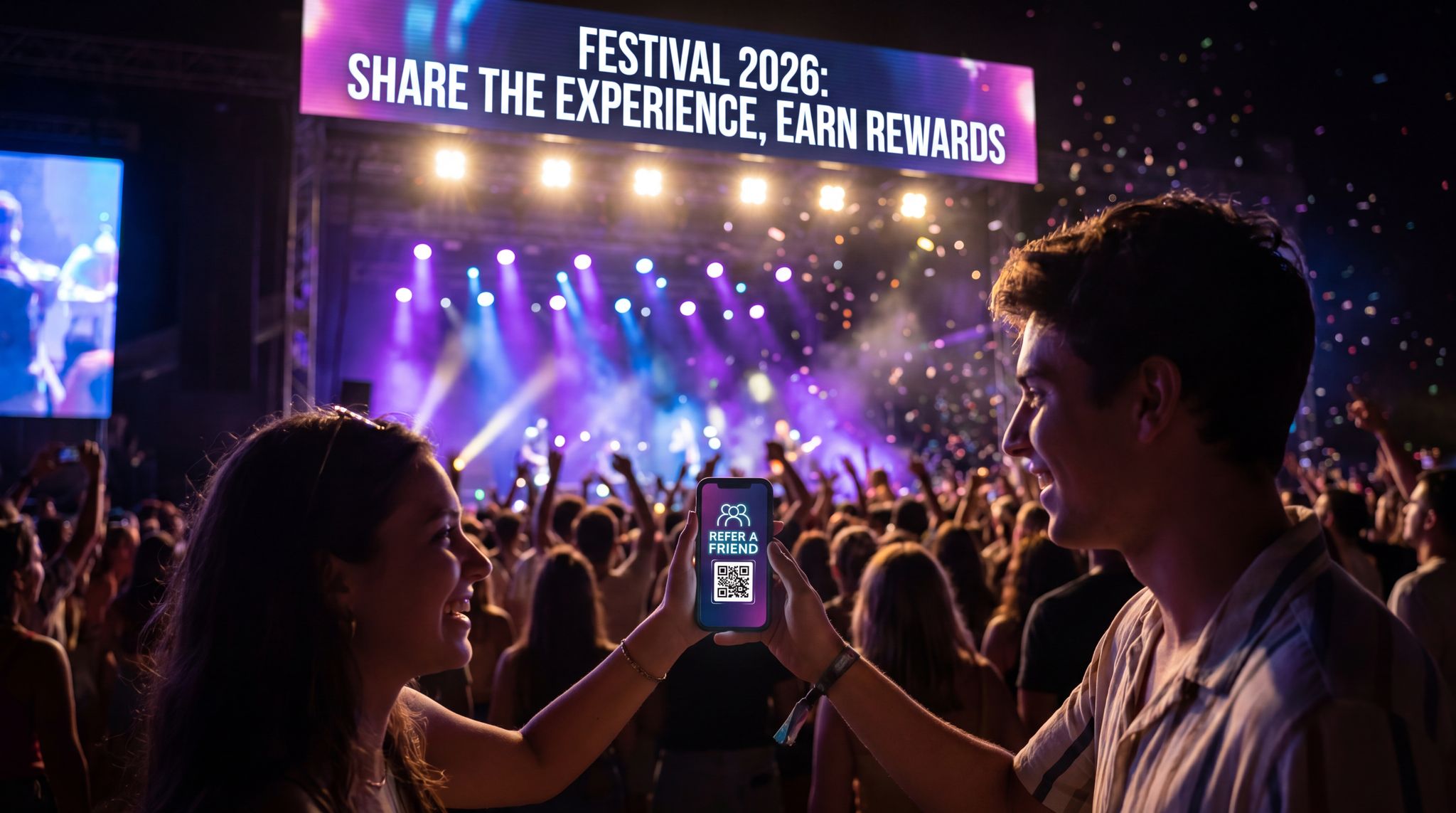
Ticket Fairy's built-in referral rewards system incentivizes attendees to share your event, delivering 15-25% sales boosts and 30x ROI vs paid ads.
Planning Your Offline Marketing Campaign Strategy
Aligning Offline Tactics with Event Goals
Every successful offline campaign starts with clear objectives. Before you spend a penny on posters or plan an elaborate stunt, nail down what you want to achieve. Is your goal to build early awareness for a new festival? Drive last-minute ticket sales for a struggling concert? Boost your event’s brand image in a crowded market? Your offline tactics should map to these goals. For example, if awareness is the aim for a first-year event, you might focus on high-visibility billboards and local buzz stunts to get on people’s radar. If you need to drive immediate ticket conversions, you might prioritize tactics with direct response mechanisms (like flyers with discount codes or digital billboards with real-time countdowns). Seasoned event marketers often map out each attendee touchpoint from initial discovery to purchase to ensure offline efforts complement the overall journey. By mapping the entire event attendee journey and aligning every touchpoint to your sales funnel, you’ll use offline channels at the right time and place to guide people toward buying tickets.
Choosing the Right Offline Channels for Your Audience
Not all offline channels make sense for every event – it depends on who you’re trying to reach and where they spend time. Match the medium to the market. For instance, to promote a tech conference for professionals, ads in airports, train stations, or office co-working hubs might be effective. A music festival targeting Gen Z might lean into edgy street murals and college campus flyering. Think about your event’s target demographics and where they physically are during their day. Also consider scale: a single 20-foot billboard might reach hundreds of thousands in a city, whereas 5,000 flyers hand-delivered at niche locations might reach a few thousand of the right people. Each channel’s reach, cost, and targeting precision differs:
Ready to Sell Tickets?
Create professional event pages with built-in payment processing, marketing tools, and real-time analytics.
| Offline Channel | Reach & Visibility | Cost Level | Best For |
|---|---|---|---|
| Billboard (Static or Digital) | Entire city or highways; huge impressions daily. | High (£3k–£20k+ per month, location-dependent) | Broad awareness for large events; making a big splash. |
| Transit Ads (Buses, Trains) | Commuters in specific routes or city areas. | Medium-High (varies by city/route) | Reaching urban audiences and daily commuters en masse. |
| Street Posters/Wild Posting | Targeted neighborhoods or venues; moderate impressions. | Low-Medium (printing + possibly permit costs) | Local gigs, subcultures, grassroots awareness in specific scenes. |
| Flyers (Hand-to-Hand) | Individual personal touch; hundreds reached if distributed smartly. | Low (cheap to print; labor-intensive) | Driving word-of-mouth, local events, niche communities. |
| Guerrilla Stunts (Flash mobs, etc.) | Varies – dozens to hundreds in person; potentially millions online if viral. | Medium (planning, talent, permits) | Creating viral buzz, PR moments, and brand personality. |
| Street Team Ambassadors | One-to-one outreach; small groups can canvas entire communities. | Low (often volunteer or low-paid) | Building grassroots engagement and trust via peer influence. |
Use the channels that best intersect with your audience. For example, if your audience is college students, focus on campus posters, street teams at student hangouts, and maybe a guerrilla stunt during orientation week. If you’re targeting affluent professionals for a luxury food & wine event, perhaps large format billboards in business districts and sponsor a pop-up tasting at a high-end mall. The key is being present where your potential attendees naturally spend time. This channel-audience fit ensures your offline marketing isn’t just seen – it’s seen by the right people who are likely to convert into ticket buyers.
Timing Your Offline Efforts for Maximum Impact
Scheduling matters. Plan your out-of-home buys and guerrilla activities to sync with your event timeline and sales cycles. A common strategy is a phased campaign:
- Early Teaser Phase (months out): Build intrigue well in advance. This could mean cryptic teaser posters around town or a short-run billboard with just the event date and a mysterious message. At this stage the goal is buzz, not immediate sales – get people talking and mark their calendars.
- On-Sale Announcement (6–8 weeks out): When tickets go on sale or lineup is announced, go big. Unveil eye-catching billboards with your headliners or theme. Deploy street teams to hand out flyers and promo codes the same week. This creates a surge of awareness right when people can take action (buy tickets).
- Ongoing Reminders (1–3 months lead-up): Keep a steady drumbeat. Rotate billboard designs or locations to stay fresh, flyer at relevant events (e.g. have a presence at a related artist’s concert with your event flyers), and maintain a baseline level of chatter. This sustains interest after the initial announcement.
- Final Push (2–3 weeks out): Create urgency. Update billboards or posters with “Nearly Sold Out!” or countdown messaging if appropriate. Launch a high-impact guerrilla stunt or street activation to generate last-minute news coverage and social media buzz. Have street teams hit high-traffic areas with “last chance” flyers or QR codes for quick purchase.
Coordinating timing this way ensures your offline marketing hits when it’s most needed. You don’t want an expensive blitz too early (when people aren’t ready to commit) or too late (when many have made plans). For a major festival, promotions might start 6+ months out (especially if travel is required), whereas a local club night might condense everything into a few weeks. Also consider external factors: if your city has a big related event or holiday, piggyback on that. For example, if you’re promoting a football fan fest, advertising around the time the season schedule is announced or during playoff weeks can ride the natural wave of interest. Strategic timing maximizes the return on every poster hung and every stunt executed.
Eye-Catching Out-of-Home Advertising Tactics
Billboards and Digital Screens: Go Big and Bold
When it comes to sheer visibility, it’s hard to beat billboards. The key to billboard success is bold, simple messaging – you have only a second or two as people drive or walk by. Use large, high-contrast visuals and minimal text (think five to seven words max besides the event name/date). A compelling image – maybe your star performer or a vibrant artwork representing your festival – can stick in viewers’ minds. Include a clear call-to-action or at least a way to learn more (a short URL or QR code). In 2026, many events use digital LED billboards that can display animated content or rotate multiple messages. This flexibility means you can show countdowns (“? Only 10 Days to Festival X!”), display live social media feed of fans hyping the event, or even adapt messages by time of day. For example, a digital screen near offices might show “Get your tickets before they’re gone – brighten up your workday with something to look forward to!” during the lunch hour rush.
Smart Promo Codes & Presale Access
Create percentage or flat-rate discount codes with usage limits, date ranges, and ticket type restrictions. Plus unlock codes for private presales.
Stunning billboards have become statements in themselves. Some savvy promoters treat them like part of the experience – creating backdrops people want to photograph and share. A creative example: a horror convention once used a 3D billboard with a giant zombie hand reaching out, which went viral online. While not every budget allows 3D or motion billboards, the lesson is to stand out visually. Even a clever tagline or humor can make an impression (for instance, a comedy festival billboard quipping “Your boss called – they said you need a night off. Live Comedy May 5.”). If your event branding can support it, don’t be afraid to be playful or provocative on billboards, as long as the message is clear and enticing. The goal is that thousands of people see it and remember one thing – that your event is coming and they don’t want to miss it.
Transit Ads: Turning Commutes into Campaigns
Transit advertising – posters and signage on buses, trains, subways, and at transit shelters – is another powerful offline tool. It effectively plasters your event across the daily journey of your potential attendees. A single bus wrapped fully in your festival’s artwork becomes a moving billboard, traversing neighborhoods and catching eyes. Train station ads or subway car banners can target urbanites who might be interested in your show or conference. The advantage here is frequency and dwell time: commuters might see your ad every day, and while waiting for a train they actually have a moment to read your message.
Grow Your Events
Leverage referral marketing, social sharing incentives, and audience insights to sell more tickets.
To maximize transit ad impact, tailor the content to the context. For example, an ad on a subway platform could say, “Daydreaming of your next big night out? [Event Name] is coming this July – escape the routine!” This speaks directly to the bored commuter. If you’re advertising a business conference at an airport, the copy might be, “Level up your industry knowledge at [Conference], March 2026 – join professionals from 20+ countries.” Include a QR code or short URL for easy info access while they wait. Transit ads often benefit from repetition – seeing the same poster on multiple buses or stations reinforces the message. Ensure your branding (event name, date, key visuals) is consistent across all placements so it becomes familiar.
One more trick: station domination. If budget permits, saturate a single high-traffic transit station or bus stop with multiple ads simultaneously. It creates an immersive takeover that people can’t ignore. Picture a central train station where every poster frame in a corridor is your event, or a tram that has not only exterior ads but interior hanging ads and window clings all about your festival. This kind of omnipresence can make your event feel like the talk of the town. Transit advertising works especially well for city-wide events or those appealing to the general public – it’s about casting a wide net in a defined area (the transit routes). Be sure to start these campaigns early enough to build familiarity, typically 4-8 weeks out from your event date so that by event week, locals have seen your ads countless times.
Street-Level Posters and Banners: Owning the Local Landscape
Not every event has big-budget billboards – but posters, flyers, and banners placed around town can be just as impactful on a local level. Printing eye-catching posters and getting them up in the right locations is a time-tested tactic for concerts, club nights, community fairs, and more. The design needs to stand out amid a clutter of other ads and street art: use bright colors, a bold title, and imagery that resonates with your event vibe (for instance, an EDM rave poster might have neon graphics, while a classical music concert poster uses elegant fonts and photos of the orchestra). Don’t overload a poster with text – just the essentials: event name, date/time, venue, a short tagline or headliner list, and a QR code or URL.
Placement is everything. Strategically target areas where your potential attendees frequent. For a music gig, that might mean lamp posts and notice boards near music venues, record stores, trendy cafes, and university campuses. Many cities have dedicated spots for “wild posting” where layers of event posters go up – consider hiring a local flyering service that knows the circuits (they can legally paste your posters on construction site walls or designated kiosks where it’s allowed). Community bulletin boards (in grocery stores, libraries, community centers) are great for local theatre shows or workshops. Some events also hang vinyl banners on venue facades or at busy intersections (with city permission) – for example, a county fair might have a banner strung over Main Street one week beforehand.
Data-Driven Event Marketing
Track ticket sales, demographics, marketing ROI, and social reach in real time. Exportable reports give you the insights to make smarter decisions.
To really own the local landscape, consistency helps. Use the same color scheme or mascot on all your print materials so people connect that “Oh, it’s that festival again, I keep seeing these posters!”. A neat trick is sequential messaging: one week you put up a teaser poster (no details, just branding and “Coming Soon 2026”), the next week the full details poster. This two-step rollout can pique curiosity then deliver info. Always ensure you’re following local laws – unauthorized postering can lead to fines or removal (and as we’ll cover in pitfalls, that can hurt your image). Done right, a poster blitz builds grassroots awareness effectively and affordably. In fact, smaller promoters often rely heavily on posters/flyers in their city, because for a few hundred pounds in printing and elbow grease, they can directly reach the subculture or neighborhood that cares most about their event.
Innovative Out-of-Home Marketing Ideas for Modern Promoters
When brainstorming out of home marketing ideas, event organizers should look beyond standard static placements to capture modern consumer attention. Consider dynamic OOH strategies like 3D anamorphic billboards that create optical illusions of your festival headliners reaching out to the crowd, or interactive digital kiosks that dispense physical VIP upgrades when users win a quick branded mini-game. Another highly effective offline event marketing tactic involves sponsoring local bike-share programs, wrapping the bicycles in your event’s branding to create a fleet of mobile advertisements moving through high-traffic urban centers. These creative physical ad concepts ensure your brand remains memorable long after the initial impression, driving both immediate curiosity and long-term ticket sales.
Grassroots Flyering and Street Team Tactics
Designing Print Flyers That Demand Attention
Flyers may be old-school, but in 2026 they remain a secret weapon for local marketing – if designed and used well. The design should be clear, visually striking, and informative at a glance. Front-load the most exciting information: if world-famous DJ XYZ is headlining your club night, make his name or photo dominate the flyer. Use an easy-to-read font for details (tiny curly text is a no-go when someone is glancing at a flyer thrust into their hand). Include a strong call-to-action: “Tickets on sale now – scan to buy” next to a QR code, or “Use code FLYER10 for 10% off”. Because space is small, every element must earn its place. Often a simple two-sided design works: front is the attention-grabber (artwork, headliner, tagline), back has the necessary details (date, time, address, ticket link, sponsors if any).
Think about pocketability and shareability. Standard A6 or A5 size is typical – easy to hand out and for people to slip in a pocket or bag. High-quality cardstock or a glossy finish can actually make someone less likely to toss it – it feels valuable (and stands up to a little rain). You can even get creative with shapes or formats if it fits your branding – e.g. a flyer shaped like a guitar for a music fest, or a fold-out mini pamphlet for a multi-day event – but ensure practicality. An effective flyer not only appeals visually, but also clearly tells the person what to do next (visit a site, scan the code, save the date, etc.). In messaging, highlight a hook: “One night only!”, “Limited early bird tickets!”, “#1 festival in the region – as seen on XYZ magazine”, anything that builds interest and urgency.
Before printing thousands, test your flyer design. Show it to a few people who represent your audience: Do they understand it at a glance? Is the key info obvious? This kind of A/B testing mindset (common in digital marketing) can apply offline too – even changing a color or tagline on a flyer can impact response. If possible, print a small batch initially and have your team hand them out in one area. See if people react or if those flyers drive any ticket sales (you’ll catch this if you used a unique promo code or link). Gathering this feedback allows you to refine the design for the main print run, maximizing its effectiveness.
Smart Distribution: Getting Flyers into the Right Hands
A stack of brilliant flyers won’t sell tickets unless they reach your target crowd. Smart distribution is as important as design. First, identify where and when your potential attendees can be reached in person. Timing matters: hand out flyers when people are in a mindset to consider leisure plans – e.g. outside venues at the end of a show (when they’re buzzing from a concert), during weekend events or markets, or in lunchtime hotspots where workers might be planning their off-hours.
Full Pixel & Analytics Integration
Install Meta Pixel with Conversions API, Google Analytics, TikTok Pixel, Reddit Pixel, and Spotify Pixel on your event pages. Server-side tracking for accurate attribution.
A classic approach is flyering outside related events. If you’re promoting a music festival, send street team members to concerts of similar artists in your region; as people exit the gig, they get a flyer for your festival. For a gaming expo, flyer at local game stores or eSports tournaments. Make sure your team is friendly and brief – a quick “Hey, check out this event coming up – might be your thing!” goes a long way, rather than silently thrusting paper at people. Always get any needed permission from event organizers or venue owners for on-site flyering – many are cool with it if it’s not a direct competitor event or if you ask politely (sometimes offering to reciprocate promotion).
Don’t overlook leave-behinds and pick-up spots: cafes, college campuses, music stores, community centers often have racks or counters for free flyers and cards. A well-placed mini poster or a stack of take-one flyers can continually reach people without staff present. Keep tabs on these – you may need to replenish popular spots weekly. It can also be worth targeting workplaces or campuses via bulletin boards (with tear-off strips or QR code printouts). For example, posting in a university dorm or student union for a student-focused event can get dorm residents talking. Just always follow rules – some places require approval stamps on posters.
One advanced tactic: use geo-targeting data to guide physical flyering. If you have ticket sales data from past events (or even from early online campaigns), see where buyers are coming from. Are certain postcodes or neighborhoods hotbeds for your audience? Focus your street marketing there. If an adjacent city has a lot of fans and is within travel range, consider a weekend street team trip to flyer that city too. Efficient targeting ensures you’re not wasting volunteers handing out flyers to uninterested folks. Quality of impressions over quantity – 100 flyers given in the right place (say, to enthusiastic con-goers at a similar convention) beat 1,000 random handouts in a generic busy street.
Creative Offline Methods to Distribute Content and Print Media
Promoters frequently ask, what are some creative offline methods to distribute content beyond standard hand-to-hand flyering? In 2026, distributing print media requires integrating your materials into the attendee’s natural environment. Consider partnering with local lifestyle brands to slip custom-designed event zines into their shopping bags, or printing your lineup on bespoke coasters distributed to high-traffic bars and coffee shops. Another effective tactic is producing limited-edition physical content—such as a beautifully designed mini-magazine featuring interviews with your headliners—and leaving them in boutique hotel lobbies, record stores, or co-working spaces. These tactile content distribution strategies transform a simple promotional flyer into a valuable piece of media that potential ticket buyers actually want to keep and read.
Mobilizing Your Street Team and Fan Ambassadors
Many hands make light work – and in event promotion, street teams can massively amplify your reach. A street team is a group of passionate people – often super-fans or friends of the event – who promote on your behalf at ground level. They might flyer crowds, hang posters, talk up the event in their social circles, and even create their own content (like fan videos or posts) to spread the word. The biggest benefit is authenticity: when a real fan says “You have to come to this festival with me, it was epic last year!”, it carries far more weight than any ad copy. Harnessing street teams and fan ambassadors can be game-changing, especially to reach younger audiences that tune out traditional ads. According to insights on grassroots marketing for festivals, authenticity and trust are key drivers.
Building a street team starts with recruiting the right ambassadors. Look for people who are already excited about your event or the scene around it. That could be active members of your online community, local influencers, college club leaders, or just die-hard attendees from past events. Many festivals and events create ambassador programs where fans sign up to promote in exchange for rewards (free tickets, merch, VIP upgrades, meet-and-greets, etc.). Even without a formal program, you can rally volunteers by emphasizing the perks: “Help us spread the word and earn swag or backstage access!” Make them feel like an insider part of the mission.
Grow Your Social Following With Every Sale
Require social media follows, shares, or playlist adds to unlock presale access or special pricing. Turn every ticket purchase into audience growth.
Coordinate and equip your team. Provide clear guidelines – for example, give them a schedule and map of where to flyer or which neighborhoods to canvass each week. Arm them with materials: plenty of flyers, posters, perhaps referral cards with unique codes if you want to track their individual contributions. It’s wise to train them on the talking points (“emphasize it’s all-night parking and great food vendors, since that’s a selling point for our fest”) and etiquette (“always ask permission before hanging a poster in a shop; be polite if someone isn’t interested”). A motivated, well-informed street team can become your event’s army of boots-on-the-ground marketers. As noted in our guide to mastering grassroots and street team marketing, turning passionate fans into promoters is one of the highest-ROI tactics because it transforms word-of-mouth into an organized strategy.
Finally, keep your team engaged and rewarded. Celebrate their wins (“Team, we distributed 5,000 flyers this month – amazing!”). Perhaps run a friendly competition (whoever gets the most online ticket referrals via their code wins a prize). Show genuine appreciation – these folks are devoting time and energy. A thank-you pizza party or early access to event news can keep morale high. When your street team feels like a valued part of the event family, they’ll go the extra mile – and their enthusiasm will infect everyone they talk to about the event.
QR Codes and Incentives: Bridging Offline to Online
One big challenge of offline marketing has always been measurability – how do you know if that poster or flyer actually led to a ticket sale? In 2026, technology has finally closed the loop. QR codes on print materials are now ubiquitous and widely used by the public (thanks to built-in smartphone scanning and the pandemic-era normalization of QR menus). Every flyer, poster, or billboard should feature a QR code or easy-to-type URL that leads people directly to your event page or ticket checkout. Even better, use unique tracking links or promo codes for different offline campaigns so you can measure results. For instance, give your street team flyers with a QR code embedded with a UTM parameter or code like “STREET10” for 10% off – later you can check how many sales came from that code. If 200 people scanned the QR from posters and 50 bought tickets, that’s valuable data on your poster ROI!
Beyond tracking, QR codes make it seamless for someone to go from intrigued to committed. Imagine someone at a bus stop seeing your event ad – if they can pull out their phone, scan, and be on your mobile ticketing page in seconds, you’ve drastically shortened the path to purchase. Always test that the landing page is mobile-optimized and easy (nothing kills the excitement like a slow-loading site). Newer tech even allows for NFC tags (tap your phone) on posters or interactive bus shelter ads that directly open links, but QR codes are simplest and most recognized.
Incentives can sweeten the deal. You might print flyers that say “Scan for a surprise” or “Use code FLYER5 for $5 off – exclusive offer for finding this flyer!”. People love feeling like they discovered a special deal. If you do a guerrilla stunt, maybe hand out cards to onlookers with a QR that gives them early access to tickets or a small discount as a thank-you for participating. At the very least, a unique hashtag or contest on the material can drive them to engage online (e.g. “Post a selfie with our poster with #[EventName] for a chance to win free tickets”). We’ll dive more into online integration next, but the takeaway here is: connect your offline and online worlds. In 2026, offline buzz should translate to digital action, and that happens when you literally give people the link between the two.
Guerrilla Marketing Stunts & Creative Activations
The Rise of Guerrilla OOH: Blending Billboards with Street Stunts
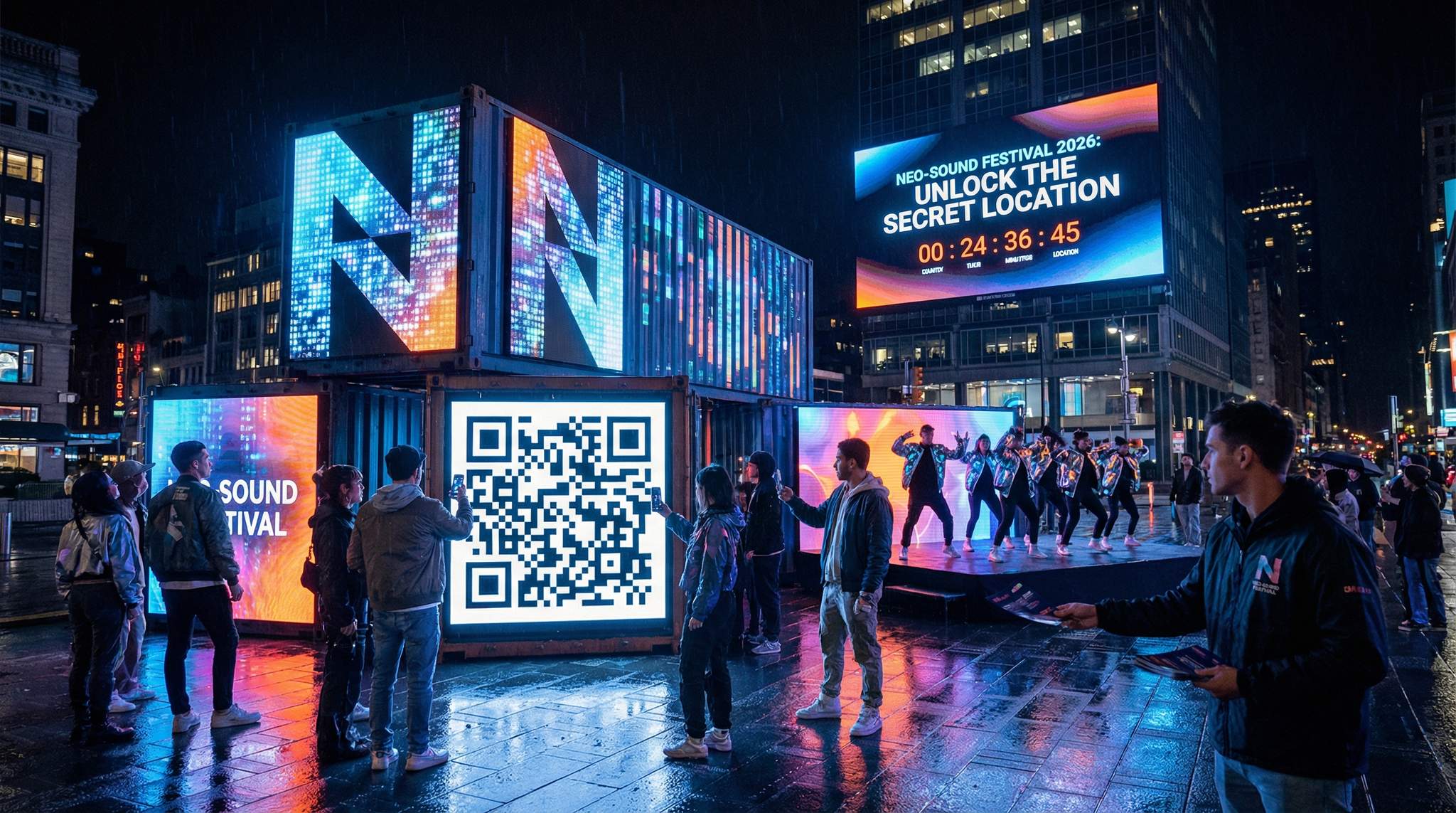
One of the most effective hybrid strategies emerging for event promoters is guerrilla OOH. This approach takes traditional out-of-home advertising spaces and injects them with unexpected, interactive, or disruptive elements. Instead of a static poster, a guerrilla out-of-home activation might involve projection mapping your festival’s lineup onto the side of a prominent downtown building, or transforming a standard bus shelter into an immersive, branded soundscape that plays your headliner’s music when commuters step inside. By merging the high visibility of standard ad placements with the shock value of street marketing, organizers can capture attention in highly saturated urban environments. These hybrid physical placements not only stop foot traffic but also serve as perfect backdrops for user-generated content, effectively turning a localized ad buy into a viral digital moment.
Free Tool: When Should You Announce?
Pick your event date and genre — the free planner outputs a recommended announce, presale, on-sale and reminder schedule anchored to how your audience actually buys.
High-Impact, Low-Cost Guerrilla Marketing Ideas for 2026
You do not need a massive budget to execute memorable street-level activations. Some of the most effective guerrilla marketing ideas low cost 2026 has to offer rely on clever placement rather than expensive production. For example, using reverse graffiti—where a street team power-washes your event logo into dirty sidewalks using a custom stencil—creates a striking, eco-friendly advertisement that costs nothing but labor and equipment rental. Another budget-friendly tactic involves “yarn bombing” or wrapping public infrastructure near your venue in your festival’s brand colors, accompanied by a simple waterproof tag featuring a QR code. These affordable offline marketing ideas for an event generate immediate local curiosity and provide excellent photo opportunities for social media without breaking the bank.
Custom Fabrication and Major Market Activations
For promoters operating in highly competitive entertainment hubs, executing a standout stunt often requires specialized guerrilla marketing fabrication. In cities like Los Angeles, where audiences are accustomed to constant advertising, custom-built physical props—such as oversized 3D sculptures of a festival mascot or interactive, branded vending machines dropped in busy pedestrian zones—can cut through the noise. While these bespoke fabrications require a larger upfront investment than simple flyering, they serve as powerful anchors for PR campaigns and user-generated content. Furthermore, guerilla marketing for artists in 2026 frequently leverages these fabricated pop-ups to host surprise album listening parties or secret ticket drops, allowing musicians and creators to forge direct, tangible connections with their local fanbases.
High-Converting On-Ground Marketing Ideas and Ad Concepts
When brainstorming on-ground marketing ideas, the most successful event organizers focus on activations that naturally interrupt the daily routine of their target demographic. Effective physical ad ideas don’t just display information; they invite interaction. For instance, setting up a branded photo booth at a complementary local festival or deploying a mobile street team with interactive tablet games can capture data while distributing promotional merch. These tactile, on-the-ground strategies build immediate rapport with potential ticket buyers, turning a passive glance into an active conversation.
Flash Mobs and Surprise Performances
Few things can grab public attention like a well-orchestrated flash mob. One moment, commuters are hustling through a train station; the next, music starts and dozens of dancers burst into a choreographed routine, dazzling everyone present. Flash mobs and other surprise performances (like a pop-up acoustic concert or theatrical skit) inject pure delight and make people stop in their tracks. For event promoters, these stunts can create massive buzz when done right. The key is to tie the performance into your event’s theme. For example, if you’re promoting a 90s throwback party, imagine a flash mob of dancers in 90s outfits at a mall, doing moves to a Backstreet Boys song – instant nostalgia hit! The crowd is entertained, videos start recording, and your event name gets mentioned as observers ask “What is this for?”
Some of the most viral guerrilla moments for events have come from these performances. Broadway musicals have famously sent cast members to surprise the public – the cast of The Lion King once stunned New York subway riders with an acapella “Circle of Life”, turning a mundane commute into a magical memory (and racking up millions of YouTube views afterward). On a smaller scale, a flash mob at a college campus could be used to promote a student festival, with the performers wearing T-shirts or holding signs revealing the event at the end. Always capture these stunts on video – their real reach often comes after, when the footage spreads on social media and local news. One pop-up dance can turn into hundreds of thousands of online impressions if it goes viral.
To execute a flash mob, planning and practice are essential (despite appearing spontaneous). Choreograph the routine, rehearse with your dancers or participants in a private space, and scout the location in advance to understand the flow and any permit needs. You may need to quietly coordinate with any relevant authorities (city square, transit station management, etc.) unless you’re intentionally going rogue (which carries risk). Aim for a place and time where you’ll get a decent crowd but not endanger anyone or violate laws. And keep it short and sweet – 2-3 minutes of jaw-dropping fun, a clear shout-out to the event (“See you at XYZ Festival! [Date]!”), then disperse. The element of surprise is what makes it memorable; leave them surprised and wanting more.
Street Art, Murals, and Creative Graffiti
When done thoughtfully, street art can double as event advertising that people actually appreciate. Instead of a plain poster, imagine commissioning a local graffiti artist to spray-paint a beautiful mural related to your event on a legal wall. It could be your festival logo stylized with cool artwork, or a scene that conveys the event’s theme. These visual creations not only turn heads of passersby, but also often get shared on Instagram and local media – free publicity because it’s art, not just an ad. In major cities, brands and events alike have used sidewalk chalk art, 3D pavement illusions, and sticker art to make a splash. For example, a film festival might hire artists to do film-themed murals around town with subtle event branding and a QR code in the corner.
However, guerrilla art walks a fine line – you want edgy creativity without crossing into vandalism. Always get permission or permits for murals and street paintings. Many building owners are happy to offer a wall for a cool mural if you just ask (especially if you’re refreshing an old tagging-covered wall with something eye-catching). There are also companies that coordinate street mural ad campaigns legally. If you’re going the more guerrilla route (like unsanctioned sidewalk chalk outside a venue), be mindful of local laws – chalk might be tolerated in some cities as temporary, but permanent paint without permission is illegal almost everywhere and can backfire badly.
Tap into the local art community. Partnering with popular street artists or art students can lend authenticity – their followers might promote the work, and by extension your event, because it’s a cool collaboration. For instance, a nightlife event could work with a known street artist to create a series of small stencils or stickers around town that people start noticing (e.g. little icons or characters that tie into the event’s story). As curiosity builds, you then reveal the full message near the event (“All those little martini glass icons you saw? They lead to Club XYZ’s speakeasy party – find out April 2!”). This creates a sort of treasure hunt intrigue.
Remember, the best guerrilla art for events isn’t just a logo slapped on a wall – it’s something worthy of a double-take. It might be quirky sculptures that appear overnight in a park, or a giant inflatable related to your event (imagine a huge inflatable astronaut suddenly standing downtown to promote a space-themed festival). Surprise and delight people, and ensure the event branding is present but not overbearing. If your stunt truly resonates, the public will do the marketing for you by sharing pics and stories. Just make sure to credit your event clearly enough that those curious can find out it’s you behind the art.
Pop-Up Experiences and Interactive Stunts
Guerrilla marketing isn’t limited to visuals and performances – you can create interactive pop-up experiences that actively involve your potential attendees. This might be a temporary installation or booth that appears in a busy area, offering a fun activity or giveaway in connection with your event. The goal is to engage people’s senses and imagination, giving them a sneak preview of the event vibe. For instance, a food festival could set up a “global flavors” tasting cart in the city center one morning, handing out free bites of international cuisine to passersby. Creative guerrilla marketing stunts generate buzz by offering tangible value and a taste of the experience. Each snack comes with a small card “Brought to you by Global Eats Festival – World Cuisine, July 9–10” and a QR code. Not only do people love free food, they immediately associate your festival with a delightful, multicultural experience – and hopefully grab tickets to taste more. This hypothetical “global breakfast” stunt is a perfect example of aligning with event theme, giving real value, and sparking social media posts under a hashtag. This aligns with strategies for creating viral moments through guerrilla stunts.
Think about what unique aspect of your event you can tease in a pop-up. If you run a horror film convention, maybe a spooky “Haunted Phone Booth” experience on a sidewalk where people step in to hear a 1-minute scary audio story – and see branding for your convention as they exit thrilled. A gaming expo might drive an arcade van to a popular park, letting people play a hot new game demo for free (with signage inviting them to the full expo). Conferences can do this too – e.g., a tech conference could have a street kiosk asking people to try a quick VR demo or AI gadget, tying into topics that will be at the conference.
Crucially, make these stunts shareable. Design the setup so it’s photogenic – people will snap pics or selfies with it. Maybe incorporate a giant hashtag sign or your event logo cleverly so it’s always in the frame. Encourage participants to post about it (“Tag us and use #[EventName]PopUp to win VIP tickets!”). Also, capture the activation on video for your own channels. A creative pop-up can generate local news coverage too if it’s public-friendly and novel – don’t hesitate to tip off a local reporter or community blogger that something fun is happening at noon in the square. The more organically the stunt ties into your event’s content, the better. You’re essentially letting people sample the experience ahead of time: if they enjoy the sample, they’ll want the full course (i.e. buying a ticket).
Teaser Trails and Citywide Treasure Hunts
Another unconventional tactic gaining traction is the mystery or treasure hunt approach. Instead of one big stunt, you set up a series of clues or mini-stunts across a city that eagle-eyed fans can discover and piece together. This gamifies your marketing and creates a sense of exclusivity – people who follow the trail feel like they’re part of a special mission. For example, a festival could place cryptic posters or symbols around town (with no clear branding at first, just a symbol and maybe a number). Those curious enough to investigate might find that the symbols correspond to letters or coordinates. Eventually, the puzzle leads them to a reveal – perhaps the final clue is a URL or a physical location announced on social media where the lineup will be unveiled at a certain time.
Some events have hidden secret messages in plain sight – like a series of street art pieces that when combined reveal the event name or a password to preorder tickets. Others use technologies like geocaching or AR apps to have fans literally hunt for hidden items (e.g., “Find the 5 hidden dragon eggs in the city and scan them to win free passes to DragonCon”). If your audience is tech-savvy or loves puzzles (comic-cons, ARG enthusiasts, etc.), this can generate enormous engagement. Even those who don’t partake will hear about the excitement as it spreads on forums and local Reddit communities. Just ensure the payoff is worth it: if people invest time solving your mystery, reward them – maybe early access to ticket sales, a discount, or a special experience at the event.
You can also combine this with live meetups: “The first 50 people to solve today’s riddle and show up at [Location] at 6 PM get a free meet-and-greet with an artist.” Now you’ve turned marketing into an event of its own. This works especially well if you have a passionate fanbase eager for any interaction related to your event. Teaser campaigns play on FOMO and curiosity – two powerful drivers of buzz. They encourage the community to work together to figure it out, thereby talking constantly about your event. Just be careful to calibrate the difficulty (too easy and it’s over quick, too hard and people give up in frustration) and keep the clues on-brand so the right audience is attracted. When executed thoughtfully, a citywide treasure hunt can make your event the most talked-about topic well before any official ads roll out.
Integrating Offline & Online Marketing Efforts
Amplifying Stunts Through Social Media and PR
Your offline campaigns will have the greatest impact when they don’t stay offline. Make it a priority to capture and share everything notable you do in the real world. That incredible flash mob or pop-up stunt? Turn it into a short, engaging video for your social channels. Encourage your street team and early ticket buyers to post photos with their flyers or of your cool billboard using your event hashtag. Essentially, manufacture FOMO online from your offline tactics. A passerby might see your street mural in person, but thousands more can see it when a local Instagrammer posts it. Sometimes one viral tweet of a clever guerrilla stunt can reach more people than a whole week of paid ads – and it comes across as organic chatter, which audiences trust more.
When planning any public activation, think about the story it tells and how media might cover it. Is it newsworthy or feel-good enough that local press would run a piece? For example, if you stage a charity tie-in (like your event volunteers do a park cleanup flash mob or a free mini-concert for a cause), that has a positive spin that media love. Even without a charity angle, a unique stunt can earn coverage: “200 Zombies Flash Mobbed the High Street to Promote Halloween Festival” – you can bet that makes the evening news for its sheer spectacle. Reach out to journalists or send a press release if you have a good hook. Partnering with local radio and press outlets to amplify your story can significantly extend your reach beyond those who witnessed the stunt.
Also, integrate with your digital marketing plan. Use offline content in your online ads – for instance, footage of real people interacting with your street team can become a heartwarming Facebook ad that says, “Join the excitement everyone’s talking about!” If an offline campaign yields a catchy slogan or great photos, incorporate those into your email marketing or event page. The idea is a cohesive campaign: online and offline efforts feeding each other. Offline generates content and authenticity for online; online builds anticipation for offline appearances (like posting a hint on social media: “Watch out for something special on Baker Street at noon tomorrow!” to drive people to see your stunt). When offline and online marketing work hand-in-hand, your event stays top of mind everywhere the audience turns.
Leveraging Geofencing and Location-Based Targeting
One sophisticated way to marry offline and online marketing is through geofencing technology. Geofencing allows you to draw a virtual “fence” around a physical location and deliver digital ads or messages to people in that area via their smartphones. How does this help event promotion? Imagine you put up a big street poster near a university. You can simultaneously run a geofenced mobile ad campaign targeting that same campus area – so students see your poster on the sidewalk and then see an Instagram Story ad for the event later that day while scrolling their phones nearby. This one-two punch dramatically increases recall. They might think, “I’m seeing this everywhere!”, when in reality you smartly synchronized your presence.
You can also geofence around complementary events or venues. If there’s a competitor’s festival happening, you could geofence the festival grounds to show those attendees ads for your upcoming festival (“Still craving more music? We’re up next in August – don’t miss out!”). Or geofence areas around your own guerrilla stunt: say you have a flash mob downtown – along with handing out flyers to the onlookers, you serve a follow-up ad to people in that vicinity for the next few days to remind them to buy tickets. This technique is covered in depth in guides like Mastering Geofencing for Event Promotion, and it’s highly effective for connecting real-world interest to digital follow-through.
Another strategy is using Bluetooth beacons or NFC at physical activations. For instance, at that pop-up experience booth, a beacon could trigger a notification to nearby phones (for people who have your app or are opted in) with a special offer. Or if you have an event app, enable location-based alerts like “You’re near Convention Center – drop by our pre-event preview happening now!”. These are more advanced and require setup, but the underlying principle is the same: reach people in the context of where they are. Since you know where you’ve concentrated offline efforts (specific neighborhoods, events, venues), amplify those with precise digital targeting rather than broad, untargeted ads.
Encouraging User-Generated Content from Offline Buzz
An often overlooked but huge benefit of offline marketing is its ability to spur user-generated content (UGC) – basically, free promotion created by your audience. Whenever you do something cool in the physical world, ask yourself: how can fans turn this into content? Because modern event-goers love to share experiences. A giant art installation or funny guerrilla stunt practically begs people to post it on TikTok or Twitter. Make it easy and rewarding for them: clearly display your event hashtag on signage, or create an Instagrammable backdrop in your pop-up where people will take selfies. Perhaps run a contest: anyone who posts a photo of your billboard or street art and tags your account is entered to win VIP upgrades. Not only do you get a flood of content spreading your event’s name, but you also engage those fans deeper.
UGC is powerful because peers trust peers – a friend’s Instagram story of your event promo in town is a personal endorsement. According to marketing research, consumers are more likely to be influenced by authentic fan content and buzz than by polished ads. So, treat your offline marketing moments as content creation opportunities for your audience. After a guerrilla stunt, you could even prompt on social, “Did you catch our surprise dance in the park? Share your videos with #DanceFestSurprise – we’ll repost the best!” This can snowball one stunt into dozens of pieces of shareable content.
This strategy isn’t limited to consumer festivals. B2B event organizers—such as those running industrial trade shows or tech summits—can also leverage physical activations to drive digital engagement. For example, a specialized expo might use popular effective hashtags displayed prominently on physical signage to fuel their content marketing in 2026. Even niche sectors, from SaaS conferences to metal fabrication expos, benefit when on-ground attendees are prompted to share their experiences online using a unified, trackable hashtag.
Monitor social media for these mentions and engage with them. If someone tweets “Just saw an epic flash mob for XYZ Festival downtown!”, jump in with a reply like “Glad you enjoyed it – you ain’t seen nothing yet! ? Come experience the real thing at the festival! [ticket link]”. By acknowledging and boosting UGC, you encourage more people to post. Over time, this builds a community-driven promotion engine: your fans’ posts become an extension of your marketing team. And don’t forget to utilize great fan content in your own channels (with permission) – a quick compilation of the audience’s view of your guerrilla campaign can be an awesome recap video to hype those who missed it.
Converting Offline Interest into Online Follows & Signups
Often the journey from offline encounter to ticket purchase isn’t instantaneous. Someone might see your billboard and think “cool event”, but not buy at that exact moment. We want to capture that interest and nurture it online. That’s why a critical integration step is converting an offline touch into an ongoing digital relationship. Here are a few tactics:
- Email/SMS Signups on the Spot: At any physical activation (street team table, pop-up booth), ask people to drop their email or phone to “get more info” or enter a giveaway. Even scanning a QR can lead to a simple signup form – “Enter your email for a chance to win 2 free tickets” is a reliable draw. Now you’ve moved them into your email marketing funnel where you can send event updates and deals (be sure to follow up quickly while the memory is fresh).
- Social Follows Encouraged IRL: Have your handles and hashtag visible on all printed material. Your street team can gently prompt, “Follow us on Instagram for artist announcements and behind-the-scenes peeks!” Maybe offer a small incentive like exclusive content: “Follow and message us now, and we’ll send you a secret setlist preview.” If they follow you, you can keep marketing to them via organic posts and ads.
- Community Building: If appropriate, invite people to join your event’s online community (Discord server, Facebook Event, etc.). For a fandom event, “Join our Discord for scavenger hunt clues” could bridge a guerrilla teaser campaign to an online hub where you can then promote ticket sales in a more personal environment.
- Retargeting Website Visitors: This is a digital step but driven by offline – many will check your website after seeing an ad or flyer. Make sure you have a Facebook Pixel, Google Analytics 4, or similar set up to retarget those visitors with ads later. That way, the person who visited your site after seeing the poster gets a reminder ad in their feed later saying “Don’t forget to grab your [Event] tickets!”, keeping the momentum.
The idea is to not lose anyone who shows interest offline. With tools like first-party data collection and retargeting, you can continue the conversation online until they convert. Modern ticketing platforms (like Ticket Fairy) help by providing built-in marketing tools – for example, Ticket Fairy’s platform can generate unique tracking links and discount codes, and even show you referral sources for ticket purchases. By combining those tools with good strategy, you’ll know exactly which billboard or flyer brought in a buyer, and you can keep engaging all those leads who didn’t buy right away but might with a little digital nudge.
Measuring and Optimizing Offline Marketing ROI
Setting Clear Goals and KPIs for Offline Efforts
To treat offline marketing with the same rigor as online, start by defining key performance indicators (KPIs) for each tactic. What does success look like for your billboard campaign? Is it a certain uplift in website traffic from the local area, a number of ticket sales using the promo code you splashed on the billboard, or maybe simply X number of impressions (views) among your target demographic? For a flyering effort, you might set a goal of capturing 500 emails or achieving a 5% off-code usage rate. Establishing these targets upfront lets you evaluate ROI later. It also guides your campaign design: if your KPI is ticket sales, you know to include strong calls-to-action and trackable info on your materials; if it’s brand awareness, you might focus on reach and buzz metrics.
Remember that some offline impact is indirect or long-term. A person might see a poster, not act for weeks, then buy a ticket after a friend mentions the event (not remembering the poster’s influence). That’s why you should use blended metrics and context when judging success. Common offline marketing KPIs include:
- Impressions/Reach: estimated number of people who saw the ad (e.g., traffic count for a billboard location or foot traffic in an area where you did a stunt).
- Engagements: countable interactions like QR code scans, contest entries, social media posts about your offline campaign, or press mentions generated.
- Leads Generated: how many people signed up or followed you due to offline (measured via unique links or forms at activations).
- Direct Ticket Sales: number of tickets sold via offline-sourced channels (using unique codes/URLs or post-purchase surveys “Where did you hear about us?”). Also consider cost per acquisition (CPA) – offline spend divided by tickets sold from it.
- ROI/Return on Ad Spend (ROAS): If you can attribute revenue to offline tactics, calculate ROAS = revenue from those tickets / cost of the offline campaign. For instance, if you spent £1,000 on posters and can attribute £5,000 in ticket sales to them, that’s a 5x ROAS.
By setting benchmarks for these, you can later celebrate if you beat them or investigate if you fall short. Don’t forget qualitative goals too – e.g., “improve local community relations” might be a goal of sponsoring a community event as promotion, which you’d assess via sentiment or partnerships formed. The point is to treat offline like an investment: define what you expect back.
Tracking Offline Campaigns with Codes and Links
Thanks to digital tech, tracking offline ROI is no longer shooting in the dark. The simplest method: use unique promo codes or URLs for each major offline channel. If your billboard says “Use code CITY10 for 10% off”, you know any use of that code in your ticketing system came from the billboard (or at least from someone who saw it or heard about it). Likewise, a custom short URL like YourFestival2026.com/metro on a subway ad can redirect to your main site but allow you to count clicks or set a cookie marking those visitors. Modern analytics and ticketing systems will show conversions from those links. UTM parameters (like adding ?src=poster to your URL) are very handy when you have multiple print placements; you can generate separate QR codes with UTMs for each location or tactic and track them in Google Analytics 4.
Surveys are another useful tool. During checkout, you can include a “How did you hear about us?” dropdown or a quick multiple-choice question. Many event marketers do this and list options like Social Media, Friend, Radio, Billboard, Flyer, etc. It’s imperfect (people might not remember or bother to answer), but it gives a rough gauge – especially if you see, for example, 15% selecting “Billboard” which is significant. You can incentivize survey completion by bundling it with a contest (“Answer this and join a raffle for a merch pack”). Post-event surveys can also glean what marketing worked, asking attendees what influenced them to buy a ticket. These responses help guide future campaigns.
If you’re really data-driven, consider controlled tests: for instance, release a batch of flyers with a certain design or offer in one city and a slightly different version in another city, to compare results (A/B testing offline). Or compare ticket sales trends in a city where you did heavy offline marketing vs. a similar city where you didn’t – this can isolate the impact to a degree. It’s very similar to how you’d test digital ads, just with more logistical challenge. Some events even use unique phone numbers on certain ads (tracked by call tracking software) if they expect inquiries, though for ticket sales driving online is more common.
The good news is platforms like Ticket Fairy are incorporating better attribution tools. For example, Ticket Fairy’s promoter dashboard allows you to see traffic and sales by referral link, and you can create custom links for your print campaigns. Utilizing these features means when your campaign is over, you can definitively say “Flyers brought in 120 ticket purchases and £9,000 revenue, not bad for a £500 print spend,” or “The transit ads got 5,000 landing page hits but only 30 sales – maybe our creative or targeting was off.” These insights are gold for refining your strategy each year.
Furthermore, advanced digital infrastructure now bridges the gap between physical ads and digital attribution. When directing traffic to your company website, platforms like Google Analytics 4 or Adobe Analytics can tag OOH as a touchpoint in the user journey. For instance, if a user sees an OOH ad, scans a QR code with a specific UTM parameter, and later converts via an organic search, the data model credits the OOH placement partially for the sale. Setting up these data-driven attribution models in GA4 ensures that your offline event marketing efforts are accurately measured alongside your digital spend, proving the true value of your physical campaigns to stakeholders.
Analyzing ROI: Offline vs Online Spend
Once you’ve gathered data on what your grassroots and OOH efforts achieved, it’s time to evaluate the return on investment in context. How did your offline marketing perform relative to your online marketing? Often, you might find offline has slightly higher cost per acquisition than well-targeted digital ads on a direct response basis. That’s normal – offline drives a lot of intangible value like brand awareness, community goodwill, and social buzz, which might not all show up as direct conversions in your tracking window. However, you can still assess efficiency. For example:
- You spent £2,000 on a guerrilla stunt that generated local press worth an estimated £10,000 in ad value, plus a noticeable spike in site traffic that week – that could be deemed a great success even if direct sales were modest.
- You spent £5,000 on billboards that directly yielded 50 sales (£50 CPA) and many more untracked impressions – compare that to maybe a £20 CPA on Facebook Ads. If those billboard buyers had a much higher average order (maybe they bought VIP packages) or they’re a segment you can’t reach online easily, the higher CPA might be justified.
- It’s also possible offline blew digital out of the water in some areas. There are studies showing out-of-home advertising can deliver higher marginal ROI than saturated digital channels. Research on out-of-home advertising ROI supports this. If you hit diminishing returns on Facebook/Google Ads, shifting budget to offline might actually bring incremental audiences you weren’t reaching before.
Calculate your overall marketing ROI with offline included. Say you spent £50k total (80% online, 20% offline) and sold £500k in tickets – that’s 10x return on the whole budget. But maybe those last few percent of sales only happened thanks to seeing that poster or the excitement a flash mob generated; they might not have responded to digital ads alone. Multi-touch attribution models (first-touch, last-touch, etc.) can be debated, but a practical approach is to gather qualitative feedback too: ask attendees “What made you decide to go?” If a significant number mention the “buzz around town” or “kept seeing posters everywhere”, that’s ROI in action even if it’s not pinned to a single channel.
Also consider lifetime value. If offline marketing brings in new attendees who become loyal fans, they might attend multiple events in the future (captured in your CRM, subscribe to your newsletter, etc.). That long-term revenue often stems from the initial offline touch that got them into your ecosystem. This is hard to quantify immediately, but it bolsters the case that offline marketing isn’t just a one-time ticket boost – it’s an investment in growing your overall audience. A balanced budget might allocate a portion to “awareness” (offline, broad reach) and a portion to “conversion” (digital retargeting, email offers). As an event marketer, you’ll justify offline spending by showing how it expands the top of your funnel and strengthens brand presence, which ultimately keeps the pipeline of ticket buyers flowing.
Adapting and Optimizing Mid-Campaign
One advantage of combining offline with digital is agility. While you can’t change a printed poster once it’s out, you can adjust aspects of an offline campaign in near-real time based on feedback – if you’ve set it up right. For instance, if you see after two weeks that hardly anyone is scanning the QR code on your posters, that could signal the placement or design isn’t effective. Maybe the QR is too small or people aren’t interested in the offer. You could react by adding a bold sticker to the remaining posters (“10% OFF with code PARTY10!”) to boost response, or refocus your street team to verbally mention the discount when handing flyers. Treat your offline campaign like a living organism – monitor it and feed it tweaks as needed.
Guerrilla tactics are inherently flexible. If a particular stunt isn’t gaining traction, pivot to something else. Perhaps your first attempt at a teaser puzzle was too obscure and no one engaged; you can simplify the clues or amplify hints on social to get more participation. If your street team reports that certain neighborhoods are unreceptive (maybe you’re flyering in the wrong area), reallocate them to more promising spots. Ground intel from your team is the equivalent of analytics data in digital – listen to it. A great approach is to have regular check-ins during the campaign (weekly or even daily during critical periods) to assess what’s working and what isn’t. Did that radio mention of your flash mob bring people out? If not, maybe push harder on social invites for the next one.
Sometimes external factors force adaptation. Weather ruined your planned outdoor stunt? Have a backup indoor idea or reschedule if timing allows. Perhaps a global event or news item changed the public mood; be ready to tweak your messaging if needed (e.g. tone down a celebratory stunt if there’s somber news in town – sensitivity matters). Effective offline marketing in 2026 borrows the agile mindset from software: test, learn, and iterate quickly. The campaign isn’t set in stone just because it involves physical elements.
Most importantly, apply your learnings to future campaigns. Once your event is done and you’ve analyzed everything, document what you learned about offline channels. Maybe you discovered that flyering at gyms was surprisingly effective for your wellness expo, while shopping mall banners weren’t. Or that smaller guerrilla stunts repeated weekly kept buzz alive better than one big stunt. By capturing these insights, you can refine your playbook for the next event – doubling down on high-ROI tactics and avoiding the pitfalls.
Scaling and Localizing Offline Marketing for Any Event
Grassroots on a Shoestring: Small Event Strategies
Not every event has a five-figure ad budget – and that’s okay. Local gigs, small venues, and community events can still generate serious buzz with creative, low-cost tactics. For a 200-person club night or a neighborhood fundraiser, lean heavily into grassroots outreach. This means making personal connections: hand out flyers yourself at related gatherings, post in local community Facebook groups about your event (digital, but community-driven), and partner with existing local networks (like ask the popular coffee shop to let you leave a flyer stack, or get the local college radio to mention your open-mic night). When budget is tight, time and hustle replace money. Rally volunteers or friends to be your street team for an afternoon. A few hours of postering the trendiest streets or chatting up people at a weekend market can yield ample attendees without spending more than the cost of prints.
Also, piggyback on other happenings. If there’s a larger event that draws your target audience, see if you can appear there in some capacity. For example, your small theater production might arrange a short preview performance at a monthly art walk or set up a quirky in-character street performance that naturally segues into “come see the full show, just down the road next week!”. With limited funds, focus on high-impact moments: one great article in the local paper or a viral neighborhood story on Nextdoor about your event can sell more tickets than generic ads could. So invest effort into narrative – maybe your event supports a cause or has a unique community angle the press would love.
Finally, forge local partnerships. A small event can collaborate with local businesses for mutual promotion. For instance, a bar hosting a concert could team up with a nearby pizza shop: anyone who buys a slice gets a flyer with a drink discount at the show, and concert-goers get a coupon for pizza after. It’s a win-win that extends reach. Community influencers (not formal “influencers”, just well-connected locals) are allies too – find those who run local blogs, event calendars, or popular social accounts and personally invite them or give them something to share (like “10 Reasons Our Block Party Will Rock – according to the organizer”). These grassroots tactics prove that creativity and community can trump cash when it comes to offline marketing a small event.
Citywide Blitz: Tactics for Regional Events
Scaling up to a mid-size or regional event (say a 5,000-10,000 attendee festival or multi-venue city event) means expanding your offline reach without losing that local touch. One approach is a citywide poster blitz combined with targeted media. Ensure your event’s visual presence is ubiquitous: posters in every hip cafe, banners in entertainment districts, ads on local radio and regional magazines. At this scale, you might invest in a few billboards or transit ads, but you can also get creative within budget – like digital signage on municipal boards or sponsoring community events leading up to yours. A beer festival, for example, could sponsor a craft beer night at various pubs one by one, effectively turning each into a mini-promotional event (with co-branded flyers, announcements, etc.).
Street teams become even more crucial. You may segment teams to cover different neighborhoods or nearby towns. Each team can tailor the approach – the college area gets the high-energy youth pitch, the suburbs get the family-friendly angle. Use regional ambassadors or partners: maybe local craft breweries helping to promote a beer festival in their taprooms, or music schools promoting a jazz festival to their students. When you spread across a city, building these localized nodes of promotion ensures deeper penetration than generic ads alone. This philosophy of thinking global while acting local allows you to treat each pocket of your region like its own community to engage.
Logistics also scale: you might need a central coordinator to schedule postering runs and track where materials have been distributed (so you don’t oversaturate one area and neglect another). Consider also the power of localized PR – send press releases not just to big city media but also neighborhood newspapers or region-specific blogs. A regional event has many angles (economic boost, community pride, cultural significance) that local media outlets eat up. For instance, a regional food festival could pitch a story to a local paper in a district focusing on a chef from that area who’ll be featured. Each locale gets their “piece” of the story.
A cohesive citywide campaign often culminates in a feeling that “the event is everywhere!”. One real example: when a mid-sized city launched its first music & arts festival, they employed street murals in various neighborhoods, a traveling pop-up stage that previewed acts in different parks over weekends, and volunteers at city council and community meetings handing out info – so from downtown professionals to artsy enclaves, everyone encountered some facet of the promotion. That broad-yet-targeted approach helped the festival draw attendees from all across the region, not just the immediate city center. The bottom line: to scale offline, broaden your geographic coverage but tailor your tactics to maintain relevance in each segment of your audience.
National and Tour Marketing: Consistency with Local Flavor
For national-scale events or concert tours spanning multiple cities, offline marketing becomes a choreography of consistency and localization. You want a unifying brand presence in every market – the tour posters should have the same look everywhere – yet you must adapt to local nuances and competition in each city. Start with the macro plan: if you’re promoting a national festival brand or a touring show, create a core set of assets (billboard designs, poster templates, key messages) that will be used across all regions for brand consistency. Then, work with local promoters or street teams in each city to deploy those assets in the most effective way for that area.
It’s often worth strategizing your multi-city campaign as a whole – for instance, timing announcements so that buzz builds sequentially. A common tactic for tours is a rolling thunder launch: all cities announce the concert at the same time (to leverage national press and trending topics), but then each city might have its own secondary push closer to the local date (like local radio giveaways or city-specific stunts). This ensures the message hits broadly (so fans even travel between cities for shows) and then hits deeply in each locale when it matters.
Local partners are gold for national events. Collaborate with local radio stations, venue networks, or even influencers in each city to hype your event. For example, a touring comic-con might have a partnership with a well-known cosplay group in each region to appear in costume around town a week before, effectively becoming walking advertisements that resonate with the fan community there. Also consider the cultural differences and regulations: what plays well in Los Angeles might not in Singapore, and postering laws or ad norms vary. Tailor your offline mix accordingly – maybe you can do street handouts in one city but need formal mall promotions in another where street marketing is restricted. If your event travels internationally, localize language and references on your materials; audiences respond when you show you’ve made an effort to connect with their culture.
Logistically, managing a multi-city offline campaign is complex, so many tour marketers work with agencies or local promoters who know each market. Provide them with the brand kit and guidance, but let them add that local flavor. The challenge is ensuring brand coherence – a tour should feel like one event with multiple stops, not completely disjointed promotions. One way to gauge this is through social media: if you check hashtags across cities, is the conversation recognizing it as the same tour/festival? If not, you might need to tighten your messaging or visuals. On the other hand, allow some local fun: perhaps each city gets a unique guerrilla stunt riffing on a local icon (imagine a giant inflatable guitar by the Grand Ole Opry for Nashville’s tour stop, versus a graffiti street art installation in Brooklyn for NYC’s stop). These touches make each city feel special while being part of the bigger picture.
Navigating Cultural and Regional Differences
Adapting campaigns for different regions isn’t just about language – it’s about cultural resonance and respect. What’s seen as humorous in one country might fall flat or even offend in another. When taking your offline marketing to varied markets, do your homework on local sensibilities. For instance, certain imagery or colors have different connotations globally (red can mean luck in China but mourning in parts of Africa). If you’re doing a guerrilla stunt in a city abroad, ensure it aligns with local customs and regulations. Noise-making flash mobs might wow in one place but could be seen as a disturbance in a culture that values quiet and order. Always ask: Will this tactic be appreciated here? If unsure, consult on-the-ground colleagues or cultural advisors.
Localization also applies to platform differences. In some regions, traditional OOH might actually dominate because digital saturation is lower or people are out and about more. For example, in parts of Europe and the UK, flyering in town squares and posters in pubs remain very effective for music events. In other areas, out-of-home is almost entirely digital screens now (like some Asia-Pacific cities where DOOH with QR codes are everywhere). Know the media landscape: sometimes adapting your event marketing for different markets means using grassroots tactics in one city and high-tech OOH in another.
Be mindful of language and translation on all your materials. If you’re touring through non-English-speaking regions, invest in professional translation for billboards and posters – and double-check that slogans don’t turn into something unintended when translated. Even within the same country, different cities have slang or preferred phrasing. Using a local phrase or reference in a guerrilla stunt can endear your event to that community (“Hey, they speak our language!”). On the flip side, avoid any imagery or concept that might tap into local tensions unknowingly – e.g., don’t use certain symbols in regions where they have political implications.
An example of cultural adaptation: When an international music festival expanded to new countries, they discovered that in some places the idea of a street team was novel – so they leaned more on influencer meet-ups and official media, whereas in other places, street teams were welcomed. By customizing each campaign to the region’s norms, they achieved better results and community goodwill. The overarching principle is respect: show you respect local culture and laws in your marketing. That might even mean foregoing a tactic you love because it’s not appropriate in one location (for instance, a skimpy costume stunt might be fine in liberal cities but not in conservative ones). Ultimately, adapting offline marketing for different regions ensures your message is not only seen but embraced by each community, paving the way for smooth events and strong ticket sales wherever you go.
Avoiding Pitfalls: Lessons from Offline Marketing Misfires
When Guerrilla Marketing Goes Wrong
Bold offline stunts can yield big rewards – but they can also backfire spectacularly if mishandled. One common pitfall is ignoring permits or laws in the zeal to do something edgy. A cautionary tale: a music festival attempted a guerrilla stunt where their team spray-painted the festival logo on a busy city sidewalk to create a “live art” moment. They didn’t get permission, and passersby saw it as vandalism in progress. As seen in examples of guerrilla marketing stunts gone wrong, failing to secure permits can lead to legal trouble. Police were called, the stunt got shut down, and instead of buzz the festival got bad press about defacing property. The intended message (“we’re a cool, art-driven fest”) was lost completely to an unintended one (“these organizers are irresponsible”). The lesson? Know the line between edgy and illegal. Always check if you need a permit for public art, performances, or street closures. If you choose to push boundaries without permission, be prepared for the consequences – and have a plan to mitigate, like quick cleanup crews or a PR statement ready, though in most cases it’s better to avoid illegal tactics altogether.
Another way guerrilla can go wrong is if it confuses or alienates people. If your stunt is too obscure or off-key, it might not connect to your event in people’s minds. Or worse, it might offend. For example, releasing hundreds of balloons might seem whimsical but today would draw ire for environmental reasons – that’s a PR nightmare for an event. Or a flash mob that’s provocative in content might upset some audiences if done in the wrong venue (imagine a loud stunt in a quiet, solemn area – context is key). Gauge public sentiment: run your crazy idea by a diverse group of colleagues or friends; if anyone raises a red flag, dig into it. It’s easier to tweak or scrap a risky stunt in planning than to deal with backlash after.
There’s also the risk of the fizzle – when a stunt flops simply because it was poorly executed. Think of a flash mob where only 5 of the 20 expected dancers showed up, resulting in an awkward half-hearted performance that impresses no one. Poor execution of viral stunts can actually hurt your reputation (people might think “wow, not many fans care about this event”). To avoid this, don’t overestimate turnouts for participatory stunts; consider having more staff or hired performers to ensure critical mass. If you’re doing a contest or treasure hunt, make sure someone actually wins or solves it – you don’t want a challenge so hard or poorly communicated that it ends up frustrating would-be participants.
Balancing Edgy Creativity with Brand Fit
In pursuit of buzz, some marketers make the mistake of being edgy for the sake of it, losing sight of brand alignment. A wild stunt might get attention, but is it the right attention? Always filter your offline ideas through your event’s identity and audience expectations. A family-friendly community festival probably shouldn’t employ shock tactics or risqué imagery in its street marketing – even if it garners buzz, it could repel the core attendees. Conversely, an underground rave event might want a bit of counterculture flair, but if they go too far and create fear or confusion (like ominous graffiti that doesn’t clearly invite people) it could undermine their goal of selling tickets.
Keep brand consistency in mind. Offline campaigns, no matter how unconventional, should feel like they come from the same voice as your other marketing. If your digital presence is all about inclusivity and positivity, but your guerrilla marketing seems aggressive or snarky, that’s a disconnect. As covered in guides on inclusive event marketing strategies, it’s important not to inadvertently exclude or offend groups in your messaging. For example, using slang or humor that might be derogatory or misunderstood by some cultures can harm your brand. What’s funny to one demographic might be alienating to another. Aim for creativity that reinforces your event’s theme and values. If it’s a fitness expo, your guerrilla stunt could be a pop-up workout session – fun and on-brand. If it’s an avant-garde art festival, a surreal street performance fits the bill – but make sure the public can tell it’s part of an art fest, not random chaos.
Another common brand pitfall is underestimating optics. Consider how bystanders will perceive your tactics without context. Will that mock protest you stage (as a clever way to ‘protest boredom’ to promote your fun event) be taken seriously and cause alarm? Will people understand that the street art you commissioned is advertising, or will they attribute it to someone else? Clarify branding in a tasteful way – e.g., discreet logos or follow-up handouts explaining the stunt – to tie it back to you. And maintain an appropriateness check: if your event is sponsor-heavy or has stakeholders to answer to, an off-color stunt could strain relationships. You can be edgy and push boundaries, just align it with your brand’s tone (be it playful, rebellious, sophisticated, etc.) and consider the range of reactions people might have.
Managing Budget Overruns and Resource Strains
Offline marketing can sometimes be like an iceberg – you see the cost of printing or the one-day activation, but beneath the surface lurk logistics costs, staff time, and more. It’s easy to overspend or overstretch if you’re not careful. One pitfall is not accounting for ancillary costs: e.g., you budgeted £2,000 for flyers, but did you consider gas and parking for distribution runs, hiring extra hands to cover more ground, or city permit fees for that banner hang? Always add a buffer (many pros allocate ~10-15% of offline budget for unexpected expenses). If you have to rent equipment (sound for a pop-up show, special lighting for a nighttime projection stunt) or pay for cleanup/security, include that from the start.
Resource strain is another issue – especially manpower. Coordinating a street campaign or series of stunts can tax your team. Make sure you’re not pulling so much into offline efforts that your online marketing or other duties suffer. The last thing you want is a wildly creative offline campaign but a neglected ticketing page or unanswered customer inquiries. Balance your resources, and consider outsourcing certain tasks, like hiring a street team agency for flier distribution if your staff is small. Yes, it costs more than doing it yourself, but it could save precious time and ensure it’s done professionally (with reporting and accountability). If using volunteers, ensure they’re reliable – no-shows can derail plans last minute, so have backups or smaller critical tasks reserved for core staff.
Another budget caution: track ROI as you go (as much as possible) to avoid throwing good money after bad. For example, if after the first month your several billboards haven’t moved the needle, maybe scale back and reallocate to something showing promise (like maybe your local partnerships are driving more sales, so double down there). Offline spends are often front-loaded and harder to adjust (you usually pre-pay for a flight of ads or prints), but you can pivot parts of your strategy if you monitor it. Use the attribution methods we discussed to make mid-course corrections – that’s how you prevent budget wastage.
In summary, plan realistically and monitor diligently. Offline marketing is incredibly impactful but has many moving parts. Proper planning (with all costs and needs outlined), combined with live tracking of how it’s performing, will keep your campaign efficient and effective. And if something does go awry or over-budget, treat it as a learning experience: debrief on what unexpected costs or issues came up so you can avoid or cushion for them next time.
Rapid-Fire Inspiration: 20 Easy Offline Marketing Ideas for Event Organizers
If you are looking for quick inspiration to jumpstart your next campaign, here is a rapid-fire list of 20 easy offline marketing ideas that promoters and venue operators can deploy with minimal friction. These physical ad ideas range from low-cost grassroots tactics to scalable out-of-home placements:
- Reverse Graffiti: Power-wash your event logo into dirty sidewalks using a custom stencil.
- Chalk Art Trails: Hire local artists to draw temporary chalk arrows leading to your venue.
- Branded Coasters: Distribute custom drink coasters featuring your lineup to local bars and pubs.
- Coffee Sleeve Takeovers: Partner with independent coffee shops to brand their takeaway cups.
- Wild Posting Blitz: Layer vibrant, high-contrast posters in designated legal street-art zones.
- Mirror Decals: Place removable branded decals on mirrors in venue or partner restrooms.
- Pop-Up Ticket Kiosks: Set up a temporary physical box office in a high-foot-traffic shopping district.
- Yarn Bombing: Wrap public infrastructure near your venue in your festival’s brand colors.
- Branded Pedicabs: Sponsor local bicycle taxis to offer free rides while playing your headliner’s music.
- Interactive Bus Shelters: Upgrade transit ads with QR codes that trigger an augmented reality (AR) experience.
- Flash Mobs: Organize a surprise choreographed dance routine in a busy commuter hub.
- Street Team Flyering: Deploy passionate fan ambassadors to hand out flyers at complementary concerts.
- Local Zine Inserts: Slip custom-designed event mini-magazines into shopping bags at lifestyle boutiques.
- Projection Mapping: Beam your event teaser video onto the side of a prominent downtown building at night.
- Branded Food Trucks: Sponsor a popular local food truck to serve a custom menu item named after your event.
- Treasure Hunts: Hide physical tickets or VIP passes around the city and drop clues on social media.
- Window Clings: Provide local retail partners with static-cling window graphics promoting the event.
- In-Store Audio Ads: Partner with local retail chains to play a 15-second audio teaser over their PA systems.
- Custom Floor Decals: Place directional floor stickers in transit stations guiding people toward your pop-up.
- Community Bulletin Boards: Pin beautifully designed, tear-off flyer strips in community centers and libraries.
By mixing and matching these offline event marketing concepts, you can build a layered campaign that captures attention across multiple physical touchpoints.
Frequently Asked Questions
What are some effective out of home marketing ideas for B2B events?
For B2B conferences and trade shows, effective out of home marketing ideas include targeted transit takeovers at airports or train stations near the venue, mobile billboard trucks circling competitor events, and sponsored Wi-Fi kiosks in business districts. These physical placements capture the attention of professionals during their daily commutes.
How do you measure the ROI of offline event marketing?
Measuring offline event marketing involves bridging the physical and digital divide. Promoters use trackable QR codes, unique vanity URLs, dedicated promo codes, and geofencing technology to attribute ticket sales and website traffic directly to specific physical ad placements and street-level activations.