Every abandoned ticket purchase is a lost revenue opportunity – but it doesn’t have to stay lost. In 2026’s competitive live events market, savvy event promoters are turning cart abandonments into second chances. By deploying timely follow-ups through email, ads, and messaging, they’re recapturing would-be attendees who left in the middle of buying tickets. This comprehensive guide breaks down how masterful abandoned cart recovery can boost your ticket sales, backed by real examples, data, and hard-won lessons from veteran event marketers.
Understanding the Cost of Abandoned Carts
The Revenue Draining in Your Blind Spot
Cart abandonment is the silent revenue killer for online ticket sales. On average, about 70% of online carts are abandoned before purchase – that’s like 7 out of 10 interested attendees walking away at the checkout. Experienced event promoters know this isn’t just an e-commerce problem; events face similar (or higher) abandonment rates, especially for pricy festivals or multi-day passes. In real terms, if you have 1,000 potential buyers initiate checkout, roughly 700 don’t complete – representing tens or even hundreds of thousands in unrealized revenue. Every incomplete purchase is a fan almost lost, and savvy marketers treat it as a second-chance opportunity rather than a dead end.
Seasoned campaign veterans stress that cart abandoners are high-intent prospects – they were interested enough to start buying tickets. Letting them slip away means leaving money on the table and possibly losing a loyal attendee. In an era when digital ad costs are rising and budgets are tight, converting those warm prospects can deliver better ROI than chasing brand new audiences. As one marketing director puts it, “It’s far more cost-effective to win back someone who nearly bought a ticket than to convert someone who’s never heard of your event.” In other words, abandoned carts are a goldmine for recovery – if you act swiftly and smartly.
Why 2026 Makes Recovery Mission-Critical
Several trends in 2026 have made abandoned cart recovery even more critical for event marketers. First, mobile bookings now dominate, and mobile users have higher abandonment rates (often 80%+ vs ~70% on desktop) due to smaller screens and distractions, a trend confirmed by data on global cart abandonment landscapes. Additionally, mobile traffic sources show specific abandonment behaviors that require attention. That means more people are dropping off mid-purchase on their phones, so you need mobile-friendly follow-up tactics (like text messages or tap-friendly emails) to reel them back in. Second, consumers are inundated with options and info – short attention spans mean a moment of hesitation can lead to a lost sale if you don’t remind them.
Recover Lost Ticket Sales
Automated abandoned cart emails re-engage potential buyers at the optimal time, recovering lost sales and boosting your conversion rate.
Privacy changes have also altered the landscape. Email remains king for direct communication, but features like Apple’s Mail Privacy Protection (which hides open tracking) and tighter spam filters mean marketers must focus on truly engaging content, not just rely on open-rate metrics. Social ad retargeting is still effective, but cookie restrictions (from browser privacy moves and iOS tracking opt-outs) mean your retargeting pools might be smaller. However, brands that retarget see far better engagement, and despite privacy changes, retargeting remains a powerful tool for conversion. In 2026, multi-channel follow-ups – combining email, ads, SMS, and more – are the new norm to ensure you actually reach that potential attendee somewhere. The bottom line: recovering abandoned carts is no longer optional. It’s a mission-critical part of the event attendee journey, ensuring no interested fan slips through the cracks on their way to your event.
The Opportunity: Small Wins, Big Impact
Every recovered cart is pure gain. Think of it this way – you’ve already invested in marketing to get that person to click “Buy Tickets.” Winning them back with a follow-up email or ad costs a fraction of what you spent to acquire them in the first place, often yielding a massive return on ad spend. Retargeting ads, for example, typically see conversion rates nearly three times higher than standard display ads, since you’re targeting warm prospects. And abandoned cart emails can convert an average of ~3–5% of recipients into buyers, with some industries seeing abandoned cart email open rates as high as 45% – which may sound modest, but if 500 people abandoned their tickets, a 5% conversion means 25 extra ticket sales you’d have otherwise missed. In practice, many event campaigns see even bigger wins: top-performing marketers have recaptured 10–15% of lost ticket purchases with well-crafted follow-up sequences, turning potential no-shows into excited attendees.
Ready to Sell Tickets?
Create professional event pages with built-in payment processing, marketing tools, and real-time analytics.
Real-world example: A regional music festival in 2025 found that about 600 people started the ticket checkout process without finishing. By deploying a series of follow-ups (two reminder emails and a retargeting ad campaign), the festival recouped roughly 120 additional ticket sales – that’s a 20% recovery of would-be lost buyers, adding nearly $18,000 in revenue. These kinds of results aren’t rare; they’re replicable with the right strategy. The key is understanding why people abandon carts in the first place, and then hitting the right notes in your follow-up to bring them back.
(Before we dive into recovery tactics, one note: Even as you focus on recapturing abandoned carts, try to reduce the reasons people abandon in the first place. The next section breaks down common causes of cart abandonment – insights every event marketer should use to improve their checkout experience, in addition to doing smart follow-ups.)*
Why Ticket Buyers Abandon (and How to Fix It)
Sticker Shock from Added Fees
It’s a tale as old as online ticketing: a fan clicks “Buy” on a $50 ticket, then sees taxes, service fees, or shipping bump it to $65+ at checkout – and promptly bails. Pricing surprises are perhaps the #1 cause of cart abandonment. Surveys show roughly 20–25% of shoppers abandon due to extra costs like fees or taxes added late in the process. In the events world, service fees and surcharges can be deal-breakers if they aren’t transparently communicated. Seasoned promoters know to avoid “sticker shock” by being upfront about fees early on (or even building fees into the ticket price to show one all-inclusive price). If buyers expect a total of $65 from the start, they’re less likely to freak out at checkout.
One major contributor to price shock is dynamic pricing – where prices increase based on demand or as lower tiers sell out. While raising prices can maximize revenue, doing it opaquely will alienate fans mid-purchase. In fact, fans often cite sudden price jumps as a reason for abandoning their tickets. Many fan-friendly events now avoid dynamic pricing entirely; for instance, Ticket Fairy’s platform opts for fair, transparent pricing instead of surge-style increases, precisely because dynamic pricing can spook buyers. The lesson is clear: be up-front and fair with pricing. If you must add fees, disclose them before the final click (e.g. show an “estimated total” in the cart). By minimizing unwelcome surprises, you’ll prevent a large chunk of abandons before they happen – and maintain trust that pays off in completed sales.
Full Pixel & Analytics Integration
Install Meta Pixel with Conversions API, Google Analytics, TikTok Pixel, Reddit Pixel, and Spotify Pixel on your event pages. Server-side tracking for accurate attribution.
Long or Confusing Checkout Process
Another common culprit is checkout friction. If the buying process feels like a form-filling marathon or confuses the user, expect dropout. Industry research shows about 18% of users abandon carts due to a too long or complex checkout. For event tickets, lengthy registration forms (collecting attendee info, seating preferences, etc.) or multi-step checkouts can bog things down. Each extra page or required field is an opportunity for distraction or frustration. Experienced event marketers have learned the hard way: keep checkout as short and simple as possible.
Some best practices to reduce friction:
– Allow guest checkout: Forcing account creation drives away approximately 1 in 10 buyers. Instead, let people buy tickets with just an email and payment, then offer account signup later. (If your system requires an account for e-tickets, auto-create one behind the scenes or make it a one-click step.)
– Minimize form fields: Only ask for necessary info at purchase. Do you really need the attendee’s mailing address if it’s a digital ticket? Probably not. Streamline to name, email, payment details, and perhaps one or two essential attendee questions. Internal testing by ticketing platforms shows that reducing form fields can significantly cut abandonment.
– Optimize page speed and mobile UX: Slow-loading pages or poor mobile design will send impatient buyers away. Ensure your ticketing site loads fast, buttons are clearly visible, and the process works smoothly on mobile devices. Given the high mobile abandonment rates, test your purchase flow on various phones – a clunky mobile interface can kill conversions.
Grow Your Events
Leverage referral marketing, social sharing incentives, and audience insights to sell more tickets.
Another tip from event marketing veterans: use a progress indicator (“Step 2 of 3”) so buyers know they’re almost done, and never surprise them with another page after they thought they were finished. The smoother the checkout, the fewer people you’ll need to chase with follow-ups later.
Lack of Trust or Payment Concerns
Even if price and process are fine, a segment of buyers will abandon because of trust issues. Approximately 17% of users cite lack of trust in the site or payment security as a reason for cart abandonment. For first-time customers especially, entering credit card details on a page that feels sketchy is a big ask. Event ticket buyers might worry: “Is this site legitimate? Will my ticket be honored? Is my card info safe?” If those questions creep in, they may bail and perhaps look for tickets on a more familiar platform.
To combat this, establish credibility and security throughout checkout. Display trust badges (SSL secure, verified payment processor logos like Visa/Mastercard, or even “Powered by Ticket Fairy” if known for reliability). Include clear contact info or support chat on the checkout page – knowing they can reach someone if there’s an issue builds confidence. Use copy to reassure, e.g. “Your payment is secure and encrypted.” And make sure your branding is consistent; a sudden redirect to a generic payment page can spook users.
Event marketers with long memories might recall early-2010s checkout pages with poor design leading to massive drop-offs. Today, there’s no excuse – use a reputable ticketing platform or payment gateway that people recognize and trust. For instance, showing PayPal, Apple Pay, or Verified by Visa logos can immediately put buyers at ease. Also, communicate your refund or ticket guarantee policies clearly. If a buyer isn’t 100% sure what happens if the event is canceled or if they can no longer attend, they might ditch the purchase. A simple line like “100% refund if the event is canceled” or “Official tickets from the event organizer” can assure them it’s a safe transaction to complete.
Free Tool: Split Tickets for Max Gross
Given capacity and a target price, the optimizer proposes Early Bird / GA / VIP allocations and prices — with projected gross at 100%, 80% and 60% sell-through.
“Just Browsing” and Other External Factors
Not every abandonment is due to something you did wrong – sometimes people were just browsing or not ready to commit. In fact, studies find as many as 48% of online shoppers abandon carts simply because they were window shopping or researching. In the events context, someone might initiate a ticket purchase to check the final price or hold seats, without firm plans to buy yet. Or they could be coordinating with friends (“Let me check who else is free that weekend”) and pause the purchase until later. Some abandonment will inevitably happen no matter how perfect your checkout is.
However, “just browsing” abandoners represent a huge opportunity for follow-ups – these are people generally interested in your event, but not fully convinced or decided. Smart event marketers align their follow-ups to address these external factors. For example, if people commonly leave to “ask friends,” a follow-up email could highlight group discounts or the fact that tickets are selling fast (creating urgency to rally their friends sooner). If people might be price-checking, an email could emphasize what a great value the event is (or offer a limited-time promo to tip the scales). Essentially, understand that many buyers leave due to indecision or procrastination, so your follow-up’s job is to nudge them from “maybe later” to “buy now.”
It’s also worth noting timing: some abandoners fully intend to come back later. But life gets busy and they forget. This is why prompt reminders are crucial – often a simple “You left tickets in your cart” nudge is all it takes for a forgetful fan to say “Oh right, I need to finish that!” and complete the purchase. The following sections will explore exactly how to execute those timely nudges across email, ads, and more. But first, ensure you have the right data and systems in place to know who abandoned their cart – so you can actually follow up.
Consider the stark reality of these browsing behaviors: even with a perfectly optimized checkout, you might only convert half of these hesitant shoppers on their first visit. With the remaining 50% chance, the customer walks away without purchasing any ticket if left entirely to their own devices. This coin-flip probability underscores exactly why proactive, automated follow-ups are not just a bonus tactic, but a fundamental requirement for maximizing your event’s revenue potential.
Building the Foundation for Recovery
Capturing Contact Info Early
To recover an abandoned cart, you first need a way to contact the would-be attendee. That’s why one rule of abandoned cart strategy is to capture the buyer’s email (or phone number) as early in the checkout flow as possible. Experienced event marketers often design checkout so that the first step asks for the email address – even before payment details. That way, if the person drops off at any point afterward, you have a way to follow up. If you wait until the last step to collect an email, you’ll lose the ability to reach a lot of abandoners.
There’s a balance: you can’t demand too much upfront or it may cause abandonment itself. The best practice is a simple first step: perhaps “Enter your email to start your order.” This feels low-friction to the user and often has an implicit benefit like creating an account for ticket delivery or sending order confirmation. Once you’ve got their email (and ideally name), you’ve built a lifeline to reel them back in later. Campaign veterans emphasize this tactic – you can’t send a reminder to someone if you never got their contact. It’s a key part of building your first-party data of attendees from the get-go. (For more on growing an owned audience, check out insights on building an owned first-party audience for event marketing that drive long-term ROI.)
Data-Driven Event Marketing
Track ticket sales, demographics, marketing ROI, and social reach in real time. Exportable reports give you the insights to make smarter decisions.
What if your checkout flow doesn’t allow early email capture? Consider adding a lightweight popup or slide-in that asks for an email “to reserve your spot” when someone clicks the ticket button. Or, ensure your ticketing platform supports capturing incomplete registrations. Modern platforms like Ticket Fairy provide promoters tools to see who started an order and didn’t finish, along with their email if provided. These systems often can automate an abandoned cart email on your behalf. In any case, prioritize collecting contact info (with consent) as early as you reasonably can. It’s the linchpin that makes all the follow-up tactics in this guide possible.
Integrating Your Ticketing, CRM, and Ad Pixels
Data is only powerful if you can act on it. Leading event promoters set up their systems so that when an abandonment happens, they know and can trigger a response. This typically involves a few integrations:
– Ticketing platform ?? Email marketing tool: Ensure your ticketing or checkout system can send data to your email system (or has built-in email capabilities). For example, when a cart is abandoned, it could add that contact to an “Abandoned Cart – Needs Reminder” list or automation. Many robust event ticketing platforms (like Ticket Fairy) have this functionality native – they detect an incomplete purchase and automatically queue up a reminder email at a set delay. If not, you might connect your platform to an email service like MailChimp, SendGrid, or Customer.io via API or Zapier so the event triggers an email workflow.
– Website ?? Ad pixels: To run retargeting ads, you’ll need tracking pixels and custom audiences set up. Make sure the Facebook Pixel (Meta Pixel) and Google Ads tag are installed on your ticketing site or embedded checkout. Configure events for “Initiate Checkout” and “Purchase Complete.” This way, you can create an audience of “Checkout Starters who did not reach Purchase Complete” – i.e. cart abandoners – and serve ads to them. We’ll cover specifics later, but integration is step one. Many platforms let you plug in your Pixel ID or Google Tag ID directly. Take advantage of that to build your remarketing pools.
– CRM ?? everything: If you use a CRM to track leads or a marketing automation platform, feed it the data on abandoned carts as well. For instance, tag those contacts as Abandoned – Not Purchased, so sales reps could even follow up manually for high-value prospects (like VIP packages or group sales). Having a single view in your CRM helps in case you plan to do personalized outreach.
Importantly, all this must be done with respect to user privacy and consent. If people enter their email, it’s generally acceptable to send a service-oriented follow-up reminding them to complete the purchase (this is often considered a “transactional” message, not a marketing blast, but always comply with local laws like GDPR/CCPA). Provide an easy opt-out in those emails. For ad retargeting, ensure your site’s cookie consent covers advertising cookies where required. Essentially, use the data smartly but ethically – you’re trying to help the customer complete something they showed interest in, not spam them. When set up correctly, these integrations work like a safety net: every potential attendee who slips away from checkout falls right into an automated recovery funnel that gives you another shot at converting them.
When evaluating your tech stack, selecting the best email platforms for abandoned cart recovery is essential for seamless execution. Promoters often look for systems that natively support abandoned checkout triggers and email retargeting platforms without requiring complex custom coding. While dedicated marketing CRMs like Klaviyo, ActiveCampaign, or Mailchimp are popular, utilizing an all-in-one ticketing solution that has these recovery triggers built directly into the checkout flow—like Ticket Fairy—often yields the most reliable data sync. This ensures that the moment a buyer drops off, the retargeting sequence fires accurately across both their inbox and social feeds.
Beyond basic integrations, advanced event organizers are looking for systems that offer real-time bidirectional syncing. When evaluating software, prioritize solutions where your ticketing cart communicates instantly with your marketing suite. This ensures that if a fan completes their purchase via a retargeting ad, the associated email sequence is immediately halted, preventing redundant messaging and preserving your brand’s professional image.
Timing and Triggers: Act Fast
A crucial part of the foundation is deciding when to trigger your follow-up. Across the board, timing matters enormously in abandoned cart recovery. Internal data analyses and industry benchmarks agree that the first 1–24 hours after abandonment are prime time. In fact, about 98% of all abandoned cart emails are sent within the first day – because the attendee’s interest is freshest then. You want to catch them while your event is still on their mind.
Smart Promo Codes & Presale Access
Create percentage or flat-rate discount codes with usage limits, date ranges, and ticket type restrictions. Plus unlock codes for private presales.
So, set up triggers like:
– Immediate or 1-hour reminder email: Often called the “in-the-moment nudge,” this can go out anywhere from 30 minutes to 2 hours after abandonment. It gently says, “Hey, noticed you didn’t finish your ticket purchase – here’s a quick link if you’d like to complete it.” This works well for catching those who got distracted or had an interruption.
– 24-hour follow-up email: If they still haven’t bought, a second email around a day later can up the urgency a bit (e.g. “Tickets are going fast, don’t forget to secure yours!”). We’ll detail content strategies in the next section.
– Ad retargeting: Ideally, your Facebook/Instagram and Google retargeting ads should start within hours of the abandonment as well. The next time that person opens Instagram that evening, seeing an ad for the event can reinforce the reminder from email. Real campaign data shows retargeting is most effective when it kicks in quickly and runs for a short window after the cart was dropped (a sense of recency and urgency helps).
Beyond the first day, you might have additional touches (another email 2–3 days later, or an SMS a week later if the event is soon). But the foundation is: don’t wait days to respond to an abandoned cart. A classic mistake of new event marketers is pulling a list of incomplete orders a week before the event and then emailing. By that time, a lot of those prospects have gone cold or moved on. Immediate, automated triggers ensure every interested fan hears from you shortly after they considered buying. Speed can make the difference between a sale and a lost opportunity.
Pro tip: If your ticketing system offers real-time notifications of big abandons (like a VIP table worth $1,000 was left in cart), have a plan to act personally and fast – for example, a team member can send a one-to-one email or even phone the customer within a couple of hours to offer assistance (this level of white-glove follow-up is usually reserved for high-value cases, but it’s hugely effective when appropriate). Now, assuming your data capture and triggers are ready, let’s talk about crafting the content of those follow-ups, starting with the all-important email sequence.
Automated Email Reminders That Convert
Timing Your Follow-Up Emails
When it comes to abandoned cart emails for events, timing is everything. As mentioned, you’ll want to send the first email very quickly – typically within an hour of the abandonment. This initial email works like a gentle tap on the shoulder: the memory of almost buying tickets is still fresh in the attendee’s mind. Our experience (and plenty of data) shows that reaching out in that first 60–90 minutes yields a significantly higher conversion rate than waiting a day. Many promoters set a rule like “Email #1 at 1 hour, Email #2 at 24 hours, Email #3 at 72 hours.” In fact, studies found that sending three emails in a sequence leads to the highest recovered revenue compared to just one ping, because you catch different people at different times. The first might get the impulse buyers, the second catches those who needed a day, and the third captures stragglers or those who needed an extra incentive.
Keep the window relatively tight – sending your last reminder more than a week after the initial abandon isn’t usually effective (by then the event might be much closer or the interest has faded). A common schedule is:
| Email # | Timing After Abandonment | Purpose & Focus |
|---|---|---|
| 1 | 1–2 hours after | Friendly reminder & assistance. Acknowledge they left tickets in their cart, provide a direct link to resume checkout, and offer help (“Need any help? We’re here if you have questions.”). No hard sell, just a nudge. |
| 2 | ~24 hours after | Urgency & social proof. Remind them the event is popular (“Tickets are selling fast!”) or mention limited availability. Highlight something exciting (lineup, headliner) to reignite FOMO. Encourage quick action before tickets run out. |
| 3 | ~48–72 hours after | Final call, possible incentive. If they still haven’t converted, this is the last attempt. Consider adding a perk: a small discount code (e.g. 10% off) or bonus (“free drink with your ticket”). Emphasize it’s a final reminder and any offer is time-limited. |
This sequence balances persistence with respect. You’re giving them a few chances over a couple of days, without flooding their inbox every few hours. And don’t worry – abandonment email series tend to be well-received when done right. They often see open rates in the 40–50% range, far above typical newsletter emails. (After all, the recipient was interested in the event – you’re providing relevant info.) If someone buys from the first or second email, your system should automatically stop later emails to avoid awkward “Just checking in” messages after they’ve purchased.
Grow Your Social Following With Every Sale
Require social media follows, shares, or playlist adds to unlock presale access or special pricing. Turn every ticket purchase into audience growth.
Crafting Irresistible Reminder Emails
High conversion rates from abandoned cart emails don’t happen by accident – they’re the result of carefully crafted content. So what makes a follow-up email effective at pulling people back? Here are key elements, honed by campaign testing and copywriting expertise:
- Subject line that jogs the memory: Be clear and specific. Good examples: “Your tickets are waiting…”, “Don’t miss out on [Event Name] – Complete your order”, or “Oops, did something go wrong?”. Avoid spammy clickbait; you want them to immediately recognize this is about the tickets they almost bought. Personalization helps too: “Emma, finish your booking for Jazz Fest 2026”. Simple, direct subject lines actually perform best – one analysis found reminder subject lines had an average 47% open rate by keeping it straightforward.
- Friendly, helpful tone: The body copy should feel like customer service, not a sales pitch. Start by acknowledging what happened: “We noticed you were looking at tickets for City Food Expo 2026 but didn’t get to check out.” Then express understanding: “No worries – it happens! If you had an issue or got interrupted, we’ve saved your selection.” Offer help: “If you have any questions or need assistance, just reply to this email – we’re here to help get you to the event.” This approach positions you as a partner, not a pushy salesperson.
- Restate the event value: Remind them why they wanted to attend in the first place. For example: “There’s a seat with your name on it at the Tech Innovators Conference – don’t miss keynote speaker Jane Doe and 50+ industry leaders networking with 5,000 peers.” Highlight a key artist, speaker, or feature that makes the event compelling. Sometimes people abandon because they weren’t 100% sold, so you need to resell the experience briefly.
- Visuals and details: Include a nice image from the event (the headliner performing, the conference stage, the festival crowd) to rekindle excitement. List the ticket details they selected if possible (e.g. “2× VIP Weekend Pass” and the price) so it’s easy to recall. Make the call-to-action button prominent: e.g. “Resume Checkout” or “Claim My Tickets”. This button should link directly to their saved cart or the ticket page – reducing any friction to complete the purchase.
- Urgency and scarcity (especially in later emails): Without being overly pushy, convey if tickets are limited: “Only 50 tickets remain at this price” or “Your selected seats are being held, but won’t last long”. FOMO is a powerful motivator in event marketing. Ethically create urgency by stating real facts – like if the event is nearly sold out or the early-bird price is ending soon.
- Incentives (optional): We’ll discuss this more in the next section, but by the second or third email, you might introduce a sweetener. Example: “Use code SAVE10 to get 10% off your tickets – our way of saying we’d love to see you there!” If you go this route, emphasize the limited nature (valid for 48 hours, etc.) to prompt action. Many top event marketers avoid mentioning a discount until the last email so as not to train buyers to wait for it, but a value-add can be hinted earlier (like, “Secure your spot and get a free merch item at the door!” if that’s planned for all ticket holders or abandoners).
- Contact and trust signals: Re-include those trust elements: “Questions? Call us at 1-800-123-4567”, or “Safe, secure payment guaranteed” in the footer. Sometimes an unsure customer just needs that extra reassurance to complete the transaction on a site they’re not super familiar with.
Crucially, keep the email short and focused – remind them of what they left, why they wanted it, and make it easy to finish. A/B testing different email content is highly recommended: try two versions of a subject line, or one email that emphasizes urgency vs. another that emphasizes helpfulness, to see which resonates more. (For a deeper dive into crafting high-converting event copy, read our guide on writing compelling event marketing copy that drives ticket sales. Even a subtle copy tweak can boost your recovery rate.)
One thing to avoid is any tone of scolding or desperation. Don’t say “Why didn’t you finish?” or “You must complete your order now.” Keep it positive and inviting – “we’d love to have you join us, here’s an easy way to get your tickets.” The customer should feel like you’re doing them a favor, not vice versa. Done right, abandoned cart emails often get responses like “Thanks for the reminder!” followed by a completed purchase – turning what could’ve been lost revenue into a win for both attendee and organizer.
It is also crucial to address a growing industry concern: the email abandonment triggered campaigns performance decline in 2026. With stricter spam filters, AI-driven inbox categorization, and general consumer email fatigue, some promoters have noticed their traditional automated sequences losing their edge. To combat this decline, savvy organizers are moving away from generic, text-heavy blasts. Instead, they are hyper-personalizing the content, cleaning their sender reputation, and ensuring their email triggers are tightly integrated with SMS and ad retargeting to maintain high overall conversion rates even if email open rates dip.
Personalization and Dynamic Content
Today’s event marketers have powerful tools to personalize abandoned cart follow-ups – leveraging everything you know about the buyer to make the message more relevant. Personalization goes beyond just inserting the person’s name (though that’s a good start). If your ticketing platform provides data on what the customer was looking at, use it. For example:
– Mention the event name, date, and location prominently. (e.g. “Finish registering for Marathon 2026 in London – June 12, 2026”). It reminds them exactly which event we’re talking about, in case they had multiple things on their radar.
– If you know the ticket type or quantity they selected, include that. “We’ve still got your 2 General Admission tickets to Summer Beats Festival in your cart.” Seeing the specifics can trigger the memory and make it feel tailor-made (“oh right, I chose two GA tickets”). Some systems can even show a thumbnail image of the seat map or ticket type icon inside the email.
– Use any profile data you have. If the person previously attended one of your events, you might say “We’d hate for you to miss out this time, given you had such a great time last year!” If you have their city, you could localize content (“People from your city are coming by the busload!”) – although be cautious to not seem creepy with data usage.
– Language and tone can also be segmented. For instance, if you have separate audiences (maybe VIP vs regular or local vs traveling attendees), you might tweak the messaging slightly. A VIP cart abandoner might get an email highlighting VIP perks (“Your backstage pass is still available”), whereas a GA abandoner might get one focusing on general excitement and maybe upgrading (“GA tickets are going fast – and VIP is almost sold out!” hinting at added value if they consider it).
Don’t overlook dynamic content in emails – many email platforms let you insert dynamic blocks based on what the cart contained. In e-commerce, it’s common to show the product image they left behind. For events, you can show the event poster or banner. If multiple events were in their cart (e.g. multi-event bundle or add-ons), list them. Visual cues make the email more engaging and relevant. According to marketing data, over 90% of abandoned cart emails show the items left behind, because it’s a proven tactic: reminding people visually of what they almost bought rekindles their desire.
Lastly, consider personalizing the send behavior. If you know a particular segment tends to open emails at a certain time (say, working professionals engage more in the evening), you might time your reminders to hit their inbox at optimal moments. Some advanced systems even use AI to send at the best time for each user. But even a simpler approach like sending one batch in the morning and another in the evening (for those who abandoned overnight) can cover different behavior patterns.
The theme here is make the follow-up feel like it’s just for them. The more it reads like a one-on-one communication rather than a form letter blast, the better it will perform. An anecdote from an event marketing veteran: after adding personalization tokens and a conversational tone to their abandoned cart email (e.g. mentioning the exact DJ the fan was interested in from the lineup), she saw the click-through rate jump from 8% to over 15% on that email. People responded because it felt like a friend reminding them, not a generic promo. That’s the power of a smart personal touch in cart recovery.
Examples of Successful Email Recoveries
It helps to see what actually works in practice. Let’s look at a couple of brief examples from real campaigns that nailed their abandoned cart emails:
- Concert Tour Reminder: A mid-sized concert promoter running a multi-city tour noticed many fans in one city were dropping out at payment. They sent a reminder email with the subject “Don’t forget your tickets for Rockin’ Reunion – Still time to join the show!” and included a fun GIF of the performing band on stage to spark excitement. The email mentioned, “Chicago show is almost sold out – only a few spots left for fans like you!” This mix of visual hype and urgency led to an impressive 45% open rate and dozens of completes. The promoter shared that the abandoned cart email alone sold an extra 120 tickets across the tour, with many recipients replying “Thanks, I got them!” – proving how a well-crafted email can directly translate into revenue.
- Festival Upgrade Nudge: For a large EDM festival, organizers noticed some customers ditched their cart after selecting pricey VIP passes (likely getting cold feet at the total). In their follow-up within 2 hours, they pivoted the message: “Your VIP experience awaits – here’s 10% off to make it even sweeter!” They provided a unique discount code and reiterated VIP perks (exclusive viewing area, free drinks). This targeted incentive email converted a chunk of fence-sitters into buyers – about 30% of those who opened used the discount to complete their VIP purchase, generating significant high-value sales. Interestingly, those buyers likely would have settled for GA or skipped entirely without that nudge, illustrating how strategic incentives in emails can upsell and recover revenue at the same time.
- Conference “Need Help?” Approach: A B2B tech conference used a very personal tone. Their reminder email came from a human name (e.g. “Sarah from FutureTech Conferences”) and led with, “Hey John, I saw you were looking at Tech Innovators Conference tickets. Everything okay? I’m here to help if you had an issue checking out – just hit reply.” This soft approach built trust. They found that a number of recipients actually replied explaining why they hadn’t finished (e.g. budget sign-off needed, or trouble with a coupon code). The team could then respond individually, solve problems (like reissuing an expired early-bird code), and close those sales. The result was not just recovered tickets but also a rapport that could lead to long-term loyalty. It’s a reminder that especially for high-value or complex event sales, a human touch via email can go a long way.
Each of these examples shows a different angle – urgency, incentive, personal service – but all succeeded by being timely, relevant, and attendee-focused. The takeaway? Well-timed, well-written emails work. They are often your first and best chance to recapture a lost sale. However, email is just one part of a multi-channel recovery strategy. Next, we’ll examine how adding incentives and leveraging other channels like ads and SMS can amplify your results even further.
Using Incentives to Win Back Attendees
Deciding When to Offer an Incentive
Incentives can be the nudge that turns a “maybe” into a “yes.” But they’re a double-edged sword – offer too much, too often, and you train your audience to wait for a discount (or worse, devalue your event). Experienced event marketers use incentives strategically in cart recovery, usually as a later-stage tactic. The rule of thumb is to try at least one follow-up without an incentive first. Many folks just need a reminder and a little urgency to complete their purchase. If that doesn’t work, then consider sweetening the deal in a subsequent message.
Ask yourself: What might have held this person back from buying? If price was a big barrier (e.g. a high-ticket-price event or someone who abandoned at the credit card step), a small discount could tip them over. If commitment was an issue (“Is this event worth it?”), maybe an added value works better than a straight discount. For instance, you might throw in a free perk: a drink voucher, a merch item, a meet-and-greet entry, or free parking – whatever fits your event. These kinds of extras often cost you less than a price discount and can be perceived as high value by the attendee.
Timing for incentives: typically in the final follow-up (like the third email or a last-day SMS). Some events also use incentives as a targeted tool – for example, they only send a discount to people who abandoned VIP tickets (to push that higher margin sale), or only to those who abandoned during an early-bird period (to get them in before prices rise). Think about your budget and margins. You don’t want to give away margin to every abandoned cart if many might buy without it, so sometimes marketers will segment. One method is to send a general reminder to all abandoners, and then send a discount offer only to those who still didn’t convert after 48 hours.
Another clever approach is the “dynamic incentive”: say an event is selling slowly, you might offer a larger discount (e.g. 15%) to entice people back. If it’s selling well and only a few spots left, maybe just a gentle perk (“free drink”) does the job since scarcity is already working. The key is to not leave it on the table unnecessarily – if you don’t need an incentive, don’t use it. But if someone hasn’t bought and you risk losing them, an incentive can be the Nth-hour save.
When evaluating dynamic discount strategies, cart recovery effectiveness often hinges on real-time inventory data. Promoters utilizing advanced ticketing platforms can automatically adjust the incentive based on current ticket tiers and remaining capacity. For instance, a tiered pricing model might trigger a 10% discount for a VIP package that is underperforming, while offering zero financial discount on a nearly sold-out General Admission tier. This fluid approach ensures that your promotional margins are protected while still maximizing the conversion rate of hesitant buyers. Ultimately, the true power of variable pricing in follow-up sequences lies in its ability to match the exact level of buyer hesitation with the minimum viable offer needed to close the sale.
Types of Incentives that Work
Not all incentives are created equal. Here are some that event promoters have found effective in recapturing abandoned carts:
– Discount codes: The classic percent-off or dollar-off coupon. Even a modest discount like 10% off or “Save $5” can push people over the edge. It’s tangible and straightforward. Use a unique code so it feels exclusive (and so you can track redemption). Make sure to highlight if the code expires soon, to create urgency. For example: “Use code LASTCHANCE10 in the next 48 hours to save 10% on your ticket.”
– Fee waivers: If you typically charge ticketing fees, you could offer to cover them for the customer. “Complete your purchase and we’ll pay your service fees – a $9 savings!” Attendees loathe fees, so this gesture can be very appealing and positions you as doing them a favor. (On some platforms, you can create a no-fee link or simply refund the fee portion manually post-purchase.)
– Upgrades or VIP perks: Sometimes the issue isn’t money, but value perception. If someone balked at VIP price, maybe you can get them to buy GA by offering a free upgrade lottery or some VIP benefit. Or if they buy GA, you’ll give them a free upgrade to a better section if available. For instance: “Buy your GA ticket now and you’re entered to win a backstage meet & greet!” or “Complete your purchase and enjoy a complimentary upgrade to Premium Seating (limited offer).” This way they pay full price but feel they’re getting extra.
– Add-on freebies: Throwing in a little something extra can tip the scales. “As a thank-you, we’ll include a free festival T-shirt when you complete your ticket order.” Or a free drink coupon, swag bag, access to an exclusive afterparty, etc. An add-on works well if it’s something with perceived value that doesn’t cost you too much (like a drink ticket costs you maybe $1-2 in product, but is worth $10 to the attendee at venue prices). If the event has sponsors, maybe you can give a sponsored perk (free trial, product sample) as the incentive, essentially at no cost to you.
– Group or “bring a friend” deals: If one person didn’t buy because they weren’t sure which friends would join, incentivize the group. “Buy now and get a 2-for-1 on a friend’s ticket” or “Use code FRIEND15 to get 15% off when you buy 2 or more tickets.” This not only convinces the person to commit, it could increase the size of their order. We’ve seen this tactic fill a lot of extra seats – someone on the fence alone will jump in if they can rope in a buddy at a discount.
It’s vital to communicate the incentive clearly. Use bold text or callout boxes in your email for the code or offer. If it’s an ad, put “Save 10%” in the ad image or headline. Make sure the redemption process is simple (auto-apply the code via a special link if possible, so they don’t have to manually enter it). And reiterate any terms, like “valid on ticket purchases by X date, one use per customer.”
From an ROI perspective, always weigh the cost of the incentive against the ticket revenue you’ll gain. For example, giving a $10 discount on a $100 ticket is a 10% revenue hit – acceptable if it converts someone who would otherwise pay $0 (lost sale). But you wouldn’t want to broadly give $10 off to people who might have paid full price anyway. That’s why limiting it to abandoned cart cases and making codes single-use can protect you. Many event organizers consider the recovery discount as part of their marketing cost – essentially, it’s like spending $10 in marketing to acquire a $90 sale. If that $10 yields a conversion that your $20 Facebook ad didn’t, it’s a win. Still, use incentives judiciously to avoid eroding your overall event income.
Avoiding the “Discount Trap”
A cautionary tale: Some frequent concert-goers know that if they add tickets to their cart and wait, they might get a discount email. You do not want to train your audience to do this. The “discount trap” is when customers come to expect that abandoning will trigger a coupon, so they purposely delay purchase. How to avoid it? Here are a few tips that seasoned promoters follow:
– Don’t always use a discount, and vary the offers. If your first abandoned cart email never contains a discount, fans won’t immediately expect one. Sometimes just a reminder gets the sale. Even when offering an incentive, mix up the types (percentage off one time, free merch another, etc.) so it’s not predictable.
– Limited distribution: If possible, limit incentives to those who truly needed them. For example, you might only send the coupon to people who abandoned a high-priced item or those who hadn’t responded to two reminders. If the majority are converting on reminders alone, no need to give everyone a code. This targeted approach means only the more hesitant buyers (who likely wouldn’t have converted otherwise) get the deal.
– One-time codes: Always use unique, single-use coupon codes for cart recovery rather than a generic “ANYONECANUSE” code blasted publicly. Unique codes prevent people from sharing them around or using them multiple times. It also adds a sense of exclusivity – this code was just for you as a courtesy.
– Expiration deadlines: As mentioned, make the incentive time-bound. “Only valid for 48 hours” creates urgency and also curtails people sitting on the code. If they know it expires, they won’t wait weeks hoping for a bigger discount (or if they do wait and it expires, that’s on them). Internally, you can generate short-life codes set to deactivate automatically.
– Don’t over-discount: Keep incentives modest. A 10–15% promo is enough to sway many folks without hurting your margins too badly. Offering 50% off starts to look desperate and will definitely teach people to hold out. Remember, your goal is to convert the on-the-fence people, not to give a bargain to someone who was already 90% likely to buy anyway.
By following these practices, experienced marketers maintain the integrity of their pricing. They treat incentives as a tactical tool, not a crutch. Many also publicly emphasize that tickets are cheapest early (early-bird pricing) and only go up – so fans believe (rightly) that waiting is not rewarded. Abandoned cart offers can be framed as exceptional (“we noticed you had trouble, here’s a small courtesy so you can still join us”) rather than standard (“we always give out coupons if you wait”). Keep that framing and frequency in check, and you’ll avoid undermining your overall pricing strategy.
Real-Life ROI of Incentives
To illustrate how incentives can pay off, consider a couple of real scenarios:
– Convention Registration Boost: A large fan convention noticed a particular segment – international attendees – were abandoning at a higher rate (likely due to travel costs on top of tickets). The organizers decided to offer a $50 rebate on-site for anyone who completed their ticket purchase after abandoning. Essentially, the email said: “We know traveling to ComicQuest is a big commitment – complete your ticket purchase this week, and we’ll give you $50 in voucher credit at the event to spend on merch, food, whatever you like!”. This was attractive since it didn’t cut the ticket price (maintaining perceived value) but gave a tangible perk upon arrival. The result? A chunk of those international prospects completed their purchase, leading to an incremental $40,000 in ticket sales. Only about half actually redeemed their $50 vouchers on-site, so the effective cost was lower than expected. By targeting a specific pain point (travel expense) with a creative incentive, the convention turned hesitant international fans into confirmed attendees.
– Club Night “Friends” Deal: A nightclub promoter for a weekly event saw many single-ticket carts being abandoned, presumably because people don’t like going out alone. They trialed a follow-up offer: “Bring a friend for free – complete your ticket and you can escort one guest at no extra charge.” This essentially made it a 2-for-1, but they framed it as a VIP guest list privilege. The psychology worked – a significant number of solo prospective attendees returned to buy knowing they could invite a friend (and suddenly a night out felt more fun/comfortable). The club wasn’t at capacity anyway, so admitting some extra guests didn’t hurt revenue, and it actually boosted bar sales. Over a month, this strategy led to about 70 additional primary ticket sales, and many of those plus-ones later became paying attendees on following nights. The promoter effectively used an “incentive” that cost nothing (empty space filled) to not only recover lost sales but seed future customers.
These cases highlight that incentives don’t always mean simply slashing price – they can be creative and tailored to the situation. The goal is always clear: make the offer compelling enough to overcome whatever hurdle stopped the purchase. Price too high? Small discount. Unsure of value? Add a perk. Didn’t want to go alone? Offer a friend pass. And measure the results! Smart promoters track how many sales each incentive email or campaign yields and the revenue versus cost of the incentives given. This analysis is key to proving that your abandoned cart recovery is delivering ROI. (In lean times, showing that a $500 worth of discounts drove $5,000 in ticket sales is a great justification for the strategy – see our guide on proving event marketing ROI with data-driven metrics for tips on measuring these efforts.)
With emails and incentives covered, let’s expand our scope: many potential ticket-buyers aren’t glued to their inbox. That’s where retargeting ads and other channels come into play, catching those otherwise lost in the digital ether.
Retargeting Ads: Second Chances Across the Web
Re-engage Abandoners with Retargeting
Have you ever shopped for something online, not bought it, and then started seeing that product’s ads everywhere? That’s retargeting in action – and it’s just as powerful for event tickets as for retail. Retargeting ads allow you to remind potential attendees about your event as they browse Facebook, Instagram, YouTube, or other websites. It’s a chance to recapture their attention outside the inbox. For cart abandoners, the strategy is straightforward: anyone who got far enough to indicate strong interest (like visiting the checkout page) should start seeing your event ads urging them to come back.
To set this up, make sure you’ve placed the Meta Pixel and Google Ads (or DV360, etc.) tags on your ticket pages. Then create a Custom Audience or Remarketing Audience of users who visited the ticket checkout or cart page but did not see the “Thank You/Confirmation” page. This audience automatically updates as new people abandon or complete purchase. In Meta Ads Manager, for example, you’d define: Include people who visited URL containing “/checkout” (or whatever unique part of your cart URL), Exclude people who visited URL containing “/order-confirmation”. Similarly, in Google, build an audience from site visitors who hit key pages and exclude converters. Once you have that audience, you can run ads specifically to them on Facebook/Instagram, the Google Display Network (which covers many sites plus YouTube via video ads), and even other platforms like Twitter (X) or LinkedIn if suitable for your event.
Why invest in retargeting ads? Because they are incredibly cost-efficient at reaching warm prospects. These folks already know your event; you’re not paying to educate them from scratch. Often, we see click-through rates and conversion rates for retargeting far exceed cold audiences. One industry stat noted that retargeted ads can have a 292% higher conversion rate compared to regular display ads. In our own Ticket Fairy promoter campaigns, retargeting usually delivers one of the highest ROIs – sometimes $8-$10 of ticket sales per $1 ad spend, since the audience is small and primed. Think of retargeting as casting a safety net across the internet: if they left your site, you can still catch them as they scroll their feed or watch videos later, gently pulling them back to finalize that ticket.
Crafting Effective Retargeting Ads
Retargeting ads should be tailored to remind and entice abandoners without feeling repetitive or annoying. Here are some tips for crafting ads that convert:
– Keep visuals event-specific: Use the best imagery or video from your event. This could be a short clip of last year’s crowd going wild, an artist highlight, or the official event poster. The goal is instant recognition – they should see the ad and immediately connect it to the event they were interested in. Consistent branding (same logo, artwork as your website) helps. If you have a promo video/trailer, retargeting is a perfect place to use it (e.g. a YouTube or Facebook video ad saying “Get hyped for [Event]!” followed by a call-to-action).
– Messaging that addresses the abandon: Acknowledge or imply that they haven’t secured their ticket yet. For example: “Don’t forget to finish your ticket purchase for Electric Carnival 2026 – final spots are filling up!” or “Your tickets to Foodie Fest are still up for grabs – come back and claim them.” You don’t want to be too on-the-nose (“we saw you abandon”) for privacy reasons, but phrasing like “don’t miss out” and using the event name jogs their memory. A bit of FOMO or urgency is good: “Last chance to join us – Get your ticket now!”. Keep the text short and punchy; people often scroll fast.
– Strong call-to-action button: Most platforms let you choose a CTA button like “Buy Now” or “Get Tickets.” Use it. Driving them directly back to the checkout or ticketing page is ideal. You might set the ad link to the specific ticket page they left (if you have multiple events or dates, ensure it’s the same one they picked). The smoother the return path, the better – logging them in automatically if possible, cart preserved. Many ticket platforms maintain the cart for some time, so if they click the ad later that day, their tickets might still be in cart awaiting payment, which is perfect.
– Frequency and freshness: A major consideration with retargeting is to frequency-cap your ads. You want to remind them, not stalk them into irritation. Showing an ad 2-3 times a day for a couple of days is usually enough. We recommend capping at ~3 impressions per user per day and limiting the campaign duration to maybe 7-14 days after the abandon. After that, if they haven’t bought, either they’re truly not interested or you might catch them with a different channel (like another email or SMS). Also, consider refreshing the ad creatives if your retarget window is long. Seeing the exact same ad 10 times can lead to ad fatigue – maybe rotate a second image or a slightly varied copy (“We still saved your ticket!” vs “Tickets waiting for you!”) to keep it fresh.
– Incentives in ads: If you decided to use an incentive for abandoners, you can incorporate that into retargeting ads too (just be mindful if the platform’s ad policies allow explicit mention of discounts – most do). For instance, run a Facebook ad saying “10% off your ticket – 48 hours only!” targeted to the abandoner audience, with a “Redeem Offer” button linking to the site where the code is auto-applied. This can work wonders for those who might not check their email but will see an eye-catching discount ad on social. However, ensure this ad is only shown to your abandoners (via custom audience) so you’re not broadly advertising a discount unnecessarily.
A quick example: a festival noticed many abandons, so they launched retargeting ads on Instagram Stories featuring a countdown sticker and the text “? Almost Sold Out! Don’t wait – only a few tickets left for DanceNation Festival. Secure yours now.” The urgency plus the native IG Story format (vertical video of last year’s epic headliner drop) drove a swipe-up to their ticket page. They capped frequency to not annoy fans. The result – a chunk of people who ignored the email clicked the Story ad and completed their purchase. The promoter saw a remarketing ad ROAS of about 12x (for every $1 spent on those ads, $12 in tickets were sold) during that final week push. That’s the power of meeting your audience where they are with the right message.
Choosing Retargeting Platforms
Where should you run retargeting ads? The short answer is: wherever your potential attendees spend time online. In 2026, the primary platforms event marketers use for retargeting are:
– Facebook and Instagram (Meta Ads): Still the juggernaut for consumer reach. Facebook’s wide user base (particularly strong for 25+ age groups) and Instagram’s visual appeal (great for events, especially music, arts, lifestyle events) make them top choices. Meta’s ad network also extends to Messenger and third-party apps. It’s typically the first retargeting channel to launch because of its scale and robust targeting. If your event has an Instagram following or FB event page, definitely leverage Meta for retargeting.
– Google Display Network & YouTube: Google’s ecosystem can show your banner or video ads on millions of websites and apps, as well as YouTube. For example, with a Google Ads remarketing campaign, your abandoners might see your event’s banner ad while reading news or blogs (those little boxes that often show concert or festival promos – that could be you). YouTube retargeting is powerful if you have a good promo video; you can have it play as a skippable ad to those who visited your site. One advantage of Google’s network is reach – you might catch someone who isn’t on social media much but browses the web. Also, if yours is a B2B event, Google/YouTube might reach some professionals more effectively, especially via business news sites, etc.
– TikTok: For a younger demographic or certain regions, TikTok is emerging as a viable advertising platform. TikTok does allow retargeting via their Pixel and custom audiences. If you promoted on TikTok and got visitors, you can try TikTok Ads to target those who didn’t buy. The creative needs to align with TikTok’s style (vertical video, trending audio, quick cuts) to feel native. This can work well for music festivals, college events, or anything visually engaging that younger audiences love. It’s a bit more experimental, but some 2026 campaigns have seen solid results from TikTok retargeting, given how much time Gen Z spends there.
– Twitter (X) and LinkedIn: These are more niche. X (formerly Twitter) might be useful for certain fan communities (e.g. anime convention, tech event buzzing on Twitter). You can upload a list of emails to create a Tailored Audience on Twitter, or use the pixel for site visits. Conversion rates vary – Twitter’s ad click-through is generally lower than Facebook’s. LinkedIn, on the other hand, is expensive but could be relevant for business conferences or high-end seminars. LinkedIn retargeting can hit people in work-mode. But because LinkedIn ads cost a premium, you’d use them mainly if your ticket price is high and the audience is very professional-focused (like a $1,000 industry conference where one extra conversion covers your ad spend). For most consumer events, Meta and Google cover retargeting well.
Focus on the channels where you already do marketing and where your attendees frequent. If you ran Facebook and Google ads in your initial campaign, definitely use those for retargeting (your pixels are probably already set up from that). If your event blew up on TikTok or you have a partnership with a TikTok influencer, consider adding TikTok retargeting while that hype is hot. Always keep an eye on performance – if one platform’s retarget ads are underperforming (low click or no conversions), reallocate budget to the platform delivering better results. Cross-channel attribution can be tricky (someone might see your ad on Instagram and later go directly to your site), but look for lift overall during periods when ads are running.
And remember to exclude purchasers from all these audiences! Once someone buys, you don’t want to keep showing them “get your ticket” ads (that’s a waste of money and could annoy a customer). Ensure your conversion tracking is working so that buyers drop out of the retarget pool promptly. For example, integrate your Ticket Fairy conversion tracking or use Google Analytics 4 to help define those audiences precisely. (For guidance on tracking conversions and audiences, see how event marketers can leverage GA4 for data-driven insights, which covers setting up events like Begin Checkout and Purchase for better retargeting funnels.)
Furthermore, modern marketing stacks increasingly blur the lines between inbox and web. Specialized software solutions now allow promoters to sync their cart abandonment lists directly into custom ad audiences in real-time. By leveraging these advanced integrations, your automated email sequences and social media retargeting efforts work in perfect harmony, ensuring that a fan who ignores a morning reminder email will seamlessly see a highly relevant ad on their evening feed.
Budgeting and Measuring Retargeting Success
One of the beauties of retargeting campaigns is that they don’t require huge budgets. Your audience of abandoners is, by definition, limited to the subset of people who started buying tickets. If that’s a few hundred or a few thousand people, you can reach them with a relatively small spend. Many event marketers allocate maybe 5–15% of their digital ad budget to retargeting, with the rest on prospecting. But those few dollars on retargeting often punch above their weight in actual ticket conversions.
For example, if 1,000 people abandoned and you want each person to see your ad say 6 times over a week, that’s 6,000 impressions. If average CPM (cost per 1,000 impressions) on Facebook is, say, $10, that’s only about $60 to get 6 impressions per user. Even if CPMs are higher or you’re on multiple platforms, you might be looking at a few hundred dollars total. Compare that to the potential revenue of converting even 10 or 20 of those people (10 × $50 tickets = $500). The math usually works out very favorably. In fact, it’s not uncommon to see ROAS (Return on Ad Spend) of 5x, 10x, even 15x on retargeting specifically, because you’re scooping up low-hanging fruit.
To measure success, set up proper conversion tracking. If you’re using Ticket Fairy or another platform, ensure the pixel events fire on the confirmation page with the revenue value. In Meta Ads Manager and Google Ads, monitor the Conversions and Cost per Conversion for your retargeting campaign. You might see something like 20 conversions at $5 each – which is fantastic if tickets are, say, $50 (that’s a 10:1 revenue:cost ratio). Also, look at view-through conversions (people who saw the ad and later converted without clicking it) – those can be significant, meaning the ad influenced them to go back directly or via email.
Pro tip: use UTM parameters or tracking links on your ad URLs so you can identify in Google Analytics or your ticketing dashboard which sales came from the ads. And cross-check your email vs ad conversions to avoid double counting. For instance, some buyers will click the email, some will click an ad, some might see both. Using an attribution model (like giving credit to the last click) helps attribute which channel “won” that sale. Often a combined approach (email + ad) does the trick, but you want to know if ads are pulling their weight. If you see low direct clicks but many view-through conversions on ads, that’s still okay – it means people saw the ad reminder and then perhaps went to their email or typed the site in to finish buying. Retargeting’s influence can extend beyond just the last click.
One more advanced tip: consider using sequential retargeting ads. This means show one message first, and if they still don’t convert, show a second message later. For example, your first retargeting ad might be generic “Complete your purchase for Event X.” If after 2 days they didn’t bite, automatically switch to an ad creative that includes perhaps a light incentive or a different angle (“We don’t want you to miss this – use code EXTRA for 10% off, limited time”). Facebook allows you to create custom audiences of people who saw Ad 1 but didn’t convert, to serve Ad 2 exclusively. It’s a bit more work but can simulate an ad “funnel” much like your email funnel. This way, you’re not showing the same message repeatedly with no results – you escalate the proposition on the ad side too.
In summary, retargeting ads are a must-have tool in the abandoned cart recovery kit. They ensure your would-be attendees don’t forget about you and provide additional touchpoints that complement email. Used wisely with compelling creative, they significantly increase the odds that a lost sale becomes a ticket sold.
Expanding Your Reach: SMS, Chat & More
The Power of SMS Reminders
Email and ads are fundamental, but let’s not forget one of the most direct lines to consumers: SMS text messages. In 2026, SMS has cemented itself as a high-response channel for event marketing. Why? Because SMS open rates are astronomically high – around 98% on average – and most texts are read within minutes. People might ignore an email or scroll past an ad, but a text ding gets attention almost every time. For abandoned carts, a well-timed SMS can work like a charm, especially for urgent or last-minute reminders.
How to leverage SMS: If during checkout you collect phone numbers (and proper consent to message them), you can send a brief text to those who dropped off. The SMS should be concise and helpful. For example:
“Hi [Name], you left tickets for [Event] in your cart. We’ve saved them for you – complete your purchase here: [short link]. Hope to see you there! Reply if you need help. – [Your Event Name]”
This kind of message is personal and provides an immediate way back (the short link should lead back to their cart or the ticket page). Many event organizers trigger an SMS about 1–2 hours after abandonment (similar to the first email timing), figuring the person is likely on their phone anyway. The immediacy is the key – we’ve seen cases like a club event where an SMS sent at 8 PM Friday (to folks who abandoned in days prior) resulted in a flurry of last-minute ticket purchases for that night’s show. It can capture impulse decisions: someone glancing at their phone might say “oh right, I’ll quickly finish that order” when they might not have bothered logging back into email.
A few best practices for SMS:
– Always include the event name and a clear call-to-action link. People should know instantly which event you’re referring to. A generic “complete your purchase” without context could be confusing.
– Keep it under ~160 characters if possible (or one SMS segment) to ensure it delivers as one message. Some phones split longer texts. Brevity also respects the consumer’s time.
– Identify yourself (your brand or event name) so it’s not from a random unknown number without context.
– Offer an opt-out option in the first message if required by regulations (“Reply STOP to unsubscribe”) even if they consented, to maintain compliance with SMS marketing laws.
– Don’t spam multiple texts – one reminder is usually enough. At most, you might do one more on the day of event if still not sold (like “It’s not too late, we still have a ticket for you if you act now”), but generally, use SMS sparingly for highest impact.
Event marketers note that SMS is especially effective with younger demographics who might ignore emails, and for time-sensitive pushes (like an event that is very soon or low on tickets). One promoter shared that their abandoned cart SMS had about a 25% click-through rate – an insanely high number compared to email click rates. And those clicks converted at a great clip. The combination of urgency (“tickets almost gone”) and the direct channel made SMS their secret weapon in the final 24 hours of sales.
Messaging Apps & Chatbot Nudges
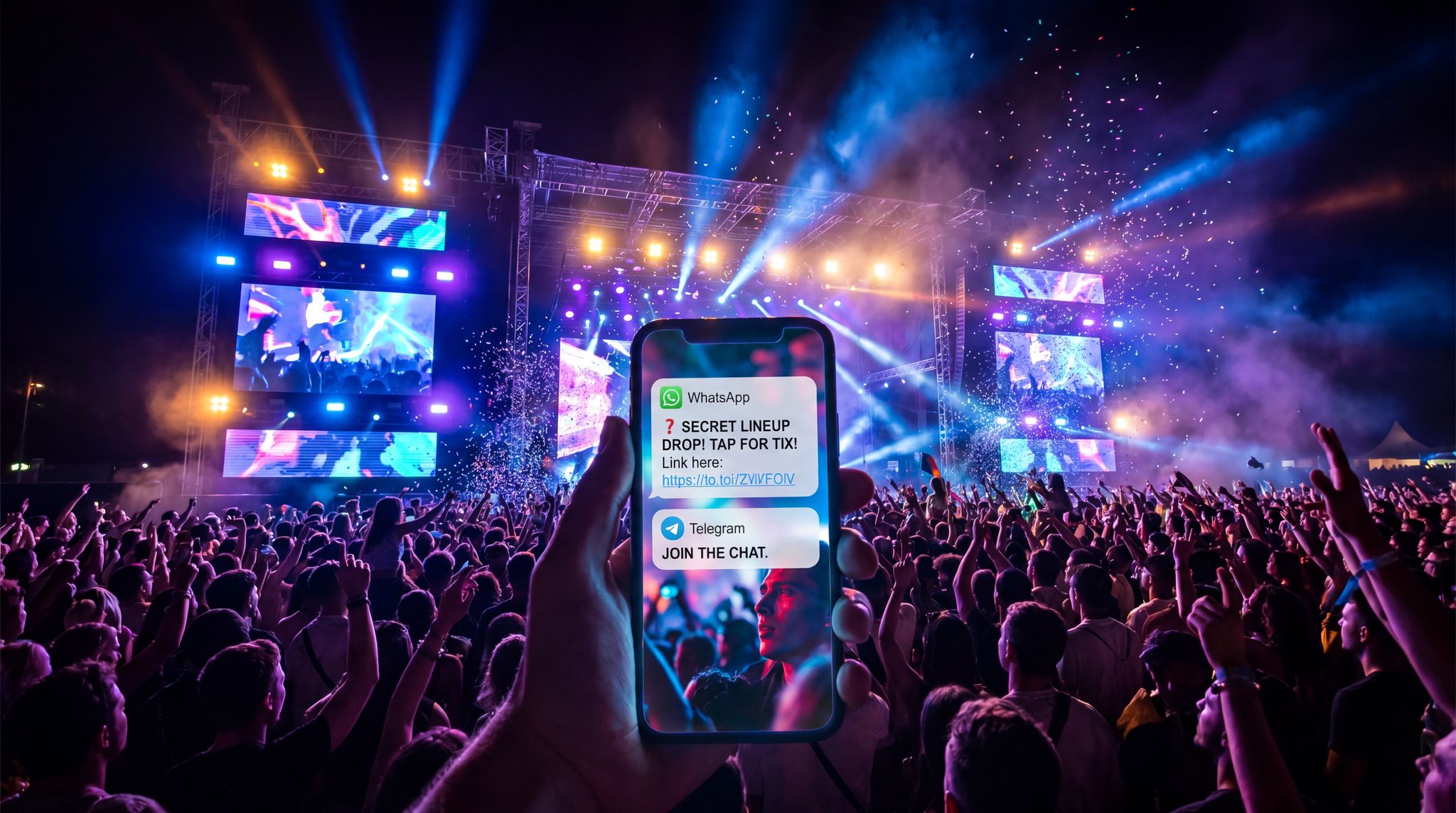
Beyond traditional SMS, there’s also the world of OTT messaging apps – WhatsApp, Facebook Messenger, Telegram, WeChat, etc. In some regions, these are even more popular than SMS. 2026 has seen rise of businesses using WhatsApp or Messenger to communicate with customers. If your event marketing collects WhatsApp numbers or uses Facebook’s messaging opt-in, you could send an abandoned cart reminder through those channels as well. For instance, a WhatsApp message format would be similar to SMS, maybe with a rich preview link.
Facebook Messenger also allows some level of automated messaging if a user has engaged with your page or initiated a chat (with the right permissions and using Messenger bots). For example, if the person chatted with your page and provided their email or started checkout via a chatbot flow, you could have a Messenger follow-up that pops up: “Hey, we saw you didn’t complete your ticket order for [Event]. Can I help you finish it? [Yes]/[No]”. If they click Yes, the bot might offer to take them to checkout or answer FAQs. This is more complex to set up but some events have successfully used chatbot reminders, especially tech conferences or events with a savvy audience.
Implementing a dedicated abandoned cart Facebook Messenger strategy offers a unique advantage: unparalleled open rates. While email inboxes are crowded, Messenger notifications cut through the noise, often boasting open rates above 80%. Event promoters can integrate their ticketing platform with tools like ManyChat or Chatfuel to automatically trigger these direct messages. When a fan leaves tickets behind, a conversational prompt—such as offering to answer questions about the venue or providing a quick link back to their reserved seats—can seamlessly guide them back to the checkout page without feeling overly promotional.
Emerging tech: Some advanced event platforms (or custom solutions) implement browser push notifications or email retargeting via programmatic means. Browser push notifications require the user to have opted in earlier, but if they did, a quick push saying “Your [Event] tickets await – complete purchase now” can pop up on their desktop or phone, which is hard to miss. Similarly, retargeting via email can also take form of Google Ads showing ads inside Gmail, though that’s more just another ad format.
The core idea is to reach the attendee on their preferred channel. In some countries, SMS might be less used but WhatsApp is king (e.g. much of Europe, India, Latin America). The Ticket Fairy team or promoter should identify which channels are culturally relevant. For example, in India, an abandoned cart WhatsApp message might outperform email by a mile. In China, WeChat would be key, etc. If your ticketing platform or CRM integrates with those (some CRMs now can send WhatsApp or Telegram messages), it’s worth exploring.
Personal Outreach for High-Value Carts
For big events or VIP customers, consider going old-school: a personal phone call or email from a human. This obviously isn’t feasible for everyone who abandons, but let’s say someone was about to buy a $5,000 VIP table package and abandoned – that’s worth picking up the phone. Many high-end venues and B2B event organizers have a policy that sales reps get notified of any incomplete orders above a certain value or specific category. A polite call along the lines of, “Hi, this is Alex from MegaFest. I noticed you started to book a VIP package for our festival and I just wanted to reach out and see if you had any questions or needed assistance.” can close deals. That personal touch shows you care about their business and can address any objections directly (maybe they were unsure about what the package includes – you can clarify and convince them on the call).
Even for mid-tier cases, a personal email from a team member can be effective. It could be a template but sent via a real email account: “Hello [Name], I’m with the [Event] team. We saw you added tickets for our event but didn’t get to finish checking out. I wanted to personally reach out and see if everything’s okay – sometimes technical glitches or unanswered questions can stand in the way, and we’d love to help if that’s the case. Feel free to reply directly if I can assist, or you can complete your order here: [link]. We really hope to see you at the event!” This sort of outreach, while manual, can convert a few extra attendees and generate goodwill. Even those who don’t buy might reply with feedback (“I was hesitant about the date/conflict or price”) which is useful info for you. And those who do buy often feel a stronger connection because someone cared enough to follow up.
Of course, scale appropriately – you can’t call 500 people for a small concert. But you might call 10 who almost bought the premium meet-and-greet tickets. For a conference, you might email all who abandoned a full-conference pass (which might be pricey) – perhaps offering to hop on a call if they have questions about the agenda, etc. This overlaps a bit with general sales follow-up rather than automated marketing, but it’s part of the holistic abandonment recovery toolkit, particularly in high-value or high-consideration ticket purchases (like luxury retreats, VIP tables, sponsorship packages, etc.).
Combining Channels Wisely
The magic happens when you orchestrate multiple channels to work together without overwhelming the customer. A possible integrated approach timeline might be:
– 1 hour: Automated Email #1 (reminder)
– 2 hours: SMS message (reminder with link)
– Day 1 evening: Facebook/Instagram retargeting ad starts showing
– 24 hours: Email #2 (urgency or info)
– 24–48 hours: Second wave of ads with perhaps new creative
– 48 hours: Possibly WhatsApp message or Messenger ping (if applicable)
– 72 hours: Email #3 (final call with incentive if used)
– Final day before event (if timing fits): SMS last reminder (especially if event is that night or next day – “It’s almost go-time!”)
This might sound like a lot, but remember not everyone is reached by every channel – some might ignore email but see the SMS, others might not read the text but notice the ad, etc. When coordinated well, these come off as helpful, well-timed prompts rather than a spam barrage. Each touchpoint should add a little value or new angle (not the exact same wording copy-pasted everywhere). Perhaps the email gives details, the SMS provides immediacy, the ad provides a visual reminder, etc. Collectively, they reinforce the message: we want you at this event, and it’s easy to complete your order.
Experienced marketers always monitor for any negative feedback during multi-channel campaigns (like if people reply “stop messaging me!” you should respect that and dial it back). But when done thoughtfully, multi-channel follow-ups significantly lift conversion rates. In fact, internal analyses often show that the overlap of channels yields the highest recovery – e.g. those who got both an email and saw an ad are more likely to convert than those who only got one or the other. It’s the gentle “surround sound” effect: wherever the potential attendee goes, there’s a polite reminder from your event guiding them toward completing that purchase, without them feeling harassed.
To execute this without losing your mind, rely on automation tools. Many email platforms also support SMS sending or integrate easily with Twilio for texting. Ticket Fairy’s marketing suite (for example) might handle both email and SMS triggers from the same abandonment data, ensuring consistency. Similarly, coordinate with your ad manager so they know the timeline of your emails – maybe ramp up budget on retargeting the same day an email drops, to hit them from two sides, then pause once they convert.
The bottom line is: don’t put all your eggs in one basket. Email alone might recover a good chunk, but combining email with ads and SMS can boost your recovered sales substantially. In an age where consumers are flooded with information, meeting them on multiple channels increases the chance your message gets through at the right moment. As one marketer quipped, “Our rule is: until that person either buys or explicitly says no, we will keep (respectfully) showing up wherever we can – in their inbox, their phone, their social feed – to remind them what they’re missing out on.” When done with tact, that persistence pays off in tickets sold.
Testing and Optimizing Your Recovery Strategy
A/B Test Your Follow-Up Campaigns
Great marketers never “set and forget” their campaigns – they continuously test, learn, and optimize. Abandoned cart recovery is no exception. Every audience and event is a bit different, so what works best for one may not for another. That’s why it’s important to employ A/B testing in your follow-up strategy to systematically identify the most effective tactics (see our deep dive on data-driven A/B testing for event marketing for general principles that apply here too).
Here are some elements you should consider testing:
– Email subject lines: Try different approaches – one version urgent (“Don’t lose your tickets for X”), another friendly (“Forgot something? Your X tickets await”), another personalized with name or detail. Measure open rates and subsequent conversion rates. For example, you might find a 5% higher open rate with a personal tone subject, which leads to more sales. Keep tests running until statistically significant or you see a clear winner.
– Send times: Experiment with exactly when you send that first or second email. Does 1 hour after work better than 30 minutes after? Does sending the second email at exactly 24 hours vs. 20 hours matter? Some tools allow send-time optimization but you can manually A/B by splitting abandoners into two schedules. Maybe your audience responds more in the evening vs morning – testing reveals that.
– Email content & design: Try a plain-text style personal email vs. a designed template with images. Some audiences might respond to the simple, human-looking email (“from John at FestivalCo”), while others might need the event imagery to get excited. You can also test including an incentive vs not including it in an email to see if it actually lifts conversion or just gives away margin unnecessarily. One approach is to hold back an incentive as a control group to see actual lift.
– Ad creatives and copy: A/B test different retargeting ad visuals or headlines. For instance, test an ad that emphasizes urgency (“Last Chance!”) vs. one that emphasizes community (“Your friends are going, join them!”). See which gets higher click-through and conversion. Platforms like Facebook allow split testing on ads fairly easily. Also test different formats – maybe a short video ad vs a static image for retargeting. The data might show one clearly outperforms (e.g. video might grab more attention in some cases, or maybe a static image with bold text does better). Optimize budget toward the winner.
– Incentive types or values: If you decide to use incentives, test what kind and how much. Perhaps send half the abandoners a 10% off, and half a “free upgrade” offer, and see which group converts more and which yields better net revenue. Or test 5% vs 15% to gauge sensitivity (you might discover 5% off is too small to matter but 15% is overkill, and maybe 10% is the sweet spot). Always calculate the profitability – an offer that yields slightly fewer conversions but higher net revenue per sale might be preferable to one that converts more but with heavy discounts.
– Number of follow-ups: Test how many touchpoints are optimal. For example, compare a sequence of 2 emails vs 3 emails. Do you really gain a lot from that third email or is it mostly the same people who would’ve bought on the second? Maybe for one event type, two reminders sufficed, whereas for a different audience, a third with a new message (like an incentive or fear-of-missing-out) captures an extra 5%. Also monitor if more emails cause any increase in unsubscribes or complaints, to ensure you’re not crossing the line. Generally, two to three is fine, but testing confirms your footing.
When running these tests, track meaningful metrics: ultimately conversions (completed ticket purchases) are king. Also keep an eye on intermediate metrics: open rate, click rate for emails; CTR and conversion for ads; redemption rate for incentives offered, etc. It’s good to make data-driven decisions. For instance, you might find Email #2 actually generates more conversions than Email #1 (maybe because it had urgency and more people acted on that). That could suggest you incorporate urgency a bit earlier, or ensure not to skip the second email thinking first is enough.
One note: ensure your sample sizes are sufficient for testing. If you only have 50 abandoned carts, A/B testing might not reach significance easily – in such cases, lean on general best practices but still track what happens. If you have hundreds or thousands, then you can get more scientific. Also, change one variable at a time for clarity. Like, don’t send two totally different emails at different times – then you won’t know if it was the send time or the content making the difference. Isolate subject vs content vs send time, etc., for clean tests.
By continually testing and tweaking, you’ll refine your abandoned cart recovery to a finely tuned machine. Campaign veterans treat each major event or season as a chance to iterate: maybe last year your email wording was so-so; this year you try a more personalized approach and see conversion improve from, say, 3% to 5%. That extra 2 percentage points recovered could mean dozens more tickets sold – significant for your bottom line. Testing is how you get those incremental gains that add up to big results.
Implementing rigorous A/B testing for cart recovery campaigns also provides the hard data needed to justify your marketing spend. By comparing a control group (users who receive no follow-up) against your active recovery flows, you can accurately calculate the true financial impact of your efforts. This process of measuring uplift from abandoned cart recovery calls incremental revenue into sharp focus, proving to stakeholders exactly how much extra cash your automated emails, retargeting ads, and personal outreach are adding to the event’s bottom line.
Monitoring Metrics and KPIs
To know if your recovery efforts are truly effective, you need to closely monitor key metrics and performance indicators. Here are the main ones to track:
– Cart Abandonment Rate: First, measure your baseline abandonment. If 1,000 people start checkout and 300 finish, your abandonment rate is 70%. Track this over time. If improvements to your site or process drop it to 65%, that’s fewer people to chase (a win!). Conversely, if you see abandonment spiking (maybe after a new checkout design or price increase), address it quickly. This metric is often found in your ticketing platform analytics or can be derived from Google Analytics funnel data.
– Recovery Rate: Of those who abandoned, what percent did you eventually convert via follow-ups? This is a crucial KPI to gauge the effectiveness of your recovery strategy. For example, if 500 people abandoned, and through emails/ads you pulled back 50 of them to purchase, that’s a 10% recovery rate. Thanks to better tools, top event marketers often recover 10–20% of abandoners. Track this by tagging or segmenting those who came from recovery campaigns. Many will click through directly from an email or ad with tracking, but some might return to the site later on their own. To capture that, use attribution windows (e.g. anyone who purchased within X days of an abandon and got our follow-ups might count as recovered). As an approximation, you might also simply compare how many extra sales you got after implementing follow-ups vs previously when you didn’t.
– Email Performance: Monitor open rates, click-through rates (CTR), and conversion rates for each email in your sequence. A high open but low click could mean your email content or CTA isn’t compelling after they open, or perhaps many already bought via another channel. A low open on one subject line might signal it’s not resonating – try a different subject. Track unsubscribes too; a spike in unsubscribes on an abandoned cart email could indicate frequency issues or poor targeting (though usually these emails have low unsubscribes since they’re transactional in nature). Ideally, each email shows some conversion. If your second or third email has near-zero conversions, it might need a different approach (or maybe your first did the heavy lifting and the rest are redundant – data will tell you).
– Ad Performance: Keep an eye on your retargeting ad CTR, conversion rate, and cost per conversion. We discussed this earlier – ensure your analytics linking ad clicks to purchases. If your retargeting ads are, say, getting a 1% CTR (which is solid for display) and converting 8% of clickers, and you’re paying $0.50 a click, you can compute cost per acquisition. In this example: 100 impressions -> 1 click ($0.50) -> 0.08 conversions on average, multiply that to per conversion maybe ~$6.25 cost. With $50 tickets, that’s okay. But if an ad isn’t pulling its weight (e.g. CTR 0.2% and cost per conversion $30 on a $40 ticket), try different creative or cut it if email is cheaper.
– Revenue Recovered: Ultimately sum up how much revenue your abandoned cart recovery efforts are bringing in. If you recovered 50 tickets at an average $80, that’s $4,000 saved that might have been lost. Compare that to what you spent (maybe $100 on ads and a bit of time on emails). Demonstrating this recovered revenue is important for justifying your marketing spend and strategy internally. It’s a concrete number often reported upwards: “Our cart recovery program generated an additional 8% in ticket sales for the event, worth $X.”
– ROI / ROAS: Calculate return on investment or ad spend specifically for the recovery tactics. For example, if you dedicated $500 total (ads + SMS costs) to abandoned cart recovery and it yielded $5,000 in sales, that’s a 10x ROI. Even including the fact some channels like email are virtually free (aside from your time), it’s usually a very efficient spend. If any channel isn’t ROI-positive, retool it. But typically, abandoned cart follow-ups are among the highest ROI tactics because of the audience’s pre-qualified interest.
– Customer Feedback: While not as quantifiable, pay attention to any direct feedback. Did anyone reply to your follow-ups with commentary? (e.g. “Thanks for the reminder, I had an issue with my card but will try now” – great, or “I decided not to go because X reason” – gives insight into a barrier you might address in messaging or future planning.) If you have a post-event survey or social chatter, see if anyone mentions the purchase process or the reminder nudges. Happy customers might say “So glad I got that email reminding me to buy – I almost missed the best show of the year!” That’s anecdotal validation.
Consider compiling these metrics into a simple dashboard or report after each event’s campaign, to evaluate performance and learn. For instance:
| Metric | Value (Event A) | Value (Event B) |
|---|---|---|
| Cart Abandonment Rate | 68% | 72% |
| Recovery Rate (of abandoners) | 15% | 9% |
| Recovery Emails Open/Click Rate | 48% / 12% | 35% / 8% |
| SMS Click Rate | 25% | (not used) |
| Retarget Ad CTR / Conv Rate | 1.0% / 10% | 0.6% / 7% |
| Total Recovered Tickets | 120 | 45 |
| Est. Revenue Recovered | $9,600 | $3,150 |
| ROI on Recovery Efforts | 12x | 7x |
Such a table (for internal use) highlights where you did well and where to improve. Maybe Event B had a lower recovery rate – why? Perhaps the audience was less responsive or the campaign not as strong; you’d dig in and refine for next time. If one method shines (SMS had huge engagement in Event A), make it a staple going forward.
Continuous Improvement and Learning
The digital landscape, consumer behavior, and even platforms algorithm rules are always evolving. That means what works today might not work as well next year, and vice versa. Approach abandoned cart recovery as an ongoing process of learning and optimization:
– Stay updated on changes with your marketing tools. For example, if email providers change how they display emails or filter promotions, adapt your strategies (e.g. in 2026 some marketers are adjusting because AI-driven email categorization is better at sorting marketing emails – which means compelling subject lines and content matter more to reach primary inbox). If privacy changes on iOS/Android limit some tracking for retargeting, you might lean more on channels like SMS or contextual targeting in ads.
– Learn from each event campaign. Did shortening your emails boost conversion? Did offering a smaller discount still yield nearly the same recovery? Apply those insights to the next event. Build a knowledge base or playbook that notes “For club events, text messages seem crucial; for corporate events, personal calls are worth it,” etc.
– Watch industry trends and benchmarks. Read case studies or blogs (like Ticket Fairy’s promoter blog or Event Marketer reports) on what other event marketers are doing for cart recovery. There might be new ideas – e.g. maybe someone had success with an interactive element, like a poll (“What held you back? [Price] [Schedule] [Other]”) in a follow-up, which not only engages the user but gives feedback. You could try innovative approaches if standard ones plateau.
– Keep an eye on your competition or comparable events. Are they employing any creative tactics? (Perhaps you got an abandoned cart email from another festival you browsed – what did you think of it? Use those experiences to critique and improve your own.) However, don’t copy blindly – test to ensure it works for your audience.
– Always be thinking about the attendee journey holistically. Abandoned cart recovery is one piece of the puzzle that connects discovery to purchase to attendance. Align it with your overall marketing. For instance, coordinate with your pre-event comms: if you send a big FOMO “only 100 tickets left” blast on social, tie that into your follow-ups (“As we mentioned on Instagram, tickets are almost gone…”). Check our guide on mapping the whole attendee journey and aligning touchpoints for a broader strategy – cart recovery should feel like a natural continuation of the journey, not an isolated tactic.
– Balance automation with a human touch. Automation is fantastic for scale and speed (you’ll never manually replicate the precision of an email that goes out exactly 60 minutes after abandon). But don’t lose sight of the human element – periodically look at some individual cases. Read through the copy as if you were a customer. Is it coming across warm and helpful? Does the timing feel right? This qualitative check can reveal things metrics don’t – for instance, noticing that your email might sound too impersonal or that the SMS link didn’t preview correctly on certain phones. Quality assurance matters.
Veteran promoters often have a mantra: Always Be Optimizing. They treat recovery campaigns as living programs that can be tweaked and improved continually. Some even run small experiments each time (like changing one line in the email) just to keep learning. Over a few years, this iterative approach can dramatically increase your effectiveness. What started as a single generic reminder email might evolve into a sophisticated, multi-channel, personalized outreach system that recovers dozens more sales per event. And in a world where every ticket counts, that can be the difference between just meeting your goal and blowing past it.
Frequently Asked Questions About Cart Recovery
How should event organizers approach A/B testing for cart recovery campaigns?
To maximize ticket sales, promoters should isolate one variable at a time—such as subject lines, incentive values, or send times. Running structured split tests on your follow-up sequences helps identify which messaging resonates best with hesitant buyers, ultimately improving your overall conversion rates and ensuring your marketing budget is deployed efficiently.
What is causing the email abandonment triggered campaigns performance decline in 2026?
Stricter spam filters, AI-driven inbox categorization, and general consumer fatigue are reducing traditional open rates. To combat this trend, event marketers must prioritize hyper-personalized content, maintain excellent sender reputation, and diversify their approach by integrating SMS and social retargeting alongside standard inbox reminders.
How do you accurately measure uplift from abandoned cart recovery?
Measuring uplift requires comparing a control group (users who receive no follow-up) against your active recovery flows. This isolates the incremental revenue directly generated by your automated emails and retargeting efforts, proving the true ROI of your marketing stack and justifying future budget allocations.
What features define the best email platforms for abandoned cart recovery?
Top-tier solutions for event promoters seamlessly integrate with ticketing systems to utilize real-time abandoned checkout triggers. They should offer dynamic content insertion, automated multi-channel workflows, and robust analytics to track recovered ticket revenue accurately without requiring complex custom coding.
How do real-time checkout triggers enhance cross-channel retargeting?
Real-time triggers capture buyer intent the exact moment a cart is left behind. By instantly routing this data to both your email service provider and your digital advertising networks, event promoters can launch synchronized campaigns. This means a potential attendee receives a cohesive message across their inbox and social feeds, significantly increasing the likelihood of recovering the lost ticket sale.
How do dynamic discount strategies impact cart recovery effectiveness?
Implementing dynamic discount strategies boosts cart recovery effectiveness by aligning the incentive with real-time event demand and inventory levels. Instead of offering a flat coupon to every hesitant buyer, event organizers can program their ticketing platforms to offer larger discounts for slow-moving ticket tiers and smaller (or non-monetary) perks for nearly sold-out sections. This targeted, variable approach maximizes recovered ticket revenue while strictly protecting the promoter’s profit margins.
How effective is an abandoned cart Facebook Messenger strategy for event ticketing?
Deploying an abandoned cart Facebook Messenger sequence is highly effective, often yielding open rates that significantly outperform traditional email. Because the notification appears directly on a fan’s mobile device in an app they use for personal communication, it captures immediate attention. For event organizers, integrating a chatbot to send a helpful, conversational reminder—such as offering to hold their selected seats or answering quick event FAQs—can rapidly convert warm leads back into completed ticket sales.