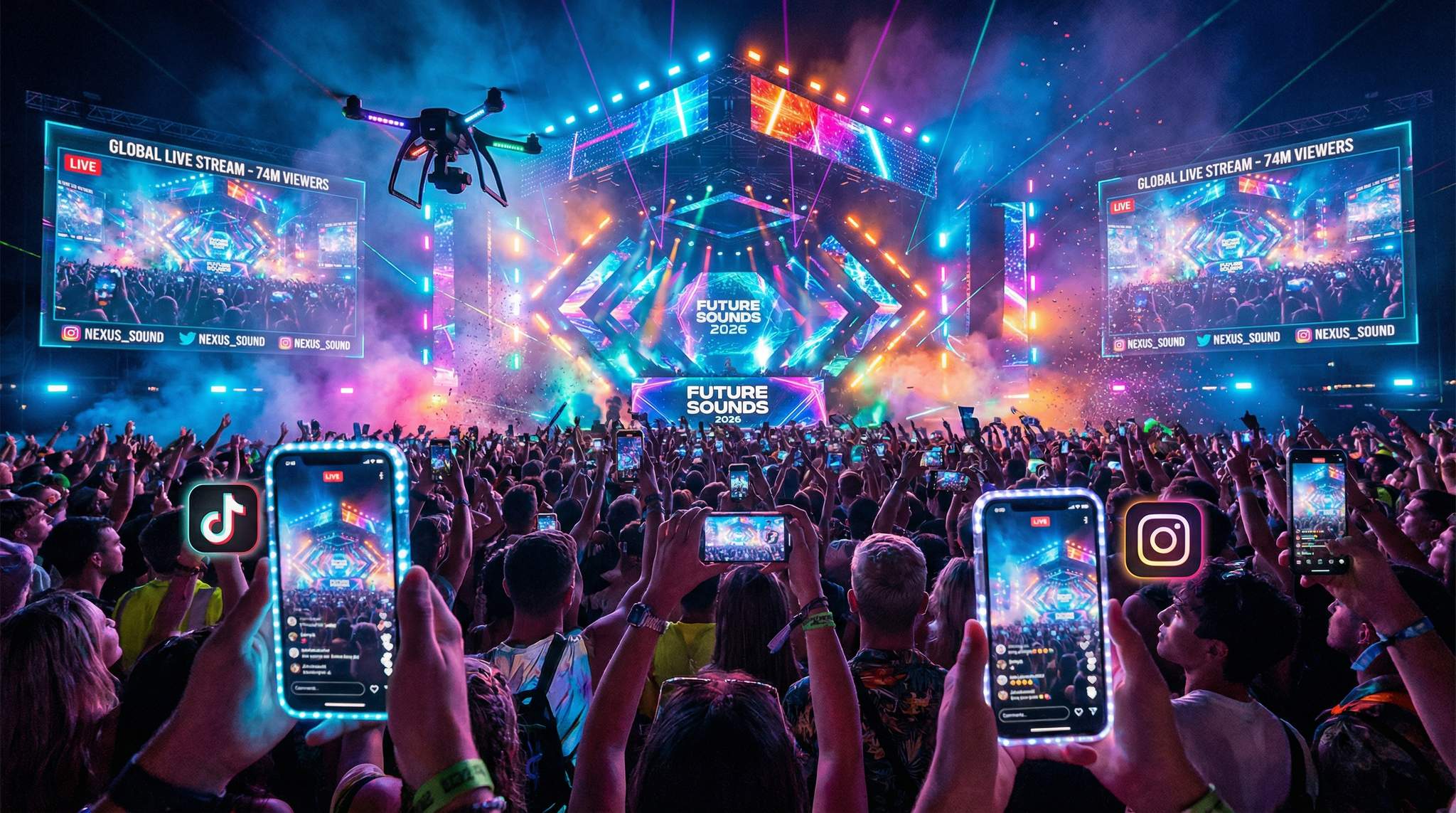
Picture this: it’s 2026, and the live music industry is undergoing a remarkable transformation. The post-pandemic concert boom may have leveled off, but fans are returning with higher expectations than ever. Traditional shows with basic stages and speakers are no longer enough – today’s audiences crave immersive, interactive experiences. The numbers tell the story: Live Nation reported that 151 million fans attended its events in 2024 – an all-time high – yet those fans are more selective, chasing unique and meaningful moments. In fact, analyses of shifting festival attendance patterns in 2024 showed that simply hosting a big lineup isn’t a guarantee by itself; attendees are gravitating toward events that offer something special in experience and value.
As we look at the broader landscape of concerts in 2026, it is clear that macro concert trends are shifting from purely transactional ticket sales to holistic, multi-sensory journeys. Promoters and venue operators must recognize that today’s attendees evaluate an event based on its end-to-end value. Tracking these evolving concert trends—whether that means integrating advanced automation, exploring new haptic feedback technologies for fans, or simply rethinking site layouts—is essential for staying competitive in a crowded market.
To capitalize on these shifts, promoters must look beyond surface-level changes and examine the core live music industry trends driving ticket sales today. The most successful live music trends of 2026 are rooted in operational agility—meaning that whether you are routing a multi-city run or programming a boutique weekender, adapting to new fan behaviors is non-negotiable. Understanding these overarching live music trends allows organizers to allocate budgets more effectively, prioritizing high-impact production elements over outdated marketing tactics.
Event organizers are responding by leveraging cutting-edge solutions and creative strategies to deliver unforgettable moments. From virtual concerts that beam global superstars into living rooms to festivals that run on 100% renewable energy, the trends shaping live music events in 2026 blend technology, sustainability, personalization, safety, and brand-new forms of engagement. Let’s dive into the biggest live music event trends of 2026 – and see how you can adapt to stay ahead of the curve.
Go Cashless With RFID Technology
Enable contactless payments, faster entry, and real-time spending analytics with RFID wristbands and NFC-enabled ticketing for your events.
Live Music Event Trends in 2026: The Rise of Virtual Concert Technology

The evolution of virtual concerts has fundamentally changed how audiences engage with live music. What began as stop-gap livestreams a few years ago has grown into full-blown virtual experiences. In 2026, streaming platforms and virtual reality (VR) and augmented reality (AR) technologies are fully integrated into concert production, creating immersive environments that draw fans into the performance like never before. With VR, attendees can enjoy 360-degree views of a show from the comfort of their homes, experiencing the stage and crowd as if they were actually there. Meanwhile, AR is enhancing physical concerts with interactive visual effects that respond to the music in real time, transforming stages into dynamic, otherworldly art pieces visible through fans’ devices or AR glasses. This blend of tech not only broadens accessibility but also deepens the emotional connection between artists and fans across the globe.
Ready to Sell Tickets?
Create professional event pages with built-in payment processing, marketing tools, and real-time analytics.
- VR Concert Worlds: Virtual concerts have evolved beyond static livestreams into interactive 3D spaces. Fans at home can don a VR headset and walk around a virtual venue, choose their viewing angle onstage or in the crowd, and even interact with other attendees’ avatars – all from their living room. The energy of a live crowd is simulated through cheers and chats, making remote viewers feel truly present at the show. For example, late last year a major Fortnite in-game concert drew 14.3 million concurrent players into a shared virtual performance, underlining the massive reach of these experiences.
- AR-Enhanced Live Shows: Augmented reality at physical concerts is turning venues into blended reality spaces. Imagine watching your favorite artist perform in a stadium while holding up your phone (or AR glasses) to see mind-bending 3D visuals – swarms of neon butterflies, floating song lyrics, or fantasy landscapes – swirling around the stage in sync with the music. These effects, visible through AR, wow the audience without any physical set pieces. Festivals have started offering AR mobile apps that overlay graphics on the stage or around the venue, creating a layer of digital artistry on top of the live show.
This fusion of physical and digital concert experiences is redefining what “live” music means. Organizers are extending shows to fans who might never set foot in the venue, unlocking new creative possibilities. (For a deeper dive into how immersive tech is shaping events, check out our guide on the future of event technology through immersive experiences.)
When analyzing broader live events and experiential entertainment trends, the surging popularity of the VR concert experience is impossible to ignore. Virtual reality music events have transitioned from niche promotional experiments to primary revenue drivers. For promoters and venue operators, understanding the trajectory of VR concerts and virtual reality music experiences is crucial; their popularity in 2026 is fueled by audiences demanding highly interactive, gamified environments rather than passive video broadcasts. As you map out your strategy for concerts in 2026, integrating these immersive digital layers can significantly expand your festival’s footprint and unlock new global ticketing tiers.
The Music Industry’s Shift to Virtual Concerts
The music industry’s embrace of virtual concerts represents a profound shift in how artists and promoters think about live performance. Initially accelerated by necessity during the pandemic, this trend has matured into a permanent new channel for live music. Several forces are driving the shift: advances in affordable VR/AR tech, changing consumer behavior (many fans are now comfortable with virtual environments), and the quest for new revenue streams in an increasingly competitive concert market.
Turn Fans Into Your Marketing Team
Ticket Fairy's built-in referral rewards system incentivizes attendees to share your event, delivering 15-25% sales boosts and 30x ROI vs paid ads.
Artists have discovered that virtual shows can complement, not cannibalize, physical tours. For instance, a pop star might sell out arenas worldwide and then host a virtual encore concert online for global fans who couldn’t attend in person. These online events can attract huge audiences without geographic limits – often racking up attendance numbers impossible in a physical venue. Major labels and event platforms are investing heavily in virtual concert technology as well, seeing it as the next frontier of live entertainment. We’ve also seen new collaborations emerge: tech companies, gaming platforms, and music promoters are teaming up to produce high-profile virtual gigs (think of the groundbreaking in-game performances by artists on Fortnite or Roblox that garnered tens of millions of viewers). The promise of worldwide reach is undeniable.
The surging popularity of the VR concert experience and virtual reality music events in 2026 is also driven by rapid advancements in hardware. We are seeing the introduction of amazing haptics and automation that allow remote fans to physically feel the bass drops and crowd vibrations from their living rooms. For festival producers, this means virtual reality music experiences are no longer just visual broadcasts; they are highly tactile, premium ticketing tiers that command real value.
Grow Your Events
Leverage referral marketing, social sharing incentives, and audience insights to sell more tickets.
Crucially, virtual concerts unlock new creative and commercial opportunities. Artists can experiment with visuals and narratives that would be impractical or costly on a real stage – floating in zero-gravity, shapeshifting avatars, infinite props – enhancing the spectacle. At the same time, virtual events open up additional monetization: selling virtual tickets and VIP upgrades, exclusive digital merchandise or NFTs, sponsorship of virtual stages, and more. A 2025 market analysis projected the global virtual entertainment event market to triple in size by 2033, reflecting confidence in these new revenue streams. While nothing replaces the electricity of a packed arena, industry leaders acknowledge that virtual concerts are now a pillar of the live music ecosystem, allowing artists and fans to connect in ways that were science fiction just a decade ago. (Of course, not every flashy tech experiment pays off – savvy organizers focus on innovations that truly enhance the fan experience, rather than tech gimmicks for their own sake; see our analysis of 2026 festival tech trends that actually deliver value for insights on what works and what doesn’t.)
The Music Industry’s Shift to Virtual Concerts
The music industry’s embrace of virtual concerts represents a profound shift in how artists and promoters think about live performance. Initially accelerated by necessity during the pandemic, this trend has matured into a permanent new channel for live music. Several forces are driving the shift: advances in affordable VR/AR tech, changing consumer behavior (many fans are now comfortable with virtual environments), and the quest for new revenue streams in an increasingly competitive concert market.
Artists have discovered that virtual shows can complement, not cannibalize, physical tours. For instance, a pop star might sell out arenas worldwide and then host a virtual encore concert online for global fans who couldn’t attend in person. These online events can attract huge audiences without geographic limits – often racking up attendance numbers impossible in a physical venue. Major labels and event platforms are investing heavily in virtual concert technology as well, seeing it as the next frontier of live entertainment. We’ve also seen new collaborations emerge: tech companies, gaming platforms, and music promoters are teaming up to produce high-profile virtual gigs (think of the groundbreaking in-game performances by artists on Fortnite or Roblox that garnered tens of millions of viewers). The promise of worldwide reach is undeniable.
The surging popularity of the VR concert experience and virtual reality music events in 2026 is also driven by rapid advancements in hardware. We are seeing the introduction of amazing haptics and automation that allow remote fans to physically feel the bass drops and crowd vibrations from their living rooms. For festival producers, this means virtual reality music experiences are no longer just visual broadcasts; they are highly tactile, premium ticketing tiers that command real value.
Data-Driven Event Marketing
Track ticket sales, demographics, marketing ROI, and social reach in real time. Exportable reports give you the insights to make smarter decisions.
Crucially, virtual concerts unlock new creative and commercial opportunities. Artists can experiment with visuals and narratives that would be impractical or costly on a real stage – floating in zero-gravity, shapeshifting avatars, infinite props – enhancing the spectacle. At the same time, virtual events open up additional monetization: selling virtual tickets and VIP upgrades, exclusive digital merchandise or NFTs, sponsorship of virtual stages, and more. A 2025 market analysis projected the global virtual entertainment event market to triple in size by 2033, reflecting confidence in these new revenue streams. While nothing replaces the electricity of a packed arena, industry leaders acknowledge that virtual concerts are now a pillar of the live music ecosystem, allowing artists and fans to connect in ways that were science fiction just a decade ago. (Of course, not every flashy tech experiment pays off – savvy organizers focus on innovations that truly enhance the fan experience, rather than tech gimmicks for their own sake; see our analysis of 2026 festival tech trends that actually deliver value for insights on what works and what doesn’t.)
To fully capitalize on the surging popularity of VR concerts and virtual reality music experiences in 2026, event organizers must treat these digital environments as premium, standalone products rather than mere marketing add-ons. The demand for these immersive shows is skyrocketing because fans crave interactive, gamified elements that traditional livestreams lack. Promoters who invest in high-fidelity 3D world-building and seamless cross-platform integration are seeing significant ROI, effectively turning remote viewers into highly engaged, monetizable communities.
Assessing the Popularity of VR Concerts and Virtual Reality Music Experiences in 2025
For promoters evaluating their digital budgets, understanding the surging popularity of VR concerts and virtual reality music experiences in 2025 provides a crucial baseline for 2026 planning. Throughout 2025, virtual reality concerts transitioned from experimental marketing activations into highly profitable, standalone ticketing tiers. Organizers discovered that fans were willing to pay premium prices for exclusive digital access, provided the production quality matched the hype. As you map out virtual concerts for 2025 and beyond, the data clearly shows that investing in high-fidelity 3D environments and seamless cross-platform streaming is no longer optional. By analyzing the success of these digital events, strategies for virtual concerts 2026 can be refined to include gamified VIP meet-and-greets and interactive digital merchandise, ensuring your event captures a global audience while maximizing digital revenue streams.
Key Aspects of Virtual Concerts
Virtual concerts come with their own set of key features and considerations that set them apart from traditional shows:
- Immersive Experience: A great virtual concert isn’t just a video stream – it’s an immersive experience that combines music, stunning visuals, and interactive elements. The goal is to make fans feel like active participants rather than passive viewers. High-end VR concerts, for example, let attendees roam a digital concert space, dance “next to” holograms of other fans, and even affect the show (imagine virtual glowsticks whose light intensity changes with the crowd’s energy). This immersion creates a unique emotional connection, as fans feel inside the performance.
- Global Reach: Virtual concerts can reach a truly global audience in real time. There are no capacity limits or travel requirements – a fan in São Paulo, another in Sydney, and another in a small town in Kansas can all attend the same show together. This global reach means artists can connect with far-flung fanbases and even grow new ones without the logistics of touring every country. For event organizers, it’s a chance to expand your event across the world (as we cover in our guide to expanding your music event globally). It’s not unusual now for a virtual concert to have viewers from 100+ countries. This inclusivity can also boost an artist’s profile worldwide and create a shared international fan experience that physical tours alone can’t match.
- New Revenue Streams: Virtual concerts unlock revenue streams that go beyond selling tickets at the door. Virtual ticket sales can number in the hundreds of thousands for a single online show, generating significant income. There’s also potential for in-platform purchases – for example, an artist might sell limited-edition digital merchandise or special avatar skins during a concert in a game world. Sponsorship opportunities are huge as well: brands might sponsor a virtual stage or lobby since they know the event has a broad online reach. Some platforms allow tipping or paid shout-outs, where fans pay to have a message displayed. These avenues, alongside traditional merch and advertising, mean a well-executed virtual show can be quite lucrative for artists and promoters.
- Increased Accessibility: Perhaps one of the greatest benefits, virtual concerts are highly accessible. Fans who can’t attend live shows due to geographic location, cost, physical disabilities, or other limitations can still join the experience. A teenager without the means to travel to a big festival can still see their favorite DJ’s set in VR. A long-time fan with mobility challenges can enjoy a rock concert from home without discomfort. This democratization of live music builds good will and inclusivity. It also helps artists engage demographics that might not appear at physical shows (whether due to age, health, or distance). In many ways, virtual concerts are bringing live music to people who were always fans but were excluded by circumstances previously.
To illustrate how virtual and physical concerts differ, here’s a quick comparison of key factors:
| Aspect | Traditional Live Concerts | Virtual Concerts (VR/Online) |
|---|---|---|
| Audience Size | Limited by venue capacity (hundreds or tens of thousands max). Often local or those willing to travel. | Effectively unlimited global audience – thousands to millions can join online from anywhere. |
| Geographic Reach | Location-bound; fans must travel to the venue. | Worldwide reach; fans attend remotely from any country. |
| Immersion | Physical crowd energy, real venue atmosphere, direct artist interaction (in-person vibes). | 360° views, VR avatar interactions, digital effects; can simulate presence but lacks physical collective energy. |
| Production Needs | Stage, sound system, lighting rigs, on-site crew, logistics for artist and attendees (security, concessions, etc.). | High-quality audio/video streaming, VR environment design or game engine development, strong internet infrastructure, moderation of virtual spaces. |
| Revenue Streams | Ticket sales, on-site merch/food & beverage sales, sponsorships (physical signage, booths). | Virtual ticket sales, digital merch/skins/NFTs, sponsorships (virtual billboards, branded interactive experiences), possibly microtransactions/tipping. |
| Accessibility | Requires physical presence; limited by travel, cost, disabilities, and location. | Highly accessible; anyone with internet can attend. Great for those unable to travel or afford in-person concerts. |
Pro Tip: If you’re planning to host a virtual concert, prioritize top-notch audio and video production. Fans might forgive simpler staging or fewer camera angles in a VR show, but they won’t forgive laggy streams or poor sound quality. Do a full tech rehearsal, invest in high-bitrate streaming and clear audio mixing, and have backup systems ready – technical polish is what makes a virtual experience feel professional and immersive.
Music Production for Virtual Concerts
Producing music for a virtual concert requires a different approach than a traditional live gig. Here are some key considerations for getting it right:
- Sound Quality: High-fidelity sound is essential for virtual shows. In an arena, fans will forgive some muddiness or live imperfections because of the atmosphere. Online, the audio feed is the atmosphere. Organizers must pay careful attention to audio production and mixing specifically for broadcast – often using studio-quality mixing desks and sound engineers who specialize in streaming. Many virtual concerts now stream in stereo or even surround sound (some platforms support Dolby Atmos or spatial audio), so fans with good headphones or home setups get a rich, immersive soundscape. Every instrument and vocal needs to be well-balanced, and any latency between audio and video must be minimized. The bottom line: treat the virtual concert audio like a recording session and a live show simultaneously.
- Visuals: In a virtual concert, visuals carry huge weight. This includes everything from the video feed quality to any computer-generated imagery. Event organizers should invest in high-definition video cameras (or game engine graphics if the concert is fully virtual in a platform like Roblox or the metaverse) and creative visual effects. Lighting and special effects that wow an in-person crowd might not translate through a screen, so producers often add digital effects in post-production or real-time overlays. For VR shows, entire virtual stages and fantasy landscapes can be built – the artist might perform from a green screen studio which is then transformed into, say, a floating stage in space for the viewer. The pop group ABBA has even built a dedicated virtual concert arena in London for their “Voyage” avatar show, where digital avatars perform with a real light show to a live audience. That hybrid production has welcomed 3.5 million attendees since 2022, illustrating how far visual tech can go. Whether it’s creative camera angles, on-screen animations, or full 3D environments, virtual concert visuals should be striking and aligned with the artist’s brand.
- Interactive Elements: A major advantage of virtual concerts is the ability to include the audience in novel ways. Live chat streams during concerts let fans share excitement (and artists can even respond or have moderators call out comments). Some platforms enable live polls – for instance, viewers might vote on one of two songs for the artist to play next, creating a choose-your-adventure setlist. Virtual meet-and-greets can be integrated, where certain ticket holders jump into a private video chat with the artist after the show. We’re also seeing experiments with multi-camera angle selection (fans can switch between stage view, crowd view, backstage cam, etc.), and even interactive mini-games or virtual merch booths that fans can explore before the show starts. All these interactive touches keep remote fans engaged. The key is to ensure they’re intuitive – clear on-screen prompts or a host guiding the experience can help. By making the event two-way, virtual concerts differentiate themselves from passive TV broadcasts.
Electronic Dance Music in Virtual Concerts
It’s worth noting that electronic dance music (EDM) has been particularly well-suited to the virtual concert arena. EDM shows already thrive on big visuals, technology, and a sense of community, which translate nicely into online formats. Here are some EDM-specific considerations:
- Beatmatching & Audio Sync: In a live club or festival, a DJ’s beatmatching (aligning beats between tracks) happens organically over massive speakers. In a virtual set, maintaining that seamless flow is just as critical – but latency can be a enemy. EDM producers doing virtual shows ensure their software and streaming setup have ultra-low latency so that audio and any visualizer effects stay perfectly in sync with the BPM. Many pre-record certain elements of the mix in lossless quality to avoid any glitch that could throw off the rhythm. When done right, the result is a smooth, continuous mix that feels just as energetic as an in-person rave.
- Visual Effects: EDM is known for jaw-dropping visual productions – lasers, LED walls, pyrotechnics – and virtual EDM concerts have taken this to the next level. Digital festivals can have physics-defying light shows: neon geometric shapes exploding to the beat, virtual dancers or avatars appearing and disappearing, even full fictional worlds built around the music. One famous example was DJ Marshmello’s virtual concert inside Fortnite back in 2019, which attracted over 10 million players live. Fans loved the surreal stage design and cartoonish fireworks synchronized to the drops. In VR or game-based concerts, the “sky” can literally be the limit for EDM visuals. Traditional festivals have started borrowing these ideas too, using AR to let fans see extra visuals via apps during DJ sets.
- Interactive Crowd Elements: EDM culture values crowd interaction – think of fans shuffling, cheering on the drop, holding up totems. Virtual EDM events try to capture that. Some live-streamed DJ sets have enabled crowd voting features so viewers can suggest the next remix or vote for an encore track. Others display a mosaic of fans dancing in their living rooms via webcam on a big screen, which the DJ can see to feed off the vibe. There have been instances of live remixing where a DJ takes suggestions from the chat in real time (for example, tweaking a beat or incorporating a meme sound that fans mention) – essentially letting the online crowd influence the mix. These interactive twists keep the communal spirit of EDM alive, even when everyone is physically apart. It’s not unusual for virtual festival-goers to coordinate in chat to all turn their smart lights green on the drop, or share short video loops of their at-home dance party during the stream. EDM fans are tech-savvy, so this genre will likely keep pioneering new virtual concert ideas that other genres adopt later.
To further amplify these digital experiences, forward-thinking promoters are leveraging internet culture to boost the popularity of their 2026 events. By collaborating with virtual influencers, integrating viral memes, and deploying amazing haptics and automation, organizers can deliver a “wow” factor that transcends traditional viewing. These gamified, highly tactile elements ensure that the VR concert experience remains a dominant force in the broader landscape of live entertainment trends.
Sustainable Music Festivals Leading the Green Movement in the Music Industry

Environmental sustainability has become a central focus for music festival organizers by 2026. With growing awareness of climate change and the carbon footprint of large events, festivals worldwide are implementing comprehensive eco-friendly initiatives that resonate with attendees and set an example for other industries. In fact, putting on a big music festival can have a significant environmental impact: a typical three-day festival generates about 500 tons of CO? (roughly 5 kg per attendee per day on average), with the majority of emissions coming from audience travel and on-site diesel generators. Record-breaking heat waves and unpredictable extreme weather in recent years have also driven home the urgency of climate-conscious planning. The industry faces a critical question: can live music become climate-conscious without losing its magic? The leading festivals are showing that the answer is yes.
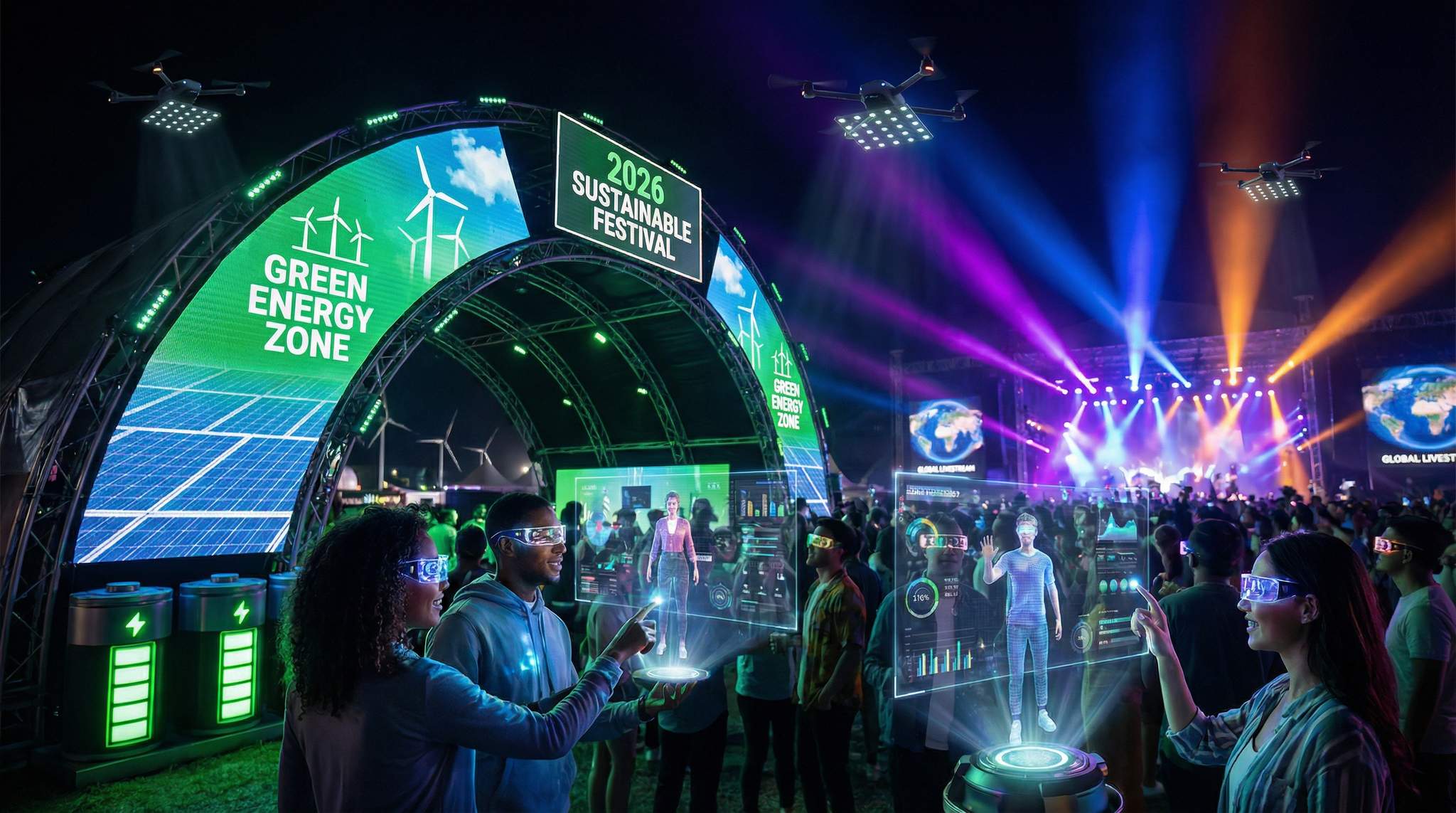
In 2025 and 2026, many prominent festivals have rolled out ambitious sustainability programs, effectively making green practices standard operating procedure. Renewable energy solutions are increasingly powering major music events – it’s no longer unusual to see solar panels lining a festival stage or wind turbines offsetting a portion of the power usage. Some festivals deploy massive battery systems charged from renewable sources in advance to run stages after dark. As a result, diesel generators (once a staple for outdoor events) are being used much less, or replaced entirely with cleaner alternatives like biofuels. For instance, at We Love Green in Paris – a festival named for its eco-ethos – the stages recently ran on a mix of solar, green hydrogen, and biofuel power with a strict zero-waste policy and fully vegetarian food offering. Likewise, Germany’s Feel Festival incentivized attendees in 2025 to travel by bicycle and public transport (offering discounts and ample bike parking), implemented a deposit-refund system for all cups and plates to eliminate trash, and served mostly organic, plant-based food. The result? Cleaner grounds and a community of festival-goers who felt they were part of a positive impact. These real-world examples prove that music and sustainability can coexist without sacrificing fun.
Boost Revenue With Smart Upsells
Sell merchandise, VIP upgrades, parking passes, and add-ons during checkout and via post-purchase emails. Increase average order value by up to 220%.
Waste reduction is another huge piece of the puzzle. Modern festivals are committing to “leave no trace” principles much more seriously. Single-use plastics are being banned at many events – for example, Glastonbury (one of the world’s biggest festivals) eliminated single-use plastic bottles starting in 2019, paving the way for others. In 2026 you’ll find free water refill stations everywhere, sponsored aluminum can water instead of plastic, and vendors using only compostable plates and cutlery. Many festivals now require or incentivize recycling and composting, achieving diversion rates above 80-90% of waste away from landfills. At Australia’s Paradise camping festival, staff hand out garbage bags to each attendee and run waste-collection competitions, dramatically reducing litter. It’s also common to see partnerships with environmental organizations: whether it’s teams of volunteers from NGOs helping sort recyclables, or charities receiving donations based on how many trash bags get filled. The community aspect is key – attendees often respond enthusiastically when they feel involved in a collective effort to go green, and festivals are tapping into that positive peer pressure.
Going green isn’t just good for the planet – it’s becoming good business for events. An increasing segment of concert-goers (especially younger fans) are eco-conscious and actively seek out festivals that align with their values. A well-publicized sustainability program can actually be a selling point that drives ticket sales and brand loyalty. Festival producers have noted that fans are more forgiving of inconveniences (like no plastic bottles or required trash sorting) when it’s for a cause they believe in. Some festivals even hold environmental awareness workshops or have areas where organizations educate attendees on eco-living, turning the festival into a place of learning as well as partying.
All of this said, making a festival sustainable is a continuous journey, not a one-time fix. It often requires investment and innovation – from sourcing local, renewable energy and installing compost toilets, to designing stages that can be efficiently transported or reused year after year. Many organizers share that the upfront costs can be higher, but they pay off in the long run with savings (solar panels eventually offset fuel costs) and goodwill. Festivals are collaborating and sharing best practices more than ever through industry groups focusing on sustainability. As of 2026, going green is no longer optional – it’s an imperative, with industry associations and even local governments pushing for strict sustainability benchmarks for events (the bar keeps rising, as covered in our guide on festival sustainability benchmarks and how to meet them). In short, the live music industry is actively leading a green movement, showing other sectors what’s possible when experience and expertise are applied to sustainability challenges.
- Renewable Energy at Festivals: At many large festivals, stages and installations are now powered by renewable energy sources. Solar panels often adorn vendor tents and production areas, soaking up the sun during the day to run the sound and lights by night. Some events use portable wind turbines or biodiesel generators (fuel made from renewable plant sources) instead of traditional diesel. The result is a significant cut in carbon emissions. For example, Switzerland’s Greenfield Festival paired its rock and metal lineup with electricity from local hydro and solar farms, eliminating thousands of liters of diesel. Organizers also plan smartly to reduce energy use – using LED lighting everywhere, optimizing soundchecks and schedules to avoid wasteful power spikes, etc. This trend is only growing: more festivals are aiming for net-zero carbon emissions, using renewable power plus carbon offsets for any remaining footprint.
- Advanced Waste Management: Gone are the days when festival grounds would be left looking like a trash heap. Zero-waste and circular economy principles are becoming standard. This means every beer cup, plate, or utensil on site is reusable or compostable, and the festival has a system to collect and process it. Many festivals give guests a trash bag at entry and a small refund or reward if they return it filled with their waste at the end – dramatically increasing personal responsibility. On-site “eco stations” separate recyclables, compostables, and landfill waste, often staffed by volunteers to help attendees sort correctly. Innovations are popping up too: some events use reverse vending machines where you drop in recyclables (cans, bottles) and earn points or prizes. Even merchandise is going green – bands are printing shirts on organic cotton or recycled fabrics, and some festivals sell upcycled clothing or encourage fans to swap outfits instead of buying new. The overall effect is a cleaner festival and a significantly reduced environmental impact.
Warning: Beware of greenwashing. Festival-goers are savvy and will quickly call out events that claim to be sustainable without real action to back it up. Don’t just talk the talk – make sure you’re implementing genuine changes (like renewable power or waste reduction) rather than superficial fixes. Inauthentic “eco” branding or token gestures (like one recycling bin while still using all plastic cups) can backfire, damaging trust with your audience. It’s far better to be transparent about what you’re doing and what challenges you still face than to overstate your green credentials.
By making sustainability a core part of the planning and culture, modern music festivals are not only reducing their carbon footprint but also rallying communities around environmental responsibility. The message is clear: you don’t have to sacrifice fun for sustainability. Dancing under solar-powered lights or using a reusables-only beer tent doesn’t dampen the experience – for many fans, it enhances it. They feel they’re contributing to something positive while having a great time. As we move forward, expect festival production to get even greener. Some forward-thinking events are exploring innovative ideas like plant-based air capture devices to offset CO?, incentives for carpooling and taking trains instead of driving, and stage materials made out of sustainable bamboo or recycled aluminum that can be flat-packed for transport. The live music industry of 2026 is proving that large-scale events can evolve to meet the climate challenge – and in doing so, they’re educating and influencing hundreds of thousands of attendees to be more eco-conscious long after the music stops.
Personalized and Data-Driven Fan Experiences in Live Performances

Grow Your Social Following With Every Sale
Require social media follows, shares, or playlist adds to unlock presale access or special pricing. Turn every ticket purchase into audience growth.
Advancements in data analytics, artificial intelligence (AI), and streaming services are giving event organizers unprecedented insight into fan preferences, behaviors, and spending habits. With the wealth of data available in 2026 – from in-app engagement and ticket purchase history to social media activity – concert producers can now deliver hyper-personalized experiences that resonate with individual attendees. We’re talking about tailoring aspects of the event journey to each fan, something that was impractical at scale until recently.
Think about how online platforms serve up personalized recommendations (your Spotify playlist or Netflix queue) – live events are adopting a similar mindset. Organizers mine data to figure out which artists an attendee is most excited for, which food vendors they’re likely to visit, and even what merchandise might appeal to them based on past behavior. By leveraging these insights, a festival or concert can create little moments of delight just for you. For example, some festival mobile apps now generate custom schedule itineraries for each user: if they know you love EDM and ’90s rock, the app might highlight the EDM stage lineup and a reunion set by a ’90s band on your personal schedule. If a fan tends to spend time at the art installations or silent disco, the event might send them a notification about a new installation unveiling or a secret set at the disco. This level of personalization makes attendees feel seen and enhances their engagement.
Technology also enables direct fan-artist interactions in new ways. Streaming platforms and social media provide data on what songs are most popular in a given city or among a certain demographic, which can inform setlists or surprise guest choices. Independent musicians and smaller event organizers are using these tools as well – even without a huge team, a local promoter might analyze Spotify data to see which cities have unexpected pockets of fans for a niche genre and then plan a show there (a tactic outlined in our article on how to expand your music event globally). On the marketing side, AI can segment audiences and deliver personalized communications: for instance, long-time ticket buyers might get an email offering a loyalty discount for this year’s festival, whereas newcomers get a welcome message explaining the event’s highlights. By tailoring outreach, organizers see higher conversion and satisfaction rates.
This data-driven approach even extends to the stage itself. Promoters and artist management teams are increasingly analyzing streaming metrics to inform the artistic choices behind country setlists, pop encores, and EDM transitions in 2025 and 2026. By understanding exactly which deep cuts resonate in specific regional markets, organizers can curate highly localized performances that drive stronger fan loyalty.
Crucially, personalization isn’t limited to digital channels – it comes alive on-site too. Some events now use RFID wristbands or mobile apps not just for cashless payments, but to understand crowd flow and interests. If data shows a particular VIP guest has visited all the craft beer stalls, perhaps they get a token for a free sample at a new brewery’s tent as a thank-you. Loyalty programs have emerged where frequent festival-goers earn points that unlock perks like backstage tours or meet-and-greet passes. Even the classic artist meet-and-greet is being reimagined through data: organizers identify top superfans (for example, people who’ve attended five shows or streamed the artist’s songs thousands of times) and offer them special meet-and-greet opportunities, knowing these fans will treasure the moment. (On that note, executing fan interactions well is key – for some best practices see our guide on the do’s and don’ts of a smooth artist meet-and-greet). All these efforts make fans feel personally valued by the event, turning a large concert into something that feels custom-tailored.
By tapping into data to deliver customized experiences, event organizers can boost attendee satisfaction, increase engagement, and build loyalty that lasts beyond the event itself. When a fan opens a festival app and sees “Welcome back, Alex! Your favorite artist is on at 9pm at the Main Stage. Don’t miss the exclusive merch drop at 7pm at the merch tent,” it creates a connection – the event feels like it was designed for them. That fan is not only more likely to have a great time, but also to talk about it afterwards and come back next year. It’s a virtuous cycle of data-driven improvement: the more you personalize, the more data you gather on what works (and what doesn’t), which helps refine future experiences. Technology empowers even independent musicians and grassroots events to achieve this; for instance, a small venue can use simple survey data or Spotify analytics to tailor a night’s lineup to what the local audience really wants to hear, rather than guessing.
Free Tool: Size Your Festival Site
Zoned capacity planning for arena, campsite, parking and entry lanes — against UK Purple Guide and NFPA density standards. Finds your bottleneck zone.
Of course, with great data comes great responsibility – respecting privacy and avoiding the “creepy” factor is paramount (more on that in a moment). But done thoughtfully and transparently, personalization is proving to be a win-win: fans get a richer, more convenient experience, and organizers see higher engagement and revenue. After all, an engaged fan is more likely to spend on merch, try new event features, and become an ambassador for the event. In 2026, the live music industry has truly begun to harness the power of experience and expertise (and a dash of AI magic) to make every fan feel like a VIP.
How to Personalize the Experience
Organizers can implement personalization in a variety of creative ways. Here are some effective strategies:
- Customized Event Itineraries: Use attendee data (such as interests selected at ticket purchase or past attendance history) to create a personalized schedule for each guest. Many festival apps now ask users “Which artists are you excited to see?” and then generate a custom itinerary highlighting those set times, with reminders so they don’t miss a favorite act. Some even go further: if you connect your Spotify or Apple Music, the app might suggest lesser-known artists on the lineup that match your music taste (e.g., “Since you like Artist X, check out Artist Y on the side stage at 4 PM”). Personalized itineraries help fans navigate busy multi-stage events and feel like the festival is catering to their preferences. Attendees love the convenience of not having to comb through schedules – instead they get a “cheat sheet” of their must-see acts, plus a few curated discoveries just for them.
- Smart Ticketing and Access: In 2026, tickets are becoming more than just a pass to enter – they’re a key to unlocking tailored experiences. Smart ticketing systems (like RFID wristbands or mobile QR codes) give organizers real-time data on attendee movement and allow for segmented access. For instance, returning VIP ticket-holders might automatically get fast-track entry through a dedicated gate, recognized by their digital profile. Push notifications can greet attendees when they arrive (“Welcome back, Jane! Get ready for an epic night.”) and guide them to personalized perks. Smart tickets also allow for on-the-fly offers: if data shows a fan has been at the secondary stage all day, the app might ping them with a discount to an upcoming show of the headliner playing that stage. These systems not only improve fan experience with quicker, tailored access, but they also help maximize sales – for example through targeted upgrade offers or merchandise recommendations. (For more ideas on leveraging ticketing tech to boost revenue and fan satisfaction, see our article on festival ticketing strategies to maximize sales. Smart ticketing, when done right, marries convenience with opportunity: shorter lines, personalized notifications, and higher engagement in one package.)
- AI-Powered Fan Engagement: AI chatbots and virtual assistants are increasingly common at large events to provide real-time customer service and personalized recommendations. These AI agents – accessible via the festival app, website, or messaging platforms – can answer frequently asked questions (“What time does parking open?”) and also use data to offer helpful tips (“Looks like you’re a big electronic music fan. The EDM stage tends to get busy, so head there 15 minutes early for a good spot.”). During the event, AI chatbots can handle thousands of queries simultaneously, helping attendees get information faster (and reducing strain on human staff). Some events also deploy AI for live engagement: for example, a festival might have an AI-driven photo booth that analyzes your photos and suggests a custom hashtag or AR filter based on the artists you saw. These tools create a personal concierge feel. Additionally, AI can trawl through social media in real time to identify issues or trends – if it “sees” a lot of people tweeting about long water lines in one area, organizers can proactively send staff or push an app notification about shorter lines elsewhere. The key is that AI helps scale personal attention to thousands of fans at once, making each person feel heard and assisted instantly.
- Loyalty Programs and Rewards: To build a loyal fan base, many music events are implementing membership or loyalty programs. These reward systems treat your attendance (and sometimes your engagement on socials or referrals of friends) as currency for perks. For example, a festival might give you 10 points for each year you attend; accumulate 30 points and you become a “Gold Member” which grants early access to lineup announcements, or maybe a free merch item on site. Other rewards could include invitations to exclusive events (like an “after-party for loyal fans” or an online Zoom Q&A with an artist). Some programs are like frequent-flyer schemes: the more shows or festivals you go to by the same organizer, the more benefits you unlock – such as discounted tickets for the next event, or a dedicated VIP lounge area reserved for repeat attendees. These VIP areas or perks make loyal fans feel appreciated. Organizers can also personalize within the loyalty program: if data shows a particular fan always buys a T-shirt every year, a reward might be a merch discount or a limited-edition item just for members. By tailoring rewards and recognition (even something as simple as a personalized thank-you email or a shout-out on the event’s social media), these programs strengthen the emotional bond between the fan and the event brand. The result is a community of superfans who will go out of their way to attend and promote the event.
One clear outcome of the personalization trend is that fans feel more connected and valued, rather than just one face in a crowd of thousands. When an event “knows” your name, your favorite genre, or rewards your loyalty, it stands out in a crowded entertainment landscape. However, organizers must implement these tools carefully and ethically.
Warning: Personalization should never cross the line into privacy invasion. It’s vital to be transparent and get consent when using attendees’ personal data. Always let fans opt in to data-driven features (like connecting their streaming accounts or enabling location services in-app). Use the data to help them, not to harass. For example, sending a push notification about a stage change is welcome; bombarding someone with vendor ads based on what they walked past is not. Also, secure that data – fans trust you with their information, and a breach could severely damage your reputation. In short, trust is crucial: use personal data responsibly, provide clear value in return, and give attendees control. A well-executed personalized experience feels helpful and cool, while a poorly executed one feels creepy.
When done right, personalization can dramatically enhance the fan experience and set your event apart. Attendees will remember that the festival app recommended their new favorite band, or that the organizer sent them a happy birthday shout-out during the show. These little touches create big loyalty. As technology evolves, we’ll likely see even more advanced personalization – possibly AI-curated stages tailored to different audience segments, or adaptive visual effects that change based on audience feedback. But even as these possibilities emerge, the core idea remains the same: treat fans as individuals and they’ll reward you with enthusiasm, support, and word-of-mouth that money can’t buy. In an era where entertainment options are endless, that personal touch can turn a one-time attendee into a lifelong advocate.
Integration of Health and Safety Technologies

If the past few years have taught event organizers anything, it’s that health and safety must be a top priority – and technology can play a key role in keeping crowds safe. In the post-pandemic world of 2025–2026, live music events are leveraging new innovations to protect attendees’ well-being and improve overall safety management. Many of these changes, prompted by COVID-19, have proven valuable beyond the pandemic and are becoming permanent features of concerts and festivals.
One major area of focus is venue environmental safety. Concert venues, from clubs to arenas, have invested in state-of-the-art air purification and ventilation systems. High-efficiency particulate air (HEPA) filters, UV-C light air sanitizers, and increased fresh air exchange rates are now common in indoor venues to ensure clean air throughout the show. Some venues even display air quality metrics on screens, so attendees know that CO? levels are being kept in check (which helps prevent that stuffy “packed crowd” feeling and reduces transmission of airborne illnesses). This goes hand in hand with monitoring temperature and humidity, especially as heat waves have made outdoor events riskier – many festivals now have cooling stations, free water refill points, and misting areas to prevent heat-related issues, using data to decide where to place these amenities.
Contactless technology has also become ubiquitous, making nearly every aspect of attending an event smoother and safer. We’ve seen an accelerated shift to cashless payments at concerts – fans use RFID wristbands, mobile payment apps, or credit cards with a tap, eliminating the need to handle cash. Ticketing has similarly gone fully digital at most venues; scanning into a show might involve a quick QR code on your phone or an NFC tap, which reduces queue times and person-to-person contact. In 2026, it’s expected by fans that buying a drink or merch won’t require any physical cash or even a paper ticket stub. The benefits are twofold: not only does this cut down on potential germ transmission, but it speeds up entry and transactions, meaning shorter lines and less crowding in lobbies and concession areas. For organizers, going contactless also provides real-time data on entry flow and sales, which can be used to manage operations in the moment (e.g., if one gate is scanning slowly, you’ll spot it in the data and can redirect staff). It’s a great example of a safety measure that also boosts convenience and efficiency.
Another game-changer is real-time crowd monitoring and analytics. We now have AI-powered systems that use cameras and sensors around a venue to track crowd density and movement in real time. These systems can literally predict and prevent overcrowding before it becomes dangerous. For example, if an AI notices that one section of a festival ground is quickly getting packed beyond a safe threshold, it can automatically alert security staff and even trigger messages on video screens or apps directing people to spread out or use alternative routes. Some venues employ thermal imaging and lidar sensors that detect surges or unusual crowd flows (like if a mass of people suddenly rush toward a stage, which could signal a developing crush situation). This technology is a direct response to past crowd tragedies – the industry is determined to avoid events like the Astroworld 2021 crowd surge disaster by using every tool at its disposal. In 2025, many major festivals and stadium concerts rolled out advanced crowd management tech, and it’s saving lives and improving comfort. Fans might not even notice it working, but they benefit from more space and proactive measures (like staff re-routing foot traffic or pausing a show for a safety announcement) long before a situation gets critical.
On top of that, health screening tech emerged during the pandemic and has partially persisted where relevant. Temperature screening cameras at entry, touchless bag checks, and even digital “health passports” were tested in 2021–2022. By 2026, temperature checks for illness aren’t standard at most events (they were phased out as COVID-19 risks changed), but the overall ethos of hygiene and rapid response remains. Venues are much quicker to sanitize high-touch surfaces, provide hand sanitizer everywhere, and communicate health guidelines (like “if you’re feeling unwell, here’s where to go for medical assistance”). Some festivals partner with public health organizations to have free COVID testing or vaccination stations on-site as a service, though this depends on local conditions and is less central than it was in earlier pandemic years.
Security technology is also advancing. Drones have started to play a role in festival security – some events use surveillance drones to get an aerial view of crowd patterns or to watch for unauthorized entrants (though they must navigate privacy and legal considerations, and many festivals enforce strict no-fly zones for safety). Anti-drone technologies are also in use to counter unauthorized drones that could pose risks, as discussed in our piece on countering unauthorized drones at festivals. Additionally, wearable tech for staff (like smart badges that track a security guard’s location and can send an SOS if they encounter trouble) helps improve incident response times. Even something as simple as better communication apps – all staff connected via encrypted messaging with GPS tagging – means if a medical issue pops up in Section B, every relevant team member knows exactly where and what in seconds.
All these tech tools set a new baseline for audience comfort and safety. Attendees in 2026 often comment that they feel safer and more taken care of at events, even in crowds of tens of thousands. It’s not just a feeling – statistically, events are seeing fewer major incidents and medical emergencies, thanks in part to these proactive measures. Importantly, promoters and venue managers are combining tech with human expertise: a control room might have screens for AI crowd monitoring, but it’s staffed by experienced safety officials who interpret the data and make decisions (like “send more water vendors to the front of Stage 2, it’s getting dense and hot there”). The best outcomes arise when technology augments the instincts of seasoned crowd managers rather than trying to replace them.
In the wake of the pandemic and incidents, the trust factor is huge – fans need to trust that they can attend an event safely. By visibly implementing health and safety tech (like touchless entry or clearly marked AI surveillance cameras labeled “Smart Safety System in Use”), events build confidence. After all, enjoying a concert is much easier when you’re not worrying about safety or sanitation. On the flip side, organizers have learned to be transparent about what they’re doing (for privacy reasons as well; for instance, if using facial recognition for ticketing or monitoring, some venues faced backlash and thus pivoted to less invasive tech). The balance between safety and privacy is an ongoing discussion, but the trend is to favor opt-in solutions and focus on measures that materially improve safety without being overly intrusive.
Below are some of the key health and safety tech integrations we’re seeing at live music events:
- AI-Powered Crowd Control: Organizers deploy AI systems that continuously analyze crowd density using CCTV feeds and sensors. These systems can detect when a mosh pit is getting too tight or if a surge is building, and then automatically alert security teams or even gently intervene. For example, digital signboards might flash “Please take a step back, folks – too crowded up front!” if the AI senses a crush hazard forming at a barricade. At one sold-out 2025 festival, the AI alert allowed staff to reroute foot traffic and temporarily pause entry into a packed side stage, preventing a potential overcrowding incident. This predictive approach is far better than reacting after something goes wrong. Some platforms also use anonymized phone location data (from the event app or cell towers) to gauge crowd movements between stages, helping to anticipate bottlenecks before a headliner set ends and everyone moves at once. It’s like having a digital eye on the crowd’s pulse at all times.
- Contactless Entry & Transactions: As mentioned, most venues have fully embraced contactless technology. Tickets are scanned via mobile apps or RFID cards with a tap, eliminating the need to handle cash. Bag checks are increasingly done with tech assistance too – some venues use electromagnetic scanners or AI-based image recognition for bags (similar to advanced airport scanners) so that only flagged bags get manual attention. Inside the venue, everything from buying a beer to upgrading your seat is done through a tap or scan. Not only does this minimize germ exposure to high-touch surfaces (no more passing credit cards or cash back and forth), it also speeds up service so fans spend less time in lines and more time enjoying the show. The data generated – like how many people are congregating at the merch booth at once – also helps organizers redistribute resources on the fly (e.g., opening another pop-up merch stand if one area is too crowded). Contactless tech has essentially streamlined the entire live event experience, which indirectly improves safety by keeping people spread out and moving.
- Enhanced Air Quality & Hygiene: Venues are using technology to keep environments healthy. Many have installed continuous air quality monitoring devices that measure factors like CO?, particulate matter, and VOC levels. These devices can trigger ventilation systems to ramp up if too much CO? (indicating stuffiness) is detected in an indoor venue. Some modern arena HVAC systems are smart enough to adjust different zones – if the floor crowd is packed and CO? climbs, fans will kick on stronger there compared to the half-empty upper balcony. Additionally, UV-C light sterilizers might be installed in HVAC ducts to kill airborne pathogens, and some are even experimenting with far-UVC lighting gently bathing entrance areas to neutralize viruses and bacteria without harming people. Venue cleaning crews now often use electrostatic sprayers to rapidly disinfect seats and handrails. Plus, a lot of bathrooms and sinks have gone touch-free (automatic toilets, sinks, soap, and paper towel dispensers) – small improvements that reduce germ spread. These might seem mundane compared to AI, but they dramatically cut down the typical colds or flus that used to often follow a big concert (some call it “post-festival flu”). Attendees notice venues smell fresher and feel cleaner, which increases comfort levels.
All these tech integrations together set a new standard for safety at live events. Importantly, event organizers aren’t relying on tech alone – they’re updating safety protocols, training staff in emergency response (many festivals now have drills for scenarios like sudden weather evacuations or crowd surges), and communicating more with attendees about staying safe (like push notifications about staying hydrated, or what to do if you see someone in distress). The cultural shift towards safety is as much a part of the trend as the gadgets.
Pro Tip: Even with cutting-edge safety tech, never underestimate the human element. Make sure your security and medical teams are well-trained and empower them to act on both their experience and the data. Run through safety drills before the event and test your systems in realistic simulations. For instance, simulate an overcrowding alert in the control room and practice how quickly staff on the ground can respond to redirect the crowd. Technology can provide early warnings, but fast, coordinated human response is what actually keeps an event incident-free. In short: use tech as an aid, not a crutch.
Ultimately, the goal is an environment where fans can lose themselves in the music without worrying about their wellbeing, because they trust that the organizers have it covered. The innovations of 2025–2026 are making that possible. Attending a large festival or stadium show today, you’ll likely notice little things – shorter lines, cleaner air, clear information on screens – that collectively make you feel safer. That’s by design. As we look to the future, expect further advancements like smart wearables for attendees (maybe one day a wristband could monitor your hydration and alert you to drink water) or even AI-assisted emergency response (drones delivering medical supplies to a patient in a big crowd). For now, live events have successfully transitioned into a safer, smarter era – one where enjoying the music and staying healthy go hand in hand. (For more insights on festival safety culture and crowd behavior, see our guide on understanding crowd psychology for safer events, which offers great tips on design and communication strategies that complement the tech solutions.) By integrating tech with expert planning, event organizers are proving that even massive crowds can be managed with a level of precision and care that keeps the focus on fun.
Experiential Marketing and Brand Partnerships for Festival Organizers

Brands have long been involved in live music events through sponsorships, but 2026 is seeing a new era of brand partnerships that go far beyond a logo on a banner. Today’s concert and festival audiences (especially younger generations like Gen Z) value experiences over advertisements. In response, savvy event organizers and sponsors are collaborating to create experiential marketing activations – meaning the brand’s presence actually adds to the event experience in a meaningful way, rather than feeling like an interruption. The result is a win-win-win: fans get extra fun or useful content, brands get deeper engagement with potential customers, and the event often gets additional funding or resources that enhance the festival.
When analyzing live events and experiential entertainment trends across 2025 and 2026, the shift toward participatory brand activations is undeniable. Sponsors are moving away from static logo placements, instead demanding integration into the core festival narrative. For organizers, mastering these live events experiential entertainment trends means designing spaces where brand partners can facilitate genuine, memorable interactions rather than traditional advertising.
If you are pitching sponsors, you might be asked exactly why amplifying presence at live events is important in 2025 and beyond. The answer lies in audience fragmentation and ad fatigue. As digital marketing channels become increasingly saturated and expensive, live events offer a rare, captive environment where consumers are actively seeking engagement. For brands, amplifying their physical footprint at a festival translates directly to higher brand recall and authentic user-generated content. For event organizers, facilitating this amplified presence means you can command higher sponsorship premiums, as you are providing a high-value, multi-sensory touchpoint that digital ads simply cannot replicate.
What does this look like on the ground? For starters, brands are becoming an integral part of the festival atmosphere by providing services or attractions that attendees genuinely enjoy. For example, instead of just hanging a banner by a stage, a beverage company might set up a refreshing cocktail garden or alcohol-free mocktail bar as a chill-out zone, with comfortable seating and live ambient music. Festival-goers can relax and recharge there, associating that positive break with the brand. Another common trend is the creation of wellness or amenity zones: a sportswear sponsor might run a free yoga session every morning at a multi-day festival, or a tech company might bring a charging lounge where people can juice up their devices while demoing new headphones. At some events, brands have hosted interactive art installations – think a giant coloring wall sponsored by an artist supplies company, or a virtual reality music video experience brought in by a phone manufacturer. These cool extras become talking points for attendees (“Did you try the VR jam session at X’s tent? It was awesome!”) and often are Instagrammable moments that get shared online, amplifying the brand’s reach organically.
The key is authenticity and relevance. The most successful brand partnerships are those that align with the festival’s theme and audience interests. At an eco-focused music festival, for instance, you’ll find brands activating around sustainability – maybe a clothing company hosts a vintage thrift shop or clothing swap on site (promoting reuse), or a solar energy company powers a small stage and educates folks on clean energy between sets. Fans appreciate when the partnership makes sense and even enhances the values of the event. In contrast, old-school sponsorships that feel out of place (like, say, a loud luxury car sales booth at a indie folk festival) tend to get ignored or even mocked. Brands have learned they need to speak the festival’s language. One great example was at a major EDM festival where a tech brand set up a “silent disco” dome – attendees could test the brand’s new noise-canceling headphones in a fun way by dancing to a silent DJ set. It fit the EDM vibe, showcased the product in action, and gave fans something novel to do.
Social media integration is another huge component of experiential marketing now. Brands often encourage festival-goers to create content that essentially doubles as advertising but in a peer-to-peer authentic way. You might see a cool art car or a colourful backdrop explicitly designed for photos, tagged with a hashtag and the sponsor’s name. For instance, a popular beverage sponsor erected a bright, festival-themed mural at multiple events and encouraged folks to snap photos in front of it; for each photo posted with the hashtag, the brand donated $1 to a festival’s community charity. This kind of activation gets people sharing positive stories and images involving the brand, extending the reach far beyond the event grounds. AR (augmented reality) filters on Instagram or Snapchat tied to the festival are also common – a brand might create a filter that adds festival-themed graphics or the festival’s mascot to your selfie, and include their logo subtly. Attendees naturally use these to document their experience, inadvertently spreading the brand message among their friends. It’s marketing through fan storytelling, which is far more organic than traditional ads.
The data shows these efforts are effective. Surveys indicate that roughly 66% of attendees feel more positive about brands after experiencing them at live events. They tend to remember the brand better because it’s tied to a great memory (“That free popsicle in the shade from Brand X saved my life during the 3 PM heat!”). No wonder nearly 40% of brands’ activation budgets now include festivals – companies recognize that a well-placed festival sponsorship can yield huge engagement and social media buzz. It’s also a response to the decline in effectiveness of traditional ads; experiential marketing lets brands cut through the noise by being part of the experience rather than distracting from it. In many ways, festivals have become marketing playgrounds where brands can test creative ideas and connect with the elusive young audience that skips TV commercials and uses ad blockers online. If a sponsor’s contribution makes the festival more enjoyable (like a ride-share app giving free credits for safe rides home, or a cereal brand handing out late-night snacks to campers), attendees see the brand as an ally to their good time, not a corporate intruder.
That being said, there’s an art to doing this right. The festival organizers usually work closely with brands to ensure any activation feels authentic and adds value. There are also logistical considerations: making sure the sponsor’s booth doesn’t block views or create bottlenecks, and balancing commercial presence so the festival doesn’t feel overly corporate. It’s all about subtle integration. Many events enforce policies like no branding on the main stage artists or stage names (to keep the focus on music), instead encouraging sponsors to get creative elsewhere. We’ve even seen festivals limit the number of on-site activations to prevent sensory overload – quality over quantity. Those brands approved to be there often get prime opportunities, and they know they have to bring their A-game to impress discerning festival crowds.
- Interactive Brand Experiences: Sponsors now strive to add real value to events through interactive experiences. This could be a “refresh and recharge” station by a cosmetics or hygiene brand offering free face wipes, sunscreen, or earplugs (much appreciated by attendees needing a refresh mid-festival), or a gaming company setting up a retro video game arcade tent for when people want a break from walking. At some music conferences, we’ve seen automotive sponsors provide free shuttle rides in branded electric buggies around the site – doubling as demos for their vehicles and a helpful service for fans. Another popular activation is the wellness zone at festivals: one festival had a “hydration lounge” sponsored by a sports drink where people could rehydrate, do quick stretching exercises led by professional trainers, and even get a short massage – all free. Festival-goers flocked to it, telling friends “you have to check out that lounge, it’s amazing,” which is exactly the kind of genuine endorsement brands dream of. By focusing on enhancing comfort, fun, or convenience, these experiences ensure the brand is remembered fondly. They turn sponsorship from mere signage into a story that attendees will tell (“Remember that arcade tent? So cool that Company Y did that!”).
- Technology-Driven Activations: Brands are also using technology and social media to amplify their festival presence far beyond the physical event. We’re seeing things like AR scavenger hunts – for example, a sponsor could create an app feature where you hunt for AR virtual objects around the festival grounds (collect all 5 and win a prize), blending digital fun with the real-world environment. Some have done live giveaways via social: “Find the secret pop-up show by Artist Z at the branded stage – first 50 people to scan the QR code there get a free t-shirt.” This drives engagement both on-site and online. Drones displays have been sponsored as well (think Intel’s drone light shows at Coachella a few years back) – they’re essentially advertising, but executed as a mesmerizing night sky show that fans actually want to watch and record. Also, nearly every big sponsor activation now integrates a hashtag or shareable element. You might step into a 360° video booth (sponsored by a smartphone maker) that records a slow-mo video of you and your friends dancing with special effects; then you instantly get the clip to share on Instagram, branded hashtag and all. This creates a shareable moment where the attendee is indirectly endorsing the brand by spreading that content to their followers. The reach can be exponential if many people participate. It’s marketing gold, and from the fan’s perspective it’s simply another cool thing they got to do at the festival.
All these efforts underscore a larger point: the line between festival and sponsorship experience is blurring. The best integrations feel like they are part of the festival fabric. For event organizers, choosing the right partners is now an important skill – they seek brands that “get it” and want to improve the attendee experience. For brands, festivals offer a chance to build trust and authenticity with consumers in a way that traditional ads can’t. Done well, a festival partnership can turn casual consumers into brand fans. Statistics also show that about 75% of participants feel a stronger connection to a brand after attending an event activation – that’s incredibly high engagement by marketing standards.
However, organizers must be careful not to let sponsorships overpower the event. The music and attendees’ enjoyment must remain front and center. Fans can sniff out when something is purely a marketing ploy versus when it genuinely adds to the festival vibe. Balance and authenticity are key. For example, a major festival once faced backlash for overdoing branding – stages were constantly renamed after brands mid-event and ads flooded the video screens, which fans felt was distracting and against the festival spirit. The lesson learned was to keep it tasteful and attendee-centric.
Warning: Don’t turn your event into a corporate billboard. It’s a delicate balance: sponsors are crucial for funding, but festival-goers will rebel if they feel sold out. Avoid constant stage name changes, excessive announcements like “This set is brought to you by XYZ!”, or plastering logos on every surface. Instead, integrate brands in ways that feel organic. One meaningful, well-placed activation will do far more for sponsor goodwill (and attendee happiness) than a dozen obtrusive banners. If fans start joking that your festival has more ads than acts, you’ve gone too far. Protect the authenticity of the event atmosphere – sponsor integrations should feel like bonus content, not commercials.
When executed thoughtfully, experiential marketing and brand partnerships can truly enhance the festival experience. They provide extra activities, comforts, and surprises that make the event more memorable. For festival organizers, these partnerships also often bring in additional resources or creative ideas that might not be possible otherwise. (And, of course, the financial support can be crucial to keeping ticket prices manageable and festivals profitable.) Brands, on their end, are adapting to what modern audiences expect – they know they need to deliver something of value to earn attention. The overall trend in 2026 is towards deeper collaboration between events and sponsors: teams meet months in advance to design experiences that fit seamlessly with festival themes, and sometimes even co-create content (like a special performance sponsored by a brand, but in a way that fans perceive as a cool collaboration rather than an ad).
From an attendee’s perspective, the future might bring even more personalized sponsor experiences – perhaps your RFID wristband will let a sponsor know you’re a superfan of a certain artist, and you’ll get an invite to a mini-concert at their tent just for the top listeners. Or brands might sponsor aspects of the festival that were previously pain points, like a “ride-share lounge” outside the exit where you can comfortably wait for your Uber/Lyft with music and freebies (instead of standing on a curb after the show). The possibilities are vast, as long as the guiding principle remains: make it cool, make it useful, and make it about the fans. If you do that, the marketing basically takes care of itself, because the fans will do it for you. Organizers who master this balance unlock a powerful synergy – they can deliver a better event experience and keep sponsors happy, all while maintaining the festival’s soul. (Festival producers looking to refine their approach can read more on evolving sponsor expectations in our piece on adapting your festival’s sponsorship pitch in 2026.) The bottom line: brand partnerships in 2026 are about enhancing the magic, not interrupting it, and the best festivals are achieving that in style.
Strategic Frameworks: Analyzing Live Events and Experiential Entertainment Industry Trends 2025–2026
As the scale of global festivals grows, the demand for rigorous, data-backed planning has skyrocketed. For those working behind the scenes—whether you are a strategy analyst, strategy associate, VP, or data analyst at the manager or senior level—gathering credible data and insights to support internal presentations and strategic recommendations is paramount. Professionals at companies with 250 to 10,000 employees often face tight deadlines to deliver polished analyses with limited time for deep research. To build comprehensive competitive landscape views and benchmark performance metrics, you need authoritative statistics that strengthen investment theses and business cases.
Staying current on live events experiential entertainment trends 2025 2026 allows you to provide valuable analysis to senior leadership or clients. However, a major pain point is the difficulty of finding reliable, recent data on niche industry topics or emerging trends, especially when pressured to synthesize complex information into digestible executive summaries quickly. If you are wondering where to find articles or blogs discussing the artistic choices behind country setlists of 2025, or seeking un-paywalled reports on the ROI of immersive tech, specialized B2B ticketing platforms and promoter networks are your best resources. Leveraging these open-access insights ensures your strategic frameworks remain sharp, accurate, and highly actionable in a rapidly shifting market.
As the industry scales to meet these new demands, we are witnessing a significant expansion and hiring surge across the sector for 2025 and 2026. Event organizers, venue managers, and marketing teams at performance venues (such as large amphitheaters like SPAC), concert halls, and versatile event spaces are rapidly growing their operations. This operational growth also targets businesses that host public events like cabarets, boutique concerts, and large-scale fan conventions. To support this rapid expansion, promoters are actively recruiting specialized talent—from data analysts to immersive tech directors—ensuring their teams are equipped to handle the complex logistical and digital demands of modern experiential entertainment.
Executive Decision-Making: Navigating Market Forces and M&A Opportunities
For senior leaders—whether at the executive, VP, partner, or director level—within mid-sized to large organizations (ranging from 250 to 10,000 employees), understanding the broader market forces shaping live events and experiential entertainment trends in 2025 and 2026 is critical. Board members and investors are increasingly pressuring leadership to articulate a clear strategic vision grounded in market reality. Executives face the challenge of separating signal from noise in a flood of industry commentary to make informed decisions on major investments, strategic pivots, and potential M&A opportunities. By validating strategic hypotheses with external expert perspectives and concrete market data, directors and partners can confidently navigate competitive threats and capitalize on emerging disruptions in the live entertainment sector.
Live Music Industry Trends: Financial and Operational Shifts
When analyzing the broader live music industry trends transitioning from 2025 into 2026, the focus is heavily on operational efficiency and diversified revenue. Promoters are moving away from relying solely on primary ticket sales. Instead, the most successful live music events of 2025 demonstrated that integrating VIP upgrades, dynamic pricing models, and digital add-ons is essential for protecting profit margins against rising production costs. These overarching live music trends dictate that organizers must adopt flexible budgeting frameworks, allowing them to scale production elements up or down based on real-time ticketing data and early fan engagement metrics.
The Evolution of Live Performances
Adapting to Live Music Venue Trends and Touring Shifts in 2026
As we map out the future, keeping a pulse on live music venue trends 2026 is critical for facility operators and independent promoters alike. Venues are increasingly transforming into modular, multi-use spaces equipped with plug-and-play digital infrastructure to accommodate complex hybrid shows. Simultaneously, live music touring trends 2026 indicate a shift toward regionalized routing and extended residencies. Rather than exhausting resources on grueling daily travel, artists and their management teams are partnering with promoters to build localized, multi-night destination events. This approach not only reduces the carbon footprint of a tour but also allows organizers to maximize local market penetration and offer bespoke VIP experiences that a traditional one-night stop simply cannot support.
When evaluating the future of live music venues, operators must look beyond simple capacity upgrades. The next generation of performance spaces is being designed from the ground up as fully immersive, hybrid-ready environments. This means integrating permanent spatial audio systems, high-density 5G networks to support thousands of simultaneous AR streams, and modular staging that can pivot from an intimate cabaret setup to a massive electronic dance music production overnight. For promoters, the future of live music relies on these adaptable spaces, as they allow for more creative booking strategies and higher profit margins through diverse, multi-genre programming within a single facility.
When industry leaders discuss the future of concerts, the conversation inevitably turns to how emerging technologies can be monetized and scaled. For promoters, the next era of live events isn’t just about flashy gimmicks; it’s about building robust digital ecosystems. Investing in concert AR infrastructure—such as high-bandwidth venue networks that allow thousands of fans to simultaneously stream augmented reality overlays—is becoming a baseline requirement for top-tier touring acts. Similarly, the rise of the AI concert experience, where machine learning algorithms dynamically adjust lighting, spatial audio, and even real-time crowd management protocols, offers unprecedented operational control. By treating these innovations as core production assets rather than experimental add-ons, organizers can future-proof their venues and command premium ticket prices.
The live music experience is continually evolving – and many of the trends we’ve discussed are paving the way for the future of performances. Looking ahead beyond 2026, we can expect these innovations to further blend with traditional concert elements, yielding new forms of live entertainment that were previously unimaginable. Here are a few ways live performances are likely to transform:
- Augmented Reality Everywhere: We anticipate augmented reality becoming a staple of live concerts and festivals. As AR hardware becomes more accessible – lightweight AR glasses are on the horizon thanks to companies like Apple and others – concert-goers might get the option to rent or sync AR devices at shows. This means the kind of interactive visuals we discussed (like seeing digital dragons or lyrics in the air) could become even more immersive, with each person seeing a personalized layer of show effects. By 2028, it wouldn’t be surprising if big tours come with an AR component standard, where fans at the venue and at home can see the same augmented content. This can also extend to informational overlays (e.g., point your phone at the stage to see set times, or at a band t-shirt to see a quick AR animation about the band). AR could also aid crowd safety in future – imagine AR glasses that display navigational arrows on the ground during an evacuation or guide you to the nearest open restroom by virtually highlighting the path. The tech is evolving fast, and concerts will be a prime playground for it.
- Virtual and Metaverse Concerts Go Mainstream: Virtual concerts will continue to grow and may branch into truly persistent online worlds. Instead of one-off virtual events, artists might maintain ongoing virtual spaces or clubs in the metaverse where fans can gather anytime, with scheduled “concert nights” featuring either the artist live via motion-capture or even AI-driven performances when the artist isn’t available. We’re already seeing seedlings of this: some DJs have virtual clubs in platforms like VRChat, and pop stars have done limited metaverse residencies. As VR headsets become more common (especially if devices like the Meta Quest or Apple’s VR/AR headsets drop in price and improve), more fans will partake in these experiences. It’s conceivable that attending a show via a VR headset with friends across the world will become a normal complement to going to physical concerts. Importantly, rather than cannibalizing live shows, these virtual gigs might serve as a fan funnel – engaging global audiences who then become interested in seeing the artist live if they tour nearby. A hybrid approach could emerge where every physical concert also has a virtual ticket option, extending the live audience by thousands online. The challenge – and exciting part – will be to keep innovating the virtual experience so it doesn’t go stale. Expect more use of haptic feedback (vests that let you “feel” the bass), interactive concert gaming elements, and elaborate virtual stage designs that defy reality.
- Holograms and Digital Avatars: The success of ABBA’s virtual avatar show “Voyage” in London (which has drawn millions and contributed over £2 billion to the UK economy) suggests that holographic concerts could carve out a significant niche. This opens up possibilities to “see” performances by artists who are no longer touring – or even those long passed away – in a live venue setting. We might see limited engagements where, say, a legendary rock band’s avatars perform a special run of shows in various cities, giving newer generations a taste of what the live experience was like, powered by archival footage and AI reconstruction. There are already rumors of other legacy acts like KISS and Queen exploring similar avatar-based productions. Meanwhile, wholly virtual artists (like the vocaloid Hatsune Miku or various virtual influencers) are gaining popularity; these digital characters can perform “live” via projection or AR. It’s quite plausible that a future festival could have a mix of human and virtual performers on the lineup. This raises interesting creative possibilities – imagine an AI-driven performer who can change their music style in response to the crowd’s mood in real time, or even take song requests on the fly because it’s not limited by rehearsed material. As these technologies develop, event organizers will need to balance novelty with authenticity. A key learning from ABBA’s project was that they treated it as a creative endeavor, not a tech gimmick: great sound, real backing musicians, and a custom-built venue made it an experience, not just a tech demo. That will be the model to follow.
- Live Streaming as Standard Practice: If we step back from cutting-edge tech, one evolutionary change that’s already well underway is that virtually every major concert is now live-streamed or recorded in some form. Fans have gotten used to tuning into Coachella or Lollapalooza from home via YouTube live streams, for instance. In the near future, we may see even mid-tier events having professional live streams or at least high-quality recordings available after the fact. This trend extends the audience (and revenue via streaming sponsorships or pay-per-view) and creates a rich archive of performances. It also means artists must consider the broadcast audience in their production choices – many already design stage visuals and camera blocking with streams in mind, effectively merging stage design with film direction. The concept of a “concert” is broadening to include the remote viewer as an integral part of the audience. Interactive live stream chats, multi-angle online viewing, and even virtual meet & greets after a streamed show (for those with special tickets) are becoming common features. Don’t be surprised if soon your concert ticket automatically includes a code to re-watch the show online from multiple angles the next day – physical and digital attendance perks merging. The live music industry is learning from sports in this regard, where attending the game and watching on TV are two versions of the same product. Music will similarly cater to both on-site and at-home fans as two halves of a whole experience.
- AI in Music Creation and Curation: This one is a bit more behind-the-scenes, but AI is increasingly used in producing live shows – from predictive analytics that help plan setlists (using data on which songs are trending in which city, an AI could suggest swapping one track for another in the encore) to AI-generated visual content on screens during the show. We might also see AI music performers opening concerts (there are already AI algorithms that can jam in real-time or generate background music; perhaps an AI DJ warms up the crowd before the human headliner). AI could even personalize aspects of the show to the audience – for instance, analyzing the crowd’s cheering and adjusting the length of a guitar solo accordingly. While some of this remains experimental, the ethos is that technology should serve to enhance the human performer’s connection with the audience, not replace it. Tools that help artists better understand and engage their crowd (maybe an AR view that an artist sees showing “heat maps” of crowd energy, generated by AI from camera feeds – so they know which sections to hype up) could level up live performance art. There’s excitement but also caution here: not everything novel will improve the show, and there’s a risk of over-reliance on tech. The acts that integrate AI and tech seamlessly, without losing the raw emotion that defines live music, will lead the pack.
Through all these evolutions, one thing remains constant: the heart of live music is the connection between performer and audience. As spectacular as technology can make a show, fans and artists alike frequently emphasize that it’s the human moments – a spontaneous acoustic encore, a heartfelt speech on stage, the crowd singing along under the night sky – that create goosebumps. The trends of 2026 and beyond seem to support that notion by aiming to enhance those human connections rather than distract from them. Whether it’s using VR to bring more fans into the fold, or AI to keep everyone safer and the show running smoothly, the ultimate goal is to amplify the magic that happens when music and people come together.
Live music has always been about innovation (from the first use of electric guitars and massive PA systems, to pyrotechnics and video backdrops), so in many ways these new trends are a continuation of artists pushing the envelope to create amazing experiences. We’re effectively watching the next chapter of concert history being written in real time. For event organizers, it’s an exciting but challenging era: there are more tools than ever to deliver a fantastic show, but also higher expectations from audiences to balance all the elements – technology, sustainability, personalization, safety, and authenticity – into one cohesive production.
As we progress through 2026 and beyond, the live music industry is demonstrating that innovation and tradition can coexist harmoniously to produce extraordinary events. The best organizers will cherry-pick the advances that make sense for their audience and event scale, while staying true to the core of what makes live music special: the shared energy of real people in a moment that won’t ever be exactly replicated. So if you’re an event organizer reading this, the takeaway is clear: embrace new ideas and data, but keep the fan experience and that genuine musical connection as your North Star. By doing so, you’ll ensure your events remain both cutting-edge and deeply memorable.
(Before you dive headlong into all these trends, a final note – don’t neglect the fundamentals! While experimenting with VR or launching sustainability programs, make sure your event’s basics are rock solid. Use our ultimate music event checklist to confirm you’ve covered everything from permits and soundchecks to security and cleanup. When the foundational logistics are handled, you’ll have the freedom to innovate on top – and deliver those next-level experiences without a hitch.)
Frequently Asked Questions
How do virtual concerts benefit music event organizers in 2026?
Virtual concerts allow organizers to reach a global audience without capacity limits, generating revenue through virtual ticket sales and digital merchandise. They create immersive experiences using VR and AR technology, enabling fans to interact with avatars and environments, while offering accessibility to those unable to travel physically.
What sustainable practices are music festivals adopting in 2026?
Festivals are reducing carbon footprints by powering stages with renewable energy sources like solar, wind, and biofuels instead of diesel generators. Organizers implement zero-waste policies through compostable materials and recycling incentives, while encouraging attendees to use eco-friendly transport options like bicycles and public transit to minimize travel emissions.
How can event organizers use data to personalize the fan experience?
Organizers leverage attendee data from apps and streaming services to create custom schedule itineraries and targeted merchandise recommendations. Smart ticketing systems and RFID wristbands enable personalized perks like fast-track entry or exclusive offers, while AI chatbots provide real-time, tailored assistance to enhance individual engagement and satisfaction.
What technologies are improving health and safety at live music events?
Live events integrate AI-powered crowd monitoring systems that detect density and prevent overcrowding risks in real time. Venues utilize advanced air purification with HEPA filters and UV-C light sanitizers to ensure clean environments, while contactless entry and payment technologies streamline operations to reduce physical contact and congestion.
How are brands using experiential marketing at music festivals?
Brands create value-added activations that enhance the festival atmosphere, such as relaxation lounges, charging stations, or interactive art installations. These partnerships focus on authenticity and attendee needs, often integrating social media moments like AR filters or photo opportunities to drive organic engagement rather than traditional passive advertising.
How does augmented reality enhance live concert performances?
Augmented reality transforms physical stages into blended reality spaces where fans view 3D visuals and interactive effects through smartphones or AR glasses. This technology overlays digital artistry like floating lyrics or fantasy landscapes onto the live performance, deepening audience immersion without requiring physical set pieces.
Why is the VR concert experience growing in popularity for 2026 events?
The popularity of virtual reality music events in 2026 is driven by a broader shift toward experiential entertainment. Fans now expect highly interactive, gamified digital environments rather than passive video streams. For organizers, these VR concerts and virtual reality music experiences offer scalable, global reach and new digital monetization avenues that complement traditional physical concerts.
What are the top live events and experiential entertainment trends for 2026?
Beyond traditional stage setups, the leading trends for concerts in 2026 include the integration of augmented and virtual reality, data-driven personalized fan journeys, and immersive brand activations. Organizers are blending physical and digital realms to create multi-sensory experiential entertainment that engages global audiences simultaneously.
What are the defining concert trends for 2026 that promoters should prepare for?
The most impactful concert trends for 2026 revolve around hyper-personalization, the integration of immersive technologies like AR and VR, and a renewed focus on verifiable sustainability. For promoters and venue operators, adapting to these shifts means investing in data analytics, upgrading digital infrastructure, and prioritizing experiential entertainment to meet the elevated expectations of modern audiences.
Where can strategy analysts find reliable data on live events and experiential entertainment trends for 2025 and 2026?
Strategy analysts, VPs, and data associates looking to support internal presentations with credible data should look to B2B ticketing platforms, industry association whitepapers, and specialized promoter blogs. These sources provide authoritative statistics, competitive landscape views, and deep dives into niche topics—such as the artistic choices behind country setlists of 2025 or the ROI of immersive brand activations—helping professionals deliver polished analyses to senior leadership without relying on paywalled reports.
What are the most impactful live music venue trends for 2026?
In 2026, live music venue trends center on modular space design and upgraded digital infrastructure. Operators are investing in high-bandwidth connectivity, advanced HVAC systems, and plug-and-play broadcast capabilities to seamlessly host hybrid events and accommodate complex touring productions.
How are live music touring trends evolving in 2026?
Live music touring trends in 2026 show a distinct move toward regionalized routing and multi-night residencies. Promoters and artists are collaborating on destination-style events that reduce travel logistics, lower carbon emissions, and allow for deeper market penetration through localized VIP experiences.
Why is amplifying presence at live events important in 2025 for brand sponsors?
Amplifying presence at live events is crucial in 2025 because digital advertising channels are highly saturated and face increasing consumer ad fatigue. By building a robust, interactive physical footprint at festivals and concerts, brands can capture undivided audience attention, generate authentic user-generated content, and foster deep emotional connections. For event organizers, enabling this amplified presence justifies premium sponsorship tiers and enhances the overall attendee experience.
How is the hiring landscape changing for venue managers and event organizers in 2025 and 2026?
There is a notable hiring surge and operational expansion across the industry. Event organizers, venue managers, and marketing teams at performance venues, concert halls, and spaces hosting cabarets or fan conventions are actively recruiting. This growth is driven by the need for specialized talent to manage advanced event technologies, immersive experiences, and complex hybrid productions.
How do live events and experiential entertainment trends in 2025 and 2026 impact executive strategy?
For VPs, directors, and partners at mid-to-large organizations, tracking these trends is essential for making informed decisions on major investments, M&A opportunities, and strategic pivots. Understanding market forces helps executives separate signal from noise, satisfy board expectations, and navigate competitive threats in the rapidly evolving entertainment landscape.
What does the future of live music venues look like for operators and promoters?
The future of live music venues centers on extreme adaptability and integrated digital infrastructure. Operators are transforming traditional spaces into hybrid-ready environments equipped with permanent spatial audio, high-density networking for AR/VR integrations, and modular staging. This evolution allows promoters to host a wider variety of immersive events, maximizing venue utilization and opening up new revenue streams through digital ticketing and global broadcasting.
What are the primary live music industry trends impacting promoters in 2025 and 2026?
The leading live music industry trends focus on revenue diversification and operational agility. Promoters are shifting away from relying solely on general admission ticket sales, instead prioritizing VIP experiences, dynamic pricing, and digital add-ons. Additionally, live music events in 2025 established a new baseline for integrating immersive technology and sustainable infrastructure, forcing organizers to adopt flexible budgeting frameworks to manage rising production costs effectively.
How will the future of concerts impact venue operations and promoter budgets?
The future of concerts requires a shift from traditional production budgets to integrated digital infrastructure investments. Promoters and venue operators must allocate resources for concert AR capabilities, such as high-density 5G networks, and AI concert management tools that optimize everything from dynamic pricing to real-time crowd safety. These technological upgrades not only enhance the fan experience but also create new, scalable revenue streams through digital ticketing tiers and interactive brand sponsorships.
How did virtual concerts for 2025 shape the digital event landscape?
Virtual concerts for 2025 proved that digital-only and hybrid events could generate substantial standalone revenue. The rising popularity of VR concerts and virtual reality music experiences in 2025 demonstrated that fans value interactive, gamified elements over passive streams, prompting organizers to heavily invest in high-fidelity virtual reality concerts for their 2026 programming.