Planning a music festival in 2026 requires an innovative approach that blends creativity with logistical expertise, all while embracing the latest trends in technology, sustainability, and audience engagement. The festival landscape continues to evolve, and today’s organizers face unique challenges: rising production costs and insurance premiums, heightened environmental expectations, and an audience that’s more diverse and discerning than ever. Attendees have more options than ever before and often hold out for the most compelling experiences, meaning you need to stand out in an increasingly crowded market. Attracting fans through multi-channel marketing strategies – from viral social media campaigns to early-bird ticket promotions – is crucial to ensure a successful turnout.
Whether you’re orchestrating an intimate niche gathering or a massive multi-day event, this guide will walk you through every step needed to create a successful and unforgettable music festival in 2026. Drawing on real-world experience and industry data, we’ll cover how to shape your festival’s vision, plan finances, secure talent, integrate cutting-edge tech, prioritize safety, and more. The goal is to create not just a concert, but a holistic experience – a cultural celebration around music that leaves attendees raving long after the final encore.
Mastering how to organize a music festival requires balancing this creative vision with strict operational discipline. From securing initial seed funding to executing complex site builds, every phase of the project demands meticulous oversight. Whether you are an independent promoter or part of a larger production agency, understanding the core mechanics of event management is the only way to ensure your gathering scales sustainably.
If you are wondering how to start a music festival from the ground up, the secret lies in treating your creative vision as a rigorous business operation. A successful music festival plan requires mapping out a multi-year trajectory rather than just focusing on year one. Organizers who master how to plan a festival understand that early groundwork—securing seed capital, building a resilient brand identity, and forming strategic local alliances—dictates long-term viability.
Go Cashless With RFID Technology
Enable contactless payments, faster entry, and real-time spending analytics with RFID wristbands and NFC-enabled ticketing for your events.
1. Establish Your Vision and Theme
Before diving into the logistics, clearly establish your festival’s vision and thematic identity. Your festival’s guiding concept will shape everything from the lineup and venue choice to sponsorship and marketing strategies, so it needs to be distinctive and authentic.
Define Your Target Audience: Pinpoint the demographics, musical tastes, and cultural trends of the crowd you aim to attract. Are you catering to EDM enthusiasts in their 20s, classic rock fans, K-pop fanatics, or a mix of indie and alternative listeners? Understanding your target audience’s preferences and values will guide all other planning decisions. Research their habits – for example, younger audiences often desire shareable, immersive experiences, while older crowds might prioritize comfort and amenities.
Ready to Sell Tickets?
Create professional event pages with built-in payment processing, marketing tools, and real-time analytics.
Choose a Unique Theme or Angle: A compelling theme sets your festival apart in a crowded field. It could center on a genre (like a jazz & blues weekend), an era or cultural movement (a ’90s throwback festival), or even a broader concept like a fusion of music and art. Festivals that have a strong point of view or “story” tend to punch above their weight in the current market. For instance, the When We Were Young festival in Las Vegas built its identity around millennial emo/pop-punk nostalgia and sold out by leaning hard into that niche vibe. The lesson: don’t try to be everything to everyone. Embrace what makes your event unique. As industry experts note, festivals with a strong personality tend to thrive. Goldenvoice VP Danny Bell observed that Stagecoach’s success comes from its booker’s “such a specific vision” and takes creative risks – resulting in a magical, one-of-a-kind atmosphere. Audiences flock to festivals that tell a story or celebrate a scene, rather than events that feel like copy-paste lineups.
Mission and Values: If your festival has a deeper mission – such as promoting sustainability, community, or inclusivity – weave those values into every aspect of the event. Modern audiences can tell when a festival genuinely stands for something versus when it’s just for show. Glastonbury, for example, has built trust by championing environmental causes and partnering with charities for decades. Whether it’s a pledge to be plastic-free or a focus on showcasing marginalized artists, make your mission visible: use eco-friendly materials, implement diversity in your lineup, and communicate these values in your promotions.
Set Clear Goals: Establish specific, measurable goals early on. These might include target attendance numbers, ticket revenue, social media engagement metrics, or satisfaction scores from attendee surveys. Clear objectives give you a framework to make decisions – and later, to evaluate success. For a first-year festival, a goal might be as simple as “break even financially and earn a 90% positive feedback rate.” If you have investors or stakeholders, defining these goals is also critical to align expectations. With your vision and targets set, you’ll have a North Star to guide all planning phases.
Understanding how to plan a festival at this foundational stage also means defining your risk tolerance. Will you scale up slowly over three years, or are you aiming for a massive debut? A well-calibrated music festival plan aligns your creative ambitions with realistic operational milestones, ensuring that your thematic vision doesn’t outpace your logistical capabilities.
Free Tool: Size Your Festival Site
Zoned capacity planning for arena, campsite, parking and entry lanes — against UK Purple Guide and NFPA density standards. Finds your bottleneck zone.
At its core, modern music experience planning goes far beyond simply booking a lineup and renting a field. It involves mapping the entire attendee journey from the moment they arrive at the gates to their final exit. Experiential design requires organizers to consider sensory touchpoints—such as interactive art installations, curated culinary villages, and immersive lighting environments—that transform a standard concert into a multi-dimensional world. By prioritizing this holistic approach, promoters can cultivate a deeper emotional connection with their audience, which ultimately drives long-term brand loyalty and higher retention rates.
When you set out to organize a festival, the transition from a passionate idea to a structured, multi-departmental operation is your first major hurdle. Learning how to organize a festival event requires adopting a strict project management mindset early on. You must build a scalable framework that can handle everything from initial permitting to post-event reconciliation, ensuring your core team is aligned before any major capital is spent.
Grow Your Events
Leverage referral marketing, social sharing incentives, and audience insights to sell more tickets.
Pro Tip: Write a one-page festival vision statement covering your theme, target audience, and values. Share it with your team and partners so everyone works toward the same creative vision. This document can keep decisions consistent – from booking artists to designing the site layout – and helps attract sponsors that resonate with your concept.
2. Budget Planning and Financial Strategy
Music festivals require substantial upfront investment, so creating a comprehensive budget is one of your first critical tasks. A well-planned financial strategy ensures you can deliver on your vision without running out of funds halfway through.
Develop a Comprehensive Music Festival Business Plan: Before spending a single dollar, you need a formal music festival business plan. This document acts as your operational blueprint and is essential if you intend to pitch investors or secure bank loans. A robust business plan should outline your executive summary, market analysis (including competitor events), organizational structure, marketing strategy, and detailed financial projections for at least the first three years. When figuring out how to start a music festival as a profitable enterprise, this foundational document proves to stakeholders that you have moved past the “good idea” phase and are treating the event as a serious commercial venture.
Estimate All Costs: Start by listing every possible expense category and researching realistic numbers for each. Major budget categories typically include talent booking, production (stages, sound, lighting, video screens), venue or site rental and infrastructure, staffing and security, permits and insurance, marketing and promotion, and general operations (sanitation, equipment rentals, transportation). Don’t underestimate “hidden” costs like insurance – festival insurance premiums have been climbing (averaging ~16% higher, with some events seeing insurance premiums jump 25% recently) – or local taxes and licensing fees. It’s wise to add a contingency buffer of at least 10–15% of the total budget for surprise expenses. Industry analysis shows nearly 90% of live events end up overspending their initial budgets, often by 15–30% according to financial reports, so without a cushion you could quickly find yourself in the red.
Free Tool: Split Tickets for Max Gross
Given capacity and a target price, the optimizer proposes Early Bird / GA / VIP allocations and prices — with projected gross at 100%, 80% and 60% sell-through.
To visualize a typical festival budget breakdown, here’s an approximate allocation:
| Category | Approximate % of Budget |
|---|---|
| Talent (artist fees, hospitality) | 30–50% |
| Production (stages, sound, lighting) | 20–30% |
| Venue & Infrastructure | 5–15% |
| Operations & Staffing | 10–15% |
| Marketing & Promotion | 5–15% |
| Miscellaneous & Contingency | ~10% |
Note: These percentages can vary widely depending on your event’s specifics (a boutique festival might spend less on big-name talent and more on venue infrastructure, for example). The key is to ensure your total budget accounting adds up to 100% with some wiggle room for contingencies.
Craft a Smart Ticket Pricing Strategy: Determine how your ticket pricing will recoup those costs. Align prices with your target audience’s willingness to pay and the value you’re delivering. Research comparable festivals and consider the local economy – for instance, major festival general admission passes can cost $400–$600 these days based on current market trends, but that may be too steep for a smaller regional event or a younger demographic. Offer tiered pricing to maximize sales: early-bird tickets at a discount to drive initial buzz, regular GA tickets, VIP packages with extra perks (premium viewing areas, exclusive lounges), and group or multi-ticket bundles to encourage friends to attend together. Some festivals are introducing single-day passes or two-day options, which can attract attendees who can’t afford or commit to the full event – Bonnaroo, for example, added one-day tickets in 2024 to boost accessibility. Also consider flexible payment plans or “layaway” options; allowing fans to pay in installments can significantly expand your pool of buyers for higher-priced passes.
Diversify Revenue Streams: Ticket sales will likely be your primary income, but the most successful festivals de-risk their finances by tapping multiple revenue sources. Explore sponsorship deals (brands paying to get in front of your audience), merchandise sales (festival-branded merch or even co-branded artist merch splits), food and beverage vendor fees or profit-sharing, parking fees, camping pass sales, and experiential add-ons (like carnival rides, workshops, or VIP upgrades). Every additional revenue stream can help cover costs and improve your profit margin. Keep in mind, though, any revenue share deals should be structured so that partners (vendors, artists, etc.) still find it worthwhile – a happy vendor or sponsor is likely to come back next year.
Secure Funding and Partnerships: If upfront cash flow is a challenge, look for external funding early. This might mean bringing in investors or seeking community grants and public funding. Many countries and cities offer arts or tourism grants for events that drive cultural value or economic impact – tapping into these public funding sources can significantly boost your budget without adding debt. Likewise, long-term sponsorships with companies aligned to your festival’s theme can provide not just funds but also in-kind support (e.g., an energy drink sponsor providing product for artists and attendees, or a tech sponsor supplying free charging stations). Just ensure any sponsor aligns with your values and audience; a mismatch can feel inauthentic and turn off attendees. Formalize all funding agreements with contracts, and outline how sponsors will be showcased or what ROI they can expect. Solid financial backing, combined with a prudent budget and diversified income, sets a stable foundation for the rest of your festival planning.
Bootstrapping Your First Event: A common question among emerging promoters is how to start a music festival with no money—or at least, very limited initial capital. While hosting a large-scale event requires significant funds, you can bootstrap a grassroots gathering by leveraging strategic presales, venue profit-shares, and volunteer equity. Consider launching a crowdfunding campaign or offering exclusive “founder” ticket tiers to your immediate network to generate early cash flow. You can also negotiate deferred payment terms with certain vendors or secure a venue by offering them 100% of the bar revenue in exchange for waiving the site fee. When figuring out how do you start a music festival on a shoestring budget, the key is minimizing upfront risk through strong community partnerships and scaling up only after your proof-of-concept year succeeds.
Let Fans Pay Over Time
Offer flexible payment plans that split ticket costs into manageable installments, making higher-priced events accessible and boosting conversions.
If you are researching how to start a music festival with limited initial capital, securing strategic brand partnerships early can provide the necessary cash flow to cover venue deposits and artist guarantees before ticket sales peak. Planning a music festival budget around these early injections of capital reduces your reliance on high-interest loans and keeps your financial runway clear.
A truly resilient music festival plan also accounts for cash flow timing, not just total expenses. Because many costs—like venue deposits, artist guarantees, and permitting fees—are due months before the gates open, organizers must map out a month-by-month cash flow projection. Understanding how to plan a festival financially means knowing exactly when your early-bird ticket revenue will hit your bank account versus when your major production invoices are due. Bridging this gap often requires securing a line of credit or structuring vendor payment terms to align with your ticketing payouts.
Warning: Be very conservative in projecting revenue. It’s tempting to assume you’ll sell out or that every attendee will splurge on merch and drinks, but overestimating income is a common pitfall. Plan for a scenario where sales might come in lower than hoped – that way you won’t overspend based on unrealistic expectations. It’s better to beat your budget targets than to find yourself thousands in debt if a rainstorm or a competing event hurts your turnout.
3. Venue Selection and Permitting
Choosing the right venue is a make-or-break decision that shapes the entire festival experience. The location impacts everything from the atmosphere and acoustics to logistics like accessibility and local support. It’s not just about finding a cool spot – it must also meet practical requirements and regulatory approval.
Match the Venue to Your Festival’s Needs: Consider how the venue aligns with your festival’s theme, size, and audience expectations. An outdoor open-field festival brings a free-spirited vibe but might require you to bring in all infrastructure (stages, power, toilets, fencing), whereas an established venue like a stadium or park might have built-in facilities but come with more restrictions. Think about geographic location: is it close enough to major population centers? Is there public transport or ample parking for attendees? If your audience is flying in (for a destination festival), proximity to airports and hotels is important. Also factor in the surroundings – will noise be an issue with neighbors? Are there any local curfews for sound? Many cities have strict noise ordinances (e.g. sound must cut off by 11 PM outdoors), which could affect your scheduling.
Capacity and Layout: Ensure the site can comfortably hold your expected crowd and all festival elements. This means enough space for stages, audience areas, vendor booths, food courts, VIP sections, campgrounds (if applicable), and emergency access lanes. Look at past events at the site (if any) as a benchmark. Overcrowding a venue is dangerous and can also violate permit conditions. On the other hand, a location too large for your attendance can feel empty and dull. Work with an approximate square footage per person guideline for safety (crowd management experts often recommend aiming for at least ~5–6 square feet per person in high-density concert areas as a minimum for comfort and safety). Beyond capacity, assess the physical layout: Is the ground level or sloped (which could impact stage placement and sightlines)? Does it tend to get muddy in rain? Where does the sun set (important for stage lighting and attendee comfort)? These factors will influence your site plan.
Boost Revenue With Smart Upsells
Sell merchandise, VIP upgrades, parking passes, and add-ons during checkout and via post-purchase emails. Increase average order value by up to 220%.
Infrastructure and Amenities: Evaluate what infrastructure the venue already has and what you must supply. Check for things like available electricity (are there enough power hookups or will you bring generators?), water supply (for drinking water stations and toilets), on-site structures (shelters, buildings for artist green rooms, etc.), and cellular service (a remote location with no cell signal can be problematic for both operations and attendees’ experience – you might need to rent mobile signal boosters or set up Wi-Fi zones). If the venue lacks certain amenities, include the cost and logistics of temporary solutions in your plan (e.g. renting light towers for an open field, or portable toilets and hand-washing stations if permanent restrooms are insufficient).
Permits and Local Regulations: Navigating the permitting process is crucial and can be complex. Requirements vary widely by locale, but common permits and approvals include: an event permit from the city or county (often covering permission to hold a gathering of X size), noise permits (especially for late-night amplified music), health department permits (for food vendors and sanitation), fire department permits (for stages, tents, pyrotechnics, or anything involving fire safety), alcohol licenses if you plan to sell or allow alcohol, and building/safety permits for temporary structures. Some jurisdictions require you to present detailed event plans to a local events board or public safety committee for sign-off months in advance. For example, in the UK, many large festivals coordinate with local authorities via a Safety Advisory Group (SAG) meeting to review plans for medical, fire, police, and infrastructure well ahead of time. Start the permitting process early – it can take 6–12 months of lead time for big festivals to secure all the necessary approvals. Make sure to maintain good communication with local officials and demonstrate that you’re taking resident concerns and safety seriously. Securing community support (or at least acceptance) can go a long way; sometimes hosting small local events or charity tie-ins beforehand helps prove your festival will be a positive presence.
Pro Tip: Always conduct multiple site visits at different times of day (and if possible, in the expected season of your event). A daytime visit might not reveal that the parking field becomes pitch dark at night with no lighting, or that a nearby industrial area starts making noise in the early morning hours. By thoroughly vetting the venue conditions, you can plan for lighting, sound buffering, or other solutions in advance.
Warning: Never assume permits are just a formality. Many a festival has been derailed by missing a deadline or underestimating requirements – for instance, failing to get a fire marshal sign-off on your stage structure can shut down the entire show. Stay organized with a checklist of every permit and inspection needed, and build in extra time for bureaucratic delays. It’s far better to be ready well ahead of your event date than to be scrambling for approvals at the last minute.
Also Read: From Greenfields to City Streets: Mastering Festival Venue & Site Planning
4. Book the Right Artists and Talent
Your lineup is the heart of your music festival – it’s often the number one reason people buy tickets. Booking the right mix of artists requires balancing star power with originality and practicality.
Smart Promo Codes & Presale Access
Create percentage or flat-rate discount codes with usage limits, date ranges, and ticket type restrictions. Plus unlock codes for private presales.
Headliners vs. Emerging Acts: Big-name headliners can certainly boost ticket sales and media attention. There’s a reason major festivals compete fiercely for the hottest superstars each year – a single popular headliner can be a huge draw (Goldenvoice’s Danny Bell quipped that if you book a “super hot” act, there almost isn’t a price fans won’t pay, given the demand for hot acts). However, banking too much on a few stars is risky. Top-tier artists are commanding record-high fees in 2026 amid stiff competition – it’s not uncommon for headliners to eat 40% or more of a festival’s entire budget due to soaring artist fees. Over-paying for talent can squeeze your resources for everything else and put you in a financial hole if ticket sales don’t explode as expected. To mitigate this, many savvy festivals mix marquee names with mid-level and local talent. Up-and-coming artists and quality local bands not only control costs, they also give your festival a unique flavor that isn’t just the same lineup seen at every other major event. Remember that today’s smaller-font artists could be tomorrow’s superstars – part of your festival’s reputation can be built on “I saw them first at your stage.” Plus, showcasing local talent helps build community goodwill.
Genre Mix and Audience Diversity: Curate a lineup that aligns with your theme but also offers some variety to widen appeal. If it’s a genre-specific festival (say all electronic music), you should still include sub-genre diversity (house, techno, drum & bass, etc.) so the experience doesn’t feel one-note. Many festivals nowadays blend genres – a mostly rock festival might sprinkle in a top-tier hip-hop or EDM act to spice things up and draw cross-over crowds. Also, pay attention to representation and diversity in your lineup. Fans and media increasingly expect festivals to showcase artists of different genders, ethnic backgrounds, and cultures. There’s been a global push for inclusivity on stage – for example, Spain’s Primavera Sound became the first major festival to achieve a 50/50 gender-balanced lineup in 2019 as part of their inclusion strategy, and initiatives like Keychange have helped festivals worldwide set diversity goals. A diverse lineup can set your event apart and make a statement that resonates with modern audiences. Of course, authenticity matters; don’t book one token female DJ or folk artist just for the optics – aim for genuine diversity that fits your festival’s vibe. (For deeper tips on curating inclusive lineups, see our guide on ensuring a diverse festival lineup for more advice on inclusion without tokenism.)
Negotiating and Contracting Artists: Start the booking process as early as possible – popular artists often schedule tours and festival gigs a year or more in advance. Reach out through the proper channels (typically booking agents or artist management). Have a clear offer ready, including the proposed performance date/window, set length, compensation, and what you’ll provide (travel, lodging, hospitality, technical needs). Be prepared to negotiate, especially if you’re a new or smaller festival; you might offer a lower fee but sweeten the deal with perks like a higher billing (placement on lineup), extra marketing spotlights, or a comfortable hospitality package. Ensure every detail is captured in a written contract – performance time, cancellation clauses, exclusivity (some big artists may request they be the only act of a certain type on the lineup or not play another festival in the region within a certain timeframe), and any promotional obligations. Don’t forget to arrange the logistical aspects: if an artist is flying in from abroad, factor in visa processing time and requirements (post-pandemic visa backlogs are still causing delays in some countries). If you promised backline equipment or specific instruments on stage, make sure those are sourced. Similarly, confirm artists’ technical riders in advance – the last thing you want is finding out on show day that the headliner expected a certain mixer or monitoring system that isn’t available.
Scheduling the Lineup: A well-thought-out festival schedule is crucial for both attendee experience and the artists’ satisfaction. Plan the flow of each day so that artists’ set times make sense energetically – for example, you might not want two mellow acoustic acts back-to-back on the main stage during peak afternoon, nor would you put two massive headliners on at the exact same time if they’re likely to have overlapping fan bases. Stagger performances to allow the crowd to move between stages without insane bottlenecks. It’s wise to leave a little buffer time between sets on the same stage to handle changeovers and any delays. When planning multiple stages, consider sound bleed and local noise curfews: don’t put the loudest band on the stage nearest the residential area at the very end of the night. Also, schedule some “surprises” if possible – festival-goers love secret sets or guest appearances, which can be slotted as unannounced treats. Once your schedule is set, use it as a marketing tool: announcing set times and a day-by-day schedule can drive single-day ticket sales and help attendees plan their experience, building excitement as the festival approaches.
Pro Tip: Keep an eye on tour announcements and artist social media – if a buzzworthy artist is planning a tour around your event dates, you might snag them for a festival set as part of their run (often at a more reasonable fee than a one-off fly-in). Sometimes routing opportunities (when an artist is already in your region) can lead to cost savings or booking a hot act who otherwise wouldn’t be available.
Also Read: Talent Wars 2026: How Festivals Can Cope with Soaring Artist Fees and Fierce Competition
5. Sustainability and Eco-Friendly Practices
Sustainability is no longer just a trendy add-on for festivals – by 2026, it’s an expectation. Both attendees and artists are increasingly eco-conscious, and a festival that doesn’t make serious green efforts risks public criticism (or even being shunned by some performers and fans). Incorporating sustainable practices from the get-go is not only the right thing to do for the planet, it can also reduce costs (like energy usage or waste disposal fees) and strengthen your festival’s brand.
Waste Reduction & Management: Festivals can generate enormous amounts of waste – think tens of thousands of people eating, drinking, and camping for days. In the UK, music festivals collectively produce around 26,000 tons of waste each year, but only about a third gets recycled according to UK waste statistics. A particularly notorious problem is abandoned tents and camping gear; an estimated 30–80% of tents are left behind at some events, creating a massive sustainability challenge, most ending up in landfills. To combat this, implement a robust waste management plan:
– Recycling & Composting: Work with a waste management partner to provide clearly labeled bins for recycling, compostable waste (food scraps, biodegradable serveware), and landfill trash. Make it easy and intuitive for attendees – use bright signage and staff or volunteers to help people sort correctly. Some festivals even incentivize recycling by offering a small reward (like a merchandise discount or free drink) for turning in bags of recyclables.
– Reduce Single-Use Plastics: Aim to eliminate single-use plastics on site. Many events have banned single-use plastic water bottles entirely. For example, Glastonbury Festival stopped selling plastic bottles in 2019, preventing over 1 million bottles from being used at each edition of the event following their plastic bottle ban. Instead, encourage attendees to bring reusable bottles and install ample water refill stations (and have vendors sell water in aluminum cans or other eco-friendly packaging if needed). Use reusable or compostable cups, plates, and cutlery at food stalls – and require vendors to do the same. If you provide straws or bags, make sure they’re biodegradable (or better yet, avoid them altogether unless necessary for accessibility reasons).
– Abandoned Tents & Gear: To address the tent problem, run campaigns well before and during the festival to encourage attendees to “take your tent home.” Partner with organizations that can collect and donate usable leftover tents and camping gear to charities or shelters. Consider setting up convenient drop-off points at the exits where people can leave tents and sleeping bags that they can’t carry back, so at least they get collected for reuse rather than trashed. Some festivals have started offering rentable tents or pre-pitched camping options – when attendees don’t bring their own cheap tent, they’re less likely to create waste.
Eco-Friendly Venue and Energy: Choosing a green venue or making your site more sustainable will drastically cut your event’s environmental footprint. If the venue has existing sustainability initiatives (like on-site solar panels, a robust recycling program, or a nature conservation policy), leverage those. Wherever possible, use renewable energy for festival operations – solar-powered stages, biofuel generators instead of diesel, or battery systems to reduce generator runtime. In recent years, a number of festivals have successfully run stages on solar or hybrid power, and technologies are improving to make this more feasible even for larger events. If using portable generators, opt for newer, more fuel-efficient models and arrange for bulk fuel delivery to minimize trips. Additionally, implement water-saving measures (like low-flow faucets and encouraging attendees to use water wisely at campsites). Respect the local environment: if you’re in a park or natural setting, have a plan to prevent damage to flora and fauna (e.g., fencing off sensitive areas, laying down track mats for vehicles). After the festival, conduct a thorough site cleanup and leave the place as you found it – or better. A good reputation with the venue’s community for environmental care can help ensure you’re welcome back.
Attendee Transportation: A huge part of a festival’s carbon footprint is travel to and from the event. Encourage and facilitate greener transportation options for fans. You can set up shuttle buses from key cities or transit hubs (and include shuttle passes in ticket packages). Promote carpool programs – perhaps offer preferred parking or small discounts for vehicles with 3+ people. Provide bike parking for local attendees. Some European festivals have even partnered with national rail services to offer combo train+festival ticket deals, reducing car usage. At minimum, in your communications highlight the environmental impact of travel and suggest alternatives to everyone driving separately. Not only does this cut emissions, it can also alleviate traffic congestion around your venue (which improves the experience for everyone).
Sustainable Merch and Swag: If you’re producing merchandise or giving away branded items, ensure they align with your sustainability values. Use eco-friendly materials – T-shirts can be made from organic cotton or recycled fabrics, wristbands from recycled plastic, and tote bags from jute or other sustainable fibers. Avoid useless trinkets that often end up as trash; instead, consider functional, reusable items like metal water bottles or bamboo sunglasses if you want branded giveaways. Work with merch vendors that have ethical and green production practices. Not only does this reduce environmental impact, but today’s consumers are more likely to buy merch if they know it’s responsibly made.
Carbon Offsets and Beyond: Despite your best efforts to reduce emissions, your festival will likely still have a significant carbon footprint (from things like attendee travel, artist flights, generators, etc.). Many festivals now calculate those emissions and invest in carbon offset projects to compensate – for example, contributing to tree planting, renewable energy projects, or verified carbon offset programs that capture methane or distribute clean cookstoves in developing countries. While offsets aren’t a license to pollute, they demonstrate to stakeholders (and possibly in any legal situation) that you take responsibility for unavoidable emissions. Be transparent by publishing a sustainability report after the event: detail what went well and what could improve. This level of accountability builds trust. Finally, involve your attendees in the mission – educate them via signage or messages about your eco-initiatives and how they can help (most festival-goers, when informed about something like a “leave no trace” ethos, will do their part if it’s made convenient).
Pro Tip: Create a dedicated “Green Team” for your festival – a mix of staff or volunteers whose sole job is to champion sustainability on-site. They can manage recycling stations, help vendors stick to the rules (like no plastic straws), and interact with attendees to raise awareness (perhaps handing out recycling bags at campsites or rewarding people for eco-friendly behavior). This not only ensures your plans are executed, but it shows visible commitment which attendees will notice.
Also Read: Beyond Greenwashing: 2026 Festival Sustainability Benchmarks and How to Meet Them
6. Technology Integration
Leveraging modern technology can massively enhance your festival’s efficiency and the attendee experience – but it’s important to implement the right tech in the right way. In 2026, festivals are more high-tech than ever, from how tickets are sold to the on-site spectacle.
Festival Apps and Digital Platforms: A dedicated mobile app for your festival can be a one-stop hub for attendees. Through an app, fans can build their personal schedule, view the festival map, get real-time notifications about surprise sets or schedule changes, and receive emergency alerts if needed. Your app can also integrate with other services: for instance, linking their wristband or ticket to the app to show remaining top-up balance for cashless payments, or using the app for virtual queues (e.g., “join a virtual line for a popular merch booth and get notified when it’s your turn” instead of standing in a physical line). If developing a custom app is too costly, consider partnering with an existing event app platform that many festivals use. Beyond apps, ensure your festival website is mobile-friendly and up-to-date since many attendees will rely on it for info before downloading anything.
Cashless Payments and RFID: The era of paper tickets and cash-only vendors is largely over. Most festivals now use RFID wristbands or scannable digital tickets for entry, and many have gone fully cashless for on-site purchases. With RFID or NFC-enabled wristbands, attendees simply load money onto their wristband (online before the event or at top-up stations on-site) and tap to pay for food, drinks, and merch. This speeds up transactions dramatically – reducing lines and increasing spending. In fact, festivals that switch to cashless often see notable boosts in revenue per attendee; one boutique UK festival reported around a 24% jump in bar sales per head the first year they went cashless, and overall spending increases of 15–30% are common once the friction of cash is removed. Cashless systems also improve security (less cash on-site means less risk of theft) and can provide you valuable data on purchasing patterns. Be sure to have robust customer support for cashless tech, though – have a helpdesk for attendees who lose their wristband or need tech assistance. Backup: always have a contingency for processing card payments or cash in case the system goes down, but ideally your cashless provider has offline modes to handle temporary network issues.
Augmented Reality (AR), Virtual Reality (VR) and Live Streaming: AR and VR are allowing festivals to extend beyond the physical venue. AR can enhance the on-site experience – for example, through an app filter, attendees could point their phone at a stage and see special effects or info about the act, or participate in an AR treasure hunt finding virtual objects around the grounds for prizes. This kind of interactive layer can be great for engagement (and is catnip for social media sharing). VR, on the other hand, enables remote fans to join in; consider offering a VR live stream or 360° video of your main stage performances, so people around the world (or those who couldn’t get tickets) can experience it in a more immersive way. While not every festival will invest in VR, some bigger ones partner with platforms to host virtual festival worlds or 3D live streams, expanding their audience globally. Even without VR, traditional live streaming on platforms like YouTube, Twitch, or dedicated sites can significantly broaden your reach – events like Coachella have amassed millions of online viewers via live streams, creating a global marketing impact and whetting appetites for future attendance.
Innovations for Attendee Engagement: Look for tech that adds real value to attendees. Social media integration is a given – set up official hashtags and encourage attendees to share their experiences (maybe run a contest for the best festival photo or TikTok dance from your event). Display attendee posts on big screens (with moderation in place) to create a communal social moment. Some festivals implement SMS or WhatsApp chatbots to answer common questions (“Where are the water stations?”) to ease the load on info booths. Another big trend is using data analytics and AI: for example, analyzing real-time crowd density via CCTV + AI to prevent overcrowding (some events use AI crowd monitoring systems that alert operators if a particular area is getting too dense). There are also AI-based schedule recommendation engines being tried – an app can suggest shows to attend based on the user’s listening history or current location within the venue, enhancing discovery of artists. Drones have seen creative use too: from spectacular drone light shows painting the sky at night (an eco-friendly alternative to fireworks) to security surveillance applications (monitoring perimeters or spotting incidents in large crowds). If you deploy any visible tech like drones or robots, communicate with attendees about it – for example, let them know that the security drones are there for their safety, or that the robot bartender is a fun experiment – so it’s received positively and not as a nuisance.
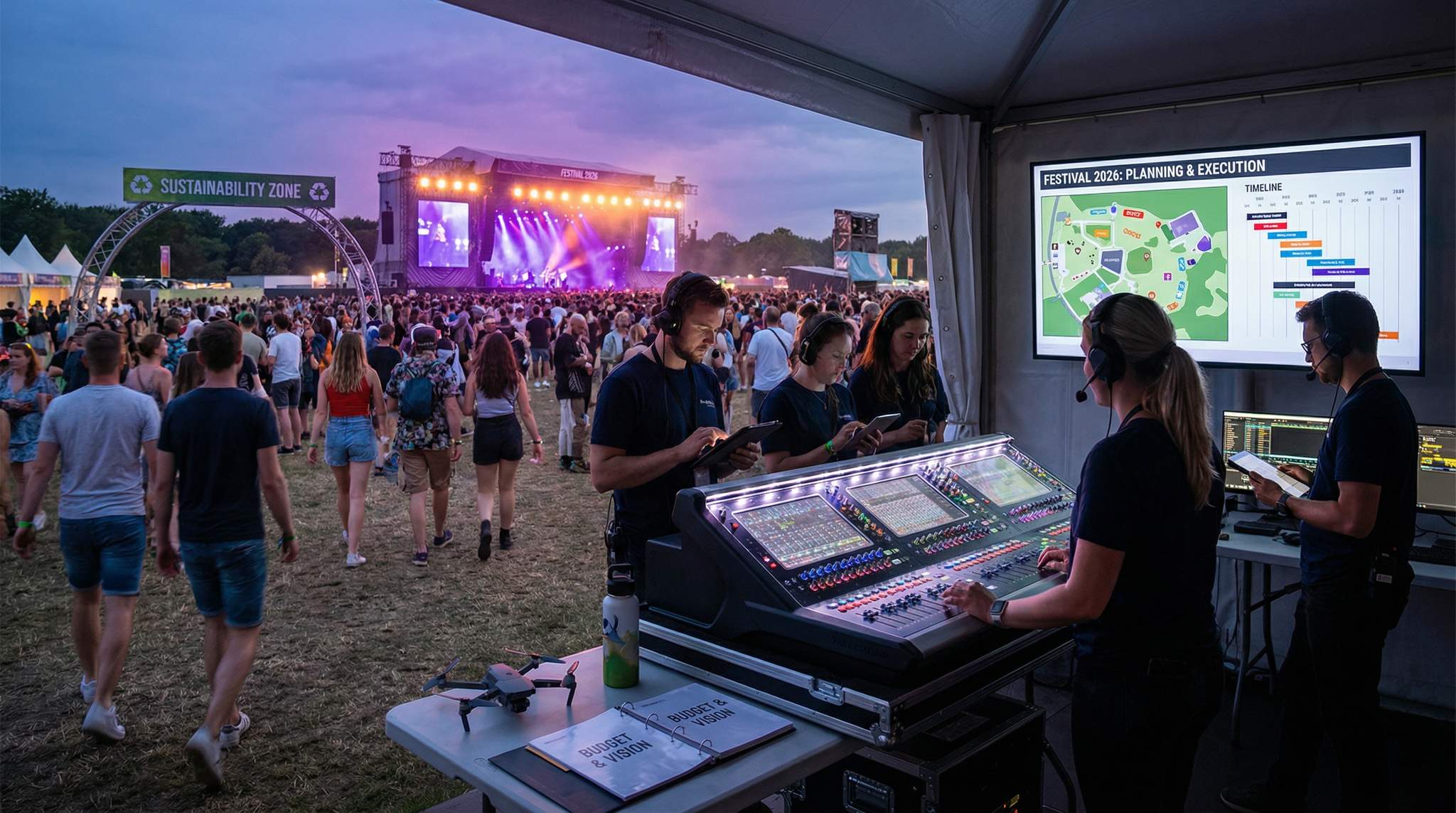
Back-End and Planning Tech: Equally important is the technology you use behind the scenes. Event management software can greatly streamline planning by organizing your timelines, vendor contacts, contracts, and checklists in one system. There are platforms tailored for festivals that handle everything from volunteer sign-ups and shift scheduling to artist advancing (collecting all the artist technical requirements and hospitality needs digitally). Using project management tools among your team (with shared task boards, calendars, and document repositories) will ensure everyone stays on the same page, especially in the hectic weeks leading up to the festival. During the event, technology in the operations center is key: use radios and communication apps for staff coordination, GPS tracking for logistics (like knowing where the water truck is or when the next shuttle bus will arrive), and incident management systems to log and respond to any issues in real time. After the festival, tech helps with collecting feedback (online surveys via email or app push notifications) and analyzing data like attendance patterns, which can provide crucial insights for next year.
Warning: With the explosion of flashy new tech tools, it’s easy to overspend or complicate your festival with unnecessary gadgets. Always ask how a given technology will genuinely improve the attendee experience or your operational efficiency. A cashless payment system that eliminates lines? Absolutely. A cumbersome AR app that few will use? Maybe skip it. Test new technologies at smaller scales or pilot programs if possible, and have analog backups for critical functions (for example, a paper copy of the schedule on hand, or manual ticket list access) in case tech fails. The goal is to make the festival smoother and more memorable, not to add tech headaches.
Also Read: Festival Tech Overload in 2026: Choosing the Right Tools Without Overwhelm
7. Staffing and Logistics
Even the best plans will fall flat without the right people to execute them. Running a music festival is an all-hands-on-deck operation that requires a reliable, well-trained team and tight coordination behind the scenes. From the moment doors open (and even before), your staff and volunteers are the ones who bring the festival to life and keep attendees safe.
When figuring out how to organise a music festival, establishing a clear chain of command is just as critical as hiring the right people. A standard festival organizational chart typically divides the workload into distinct departments: Site Operations, Talent Buying & Artist Relations, Marketing & Ticketing, Finance, and Health & Safety. By compartmentalizing these areas, the core production team can delegate effectively, ensuring that the massive undertaking of planning a music festival doesn’t bottleneck with a single promoter. This structured approach allows department heads to manage their specific micro-timelines while reporting back to the executive producer.
Build a Strong Team: Start by identifying key roles you need to fill. At minimum, you’ll want experienced leaders for operations, production/stage management, security, communications, and logistics. For example, a Festival Operations Manager might oversee the overall event flow, a Production Manager or Stage Manager handles stage schedules and technical crews, and a Volunteer Coordinator manages any unpaid staff. Hire people who have done it before if you can – a seasoned security chief or site manager brings invaluable know-how about crowd behavior, weather contingencies, etc. If your budget allows, consider bringing on a few specialized consultants (e.g., a safety consultant or a traffic engineer for a large event). Begin recruiting early – the live events industry has faced labor shortages in recent years, so you want to lock in good staff and crew well ahead of time. Leverage your network and reach out to people who have worked similar events. For lower-level staff and day-of-show crew, you can also coordinate with local event staffing agencies or trusted vendors (for tasks like stagehand labor, cleanup crews, etc.).
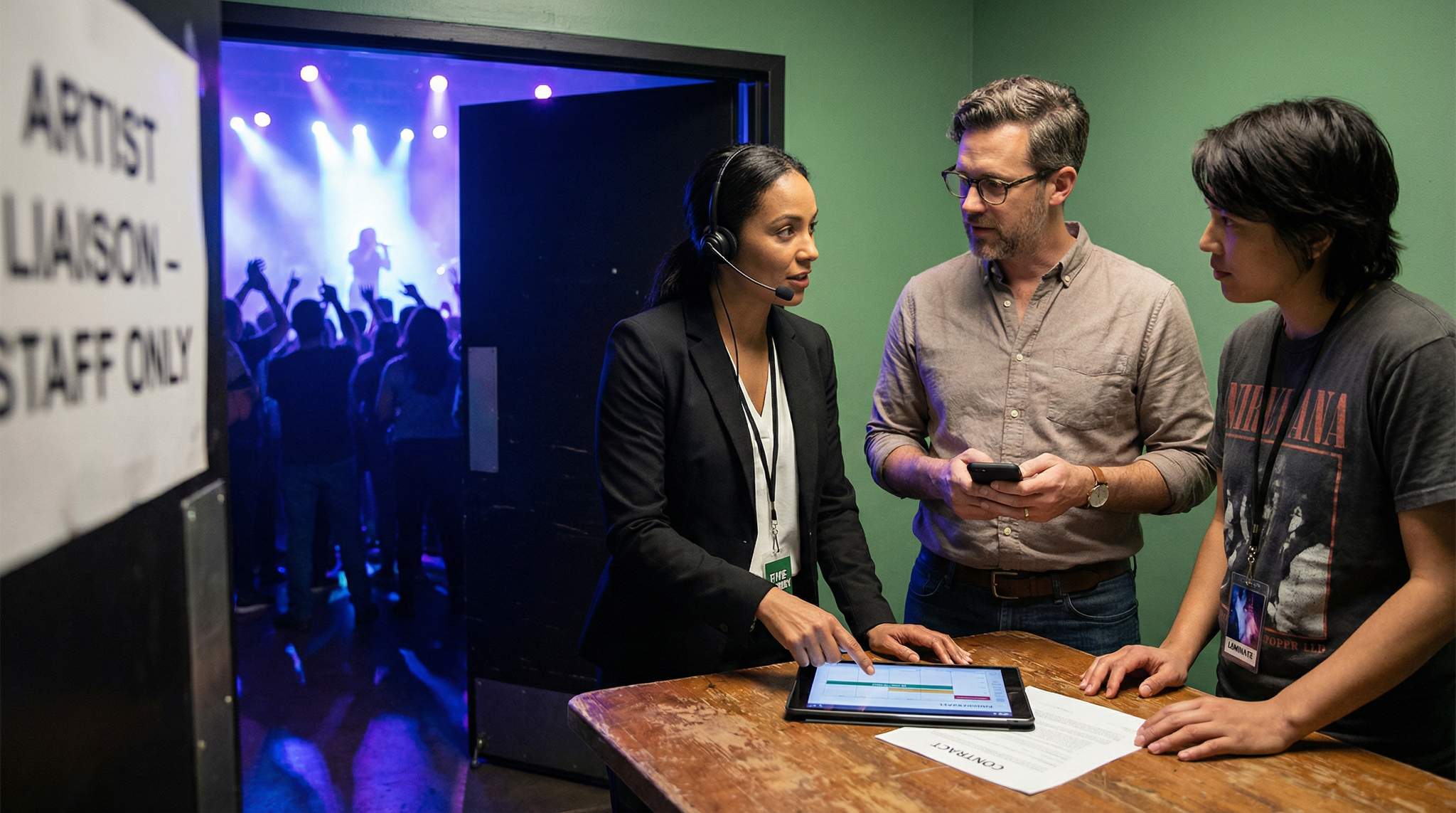
Volunteers: Many festivals rely on volunteer labor for tasks like ticket scanning, info booths, artist liaison runners, and cleanup. A strong volunteer program can both reduce costs and build a community around your event – some fans love the chance to be part of the action. If using volunteers, clearly communicate what they get in return (free or discounted tickets, merchandise, food vouchers, volunteer-only swag, or a special thank-you party after the festival). Assign roles that match their abilities, provide training (even if just a pre-event briefing), and have team leaders or supervisors in place so volunteers have someone to ask for help. Also, be mindful of labor regulations – in some places, you can’t use volunteers for certain roles that should be paid, or you may need to provide certain amenities if they work long shifts. Treat your volunteers well; a happy volunteer can become an annual ambassador for your festival, whereas a mistreated one can tarnish your reputation (word spreads fast in communities).
Logistics and Operations: Meticulous logistical planning keeps the festival machine running smoothly. This covers a lot of ground:
– Site Setup: Plan load-in schedules for vendors, equipment, and infrastructure. Stagger arrivals so that, say, the stage construction crew isn’t blocked by food trucks unloading at the same time. Create a site map that marks where everything goes (stages, tents, generators, toilets, water points, merch booths, medical tents, etc.) and share it with all vendors and crew beforehand.
– Crowd Management: Design the physical layout and barriers to naturally guide crowd flow. Use barriers or fencing to prevent dangerous overcrowding in front of stages and to block off restricted areas. Have a clear protocol for managing crowd surges or pauses in performances – for example, ensure your MC or artists know to calmly notify the crowd if there’s any interruption or issue, to prevent panic. If you have a large general admission crowd, consider using video screens and delay towers (speakers further back) so people far from the stage still get a good experience and don’t push forward excessively. Keep communication open between security, stage managers, and the central control center so you can respond quickly if a crowd issue arises.
– Traffic and Transport: If attendees are arriving by car, work with local authorities on a traffic management plan. You might need signage on nearby roads, police or marshals directing traffic, and a strategy for peak ingress and egress times. Designate drop-off/pick-up zones for rideshares or shuttles. For parking, have attendants guide cars and use lot section markers (so people remember where they parked). After the show each night, getting everyone out efficiently and safely is just as important – consider staggering exit times by offering a late DJ set or keeping concession stands open late so not everyone heads to the exits at once.
– Signage and Communication: A well-signposted festival is a safer and happier festival. Use large, clear signs to point people to key locations: entrances/exits, stage names, restrooms, first aid, water stations, info points, and camping areas. Also employ digital communication – a combination of push notifications via your app, social media updates, and announcements on the PA or video screens – to convey important messages (“Storm coming, seek shelter” or “Lost child reported, please keep an eye out for a 6-year-old boy in a red shirt,” etc.). Establish an information booth or help desk where attendees can ask questions or report issues.
– Backstage and Vendors: Don’t forget the behind-the-scenes logistics. Coordinate with artists for smooth backstage operations – assign stage managers to each stage to wrangle set times, and have hospitality ready (food, drinks, comfortable green room) so artists feel taken care of. Manage vendor logistics by assigning load-in times and locations for all food trucks, market stalls, etc., and ensure they know the rules (e.g., no single-use plastics if you’re doing a green festival, as mentioned).
For those learning how to organize a music festival from an operational standpoint, mastering vendor procurement and site mapping is essential. Before a single piece of staging arrives, your operations team must finalize a detailed site plan that dictates load-in sequences, heavy machinery pathways, and power distribution grids. When you organize festival logistics at this granular level, you prevent the costly delays that occur when multiple suppliers attempt to access the same footprint simultaneously.
Understanding how to set up a festival site efficiently is a cornerstone of successful production. A well-executed festival set up requires a phased approach, beginning with heavy infrastructure like staging, perimeter fencing, and power generators, before moving on to lighter elements such as vendor tents, signage, and audio-visual rigging. By sequencing your build schedule logically, you minimize the risk of heavy machinery damaging delicate equipment or blocking access routes for subsequent deliveries.
Transitioning from the initial strategy to on-the-ground execution is where many first-time promoters stumble. Successfully organising a music festival requires shifting your mindset from high-level booking to micro-logistics. This means establishing rigorous daily production schedules, conducting site safety walks, and ensuring every vendor, artist liaison, and site crew member understands their specific operational window. The physical act of organizing the event site demands real-time problem solving—whether that’s rerouting a delayed stage delivery or adjusting crowd barriers before gates open.
When planning a music festival, having a centralized, living document is non-negotiable. Develop a comprehensive music festival planning checklist that tracks every micro-deadline across departments—from the day artist deposits are due to the final site walk-through with the fire marshal. This level of granular organization is what separates amateur promoters from seasoned professionals who know exactly how to organise a music festival at scale.
As your event scales, relying solely on spreadsheets becomes a liability. Professional music festival management requires adopting specialized platforms that integrate advanced event ticketing, staff scheduling, and vendor communications into a single dashboard. The complexities of event management for music festivals—from advancing artist riders to tracking real-time site build progress—demand a dedicated festival ticketing platform that provides your entire production team with a unified source of truth. Mastering this level of festival management ensures that when a last-minute crisis hits, your department heads are reacting to data, not guessing.
Running logistics is like conducting an orchestra – when each section knows their part and timing, you get a harmonious result. Consider conducting a full “dress rehearsal” or tabletop exercise with your core team before the festival: walk through the event timeline and imaginary scenarios (an hour-by-hour run-through of Day 1, and how you’d handle a sudden thunderstorm at 3 PM, for example). This can reveal gaps or misunderstandings to fix ahead of time.
Ultimately, the ability to successfully organize a festival comes down to how well you manage these overlapping logistical timelines. Whether you are putting together a 500-person boutique gathering or a 50,000-capacity mega-event, the core principles of how to organize a festival remain the same: delegate effectively, maintain rigorous vendor communication, and always have a contingency plan for your critical infrastructure.
Ultimately, understanding how to run a music festival day-to-day is vastly different from the initial design phase. While planning focuses on contracts and marketing, running the actual event requires dynamic leadership and rapid crisis management. If you want to know how to put on a music festival that operates seamlessly, you must empower your department heads to make real-time decisions. The most successful producers build a command center—often called event control—where all radio traffic, weather updates, and crowd flow data converge, allowing the core team to steer the live operation without getting bogged down in minor vendor disputes.
To ensure all these moving parts align, veteran producers rely on detailed functional specifications for a music festival. This comprehensive technical document outlines the exact requirements for every operational system—from power distribution grids and broadband internet bandwidth for cashless terminals, to the load-bearing capacities of temporary staging. Developing these functional specs early prevents costly miscommunications between your site manager, technical vendors, and local permitting authorities.
When organizing a music festival, one of the most critical yet overlooked elements is cross-departmental synergy. The site operations team cannot work in a silo away from the talent buyers or marketing directors. A successful approach to organizing a festival involves establishing weekly all-hands production meetings starting at least six months out. This ensures that when the marketing team promises a specific VIP activation, the logistics crew has already allocated the necessary power, fencing, and staffing to deliver it safely.
Also Read: The Ultimate Stage Management Guide in 2025: Tools, Trends, and Best Practices
8. Build Partnerships and Sponsorships
Successful festivals often have a network of partners and sponsors behind them. These collaborations can inject crucial funding, resources, and credibility into your event while also enhancing the experience for attendees. Think of partnerships as win-win relationships: they help you shoulder the heavy costs and logistics of the festival, and in return partners get access to your audience or other benefits.
Also Read: Live Music Event Brand Partnerships Guide 2025: How They Drive Success
Running logistics is like conducting an orchestra – when each section knows their part and timing, you get a harmonious result. Consider conducting a full “dress rehearsal” or tabletop exercise with your core team before the festival: walk through the event timeline and imaginary scenarios (an hour-by-hour run-through of Day 1, and how you’d handle a sudden thunderstorm at 3 PM, for example). This can reveal gaps or misunderstandings to fix ahead of time.
Ultimately, the ability to successfully organize a festival comes down to how well you manage these overlapping logistical timelines. Whether you are putting together a 500-person boutique gathering or a 50,000-capacity mega-event, the core principles of how to organize a festival remain the same: delegate effectively, maintain rigorous vendor communication, and always have a contingency plan for your critical infrastructure.
Ultimately, understanding how to run a music festival day-to-day is vastly different from the initial design phase. While planning focuses on contracts and marketing, running the actual event requires dynamic leadership and rapid crisis management. If you want to know how to put on a music festival that operates seamlessly, you must empower your department heads to make real-time decisions. The most successful producers build a command center—often called event control—where all radio traffic, weather updates, and crowd flow data converge, allowing the core team to steer the live operation without getting bogged down in minor vendor disputes.
Also Read: The Ultimate Stage Management Guide in 2025: Tools, Trends, and Best Practices
8. Build Partnerships and Sponsorships
Successful festivals often have a network of partners and sponsors behind them. These collaborations can inject crucial funding, resources, and credibility into your event while also enhancing the experience for attendees. Think of partnerships as win-win relationships: they help you shoulder the heavy costs and logistics of the festival, and in return partners get access to your audience or other benefits.
Also Read: Live Music Event Brand Partnerships Guide 2025: How They Drive Success
Why are sponsorships and partnerships so valuable?
– Increase Revenue: Sponsors often provide direct financial support or in-kind contributions (e.g., a beer sponsor supplying product instead of cash), which can offset major expenses. A title sponsor for your main stage or the entire festival might cover a significant chunk of your budget in exchange for brand visibility.
– Enhance the Attendee Experience: Good partners bring added value for your crowd. For example, a partnership with a popular beverage brand might mean creative cocktail bars on-site, or a tech sponsor could set up free charging stations or a virtual reality experience booth. These extras make the festival more enjoyable at no extra cost to you.
– Expand Marketing Reach: When you partner with brands or organizations, you can tap into their marketing channels. A local radio station that partners with your festival will talk it up on air; a brand sponsor will promote their involvement to their customers. Co-promotion helps you reach potential attendees who might not have heard of your festival otherwise.
– Build Community and Credibility: Aligning with local businesses, community organizations, or known brands can bolster your reputation. If a respected local brewery, a city tourism board, or a music publication is involved, it signals that your festival is legitimate and worth attending. Plus, engaging local partners (restaurants, artisans, cultural groups) integrates your festival into the community fabric, generating goodwill.
How to Build Effective Partnerships:
1. Identify Prospective Partners: Look for businesses and organizations that align with your festival’s theme and audience. Make a list of potential sponsors at national and local levels. Think broadly: corporations (beer companies, tech firms, apparel brands), local venues or businesses (nightclubs, retailers), media outlets, food and beverage companies, tourism boards or city agencies, and even other events that might cross-promote. Research what sponsorships similar festivals have – if a rival event has an energy drink sponsor, you might approach a competitor of that brand for yours.
2. Craft a Compelling Proposal: Develop a sponsorship deck or proposal that highlights what makes your festival special (vision, lineup, audience demographics, expected attendance) and lays out the benefits for sponsors. Include various sponsorship tiers/packages – for example: “Gold Sponsor” gets naming rights to a stage and logos on all marketing, “Silver Sponsor” gets a banner and VIP booth, etc. Use data if you have it (social media reach, past attendance stats, engagement levels) to show the potential ROI for a sponsor. And don’t focus only on exposure – outline creative activations: e.g., “opportunity to run a branded chill-out lounge” or “presenting sponsor of our live stream” as part of the package.
3. Reach Out and Pitch: Approach your target partners professionally. Send a personalized email or make a call to the marketing or community manager of the company with a brief of your festival and why you think it aligns with their brand. If you have a mutual contact or the introduction can come via a networking connection, even better. Be persistent (companies are busy and get many proposals) but also polite. Don’t be discouraged by no’s – sponsorship is often a numbers game.
4. Negotiate Mutually Beneficial Terms: When a potential partner shows interest, discuss what each party is looking for. Maybe a local company can’t give much money, but they can provide a needed service for free – that’s still valuable. Be open to in-kind sponsorships (e.g., an audio company lending sound equipment, a brewery supplying beer) if it defrays costs. Clarify expectations: what exactly will the sponsor provide (cash, product, cross-promotion) and what will you provide (logo placements, shoutouts on stage, free tickets, etc.). Nail down details like the duration of sponsorship (just this event or multi-year), category exclusivity (will that beer brand be the only beer sold?), and any key performance indicators (like a sponsor might want a minimum number of social media impressions).
5. Activate and Maintain the Partnership: Once agreements are signed, integrate sponsors into your event plan so they get the value promised. Ensure their logos go on all relevant materials, coordinate load-in for any activation booth they bring, and give them the passes they need. Educate your staff about sponsors (e.g., security should know that the sponsor’s promo vehicle arriving is authorized). During the festival, assign someone to liaise with sponsors and make sure they’re happy (and fix any issues immediately – if the power goes out in the sponsored tent, that’s a priority to restore). After the festival, follow up with a thank-you and a recap report highlighting the exposure they got and success of the partnership (this helps renew deals for next year). Maintaining good relationships can turn one-off sponsors into long-term partners.
Tips for Successful Partnerships:
– Highlight Benefits, Not Just Features: In all communications, frame the partnership from the sponsor’s perspective. Instead of “We need money for our second stage,” say “Your brand will gain exposure to 5,000 young trendsetters on our second stage, plus content for your social channels.” Show you understand their goals.
– Be Flexible and Creative: Each sponsor will have different objectives. Some care about brand awareness, others want sales leads, others CSR (Corporate Social Responsibility) cred. Tailor packages to fit their needs where possible. If a potential sponsor balks at cost, maybe offer a smaller package or a trial deal. If a sponsor has an idea for an activation that wasn’t in your plan but is workable, be open to it – it could enhance your event too.
– Maintain Communication: Keep partners in the loop from the planning stages through post-event. Send them periodic updates like “We just confirmed our headliner – we think this will boost ticket sales, which is great for your exposure” or logistical details they need. Good communication prevents misunderstandings and builds trust.
– Align Values and Audience: Aim for sponsors that make sense with your festival’s image. A hardcore punk festival might pair well with an alternative clothing brand or energy drink, but maybe not with a luxury wine sponsor (fans would see through that mismatch). When the partnership feels organic, attendees engage more with it – and the sponsor will see better results. Also, avoid partners whose values conflict with yours (if your festival prides itself on sustainability, think twice before partnering with a company with a poor environmental record, for instance).
– Deliver on Your Promises: This is crucial for trust. If you promised a sponsor they’d have their logo on the live stream or a mention in press releases, make absolutely sure those things happen. It’s better to under-promise and over-deliver. Provide sponsors with a post-event report (include metrics like attendance, social media reach, photos of their branding on-site, etc.) – this transparency shows professionalism and helps justify their spend.
Also Read: 5 Essential Elements for a Successful Live Event Brand Partnership Strategy
Examples of Partnership Opportunities:
Local Restaurants: Team up with popular eateries or food trucks in your area. They could become official food vendors at your festival, offering unique dishes that enhance the local flavor of your event. In return, you might promote them on your website or give them a prime vending location. Some festivals also arrange “show your wristband for a discount” deals with local restaurants in town – encouraging festival-goers to patronize them during festival week, which boosts the local economy and fosters goodwill.
Entertainment Add-Ons: Beyond music, you can partner with companies to provide extra attractions. For example, you might collaborate with a carnival ride company to set up a Ferris wheel or funfair area, sponsored by that company (or by a brand that wants a big, fun activation). Or partner with artists and tech companies to bring art installations, virtual reality experiences, or gaming zones. These partners may not always contribute cash, but by providing gear or experiences at low/no cost, they make your festival more memorable.
Local Media Outlets: Radio stations, local magazines, or event blogs love partnerships with festivals. They gain content and exclusives (like artist interviews or ticket giveaways) and you gain free publicity. You can offer a media partner status which includes putting their logo on your promotions, shoutouts during the event, and perhaps a small booth on-site, in exchange for a certain amount of ad spots or coverage leading up to the festival. For instance, a regional radio station might run festival commercials and do live broadcasts from the event, boosting your reach significantly.
Brand Sponsorships: Larger brands (think beverage companies, tech giants, auto brands, banks, etc.) often have budgets for event marketing. If you secure one, make the integration creative. Instead of just a logo banner, maybe the beer sponsor can create a themed bar area or the tech company can host a cool interactive photo booth that posts pictures to social media. Brand sponsors typically want to see engagement – so brainstorm activations that get attendees interacting with their product or branding in a fun way. Done right, these can become highlight attractions at your festival (like [Brand Name] silent disco tent or [Brand Name] water refill station with their branding). Always uphold any contractual visibility obligations (e.g., minimum number of logo impressions on signage, stage mentions like “This next set brought to you by…,” etc.).
By cultivating strong partnerships and sponsorships, you not only ease the financial burden on your festival but also enrich the experience for attendees. The key is to choose partners that genuinely add value and to nurture those relationships professionally. Ideally, sponsors will become annual allies in your festival’s journey, growing alongside your event and contributing to its long-term success.
9. Marketing and Promotion
You could book the greatest lineup and have the perfect venue, but without effective marketing, your festival might still end up half-empty. Promotion is what drives ticket sales and builds the hype that makes your event the place to be. In 2026, marketing a festival requires a savvy mix of digital strategy, grassroots outreach, and creative engagement to cut through the noise.
Before launching any public-facing campaigns, you must formalize a comprehensive music festival marketing plan. This strategic roadmap should detail your audience personas, budget allocation per channel, and a phased timeline for lineup announcements and ticket tier releases. Many successful promoters use a standardized how to plan a festival template to outline these marketing deliverables, ensuring that every social media post, press release, and influencer activation is tracked against specific ROI targets.
Craft a Multi-Channel Campaign: Start by developing a comprehensive marketing plan that covers all channels:
– Social Media: This is your frontline. Establish a strong presence on platforms where your target audience hangs out – Instagram, TikTok, Facebook, Twitter/X, and possibly YouTube. Create a content calendar with regular posts: artist spotlights, throwback videos of past events, behind-the-scenes peeks as you build stages or do soundchecks, countdowns to big announcements, etc. Use platform features (Instagram Stories, TikTok trends) to your advantage. Short-form video is incredibly powerful for music events – teaser clips of performers, or a 15-second montage of what attendees can expect (flashing lights, happy crowds, etc.) can ignite excitement.
– Email and Direct Marketing: Don’t underestimate email – it’s one of the most cost-effective ways to reach interested fans directly. Build an email list via your ticketing platform or website sign-ups and send out updates: exclusive lineup announcements to subscribers, presale ticket offers, and informative newsletters (“Top 10 Festival Preparation Tips”) that also subtly remind them to buy tickets. Personalize emails when possible (many email tools allow you to insert the recipient’s name, etc.), and keep the design mobile-friendly.
– Paid Digital Ads: To reach new eyeballs, invest in targeted online advertising. Use Facebook/Instagram Ads and Google Ads with geotargeting and interest-based targeting (for example, target fans of similar artists or followers of competitor festivals). If your budget allows, expand to TikTok ads or YouTube pre-roll ads featuring a hype reel of your festival. For 2026, consider programmatic ad platforms which can place your banners on websites frequented by music lovers. Always use compelling visuals and a clear call-to-action (“Tickets on sale now!” with a direct link).
– Influencer Partnerships: Identify influential figures in the music and lifestyle space who resonate with your festival’s style. This could be a popular DJ who isn’t on the lineup but loves your genre, a local music blogger, or social media personalities who attend lots of festivals. Partner with them to create content – maybe a “festival fashion tips” post featuring your event, or an Instagram takeover where an influencer shares updates from your launch party. Make sure any influencers you work with disclose the partnership per advertising rules, and aim for authenticity: audiences can tell if someone is just phoning it in. Ideally, invite some of these influencers to your festival to cover it live – their followers will get an on-the-ground perspective that could translate into late ticket sales or at least build your brand for next year.
– Traditional Media & PR: While digital is core, traditional media still has a role, especially for reaching local communities or older demographics. Send out press releases to local newspapers, magazines, and radio/TV stations when you have newsworthy updates (e.g., headliner announcement, new safety measures, a sold-out milestone). Offer press passes to relevant journalists and bloggers to cover the festival. Do some grassroots postering in your region – eye-catching posters or flyers at music venues, cafes, universities, and record stores can raise awareness. And consider hosting a small preview event or press conference, perhaps featuring a live performance or Q&A, to generate media coverage ahead of the festival. Local radio stations might run ticket giveaways in exchange for some on-air mentions – those kinds of promotions are win-win and reach people who might not see your Instagram ads.
– Community Engagement: Build an online community around your festival. This could mean a Facebook Event or group where fans can discuss plans, or a subreddit or Discord server for the festival where you (or superfans) share updates and answer questions. Engage directly with comments and DMs – prompt responses to fan inquiries can turn a “maybe I’ll go” into a ticket purchase. Running contests and giveaways is great for engagement: for example, ask fans to share a post or create content (like a fan art poster for the festival) with a chance to win VIP upgrades or merch. Not only does this spread the word via user-generated content, it makes fans feel personally invested.
Time Your Announcements Strategically: Major festivals often roll out their lineup in phases – a big initial headliner reveal, then secondary artist announcements, and so on – to generate multiple waves of publicity. Figure out a timeline for your key announcements and ticket sale periods (early bird launch, lineup drop, schedule release, etc.). Align marketing pushes around those. For instance, if your tickets go on sale in September, start teasing the lineup in August with cryptic hints or small reveals to build anticipation. Use milestones as marketing hooks (“Only 100 days until the festival – check out our new aftermovie from last year!”). As the event nears, create urgency: “Last chance for discount tickets – prices go up next week” or “Only 500 tickets left for Saturday!”
Leverage Your Lineup for Marketing: Each artist on your bill is an ambassador for your festival. Provide your booked artists with promotional materials (graphics or short videos announcing they’re playing) and encourage them to share these on their socials. Many artists will hype their festival appearances because it benefits them (bigger crowd energy) – tap into that. Perhaps organize an Instagram Live with one of your headliners talking about what fans can expect at the festival, or have artists do a quick shout-out video (“Hey, this is DJ XYZ – catch me at [Your Festival] on July 15th!”). This not only spreads the word to the artists’ followers, but also lends credibility; if a fan sees their favorite band excited about playing your fest, they’ll be more likely to go.
On-Site and Post-Event Marketing: Marketing doesn’t stop once the festival starts. Use the event itself to create FOMO for those not there – post live clips, daily highlight reels, and crowd shots (with attendees’ consent) to your social channels during the festival. Show off the excitement and unique moments. This real-time content can drive last-minute attendees if you have day passes, or simply build your brand’s cachet for next year. After the festival, share an “aftermovie” – a high-energy recap video – and photo albums. Keep the social media channels active with thank-yous and perhaps an attendee survey. The goal is to turn this year’s attendees into loyal followers who will be first in line for next year’s tickets.
Ultimately, driving year-round music festival engagement is the secret to lowering your customer acquisition costs. When fans feel continuously connected to your brand through interactive digital touchpoints, exclusive off-season content, and community-driven initiatives, they transition from casual attendees to loyal advocates. This sustained engagement ensures that when your next presale launches, you already have a captive, eager audience ready to convert.
Pro Tip: Don’t overlook the power of partnerships in marketing. Collaborate with ticketing platforms or music apps to feature your event. For example, getting your festival highlighted on a platform like Spotify’s concert finder or Songkick can reach avid concert-goers. Also, consider cross-promo deals with other festivals or events that don’t compete directly – you plug their event to your audience, they plug yours to theirs. It’s a cost-free way to expand reach and can often be done through simple agreements between promoters.
Also Read: How To Create An Effective Event Marketing Plan For Your Music Festival or Concert
10. Health and Safety Protocols
In 2026, health and safety planning remains a top priority for festival organizers. While the acute pandemic era has receded, its lessons – and other sobering events – have reshaped how we approach safety at large gatherings. A festival should be a place of joy, and that means minimizing risks and being ready to handle any emergency swiftly.
Crowd Management and Safe Design: Large crowds have inherent risks, from accidental surges to simple trip-and-fall injuries. Design your site and procedures to prioritize crowd safety. This starts with knowing your capacity limits and not overselling – it’s far better to have a safe sell-out than to pack people in beyond what your staff or venue can handle. Lay out the venue with ample space in high-traffic zones (make food courts and entrance areas big enough to avoid bottlenecks). Use barriers to channel flows, but avoid creating dead-ends where crowds could get trapped. Have clearly marked emergency exits all around and keep them unobstructed. Train your security teams in crowd psychology – they should know how to identify and alleviate dangerous crowd behavior before it escalates (for instance, recognizing signs of crowd crush in a dense audience and intervening by reducing density or pausing a show). It’s crucial to have a protocol with performers too: if things look unsafe, artists or MCs should be prepared to calmly halt the show and communicate with fans. The tragic Astroworld 2021 incident put a spotlight on the importance of real-time crowd monitoring and understanding crowd psychology risks; many festivals now employ dedicated crowd managers or use tech like AI video analytics to watch crowd density in real time and trigger alerts if things get too tight. Consider having a safety officer or experienced crowd manager on the team who coordinates between security, medical, and production if a tough call (like stopping the music) needs to be made for safety.
Public Health Measures: While we (hopefully) won’t see a return to the strict social distancing of 2020-2021, basic public health practices still matter. Continue to make hand hygiene easy – station hand sanitizer dispensers at entrances, near bathrooms, and at food areas. If any health advisories are in effect (for example, a flu outbreak or, hypothetically, a new COVID variant of concern), communicate any recommended precautions to attendees in advance. You might encourage (but not require) masking in enclosed crowded spaces if there’s a known risk; at the very least, have masks available at first aid stations for anyone who wants one. Keep an eye on any local health guidelines that might pop up. Additionally, consider environmental health factors: for outdoor summer festivals, extreme heat is a health risk – provide free water, shade, and misting/cooling areas to prevent heatstroke. If your region is prone to wildfire smoke or other air quality issues, be ready to offer respite areas (like a large tent with air filters) or masks if the air becomes unhealthy. The key is to be proactive: coordinate with local health departments when planning, so you can set up food handling standards for vendors, proper sanitation facilities (toilets and waste disposal to avoid outbreaks of illness), and any on-site testing or medical protocols you might need for a specific situation.
Emergency Response Plan: Prepare for the worst, even as you hope none of it happens. Develop a detailed Emergency Action Plan covering scenarios like severe weather (thunderstorms, high winds, extreme heat), fire, a lost child, an aggressive person or security threat, a medical emergency outbreak, etc. Assign specific roles to staff for each scenario: who makes the call to evacuate or pause the event, how will messages be delivered to attendees (e.g., stage PA announcements, big screen alerts, emergency text via the app), where will people be directed to go. If lightning strikes within a certain radius, do you have enough shelter area or will you send everyone to their cars? If a section of the venue becomes unsafe, can you reroute foot traffic easily? Conduct training with your core team and security on these plans – even a tabletop exercise walking through “what if” scenarios can surface important details. Local police, fire, and EMS should be looped into your plans; often they appreciate being invited to a pre-event briefing or site walk-through so they’re familiar with the venue and prepared to assist if needed.
On-Site Medical and Health Services: As mentioned in staffing, have medical personnel and facilities appropriate to your festival’s size. Clearly mark first aid tents on your map and signage. Encourage attendees to seek help at the first sign of distress (better they come to first aid feeling a little unwell than ignore it and it becomes serious). Modern festivals often go beyond basic first aid – many now stock Naloxone (Narcan) for drug overdose reversal and train staff/volunteers in its usage, coordinate with local organizations to provide drug education or testing kits (where legal) to prevent accidents, and have mental health/welfare teams roaming (especially at multi-day camping festivals, attendees might get anxious or overwhelmed). These measures can genuinely save lives and show your audience that you care about their well-being. Also plan for accessibility and disability services: ensure your medical team knows how to assist guests with disabilities (for instance, someone in a wheelchair needing evacuation from a crowd) and that you have resources like mobility aid charging stations or ASL interpreters if needed for safety announcements.
Insurance and Liability: Acquiring comprehensive insurance is an essential (if unglamorous) part of safety planning. At minimum, you’ll need general liability insurance to cover injuries or accidents, and it’s wise to have event cancellation insurance for weather or other uncontrollable cancellations (though since 2020, communicable disease coverage has been very hard to get or extremely expensive). Work with an insurance broker who understands large events – they can advise on the proper coverage amounts and any special riders (for example, if you’re having pyrotechnics, you might need an extra policy). Document all your safety measures; not only does this help in case of an insurance claim, but it also demonstrates to stakeholders (and possibly in any legal situation) that you took due diligence.
Ultimately, a safe festival is the product of careful preparation and an attentive operations team. Many issues can be prevented by smart planning, and those that can’t be prevented can be mitigated with a solid response. Attendees will remember not just the great music but also that they felt safe and cared for throughout the event – a fundamental aspect of a positive festival reputation.
Also Read: Crowd Psychology 101 for 2026 Festivals: Designing Safer, Happier Events
11. Post-Festival Engagement
Just because the festival is over doesn’t mean your job is done. How you interact with your community after the event can influence your festival’s long-term success. The end of the festival is actually the beginning of building momentum for your next one. Here’s how to keep the magic alive once the final encore has played:
Express Gratitude: Soon after the festival (within a day or two), send out thank-you messages. This could be an email blast to all ticket buyers, a heartfelt post on social media, and personal thank-yous to key partners and crew. Acknowledge everyone—attendees for their energy and positivity, artists for their performances, volunteers and staff for their hard work, sponsors for their support, and the local community for hosting the event. Sincere appreciation makes people feel good about being part of your festival family and more likely to support future events.
Gather Feedback and Data: One of the best times to learn is right after the event, while experiences are fresh. Create a post-event survey and email it to attendees or push it through your app. Ask about what they loved, what could be improved, and suggestions for the future. Keep it concise, but do include a mix of rating-scale questions and a couple open-ended ones for detailed feedback. Use incentives for responses if possible (maybe a chance to win a pair of tickets for next year). Pay special attention to common themes in the feedback—if many people mention that lines for water were too long, that’s something to address. Also gather debriefs from your team: hold an internal meeting to document what went wrong (there are always a few hiccups) and brainstorm solutions. Showing attendees that you listened is powerful; industry research shows about 80% of festival-goers are more likely to return if they feel their feedback was valued and acted upon.
Share Memories and Content: Keep the excitement going on your channels by sharing highlights. This is where having a photographer and videographer on your team pays off. Within a week post an official aftermovie – a 3–5 minute highlight reel with the best moments, crowd shots, and artist highlights (set it to an uplifting track, ideally by one of the headliners). Major festivals’ aftermovies often rack up millions of views and become a key marketing asset for the next year. Release photo albums on Facebook or Flickr and encourage attendees to tag themselves. On Instagram, continue posting epic shots or fan-generated content with your hashtag (with permission and credit) for a few weeks after the event. This not only gives people a dose of nostalgia but also shows anyone who missed it what they can look forward to next time.
Maintain the Community Year-Round: Don’t let your festival’s social media and email list go dormant for 10 months and then suddenly spring back to life to announce the next lineup. Keep light engagement throughout the year – even if it’s periodic. You can share off-season updates like “big news coming soon” teasers, throwback posts to past festival moments (“Remember when X band played that surprise cover at sunset?”), or relevant music news that resonates with your audience. If your festival has a theme or community (say, a folk festival might share links to artists’ new releases, or a sustainability-focused festival might post eco-tip trivia now and then), this content keeps people connected to your brand. Consider hosting smaller off-season events or a presence at other events – for example, organize a holiday meetup or host a stage at a city fair – and promote those to your followers. The idea is to nurture a loyal community that feels like your festival is more than just those few days a year.
Plan the Next Sales Cycle: Believe it or not, hardcore fans will start asking about next year almost immediately. Capitalize on the post-event high by announcing dates for the next edition as soon as you can (if you have them set and the city permit locked, for instance). Some festivals even launch a “loyalty” pre-sale right after the event, where this year’s attendees get first dibs on next year’s tickets at a special price. That can drive early revenue and commitment. If you’re not ready to sell tickets, at least open a pre-registration list (“Sign up now to be the first to know about 2027 tickets and lineup”) – this helps gauge interest and builds an email list of warm leads. In any case, keep past attendees in the loop for future events – they are your easiest sell since they’ve experienced it already.
Address Issues and Celebrate Wins: Use your post-festival communication to be transparent if something went wrong and highlight what went right. For example, if there was a long delay one night due to weather, you might acknowledge it in your recap – “Thanks for your patience during Friday’s storm delay – safety comes first and we appreciate everyone staying in good spirits!” This kind of honesty builds trust. Conversely, if you broke an attendance record or did something eco-friendly like donated leftover food to a charity, share that proud achievement. It makes attendees feel they were part of something significant and positive.
By engaging attendees after the event, you turn a one-time ticket buyer into a potential long-term fan who will not only come back themselves but also bring friends and spread the word. The experience of your festival should linger in their minds – through the photos they look at, the stories they tell, and the feeling that they’re now part of a community waiting excitedly for the next chapter.
Planning a music festival is an enormous endeavor that goes far beyond booking artists and renting a sound system. As we’ve covered, it demands attention to vision and branding, rigorous financial planning, thoughtful venue design, curation of talent, commitment to sustainability, smart technology use, talented people behind the scenes, strong partnerships, savvy marketing, and diligent safety measures. It’s about blending creativity with practicality – ensuring the toilets get cleaned and the lights turn on, but also crafting moments of magic that people will cherish. Stay on top of industry trends, learn from others’ successes and mistakes, and never lose sight of the attendee perspective (after all, delivering a fantastic experience is the ultimate goal). Whether you’re building a boutique indie gathering or a mega-festival for tens of thousands, a detail-oriented approach paired with big-picture vision will set you up for success. With passion, planning, and perseverance, you can create a festival that not only runs smoothly but becomes a highlight of the year for everyone involved – an unforgettable celebration of music and community that keeps fans coming back.
You May Also Like:
– Music Festival Marketing: The Ultimate Guide to Boosting Ticket Sales and Buzz
– Music Event Technology Trends 2025: Innovations Shaping the Future of Live Music Experiences
– Festival Ticketing Strategies: 10 Proven Ways to Maximize Sales & Revenue
Frequently Asked Questions
How should I allocate a music festival budget in 2026?
Allocate approximately 30–50% of your total budget to talent booking and hospitality, followed by 20–30% for production costs like stages and sound. Reserve 10–15% for operations and staffing, and always include a contingency buffer of at least 10–15% to cover unexpected expenses or rising insurance premiums.
How much space is needed per person at a music festival?
Crowd management experts recommend planning for a minimum of 5–6 square feet per person in high-density concert areas to ensure safety and comfort. When selecting a venue, verify that the total capacity allows for this density while accommodating stages, vendor booths, emergency access lanes, and camping areas if applicable.
What are the benefits of using cashless payment systems at festivals?
Cashless systems using RFID wristbands or digital tickets significantly speed up transactions and reduce theft risks. Festivals implementing cashless payments often experience revenue increases of 15–30% per attendee due to reduced friction. Additionally, these systems provide valuable data on purchasing patterns to help optimize future event planning.
How can music festivals reduce waste and improve sustainability?
Implement robust recycling and composting programs while eliminating single-use plastics, such as banning plastic water bottles. Address the issue of abandoned camping gear by partnering with charities to collect usable tents. Additionally, utilizing renewable energy sources like solar power and offering eco-friendly merchandise helps minimize the event’s environmental footprint.
What is the recommended security ratio for music festivals?
A common starting guideline for festival safety is deploying one security guard for every 250 attendees, though this ratio should adjust based on specific risk factors and layout. Effective security planning also involves hiring professional firms, coordinating with local emergency services, and implementing real-time crowd monitoring technologies to prevent overcrowding.
How does a multi-channel marketing strategy work for festivals?
A multi-channel strategy combines viral social media campaigns, influencer partnerships, and targeted digital ads to reach diverse audiences. Organizers should strategically time announcements, such as releasing lineups in phases to generate waves of publicity, and utilize tiered ticket pricing with early-bird discounts to drive initial sales and build momentum.
How do I start a music festival from scratch?
To start a music festival, begin by defining a unique niche and target audience, then develop a comprehensive music festival plan that includes a realistic budget, funding sources, and a multi-year growth strategy. From there, secure a viable venue, obtain necessary permits, and build a core team of experienced event professionals to handle logistics, talent buying, and marketing.
What should be included in a music festival planning checklist?
A thorough planning checklist should cover talent booking deadlines, venue permitting milestones, budget audits, marketing campaign launches, and operational logistics like vendor load-in times, security briefings, and health and safety protocol reviews.
How long does it take to plan a music festival?
For a first-year event, a realistic music festival plan requires 12 to 18 months of lead time. This extended runway is necessary to secure a viable venue, negotiate talent contracts, obtain local permits, and execute a multi-phase marketing campaign. Rushing the process often leads to budget overruns and logistical failures.
What should be in a music festival business plan?
A professional business plan for a music festival must include an executive summary, target demographic research, a competitive market analysis, a detailed multi-year financial forecast, and a comprehensive marketing strategy. This document is critical for securing seed capital from investors and proving the long-term viability of your event.
How can you start a music festival with no money?
While launching a large-scale event requires capital, you can bootstrap a grassroots festival by utilizing ticket presales, crowdfunding, and strategic partnerships. Negotiate profit-share agreements with venues (such as giving them bar revenue in exchange for a free site) and secure in-kind sponsorships to cover essential equipment. Starting small and proving your concept allows you to generate the initial cash flow needed to host a music festival without massive upfront investment.
What are the first steps to host a music festival?
To successfully host a music festival, begin by defining a clear thematic vision and target audience. Next, draft a comprehensive business plan to outline your budget, potential revenue streams, and marketing strategy. Once your financial framework is set, focus on securing a suitable venue, obtaining the necessary local permits, and booking talent that aligns with your brand.
What team structure is needed to organise a music festival?
To successfully organise a music festival, you need a structured core team divided into specialized departments. Essential roles include an Executive Producer or Festival Director, a Site Operations Manager to handle venue logistics, a Talent Buyer for artist curation, a Marketing Director to drive ticket sales, and a Health & Safety Officer. Delegating these responsibilities ensures that every aspect of planning a music festival is managed by a dedicated expert.
What are the core components of effective music festival management?
Effective music festival management encompasses several critical pillars: rigorous financial forecasting, comprehensive site and operations planning, strategic talent curation, and robust health and safety protocols. Successful event management for music festivals also relies heavily on utilizing specialized software to centralize ticketing, staff communication, and vendor logistics, ensuring all departments operate from a single source of truth.
What are the most common pitfalls when organising a music festival?
One of the biggest mistakes when organising a music festival is underestimating the lead time required for municipal permitting and site infrastructure builds. Promoters often finalize their music festival plan on paper but fail to account for real-world delays, such as supply chain issues for staging equipment or extended approval processes for noise variances. To avoid these pitfalls, build a contingency buffer into both your budget and your production timeline, ensuring your team has ample runway to execute the event safely.
What are the most important phases when you organize a festival?
To successfully organize a festival, you must break the process into distinct phases: concept and feasibility (budgeting and vision), pre-production (venue booking, permitting, and talent acquisition), marketing and sales, on-site execution (logistics and staffing), and post-event reconciliation. Mastering how to organize a festival event means treating each of these phases as its own mini-project with dedicated timelines and department leads.
What is the difference between planning and knowing how to run a music festival?
Planning involves the strategic groundwork—budgeting, booking talent, and securing permits. Knowing how to run a music festival, however, refers to the live operational execution. This includes managing real-time crowd dynamics, overseeing the daily production schedule, coordinating emergency responses, and empowering department heads to make rapid decisions on the ground.
What are the essential operational steps to put on a music festival?
To successfully put on a music festival, organizers must transition from strategy to execution by establishing a centralized event control room, implementing rigorous daily run-of-show schedules, conducting comprehensive safety briefings with all staff, and maintaining open radio communication across all departments during the live event.
What are the functional specifications for a music festival?
Functional specifications for a music festival refer to the detailed technical and operational requirements needed to execute the event safely. This includes precise documentation on power distribution, internet bandwidth for ticketing and cashless systems, stage load capacities, plumbing infrastructure, and emergency communication networks. Providing these specs to vendors ensures all technical infrastructure is built to the correct standards.
What should a music festival marketing plan include?
A robust music festival marketing plan must outline your target audience personas, phased ticketing strategies, budget allocations for paid digital ads, and a timeline for lineup announcements. Utilizing a standardized event marketing template helps promoters track deliverables across social media, PR, and influencer partnerships to ensure maximum return on ad spend.
What are the key milestones when planning a music festival?
When planning a music festival, the critical milestones include finalizing the initial budget and business plan, securing a venue and dates, obtaining municipal permits, booking headline talent, launching the marketing and ticketing campaign, and executing the final site build. Tracking these deliverables on a centralized master schedule is essential for keeping the production on track.
What is the most challenging part of organizing a music festival?
For most promoters, the most challenging aspect of organizing a music festival is managing cash flow and aligning multi-departmental timelines. Because major expenses like venue deposits and artist guarantees are due long before the bulk of ticket revenue arrives, maintaining a strict financial runway is critical. Additionally, coordinating the overlapping schedules of site builds, vendor load-ins, and municipal permitting requires rigorous project management.
What is music experience planning in the context of festival production?
Music experience planning is the strategic design of the entire attendee journey, moving beyond basic logistics and talent booking to focus on experiential elements. It involves curating immersive environments, interactive art installations, sensory touchpoints, and seamless site navigation to create a cohesive, memorable world that fosters deep emotional connections with the audience.
What are the key phases of a festival set up?
A successful festival set up is typically divided into three phases: heavy infrastructure load-in (staging, fencing, and power distribution), secondary installations (vendor tents, audio-visual rigging, and sanitation facilities), and final detailing (signage, decor, and safety barriers). Understanding how to set up a festival site in this sequential order prevents logistical bottlenecks and ensures a safe working environment for all crew members.