Creating and managing successful music events at home is an achievement – but long-term growth means looking beyond borders. Thinking about how you could expand your music event globally allows you to align your decisions toward that goal from the start. In fact, creating music events and festivals with an eye on future international audiences can set you up for success. The live music scene is more globally connected than ever: over 30 million people now travel each year primarily to attend festivals, according to festival travel statistics from Hotel Agio. Furthermore, in 2024 the event tourism market was valued around $1.52 trillion, highlighting the economic impact of event tourism. This shows the huge opportunity when you take your event to the world stage.
As you dominate your local venues, the next step is to expand internationally. You want your event to excite overseas audiences just as much as it does at home. It’s an ambitious goal – but not unrealistic in 2025. Music fans are increasingly willing to hop on planes for great experiences; roughly 15% of festival-goers worldwide travel abroad for events now, based on global festival attendance statistics. This figure rises to nearly 1 in 4 in parts of Asia, according to Wifi Talents’ demographic data. By planning strategically, you can tap into this global enthusiasm and make your event a destination for fans everywhere.
However, expanding a beloved festival to a new country comes with challenges. You must maintain the core brand and quality that fans adore while adapting to a different local landscape – a delicate balance between maintaining global consistency and local flavor. The good news: many festivals have done it successfully. Case studies of touring festival brands expanding internationally show that global franchises can thrive abroad by blending consistency with local flair. Lollapalooza, for example, now holds editions in at least eight countries, proving that touring festival brands can succeed globally by pairing signature style with local acts. With the right approach, you can achieve similar global growth. Below are five key strategies to help your music event reach international audiences and thrive across the world.
1. Opt for a Hybrid Event Format
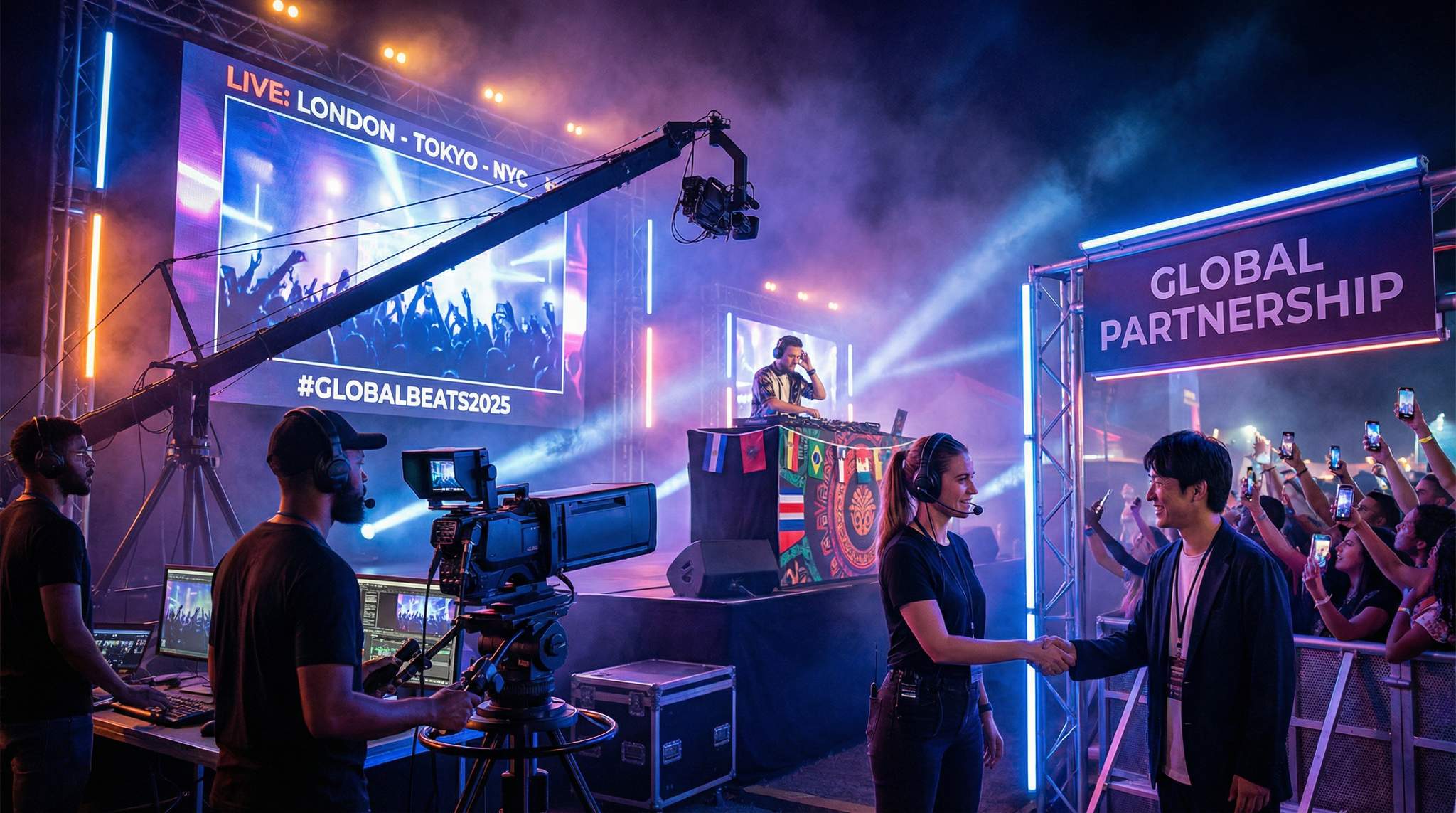
One way to immediately extend your event’s global reach is by hosting a hybrid festival that bridges in-person and online experiences – combining a live in-person show with an online streaming component. This format became common out of necessity during recent global disruptions, but now it’s a powerful tool to expand your event’s reach beyond geographical limits, effectively bridging the gap between physical and virtual events. Fans who can’t travel due to distance, cost, or health reasons can still participate virtually, creating a worldwide community around your music event. For example, some major festivals have seen millions of online viewers tuning in: Tomorrowland’s all-virtual edition in 2020 drew over 1 million paid online attendees – about 2.5× its usual in-person crowd. This success highlights the value of bundling in-person and virtual access. Another famous festival’s free livestream attracted nearly 4 million viewers globally over one weekend, further proving how hybrid festivals foster global communities. These numbers show the immense potential of hybrid formats to build international fandom.
Grow Your Social Following With Every Sale
Require social media follows, shares, or playlist adds to unlock presale access or special pricing. Turn every ticket purchase into audience growth.
Looking at successful virtual events examples can provide a blueprint for your own digital expansion. Beyond massive electronic festivals, multi-genre events like Glastonbury have hosted ticketed global livestreams featuring exclusive sets from iconic landmarks, proving that fans will pay for high-quality, location-specific digital broadcasts. Similarly, niche industry showcases and boutique indie festivals have utilized interactive platforms to host virtual meet-and-greets alongside live performances, demonstrating that digital engagement works at any scale.
Setting up a hybrid event does require extra planning and tech investment. You’ll need a dedicated crew for capturing high-quality video, streaming the performances in real time, and moderating online engagement. Ensure you have robust internet bandwidth at the venue and consider time zone differences – some festivals offer replays or adjust set times so remote viewers in various regions can tune in live. If you decide the demand is there, offer virtual tickets or streaming access passes as part of your event. You can easily configure multiple ticket types (in-person and virtual) using a platform like Ticket Fairy for hybrid event ticketing, allowing you to monetize both audiences. Many organizers even create exclusive online content (behind-the-scenes footage, artist Q&As, bonus stages) to give remote attendees a special experience. Done right, a hybrid approach not only brings in extra revenue but also boosts your global profile, since your event can be discovered by fans in any country with an internet connection.
Ready to Sell Tickets?
Create professional event pages with built-in payment processing, marketing tools, and real-time analytics.
Pro Tip: Run a full technical rehearsal for your livestream before the event. Test your cameras, audio feeds, and backup internet connections to prevent glitches. Also, designate a producer to direct the online broadcast (separate from the on-site stage manager) – this ensures virtual attendees get a seamless, engaging show rather than feeling like an afterthought.
2. Collaborate with Local Partners
One of the smartest ways to expand your music event into another country is to partner with local authorities and promoters for festival success in the host country. Forging relationships with local experts on the ground can be the determining factor between smooth success and a logistical nightmare. For any festival looking to expand, knowing how to effectively team up with local entities is crucial. Seasoned festival organizers remind us that “launching a festival in an unfamiliar locale without local allies is like sailing uncharted waters without a map,” emphasizing why local partners matter for international events. Local partners bring invaluable on-ground knowledge – from navigating permit laws and regulations to understanding cultural nuances in the community, which can be the determining factor for smooth event success. They can guide you on everything from securing the right licenses to choosing optimal dates (for example, avoiding local holidays or election periods that might conflict). In short, having a trusted team in the host country greatly reduces the learning curve when entering a foreign market.
Do your homework and identify potential partners and sponsors that align with your event’s brand and style. For instance, if you plan to take an indie rock festival to Japan, connecting with a well-known Japanese promoter or production company can help tailor your show to local tastes. Likewise, seek out sponsors that resonate locally – a global beer brand might sponsor your event at home, but in your target country a popular local craft brewery or energy drink brand may generate more excitement. These collaborations give you built-in credibility and marketing reach; locals are more likely to buy tickets if they see familiar, trusted names involved. Big festival franchises use this approach: Lollapalooza has often worked with local promoters in each country to handle permits and on-site operations, ensuring they balance global consistency with local flavor. They also add market-specific sponsors alongside global partners to appeal to regional tastes, utilizing market-specific sponsors for maximum impact. You can apply the same principle, even on a smaller scale.
When structuring a partnership, make sure expectations are clear on both sides – who handles which tasks, how costs and revenue are split, and how branding will be presented. It’s wise to start with smaller collaborations or a pilot event to build trust with your partners and the local audience. Over time, a strong local partnership can evolve into a long-term alliance that helps your festival flourish year after year in that region.
Free Tool: Split Tickets for Max Gross
Given capacity and a target price, the optimizer proposes Early Bird / GA / VIP allocations and prices — with projected gross at 100%, 80% and 60% sell-through.
Warning: Vet all potential partners carefully. A collaborator who doesn’t share your quality standards or vision can damage your reputation in a new market. Before signing anything, check the partner’s track record with past events and speak with others in the industry about their reliability. Also, have clear contracts outlining each party’s responsibilities, revenue splits, and an exit plan if things don’t work out. Good partnerships are built on transparency – establishing open communication from day one will help avoid misunderstandings once planning is underway.
3. Target Similar Locations and Audiences
Choosing where to expand is just as important as deciding how. Focus on locations that align with your event’s vibe and audience to increase your chances of success abroad. Start by analyzing what has made your domestic events successful – is it the city’s youthful indie scene, the beachside atmosphere, or a strong culture around your music genre? Look for international destinations that have comparable characteristics. For example, if your festival thrives in a college town with a big EDM fanbase, you might target another country’s city known for its EDM clubs and university crowd. Expanding to a place where the local audience already enjoys your style of music (and shares some cultural affinity with your theme) will make your debut much smoother.
Grow Your Events
Leverage referral marketing, social sharing incentives, and audience insights to sell more tickets.
Also consider practical similarities. If your event production relies on a certain climate or terrain (say you run a winter event with snow sports, or a summer beach party), find a venue abroad with those conditions at the right time of year. Many festival organizers follow the seasons when expanding – for instance, a promoter might hold their flagship event in Europe during July, then host a second edition in Australia in January (Europe’s winter, Australia’s summer) to keep a consistent experience. By targeting locations that let you preserve the core elements of your event (from ambience to scheduling), you ensure continuity of your brand values and attendee experience.
At the same time, be on the lookout for opportunities in emerging markets where demand is growing. According to our analysis of emerging festival markets in 2026, these regions are primed for a festival explosion thanks to youthful demographics and rising demand for live entertainment. These new regions and audiences for festivals offer massive growth potential. In sub-Saharan Africa, over 70% of the population is under 30, and Asia-Pacific is on track to comprise two-thirds of the world’s middle class by 2030. This shift highlights the next frontiers for festival expansion, translating into millions of new potential festival-goers with disposable income. If your event can be one of the first to serve a particular genre or niche in a region where the fanbase is suddenly booming, you could become an established name there very quickly. Just make sure that even in a new frontier, you find some common ground with your brand – whether it’s a shared language of music, a similar subculture, or values (for example, an eco-focused festival expanding to a country that’s passionate about sustainability).
Throughout your planning, understand the local audience in detail. Research what similar events (if any) already exist in your target location and how popular they are. Learn about local ticket-buying habits (are people used to buying early, or last-minute?), preferred pricing, and whether the culture is more about all-day festival outings or shorter concert-style events. Adapting to these preferences doesn’t mean changing your event’s identity, but it helps you meet the audience where they are. By designing your international edition with local tastes and expectations in mind, you create a sense of community and familiarity from day one.
Pro Tip: Before committing to a new host city or country, visit in person during a time when music events are happening there. Attend a local concert or festival to observe the crowd dynamics, venue logistics, and overall vibe. While there, try to meet with venue managers, local artists, or grassroots promoters. This on-the-ground research can reveal nuances (from crowd energy to transit options) that you might never learn from afar – and these insights will prove invaluable when tailoring your own event to the location.
4. Connect with Audiences Through Social Media
No matter where you go in the world, one thing is certain: people are on social media, and it’s one of your most powerful tools for reaching them. A savvy social media strategy lets you build hype in international markets long before you set foot there. Start by engaging with online communities in your target region. Platforms like Instagram, YouTube, TikTok, and X (Twitter) are global, but keep in mind each area might have its own preferred networks too (for instance, parts of Asia lean heavily on WeChat, Weibo or LINE). Tailor your approach by learning which channels your prospective audience uses most.
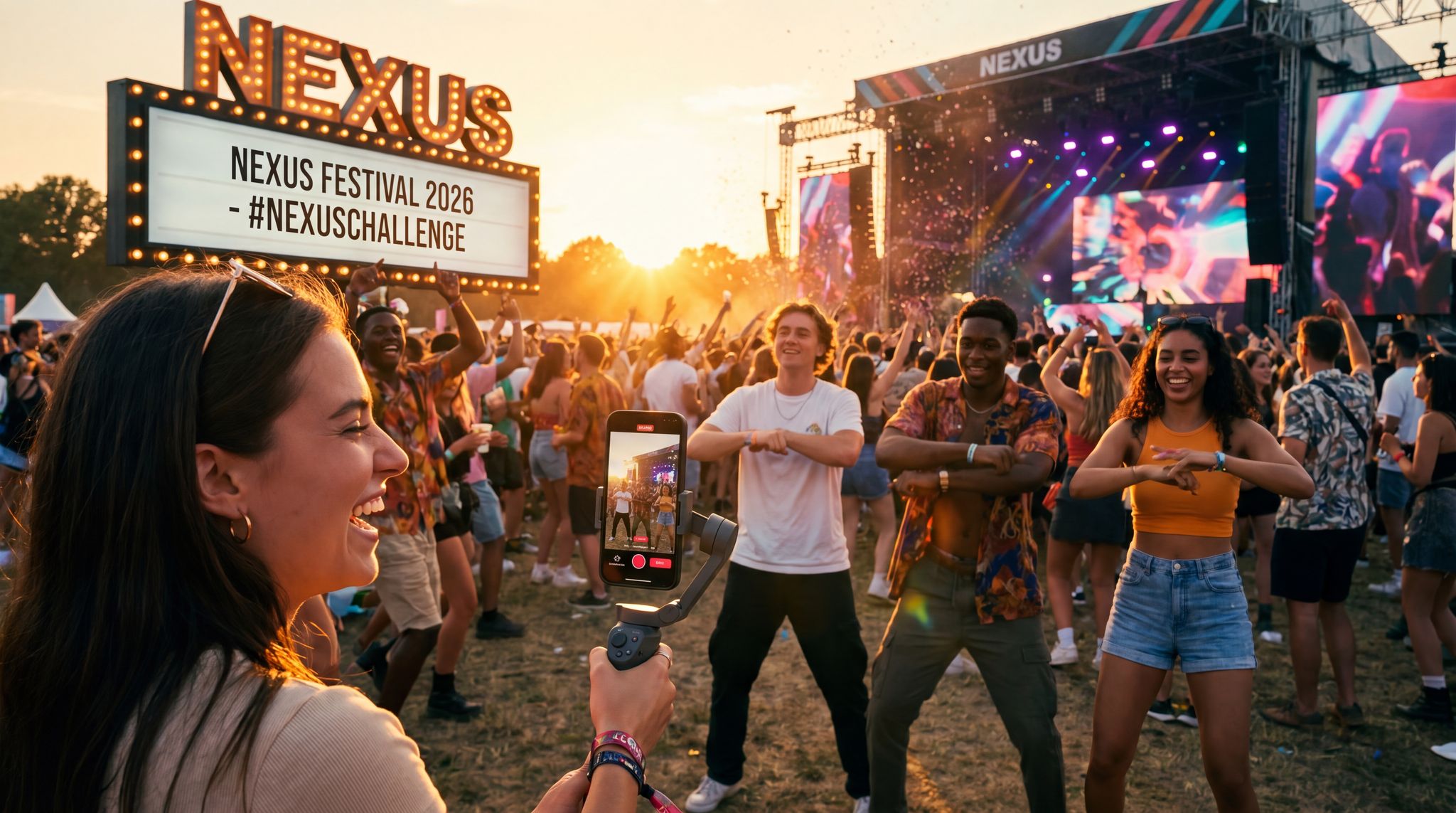
Use social media to research local tastes and trends as well. Follow relevant hashtags, join music fan groups, and see which artists or content the local audience responds to. This will give you insight into how to market your event in a culturally relevant way. Then, craft a campaign that speaks to those interests. Often, this means creating region-specific pages or accounts for your festival – posting in the local language, referencing local culture or memes, and timing posts for the local time zone. Share teaser videos, past festival aftermovies, and behind-the-scenes clips to introduce your brand to new fans. Encourage user-generated content by running contests or challenges (for example, a dance challenge related to your festival’s theme) to organically spread the word.
A great tactic is to partner with local social media influencers or music bloggers in your target country. Find influencers whose followers match the crowd you want to attract – maybe a popular DJ, event reviewer, or nightlife vlogger in that region – and collaborate with them to promote your event. Their endorsement can make your festival feel more familiar and trusted to locals. For instance, if you’re expanding a festival to Brazil, having a well-known Brazilian artist or YouTuber talk about your event (or appear in your promo content) will grab the attention of local fans. Influencers can also give you feedback on what messaging will resonate best with their community.
Don’t forget to leverage paid social advertising as well. Utilizing geo-targeted ads can put your festival announcement in front of exactly the right people – for example, 18–30 year-old music fans within 100 km of your host city. Platforms like Facebook and Instagram allow fine-grained targeting by location and interests, which is perfect for zeroing in on a new audience. A strategic mix of organic content (regular posts, stories, tweets) and paid ads will ensure that you both engage the existing community and reach new potential attendees who haven’t heard of you yet. For more insights on engagement, learn about the tips and tricks that entice audiences to attend music events.
Throughout your social campaigns, make the conversation two-way. Respond to comments and DMs from international fans; consider hiring a bilingual social media manager or translator if you’re targeting a non-English-speaking audience, so you can interact in the local language. Building excitement via social media can make distant fans feel personally connected to your event. By the time tickets go on sale, they’ll already have a sense of your festival’s personality and be eager to attend.
5. Figure Out the Similarities and Differences
Entering a foreign market successfully comes down to preparation and adaptation. Before you launch an overseas event, do thorough research to figure out the key similarities and differences between your home market and the target market. Some elements of your festival can be replicated from home base to abroad – others will need tweaking to win over the local crowd. The trick is knowing which is which ahead of time.
Accept Payments Across 13 Countries
Local currency processing via Stripe, Razorpay, Xendit, Paystack, and OXXO across 13 countries with region-specific payment methods.
Start by listing what makes your event great and assess which of those aspects will translate well. For example, your booking strategy of mixing big headliners with emerging artists might work anywhere, but your usual 2 AM curfew might clash in a city that has a strict midnight noise ordinance. Consider factors like local music preferences, cultural values, holidays, and even weather patterns. If you’re used to a freewheeling mosh pit culture at shows, but you’re expanding to a place where crowds tend to be more restrained or have different etiquette, you may need to adjust how you encourage audience interaction. If merchandise sales are huge at your U.S. festival but the region you’re entering has a less developed merch-buying culture, plan accordingly. The goal is to market and design your event to fit the local audience’s interests and values – without losing your festival’s core identity.
To help plan, here’s a quick breakdown of what you might keep consistent versus what you should adapt when going global:
| Keep Consistent (Global) | Adapt to Local Market |
|---|---|
| Core brand identity (music genre, theme, mission) | Marketing language and tone (use the local language and slang where appropriate) |
| High production value and safety standards (the quality of experience attendees expect) | Lineup composition – add popular local artists/DJs alongside your international headliners |
| Signature visual branding (logo, stage design elements that define your look) | Ticket pricing and payment methods – set prices in local currency and offer familiar payment options |
| Fan experience ethos (e.g. friendly customer service, inclusive atmosphere) | Sponsor and vendor choices – incorporate local food, drinks, and brands the community loves (and comply with local regulations) |
| Sustainability and safety policies (eco initiatives, security protocols that reflect your values) | Event scheduling – adjust to local climate/season and cultural norms (e.g. start/end times, intermissions for prayer or siesta if applicable) |
As this table shows, you should preserve what defines your festival globally, but adapt areas that would improve local appeal or compliance. Sometimes these differences are subtle; other times they’re significant. For instance, a marketing campaign that works in the UK might fall flat in Japan if it relies on British pop-culture references. Likewise, the permitting process and regulations can be wildly different in each country – securing festival licenses, dealing with noise curfews, and meeting safety requirements will be a new learning curve every time. This is where mastering international festival planning logistics becomes essential. Build extra time into your timeline for dealing with local bureaucracy and factor in the costs of permits or legal advice when budgeting your international event.
It’s also crucial to adapt on the logistics side. Plan for extra time and budget when dealing with international shipping of equipment, visas for your staff or artists, and currency exchange fluctuations. You might find it better to hire local suppliers for staging, lights, or catering rather than shipping everything from home – but always vet them for quality and reliability. Consider bringing on local crew or consulting with an experienced event manager in the host country who can double-check your plans for any blind spots you might not be aware of.
Financial planning also requires a deep understanding of regional economic policies. Organizers often ask what strategies international music companies and artists could use to adapt to different tariff structures in various countries without losing their global fan base. The most effective approach is localized pricing combined with strategic regional partnerships. By working with domestic vendors to source equipment locally, you can avoid hefty import tariffs on production gear. Additionally, absorbing certain local ticketing taxes or adjusting base ticket prices to match the regional cost of living ensures your event remains accessible to international fans without sacrificing your overall profit margins.
A great example of smart adaptation comes from 88rising’s Head In The Clouds festival, which expanded from the U.S. to Asia. When they brought the event to China, they had to navigate strict government content policies and prioritize self-censorship to comply with local regulations, as detailed in Time’s report on Head In The Clouds China. The company’s president in China emphasized being creative but adapting operations to local conditions to make the festival work there, showing a commitment to adapting creatively while maintaining integrity. In other words, they adjusted their promotion and production to respect the local cultural climate while still delivering the core experience their fans expected. This kind of flexibility is what will earn you acceptance from authorities and win over fans in any new country.
Free Tool: When Should You Announce?
Pick your event date and genre — the free planner outputs a recommended announce, presale, on-sale and reminder schedule anchored to how your audience actually buys.
On the flip side, failing to account for local differences can spell disaster. A cautionary tale was the 2015 attempt to replicate a major European EDM festival in the United States – the event was hit by heavy rains and poor transport planning, which left thousands of attendees stranded in mud when shuttles couldn’t reach the remote venue. Maxim’s coverage of the TomorrowWorld disaster highlights the chaos that ensued. The final day had to be canceled, and organizers faced huge backlash for not having better local contingency plans. The lesson? Never assume what worked at home will automatically work elsewhere. You need backup plans for local weather, infrastructure, and cultural quirks. Always ask yourself: What’s different about doing the show here? – and be ready to adjust accordingly.
For a deeper dive into the logistics of international festival production, check out our guide on mastering international festival planning from visas to vibes, which covers visas, foreign permits, multi-language marketing, budgeting across currencies, and more.
Need assistance expanding your music event across the world? Ticket Fairy has supported event promoters and venues globally – from niche club nights to large-scale festivals. Request a one-on-one consultation with Ticket Fairy to learn how we can help you navigate international ticketing, marketing, and on-site production. With the right planning (and the right partners), your music event can thrive on the global stage, bringing new audiences together under the shared love of music.
Frequently Asked Questions
How can hybrid event formats help expand a music festival globally?
Hybrid festivals extend an event’s reach beyond geographical limits by combining live in-person shows with real-time online streaming. This format allows fans unable to travel due to distance or cost to participate virtually, fostering a worldwide community. For example, Tomorrowland’s virtual edition attracted over 1 million paid online attendees.
Why is partnering with local promoters essential for international events?
Collaborating with local partners provides crucial on-ground knowledge regarding permit laws, regulations, and cultural nuances necessary for smooth operations. Local promoters help navigate logistical challenges and tailor the event to regional tastes. Major franchises like Lollapalooza rely on these partnerships to balance global brand consistency with local flavor.
How should organizers select locations for international festival expansion?
Organizers should target international destinations that mirror their domestic event’s vibe, audience demographics, and climate. Success often comes from finding cities with similar musical subcultures or following seasonal patterns, such as moving from a European summer to an Australian summer. Additionally, emerging markets with growing youth populations offer significant potential.
What social media strategies work best for promoting events abroad?
Promoting events internationally requires using region-specific platforms like WeChat or LINE alongside global networks like Instagram. Partnering with local influencers and utilizing geo-targeted advertising ensures the message reaches the correct demographic. Creating dedicated accounts in the local language and engaging with regional trends helps build trust with new audiences.
What aspects of a festival should be adapted for local markets?
While core brand identity and safety standards should remain consistent, organizers must adapt marketing tone, ticket pricing, and lineups to fit local preferences. Successful expansion involves incorporating local artists, adjusting to cultural norms regarding timing or etiquette, and complying with specific government regulations to resonate with the new audience.
Which emerging markets are currently primed for festival growth?
Regions like Sub-Saharan Africa and Asia-Pacific offer massive growth potential due to their youthful populations and rising middle class. In Sub-Saharan Africa, over 70% of the population is under 30, while Asia-Pacific is on track to hold two-thirds of the global middle class by 2030, driving demand for live entertainment.
What are some successful virtual events examples that organizers can learn from?
Successful virtual events examples range from Tomorrowland’s massive digital-only editions to Glastonbury’s ticketed global livestreams broadcast from iconic landmarks. Boutique festivals have also found success by pairing live performance streams with interactive digital meet-and-greets, proving that high-quality online experiences can drive revenue and global engagement at any scale.
How can international music events adapt to different tariff structures without losing fans?
To adapt to different tariff structures in various countries without losing their global fan base, organizers should utilize localized pricing and source production equipment domestically to avoid import taxes. Adjusting base ticket prices to reflect the local economy and absorbing certain regional fees ensures the event remains financially accessible to international attendees.