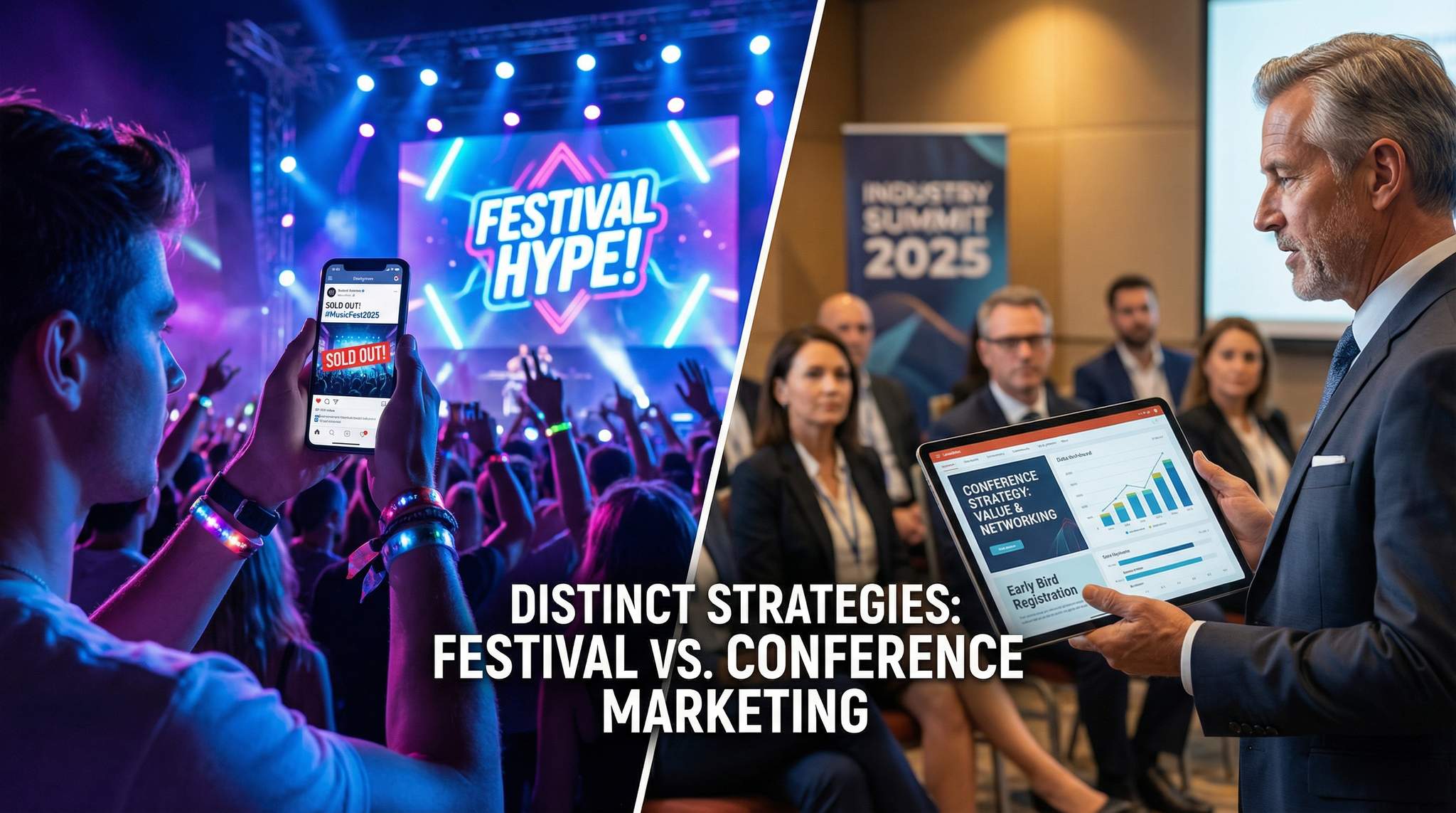
It goes without saying that strong marketing is the lifeblood of any successful event – but the way you market needs to match the type of event. A strategy that sells out a summer music festival might flop for a professional conference. As event planners and organizers in 2025, it’s critical to recognize these differences. The live events industry is surging back – valued at $1.1 trillion in 2019 and projected to reach $2.1 trillion by 2032 according to recent event marketing statistics – and competition for attendees’ attention is fiercer than ever. Good marketing plans leverage data about your target audiences and craft content that actually reaches and resonates with them.
If you apply the wrong tactics for the event type, it won’t matter how much content you churn out or how hard you push promotion – the message won’t stick. For instance, a flashy social media campaign that creates FOMO may work brilliantly for a music festival, but a conference audience might need detailed value propositions and professional credence. Understanding how a music event differs from a conference is the first step, and you should bake those distinctions into your marketing plan from day one. As seasoned producers know, every event’s marketing must be custom-tailored to its audience and purpose, as what most festivals get wrong about audience targeting can lead to failure. If your efforts aren’t even reaching the right people or speaking their language, there’s a tactical problem to resolve.
Warning: Don’t use a one-size-fits-all approach. A tactic that sells out a festival can fall flat for a conference crowd, and vice versa. Always adjust your strategy to the event type and audience.
To avoid misfires, start thinking about conference vs. event differences at the planning stage of your marketing. Below, we’ll break down how to craft distinct strategies for conference marketing, step by step.
Grow Your Social Following With Every Sale
Require social media follows, shares, or playlist adds to unlock presale access or special pricing. Turn every ticket purchase into audience growth.
What Makes an Event Different from a Conference?
Begin by asking the basic questions: What makes an event like a music festival different from a conference, and what defines each? Most people know what a music event entails – high-energy performances, crowds of fans, and an emphasis on a once-in-a-lifetime experience. Festivals and concerts aim to give attendees a memorable spectacle: from superstar performers to immersive art installations, the goal is pure entertainment and communal excitement. Attendees are looking for FOMO-inducing moments they can share and remember for years.
A conference, on the other hand, while still aiming to deliver a unique experience, is typically driven by informing, connecting, and networking within a specific community. A conference gathers people who are deeply interested in a particular subject – whether it’s a music business conference for industry professionals, an anime fan convention, or a mental health symposium. The target audience is usually a niche group of superfans, practitioners, or experts in a field. They aren’t just looking for fun; they’re seeking knowledge, industry insights, and meaningful connections. In essence, a conference is a larger networking and learning event designed around a focused agenda. The main goal is to inform attendees about new developments, share expertise, and spark big conversations in that domain.
Ready to Sell Tickets?
Create professional event pages with built-in payment processing, marketing tools, and real-time analytics.
To clarify the differences, here’s a quick comparison:
| Aspect | Music Event or Festival | Conference or Convention |
|---|---|---|
| Primary Purpose | Entertainment & memorable experiences (fun, escape, fandom). | Education, information exchange & networking among a niche group. |
| Audience | General public or fans of a genre; broad appeal across demographics, drawn by artists or theme. | Industry professionals, experts, or passionate enthusiasts in a specific field; a pre-engaged niche audience. |
| Content Focus | Live performances, spectacle, art, and immersive environments (stages, music, dance). | Keynote speeches, panels, workshops, product demos, and discussions on focused topics. |
| Emotional Drivers | FOMO, excitement, hype, community vibe, “be there” appeal. | Professional growth, learning, curiosity, career development, belonging in a community of practice. |
| Key Marketing Hooks | Artist lineup reveals, headliners, festival amenities (VIP lounges, camping, merch, after-parties). | Speaker lineup (industry leaders), session topics & takeaways, networking opportunities, new product or research unveilings. |
Most events share the goal of delivering a unique experience, but how they do it differs greatly. A 50,000-person music festival and a 5,000-person industry convention might both call themselves “events,” but the festival thrives on broad pop-culture appeal and spectacle, while the convention succeeds by diving deep into subject matter that a specific crowd cares about. As event marketing expert Philip Scholes puts it, “A festival is a celebration; a conference is a congregation.” The vibe, content, and expectations set them apart.
Crucially, these core differences drive how you market each type. For example, the once-in-a-lifetime atmosphere of a concert is often marketed by building hype and emotional appeal. In contrast, a conference’s marketing highlights its agenda – what new or exclusive knowledge will attendees gain? What networking or career opportunities await? A conference promises high value information (and maybe even continuing education credits or certification in some industries), so its promotion must emphasize substance and credibility over flash. Understanding these distinctions is not just theoretical – it’s practical. It ensures your marketing approach speaks directly to the motivations of your intended audience.
To illustrate, consider two real-world events in 2024:
* Tomorrowland (Music Festival) – Marketing centered on its superstar DJ lineup, after-movie videos of ecstatic crowds, and tantalizing hints at magical stage designs. The content invoked emotion and FOMO, attracting a broad international fan base.
* Web Summit (Tech Conference) – Marketing highlighted its roster of 500+ expert speakers, startup competition, and networking sessions with venture capitalists. It relied on industry media coverage and LinkedIn promotions to reach tech professionals. The messaging focused on insights attendees would gain and who they could meet, giving companies and individuals clear ROI for attending.
Built-In Email Marketing for Events
Send targeted campaigns, automated purchase confirmations, and post-event follow-ups directly from your ticketing dashboard.
These two campaigns looked nothing alike – and that’s the point. Next, we’ll explore how those differences translate into distinct marketing tactics.
Marketing an Event vs. a Conference
Now that we’ve identified the core differences between a music event and a conference, it should be clearer why your marketing game plan must adapt. Let’s break down some key areas where your approach to marketing a conference should diverge from how you promote a concert or festival:
Grow Your Events
Leverage referral marketing, social sharing incentives, and audience insights to sell more tickets.
When determining exactly how to market conferences to a discerning B2B crowd, organizers must pivot from selling pure entertainment to selling professional advancement. Every promotional asset—from the initial save-the-date email to the final retargeting ad—needs to clearly articulate the return on investment (ROI) for the attendee’s time and corporate budget.
For those mapping out how to market a conference from scratch, the most effective approach is to treat the campaign like a B2B sales funnel. Rather than relying on spontaneous, emotion-driven ticket purchases, successful promoters nurture leads over several months. This involves providing continuous educational touchpoints—such as whitepapers, speaker Q&As, and industry reports—that guide prospective delegates from initial brand awareness to final registration.
- Marketing Timeline: Conference attendees often plan far in advance – they may need to book travel, get workplace approval, or align attendance with their professional development goals. That means your conference marketing needs to start early (sometimes a year out for major conventions) and emphasize early registration incentives. By contrast, music events rely heavily on hype cycles and may see a large portion of tickets sell closer to the event. In fact, festival producers in 2025 have noted a trend of fans purchasing tickets later than ever, a phenomenon known as managing last-minute festival ticket buyers, with many waiting until the final weeks or days before a show. This procrastination forces festival marketers to sustain buzz and use “last-chance” urgency tactics to win the waiting game and drive late sales. Conference marketers, however, will want to front-load promotion to capture the interest (and budgets) of attendees early, often with early-bird discounts and reminders about limited seating for premium workshops.
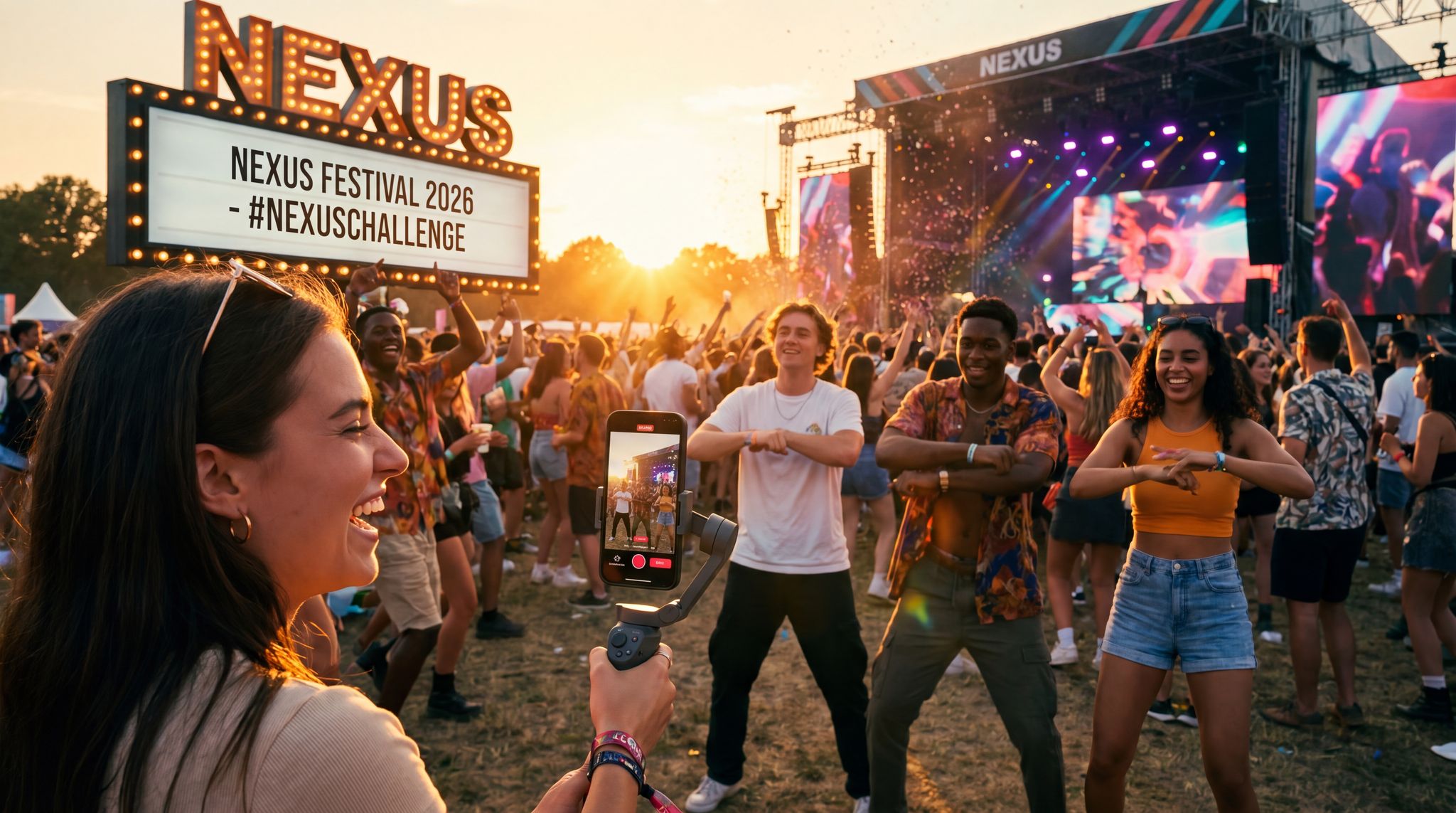
- Channels & Platforms: The channels you choose should reflect where your audience hangs out. For a general public event or festival, visually-rich social media like Instagram, TikTok, and Facebook are kings for spreading excitement. Festival marketers routinely leverage these platforms – any seasoned festival organizer will tell you an online presence is as crucial as on-site logistics, necessitating a robust digital marketing and social media strategy. Viral hashtag challenges or influencer partnerships on TikTok can turn a local event into a global phenomenon. In contrast, conference marketing leans more on professional networks: LinkedIn posts and ads, industry forums, dedicated email marketing, and press releases in trade publications. For example, a fintech conference might gain traction by sharing thought leadership articles on LinkedIn or securing mentions in a niche newsletter, whereas those channels would be less impactful for a pop concert. Understanding these nuances in media consumption is key; you’re essentially fishing in different ponds.
- Messaging Style: The tone and content of your messaging should differ greatly. Events like festivals thrive on emotional marketing – colorful, FOMO-inducing language (“Experience the magic under the stars!”) and lifestyle branding that appeals to a broad sentiment. Conferences require a more informative and authoritative tone (“Join 2,000 industry leaders to explore the latest fintech innovations”). Your conference promo copy should clearly answer: “What will I learn or gain by attending?” and “Who will I meet?” It should build trust (perhaps by mentioning expert speakers or years the event has run) because a conference attendee often needs to justify the investment. In other words, festival marketing sells fun, while conference marketing sells value.
- Stakeholders & Partners: Another strategic difference is in partnerships. Conferences frequently involve sponsors, exhibitors, and associations who have a stake in the event’s success. You can leverage these partners in your marketing – for instance, a trade association co-hosting your conference can blast the event info to all its members, or a major sponsor can promote your event to its customers as part of the partnership. (These tactics are common in conference marketing and can massively extend your reach if executed well; check out our insider festival sponsorship strategies playbook for ideas on crafting win–win sponsor partnerships.) On the flip side, a music event might partner with a few lifestyle brands or media outlets, but generally the biggest “partners” that help promote festivals are the artists themselves (and their fanbases). Many festival organizers focus on artist-driven promotion – leveraging performers’ social followings and fan communities – whereas conference organizers focus on industry networks and media.
- Success Metrics: The end goals of marketing also influence strategy. For a public-facing festival, success might be measured purely in ticket sales and social media buzz. For a conference, success might include not only selling passes but also attracting the right kind of attendee (e.g. qualified professionals, buyers, or decision-makers) and achieving high participant satisfaction for long-term brand credibility. Conference marketing might therefore also emphasize quality over sheer quantity – targeting a smaller pool of ideal attendees, rather than aiming for mass awareness.
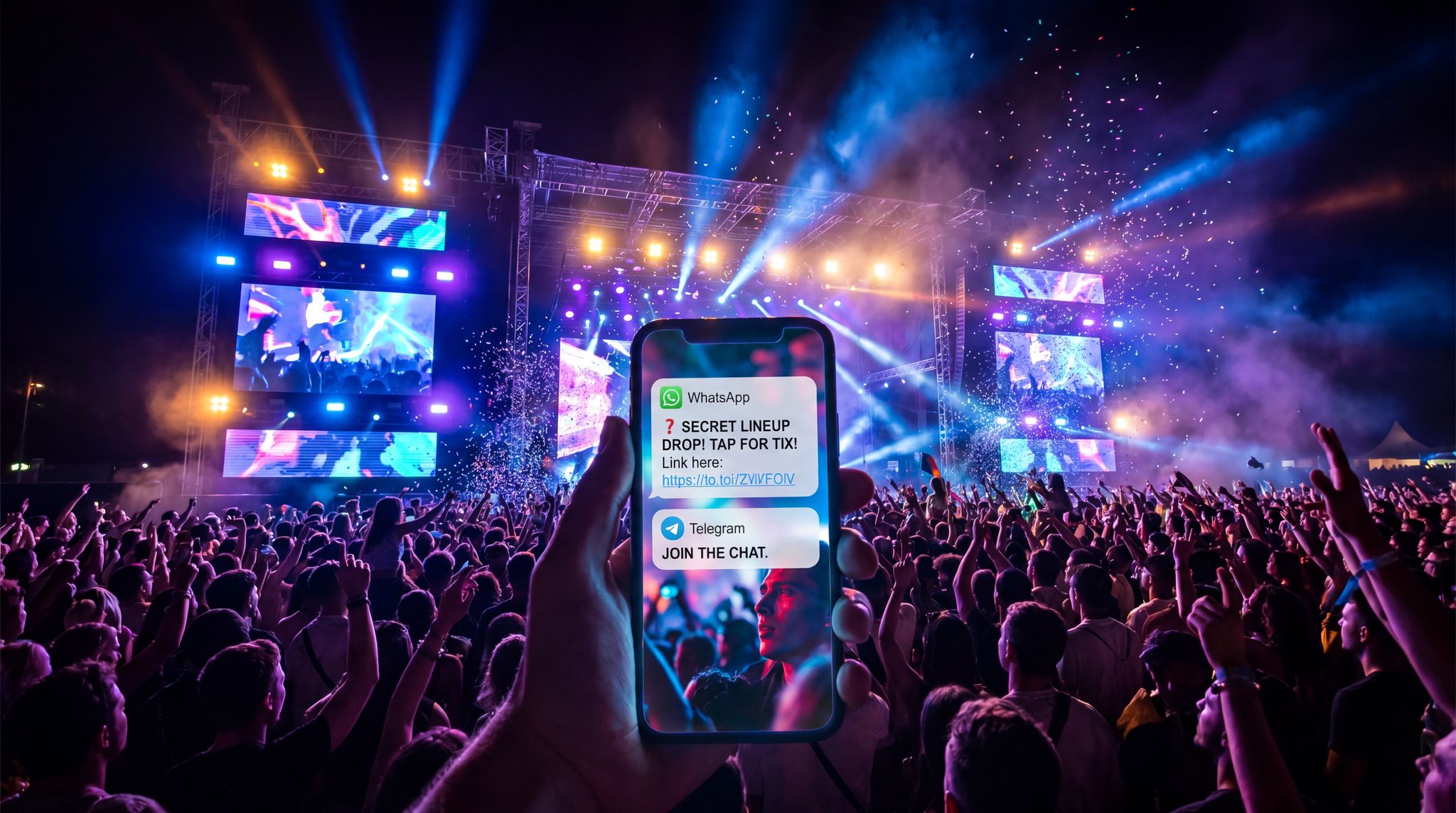
To put this into perspective, imagine a marketing team handling two clients: a huge EDM festival and an international business conference. The team’s festival strategy might involve releasing a cryptic lineup poster on Instagram to spur speculation and using a popular DJ’s endorsement to ignite fan excitement. Meanwhile, for the conference, the same team would focus on LinkedIn ads targeting specific job titles, email campaigns with early-bird offers, and webinars or blog posts previewing the conference content. One team member might recall, “Our tech conference didn’t gain traction until we switched from flashy promo videos to informational LinkedIn posts. It was the exact opposite of our festival strategy, where a hype video on TikTok led to thousands of ticket clicks.” In both cases, they were promoting an event – but the playbook had to be completely different.
Developing a Comprehensive Conference Marketing Strategy
Building a robust conference marketing strategy requires moving beyond ad-hoc promotions and establishing a structured, multi-channel campaign. For B2B event organizers, this means mapping out the entire attendee journey—from the initial awareness phase through to post-event follow-ups. A highly effective strategy integrates content marketing, targeted email sequences, and strategic partnerships to continuously demonstrate the event’s professional value. By aligning your promotional efforts with the specific pain points and career goals of your target demographic, you ensure that every touchpoint reinforces why your summit or convention is a must-attend industry fixture.
Smart Promo Codes & Presale Access
Create percentage or flat-rate discount codes with usage limits, date ranges, and ticket type restrictions. Plus unlock codes for private presales.
Think About Your Target Audience
Effective marketing always begins with knowing your audience. This fundamental principle takes on added importance when comparing event vs. conference marketing. Both a music event and a conference have defined demographics they appeal to, but the nature of those audiences – and how they discover and decide on events – can be worlds apart.
For a music event or festival, your target audience might be a broad swath of the public: for example, 18–35 year-old electronic music fans from across Europe for a trance music fest, or local families for a community cultural fair. These audiences may not actively seek out your event; you have to grab their attention through catchy content, social ads, influencer recommendations, and other outreach. They’re often passive discoverers – scrolling social media or hearing about the event from friends or artists. Thus, casting a wide net with creative mass marketing (while still tailoring to likely fan profiles) is key.
In contrast, a conference audience is often an active, nuanced base that is already tuned into the topic. Think of them as “industry people” or passionate enthusiasts who want to find events relevant to their interests or careers. For example, the attendees of an international live music industry conference like ILMC or Pollstar Live are typically promoters, agents, and venue managers who read trade magazines and network with peers regularly – they’re actively looking for opportunities to meet and learn. Likewise, a niche fan convention (say a Comic-Con or an anime conference) will attract superfans who are already engaged in online forums, subreddits, or fan clubs about that topic. These audiences are more proactive in seeking information; your job is to show them that your event is the must-attend gathering in their niche.
The way these audiences receive information differs. A festival’s potential attendee might respond to a high-impact YouTube trailer or a radio spot while driving. A conference-goer might prefer a detailed email or an article that lays out the agenda and speakers. Your marketing channels should reflect these preferences. For instance, if you’re promoting a B2B marketing conference, leveraging LinkedIn and email newsletters will likely yield better results than TikTok. (In fact, nearly 80% of organizers say in-person conferences and conventions are critical to their company’s success according to Bizzabo’s event marketing statistics, so professionals are on the lookout for worthwhile events to attend.) If you’re promoting a rock festival, Instagram, TikTok, and music blogs or Spotify ads could hit the mark more than a formal email blast.
Demographics also come into play. Conferences might skew older or more professional in their makeup – meaning they might respond better to formal communication and content-rich marketing. Use industry jargon and address their specific pain points or interests (e.g., “Learn the latest in AI automation” for a tech conference, or “Network with 500+ top real estate investors” for a property summit). Festival audiences, especially younger crowds, tend to embrace visual storytelling and concise, exciting messaging (e.g., “Dance under the stars with 50,000 people – don’t miss out!”). Always consider age, professional level, and even geographic spread. International conference audiences may appreciate seeing content in multiple languages or scheduling announcements in various time zones, whereas a local one-day event can focus purely on its city’s culture and hot spots.
This audience-centric approach isn’t just a marketing platitude – it’s a cornerstone of successful event strategy. Veteran festival producers insist that pinpointing who your attendees are (their desires, fears, and motivations) should guide every decision to avoid common mistakes in audience targeting and experience. The same holds true for conferences. Are your prospective attendees looking to earn continuing education credits? Are they new entrants in the field hungry for basic knowledge, or seasoned veterans seeking advanced insights? By answering these questions, you can tailor your marketing message precisely. For example, music business conferences often have to balance content for both newcomers and experienced executives – so the marketing might segment messaging, inviting newcomers to “learn how to break into the industry,” while simultaneously promising veterans a chance to “debate the future of the industry with peers.”
Turn Fans Into Your Marketing Team
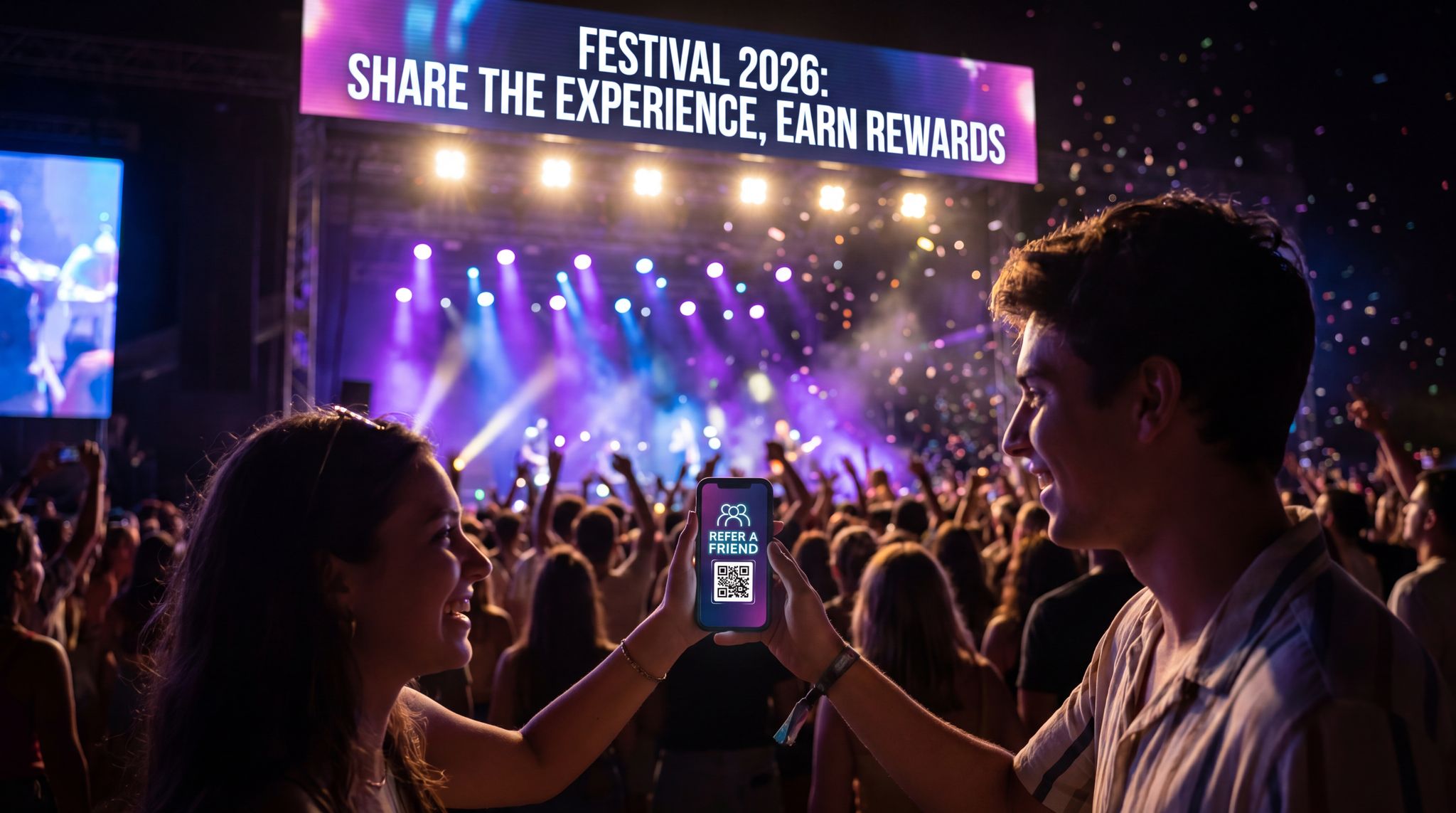
Ticket Fairy's built-in referral rewards system incentivizes attendees to share your event, delivering 15-25% sales boosts and 30x ROI vs paid ads.
Pro Tip: Create attendee personas for your conference just as you would for a consumer event. For instance, a “Networker Neil” persona might represent mid-career professionals who primarily attend to meet people, whereas “Learning Lucy” might be an enthusiast who attends for workshops. By visualizing a few persona archetypes, you can craft targeted messages that speak directly to each group’s interests. This granular targeting is far more effective than a blanket approach.
Finally, remember that your audience’s circumstances matter. A common scenario: many people may want to attend your conference but can’t travel due to location, budget, or time constraints. Unlike festivals (where missing out might just mean waiting for next year or watching a live-stream), missing a key conference could mean a lost opportunity for one’s career or passion. That’s why conference organizers often provide remote attendance options or post-event content. Consider how you’ll engage not just those who can come in person, but those who follow along from afar – more on that in a moment.
Creating Content for Event vs. Conference Marketing
Once you have a solid marketing plan in place (if you need a refresher on planning basics, follow these 5 steps to create a top-notch event marketing plan), the next step is building the content and campaign around your event. The content you create – from graphics and videos to blog posts and emails – will be the vehicle that carries your message to your target audience. But content that works for an EDM rave might not work for an academic conference. Let’s break down how to tailor your content strategy for each scenario:
Visual Identity: Posters, Graphics, and Branding
Visuals are a cornerstone of event marketing. Both conferences and festivals use posters and graphics, but their styles and messaging differ. For a music event, posters and promo graphics tend to be bold, vibrant, and sometimes mysterious – think of a festival poster teasing a lineup with flashy artwork, neon colors, and maybe only partial information to create intrigue. The goal is instant excitement. In contrast, a conference flyer or banner will lean on clarity and credibility. You’ll often see conference graphics include the event theme or tagline, date and location, and logos of key partners or sponsors (to lend authority). The design is cleaner and more professional, using company or industry imagery (e.g., a tech conference might use circuit patterns or futuristic motifs, whereas a music industry conference might feature icons of instruments or stage lighting).
Your content should reflect what the audience cares about visually. Festival creatives should showcase the experience – crowd shots, performers, festival grounds, bright colors. Conference creatives might showcase people shaking hands, a speaker at a podium, or a collage of headshots of featured speakers. Think of it this way: a festival poster should spark emotion, while a conference banner should convey information at a glance (yet still look engaging). A practical example: when marketing an international jazz festival versus a jazz education conference, the festival poster might splash the names of headlining musicians in artistic fonts, whereas the conference flyer highlights session topics like “Improvisation Masterclass” and credentials of speakers (PhDs, Grammy winners, etc.). Both target jazz lovers, but one is selling a show and the other is selling an educational gathering.
Choosing Your Marketing Channels (Social Media and Beyond)
We’ve touched on channel selection in the strategy section, but it’s worth diving deeper as you create content for each channel. Social media platforms are indispensable, but you should customize content to fit the platform and the event type.
Free Tool: Split Tickets for Max Gross
Given capacity and a target price, the optimizer proposes Early Bird / GA / VIP allocations and prices — with projected gross at 100%, 80% and 60% sell-through.
For a festival or public event, you’ll be active on platforms like Instagram, TikTok, Facebook, YouTube, and Twitter (X). Your content can include aftermovies, teaser videos, artist announcements, contest giveaways (“Share this post to win VIP upgrades!”), and interactive posts to hype the crowd. On TikTok, for example, you might start a hashtag challenge or post behind-the-scenes clips of stage construction to build excitement. On Instagram, visually stunning photos from past editions or artists can hook fans – many festivals now invest heavily in creating photogenic moments just so attendees and promoters can share them. Remember, for festivals, social media buzz = social proof. When potential attendees see their friends (or influencers) talking about the event, it drives interest.
For a conference, your social media content strategy shifts to networks like LinkedIn and Twitter, and possibly Facebook groups or niche forums relevant to your industry. Your posts might announce keynote speakers (with a professional headshot and their title/affiliation), share insightful quotes or snippets from those speakers, highlight panel topics, or even share industry news related to your conference themes. The tone is more serious and value-driven. On LinkedIn, you might publish short articles or infographics (“5 Trends to be Discussed at [Your Conference]”). Twitter can be used for real-time updates and engaging with industry hashtags (for example, during the lead-up to the International Live Music Conference, organizers tweet news about panel additions, shout-outs to sponsors, and commentary on industry trends to hook the relevant audience following those topics).
Understanding platform algorithms can further amplify your reach. For instance, the shift of a professional networking site like LinkedIn to incorporate more social posts (such as behind-the-scenes conference interactions and casual video updates) is primarily a strategy aimed at sustaining user engagement and active participation on the platform. Savvy event marketers can capitalize on this by encouraging speakers and attendees to share authentic, conversational updates rather than just formal press releases, aligning perfectly with the platform’s goal to keep users scrolling and interacting.
It’s also worth considering email marketing and content marketing more heavily for conferences. Long-form content like blog posts, whitepapers, or webinar recordings that tie into your conference’s subject matter can be excellent lead-ins to the event – they position your team as thought leaders and get your target audience invested in the topic. Many successful conferences host free monthly webinars or publish articles year-round, which act as marketing for the big annual event. Meanwhile, most festivals will focus on high-impact visual content rather than lengthy articles, because their audience is looking for entertainment, not homework.
If you need a deeper dive into optimizing digital channels, see our guide on digital marketing and social media strategies for festivals. It’s geared toward festivals, but many principles — like consistency in branding and timing your posts for maximum engagement — apply to any event promotion.
Spotlighting Headliners vs. Keynote Speakers
One of the biggest content differences comes down to who or what you spotlight in your marketing. For concerts and festivals, your “headliners” (artists, bands, DJs) are the star attractions. Marketing content revolves around them – lineup announcements, artist interviews, performance previews. Fans make attendance decisions heavily based on who’s playing. Therefore, a huge part of event marketing is essentially artist marketing: sharing music previews, past performance clips, and using artists’ names and images prominently on all materials.
Free Tool: When Should You Announce?
Pick your event date and genre — the free planner outputs a recommended announce, presale, on-sale and reminder schedule anchored to how your audience actually buys.
For conferences, the equivalent of a headliner is your keynote speaker or high-profile panelists. A major conference might have a celebrity speaker or industry titan delivering a keynote address – that should be front-and-center in your marketing (e.g., “Fireside chat with Elon Musk” or “Keynote by the CEO of Live Nation”). Even if your speakers aren’t household names, ensure you highlight their expertise and what exclusive insight they bring. For example, “Jane Doe, Head of Marketing at Spotify, will share new research on fan engagement.” This appeals to the target audience’s desire to learn something they can’t easily Google. Remember, conference attendees often justify going to their bosses or themselves by citing tangible takeaways (“I’ll get to learn X from Y expert”). If your content makes those takeaways clear, it’s doing its job.
The way you present these figures can differ too. Festival marketing will use dynamic photos of artists performing, stage pyrotechnics, etc., to tap into the excitement. Conference marketing might use more formal photos (speaker portraits) or simply list names with accolades. However, don’t shy away from creativity in conference marketing either – a short video clip of an expert teasing their session topic can be very effective on social media, just as a band’s tour promo clip works for a festival.
Pro Tip: Leverage exclusive content from your headliners or speakers. For a festival, that could mean a short video of a headlining DJ backstage saying “Can’t wait to see you at XYZ Festival!” which you post on Instagram. For a conference, ask a keynote speaker to write a one-paragraph preview or do a 2-minute video interview about what they’ll discuss. Use these in email blasts and on social channels. When the audience hears directly from the star attractions, it builds anticipation and credibility.
Venue and Format as Marketing Tools
The venue of an event can be a selling point in itself – and how you market it differs by event type. A festival often prides itself on a unique location (“Three days of music in the California desert” or “a historic castle grounds festival in the UK”). Stunning photos of the venue (or past crowds at the venue) are common in event marketing because they help potential attendees imagine themselves there. In recent years, many festival promotions include drone shots of the beautiful landscape or 360° site tour videos to showcase the experience beyond the stage.
For conferences, the venue might be a less flamboyant factor but still important. Conference marketing should communicate practical info like the city and facility (“London, O2 Arena Conference Center”) and perhaps highlight convenience or prestige (“This expo is held at the iconic Javits Center in NYC” or “Enjoy state-of-the-art meeting facilities at the brand-new downtown convention hall”). If your conference venue has notable perks (like a great location, or if it’s a known hotel/resort), mention it. Additionally, emphasize the format: is it a one-day intensive workshop or a week-long convention with expo halls? The structure can attract different folks – some might attend because it’s a quick one-day knowledge boost, others because it’s a big multi-day industry pilgrimage.
For venue operators and organizers working together, developing a cohesive conference venue marketing strategy is a powerful way to boost registrations. This involves co-marketing efforts where the venue highlights its state-of-the-art tech infrastructure, proximity to transit, and premium catering options across its own B2B channels, while the organizer leverages the venue’s reputation to build trust. When a venue actively promotes the conferences it hosts to its local corporate database, it creates a mutually beneficial loop that drives both ticket sales and future venue bookings.
To maximize this synergy, a robust venue promotional plan should include sharing high-quality digital assets with the event producer. Providing 3D floor plans, virtual walkthroughs, and case studies of past successful B2B summits allows organizers to seamlessly integrate the location’s best features into their broader campaign. This collaborative approach not only answers the core question of how to market a conference to hesitant travelers, but also positions the facility as a premier destination for future industry gatherings.
To formalize this collaboration, operators should draft a comprehensive conference venue marketing plan well before the event’s launch. This blueprint outlines exactly how the facility will support the organizer’s promotional efforts, detailing specific deliverables like dedicated email blasts to the venue’s corporate client list, co-branded social media campaigns, and targeted digital ads geo-fenced around the convention center. A well-structured plan not only helps organizers understand the added value of booking your space but also establishes clear timelines and responsibilities for both marketing teams.
For facility operators wondering how to market a conference venue effectively to top-tier event producers, the key is showcasing adaptability and technological readiness. Promoters are actively looking for spaces that can seamlessly support complex AV setups, high-speed Wi-Fi for hybrid streaming, and flexible breakout rooms. By creating targeted B2B case studies that highlight past successful conventions hosted at your property, venue managers can provide the exact social proof organizers need when selecting their next location.
Another aspect is the location appeal. A music event might market the location as part of the adventure (traveling to a beautiful island for a festival – the trip is part of the fun). A conference might market location as part of its draw if relevant (e.g., “Join us in Paris for the annual fashion marketing conference” – here Paris itself is appealing to the attendees professionally and personally). If the conference is virtual or hybrid, then the “venue” discussion shifts to platform – ensure your marketing communicates how easy and accessible the virtual experience will be (for instance, “Attend from anywhere via our immersive 3D event platform” or “All sessions will be available on-demand for remote attendees”). That builds confidence that even if they’re not there in person, they’ll get value.
Attractions and Extras: Music, Merch, and More
Events often have extras that sweeten the deal for attendees. For a festival, these might be things like on-site art installations, carnival rides, VIP lounges, after-parties, meet-and-greets, or exclusive merchandise drops. These elements can and should be part of your marketing content. A lot of successful festival campaigns dedicate some content to showcasing the full experience – not just the main stage lineup, but the food vendors, the camping fun, the eco-friendly initiatives, etc. This gives potential attendees a fuller picture and can tip fence-sitters who care about those extras. (For example, a eco-conscious fan might be swayed to attend a festival after seeing a post about the event’s zero-waste programs and community impact, something we discuss in our sustainability guide). Use vibrant photos or testimonials from past attendees (“The art tents and morning yoga sessions made XYZ Festival unforgettable!”) as content here.
Conferences also have attractions and perks, though of a different nature. Common ones include expo halls (where companies demo products or tech – essentially merchandise in a B2B sense), networking receptions, book signings by famous authors, or even entertainment like an opening night party or live podcast recording. When marketing a conference, highlight these “Bonus” features: e.g., “Your ticket includes access to a trade show of 100+ exhibitors” or “Don’t miss the after-hours networking mixer with free refreshments and live music.” If attendees can earn professional credits (common in medical or legal conferences), absolutely mention that prominently. Every extra takeaway – whether it’s a swag bag, certificate, or unique experience – can help convince someone that this conference is worth their time and money.
Even merchandise can play a role in marketing. Festivals often drop limited merch (like themed apparel or collectibles) and sometimes make them available only to attendees – creating another incentive to buy tickets. Conferences might offer early registrants a bonus like a hardcover industry report or exclusive access to an online course. These can be advertised as part of the “value bundle” of attending.
The line between event and conference attractions can blur – for instance, many conferences now incorporate music and entertainment in evening programs, and some fan conventions resemble festivals with their concerts and cosplay contests. If your conference has a fun element (like a big closing party with a live band), don’t be afraid to promote that too. It humanizes the event and can broaden its appeal, especially if you’re trying to grow attendance.
Special Promotions and Ticketing Strategies
Promotional tactics are another area of divergence. Discounts and special offers need to be tailored to how your audience buys tickets. Conferences often use group discounts (e.g., “10% off for teams of 5+ from the same company”), early-bird pricing tiers (with deadlines set months in advance), and sometimes bundle deals (“Buy a conference pass and get a free workshop ticket”). These promotions recognize that conference-goers are price-sensitive and often need an extra nudge to commit early or bring colleagues. Also, given that a company might pay for an employee to attend, offering a bulk deal can spur an organization to send multiple people.
Festivals and concerts, conversely, play more on urgency and scarcity for the general public. You’ll see promotions like “Limited Early Bird tickets at 50% off – first 1000 buyers only!” which creates a rush, or loyalty perks (“Last year’s attendees get first access to tickets”). Festivals sometimes partner with brands for ticket giveaways or run social media contests (“tag 3 friends for a chance at free passes!”) that amplify reach. The language is geared toward excitement (“Don’t wait until it’s sold out!”) rather than the professional justification angle used in conference marketing.
Another noteworthy tactic for conferences is tiered ticketing beyond just VIP/GA. Conferences might have tiered access: for example, a basic pass that only covers keynotes and expo floor, a full pass that covers all sessions, and a VIP pass that adds closed seminars or speaker dinners. This segmentation lets you market different options – and upsell those who really want the full experience. In marketing content, clearly outline what each tier offers (“All-Access Pass includes 3 days of sessions, networking lunch, and VIP afterparty; One-Day Pass available for Day 1 only, covering keynote and expo.”). By contrast, most music events keep it simpler (General Admission vs. VIP, etc.), and the marketing is usually aimed at selling out all tickets rather than parsing tiers, except perhaps VIP as an upgrade.
If your event spans both worlds (for example, an EDM conference that has daytime panels and nighttime music showcases open to the public), you might employ a mix of these strategies and target distinct segments of your audience with the appropriate message for each. This is advanced marketing juggling, but it can pay off if done right – essentially treating the conference portion and festival portion as two products under one brand, each with its own campaign.
Embrace Hybrid Formats and Global Reach
One major development in the events landscape, especially after 2020, is the normalization of hybrid and virtual events. As of 2024, roughly 35% of events were still taking place virtually and 5% in hybrid formats (mix of online and in-person) as noted in recent industry state and trends reports. That means a significant share of your potential audience might prefer or even expect a way to participate remotely. Often, audiences around the world simply cannot travel to attend a conference in person – but they might pay for a virtual pass or engage with your content online if you make it available.
Conference organizers should consider setting up strategies for revolutionizing events with hybrid formats to expand their reach beyond the venue. This could be as simple as live-streaming key sessions, or as elaborate as a fully interactive online platform mirroring the physical event. From a marketing standpoint, promoting a hybrid model can be a selling point: “Can’t make it to London? Join us virtually and catch all keynotes live!” It shows you’re inclusive and tech-savvy, and it taps a global audience that is much larger than those who can hop on a plane to attend.
Furthermore, you can create different ticketing tiers for various levels of access. For example, offer a discounted streaming-only ticket for remote attendees, or a premium pass that includes six months of on-demand access to session recordings. This tiered approach can maximize participation and revenue. Modern platforms like Ticket Fairy’s integrated event system make it easy to implement multiple ticket types and manage the complex logistics of hybrid audiences, so don’t shy away from these options. Including these details in your marketing (“In-person and virtual tickets available” or “Choose from three experience levels”) will ensure potential attendees know there’s a format that suits them.
Additionally, leveraging advanced ticketing platforms can streamline your promotional efforts across borders. Implementing robust estrategias de marketing con The Ticket Fairy allows organizers to utilize built-in referral programs, automated audience segmentation, and real-time analytics. These tools empower promoters to track which marketing channels are driving the most high-value B2B registrations, ensuring that ad spend is optimized for maximum return on investment.
Finally, even for music events, consider some hybrid elements in your marketing strategy. While a concert itself isn’t easily “virtual,” you can still live-stream parts (like a sneak peek of an artist’s performance) to drive FOMO and online engagement. Many festivals now sell virtual access or post exclusive content for those who couldn’t attend, keeping the remote fan community engaged – and often upselling them to attend in person next time.
Conclusion
Marketing a conference versus a music event requires distinct strategies, but the underlying theme is the same: know your event, know your audience, and meet them where they are with the right message. By acknowledging the different motivations and behaviors of conference-goers and festival fans, you can tailor your marketing plan to hit the right notes. In 2025 and beyond, as the events industry continues to evolve with technology and changing audience expectations, the most successful promoters will be those who demonstrate both expertise and empathy – expertise in the tools and tactics of marketing, and empathy for the audience’s needs and desires.
Whether you’re promoting a groundbreaking conference aimed at professionals or the next big music festival for the masses, apply the distinct strategies outlined above. Use data and feedback to refine your approach continuously. And remember, the best marketing not only sells tickets but also sets the tone for the attendee’s entire experience. Market your conference as the beginning of an enlightening journey for your delegates, and your festival as the start of an unforgettable adventure for your fans. When your marketing content aligns perfectly with what the event delivers, you’re not just getting people to show up – you’re building trust that keeps them coming back.
Often, the difference between a sold-out event and an empty room comes down to understanding these nuances. Master those, and you’ll be well on your way to marketing success, no matter what kind of event you’re championing.
(Feature image via MaRS Discovery District)
Frequently Asked Questions
What is the main difference between marketing a conference and a music festival?
Marketing a conference focuses on education, networking, and professional value for a niche audience, requiring authoritative messaging. In contrast, music festival marketing targets broad entertainment and communal excitement, relying heavily on emotional drivers and FOMO. Strategies must adapt to these distinctions, shifting from hype-based tactics to detailed value propositions for professionals.
When should marketing begin for a professional conference?
Conference marketing should start far in advance, sometimes a year out, because attendees need time to book travel, secure workplace approval, and align with professional goals. Unlike festivals that often manage last-minute ticket buyers, conferences must front-load promotion with early-bird discounts and registration incentives to capture budgets and interest early.
Which social media channels are most effective for conference marketing?
LinkedIn is the primary channel for conference marketing, supported by industry forums and dedicated email campaigns. While festivals thrive on visually rich platforms like Instagram and TikTok to spread excitement, conferences rely on professional networks to share thought leadership, speaker insights, and whitepapers that demonstrate ROI to potential attendees.
How does audience targeting differ for conferences versus consumer events?
Conference audiences are typically active, nuanced groups of professionals or enthusiasts proactively seeking knowledge and industry connections. Consumer event audiences, like festival-goers, are often more passive and broad, requiring creative mass marketing to grab attention. Conference strategies must use granular targeting, such as specific job titles or attendee personas, to be effective.
Why are hybrid formats important for event strategies in 2025?
Hybrid formats allow organizers to reach global audiences who cannot attend in person due to travel, budget, or time constraints. With approximately 35% of events taking place virtually and 5% using hybrid models as of 2024, offering remote access options like live streams or on-demand content significantly maximizes participation and revenue.
How should keynote speakers be highlighted in marketing content?
Marketing content should position keynote speakers as the primary source of value, emphasizing their expertise, professional titles, and the exclusive insights they will deliver. Unlike festival headliners who are marketed for entertainment value, conference speakers are promoted to answer what attendees will learn, helping professionals justify the investment of time and money.
What are the core steps for how to market a conference effectively?
To market a conference effectively, start by defining your niche audience and establishing a long-lead promotional timeline. Focus your messaging on professional value, networking opportunities, and actionable takeaways rather than FOMO. Utilize B2B channels like LinkedIn, partner with industry sponsors, and highlight your keynote speakers’ expertise to build credibility and drive early-bird registrations.
How does a collaborative conference venue marketing strategy improve event ROI?
A joint conference venue marketing strategy improves ROI by pooling the promotional resources of both the event organizer and the host facility. By co-marketing the event—such as the venue sharing registration links with its corporate mailing list or the organizer highlighting the facility’s premium networking lounges—both parties reach a wider, highly qualified B2B audience, ultimately driving more ticket sales and future booking inquiries.
What should be included in a conference venue marketing plan?
A comprehensive conference venue marketing plan should outline collaborative promotional efforts between the facility and the event organizer. Key elements include co-branded digital assets, targeted email campaigns to the venue’s B2B database, geo-fenced advertising, and a clear timeline for sharing 3D floor plans or virtual tours to help drive attendee registration.
What are the essential elements of a B2B conference marketing strategy?
A successful B2B conference marketing strategy relies on a structured, multi-channel approach that guides professionals through a long-lead sales funnel. Essential elements include targeted content marketing (like whitepapers and webinars), personalized email sequences, strategic industry partnerships, and clear messaging that highlights the event’s ROI, networking opportunities, and educational takeaways.
How can operators effectively market a conference venue to event producers?
To effectively market a conference venue to event producers, operators should focus on showcasing the facility’s technological capabilities, flexible breakout spaces, and premium amenities. Providing B2B case studies, 3D virtual tours, and comprehensive venue marketing plans demonstrates to organizers that the space can seamlessly support complex, high-stakes professional gatherings.