It’s safe to say the world of live events has changed permanently. In the past few years, global disruptions transformed how we travel, communicate, and work – and how we gather for entertainment. During the pandemic, people developed new habits to keep themselves and their loved ones safe, turning to virtual connections and online content. Even now in 2026, with festivals and concerts back in full swing, many of those habits have endured. Audiences remain health-conscious, tech-savvy, and expect greater flexibility in how they experience events.
When it comes to music events and festivals, these changes are impossible to ignore. In-person attendance used to be the sole foundation of success, but now promoters are embracing hybrid event formats that blend physical and virtual experiences. Live shows continue to offer irreplaceable energy, but adding an online streaming component has become a savvy way to cater to fans who can’t be there. Nearly three-quarters of event organizers say hybrid events will remain a major part of their strategy going forward, a trend supported by recent event industry statistics. Fans often ask whether a festival will be livestreamed, and many will tune in from home if given the chance.
One thing is clear: hybrid music events have proven immensely successful – not just as a pandemic stopgap, but as a permanent evolution in event planning. Music events with hybrid formats are seeing record engagement and interest. They allow you to satisfy both the audience that wants to attend live and the audience that cannot make it to the venue but still craves the experience. In the process, hybrid events unlock new benefits and opportunities for you as a promoter – from reaching global audiences to unlocking new revenue streams. Let’s explore how revolutionizing your events with hybrid formats can provide more opportunities, and what you should keep in mind to make the most of this approach.
How Hybrid Event Formats Expand Your Reach
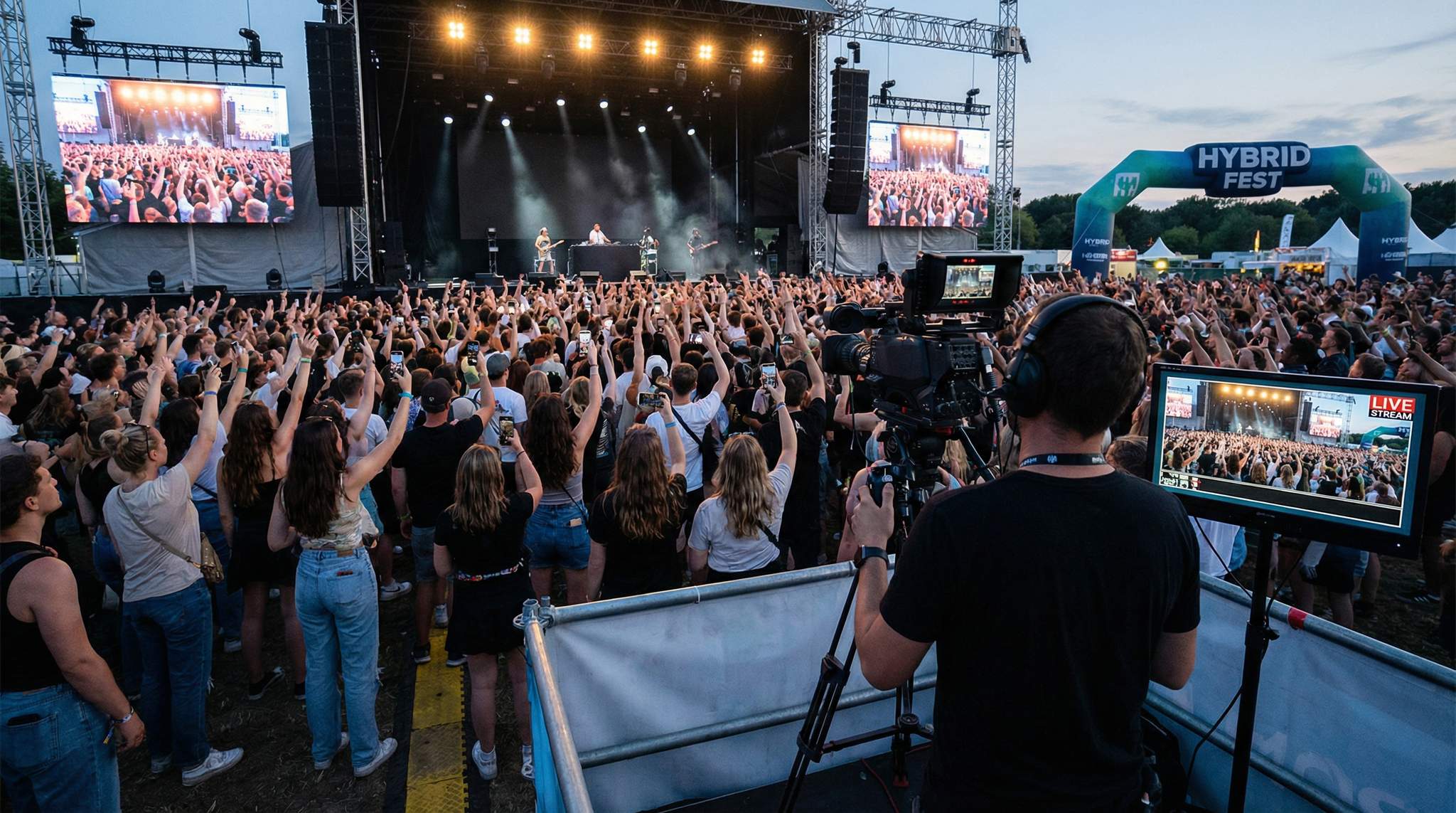
Hybrid events dramatically expand the reach of your music event beyond what’s possible with an on-site audience alone. By livestreaming your concert or festival to fans online, you can bring in a second audience from across the country or even across the world. For example, one major U.S. festival’s YouTube webcast drew almost 4 million viewers in a single weekend, effectively bridging in-person and online audiences. And in summer 2025, major festivals reported online viewership booms of up to 324% higher than the previous year thanks to increased global streaming partnerships. Platforms like YouTube, Twitch, and even TikTok are democratizing access to live music and helping concerts garner bigger audiences than ever. In short, hybrid formats remove the traditional limits of venue size and geography – anyone with an internet connection can join the experience.
Free Tool: Model Promoter Payouts
Flat-percentage, flat-per-ticket, or tiered-bonus commission structures — get per-promoter payouts and total commission as % of gross. Free calculator.
Expanding your online audience doesn’t just boost headcount; it can also supercharge your event’s profile and marketing impact. Hybrid music events create global awareness: fans who might never travel to your festival can still become part of your community. This means your target audience is no longer limited by location, budget, or physical ability. A local boutique show can gain international followers overnight, and a major event can multiply its fanbase beyond those on site. You can even create a “second life” for your event by recording and reposting highlights on social media or releasing an aftermovie. Those streamed moments can go viral, attract press coverage, and drive FOMO-fueled demand for future ticket sales. (Many festivals find that viewers who loved the free stream are inspired to attend in person the next year.) As an event organizer, reaching a global audience has always been the dream – and with hybrid events, that dream is now within reach.
Importantly, reaching more people also opens up new revenue opportunities. Some promoters sell virtual tickets or exclusive online access passes for a hybrid show, generating income from viewers who aren’t at the venue. Even if you offer the livestream free, a bigger audience makes your event more valuable to sponsors and partners. Brands are eager to tap into the expanded visibility – in fact, 72% of sponsors are willing to support hybrid events when they reach both in-person and online fans. With a hybrid concert, you aren’t constrained by venue capacity; you can promise sponsors tens or hundreds of thousands of impressions worldwide. This scale can lead to more lucrative sponsorship deals and partnerships. Hybrid formats basically future-proof your event’s growth – allowing you to expand your fanbase and influence without being limited to those who can physically attend.
Ready to Sell Tickets?
Create professional event pages with built-in payment processing, marketing tools, and real-time analytics.
And don’t worry – offering a virtual stream won’t cannibalize your ticket sales. In fact, a well-executed livestream often builds more hype for the live experience rather than replacing it. Festivals typically limit the availability of full-set replays to maintain a sense of exclusivity – using limited streaming windows and other tactics to avoid “cannibalizing” attendance. (For instance, Glastonbury Festival in the UK broadcasts select performances on TV and online only during the event weekend, then takes them down – ensuring that the “you had to be there” feeling still drives fans to buy tickets).) Far from discouraging in-person attendance, the online element can be a powerful marketing tool that fuels future ticket demand.
Hybrid Events Are Transforming the Attendee Experience
From the attendee’s perspective, hybrid events are a game-changer. Not everyone has the time or budget to travel for a music festival – but a virtual option lets them attend without breaking the bank. Going to an in-person festival often means taking time off work, buying tickets and gas or airfare, and spending a small fortune on lodging and food. In 2026, with travel costs rising, many fans appreciate an option that doesn’t require a $500+ trip. A hybrid format cuts those costs down dramatically. Someone can tune in from home for little to no cost, or pay a modest streaming fee, instead of spending days and hundreds of dollars on a trip. For die-hard fans on a tight budget or those short on vacation days, the virtual stream is a priceless alternative.
Hybrid events also make concerts and festivals far more accessible and inclusive. Think of all the people who would love to attend in person but can’t – whether due to health conditions, disabilities, family obligations, or geographic distance. A hybrid format opens your event to these new demographics. For instance, an immunocompromised fan who still isn’t comfortable in large crowds can safely enjoy the show via livestream. A music lover on the other side of the world can join virtually when they never could have flown to your venue. And attendees with mobility challenges or other limitations can experience the festival remotely without the barriers that might exist on-site. By accommodating those who can’t be there physically, you are building a broader and more diverse community around your event (and earning goodwill for being inclusive).
Not only that, but virtual attendance can be more comfortable for some people. A streaming viewer faces no long lines for bathrooms or water, no weather risks, and no physical fatigue from standing all day. They can enjoy the music from the comfort of their couch, with high-quality audio in their headphones and a great view of the stage on screen. Many festivals now ensure the online experience is as engaging as possible – offering HD multi-camera streams, professional sound mixes, and live commentary for the remote audience. Providing features like real-time captions on your livestream ensures that hearing-impaired viewers and non-native speakers can follow along without issue. Some events even include other accessibility upgrades, such as audio descriptions or multi-language subtitles for international viewers to further promote inclusivity. These efforts show your commitment to every fan’s experience, whether on-site or online.
Boost Revenue With Smart Upsells
Sell merchandise, VIP upgrades, parking passes, and add-ons during checkout and via post-purchase emails. Increase average order value by up to 220%.
Interestingly, having more fans watch from home can also align with sustainability benchmarks for your event. If a portion of your audience isn’t traveling long distances, you reduce the overall carbon footprint of the show. Fan travel is one of the biggest sources of emissions in live music, a fact highlighted by studies on live music and climate change, so giving people a way to participate without flying or driving can significantly cut CO2 output. For eco-conscious festivals working toward green goals, hybrid attendance is a welcome tool. It allows you to share the magic of the event widely with a lower environmental impact – a win-win for the community and the planet. (Skipping a cross-country flight or road trip doesn’t just save money – it’s also a tangible way attendees help the event stay sustainable.)
Key Considerations for Planning a Hybrid Event
Hybrid music events are the way of the future, but they require careful planning to pull off successfully. You’ll essentially be running two events in parallel – one on the ground and one online – so it’s important to prepare for the unique needs of each audience segment you are targeting. When planning a hybrid event, keep these key considerations in mind to ensure everything runs smoothly.
Grow Your Events
Leverage referral marketing, social sharing incentives, and audience insights to sell more tickets.
Elevating Traditional Concert Event Management
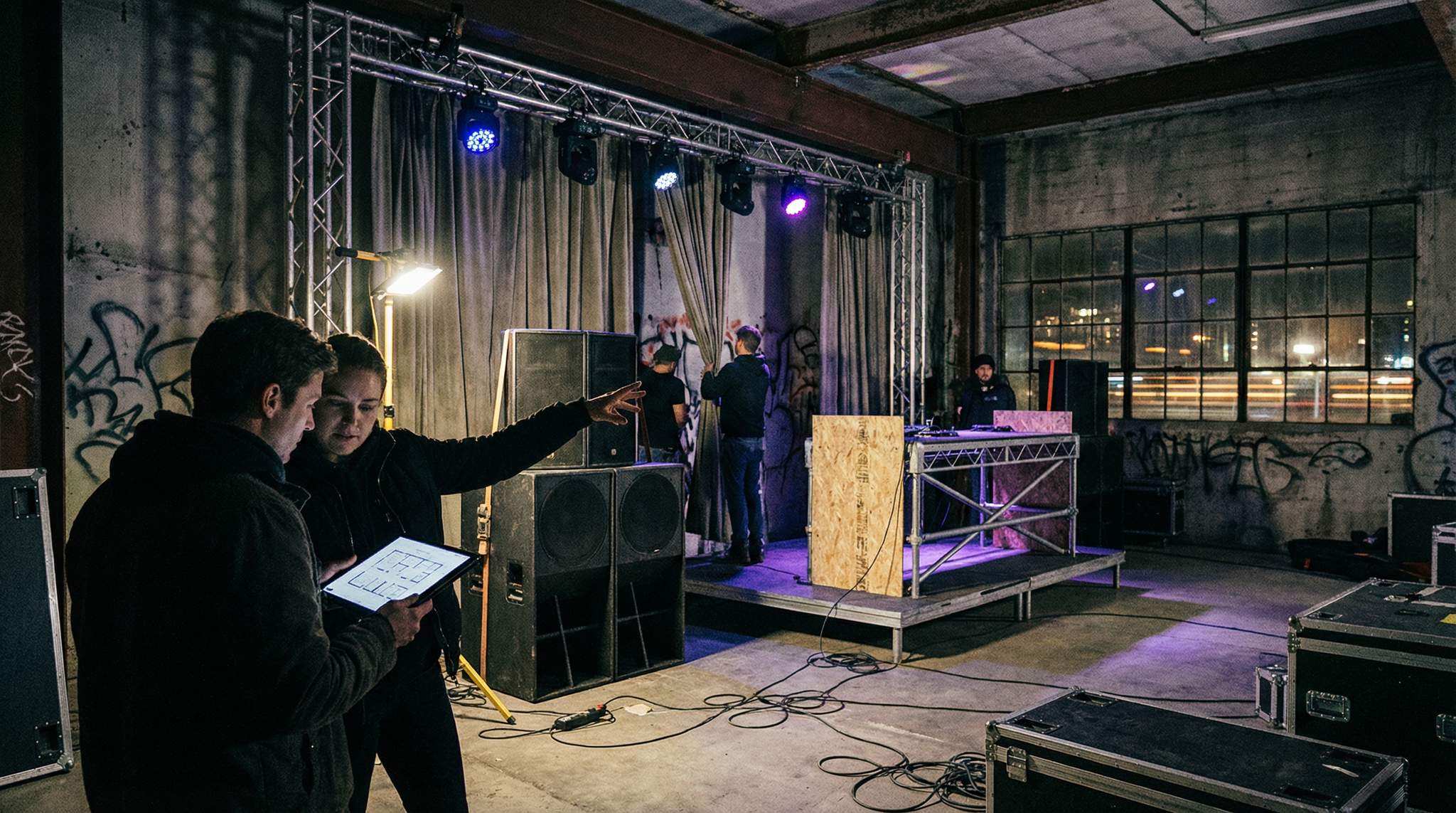
Integrating a virtual component fundamentally shifts the scope of traditional concert event management. As a producer, you are no longer just overseeing stage builds, artist riders, and crowd control at the physical venue; you must simultaneously direct a live broadcast production. This dual responsibility requires event management teams to bridge the gap between on-the-ground operations and digital delivery. Successful organizers often appoint a dedicated digital producer to work alongside the site manager, ensuring that camera blocking doesn’t interfere with the live audience’s view and that the audio mix is optimized for both the PA system and the streaming feed. By adapting your operational workflows to support both environments, you elevate the overall production value and create a seamless experience across all touchpoints.
Additionally, coordinating the logistics for a dual-format production often means managing complex itineraries for artists, specialized broadcast crews, and on-site staff. Utilizing a comprehensive hybrid event management platform travel manager feature can streamline this process. By centralizing flight bookings, hotel accommodations, and ground transport for your physical crew alongside the digital scheduling for remote moderators, you ensure that no logistical detail falls through the cracks while your team focuses on delivering a world-class show.
1. Ensure Attendees Have All the Information They Need
A successful hybrid event starts with clear communication. You will likely have separate details for your in-person audience and your online audience, so be sure to keep both groups in the loop. Well before the show, email all attendees with the essential information on how to join the event. For instance, provide a detailed itinerary or schedule for the virtual broadcast (including set times, time zone references, and any special online-only segments). Send the secure streaming link or access instructions to your remote ticket holders, and mention any technical requirements (for example, if they need to download an app or create an account). If you have a host or emcee for the online portion, introduce them and explain how they’ll guide the stream. Likewise, make sure your in-person attendees know the venue details, entry rules, and anything relevant about the on-site show. The goal is to prevent confusion on event day – everyone should know exactly when and how to join the party, whether they’re walking through the gates or logging in from home.
It’s also smart to set up a channel for last-minute updates in case anything changes. This could be a texting alert system, a push notification via your event app, or simply a timely email. For example, if the livestream link or platform changes at the last minute, you want to instantly notify all virtual attendees. Consider having a dedicated FAQ page or support contact for online viewers, addressing common questions (“How do I cast the stream to my TV?” or “What if my video quality is low?”). Proactive communication will greatly reduce frustrations and ensure your audience feels taken care of. Remember, an informed attendee is a happy attendee – and in a hybrid format, information is key to bridging the gap between the physical and digital sides of your event.
Free Tool: Split Tickets for Max Gross
Given capacity and a target price, the optimizer proposes Early Bird / GA / VIP allocations and prices — with projected gross at 100%, 80% and 60% sell-through.
Pro Tip: If you use Ticket Fairy for ticketing, leverage the platform’s internal messaging tool to email your event attendees important updates – for free. Open your event dashboard and select Interact > Messaging to send a formatted email to all ticket holders, or even target just online vs. in-person guests. This built-in mailer ensures every attendee gets the right info at the right time, without any extra cost.

Screenshot: Ticket Fairy’s built-in event messaging system for sending attendee emails
2. Be Prepared with Technical Support
Streaming your event to a large online audience means technology becomes mission-critical. Nothing is worse than having thousands of fans eagerly watching from home, only for the feed to crash or buffer endlessly. To avoid this, prepare thoroughly on the technical front. Choose a reliable streaming platform and test it under conditions similar to your actual event – same video quality, same expected number of viewers – to see how it holds up. It’s wise to conduct a full dry run or rehearsal of your broadcast: simulate the live stream a few days before (even if just privately) and troubleshoot any issues in advance. Check your internet upload speeds from the venue (many top festivals treat connectivity as critical infrastructure, as smart tech revolutionizes live events) and ensure you have ample bandwidth for HD video. If possible, arrange for a backup internet connection – for example, a secondary fiber line or a bonded 5G hotspot – that can take over if the primary network fails.
You should also have experienced tech support staff on hand during the event. Dedicate part of your team (or hire a professional streaming vendor) to monitor the live feed at all times. If any hiccup occurs – whether it’s the audio dropping, a camera feed freezing, or the stream going down – they can jump on it immediately. Ideally, your tech crew should have a direct line of communication to the stage managers and event directors, so they know if something on the ground will affect the broadcast or vice versa. Create a plan for common technical difficulties: for example, if one camera fails, do you have a spare ready? If the stream disconnects, do you have a “please stand by” message or backup feed to roll while fixing it? By anticipating problems and rehearsing solutions, you can react calmly and quickly under pressure. Technical glitches might still happen, but with preparation you’ll minimize downtime and keep your remote audience engaged.
Warning: Don’t skimp on backup connectivity and testing. Over 32% of hybrid event organizers have run into streaming outages or network issues, yet only about 12% had a backup internet line ready according to hybrid event statistics. Always have a fallback plan for your livestream (redundant connections, spare equipment) – otherwise a single glitch could drop your virtual audience and tarnish your event’s reputation.
3. Maintain Engagement for Both On-Site and Online Audiences
One challenge with hybrid events is making sure that your virtual audience feels as involved and excited as the crowd at the venue. Watching from a screen is inherently different – remote viewers can’t feel the bass in their bones or feed off the collective energy of a live crowd. In fact, nearly 40% of people who attend hybrid events virtually have felt “not included” in the experience based on attendee feedback data, often because all the focus was on the in-person attendees. To overcome this, design interactive elements specifically for the online viewers. For example, consider appointing a dedicated virtual emcee or host who speaks directly to the livestream audience throughout the show. They can provide commentary, interview artists or staff backstage exclusively for the online viewers, and give remote fans shout-outs between performances. This kind of personal attention helps replicate that special feeling of being “part of” the event for those watching from home.
No Hidden Fees, Just Honest Pricing
One all-inclusive fee covers the platform, payment processing, support, and every feature. Free events are always free. No setup costs, no surprises.
Look for ways to let the virtual audience actively participate. One popular approach is integrating live polls, Q&As, or chat discussions into the streaming platform. Encourage at-home viewers to post questions for artists or vote on special requests in real time. (Many presenters appreciate this too – about 67% of speakers say interactive polls help them connect with virtual audiences.) You can also run fun social media challenges for remote fans – for instance, prompt them to share a photo of their “home festival setup” on Instagram or Twitter with your event hashtag. Consider having a moderator highlight great comments or fan content during the broadcast. Showing a curated social media wall or fan messages on the stream (or even on the stage screens) can bridge the gap between home and the live venue. The key is to remind online attendees that they’re not just watching passively – they’re a valued part of the event community.
Be mindful of timing and content for the virtual stream as well. Your online viewers won’t enjoy watching an empty stage during set changes or intermissions. Plan some exclusive content to fill those gaps – for example, cut to a backstage camera feed or a quick interview with performers while the main stage resets. If your festival has multiple stages, think about offering a multi-channel webcast or a “choose your stage” feature so remote users can pick which performance to watch. Also, consider the global audience and time zones. If you have many international viewers, you might schedule an encore re-broadcast at a convenient time for another region, or provide the stream as on-demand video for a limited window after the live show. That way fans in different parts of the world don’t feel left out by inconvenient live timings across multiple time zones. By accommodating various time zones and schedules, you’ll maximize engagement and viewership worldwide.
Finally, coach your on-site team and performers to acknowledge the virtual audience occasionally. A simple shout-out from the headliner – e.g. “I see everyone watching at home, we love you!” – can make remote fans cheer and feel included. If you have large LED screens at the venue, you could even display a feed of online viewers (via a moderated Zoom wall or social posts) so the in-person crowd realizes thousands more are celebrating virtually. This creates a sense of one big community rather than two separate groups. The most successful hybrid events find the balance between cutting-edge tech and genuine connection – essentially a high-tech, human touch approach – that keeps your event’s spirit alive. By balancing innovation with personal interaction, every attendee feels the same excitement and inclusion, no matter where they are.
Creative Virtual Concert Ideas to Elevate the Stream
When brainstorming virtual concert ideas, think beyond a static single-camera feed. Promoters are increasingly adopting interactive digital environments to make the remote experience feel premium. Consider implementing multi-angle viewing options where fans can switch between a front-of-house wide shot, a drum-cam, or a backstage feed. Another highly effective concept is hosting a digital VIP lounge—a gated online room where premium ticket holders can access exclusive pre-show acoustic sets or live Q&A sessions with the artists. You might also explore gamification, such as digital scavenger hunts or interactive leaderboards that reward viewers for participating in chats and polls. By integrating these innovative broadcast concepts, you transform a passive viewing session into a highly engaging digital event that fans will gladly pay for.
4. Develop a Cohesive Hybrid Festival Ticket Strategy
To maximize revenue and streamline operations, organizers must implement a smart hybrid festival ticket strategy. Pricing virtual access requires finding the sweet spot: it should be affordable enough to attract a massive global audience, yet valuable enough to justify the cost. Many promoters offer tiered options, such as a basic livestream pass and a premium “virtual VIP” package that includes exclusive backstage interviews, interactive meet-and-greets, or on-demand replay rights. When combining ticketing for online and live attendees, it is crucial to use a unified platform. Managing both inventories in one system prevents data silos, allowing you to track total revenue, analyze cross-channel buyer behavior, and easily upsell virtual add-ons to in-person ticket holders. This unified approach works seamlessly across all types of entertainment—whether you are producing a multi-day music festival, a comedy showcase, or a niche cultural convention.
Having produced events across Europe, I’ve seen firsthand how international markets are leading this charge. For instance, in the Netherlands and Belgium, mastering a hybride festival ticketstrategie (hybrid festival ticket strategy) is now a standard operational requirement. When executing hybride events: ticketing combineren voor online en live bezoekers (combining ticketing for online and live visitors), European organizers rely heavily on centralized systems. By keeping all your data in one place, you can easily analyze cross-border buyer behavior and adjust your hybrid festival ticket strategie on the fly, ensuring that both your local on-the-ground fans and your international digital audience are fully supported.
Grow Your Social Following With Every Sale
Require social media follows, shares, or playlist adds to unlock presale access or special pricing. Turn every ticket purchase into audience growth.
Hybrid events are truly revolutionizing the live music industry, creating new possibilities for growth, inclusivity, and fan engagement. By being conscious of your dual audiences and refining the experience for each, you can ensure all your eventgoers have an unforgettable time – whether they’re dancing in front of the stage or cheering from their living room.
Curious to see if your event could be a hybrid event? Make sure to first see if they fit the criteria for a hybrid model!
Frequently Asked Questions
How do hybrid events expand audience reach for music festivals?
Hybrid events expand reach by blending physical and virtual experiences, allowing promoters to target a global audience unrestricted by venue size or geography. This format bridges in-person and online fans, with some festivals reporting viewership booms of up to 324% and drawing millions of remote viewers in a single weekend.
What are the revenue benefits of hosting hybrid music events?
Hybrid formats unlock new revenue streams through virtual ticket sales and exclusive online access passes for fans unable to attend in person. Additionally, the expanded global visibility attracts lucrative sponsorship deals, as 72% of sponsors are willing to support events that reach both in-person and online audiences effectively.
Do festival livestreams reduce in-person ticket sales?
Livestreams typically do not cannibalize ticket sales; instead, they often build hype and fuel demand for future in-person attendance. Promoters use strategies like limited streaming windows to maintain exclusivity, ensuring the “you had to be there” feeling remains while using the broadcast as a powerful marketing tool to drive growth.
How do hybrid events improve accessibility for attendees?
Hybrid events improve accessibility by allowing immunocompromised fans, people with disabilities, or those with financial constraints to attend virtually. Organizers enhance this inclusivity through features like real-time captions, audio descriptions, and multi-language subtitles, ensuring remote viewers can experience the festival comfortably without physical barriers or high travel costs.
What technical considerations are critical for planning a hybrid event?
Successful hybrid event planning requires reliable streaming platforms, thorough dry runs, and dedicated technical support staff to monitor live feeds. Organizers must prepare backup internet connections, such as secondary fiber lines or bonded 5G hotspots, to prevent outages, as over 32% of hybrid events face network issues during broadcasts.
How can promoters keep virtual audiences engaged during hybrid events?
Promoters can maintain virtual engagement by appointing a dedicated online emcee, using interactive tools like live polls and Q&As, and displaying social media walls. Providing exclusive content during set changes, such as backstage interviews, and having performers acknowledge the remote crowd helps online viewers feel included in the community.
What is the best hybrid festival ticket strategy for organizers?
A strong hybrid festival ticket strategy involves offering tiered pricing for both physical and virtual attendees. Organizers should use a unified ticketing platform to seamlessly combine inventory for online and live audiences, allowing for easy upselling, bundled packages, and comprehensive data tracking across all types of entertainment.
How do international markets approach a hybrid festival ticket strategy?
International markets, particularly in Europe, emphasize centralized data. A successful hybride festival ticketstrategie involves using a single platform for hybride events: ticketing combineren voor online en live bezoekers (combining ticketing for online and live visitors). This unified approach allows promoters to track global revenue, manage diverse audience segments, and seamlessly upsell virtual add-ons to physical ticket holders.
How does a hybrid format change concert event management?
A hybrid format expands concert event management from purely physical logistics to dual-environment production. Organizers must coordinate traditional on-site operations—like crowd control and stage management—alongside digital broadcast requirements, such as streaming bandwidth, camera blocking, and live audio mixing for remote viewers.
What are some effective virtual concert ideas for hybrid festivals?
Effective virtual concert ideas include offering multi-angle camera feeds, hosting digital VIP lounges with exclusive artist Q&As, and integrating gamification like interactive polls or leaderboards. These concepts transform a standard livestream into a premium, interactive digital experience that boosts remote attendee engagement.