The Multilingual Imperative for Events in 2026
Global Audiences and Inclusive Communication
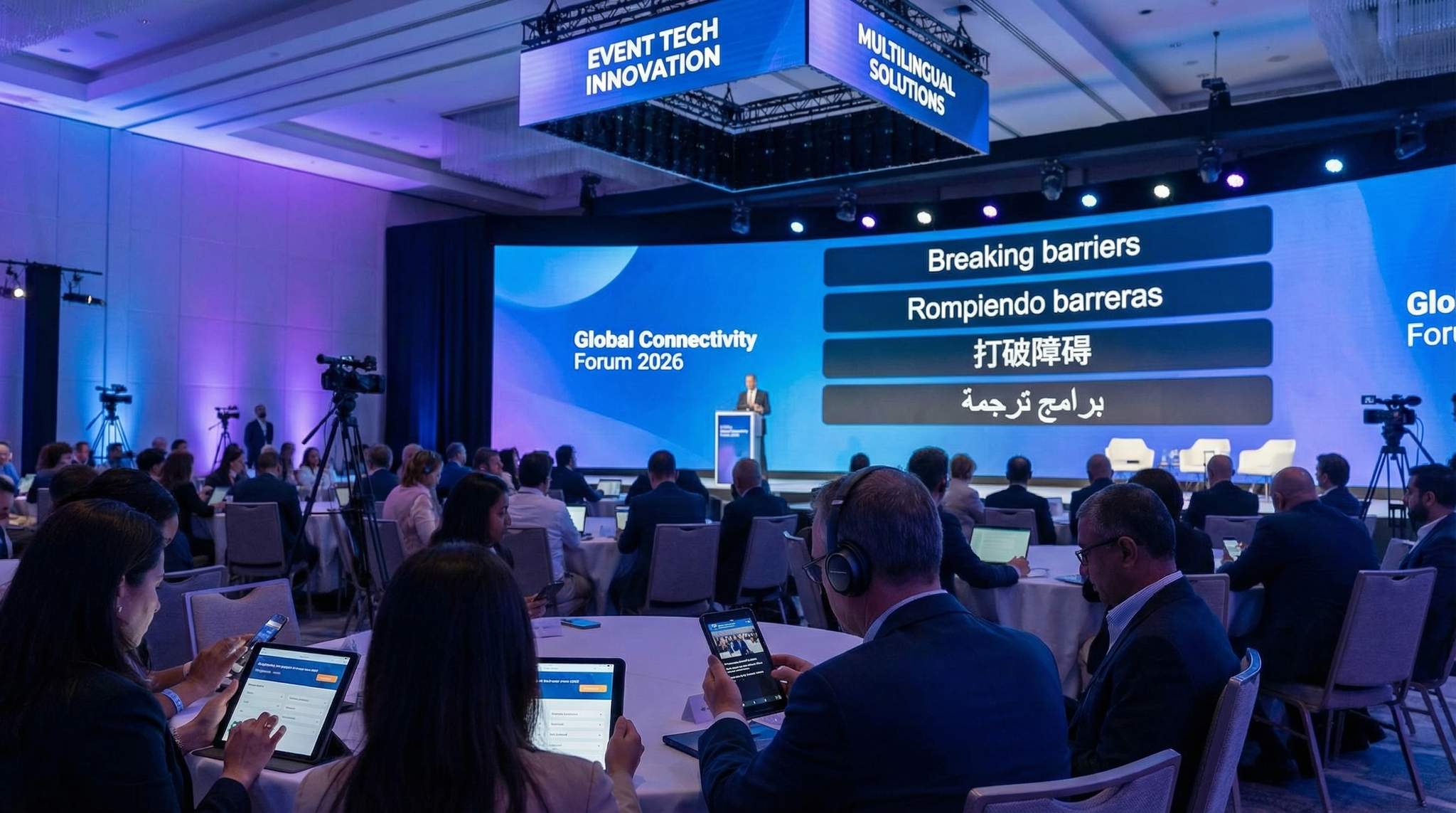
Live events in 2026 are more globally connected than ever. Conferences, festivals, and trade shows routinely draw attendees from dozens of countries, each bringing their own language. Organizers have recognized that making content understandable in multiple languages isn’t just a nice-to-have – it’s now a core part of creating an inclusive experience for all attendees (www.wordly.ai). In fact, in a 2024 global survey of event planners, 97% said increasing inclusivity (including language accessibility) is a top priority (www.wordly.ai). Breaking the language barrier has become imperative to engage diverse audiences and ensure no guest feels left out due to language differences.
Language Diversity at Modern Events
Attendee demographics underscore the need for multilingual support. Nearly 88% of organizers report having at least two non-English languages among their attendees (and 40% encounter six or more languages) (www.wordly.ai). As businesses and fan communities span continents, it’s common to have speakers on stage in one language, a crowd speaking others, and virtual attendees tuning in globally. For example, a tech summit might host keynotes in English while welcoming large delegate groups from Asia, Europe, and Latin America. Without translation services, a significant portion of the audience could miss critical insights. Language diversity is the new norm, and events that accommodate it reap big benefits – from higher attendee satisfaction to broader international reach. Organizers are seeing that when everyone can follow the content in a language they understand, engagement soars.
Demand for Real-Time Translation Tools
To meet these needs, events worldwide are adopting real-time translation tools at an unprecedented rate. Two-thirds of planners now regularly offer some form of interpretation or captioning at their events (www.wordly.ai), and 77% plan to increase their live translation offerings further (www.wordly.ai). This demand is driving a boom in event language technology. From multi-language audio channels at global conferences to AI translators in event apps, 2026 has seen rapid growth in solutions that break communication barriers. Hybrid events have amplified this trend – when you’re streaming to international audiences online, providing multiple language options becomes critical. Successful hybrid productions emphasize tech strategies for uniting in-person and virtual audiences across the language divide. The message is clear: if you want to maximize engagement and attendance, speak your attendees’ language (often literally). In the sections below, we explore the cutting-edge tech making it happen.
Simultaneous Interpretation Systems: Real-Time Language Channels
Traditional On-Site Interpretation (Booths & Headsets)
For high-stakes multinational events – think UN-style conferences or global summits – simultaneous interpretation remains the gold standard for real-time translation. In a classic setup, professional interpreters sit in soundproof booths, listening to the presenter via headphones and simultaneously interpreting into a target language. Attendees who need translation wear wireless headsets that tune into the channel for their language. This system allows everyone to hear the speech in real time without pauses, as if it were delivered in their own tongue.
The technology behind this is mature and reliable. High-quality infrared or RF transmission sends audio from interpreter booths to audience headsets with minimal latency. Modern digital systems support dozens of parallel language channels. For example, the European Union often provides 24 language channels at major meetings, requiring a robust technical infrastructure of consoles, mixers, and distributed RF antennas. Interpreters work in teams (typically two per language) to avoid fatigue, handing off every 20-30 minutes. These on-site systems have proven capable of serving events from 100-person seminars to 50,000-person conventions with crystal-clear audio in each listener’s preferred language.
There are important best practices when deploying on-site interpretation. Equipment setup and testing is critical – interference-free audio and sound isolation for booths ensure interpreters can hear and be heard clearly. Organizers must also budget for the significant costs: professional interpreters (especially those with technical subject expertise) and specialized gear aren’t cheap. But the payoff is a premium, high-accuracy experience. At one international medical conference, for instance, hiring certified interpreters in five languages resulted in a 40% increase in feedback scores from non-English-speaking attendees, who appreciated understanding the complex content fully. The investment meant hundreds more attendees could engage deeply, rather than feeling left behind.
Ready to Sell Tickets?
Create professional event pages with built-in payment processing, marketing tools, and real-time analytics.
Managing Complexity: The Professional Interpreter Workflow
For technical directors and event producers, understanding exactly how professional simultaneous interpreters handle complex multilingual events is crucial for seamless execution. Particularly at large-scale global summits hosted in the United States, the cognitive and technical demands on linguists are immense. Interpreters manage this complexity through rigorous pre-event preparation, requiring organizers to supply detailed speaker notes, specialized industry glossaries, and slide decks weeks in advance. During the live show, they utilize a technique called “relay interpretation” for rare language combinations—for example, if a speaker presents in Korean, one interpreter translates it into English, and another immediately translates that English feed into Arabic. To maintain peak accuracy and prevent cognitive fatigue, these professionals always work in pairs or trios, rotating active microphone duties every 20 to 30 minutes while their partner monitors the feed and assists with terminology.
Remote Simultaneous Interpretation (RSI) Platforms
While traditional booths and headsets are still common, 2026 has solidified remote simultaneous interpretation (RSI) as a flexible alternative. RSI platforms allow interpreters to work from anywhere in the world, listening to the live event audio via the internet and streaming their interpretation back to listeners on-site or online. Attendees can receive the translated audio through a mobile app, web link, or even a phone dial-in. This approach gained huge traction during the pandemic and is now mainstream for many conferences and hybrid events (teeventinterpretation.com).
The advantages are clear: organizers can hire top interpreters from around the globe without flying them in, and scale up language support quickly. Logistically, there’s less bulky equipment on-site – no interpreter booths or hundreds of headsets to manage. Instead, attendees use their own smartphones or an event-supplied earpiece to access audio streams. Platforms like KUDO, Interprefy, and Zoom’s interpretation feature integrate directly into event apps or video streams, making multilingual audio as easy as selecting a language channel in the interface.
That said, RSI introduces one non-negotiable requirement: rock-solid connectivity. A remote interpreter is only as effective as the network link between them and your venue. High bandwidth, low latency internet and robust Wi-Fi coverage in presentation areas are a must. Technical directors put a premium on building a reliable, high-capacity event network to carry multiple live audio streams without dropouts. Many events use dual internet connections (primary and backup) and network QoS settings to prioritize interpretation data. It’s also wise to have a backup plan – for example, a local bilingual staffer who can step in if an interpreter’s connection fails, or a dial-in phone line as a last resort for critical sessions. With planning, RSI can dramatically expand language offerings at a fraction of the cost of fully on-site setups, provided the tech backbone is up to the task.
Smooth Entry With Mobile Check-In
Scan tickets and manage entry with our mobile check-in app. Supports photo ID verification, real-time capacity tracking, and multi-gate coordination.
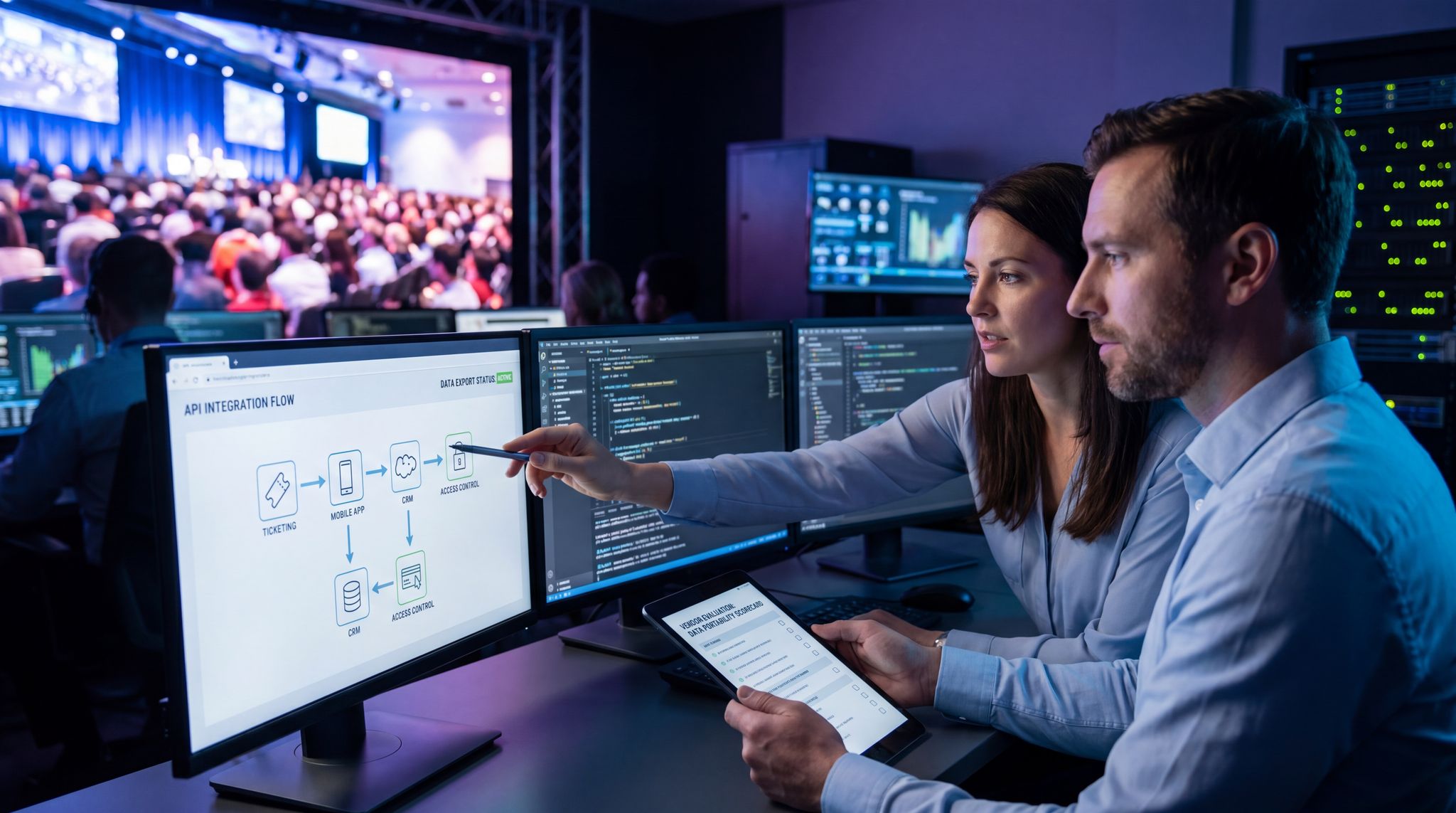
When evaluating the best tools for interpreting multilingual events in 2025 and 2026, technical directors must prioritize platforms that offer seamless API integrations with existing broadcast software. The top-tier RSI solutions now feature advanced audio routing, automated interpreter handovers, and built-in redundancy protocols. Selecting the right software suite ensures that whether you are hosting a specialized corporate summit or a massive hybrid festival, the interpretation delivery remains stable under heavy user loads.
When shortlisting the premier interpretation software and translation applications for upcoming event cycles, technical directors should look beyond basic audio routing. The most effective solutions now incorporate hybrid capabilities—allowing seamless toggling between human RSI professionals and AI-driven fallback engines. Evaluating these top-tier systems requires rigorous pilot testing, particularly focusing on how well the vendor’s cloud infrastructure handles latency spikes during peak keynote sessions.
Grow Your Events
Leverage referral marketing, social sharing incentives, and audience insights to sell more tickets.
Ensuring Quality and Minimal Latency
Whether on-site or remote, audio quality and timing are paramount in simultaneous interpretation. Attendees need to hear the translated speech almost in sync with the presenter, which means every link in the chain must perform. Here are some tips to ensure top-notch quality:
– Use Professional-Grade Audio Gear: Cheap headset mics or consumer walkie-talkie systems won’t cut it. Invest in proven interpretation consoles, high-fidelity interpreter microphones, and encrypted digital transmitters to prevent interference or eavesdropping.
– Optimize Venue Acoustics: If using on-site booths, place them in a quiet, elevated location with direct line of sight to the stage (or a video feed) so interpreters can see slides and body language. Insulate against crowd noise. Small details (like ensuring the booth air conditioning isn’t loud) make a difference in what interpreters hear.
– Rehearse and Sound-Check: Conduct thorough tests with interpreters before attendees arrive. They should practice with a sound check script to ensure volume levels are comfortable and the delay is unnoticeable. In hybrid settings, test the end-to-end chain – from the stage microphone through the platform to the remote interpreter and back to a listener’s device.
– Minimize Latency: Aim for <1 second delay if possible. Using hardwired ethernet for interpreter stations and streaming gear can shave off valuable milliseconds versus Wi-Fi. Likewise, choose RSI platforms known for low-latency architecture (some use dedicated audio codecs and edge servers to speed delivery).
– Interpreter Coordination: Have an Interpreter Manager on the team. This person keeps time, prompts handoffs between interpreters, and communicates any issues (e.g. “slow down the speaker” requests). Smooth coordination prevents gaps or overlaps in the translated audio.
By sweating these details, you ensure that the simultaneous interpretation feels seamless. Attendees often remark that when it’s done well, they almost forget an interpreter is involved – it feels like the speaker is magically fluent in their language. That level of transparency is the goal: make the technology invisible and the understanding total.
Real-Time AI Translation: Automation Meets Accessibility
AI-Powered Speech Translation Solutions
New advances in artificial intelligence are fundamentally changing how events handle multilingual content. Instead of relying solely on human interpreters, organizers in 2026 can tap into AI-powered translation systems that automatically convert a speaker’s words into other languages in real time. These systems typically use a combination of speech recognition (to transcribe the speaker’s words) and machine translation (to translate the text, often with a synthesized voice reading it out). The result can be an instant foreign-language audio feed without a human in the loop.
Major tech companies and startups alike have brought AI translation to the event space. For example, Google’s latest cloud AI can live-translate English speech into 32 languages, and Microsoft’s Translator offers live subtitling and spoken translation via a simple mobile app interface. Specialized event tools like Wordly go further – they provide live AI translation and captions in dozens of languages, with no human interpreters or special hardware required (www.wordly.ai). Attendees can use their smartphone to select a language and hear a computer-generated voice or read text translating the presenter’s speech on the fly. At large scale, these AI systems can support many more languages than would be feasible with human interpreters. It’s not uncommon now for an international convention to offer 10+ language options using AI, covering everything from Spanish and Mandarin to Korean, Arabic, or Swahili if needed.
Data-Driven Event Marketing
Track ticket sales, demographics, marketing ROI, and social reach in real time. Exportable reports give you the insights to make smarter decisions.
The benefits of AI translation are significant. First, it vastly improves scalability – you can serve small niche language groups without the high fixed cost of hiring interpreters for each. In terms of speed, modern AI models operate in fractions of a second, so translated audio or captions appear almost simultaneously with the original speech. This was showcased at a global startup conference in 2025, where an AI system provided real-time translation across multiple stages. On-site attendees heard talks in their preferred language via an app, while online viewers saw live caption subtitles in their chosen language (www.eventcat.com). Crucially, the AI kept up with rapid-fire tech discussions, allowing panels to flow naturally without pauses. Event organizers report that these tools can dramatically lower costs as well – one study found 96% of planners felt AI translation delivered higher ROI than traditional interpreting, primarily by saving money and time (www.wordly.ai).
Use Cases and Best-Fit Scenarios
It’s important to note that AI translation isn’t a one-size replacement for humans in every scenario. Instead, savvy organizers are matching the tool to the task. High-profile keynote or complex legal briefing? Probably best to stick with human interpreters for maximum nuance. Routine breakout session or all-hands meeting with predictable vocabulary? AI translation can likely handle it and save you a bundle. Many events are now using a hybrid approach: professional human interpreters on main stages where absolute accuracy is critical, and AI-driven translation for secondary sessions, internal meetings, or community events where perfection is less critical.
A great use case for AI is in hybrid and virtual conferences. When thousands of remote attendees join from around the world, it’s not practical to hire interpreters for every language viewers might need. AI solutions integrated into streaming platforms can automatically generate captions or alternate audio tracks for dozens of languages, letting virtual attendees select their language just like they’d select video quality. This was seen at a recent developer conference that streamed globally – viewers in South America could listen with Spanish narration synthesized in real time, while viewers in Germany saw German subtitles on the webcast. The event expanded its online audience by 30% thanks to these additional language options, essentially unlocking whole new regions of attendees who wouldn’t have registered if content was English-only.
For technical directors and producers seeking the ultimate guide to multilingual virtual events, the secret lies in treating language integration as a core broadcast requirement rather than an afterthought. A comprehensive digital strategy involves mapping the entire remote attendee journey—from localized registration landing pages to multi-channel audio routing in the main web player. By standardizing these workflows, organizers can seamlessly scale their digital footprint, ensuring that remote participants in Tokyo experience the same high-fidelity, native-language broadcast as those tuning in from London or São Paulo.
Another emerging application is multilingual attendee networking. AI can translate live conversations between attendees who don’t share a common language – for example, through mobile translation apps or even wearable translator earpieces. At expo booths and networking lounges, language no longer has to be a barrier. Two professionals can chat each speaking their own language, with their phones converting each other’s speech in near real time. We’re also seeing AI chatbots at events that support multiple languages, answering attendee FAQs in, say, English, French or Japanese depending on what the user types. This kind of multilingual AI assistant is immensely helpful for international guests trying to get information or directions at large venues.
Accuracy, Nuance, and Limitations of AI
Of course, AI translation is not perfect – and understanding its limits is key to using it effectively. While the quality of machine translation has improved rapidly (95% of organizers say AI translation quality increased in just the past year (www.wordly.ai)), there are still challenges:
– Context and Nuance: AI can stumble on idioms, jokes, or culturally nuanced references that a human interpreter would adapt. A joke that brings the house down in one language might get a perplexing literal translation from a machine. Organizers should be cautious using AI for content like humor, poetry, or sensitive negotiations – human expertise handles these best.
– Accents and Audio Quality: Heavy accents or poor microphone quality can reduce speech recognition accuracy. While AI models are improving at understanding diverse speakers, an echoey room or fast-talking presenter can introduce errors. It’s wise to use high-quality mics and feed a direct audio line to the AI system (avoiding ambient noise) to boost accuracy.
– Technical Jargon: Industry-specific terms or acronyms may not translate well unless the AI is trained on them. Many platforms let you upload a glossary of key terms (product names, technical vocabulary) ahead of time – take advantage of this to teach the AI your event’s lingo.
– Latency: There can be a slight delay (often 1-2 seconds) with AI speech translation as the system processes audio and generates speech. Generally it’s short enough not to disrupt flow, but in fast Q&A back-and-forth, those seconds can add up. Planning session formats accordingly (e.g., having speakers pause briefly after key points) can help.
– User Trust: Some attendees may simply trust human interpreters more for accuracy with important information. It can be reassuring to know a qualified interpreter is conveying the meaning, not an algorithm. Clearly communicate what type of translation is being provided so attendees know what to expect.
Go Cashless With RFID Technology
Enable contactless payments, faster entry, and real-time spending analytics with RFID wristbands and NFC-enabled ticketing for your events.
For most content, AI does remarkably well and continues to get better. Many events report that attendees are amazed at how understandable and quick the AI translations are today compared to clunkier versions a few years ago. Still, the best practice is a balanced approach – use AI where it shines and have human backup for where it doesn’t. By understanding its strengths and weaknesses, organizers can confidently leverage AI to vastly expand their language capabilities. The result can be events that feel truly global, without a proportional increase in budget or complexity.
Multilingual Event Apps and Digital Platforms
Starting the Journey: The Multi-Language Ticketing Platform
The attendee experience doesn’t begin at the venue doors; it starts the moment they decide to buy a ticket. Utilizing a robust multi-language ticketing platform is the crucial first step in welcoming an international audience. When prospective attendees land on a registration page that automatically detects their browser language and translates ticket tiers, checkout flows, and terms of service, conversion rates naturally increase. Organizers should look for registration systems that go beyond basic machine translation, allowing for localized currency processing and culturally nuanced marketing copy. By removing friction at the point of sale, a localized ticketing solution ensures that language differences never stand in the way of a completed registration.
Furthermore, integrating this localized checkout flow with your broader event CRM allows promoters to capture vital demographic data early. Knowing exactly which languages your registered attendees prefer enables more accurate forecasting for on-site interpretation hardware and digital bandwidth requirements.
Localized Content and Interfaces
In 2026, the official event app or digital platform is often the information hub for attendees – and it needs to speak their language. One of the most impactful yet straightforward steps is implementing multi-language support in your event app’s UI and content. This means attendees can open the app and immediately select their preferred language (or better yet, the app detects their phone’s language setting and defaults appropriately). All menus, buttons, and instructional text should then appear in that language, as well as key content like the schedule, speaker bios, FAQs, and venue maps.
Leading event app platforms now make it easy to load translations for all your content. You’ll want to work with professional translators (or at least skilled bilingual staff) to create high-quality translations of your event information. Poor or machine-only translations here can confuse attendees – clarity is key for things like session details or safety instructions. Localized content goes beyond just word-for-word translation; it includes formatting things correctly (dates, times, currencies in the local format) and being mindful of text length differences (for instance, German text is often longer, so design your app pages to accommodate). Testing the app in each target language is an absolute must – you don’t want to discover during the event that half of a Russian sentence got cut off on the schedule screen!
When done right, multi-language app support greatly enhances the attendee experience. Imagine a delegate from Brazil opening the conference app and seeing all the info in Portuguese – they’ll feel instantly more comfortable and in control of their experience. This inclusive approach sends a message that the event welcomes a global audience. Even simple touches like offering customer support chat in-app in multiple languages (with multilingual staff or chatbot assistance) can turn a frustrating moment into a positive one for someone struggling to ask a question in English. Ultimately, an app that “speaks” to each user in their language becomes a personal concierge, guiding them through the event confidently.
Free Tool: When Should You Announce?
Pick your event date and genre — the free planner outputs a recommended announce, presale, on-sale and reminder schedule anchored to how your audience actually buys.
Real-Time Translation Features In-App
Beyond static content, many event apps in 2026 are incorporating real-time translation features to facilitate live communication. One such feature is integrating the simultaneous interpretation audio feeds directly into the app. Instead of handing out separate headset devices, some events let attendees open the app, tap a “Listen in Spanish” (or other language) button, and hear the live translated audio through the app itself. This kind of integration between the event’s technology stack ensures that language support is not a side accessory but a core part of the digital experience. It’s convenient (attendees use their own phone and headphones) and can save costs on hardware. Just make sure your Wi-Fi/network can handle potentially thousands of simultaneous audio streams if you go this route!
Another popular feature is live translated captions or transcripts available on the app. For example, during a keynote session, an attendee could open the app’s “Live Captions” section, choose a language, and see the speaker’s dialogue scroll in text form nearly in real time. This leverages the same speech-to-text and translation engines discussed earlier, but presents it as text for quick reading. It’s incredibly useful not only for those who don’t understand the spoken language, but also for anyone who might have missed a phrase and wants to quickly glance at the transcript. Some event apps even allow users to search the live transcript for keywords – a handy way to jump back if you lost track. And after the session, those translated transcripts can be saved in the app, so attendees can review content later in their preferred language.
Event apps are also facilitating multilingual Q&A and networking. In live Q&A sessions, apps can include a feature for attendees to submit questions in their own language, which are then translated for the moderator. For instance, a Japanese attendee can type a question in Japanese; the moderator’s view shows the English translation, and they can respond in English which the attendee hears via interpretation or reads via caption. Similarly, matchmaking and chat functions in apps are starting to include on-the-fly translation so that language is no longer a silo in networking. An attendee could message a new contact through the app in French, and the recipient sees it in English (with the option to view original text too). These emerging features break down social language barriers and encourage more connection among international participants.
Engaging Attendees in Their Preferred Language
Truly multilingual apps go beyond just translation – they aim to engage each attendee in the language they are most comfortable with. One best practice is to send push notifications in the user’s preferred language. If a schedule change or safety alert needs to be broadcast, the system can dispatch it in multiple languages so everyone receives a notification they can read. Modern platforms allow segmenting notifications by app language or user locale. For example, if 30% of your users have set French as their app language, those users can get the message in French while others get it in English. This avoids situations where an attendee misses an important update because it wasn’t communicated in a language they readily understand.
As we look at communication trends, leveraging external messaging apps has become a critical component of multilingual event software ecosystems. For instance, deploying automated translation for SMS or popular chat apps ensures critical updates reach attendees instantly. Specifically, utilizing advanced API webhooks for LINE integration notifications translation in 2026 allows organizers hosting delegates from Asia to push schedule changes directly to their preferred messaging app in their native language. Whether you are routing alerts through WhatsApp, LINE, or X, integrating real-time translation engines into your outbound notification strategy guarantees that emergency broadcasts and VIP invites are universally understood.
It’s also wise to produce multilingual content in your event’s social feeds and news updates (often accessible via the app or event website). If you’re posting daily recaps, consider having them available in the top attendee languages. Some events create separate social media accounts or groups for different language communities – your app can mirror that by curating content by language. For instance, a major music festival might have English and Spanish versions of its daily schedule highlights, each featuring artists and tips tailored to those audiences. Attendees tend to engage more (liking, sharing, commenting) when the content is in their native tongue, which boosts the overall buzz and sense of community at the event.
No Hidden Fees, Just Honest Pricing
One all-inclusive fee covers the platform, payment processing, support, and every feature. Free events are always free. No setup costs, no surprises.
Finally, don’t overlook feedback surveys – offer them in multiple languages to encourage a higher response rate. You want to hear from all your attendees about their experience, not just the English-speaking ones. Many event apps support multilingual survey questions, or you can route users to different language versions of a survey. By engaging attendees in the language they prefer at every touchpoint (information, communication, and feedback), you demonstrate respect and hospitality. It leaves a strong impression that can turn first-time attendees into loyal fans, knowing that your event truly welcomes a global audience on equal footing.
Customer Support and Multilingual Help Centers
As your international attendee base grows, so does the need for accessible customer support. Event organizers are increasingly seeking out the best tools for building multi-language help centers in 2026 to manage pre-event inquiries. Modern help desk platforms integrate AI-driven translation to automatically route tickets to appropriate staff or instantly translate email and chat responses. Providing a comprehensive, localized FAQ knowledge base ensures that attendees can find answers about visa requirements, travel logistics, or venue policies without waiting for a human agent. This proactive approach drastically reduces support ticket volume and builds trust with your global audience long before they arrive on site.
To maximize the ROI of these support systems throughout 2025 and 2026, operators should prioritize help desk software that offers dynamic language detection. When a prospective ticket buyer from Germany opens the support widget, the system should instantly serve German-language articles and route any escalated chats to a German-speaking agent or a real-time translation API. This level of automation is what separates standard customer service from a truly frictionless, global attendee journey.
Live Captioning and Subtitles for Events
Captioning for Accessibility and Inclusion
Live captioning is a powerful tool that serves a dual purpose: it makes events more accessible to attendees who are deaf or hard-of-hearing, and it also aids understanding for those who speak different languages. Real-time captions display the spoken words as text on a screen (or personal device), either verbatim in the original language or translated into another language. In 2026, attendees increasingly expect captioning as part of an inclusive event experience. For example, many festivals now provide a screen with live captioning of lyrics and speeches at main stages, right alongside the performers (www.ticketfairy.com). This ensures even attendees who might not catch rapid-fire lyrics or who aren’t fluent in the singer’s language can follow along with the content. It’s an inclusion win-win: accessibility for those with hearing loss and better comprehension for non-native speakers.
There are a few flavors of captioning to consider. Same-language captioning (often called CART for Communication Access Realtime Translation) involves a stenographer or software transcribing English speech to English text in real time, for instance. This benefits people who didn’t quite hear a phrase or who process information better by reading. On the other hand, translated subtitles involve converting the speech into another language before displaying it as text. At international conferences, you might see multiple screens or a screen split into sections, each showing a different language’s subtitles simultaneously for the audience. Alternatively, attendees use an app or tablet to view subtitles privately in their language, which was the approach at the COMEUP 2025 conference where live captions were provided to online viewers globally in multiple languages (www.eventcat.com).
Captioning is also extremely useful for virtual and hybrid events. Platforms like Zoom, Teams, and webinar tools now routinely offer AI-driven live captioning that attendees can toggle on. Often these can be set to different languages – for instance, a remote viewer can choose to see captions translated into French even while the audio is in English. This has made webinars and virtual conferences far more accessible and engaging for international audiences. Even in-person, though, having captions on a big screen can be a boon. We’ve heard from attendees that seeing the speech transcribed helps them focus and retain information, especially if the sound in the venue isn’t perfect or the speaker has a heavy accent. In one survey, patrons said the availability of captions influences their choice of which events to attend (particularly among older adults with some hearing loss) (www.ticketfairy.com) – a clear indication that offering captions can actually boost your attendance and satisfaction scores.
Accept Payments Across 13 Countries
Local currency processing via Stripe, Razorpay, Xendit, Paystack, and OXXO across 13 countries with region-specific payment methods.
Human Stenographers vs. Automated Captions
When implementing live captioning, event organizers have two main options: human captioners or automated captioning software. Each has its pros and cons, and sometimes a combination is used.
Human stenographers (CART captioners): These are professionals who use specialized machines or software to manually transcribe the speech at lightning speed (often over 200 words per minute). They often work remotely, listening in via an audio feed and sending the captions to your displays. The big advantage is accuracy – a skilled captioner can capture virtually every word and correct mistakes on the fly using context and expertise. They’re also better at adding needed punctuation and dealing with homophones or tricky proper names (since they often prepare by reviewing the event content beforehand). The downsides are cost and logistics. Humans are expensive (you generally pay by the hour, including prep time), and like interpreters, they may need to tag-team for long sessions. Availability can be an issue if you need captions in many languages – you might not find a captioner for every language of interest.
Automated captioning (AI speech-to-text): This uses speech recognition algorithms to generate captions without human intervention. The obvious benefit is cost and scalability. With AI, you can caption multiple sessions or languages in parallel at relatively low cost. Setup can be as simple as plugging the audio feed into a captioning application or platform – some popular ones include AI services from Google, IBM, and smaller specialists like EEG’s Lexi or AI-Media. Modern AI captioning can be impressively accurate under the right conditions. However, you should expect some errors, especially with technical terms or fast dialogue. The accuracy might be around 85-95%, depending on audio quality and accent, whereas a human might achieve 98%+. AI captions also usually lack punctuation and may have a short delay. On the plus side, they can be generated nearly instantaneously in multiple languages simultaneously – something impractical with human captioners alone.
A common strategy in 2026 is to use automated captions as a baseline, and involve human captioners or editors for the most important sessions or to supervise the accuracy. For example, an event might run AI captions on the big screen during each session, but have a staff member or caption operator review them and quickly correct any major mistakes (some systems allow an operator to override or correct the text in real time). As AI technology improves, the gap between automated and human captioning is closing. In fact, the latest AI models with domain-specific training can come surprisingly close to human-level accuracy for straightforward speech (www.ticketfairy.com). The decision often comes down to budget and how critical 100% perfection is. For a formal keynote at a medical congress, you might hire a top-notch human captioner. For a casual panel discussion at a festival, AI captions might serve well enough to get the gist across.
Delivering Captions Onsite and Online
Once you have captions being generated – by human, AI, or both – the next question is how to display them effectively so that attendees can easily use them. The approach can differ for in-person audiences versus remote viewers:
Onsite caption displays: Many conferences will have one or two large screens dedicated to captioning, usually positioned to be visible from the seating areas without distracting from the speaker. These might be LED screens flanking the stage or a lower-third section of the main screen that scrolls text. It’s important to use a legible font (san-serif, high contrast) and size large enough to be read from the back rows. You’ll also want to limit the number of lines shown at once (typically 2–3 lines) to avoid overwhelming readers. As mentioned, some events schedule specific open-captioned sessions (especially in theater and performing arts) where captions are always on display for anyone to see (www.ticketfairy.com). Other times, organizers opt for closed caption devices – like personal handheld screens or AR smart glasses – so that only those who want captions see them (www.ticketfairy.com). For example, some theaters hand out smartphone-like devices that sync to the show’s dialog for patrons who request them, avoiding putting text on the main stage for everyone. In a conference, you might achieve a similar effect by using an app: attendees who want captioning can open the event app or a special web page on their phone to view the live transcript, while others might ignore it. This approach was noted in the venue world, where some arenas are offering captioning via mobile apps to enhance accessibility without altering the main show for everyone (www.ticketfairy.com).
Online caption integration: For virtual attendees, captions are typically integrated into the video player or webinar interface. Be sure to choose a platform or streaming setup that supports closed captions. Most will either display them overlaid on the video or in a sidebar. Give your remote audience instructions on how to turn captions on and choose the language if that’s an option. It’s a good practice to have someone monitor the captions during the live stream – if the caption feed stops or has an error (like a frozen line of text), they can reset it or notify the tech team. One great benefit of captioning your stream is the archive it creates. Those transcripts can be edited after the event and turned into on-demand subtitles on your recorded videos, or even repurposed into written content summaries. They also make your content more searchable (a boon for SEO if you publish videos online). So, investing in captioning brings not only immediate accessibility benefits but also valuable media assets post-event.
In implementing captioning, communicate clearly with your audience about what services are available. Mention on your website and program that captioning is provided (and in what languages), so attendees who need it know to expect it. During sessions, a brief announcement or an icon on the screen can alert people that they can view captions on the event app or on the side screens. By normalizing and advertising these services, you encourage attendees to use them and demonstrate your commitment to inclusion. As one venue manager put it, “an informed audience is an engaged audience” – when people know you’ve got them covered with tools like captions or translation, they can relax and focus on the content rather than worrying about what they might be missing.
Best Practices for Implementing Multilingual Tech
Planning Language Needs and Solutions Early
Pulling off a truly multilingual event requires upfront planning – it’s not a box to check last-minute. The first step is to analyze your audience and stakeholders to determine which languages need support. Look at ticket data, registration info, and past event demographics: how many attendees might not be fluent in the primary event language? If you’re marketing globally, you may even decide on adding language support as part of your promotion strategy to boost international attendance. Once you’ve identified target languages (perhaps the top 2–4 aside from the primary language), consider the scope of support for each: Will you offer full simultaneous interpretation for all sessions? Only select sessions? Will printed materials and apps be translated? Having a clear language plan early on will drive your budgeting and vendor choices.
Research and choose your tech solutions well in advance. There are many vendors for interpretation, captioning, and translation – each with different capabilities. You’ll want to compare options and possibly do demo sessions. For instance, test out an AI translation tool with samples of your event content to see how it handles the terminology. If you plan to use an RSI platform, involve your AV/IT team to ensure it’s compatible with your other systems (sound board, streaming setup, event app). Negotiate contracts with interpretation service providers or software vendors with plenty of lead time; top human interpreters, for example, are booked out months ahead for peak conference seasons. Also, if your event requires any specialized translation – say a medical conference needing interpreters familiar with medical jargon – factor that in early so the provider can secure appropriately skilled linguists.
Don’t forget to prepare your content for translation. This means arranging to translate slides, signage, and any pre-produced videos or materials. If you’ll project slides in multiple languages, you might have separate decks or a system to overlay translated text. Ensure speakers provide presentations and notes well in advance so interpreters or translators can familiarize themselves. It’s also wise to create a glossary of key terms and names for your event, and share it with both interpreters and AI systems. This might include industry-specific terms, product names, or the correct spelling of speaker names – all to improve accuracy on the day. By embedding multilingual considerations into your planning process from the start, you avoid scrambling later on and help guarantee a smooth experience for all.
As you map out this strategy, comparing the top-rated multilingual event interpretation tools for the 2025 and 2026 seasons will be a major focus. The landscape is shifting rapidly from standalone hardware to integrated SaaS ecosystems. Event producers must assess whether a vendor offers native integration with their chosen registration and streaming platforms, ensuring that language data flows seamlessly from the initial ticket purchase down to the individual attendee’s mobile device.
When evaluating the broader landscape of multilingual event software, technical directors must look beyond standalone apps and consider end-to-end platforms. The most robust systems now unify registration, live streaming, and on-site hardware management under a single dashboard. By centralizing these functions, organizers can seamlessly track which language channels are experiencing the highest demand and dynamically allocate bandwidth or interpreter resources in real time.
Evaluating Language-Services Software Companies
When organizers evaluate a language-services software company for multilingual event interpretation, the vetting process must be rigorous. Technical directors should look past marketing claims and assess the vendor’s Service Level Agreements (SLAs) for uptime, data privacy compliance (such as GDPR for international delegates), and the availability of dedicated, on-call technical support during live show hours. A top-tier multilingual event software provider will offer transparent, scalable pricing models—whether billed per-user, per-language channel, or per-minute—allowing promoters to forecast budgets accurately. Furthermore, requesting case studies of similar-sized deployments ensures the chosen platform can handle peak concurrent user loads without audio degradation.
Training Staff and Informing Attendees
Implementing multilingual tech isn’t just a technical endeavor – it also involves the human side: your staff and your attendees. It’s essential to train your event staff and volunteers on the language services you’re providing. Everyone should know what’s available and how it works so they can assist attendees as needed. For example, your registration staff should be aware if headsets are being distributed for interpretation or if there’s a QR code for an app-based audio stream. Train them on basic troubleshooting (e.g., helping attendees connect to Wi-Fi or select the right channel in the app). If you have an info desk, consider having a few multilingual staff or a translation app ready to help answer questions from foreign-language speakers. Even basic phrases in common languages or an on-call phone interpreter service can empower your team to handle inquiries across the language barrier. The more confidently your staff can explain “Here’s how you can hear this in Chinese” or “Open this link to see captions in Spanish,” the more attendees will actually use and benefit from the services.
Attendee communication is another critical piece. In pre-event emails and your website, promote the availability of multilingual support so attendees know they won’t struggle to understand content. This can be a selling point that convinces someone from abroad to register. Provide instructions in those communications – for instance, a guide on how to access interpretation on site (“pick up your headset at the translation desk in the lobby”) or how to use the app for captions. At the event itself, use signage to remind and direct people. You might have symbols or icons for each language at session rooms, or a help desk specifically labeled in multiple languages. Some events produce a brief “how to access translations” video or live demo at the opening session, which can be very effective. An engaged attendee who knows how to tap into these resources is far more likely to stick around and feel included, rather than tuning out because they’re lost.
One often overlooked aspect is cultural sensitivity training for staff and even speakers. Ensure your team is aware of basic etiquette when interacting with multilingual or international guests. Seemingly small things help, like speaking slowly and clearly when giving instructions (especially if using English as a lingua franca), and being patient if there’s a communication hurdle. Encourage speakers to be mindful of language too – avoiding colloquialisms that don’t translate well, and pausing slightly to allow interpreters or captions to catch up. Many experienced presenters will already know these tricks, but a gentle reminder in the speaker briefing can’t hurt. In the end, rolling out multilingual tech is as much about fostering a welcoming atmosphere as it is about hardware or software. By preparing the people involved – both staff and attendees – you create a cooperative environment where the technology can shine.
This training is particularly vital when organizing multilingual staff conferences or internal corporate kickoffs. When your own workforce spans multiple regions, ensuring that every employee can participate in their native language is critical for alignment and morale. Event managers must train internal stakeholders and department heads on how to use interpretation headsets and digital Q&A features effectively, ensuring that internal company events set the gold standard for inclusive communication.
Testing, Backups, and Pitfalls to Avoid
Any time you introduce new tech into an event, you should budget time for thorough testing and have fallback options – and this is especially true for mission-critical language solutions. Conducting a full test or even a dress rehearsal with your interpretation and translation setup can catch issues that a simple sound check might miss. For example, simulate a live session with interpreters (or AI) running and have bilingual staff listen as “attendees” to verify audio clarity and translation accuracy. Test the captioning on the actual screens or devices that will be used, to ensure text size and speed are suitable. If using an app for streaming audio or text, test it on various devices (iPhone, Android, different models) and under real network conditions. It’s worth doing these dry runs in the actual venue environment if possible, since things like venue network firewalls or interference from other equipment can be hard to predict in theory.
Despite best efforts, tech can sometimes fail – so have backup plans ready. For interpretation, consider booking an emergency interpreter on standby (perhaps listening in remotely) who can cover if one of the primary interpreters falls ill or a technical glitch occurs. Alternatively, have a cache of pre-recorded translations for key content as a backup; for instance, if the Welcome speech is scripted, you could have it pre-translated and available as text or audio in major languages on the app just in case live interpretation fails at that moment. For captioning, if you’re relying on AI, it might be wise to have a captioner on call to step in if the automated system has issues (or vice versa, use AI as backup if the human feed drops). Redundancy in equipment is smart too: extra headsets and receivers, an extra laptop running the translation software, and spare cables and batteries for all related gear. Many seasoned technical directors even create a “Plan B” and “Plan C” document – e.g., if the interpretation app crashes, switch to a backup streaming link or deploy spare radio headsets, etc. The goal is that no single point of failure (a server outage, a lost internet connection, etc.) will derail communication for those who need it.
It’s also helpful to learn from common pitfalls and avoid them. A classic mistake is underestimating setup time – don’t cut it too close on installing booths or calibrating interpreter audio, as rushing leads to errors. Another pitfall is not providing adequate monitoring: assign someone to actively monitor each language audio channel during sessions, either via headset or the app, so they can catch if an interpreter has an issue or if audio drops. We’ve heard horror stories of nobody realizing for 10 minutes that the “French channel” was silent due to a muted mic – an easily preventable scenario with a dedicated monitor. Watch out for audio bleed in venues – if multiple languages are being interpreted in the same vicinity, make sure the sound isolation is sufficient so interpreters don’t hear each other. And ensure power and internet backups (UPS for your equipment, a backup internet source like a 4G/5G hotspot for critical connections) to guard against outages. In our event tech implementation playbook, we emphasize testing and redundancies as key to avoiding day-of disasters. The same holds true here: meticulous preparation and backup contingencies will crisis-proof your multilingual tech so you can handle any surprises.
Furthermore, the industry is seeing a push toward automated diagnostics, with leading platforms driving language testing innovation in 2026. These advanced systems can simulate thousands of concurrent virtual attendees connecting to different language channels simultaneously, stress-testing the network infrastructure before the event goes live. By leveraging these innovative testing environments, IT teams can identify latency bottlenecks and audio routing errors proactively, guaranteeing a flawless multilingual broadcast on show day.
Expanding Reach and Engagement with Multilingual Tech
Attracting a Broader Audience
One of the biggest benefits of embracing multilingual event technology is the potential to significantly expand your event’s reach. When attendees know that an event will cater to their language needs, they’re far more likely to attend or tune in. By offering content in multiple languages, you open the door to markets that may have been closed off before. For example, a conference that previously drew mostly domestic attendees can start pulling a global audience once it provides live translation – suddenly executives or fans from overseas feel confident they’ll understand and participate. This was the case for a gaming convention that added Spanish and Mandarin interpretation; the following year they saw a double-digit percentage jump in registrations from Latin America and China, turning a regional event into an international one.
Multilingual support can also be a compelling marketing angle. Promoting that your festival has “full programming in English and Spanish” or that your webinar will have “live captions in 10 languages” makes your outreach stand out. It signals that your community is global and inclusive. Event marketers are building this into their campaigns, sometimes even creating separate promotional content in different languages. (For instance, running social media ads in French specifically to target Quebec attendees for a primarily English festival, knowing that French content on site will be available.) In fact, inclusive promotion strategies often go hand-in-hand with multilingual planning – the effort you put into inclusive event marketing strategies will be amplified by having the technical means to welcome those diverse audiences when they show up.
There’s also a reputational boost: being known as an event that “goes the extra mile” to accommodate different languages can enhance your brand. Attendees talk about these positive experiences, and word spreads in international networks. Conversely, failing to provide language support when a large portion of your audience needs it can damage your reputation and limit growth. In 2026’s ultra-connected world, language inclusion is increasingly synonymous with professionalism for events aiming to be world-class.
Deeper Attendee Engagement and Satisfaction
Beyond just the raw numbers of attendance, multilingual tech directly improves how engaged and satisfied attendees are during the event. When people can fully understand the content, they engage more – they ask more questions, they participate in discussions, and they retain more knowledge. Imagine a scenario with no translation: an attendee who isn’t fluent might zone out during sessions or skip them entirely. Provide interpretation or subtitles, and that same attendee is taking notes, responding to polls, and actively networking about the talk afterwards. The difference in engagement is night and day, simply because the language barrier was removed.
The data backs this up. Studies have shown higher dwell times in sessions and lower drop-off rates for streams that had multi-language options. In a survey of attendees at a bilingual conference, over 90% of those who used the translation services reported feeling much more satisfied with the event experience and said they were able to participate equally (www.wordly.ai) (www.wordly.ai). They weren’t left feeling like second-class citizens straining to catch meaning. Instead, they felt heard and valued. On the flip side, the native English-speaking attendees in that same event hardly noticed anything different – the translations didn’t detract at all from their experience. This underscores an important point: well-implemented multilingual solutions elevate the experience for those who need them while being unobtrusive for those who don’t. It’s additive with no downsides.
We should also mention the networking and community aspect. When language tools are available, attendees of different languages mingle more freely. They’re not as self-segregated by language groups, because things like translation apps or bilingual staff can bridge introductions. This leads to richer interactions and often very positive feedback – people love making unexpected connections when they travel to events, and language shouldn’t be a blocker. For example, at an “international creators summit,” the organizers noticed far more cross-language networking once they introduced real-time translation in the event app’s chat and a multilingual matchmaking activity. Attendees left with new contacts from around the world, precisely because they had a way to communicate. These kinds of outcomes – new business deals, collaborations, friendships – are exactly what event hosts hope to facilitate. Providing the means for all attendees to talk and learn across languages directly strengthens your event’s impact and ROI.
Boosting ROI and Long-Term Impact
Speaking of ROI, investing in multilingual capabilities can yield substantial returns, both immediately and long-term. On the immediate side, you often increase ticket sales or viewership by making your event accessible to more people. If adding a few languages brings 15% more attendees, that could be tens or hundreds of thousands of dollars in additional revenue – easily justifying the cost of interpretation services or tech platforms. Moreover, sponsors and partners tend to be happier when an event reaches a wider audience. If you can report that your live stream had viewers from 50 countries thanks to language support, that’s a compelling metric to attract sponsors who crave global exposure. Some events even monetize language options directly (for instance, a virtual summit charging a small premium for access to premium multilingual content or selling sponsorship of a “language channel”).
Long-term, providing a great multilingual experience builds loyalty and community growth. Attendees are more likely to return year after year, and to recommend the event to others. A positive experience for a non-native speaker today means they might bring colleagues or friends with them next time, knowing it’s worth it. Conversely, if someone struggled due to language, they may not come back or could post negative feedback. So there’s a big reputational ROI in “getting it right” for everyone. This also feeds into your content’s legacy. Recordings of sessions with multi-language audio or subtitles have an extended shelf life – they can be repackaged into educational materials or marketing snippets that appeal to multiple markets. For example, a conference that records all sessions and quickly publishes highlight videos with subtitles in 5 languages will see continued engagement online, drawing interest to future events and attracting followers globally.
In essence, multilingual tech solutions transform an event from a one-off gathering into a multinational platform. You’re not just hosting an event; you’re creating content and connections that traverse languages and borders. The expanded reach can open up new host cities or regions for your event brand, new partnerships (perhaps you collaborate with an overseas organization to boost a translated stream), and even new revenue streams (such as offering consultation on multilingual event best practices to others, once you’ve mastered it). All of these add up to a strong business case. At the end of the day, breaking the language barrier isn’t just the right thing to do for inclusivity – it’s a savvy strategy to future-proof your event and amplify its success.
Future Outlook: Next-Generation Multilingual Tech
AI Advancements on the Horizon
Looking beyond 2026, the future of multilingual event tech is incredibly exciting. AI advancements are accelerating, promising even more seamless and high-quality translations in the near future. Tech giants and startups alike are working on next-gen translation AI that could make the dream of a “universal translator” nearly reality. We’re talking about systems that not only translate words, but capture tone, emotion, and intent – making the translated speech sound almost as natural as a native speaker. One area of rapid development is AI voice cloning for translation: imagine an English speaker’s voice being generated in Spanish, but still sounding like the same person, tone and all. Early versions of this exist, and a few years from now an event presenter might speak only English on stage while attendees’ devices output the presenter’s own voice in dozens of languages. That kind of continuity would be a game-changer for audience experience.
We’ll also see improvements in speed and accuracy. The latency for AI translations could shrink to virtually zero with more powerful algorithms and edge computing. Accuracy will get a boost from AI models that train on massive specialized datasets – for example, a medical conference could use a model trained intensively on medical literature for near-flawless translation of technical sessions. Some researchers predict that by 2030, AI interpretation might handle casual and mid-level technical discussions as well as a human 95% of the time, which means human interpreters can focus only on the most nuance-critical content. And with the rise of machine learning, these systems will continuously learn from each event. The mistakes made this time become lessons that make the next event’s translation even better, creating a virtuous cycle of improvement.
Another development to watch is AI that can transcend speech altogether. For instance, translating sign language via AI-driven computer vision (so an AI could watch a sign language interpreter on video and translate that into other spoken languages in real time). Or AIs that analyze a speaker’s slides or script in advance to anticipate and prepare translations, reducing on-the-spot errors. The bottom line: the coming years of AI innovation will further break down language barriers, making real-time multilingual communication feel ever more natural. Event planners should keep an eye on these trends – early adopters of mature next-gen AI tools could deliver experiences that truly wow international audiences and set new standards for inclusivity.
Wearables and Immersive Language Tech
The hardware side of language tech is evolving too. We’re likely to see more wearable translation devices and immersive tools integrated into events. Consider the progress in consumer translator earbuds – by 2026 there are already earbuds people can wear that translate conversations on the fly. In the future, events might offer or even require specialized earpieces that automatically handle all audio translation and even adjust to the ambient sound environment. These could intelligently switch channels based on the session you walk into, or lower the volume of the original speech as it plays the translation so you hear a balanced output. Essentially, sleek universal translator earbuds could replace clunky headsets entirely, making the experience more comfortable and hands-free.
Augmented reality (AR) is another realm with huge potential. We may soon have AR glasses or smartphone AR apps that can display captions or translated text floating in your field of view, aligned with the stage or speaker. Prototype AR captioning glasses already exist for theater performances; mainstream adoption could bring this to conferences and concerts. Imagine looking at an art installation at a global expo and seeing informational labels automatically appear in your preferred language via AR – no need to find the English on a crowded sign. Or during a keynote, AR could project the speaker’s translated speech as subtitles right beneath them from your perspective. This kind of immersive tech would literally embed the translation into the live scene, which could feel far more integrated than looking down at a phone or up at a side screen.
Even haptic tech might play a role for inclusive communication – for example, vibrating wearables to cue a deaf attendee of important audio alerts in their language, or using devices that trace patterns on the skin representing words (this is experimental, but research is ongoing). Of course, these advancements also hinge on improvements in connectivity (5G/6G, low-latency networks) to deliver rich data like AR content universally around a venue. But given how fast event connectivity is advancing, it’s quite plausible that within a few years, attendees will be opting in to a fully tech-augmented language experience. Event organizers should be prepared to pilot these gadgets as they mature – the events that can boast “we used AR translation glasses for our international delegates” will certainly make headlines and attract tech-forward attendees.
Toward a Truly Borderless Event Experience
The ultimate vision that many in the industry share is a truly borderless event experience, where language ceases to be a barrier at all. If we project into the later 2020s and beyond, we can imagine events where any attendee can converse with any other, or listen to any presentation, and each person hears and interacts in their own native language seamlessly. The technology would intermediate in real time with such quality that it feels almost like a Babel fish in the ear (to borrow the famous sci-fi concept). Achieving that means converging the developments we discussed: highly accurate AI, unobtrusive wearables, and powerful platforms integrated into every facet of the event.
We can also anticipate more integration across systems. Ticketing platforms might automatically ask for your language preference when you register, and then all your event touchpoints (the app, the check-in kiosk, the session seating with an interpretation headset ready) are pre-configured for your language when you arrive. Networking apps could automatically pair people who speak the same language if they prefer, or purposely mix languages but facilitate their introductions with instant translation. The whole journey from registration to post-event feedback could be localized per attendee. In the coming years, event tech providers (like conference app companies, webinar platforms, etc.) are very likely to bake in multilingual features as standard – much like how “mobile-friendly” or “social media integration” became standard in the 2010s. We’re already seeing this: some leading platforms now tout built-in support for 20+ languages in their interfaces and content management.
A borderless experience also extends to content after the event. Expect to see event recordings not only subtitled but dubbed with AI voices in multiple languages, and perhaps available as podcasts or streams where the listener can choose the language as easily as choosing an audio track on Netflix. This means the knowledge sharing and marketing impact of events will travel even further. A workshop delivered in English can turn into a YouTube video series with voice-overs in Hindi, Portuguese, or Swahili, reaching communities that were never in the live audience. We’re not far off from that now, but the process will become smoother and higher quality as technology progresses.
In summary, the trajectory is towards eliminating language as a limiting factor entirely. While language and cultural diversity will always be celebrated, the goal is that anyone can participate in any event and feel like it was designed for them. Breaking the language barrier is thus an ongoing journey – one that will continue to unlock new possibilities in how we share experiences globally. For event professionals, staying at the forefront of these tools isn’t just a technical endeavor, but a chance to reshape what’s possible in international community-building. The year 2026 is a milestone on this path, offering us a preview of the inclusive, borderless events of the future.
Frequently Asked Questions About Multilingual Event Technology
What are the best tools for interpreting multilingual events in 2026?
The ideal interpretation software depends on your specific production format. For large-scale hybrid conferences, Remote Simultaneous Interpretation (RSI) platforms like KUDO, Interprefy, and Wordly lead the market by offering low-latency audio routing and seamless API integrations with major broadcasting software. For smaller, in-person corporate summits, AI-driven speech-to-text translation apps are becoming increasingly popular due to their cost-effectiveness and rapid deployment capabilities.
How can organizers effectively manage multilingual staff conferences?
When hosting internal corporate kickoffs or global employee summits, technical directors should deploy unified communication platforms that support real-time audio channels and translated live captions. Ensuring that every team member can participate in their native language boosts engagement, improves knowledge retention, and sets a standard for inclusive corporate culture.
Which platforms are driving language testing innovation this year?
Top-tier event tech providers are introducing automated diagnostic environments that simulate thousands of concurrent users across various language channels. These advanced testing suites allow IT teams to proactively identify network bottlenecks and audio latency issues before the live broadcast, ensuring a flawless multilingual delivery.
What are the core components of an ultimate guide to multilingual virtual events?
A definitive playbook for digital language integration must cover three main pillars: localized pre-event touchpoints (like ticketing and help centers), robust broadcast architecture (supporting multi-track audio and low-latency RSI), and inclusive post-event VOD assets (such as AI-dubbed recordings). By standardizing these elements, event producers create a scalable framework that guarantees equitable, high-quality experiences for remote attendees worldwide.
How do professional simultaneous interpreters handle complex multilingual events in the United States?
At major US-based international conferences, professional interpreters manage logistical complexity by working in coordinated teams and utilizing advanced audio routing. They rely on relay interpretation for uncommon language pairs, rotate shifts every 20-30 minutes to avoid cognitive overload, and require extensive pre-event technical briefings and specialized glossaries from event organizers to ensure absolute accuracy.
How is multilingual event software evolving between 2025 and 2026?
The transition from 2025 to 2026 has seen multilingual event software shift from fragmented, single-purpose applications to comprehensive, all-in-one ecosystems. Organizers are now prioritizing platforms that offer native API integrations for ticketing, CRM, and external messaging (such as automated translation for LINE or WhatsApp notifications). This evolution ensures that language data flows seamlessly across the entire attendee journey, reducing manual data entry and improving the accuracy of real-time interpretation delivery.
How should organizers evaluate a language-services software company for multilingual event interpretation?
When assessing vendors, event producers should prioritize platforms that offer robust API integrations, low-latency audio routing, and enterprise-grade security. It is crucial to request live stress-test data and verify that the chosen multilingual event software can handle peak concurrent user loads during keynote sessions without degrading audio quality or introducing noticeable delay.