Festivals may be celebratory spectacles on the surface, but behind the scenes artists often fight unseen battles with stress, anxiety, and exhaustion. The touring lifestyle – long travel, high expectations, irregular sleep, and intense performance pressure – can strain even seasoned performers. Veteran festival producers know that caring for artists’ mental health isn’t just compassionate, it’s a smart investment in better shows and a smoother event. This article explores how organizers worldwide are moving beyond the spotlight to support artist well-being through practical measures like quiet wellness spaces, flexible scheduling, on-site counseling, and mindful hospitality.
Understanding the Pressure on Festival Artists
Touring Stress and High Expectations
Performing at festivals is exhilarating yet uniquely stressful for artists. Tight travel schedules, unfamiliar environments, and the expectation to deliver a flawless show in front of tens of thousands can trigger intense anxiety. Research confirms the toll: people working in the music industry are up to three times more likely to suffer from depression than the general population, according to guides on mental health in the music sector. Factors like irregular sleep, poor diet on tour, pressure from fans and labels, and easy access to alcohol or drugs further erode mental well-being, as noted in reports on music industry mental health. For example, a veteran producer recalls a 20-hour travel day that left a headliner visibly shaken and exhausted before their set – a stark reminder that even superstar artists are human beings with limits. In recent years, numerous artists have canceled festival appearances citing mental health exhaustion or anxiety, bringing this once-taboo issue into the open.
The Stigma and Silence in the Music Industry
Until recently, mental health struggles were often kept quiet in the music world. Artists feared that admitting anxiety or depression might be seen as weakness or unprofessionalism, so they pushed through breakdowns in silence. This stigma meant festival organizers weren’t always aware when a performer was on the brink. Thankfully, attitudes are changing – major figures from DJs to pop stars have spoken publicly about therapy, panic attacks, and burnout. However, silence still shrouds many situations: a singer might suffer a panic attack backstage and no one on the production team recognizes the signs. Industry charities like Mind note that insecure income, poor work/life balance, and constant public scrutiny create a mental health tinderbox, a concern highlighted by charities supporting mental health at work. Festival producers need to foster an environment where it’s okay for an artist or crew member to say “I’m struggling” without fear of ridicule or retribution.
Mounting Evidence of a Crisis
Hard data underscores that artist mental health needs proactive attention. In the UK, a 2023 Musicians’ Census found 30% of professional musicians reported poor mental well-being, based on findings from the Musicians’ Census. Surveys of touring crews and artists by the charity Music Support revealed 76% had felt depressed in the past year, and a worrying 21% had experienced suicidal thoughts, according to surveys conducted by Music Support. These figures are alarming. They also explain why 93% of those surveyed said having mental health support services at festivals is “extremely or very important,” as indicated by respondents in industry safety surveys. It’s not just statistics – high-profile tragedies have been wake-up calls. The untimely death of superstar DJ Avicii in 2018 (after canceling dozens of shows due to extreme stress) and other incidents sent shockwaves through the industry. For festival organizers, the message is clear: the mental health of performers can no longer be an afterthought. Each percentage point in those surveys represents real people – the guitarist trembling with anxiety, the DJ fighting depression behind dark sunglasses – who need support. Recognizing the scale of the issue is the first step toward meaningful action.
Why Artist Well-Being Should Be a Festival Priority
Better Performances, Happier Fans
Caring for artists off-stage isn’t just altruism – it directly impacts the on-stage performance and audience experience. Veteran promoters often say “a happy artist off-stage leads to a happy audience on-stage.” When performers feel comfortable, respected, and supported, they tend to deliver inspired, high-energy sets, a concept central to backstage practices that delight performers. On the flip side, an artist battling anxiety or exhaustion may give a lackluster show or cut their set short. Industry professionals widely acknowledge that paying attention to artist hospitality and wellness can elevate the quality of a festival’s program. As an example, one European festival noticed that after upgrading their backstage amenities and adding a wellness lounge, artists were visibly more relaxed and engaging during shows – fan satisfaction scores rose and so did positive social media buzz. Simply put, investing in artist well-being is investing in the festival’s artistic excellence and reputation.
Fewer Cancellations and Last-Minute Crises
Nothing derails a festival schedule faster than a stressed artist who feels unable to perform at the eleventh hour. Mental health-related cancellations – often labeled “exhaustion” or “anxiety” in press releases – have become increasingly common. By prioritizing artists’ mental health, festivals can significantly reduce no-shows and emergency schedule reshuffles. For instance, at a major California festival in 2019, a prominent singer nearly pulled out two hours before her set due to a panic attack. However, because the festival had an on-call counselor and a quiet space backstage, she received support, her panic subsided, and she went on to perform a stellar set. Avoiding a high-profile cancellation not only saved the festival from disappointing thousands of fans, it also prevented financial losses (no refunds needed) and preserved the event’s tightly crafted timetable. Proactively supporting artists means fewer incidents of “artist is running late” or outright cancellations, which in turn leads to smoother operations and happier ticket buyers.
Planning a Festival?
Ticket Fairy's festival ticketing platform handles multi-day passes, RFID wristbands, and complex festival operations.
Long-Term Relationships and Loyalty
Festivals that champion artist well-being often earn a special place in performers’ hearts – and booking calendars. In a crowded market, word travels fast when a festival treats artists exceptionally well. Agents and tour managers talk; if your event is known for thoughtful hospitality and a supportive atmosphere, artists are more likely to accept your offers even if your paycheck isn’t the absolute highest. On the contrary, if artists leave your festival feeling burnt out or disrespected, you may quietly get blacklisted by their teams. Building a reputation for caring about artists as people can yield repeat performances and easier headliner negotiations. Many boutique festivals leverage this: they offer perks like on-site massages, personalized catering, and downtime activities, leading artists to rave about the experience. This goodwill has tangible benefits – from easier talent booking in future years to artists giving your festival shout-outs that boost its prestige. In an era where top talent can pick and choose events, prioritizing artist mental health is a competitive advantage that helps festivals stand out as preferred gigs.
A Healthier Festival Ecosystem
Beyond individual shows, there’s a broader ethical imperative: festival organizers are influential players in the music ecosystem and can lead the way toward a more sustainable, humane industry. When festivals openly support mental health – by having wellness services or publicly encouraging balance – it sets an example for venues, tours, and artists themselves to follow suit. This leadership contributes to an industry culture where mental wellness is valued alongside artistry. Moreover, caring for artists’ well-being can reduce the risk of more serious incidents on-site. Just as many events now feature mental health care and recovery spaces for festival attendees, extending that care to performers creates a safer overall environment. Ultimately, showing that “we’ve got your back” fosters trust between artists and promoters. It’s a reminder that festivals aren’t just transactional business engagements, but collaborative communities of people working together to create magical moments. In such a community, everyone – from headliners to crew – can thrive.
Comparing Traditional vs. Mental Health-Focused Approaches: Festivals historically focused on logistics and spectacle, but modern events are evolving to care for artists as whole people. The table below contrasts old-school festival practices with today’s wellness-oriented approach to artist relations:
| Aspect of Artist Care | Traditional Approach (Old School) | Mental Health-Focused Approach (New School) |
|---|---|---|
| Scheduling & Itinerary | Maximize appearances: back-to-back sets, early press calls next day. | Build in rest buffers: reasonable set times, buffer days for travel to recover from jet lag, which helps when managing international artists and travel logistics, minimal early mornings after late shows. |
| Backstage Environment | Chaotic and crowded: loud common areas, constant entourages and media. | Calm and controlled: designated quiet zones or wellness tent for downtime, limited access to give artists breathing space. |
| Hospitality & Green Room | Generic rider fulfillment: fast food, endless alcohol, one-size-fits-all green room. | Mindful hospitality: nutritious catering (with vegan/gluten-free options), non-alcoholic drinks, personal touches (favorite tea, local snacks), and a clean, tidy space, reflecting modern artist hospitality standards. |
| Expectation of Engagement | “The show must go on” mentality: artists expected to do meet-and-greets, interviews, afterparties regardless of fatigue. | Well-being first mentality: obligations adjusted if an artist is unwell, no-pressure approach to optional activities (e.g. it’s okay to skip the afterparty to rest). |
| Support Services | Little to none: standard first aid for physical illness only, no mental health resources; issues handled ad hoc if at all. | Proactive support: on-site mental health professionals or partnerships, staff trained in mental health first aid, clear protocol to get artists help discreetly. |
As the comparison shows, a paradigm shift is underway in festival artist relations – from treating performers as just “talent” to caring for them as people. The following sections dive deeper into how to implement these supportive practices in the festival context.
Free Tool: Size Your Festival Site
Zoned capacity planning for arena, campsite, parking and entry lanes — against UK Purple Guide and NFPA density standards. Finds your bottleneck zone.
Creating Calming Backstage Wellness Spaces
Designing a Quiet Retreat Backstage
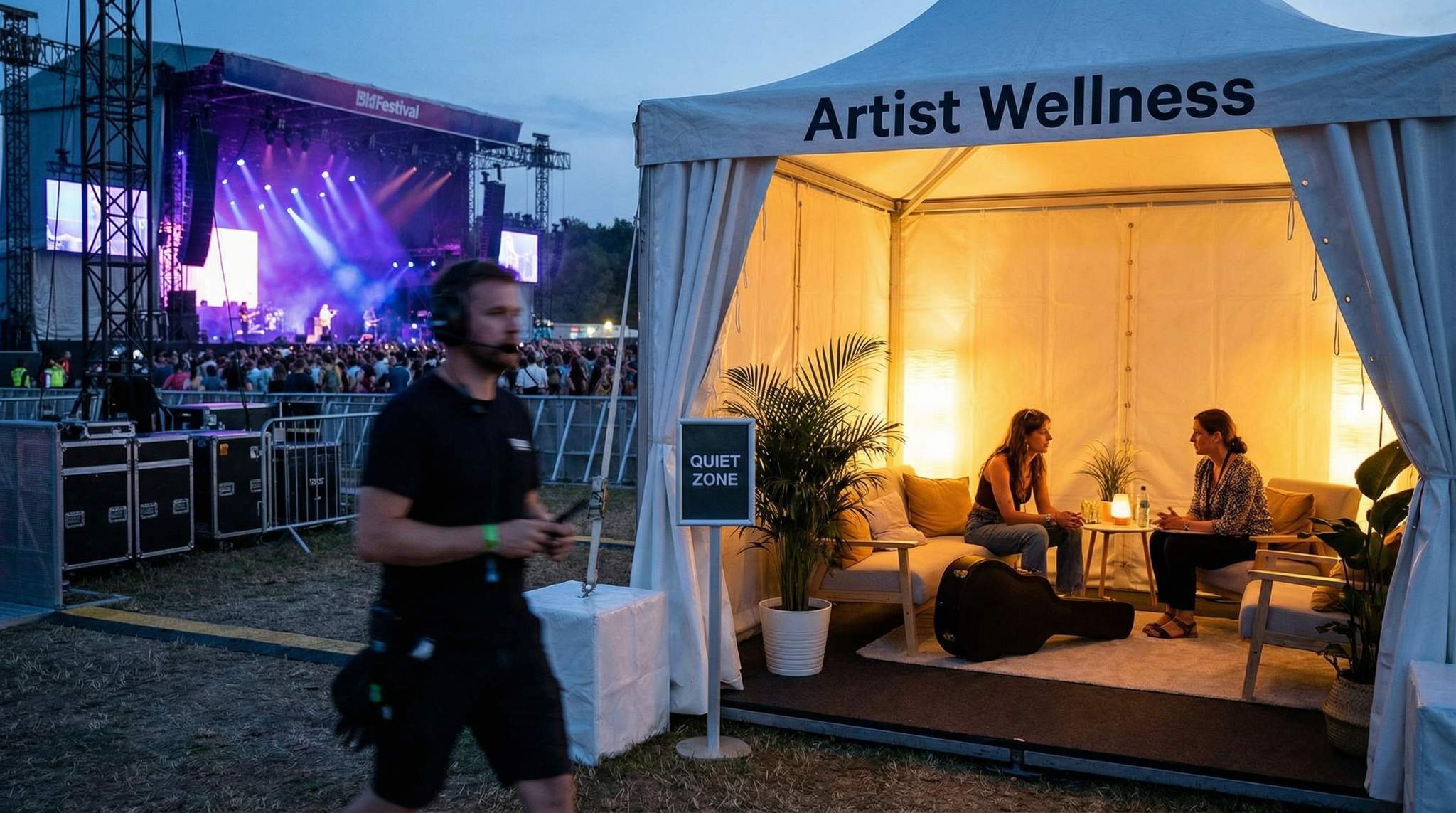
One of the most effective steps a festival can take is establishing a designated quiet wellness space backstage. This could be a small tent, trailer, or room outfitted to be a sanctuary from the chaos. Think of it as an artist “quiet room” or decompression lounge. To design it, festival producers keep it deliberately minimal and soothing: soft lighting instead of harsh fluorescents, comfortable seating (plush couches, floor pillows or even small cots), and acoustic padding or soundproofing to muffle the distant thump of stages. Consider adding touches like an essential oil diffuser (lavender for calm), greenery or plants, and a screen or partition for privacy. Importantly, this space should be off-limits to anyone but artists and perhaps one support person each – no press, no autographs, no production meetings. One festival in Asia nicknamed their wellness tent “The Escape Room” because it gave performers a literal escape from the spotlight where they could breathe deeply and find a moment of peace amid a hectic festival day.
Wellness Amenities and Activities
Beyond just a quiet zone, many events are incorporating wellness amenities backstage. At some festivals, you’ll now find yoga mats and foam rollers tucked in a corner, or a massage therapist available for 15-minute shoulder rubs to release pre-show tension. Providing a few low-key activities can help anxious artists center themselves: think coloring books, stress-ball toys, or noise-cancelling headphones for guided meditation. These aren’t expensive perks – a yoga mat and a mindfulness app subscription cost far less than a catered lunch – but they signal to performers that it’s okay to prioritize self-care. A growing number of performers even request such items in their riders. According to industry insiders, it’s no longer unusual for an artist to ask for a small meditation space or herbal tea for anxiety relief backstage, a trend noted in guides on building artist loyalty. Festivals like Splendour in the Grass (Australia) and Lightning in a Bottle (USA) are known for their holistic, wellness-oriented atmospheres and have offered artists perks like Reiki healing sessions or guided breathwork. While not every event will go that far, even a simple comfortable couch in a low-traffic area can make a world of difference for a performer needing to recharge.
Need Festival Funding?
Get the capital you need to book headliners, secure venues, and scale your festival production.
Examples: Safe Hubs and Chill-Out Zones
Real-world examples prove that these quiet spaces are both feasible and invaluable. In the UK, the non-profit Music Support has been providing backstage “Safe Hubs” at major festivals since 2016, establishing Safe Hubs for artist support. These are drug- and alcohol-free tents staffed with volunteers trained in mental health first aid. Artists or crew can drop in to chat confidentially or just escape the pressure for a moment – one artist described it as “a lifeline when I felt overwhelmed by everything going on.” At Glastonbury and Download Festival, organizers have partnered with Music Support to host these hubs, normalizing the idea that taking a mental breather is part of festival life. Smaller boutique events have created their own versions too: at a 5,000-capacity indie festival in California, the producer set up an “Artist Chill-Out Garden” behind the main stage, complete with shade, beanbag chairs, and a strict rule that no business conversations were allowed there – it was purely for relaxation. The result? Artists actually used it – members of several bands were seen napping or reading quietly between sets – and multiple acts thanked the organizers for “the best backstage area of the whole tour.” These case studies show that whether it’s a formal Safe Hub or a simple quiet corner, providing a retreat from the noise demonstrates respect for artists’ mental well-being.
Flexible Scheduling to Reduce Stress
Avoiding Overpacked Itineraries
Festival lineups are jigsaw puzzles of set times, meet-and-greets, press interviews, and travel logistics. However, cramming too much into an artist’s day can be a recipe for burnout. Seasoned festival organizers recommend building schedules with empathy: consider the artist’s perspective on show day. For example, if a DJ is flying in overnight from another gig, don’t book them for a 10 AM radio interview and a 1 PM soundcheck followed by a 3 PM meet-and-greet. Instead, allow reasonable rest periods between obligations. Many festivals now coordinate with artists’ tour managers weeks in advance to understand their tour routing and schedule needs. By sharing information, you might learn that your headliner has performed three shows in the past four days – a cue to avoid adding extra appearances on their festival day. As one organizer puts it, “Just because an artist is physically on-site all day doesn’t mean they should be working all day.” A more balanced itinerary might include a late afternoon arrival, one evening performance, and no compulsory activities until a reasonable hour the next day. If you take care not to overpack their schedule, artists can conserve energy for the show that fans came to see.
Building Buffers and Downtime
Built-in downtime is a gift to a touring artist. Festivals that get it right often schedule intentional “gaps” around an artist’s set. For instance, avoid scheduling back-to-back sets on different stages for the same artist (even if they’re doing a DJ alter-ego set or a surprise guest spot) without at least an hour gap. If an artist has a tight turnaround – say they land just two hours before showtime – consider having a flexible set start window or a pre-agreed plan to shift their slot slightly if needed. Communication is key: let artists know that the schedule has some flexibility if delays occur, so they don’t experience panic at every traffic jam or flight delay. Travel buffer days are another important tactic for managing international artist logistics. If your budget allows, fly international acts in a day early to rest at the hotel (or negotiate that in the deal), rather than the morning of the show. This buffer helps everyone adjust for jet lag and recover from long flights, ensuring international artists adjust culturally and physically. Some forward-thinking festivals even create “light days” for artists: if a singer is doing back-to-back festivals over a weekend, one festival might agree to schedule them on Sunday afternoon rather than Saturday night to give them an overnight rest. These kinds of adjustments involve extra planning and sometimes expense (e.g. additional hotel night), but the payoff is artists who arrive fresh, focused, and far less likely to falter.
Coordinating with Tour Managers
Tour managers are an organizer’s best ally in preventing artist stress. Festival producers should open lines of communication early and be upfront in asking about an artist’s needs and limits. For instance, a tour manager might inform you that their artist struggles with early mornings due to insomnia, or that they need a quiet, private space to warm up for 30 minutes before the set to manage anxiety. Armed with this knowledge, you can adjust the schedule or arrangements accordingly. It’s also wise to share any festival quirks or demands in advance – if your event traditionally has a closing all-cast photo or a post-show press conference, give the artist’s team a heads-up and the option to opt out if it could cause undue stress. Flexibility goes a long way: at one European festival, the headlining band’s manager mentioned the singer was feeling extremely drained after a long flight. The festival quietly pushed their set time 20 minutes later (swapping with a DJ set) to allow the singer a bit more rest. The audience was none the wiser, and the artist was deeply grateful for the consideration. Coordination like this turns potential problems into non-issues. In summary, treat tour managers as partners – loop them into planning, heed their advice on the artist’s well-being, and you’ll be better positioned to avert meltdowns or miscommunications on show day.
Collect Any Attendee Data at Checkout
Add custom registration fields to your checkout — dietary needs, t-shirt sizes, company names, and more. Conditional logic and per-ticket-type fields.
Adapting to On-Site Needs
Even with the best planning, things can change on the day of the event. Perhaps an artist arrives late and flustered, or maybe they’re experiencing a personal crisis unrelated to the festival. The most artist-friendly festivals build flexibility into their DNA. This might mean having a backup plan for critical slots – for example, a local DJ on standby to cover a set if a performer needs an urgent hour delay. It also means empowering stage managers and artist liaisons to make minor adjustments without a bureaucratic hassle. If a performer requests “Can I go on 10 minutes later? I just need a bit more time to get myself together,” and it won’t break the festival, say yes. Those 10 minutes might be the difference between a cancelled set and a triumphant one. Similarly, if an artist is supposed to do a fan meet-and-greet but is visibly unwell or anxious after performing, have a compassionate cancellation plan: perhaps the meet-and-greet can be shortened, moved to a calmer area, or handled by band members who are up for it while excusing the one who isn’t. Festivals that show this kind of humanity and adaptability earn respect. One tour manager noted that after a festival allowed her artist to skip a press line due to a panic attack, “the entire crew was so relieved – it made us want to work with that festival anytime.” Rigidity is the enemy of mental health; a little flexibility can prevent a crisis and demonstrate that the festival truly puts people first.
On-Site Mental Health Resources and Support
Partnering with Professional Support
An increasingly popular strategy is to bring in mental health professionals or organizations as partners for the festival. Just as many events have a doctor or medic on-site, why not a therapist or counselor? Festivals in the UK have led the way by working with charities like Music Support (which operates the backstage Safe Hubs) and Help Musicians/Music Minds Matter helpline to give artists direct access to support. In the US, non-profits such as Backline and the Grammy’s MusiCares foundation are resources that connect music professionals with mental health services, demonstrating how Backline pioneers industry support and align with best practices for artist hospitality. Forward-looking festival organizers will reach out to these groups well in advance. For example, a mid-size festival in Colorado partnered with Backline to have a counselor on-call by phone for any artist or crew member who needed a consultation during the event. Another festival arranged for a local psychologist (with experience treating performers) to be on-site each afternoon for drop-in sessions – essentially like having an emotional paramedic backstage. These partnerships often come with modest costs relative to overall budgets, and sometimes sponsors or grants can offset the expense. The key is letting artists know the resource exists: include a discreet note in the artist info pack that says something like “We’ve partnered with XYZ Wellness – if you or anyone on your team is feeling overwhelmed or needs to talk, free confidential support is available on-site. Contact the artist liaison or call this number.” By normalizing mental health services as just another part of festival infrastructure, you send a powerful message that seeking help is supported, not stigmatized.
Mental Health First Aid and Training
Not every festival can afford a staff therapist, but every festival can train its team in basic mental health first aid. Mental Health First Aid (MHFA) courses teach people how to recognize signs of distress, approach someone who might be struggling, and guide them to appropriate help. Many event management teams are now putting their artist relations, hospitality staff, and security leads through such training ahead of festival season. The result is a crew that’s alert and prepared. For example, an artist liaison might notice a performer hyperventilating with stage fright – instead of freezing or dismissing it, they know how to stay calm, offer support, and quietly call in further help if needed, which is often the best course of action. Training also covers what not to do: staff learn not to say dismissive things like “cheer up” or to engage in excessive force if someone is panicking, and instead practice de-escalation. Some festivals include tour managers in this orientation too, creating a joint understanding among everyone backstage. Privacy and confidentiality are emphasized – if an artist is having an issue, staff are taught to handle it discreetly away from curious onlookers. In addition, having a basic protocol for mental health emergencies is critical. Much like you have a plan for accidents or severe weather, have a plan if, say, an artist locks themselves in their dressing room sobbing or is suspected to be dangerously depressed. Who will talk to them? At what point do you involve medical doctors? Is there a private transport off-site if they need to leave? Preparing for these scenarios that “will hopefully never happen” means that if they do occur, your team can respond with competence and compassion rather than panic.
Encouraging Use of Support Resources
Even if you have great resources available, artists might be hesitant to use them unless you actively foster a culture that encourages it. One tactic festivals use is to introduce the mental health team or liaison in a casual, stigma-free way. For instance, at artist check-in, the staff might mention, “The green room is stocked with snacks, and by the way, we also have a wellness counselor on site today – no big deal, just letting you know in case anyone needs a chat or a quiet moment.” Making it matter-of-fact helps remove the mental barrier an artist might feel about seeking help. Some festivals have even posted small signs backstage like “Feeling anxious or overwhelmed? It’s okay – come to the Wellness Tent (next to Stage B) or call our confidential support line at XXX-XXXX.” Another idea is slipping a one-sheet of mental health resources into the artist welcome packet (right alongside the catering menu and schedule). A quick reference list could include contact info for on-site support and perhaps national helplines or resources for later use. Seeing that information readily available normalizes seeking help and signals that you care about their well-being beyond just the gig, often achieved by providing simple mental health resource sheets. During safety briefings or artist welcome meetings, some festival directors even take a moment to say, “We know touring can be tough. We’ve got a quiet lounge and support folks here for you. Don’t hesitate if you need anything.” These small gestures can greatly increase the likelihood that if an artist does face a crisis, they’ll reach out rather than suffer silently or act out.
Discreet Handling of Crises
Despite best efforts at prevention, there may be times when an artist experiences a mental health crisis on-site. Handling these moments with discretion and care is paramount. It’s essential to have a plan that preserves the artist’s dignity and privacy. For instance, if an artist has an onstage breakdown and leaves mid-set, have a contingency to gently manage the crowd (perhaps a spokesperson addresses technical difficulties rather than stating the artist is unwell). Backstage, immediately provide a safe, private space – clear out any unnecessary people. A mental health professional or the most trained staff member available should take the lead in engaging with the artist. Remain calm and non-judgmental; use the person’s name, speak softly, and reassure them that they are safe. Avoid any scolding about show timing or pressure to continue – focus on the human first. If the artist’s condition is severe (e.g., mentioning suicidal thoughts, in a dissociative state), follow your emergency protocol which likely involves medical intervention and possibly ceasing their festival participation for their own safety. It’s important to also support the artist’s team in this moment – a panicked manager or bandmate may need guidance on how to help. After the incident, keep it confidential – only those who need to know (festival directors, maybe PR for messaging) should be aware of the details. Publicly, a generic statement about illness can suffice. By being proactive, prepared, and respectful in these crisis moments, festivals can turn a potentially disastrous situation into one that is handled smoothly, with the artist getting the care they need and the festival maintaining professionalism.
Extending Mental Health Support for Festival Workers
While artists are the public face of the event, the production crew, stagehands, and hospitality staff endure grueling hours and high-stress conditions. Providing comprehensive mental health support for festival workers is just as critical as caring for the talent. Organizers are increasingly opening their backstage Safe Hubs and on-site counseling services to all credentialed staff. By offering dedicated resources—such as peer support groups, access to helplines, and mandatory rest breaks—producers ensure the entire ecosystem remains healthy. After all, a resilient, well-supported crew is the backbone of any successful large-scale event.
Free Tool: Project Your Bar Revenue
Per-head spend benchmarks by event type turned into projected bar and food revenue, with a stock-mix estimate and gross-margin line. Free calculator.
To illustrate the range of support options available, here’s a quick reference table of on-site mental health resources festivals are implementing and what they offer:
| Mental Health Support Option | What It Provides | Real-World Example or Note |
|---|---|---|
| Backstage “Safe Hub” Tent | A quiet, confidential space staffed by mental health first aiders; free of alcohol and distractions. | Music Support Safe Hubs at UK festivals like Download, offering artists and crew a refuge and someone to talk to on-site. |
| On-Call or On-Site Counselor | Licensed therapist available by phone or in person during the event to assist in crises or talk one-on-one. | Coachella partnered with a wellness consultant in 2022 to be available to performers – used by several artists for immediate support. (Hypothetical example) |
| Peer Support Team | Designated crew or volunteers (often with training) who check in on artists and crew well-being. | Some touring crews implement this informally; festivals can coordinate with tour managers to ensure artists have support. |
| Mental Health Info Kit | Resource list and information on well-being practices provided to artists (digital or physical). | Glastonbury’s artist welcome packet in recent years included a sheet with mental health helpline numbers and tips for coping on tour (normalizing the topic). |
| Substance Recovery Support | Access to recovery meetings or sober companions for artists in recovery from addiction. | Many festivals coordinate with groups like Alcoholics Anonymous to host backstage meetings, inspired by the long-running “Sober Tour” programs in the industry. |
Note: The examples above illustrate how different festivals tailor support to their context. Even smaller events can adopt some of these ideas (for instance, providing an info sheet and a quiet room costs very little), while larger festivals might implement multiple support systems in parallel. The common theme is making mental health care accessible “when and where creators need it,” a goal championed by Backline’s live music industry support – exactly as organizations like Backline advocate.
Mindful Hospitality and Healthy Green Rooms
Nutrition and Wellness in Catering
The old stereotype of backstage excess – mountains of junk food and a fully-stocked liquor cabinet – is giving way to a more mindful approach to artist hospitality. What performers consume before or after a show can significantly affect their mood and energy. Festival hospitality managers are increasingly providing healthier, nutrient-rich food options and tailoring offerings to artists’ dietary needs. Instead of just pizza and fried snacks, you’ll now see fresh fruit, protein bars, smoothies, and hot meals that cater to vegan, gluten-free, or other special diets. This isn’t merely about trendiness; it’s about helping artists feel physically good, which in turn supports mental well-being. A heavy, greasy meal might leave an artist lethargic or upset their stomach, whereas a light but nourishing meal can sustain them through a long day. Hydration is also key – alongside the usual beers and sodas, smart festivals stock plenty of water (preferably electrolyte-enhanced) and non-alcoholic alternatives like herbal iced teas or kombucha. One festival organizer noted that after upgrading the green room catering to focus on quality nutrition, artists were in better spirits and less prone to mid-day energy crashes. Of course, treats aren’t off the table – comfort food has its place in morale – but the goal is to offer balance and choice. By meeting artists’ wellness needs (be it a ginger shot for an anxious stomach or a caffeine-free tea for a jittery singer), you help set them up for success on stage.
Limiting Alcohol and Late-Night Temptations
Hospitality also extends to the culture you cultivate backstage. Festivals are parties for the audience, but for artists the backstage shouldn’t be a non-stop party unless they want it. Many performers, especially those in recovery or who simply prefer a clear head, appreciate when festivals provide a comfortable environment that doesn’t revolve around alcohol or drugs. How can organizers achieve this without policing personal choices? It’s about offering appealing alternatives and not pressuring artists to indulge. For example, ensure that the green room fridge has enticing non-alcoholic beverages (flavored seltzers, craft zero-proof cocktails, coconut water, etc.), not just beer and champagne. Set up a specialty coffee bar or a smoothie station – something fun that doesn’t involve alcohol. Some festivals implement an alcohol request system – instead of automatically flooding the dressing room with liquor as a “welcome gift,” they ask the artist’s team what they prefer. If an artist does want the whiskey and beer, it’s there; if they don’t, those items simply won’t be present to tempt or pressure anyone. Mindful hospitality means reading the room: if you know an artist is sober or on a strict regimen, brief the hospitality staff to be respectful of that (e.g. don’t keep asking them to join the backstage bar afterparty). One successful approach has been scheduling “dry hours” in the artist lounge – say, making it a chill, cafe-like vibe in afternoons with no alcohol service, switching to a bar vibe only later at night for those who are off the clock and interested. This creates balance. The goal isn’t to ban fun – it’s to ensure those who don’t want to drink or party hard feel just as welcome and catered to. Such practices prevent scenarios where an artist relapses or feels uncomfortable because the only way to fit in is by partying. When they see that you value their boundaries (like providing great decaf coffee or mocktails on request), it builds trust and comfort.
Comfort, Privacy, and Personal Touches
A green room should be a haven of comfort for artists, not another source of stress. Mindful hospitality focuses on details that make a performer feel at home and respected. Privacy is one of those details – artists often need a breather away from fans, media, and even other artists. Savvy festivals arrange the backstage so that each act has a secure, private area (dressing room or trailer) where they won’t be intruded upon. If physical space is limited, a schedule can be set for shared spaces or a curtain divider can offer solitude. Placing security or staff to politely deter unwelcome visitors (like local VIPs or extra people wandering backstage) is also important so artists don’t have to play gatekeeper. Meanwhile, small personal touches in hospitality can boost an artist’s mood immensely. This could be as simple as a welcome note in the dressing room or a basket of local snacks that show some thought. Some festivals ask in advance for an artist’s “favorite comfort food” or any item that makes them feel relaxed – then have it waiting for them. A few fresh pillows, a fan or heater if the weather calls for it, a mirror with decent lighting; these creature comforts help artists decompress. Eco-friendly hospitality practices can play a role here too – for instance, providing reusable water bottles, organic toiletries, and locally sourced foods backstage creates a cleaner, calmer atmosphere compared to a clutter of single-use plastics and trash. Artists notice when the organizer goes the extra mile to make them comfortable. One tour manager recounted how a festival set up a small private outdoor patio behind the dressing rooms – furnished with just a few chairs and a shade umbrella – where artists could quietly enjoy a coffee. It became a favorite spot and artists from different bands even struck up friendly, low-key chats there. Comfort and community can coexist when hospitality is done thoughtfully, leading to happier, more relaxed performers.
Adapting to Individual Needs
No two artists are the same, and a hallmark of mindful hospitality is adapting to the individual. This starts with the advance artist rider – those documents aren’t just about quirky demands, they’re windows into what makes the artist tick. One singer’s rider might request a particular brand of chamomile tea and honey (perhaps she sips it to soothe anxiety and her voice), while a DJ’s rider might insist on a completely dark and quiet room an hour before the set (indicating he meditates pre-show). Take these cues seriously. If a request is vague – “assorted wellness foods” – don’t shrug it off, instead ask their team for clarification or suggestions. Sometimes artists don’t vocalize needs in riders, especially regarding mental health or comfort, so be observant on-site. If you notice an artist pacing nervously, a gentle offer like “Would you like a quiet space to chill? We have one if you need it,” can be very welcome. Some artists travel with family, children, or pets to feel more at ease – accommodating that (within reason) can earn major goodwill. For example, if you know a DJ is bringing his small dog on tour, having a couple of treats or a pet relief area backstage is a considerate touch. If an artist’s culture or religion has specific needs (prayer time, dietary laws), liaise in advance to make it seamless – perhaps set aside a private area for prayer or ensure halal or kosher meals are available. This intersects with the importance of building inclusive venue lineups for broader audiences – when artists from all backgrounds see that you’ve done your homework to make them comfortable, it reduces stress and fosters mutual respect. Ultimately, being flexible and treating artists as partners in the event (rather than just hired entertainment) is the core of mindful hospitality. When artists feel heard and accommodated, their mental state improves – they go on stage feeling valued, not vexed, which shines through in their performance.
Smooth Entry With Mobile Check-In
Scan tickets and manage entry with our mobile check-in app. Supports photo ID verification, real-time capacity tracking, and multi-gate coordination.
Training the Team and Fostering a Supportive Culture
Educating Staff and Crew on Empathy
A festival is only as supportive as the people running it. That’s why training your staff and cultivating an empathetic team culture is fundamental to supporting artist mental health. Start with the artist relations team and stage managers – they interact most with performers. Provide training sessions or workshops on topics like active listening, conflict de-escalation, and cultural sensitivity. Teach them to recognize when an artist might be signaling distress non-verbally: are they unusually quiet and withdrawn? Are they snapping at minor issues (could be a sign of burnout or anxiety)? By attuning staff to these clues, festivals empower them to respond in helpful ways. For example, if a typically sociable artist declines all conversation and looks tense, an empathetic artist liaison might quietly ensure they’re left alone for a bit and perhaps place a bottle of water or a snack at their door as a supportive gesture. It’s also useful to share past anecdotes and lessons with the team. Many veteran crew members have stories of artists having breakdowns or panic attacks on tour – talk through those case studies (anonymously) in pre-production meetings. Discuss what went right or wrong in handling them. Emphasize that compassion and professionalism go hand-in-hand: it’s not coddling artists to care about their mental state, it’s enabling them to do their job (performing) to the best of their ability. When hiring new staff or volunteers, look for people skills as much as technical skills. One festival director even includes a line in crew orientation: “Our ethos is Fans First on the front end, and Artists First on the back end. We go above and beyond to make artists feel supported.” By making artist care a team value, you create a culture where crew instinctively act in the artists’ best interest.
Open Communication and Respecting Boundaries
Good communication can prevent a multitude of issues. Festival teams should establish early and clear lines of communication with artists’ teams, and maintain a respectful dialogue throughout the event. An important aspect is setting and respecting boundaries. Make sure staff know to always knock and ask permission before entering an artist’s dressing room, for instance – barging in unannounced is a quick way to spike an artist’s anxiety or irritation. Similarly, limit communications to what is necessary; bombarding an artist with constant texts or calls about minor updates will only add stress. Identify a single point-of-contact (like the artist liaison or stage manager) to interface with each act, so the artist isn’t hearing from five different people. Encourage that point-of-contact to check in with the artist, but not too frequently – a friendly “How are you feeling? Need anything?” a few hours pre-show can open the door for the artist to express a concern, but if they signal they want to be left alone, respect that. Also be mindful of privacy: if you have multiple artists sharing a backstage, create separate areas or schedules so they aren’t constantly intruding on each other. Some artists are extroverts who love mingling, but others might find it stressful to socialize with strangers or industry folks when they’re trying to mentally prepare. By communicating openly – asking what they prefer – and planning accordingly, you avoid putting artists in uncomfortable positions. Another key boundary is around media and guests: ensure that meet-and-greets, photo ops or label schmoozing only happen if previously agreed. Surprising an artist with an impromptu press gauntlet or a label dinner is a huge no-no that can incite panic or anger. Transparency and consent are the watchwords; always get the artist/team’s buy-in for any non-performance activity. When artists see that the festival honors their personal limits and comfort, they feel safe – and a sense of safety is the bedrock of mental well-being.
Handling Difficult Situations with Diplomacy
Despite best efforts, festival staff will occasionally encounter difficult artist situations – from last-minute special requests to emotional outbursts – especially when an artist’s mental state is frayed. In these moments, how your team reacts is critical. Train staff to stay calm, listen, and respond with solutions rather than defensiveness. If a normally easygoing artist suddenly becomes irritable and makes capricious demands, it might be a sign they’re extremely anxious about something. Rather than dismissing them as “difficult,” a savvy approach is to practice backstage diplomacy, as in tactfully managing even the most demanding artist requests. For example, if an artist is shouting that they need a specific brand of hot sauce or their whole performance will be ruined (yes, these things happen), the diplomatic response is: “We’ll do our absolute best to get that for you. In the meantime, is there anything else bothering you that I can help with?” Often the minor demand is a manifestation of a bigger stress (feeling out of control, exhausted, etc.). By calmly addressing it and showing genuine concern, you de-escalate the situation. Another scenario: an artist arrives late and is freaking out that their set will be cut short. The stage manager can either bark at them about being late (making it worse) or politely reassure them: “We’ve got you – take a moment to compose yourself, we’ll adjust what we can.” Whenever possible, offer solutions or alternatives rather than saying “No” flat out. If an artist requests something impossible (like swapping their set time with the headliner), explain the challenge, but then see if there’s a compromise (maybe a slightly extended set or extra effects for their show to make up for an early slot). Maintain professionalism – no matter how heated an artist might get, staff must remain respectful and not take it personally. Festival veterans note that many seemingly “difficult” artists are actually just under immense pressure and will often apologize later if treated with kindness in the moment. By training your team in these diplomatic, empathetic approaches, you not only solve problems more smoothly but also show artists that even when things go awry, your festival cares about their state of mind and works with them, not against them.
Continuous Improvement Through Feedback
Finally, a truly artist-supportive festival never stops learning how to improve. After each event, it’s invaluable to seek feedback from the performers and their teams about their experience. This can be done through a casual conversation as they depart (“How was everything for you? Any suggestions for next time?”) or a short post-event survey sent via email. Some artists may not respond, but others will be candid – and that information is gold. Perhaps multiple artists comment that the backstage was too noisy or hectic when moving from dressing rooms to the stage – that’s a cue to redesign the traffic flow or add more coordination. Or maybe an artist mentions that having a quiet room really helped their pre-show jitters – that feedback can justify expanding the concept further. Also pay attention to indirect feedback: did any artists end up canceling or cutting their set short? If so, politely inquire with their management about what happened and how it might be prevented in future (without prying if it’s personal). Look at patterns across festivals too; industry conferences and associations (like the Event Safety Alliance or IFEA) are now covering mental health topics, and sharing knowledge can spark new ideas. For instance, you might learn that another festival implemented scheduled “wellness check-ins” where an artist liaison stops by each dressing room two hours before set to see if all is okay – and perhaps adopt that practice yourself. Encourage your team to share observations internally: maybe a crew member noticed that a certain small gesture made a big difference to an artist’s mood – make it standard practice next time. The goal is to institutionalize the mindset that supporting artists’ mental health is an evolving mission. Each festival edition should build on the last, with new measures or tweaks to better serve the talent. By continuously improving, you keep your event at the forefront of artist relations – and you contribute to raising the bar across the live events industry for treating artists with the full respect and care they deserve.
Budgeting and Planning for Artist Wellness
Allocating Budget and Resources
One concern festival organizers often have is the cost of these mental health and wellness initiatives. The reassuring news is that many artist well-being measures are low cost, especially in comparison to other festival expenses (pyro, staging, talent fees, etc.). It’s about smart allocation of resources. When planning your budget, earmark a portion specifically for artist hospitality and wellness – treat it as non-negotiable, like you would insurance or security. Even 1-2% of a large festival’s budget set aside for artist well-being can go a long way. For a smaller festival, this might be a few thousand dollars/pounds to cover things like a comfortable lounge setup and perhaps a part-time counselor stipend. In some cases, you might already be spending on hospitality; it could be as simple as redirecting those funds towards healthier catering or wellness amenities. Partnering with sponsors or local businesses can also defray costs – for instance, a local catering company might provide healthy snacks at a discount for the exposure, or a spa might offer a masseuse for a day in exchange for branding. The key is to plan these things early. Include “Artist Wellness Space” in your site plan from day one (so you’re not scrambling to find a tent last-minute). Include “Mental Health Services” in your staffing plan, even if initially that’s just training existing staff. When issuing artist contracts and advance sheets, allocate a line to ask about any special well-being needs (this costs nothing and shows you care). By baking wellness into your planning process, it becomes a natural part of the festival, not an afterthought.
The ROI of Caring for Artists
From a financial perspective, some festival executives might ask: What’s the return on investment for spending on artist mental health? While it’s tricky to quantify happiness, there are tangible metrics that matter to the bottom line. Reduced cancellations is one – every averted cancellation saves potentially tens or hundreds of thousands in refunds or reputational damage. Enhanced performance quality leads to better attendee reviews and repeat ticket sales; a festival known for amazing artist performances builds brand equity. Also consider the value of artist loyalty: if your festival can more easily book top talent (or negotiate better fees) because you’re known for treating artists well, that has direct financial upside. There’s also the avoidance of costly incidents – an unsupported, stressed artist could result in a negative PR event (think ranting on stage or walking off mid-set) that hurts your festival’s image. By contrast, supporting them might prevent that blow-up. Sponsor appeal is another angle: in an age where brands are keen on mental health and wellness causes, a festival that champions artist well-being could attract sponsorship from companies in the health, lifestyle, or tech space looking to highlight positive impact. In short, taking care of your artists is not a charity expense; it’s an investment in the quality, reliability, and reputation of your event. The table below outlines a brief cost-benefit analysis of common mental health initiatives:
Accept Payments Across 13 Countries
Local currency processing via Stripe, Razorpay, Xendit, Paystack, and OXXO across 13 countries with region-specific payment methods.
| Initiative / Resource | Estimated Cost Impact | Potential Benefit (ROI) |
|---|---|---|
| Quiet Wellness Space Backstage | Minimal cost: e.g. $2,000–5,000 for a tent, comfortable furnishings, and supplies. | Prevents artist meltdowns/cancellations; improves performance readiness; artists praise the festival (good PR). |
| On-Site Counselor (per day) | Moderate cost: e.g. $800–$1,500 for a licensed therapist’s daily rate or on-call retainer. | Rapid response to crises avoids show disruptions; shows festival’s commitment (attractive to artists & sponsors); possibly life-saving support. |
| Upgraded Catering & Hospitality | Moderate cost: 10–20% increase in hospitality budget to include high-quality food, wellness items. | Better artist health and satisfaction; “happy artist = better show” leads to strong fan experiences; festival known for great hospitality gains booking advantage. |
| Staff Mental Health Training | Low cost: ~$300 per staff for certification, or free via online resources for basics. | Staff catch and resolve issues early; safer environment; less risk of mishandling a situation (which could lead to costly fallout). |
| Partnerships (e.g. Music Support, Backline) | Low to moderate: often free or subsidized by the org, or a sponsorship integration. | Professional-grade support on-site; fulfills duty of care; aligns festival with industry best practices and positive press coverage. |
As shown above, the costs are relatively small and the benefits substantial. Many initiatives cost only a few thousand dollars – a rounding error in a multimillion festival budget – yet can save the festival from major losses and strengthen its brand. Even for an independent event on a shoestring, reallocating existing funds (like trimming one lavish backstage request to fund a wellness feature) can make it achievable. The bottom line is that supporting mental health is not just the right thing to do morally, it’s financially prudent for the longevity of the festival.
Leveraging Sponsorships and Community Support
If budget is a constraint, festival organizers can get creative by looping in sponsors or community organizations to support artist wellness efforts. Mental health is a prominent societal theme now; many companies are eager to show they care. Consider seeking a sponsorship from a healthcare provider, mental wellness app, or lifestyle brand to underwrite the cost of your backstage wellness lounge or on-site counselor. For example, a meditation app might sponsor your “Zen Zone” backstage, providing free premium subscriptions for artists and funding the space setup, in exchange for subtle signage or mention in press releases. This kind of partnership can be win-win: the sponsor gets positive exposure and you get resources to help your artists. Additionally, local mental health clinics or non-profits might volunteer services or offer discounts for the opportunity to be associated with a high-profile event and fulfill their mission of helping the community (and artists are part of the community too). There’s precedent for this – in some cities, local therapy practices have partnered with music venues to offer free counseling days for musicians. A festival could host a similar collaboration on-site. Government arts grants or initiatives sometimes fund health and welfare projects for artists; it’s worth researching if there are public funds available for artist wellness at events. Another community angle is tapping into the artist community itself: veteran artists who are mental health advocates might be willing to do a shout-out or brief on-site session (think along the lines of a morning yoga led by a friendly artist) to encourage everyone to take care of themselves. When artists see the festival actively rallying support and resources for well-being, it reinforces a culture of care. And to the outside world, it positions your festival as a progressive leader addressing an important issue – which can further attract sponsors that value social responsibility.
Integrating Wellness into Festival Planning
The most successful approach to artist mental health is to integrate it seamlessly into the festival planning timeline. Rather than treating it as a last-minute add-on, make it a core consideration from the beginning. When scouting venues, think about where a quiet space could go. When drafting the festival schedule, build in those buffer times we discussed and avoid overly punishing itineraries. Ensure that your artist advance forms (the questionnaires sent to artists pre-event) have sections not just for technical and hospitality needs, but also asking if they have any well-being requests or sensitivities organizers should know about. (You might be surprised – some artists or their managers will actually tell you valuable info, like “She prefers minimal staff interaction for an hour after the show” or “He’s diabetic, so have juice on hand in case of low blood sugar,” which can help you prevent issues that would affect their mental state.) Plan your communications: add a bullet in the artist welcome email that highlights the wellness resources you’ll have. Schedule staff training sessions on the calendar early on. Essentially, bake wellness into your critical path – treat it with the same importance as you do stage construction or ticketing strategy. One approach is to designate an “Artist Wellness Coordinator” on your team – not necessarily a new hire, but assign someone this responsibility in addition to their other duties, to champion and keep track of all these initiatives. During production meetings, include an agenda item for artist well-being: what’s the status on the quiet room setup? Did we confirm the counselor’s schedule? Are the hospitality riders aligned with our healthy catering plan? By tracking these alongside other deliverables, you ensure nothing falls through the cracks. The result of this integration is that by festival day, supporting artist mental health doesn’t feel like a novelty – it feels like a natural part of how your festival operates. That’s the ultimate goal: a festival where caring for artists is just “how we do things around here.”
Frequently Asked Questions
Why is mental health support for festival workers important?
Festival workers, including stage crew, artist liaisons, and production staff, work long, high-pressure hours in demanding environments. Providing mental health support for festival workers reduces burnout, prevents accidents caused by fatigue, and ensures a safer, more efficient operational team.
What are some effective performer mental health tips organizers can share?
Organizers can include performer mental health tips in their advance packets, such as encouraging adequate hydration, utilizing on-site quiet spaces, setting firm boundaries for press engagements, and reaching out to dedicated backstage counselors when feeling overwhelmed.