A New Era of Wellness-Focused Venues
Changing Audience Expectations in 2026
Modern concert-goers demand more than loud music and a place to buy beer. Around the world, audiences in 2026 are prioritizing health, comfort, and well-being as part of the live event experience. Post-pandemic attitudes have shifted – after years of heightened health awareness, fans value cleanliness, safety, and care as much as they do great sound. Surveys even show record declines in alcohol consumption (only 54% of U.S. adults drank alcohol in 2025, down from 62% in 2023, as investors tap into the zero-proof and non-alcoholic beverage market)) as people focus on wellness. This cultural sea change means venues must evolve beyond the old “beer and burgers” model to meet new expectations.
From Beer & Burgers to Balance & Well-Being
Just a decade ago, a typical night out might mean greasy concession stand food, sugary sodas, and liberal alcohol pouring. Today’s fans, especially Gen Z and Millennials, are “sober-curious” and health-conscious, seeking experiences that don’t leave them feeling lousy the next day. An estimated one-third of young adults now abstain from alcohol entirely, and many more moderate their intake for mental and physical health reasons. They also come hungry for better food options – fresh, nutritious, and catering to diverse diets. In response, forward-thinking venues worldwide are revamping their offerings and atmosphere to emphasize balance and well-being. Concert halls are rolling out herbal mocktails, clubs are advertising organic juice mixers, and theaters offer gluten-free and vegan snacks alongside the classic popcorn. The goal isn’t to eliminate the fun of a night out, but to elevate it – giving fans choices that let them party and feel good doing it.
Why Wellness is Now a Business Imperative
Far from being a niche concern, wellness and comfort have become core business issues for venues. Veteran venue operators aren’t just adding healthful options out of altruism – they’ve learned that a comfortable, cared-for guest is a repeat customer. In competitive markets, a reputation for treating attendees well can set a venue apart. Fans talk about their experiences, and today’s social media buzz often centers on things like “The venue had free water and a chill-out lounge, it was amazing!” just as much as the performance itself. Industry data backs this up: improving basic attendee comfort (adequate water, seating, healthy food, etc.) yields outsized gains in perceived value, as 2026 festivals embracing mental health and mindfulness have discovered. People are more likely to return (and to pay premium prices) if they feel an event respected their well-being, not just their wallet. On the flip side, ignoring these trends carries risks – as one venue found when backlash erupted over $10 bottled water, or when a lack of accommodations for a fan with disabilities sparked viral criticism. In 2026, wellness isn’t a “nice to have” – it’s central to venue success.
(From intimate basement clubs to 20,000-seat arenas, the following sections explore how venues of all sizes can put wellness and comfort at the center of their operations. Whether you run a historic theater in London or a cutting-edge arena in Los Angeles, these strategies will help you delight modern audiences – and keep them coming back.)
Turn Fans Into Your Marketing Team
Ticket Fairy's built-in referral rewards system incentivizes attendees to share your event, delivering 15-25% sales boosts and 30x ROI vs paid ads.
Expanding Food & Beverage for Healthier Choices
The Rise of Non-Alcoholic & Low-ABV Beverages
Not everyone coming to your venue wants to drink alcohol – and even those who do may appreciate lighter options. In 2026 the “zero-proof” drink movement has fully arrived at concerts, clubs, and festivals. Sales of non-alcoholic beer, wine, and spirits are still small (under 1% of total alcohol beverage sales), but they surged by over 30% in the last year, according to modern venue food and beverage strategies for 2026. Some markets saw even bigger spikes – Charlotte, NC reported a 42.9% jump in non-alcoholic beer sales during a recent period, further highlighting successful modern venue food and beverage strategies. The message is clear: there’s real demand for quality alcohol-free drinks. Smart venues are capitalizing on this by offering creative alternatives alongside the usual bar menu. This means crafting mocktails that look and taste as special as cocktails, stocking at least one or two flavorful NA beers (think craft brews without the booze), and even highlighting low-ABV “session” cocktails for those who want to pace themselves. Importantly, these drinks carry healthy profit margins – patrons will pay cocktail prices for a well-made mocktail, minus the liquor cost. To maximize uptake, venues train bartenders to enthusiastically promote sophisticated booze-free beverages so non-drinkers feel just as included in the fun. Some clubs have gone as far as setting up dedicated alcohol-free bar areas to foster a social vibe without spirits, reflecting 2024 sobriety trends in nightlife and festivals and the rise of mocktails as a new social norm. By incorporating the zero-proof revolution, venues send a welcoming signal to sober drivers, pregnant attendees, the sober-curious, and anyone who just wants a great night out without a hangover. (For a deep dive into how venues are updating their bars – from craft mocktail menus to faster service tech – see our guide on modern venue food and beverage strategies emerging in 2026).
Nutritious, Diverse & Diet-Friendly Menus
Gone are the days when stale pretzels and mystery-meat hot dogs were a venue’s only fare. Today’s audiences have higher culinary expectations, and venues that deliver will reap the rewards in both revenue and guest satisfaction. The trend in 2026 is toward fresh, diverse, and diet-conscious food options. This can take many forms:
Ready to Sell Tickets?
Create professional event pages with built-in payment processing, marketing tools, and real-time analytics.
- Healthier preparations – Grilled or baked items instead of deep-fried everything; incorporation of fruits, veggies, and whole grains in snacks.
- Global flavors – Offering popular international or regional cuisines (tacos, sushi rolls, curries, Mediterranean bowls) to provide variety beyond the basic burger.
- Plant-based choices – Ensuring vegetarians and vegans have delicious options, like veggie burritos, plant-based burgers, or dairy-free ice cream. Even meat-eaters appreciate these when they’re tasty.
- Allergen-friendly items – Clearly labeling common allergens (nuts, dairy, gluten, etc.) and providing alternatives (e.g. a gluten-free pizza crust, nut-free cookies) so that guests with allergies or intolerances can dine with confidence, a key component of modern venue food and beverage strategies that ensures attendees are more likely to spend throughout the event.
- Lighter fare – In addition to hearty meals, include lighter snacks like hummus plates, fresh salads, or protein bars for the wellness-focused crowd.
Importantly, it’s not enough just to have one token healthy option – venues should integrate these choices into their main offerings. For example, instead of relegating the vegetarian item to fine print, feature a signature vegan dish that appeals to all. Many venues partner with local eateries or food trucks to rotate interesting menu items, keeping the food selection fresh and buzzworthy, as noted in modern venue food and beverage strategies. Dietary inclusion is huge: nobody should attend a show and find nothing they can eat. Festivals have led the way on this – guides to making events allergy-friendly and inclusive for attendees with food restrictions emphasize detailed labeling, trained staff to answer ingredient questions, and strict handling to avoid cross-contamination. Venues are now following suit. The payoff? Attendees who can find something delicious that fits their needs will stay longer (instead of leaving the venue for food), spend more, and remember the venue as a place that “gets it.” In fact, some sports and entertainment venues have earned public praise for embracing healthier menus – Seattle’s T-Mobile Park was even celebrated as one of MLB’s most vegan-friendly stadiums in 2024, according to reports on the vegan baseball stadium T-Mobile Seattle, after introducing a range of plant-based concession items. The evolution beyond burgers is not just good for patrons’ bodies; it’s good for business.
Hydration Stations & Free Water Access
Water – the most basic refreshment – has become a flashpoint in recent years. Overpriced bottled water or lack of drinking water access isn’t just an annoyance for guests, it’s a genuine safety issue. Dehydration at crowded concerts (especially ones that are hot, high-energy, or involve dancing) can lead to medical emergencies in the span of a few hours. Savvy venue managers treat hydration with the same seriousness as security or first aid. That means ensuring free, easily accessible water is available to all attendees. The simplest step is installing water refill stations or fountains and clearly signposting them. Many venues now welcome patrons to bring an empty bottle to fill on-site, or provide cups at water stations, so nobody has to shell out $7 just to stay hydrated. Multiple governments have stepped in on this issue: places from San Francisco to Connecticut have laws requiring bars and clubs to provide free tap water, and as of 2025 the state of Minnesota mandates that any concert or stadium event over 100 people offer free water or allow water bottles, as detailed in reports on New York music venues restricting free water. Even Ibiza’s famous nightclubs – notorious for charging €10 for a bottle – were forced by regulation to give free water on demand after tourist complaints, according to coverage of venue water policies. The trend is unmistakable: fans expect water to be freely available, just like restrooms.
From an operator’s perspective, the benefits outweigh any minor lost revenue on bottled water sales. Free hydration keeps the crowd safer and more energetic – which means they’re in a position to enjoy the show (and perhaps buy that extra beer or merch item later). “A thirsty, dehydrated crowd is an unhappy crowd,” as festival organizers put it in guides to keeping festival attendees hydrated and safe, noting that events like Electric Zoo underscore how vital hydration is. Veteran EMTs attest that something as simple as free water can be the difference between a guest walking out on their own or leaving in an ambulance, according to interviews with emergency medical technicians. Every experienced venue manager has seen or heard horror stories like Woodstock ’99, where scarce water and price gouging led to anger and dangerous conditions, a lesson highlighted in hydration infrastructure best practices. Don’t be that venue. Instead, make water a hospitality feature: have staff proactively point out water refill areas, include a note in the pre-show info (“Empty water bottles are welcome!”), and keep those stations well-lit and clean. Some venues even get sponsors for their hydration stations (prominent branding on a water cooler is great PR for a beverage or wellness company). The bottom line is that in 2026, free water is expected. Providing it shows you care about attendees’ basic needs. And it can pay off indirectly – guests who feel cared for are likely to stay longer and give better reviews. (More on that in Benefits below.)
Comparing Traditional vs. Wellness-Focused F&B
To see how far venue food and drink have come, consider the differences between the old-school approach and the new wellness-centric model:
Go Cashless With RFID Technology
Enable contactless payments, faster entry, and real-time spending analytics with RFID wristbands and NFC-enabled ticketing for your events.
| Aspect | Old Approach (2010s) | Wellness-Focused (2026) |
|---|---|---|
| Beverages | Beer, wine, basic mixed drinks; soda only for nondrinkers. | Craft beers plus alcohol-free beers; creative mocktails; kombucha and flavored seltzers. |
| Food Menu | Greasy fast food (burgers, hot dogs, nachos) with little variety. | Diverse cuisine options (tacos, sushi, falafel, etc.) made fresh; gourmet takes on classics. |
| Dietary Options | One veggie item (if any); no special accommodations or labeling. | Vegan, vegetarian, and gluten-free choices at every event; clear allergen labeling on menu. |
| Water Access | Bottled water $5+ at bar; fountains hidden or absent. | Free water refill stations in multiple locations; cups or bottles provided; promotion of hydration. |
| Marketing | No mention of F&B in promotions; it’s an afterthought. | Menus highlighted in event marketing (e.g. “Try our signature alcohol-free cocktail!”); healthy options as a selling point. |
As the table shows, venues in 2026 treat food and beverage as part of the experience, not just a concession. By embracing these wellness-focused approaches, you cater to modern tastes and signal that your venue cares about attendee comfort.
Enhancing Physical Comfort & Convenience
Seating, Space, and Crowd Comfort
Few things sour an event faster than feeling cramped, squished, or physically uncomfortable for hours. That’s why physical comfort in venue design and operations is a top priority in 2026. Venues are rethinking everything from seating layouts to crowd flow to ensure guests have the space and amenities to enjoy the show without aches and pains.
Grow Your Events
Leverage referral marketing, social sharing incentives, and audience insights to sell more tickets.
- Comfortable Seating & Layouts: If your venue has seats, invest in ones that provide decent padding and legroom. Many older theaters and sports arenas have been renovating to widen seats or reduce capacity slightly for more personal space. New performing arts centers even use ergonomic seats and thermal-sensitive materials so guests don’t get too hot or cold. For general admission (standing) venues, consider creating a few seating nooks or bleachers at the edges where tired attendees can take a breather. Something as simple as a row of stools along a back wall, or benches in a courtyard, can be a welcome relief for an older concert-goer or someone with a bad knee. Variable layouts – like retractable seating or modular furniture – can allow you to add comfort for smaller shows while still packing the floor for high-energy sellouts. The key is to show you’ve thought about the audience’s comfort. Fans notice when a venue feels spacious versus when it’s a sardine can.
- Preventing Overcrowding: Yes, you need to sell tickets, but cramming in people beyond safe capacity is dangerous and ruins the experience for everyone. Seasoned venue managers know to never oversell beyond what the space and staff can handle (and local fire codes demand it). Beyond legal capacity, consider the optimal comfort capacity – for instance, maybe you cap a GA floor at 90% of legal max to ensure folks can move around. If the front gets very packed, staff can periodically encourage guests to move in or open an alternate viewing area to diffuse crowding. It’s also critical to design clear traffic pathways – like wide aisles or one-way flow routes – so people can get to restrooms or bars without pushing through a dense crowd. Little touches like posting staff with signs to direct foot traffic, or using floor tape to mark lanes, can ease congestion in a busy club. Fans hugely appreciate when they can navigate a venue easily and safely.
- Climate Control & Air Quality: Physical comfort isn’t just about seating – it’s also about temperature, ventilation, and cleanliness. A hot, stuffy venue will exhaust and irritate guests (and potentially exacerbate health issues); a too-cold room can be equally miserable. In 2026, HVAC upgrades are a common venue investment, both to improve comfort and to meet health guidelines for air circulation. Ensure your heating/AC systems keep a stable, moderate temperature when the venue is full of bodies. Proper ventilation is crucial – fresh air flow helps with everything from reducing virus transmission to eliminating that “stale sweat” smell older venues are infamous for. Some venues have added air purifiers or openable roof panels for natural ventilation on temperate days. Guests likely won’t explicitly praise “excellent ventilation,” but they will notice when the air feels fresh versus suffocating. Cleanliness also factors in: keeping floors from becoming sticky messes, promptly cleaning spills in seating areas, and ensuring restrooms stay sanitary all night contributes to an overall feeling of comfort. Especially post-COVID, audiences are unforgiving about cleanliness – venues must demonstrate high standards (e.g. “touch points are sanitized frequently” notices or visibly posted cleaning schedules) so that guests feel at ease.
Above all, designing for physical comfort means adopting the mindset that a venue should feel welcoming and accommodating, not punishing. Some of these measures require investment, but they can yield ROI through happier crowds who stay longer and spend more. Fans who might have left early due to fatigue or discomfort will stick around for encores and afterparties if they’re feeling good. And practically, fewer people passing out from heat or getting injured scrambling through a packed crowd means fewer show interruptions and liability issues. As one veteran manager put it, “We treat comfort like part of the show production – lighting, sound, and audience well-being all have to be in sync.” The best venues find that sweet spot where capacity and energy remain high, but every attendee still feels safe, relaxed, and free to enjoy the music.
Minimizing Lines and Wait Times
Nothing kills a concert buzz like spending 30 minutes in a bathroom queue or missing your favorite song because you’re stuck in the beer line. In 2026, cutting wait times is seen not just as an efficiency goal but as a guest comfort imperative. Venue operators are deploying a mix of technology, staffing strategies, and layout hacks to keep things moving swiftly, ensuring fans don’t spend half the night waiting instead of enjoying the event.
Tech Solutions: A major push has been toward cashless payments and mobile ordering to speed up transactions at bars and concession stands. When fans can tap a card or phone rather than fumbling for cash, each service is a few seconds faster – which adds up to drastically shorter lines by the end of the night. Many venues have adopted mobile pre-order systems for intermission drinks or halftime snacks, letting guests order from their seats and simply pick up from a fast-track counter, a tactic highlighted in modern venue food and beverage strategies where venues are able to offer dedicated pickup lanes. Others use self-service kiosks where attendees can quickly punch in their beer order and pay without a long bartender interaction. The key is implementing tech that actually improves speed and doesn’t confuse less tech-savvy guests – often a combination of both high-tech and traditional service yields the best result. For instance, some venues have staff with tablets roaming lines to take quick orders (blending that human touch with tech efficiency). If you’re interested in the cutting-edge approaches, check out how venues are drastically cutting wait times at bars, bathrooms and concessions through innovations like AI-powered beverage taps and line management apps.
Staffing & Training: Technology alone won’t solve queues if you don’t have enough well-trained staff. Proper staffing levels for expected crowd size, and staff who hustle, make an enormous difference in wait times. Experienced venues analyze sales data to predict peak rush periods (e.g. 20 minutes before showtime, or immediately after a support act ends) and will deploy extra “floater” staff to critical points just before those surges. Training is crucial too – bartenders and concession workers should be taught “speed service” techniques: prepping multiple orders at once, pouring several beers in one go, etc. Many venues run speed drills and friendly competitions to encourage quicker service without sacrificing accuracy, as discussed in modern venue food and beverage strategies where teams operate with coordinated bar teams. During sold-out shows, specialized roles can help, such as having dedicated cashiers and dedicated runners/pourers behind a bar so each person focuses and works faster, a method proven effective in modern venue food and beverage strategies. An efficient team will process a line twice as fast as an unprepared one. Additionally, don’t overlook the bathroom situation – ensure you have adequate facilities (including some gender-neutral or flexible-use restrooms to balance out lines), and consider bathroom attendants or staff directing people to the next available stall when it’s super busy. Quick tips like installing hand sanitizer stations outside the restroom (so people don’t all crowd the sinks) and using signage like “Bathrooms also downstairs with no line!” can redistribute traffic. The goal is to treat time as a comfort factor – when guests spend less time waiting, they have more time to relax, socialize, and enjoy the main event.
Smooth Entry With Mobile Check-In
Scan tickets and manage entry with our mobile check-in app. Supports photo ID verification, real-time capacity tracking, and multi-gate coordination.
Layout Tweaks: Often, small changes in layout can alleviate bottlenecks. For example, opening more service points – even portable beer tubs or satellite merch tables – spreads out demand. Many arenas now place hawkers or portable kiosks in the stands or concourses so that fans can grab a drink or snack without a lengthy trek. Clear signage is another low-tech but powerful tool: if people can quickly find where to go (and where lines form), things move smoothly. Mark out queueing areas with stanchions to prevent chaotic crowding of walkways. One innovative approach some large venues use is real-time monitoring of lines via CCTV or staff feedback – if one bar has a huge queue but another on the other side is empty, you can have an emcee or signage direct folks (“Shorter lines at Beer Garden Bar by Section 120!”). Communication and convenience are your allies. When fans breeze through entry, grab a drink with minimal fuss, and never miss a beat of the show due to waiting, they will absolutely notice. Venues that have mastered the art of short lines often boast higher per-capita spending (because people aren’t deterred from buying that second drink) and way happier post-show reviews. One 2026 survey of concert-goers showed that excessive waiting was a top complaint – but venues that fixed it saw those complaints evaporate, replaced by praise for the “amazing service.” A little investment in efficiency goes a long way in elevating the overall comfort and experience for your audience.
(For more detailed strategies on aligning staffing to event needs and using tech to optimize service, see our resources on matching venue staffing to demand and techniques venues use to cut wait times.)
Making Venue Navigation Easy
Part of physical comfort is simply the ease of getting around your venue. In an unfamiliar stadium or a dark crowded club, attendees can quickly feel disoriented or stressed if they can’t find what they need. In 2026, venues are putting much more thought into navigation and amenities that make moving around comfortable and intuitive.
Consider implementing:
– Clear Signage & Info: Use large, well-lit signs to mark all key areas (entrances, exits, restrooms, first aid, water stations, merch, etc.). Modern graphic LED signs that can be updated in real time are a plus – you can display messages like “Lower bar has no line right now” or indicate directional arrows. Also, provide site maps via QR code or on the event app so people can quickly see where things are.
– Sectioned Spaces: In bigger venues, dividing the crowd into sections or zones can help. For example, have color-coded wristbands or tickets corresponding to sections (red for floor GA, blue for balcony, etc.) and mark those colors on signage. That way people know if they’re in the right place and it prevents aimless wandering. At festivals, this might mean distinct areas (Chill Zone, Dance Tent, Food Court) clearly delineated. In clubs, even simple floor markings for “To Dancefloor” vs “To Exit” can subconsciously guide flow.
– Staff Guidance: Train your front-of-house staff to be friendly guides. Ushers and security should themselves know the venue layout intimately and be ready to assist lost-looking attendees (“Hey, looking for the restroom? It’s up the stairs to the left.”). Sometimes just having staff proactively directing traffic at critical junctures (like right after doors open, or when a show ends and people exit) prevents congestion and confusion. A pro-tip many veteran venue managers use: equip staff with glow sticks or LED wands to wave and signal directions in dark venues, e.g. guiding people toward an exit or taxi area at the end of the night.
– Accessibility in Navigation: Consider those who might have mobility issues – are there ramps and elevators clearly marked for someone in a wheelchair or on crutches? If your venue is large, maybe offer a shuttle service or golf cart to help disabled guests get from a distant parking lot to the entrance (some stadiums do this and it earns huge appreciation). Inclusive wayfinding (like signage that is color-blind friendly, announcements in simple language, and even braille markers in some cases) ensures everyone can navigate comfortably. (More on broader accessibility in the Inclusive Amenities section.)
The aim is to eliminate that feeling of frustration when someone misses half a song because they were searching for the bathroom, or gets anxious trying to find an exit in a sea of people. When navigation is smooth, attendees feel more in control of their environment – which greatly reduces stress and increases comfort. The best venues often go unnoticed in this regard; everything “just works” from the audience perspective. And that’s exactly the point – by engineering an intuitive, user-friendly environment, you let the crowd focus on having fun rather than figuring out logistics.
Quiet Spaces and Sensory-Friendly Areas
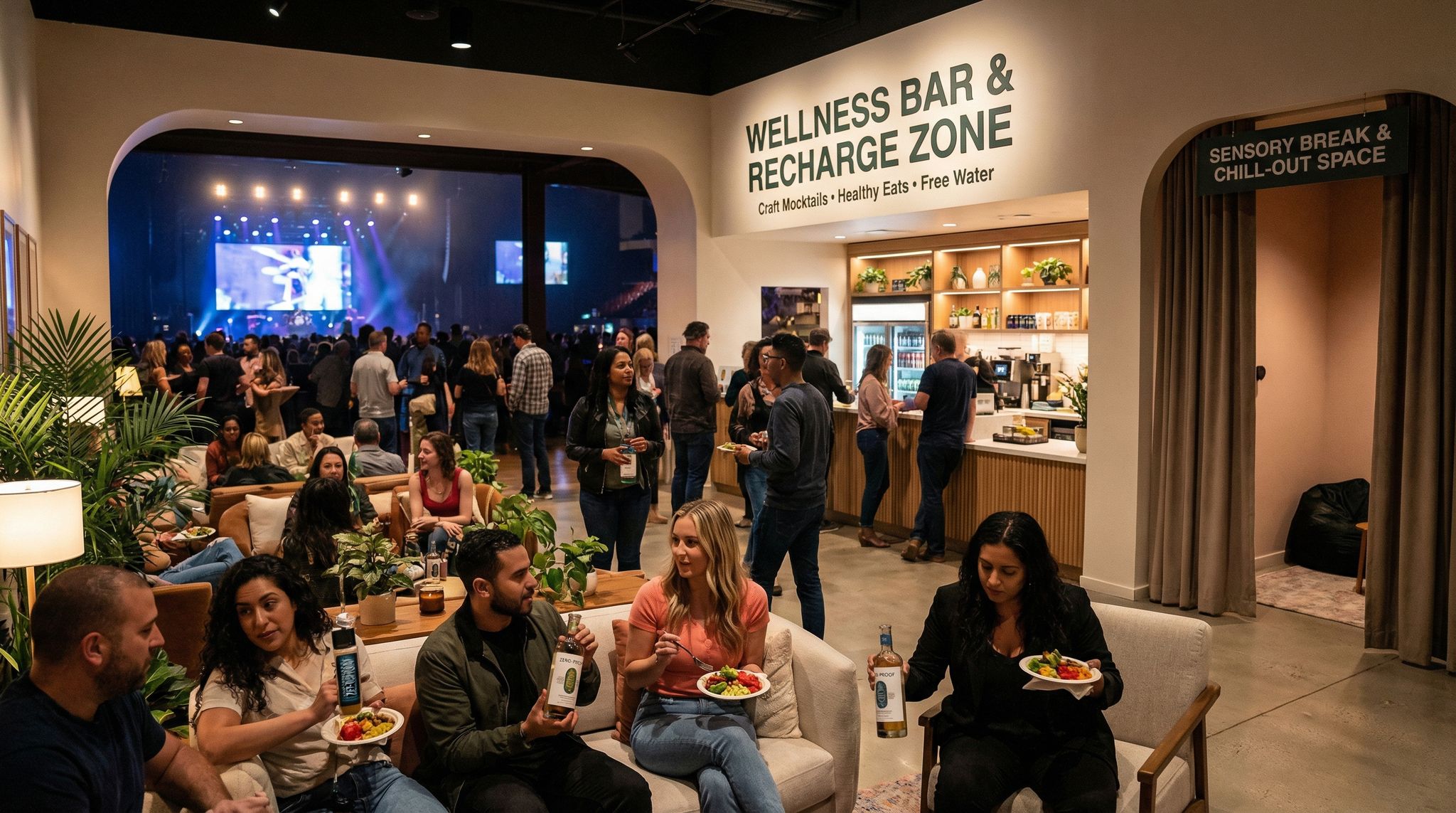
Chill-Out Zones for Relaxation
Live events are thrilling – but they can also be intense, even exhausting, especially for multi-hour concerts or festivals. That’s why many venues in 2026 are creating dedicated chill-out zones: calmer areas where attendees can take a break from the noise and crowds. Think of these as the venue equivalent of a spa lounge at the airport – a place to recharge before diving back into the action.
Free Tool: Project Your Bar Revenue
Per-head spend benchmarks by event type turned into projected bar and food revenue, with a stock-mix estimate and gross-margin line. Free calculator.
A good chill-out zone is located in a slightly removed spot from the main action, but still within the venue’s secure perimeter. It might be a side room, an outdoor courtyard, an upper lobby, or even just a roped-off section at the back of a club floor. The idea is to provide a space with a different vibe from the raucous concert hall:
– Seating and comfort: Furnish it with comfortable seating – couches, scattered cushions, benches – anything inviting to plop down on. People might want to sit or even lie down for a bit if it’s safe to do so.
– Ambient environment: Keep lighting gentle (lamps, fairy lights, or dimmer overheads instead of strobe lights). Some venues incorporate ambient music at low volume or natural sounds (like gentle waves or birds) to create a soothing atmosphere. Crucially, it should NOT be silent – just a softer background so it’s relaxing but conversations can happen.
– Amenities: Consider offering free water or electrolyte drinks in this zone, since many who come to chill likely need hydration. Maybe even some light snacks like fruit slices – at the very least, vending machines or a small bar with non-alcoholic options. Charging stations for phones are a popular addition too (people often use chill time to juice up their devices). If space allows, you might include mindfulness or fun elements: some festivals have put coloring books, stress-ball toys, or aroma diffusers (lavender scent, anyone?) in their chill areas to encourage relaxation.
– Staffed or Monitored: It’s wise to have a staff member or volunteer in or near the chill zone, partly for security and partly to assist anyone who might actually need help (like if someone sat down because they felt faint). Their presence also deters any rowdy behavior from spilling into the calm area.
Chill-out zones aren’t just for people feeling unwell – they appeal to anyone who wants a quick sensory break. Maybe someone’s feet hurt from dancing, or they got a phone call they need to hear, or they simply want to chat with friends without screaming over the PA. By providing a refuge, you enable attendees to catch their breath and then rejoin the crowd invigorated. Many venues report that when they introduced a chill-out lounge, they saw higher overall enjoyment scores in post-event surveys – guests appreciated having the option, even if they only used it for 5 minutes. It can also reduce early exits; someone about to head home exhausted at 11pm might take a 15-minute rest in the lounge and then rally for the headliner’s midnight set. Especially at all-day events or festivals, these rest areas are crucial. For example, the UK’s Latitude Festival features areas like “The Zen Den” with hammocks and soothing decor as a retreat from the stages. Even high-energy EDM festivals now commonly include a “chill tent” or ambient music zone for balance, as noted in reports on why 2026 festivals are embracing mental health and mindfulness where wellness initiatives reported higher ratings. Venues of all types are learning from these examples: variety in atmosphere can enhance the overall experience. Not everyone wants to be in party mode 100% of the time; giving them a place to decompress ultimately keeps them happier and safer.
Sensory Rooms for Neurodivergent and Sensitive Guests
One of the most progressive developments in venue comfort has been the rise of sensory-friendly rooms and accommodations for those with sensory sensitivities (such as individuals with autism, PTSD, or anyone prone to sensory overload). Large arenas and small theaters alike are realizing that inclusivity means creating spaces where everyone can enjoy the show at their own comfort level. Enter the quiet sensory room: a separate area, away from the main crowd, designed to be a low-sensory safe haven.
A typical sensory room (also called a “quiet room” or “calm space”) has features like:
– Soft lighting: No flashing lights or harsh fluorescents – often they use adjustable lamps, projected soothing visuals on the ceiling, or even fiber-optic soft glow lights. The lighting is calming and can often be dimmed to preference.
– Sound dampening: Thick carpet, sound-absorbing panels, or even just distance from the stage ensures the room is much quieter. Some venues provide noise-cancelling headphones or earplugs in the room so a person can further reduce the noise if needed.
– Comfort items: Comfortable seating (bean bags, padded mats, couches) and sensory objects like stress balls, fidget toys, weighted blankets, or tactile panels on the wall can help people self-soothe, as seen in the Magik Theatre quiet room for children with autism which supports development and mental health. For example, Magik Theatre in San Antonio equipped its new quiet room with calming lights on the ceiling and sensory toys like fidget spinners and weighted plush animals for kids who needed a break, according to reports on the Magik Theatre’s sensory initiatives and its impact on children’s mental health.
– Live feed or information: Sometimes these rooms have a TV monitor showing the live concert (with lower volume or captions) so that those taking refuge don’t feel they’ve completely missed out. Parents of an overstimulated child, for instance, can still catch the show on screen while calming their kid. In other cases, simply having a speaker that plays the concert audio very softly or provides text updates (“intermission now”) can suffice.
– Trained staff or volunteers: Ideally, staff trained in sensory sensitivities or basic first aid should be on hand. They don’t intrude, but are there to assist if someone is in distress or if a family needs help. Many venues partner with organizations like KultureCity – a nonprofit that trains venues and provides sensory kits – to certify as “sensory inclusive.” KultureCity alone has helped certify over 6,000 venues in 40 countries in the past decade, redefining the fan experience with KultureCity and Live Nation’s partnership, in partnership with major promoters like Live Nation. That often includes supplying venues with bags containing noise-cancelling headphones, cue cards to help nonverbal guests communicate, and weighted lap pads that can be checked out at customer service.
The impact of sensory rooms has been profound. Guests who might otherwise avoid concerts entirely can now attend knowing there’s a safety net if it gets overwhelming. For instance, during Taylor Swift’s massive 2023 stadium tour in Australia, many of the stadiums set up quiet sensory rooms specifically for fans with autism or anxiety – allowing them to take a break from the deafening screams and then return to their seats when ready, a strategy highlighted in why 2026 festivals are embracing mental health and mindfulness. Parents called it a game-changer, and those venues earned praise for their inclusive approach. Similarly, European electronic music festivals have introduced “low-stimulus zones” where strobes and loudness are toned down, acknowledging that even in a wild techno party, not everyone can go full throttle at all times, as discussed in why 2026 festivals are embracing mental health and mindfulness to create inclusive environments for all guests.
For venue operators, creating a sensory-friendly space is about being a welcoming host to all attendees. It doesn’t detract from the main event – it runs in parallel as a supportive amenity. The space needed is usually modest (a small spare room or a curtained-off area can work), and costs are relatively low (some soft furnishings and sensory kits). Yet the goodwill and loyalty earned are immense. Families of neurodivergent members, for example, become incredibly loyal to venues where they feel safe and accommodated. They’ll choose your theater over another that lacks those options, even if the programming is similar. Word spreads quickly in communities that “this venue is autism-friendly” or “that stadium has a quiet room if you need it.” In short, sensory rooms exemplify how prioritizing comfort and inclusion goes hand-in-hand. As one accessibility advocate put it, providing psychological safety at events should be as routine as providing physical safety – it’s simply part of good venue hospitality now, helping to mitigate sensory overload triggering anxiety.
Collect Any Attendee Data at Checkout
Add custom registration fields to your checkout — dietary needs, t-shirt sizes, company names, and more. Conditional logic and per-ticket-type fields.
Managing Sound Levels and Hearing Protection
While booming audio is expected at a concert, sound comfort is an often overlooked aspect of attendee well-being. There’s a fine line between an exhilarating loud show and one that leaves ears ringing for days (or worse, causes lasting hearing damage). In 2026, more venues are mindful of decibel levels and offering ways for guests to protect their hearing or find a quieter spot if needed.
Many venues now monitor sound levels in real time during events. Engineers will use dB meters around the venue, not just at the mix board, to ensure levels stay within safe ranges (typically under around 105 dB for sustained periods, though standards vary). Some cities have regulations capping venue sound, but even where not mandated, progressive venues voluntarily watch the volume, especially for high-frequency-heavy music that can be harsh. The goal is to deliver powerful sound fidelity without just cranking volume to 11. Training your sound techs on this balance is key – clear, immersive sound at a reasonable level actually makes for a better show than distorted, painfully loud audio.
Free earplugs have become a common offering at shows – and a welcome one. For a minimal cost, venues provide basic foam earplugs at ticket booths, guest services, or via roaming staff. This is especially appreciated by patrons who didn’t think to bring their own but find the sound a bit much. Some venues get branded earplugs as a sponsorship opportunity (imagine earplugs with the venue’s logo or a sponsor’s name on the container). The message it sends is, “We want you to enjoy the show and still hear tomorrow.” It’s also a subtle nudge that hearing protection is totally acceptable – some fans (often young ones) hesitate to wear earplugs because they think it’s uncool or will muffle the experience, but if lots of people are using the complimentary earplugs, it normalizes it. A few innovative venues even sell high-fidelity musician’s earplugs at the merch stand for a few dollars – these reduce volume without losing clarity, and many audiophiles happily invest in them.
Another approach to sound comfort is offering quiet zones within the main space. For example, some arenas designate the top rows or a concourse area as a “volume reduced” zone where the speakers are dialed down a bit. Similarly, family sections at certain events might be placed further from loudspeakers so that parents with young kids can enjoy a slightly quieter experience. For GA standing shows in clubs, it’s understood the front row by the speakers will be loudest – but smart venue layouts provide ways to step back to areas (like near the bar or back wall) where the sound is less intense if someone needs a break from the auditory onslaught. Clear signage or staff can help communicate this (e.g., “Looking for a quieter spot? Try the mezzanine level.”).
Lastly, consider post-show hearing health messaging. Some venues have started handing out cards or displaying signs as people exit: “Protect Your Hearing – if you experience ringing in your ears, it’s a sign to use ear protection next time. We want you rocking out for years to come!” This kind of education shows that you care about fans long after they leave the venue. It’s an extra step that solidifies trust and goodwill. When an attendee feels that the venue is not just trying to deafen them for the sake of a hype show, but actually wants them to have a great and safe auditory experience, it reinforces the venue’s reputation for professionalism and care. In summary, managing sound for comfort is a nuanced but vital part of the 2026 wellness focus – because experiencing live music should be joyful, not painful.
Inclusive and Accessible Amenities for All Guests
Catering to All Ages and Demographics
A truly comfortable venue experience is one that caters to a diverse audience – including people of all ages, backgrounds, and lifestyles. In 2026, venues are broadening their hospitality mindset to ensure that everyone from teenagers to seniors, locals to international tourists, feels welcome and accommodated. This means anticipating needs beyond the “average” 21-35 concert-goer.
Data-Driven Event Marketing
Track ticket sales, demographics, marketing ROI, and social reach in real time. Exportable reports give you the insights to make smarter decisions.
All-Ages Friendly Practices: With the resurgence of all-ages shows and family-oriented events, venues must adapt to hosts guests who can’t be served alcohol or who have different needs. For example, an all-ages concert will likely have teens and even children in attendance. These younger fans (and their parents) will gravitate towards fun non-alcoholic drinks – think creative mocktails, specialty lemonades, or fancy sodas – so be sure to showcase those at concession stands. Offering kid-friendly snacks or meals (like a simple combo meal with a soft drink and popcorn or a slice of pizza) can also encourage families to spend on F&B. Venues that succeed with all-ages crowds often set up a dedicated “family zone”: a seating or standing area where no alcohol is allowed, security keeps an extra eye out, and perhaps there’s easier exit access for quick bathroom trips. It’s all about creating a comfort zone for those who might not be used to the concert environment. As covered in guides on expanding your audience with all-ages shows while managing risk, balancing minors’ safety with a good time is key. Simple steps like different wristband colors for under-21 vs. over-21, strict ID checks coupled with plenty of alcohol-free offerings, and trained staff to handle any unruly behavior swiftly can make all-ages shows both safe and enjoyable for everyone. The payoff is huge: by cultivating young audiences now, you earn their loyalty (and their parents’ approval), essentially future-proofing your customer base.
Inclusivity of Lifestyle Choices: Not everyone at a venue drinks alcohol, as we discussed, and not everyone eats meat or dances or stays out late. A comfortable venue respects these differences. Provide alternatives and options: a coffee or tea bar for those who want a warm non-alcoholic beverage (especially in theater and arts venues, having coffee at intermission is a nice touch), or a quieter programming option early in the night for those who might leave before the rowdier late-night acts. Some music venues have started hosting occasional “sober night” events or alcohol-free dance parties, creating an inclusive atmosphere for those who avoid alcohol entirely, as seen in 2024 sobriety trends in nightlife and festivals and the rise of sober dance parties and events. The success of these events, and the growing number of alcohol-free venues, shows that there’s a demand for social spaces that don’t revolve around drinking. By at least dedicating some events or areas to this concept, you can attract a new segment of health-conscious or religiously abstinent patrons. Likewise, be mindful of cultural diversity – if you have a lot of attendees from communities that don’t consume certain foods or drinks (for instance, no pork or halal-only diets), ensure there are suitable options available. A bit of research into your audience demographics can guide menu tweaks (e.g. having a halal-certified vendor on-site for a show with many Middle Eastern attendees, or offering non-alcoholic beer for an event that overlaps with Dry January and might draw the sober-curious crowd). These gestures show respect and make everyone more comfortable.
Family Amenities: If you want to attract a broader audience, consider small additions that mean a lot to families. Baby changing stations in restrooms (including in men’s restrooms, not just women’s) are essential for any event that might have infants or toddlers present. A designated stroller parking area or policy can be useful for festivals or daytime events. Some performing arts venues even offer childcare services or partner with local babysitting services for special events (for example, a theater might have a supervised kids’ room with activities during a long classical performance, so parents can enjoy the show). While that level of service may not be feasible for every venue, the general idea is to remove barriers for families. If parents know they can bring their kids and the venue has their backs – milk warming available, staff who won’t blink at a breastfeeding mother, maybe even free entry for under-5 children – they’ll be more likely to attend (and spend). One independent cinema-venue started “family mornings” where the volume was lower and lights slightly up, specifically welcoming kids – a concept borrowed from “sensory friendly” screenings but applied to general family comfort, resulting in new loyal daytime audiences.
In summary, adjusting your operations for different ages and preferences isn’t about changing your venue’s core identity – it’s about broadening the tent. The more types of people who can comfortably enjoy your space, the larger and more loyal your customer base becomes. And when people with different backgrounds and lifestyle choices all feel at home, you’ve truly achieved the next level of hospitality.
Beyond ADA Compliance: True Accessibility
Most venues are legally required to meet accessibility standards (e.g. wheelchair ramps, companion seating, hearing-assist systems). But there’s a world of difference between bare-minimum compliance and a genuinely welcoming, accessible experience. Leading venues in 2026 are moving “beyond compliance” to make sure attendees with disabilities or special needs aren’t just accommodated, but truly included in the event experience on an equal footing.
Mobility Accessibility: Start with the basics – if someone uses a wheelchair, can they get in every door, enjoy every area, and see the show clearly? Many older buildings technically have a ramp or lift, but it might be at a side entrance or offer a poor sightline. Forward-thinking venues are investing in things like elevated platforms in general admission areas so wheelchair users can see over standing crowds, and ensuring those platforms are placed with excellent views (not stuck in a corner). They’re also re-examining seating charts to include more wheelchair & companion seats spread throughout the venue at various price levels, so an attendee who can’t climb stairs isn’t limited to one section. And crucially, training staff to proactively assist – for instance, saving a spot at a bar that has lower counter height, or having security clear path through crowds when needed. Some innovative venues have introduced “quiet lanes” or separate lines for those who may not be able to wait in a long queue due to disabilities; they can check in at a customer service desk and then be escorted in when doors open, avoiding the crush. These kinds of touches go beyond legal requirements and head toward true equity of experience.
Sensory and Cognitive Accessibility: Beyond the sensory rooms discussed earlier, venues are improving accessibility for people who are deaf, hard of hearing, blind, or who have cognitive disabilities. One major trend is providing ASL interpreters or captioning at shows. Festivals like Rock in Rio set a great example by having on-stage sign language interpreters for major acts and even special sections where deaf fans could feel vibrations, as detailed in elevating venue accessibility and inclusion in 2026. In a venue context, if you’re doing a theatrical performance or a public speaking event, offering open captions or an interpreter on request can be game-changing for attendees with hearing loss. Many venues partner with services/apps that deliver real-time captions to a user’s smartphone – a cost-effective solution if installing caption boards isn’t feasible. For blind or low-vision guests, some theaters have begun offering audio description headsets (where a narrator describes the on-stage action during natural pauses). At concerts, this might not apply, but simply having staff trained to assist blind patrons with navigation, and allowing service animals generously, goes a long way.
There are also “hidden” disabilities to consider: not all disabilities are visible. Staff training should emphasize patience and help for individuals who might have anxiety, autism, chronic pain, etc. For example, someone with autism might not be in a wheelchair but could benefit from skipping a noisy line – a compassionate staff policy can allow them (and one companion) to wait in a quieter area until door time. Some venues implement a Sunflower Lanyard program (originally from UK airports) where guests with hidden disabilities can wear a sunflower symbol to discreetly signal they may need assistance or a bit more time/patience. If your venue uses this, be sure your staff know what it means.
Why go to these lengths? Because inclusive venues see real benefits: broader audiences, greater loyalty, and positive PR. Guests who feel truly cared for become repeat visitors and enthusiastic ambassadors for your venue, as noted in elevating venue accessibility and inclusion in 2026. They’ll tell friends and social media how great the experience was. Additionally, agents and tour managers talk – artists prefer to play at venues known for smoothly handling special accommodations for their fans or crew. Sponsors are increasingly interested in partnering with venues that demonstrate values of inclusion, sometimes even funding accessibility upgrades in exchange for goodwill and exposure, a trend discussed in elevating venue accessibility and inclusion in 2026. In short, investing in accessibility isn’t just ethical, it’s smart business. It differentiates you in a competitive market. However, none of this works if you don’t also avoid the pitfalls: a single bad experience (like an “accessible” area with an obstructed view, or an insensitive interaction by staff) can go viral and tarnish your reputation, underscoring the need for equity in experience. So it’s an ongoing commitment – involve people with disabilities in your planning (many venues consult with disability advocacy groups or create advisory panels), constantly audit your facilities, and stay current with assistive tech. By going beyond the ADA checklist and embracing true accessibility, you create an environment where every attendee – regardless of ability – feels comfortable, cared for, and part of the community.
Cultural Sensitivity and Community Comfort
Wellness and comfort aren’t one-size-fits-all – they can mean different things in different cultural contexts. Venues that host international artists or cater to diverse local communities are becoming more culturally sensitive in their amenities and policies, ensuring everyone feels at home.
Take for example venues that host K-pop concerts or Latin music nights: the audience might include a high percentage of attendees from specific cultural backgrounds (Korean, Spanish-speaking, etc.). A culturally sensitive venue might provide multilingual signage or staff – basic greetings and directions in the predominant languages, or hiring bilingual staff for event nights where many guests might not speak the local language fluently. Even printing a welcome message or some house rules in other languages can impress attendees that you’ve thought about them.
Food and beverage is another area for cultural comfort. If your venue runs a Bollywood film festival and you know a lot of Indian families are attending, having some Indian snacks or non-alcoholic drinks like chai available could delight the crowd. Similarly, during religious periods (like Ramadan), acknowledging those fasting by perhaps offering some dates and water for the post-sunset break fast at relevant events shows deep respect. Some venues in multicultural cities have added prayer rooms or quiet prayer corners – for instance, providing a clean, signposted area for Muslim attendees to pray, which can be hugely accommodating if an event spans prayer times. It doesn’t have to be elaborate, just a mat and a bit of privacy. The fact that a venue even considers this elevates its status among those communities.
Dress code and security policies can also be tuned for cultural inclusion. For example, ensuring that security screening is respectful of religious garments or headwear (with options for private screening by same-gender staff if requested) will make guests more comfortable. Offering a safe storage for items like ceremonial swords (common in some cultural celebrations) or large religious items so people don’t feel profiled at the door is another idea some event organizers have successfully used.
Engaging with your local community can provide insights here. If you plan events that target a certain demographic, talk to leaders or frequent event-goers from that group about what would make them feel most comfortable. Maybe it’s as simple as adjusting your timeline (e.g., not running too late on weeknights for an audience that largely uses public transit or has early work hours) or as specific as providing gender-neutral restrooms to make LGBTQ+ attendees feel safe and welcome. In fact, gender inclusivity is an important comfort factor – many venues now designate some restrooms as all-gender, and train staff to proactively assist any trans or non-binary guests who might face harassment, adopting a zero-tolerance policy for such behavior.
Overall, cultural comfort is about empathy and paying attention to who your audience is. It’s the little details that create a sense of belonging. When people see their culture or needs reflected in a venue’s services – whether through language, food, or accommodating traditions – it forges a powerful connection. That attendee isn’t just a ticket buyer; they feel seen as a person. And that feeling converts to loyalty and positive word-of-mouth within their community. In a diverse world, the venues that thrive will be those that can seamlessly host a EDM rave one night, a multi-generational family concert the next, and a cultural festival the following week, each with the right touches to make the specific crowd feel this place is for us.
Implementing Wellness Initiatives Successfully
Training Staff in Hospitality & Care
You can invest in all the fancy amenities in the world, but if your staff aren’t on board with the wellness-and-comfort mission, those efforts can fall flat. Front-line venue staff – from security to ushers to bartenders – are the human face of your operation, and their interactions can make or break an attendee’s experience. In 2026, leading venues are heavily emphasizing staff training around hospitality, awareness, and empathy to ensure the venue’s wellness initiatives truly shine.
Start by communicating the “why.” When rolling out new policies like free water or quiet rooms, explain to staff the rationale: it’s about guest safety, happiness, and loyalty. When employees understand that a chill-out zone isn’t just a weird new rule but a real way to help someone in need, they’ll be more enthusiastic in supporting it. Many veteran venue managers share real stories during training – e.g., how a quick-thinking staffer with a water bottle prevented a medical incident, or how a kind word to a stressed guest turned a complaint into praise. These stories reinforce a culture of care. As one manager put it, “We tell our team: we’re not just bouncers or bartenders, we’re hosts. Imagine these attendees are guests in your home.”
Specific training modules could include:
– Identifying Distress: Teach staff how to recognize signs of dehydration, anxiety, or sensory overload in attendees. For example, a security guard should know that someone fanning themselves and looking dazed might need water and a chair, not just assume they’re intoxicated. Similarly, staff can learn to spot a guest who is alone and looking uncomfortable, and gently check if they’re okay or need anything. Some venues even bring in basic first aid and mental health professionals to give quick lessons (e.g., how to approach someone having a panic attack versus someone who is aggressive). If your budget allows, certifying key staff in Mental Health First Aid can be invaluable.
– Customer Service & Communication: It sounds basic, but a refresher on friendly, inclusive customer service is key to implementing comfort initiatives. For instance, train bar staff to proactively offer water – “Hey, it’s a hot one tonight, be sure to grab some water from the station over there after this round.” Train ushers to offer solutions: if someone complains “It’s too loud,” don’t just shrug – perhaps offer earplugs or suggest a spot that might be a bit quieter. Role-play scenarios are great here: have staff practice how to respond to various questions or issues (child with noise sensitivity, person with dietary question, etc.). Emphasize patience and positivity. Even if the answer is no (e.g., a request you can’t accommodate), the way staff respond should be empathetic and helpful (“I’m sorry, we can’t allow outside food, but let’s see if our concessions have something for your dietary need.”).
– Empowerment: Encourage your team to go the extra mile and empower them to make small calls that aid comfort. Maybe a staff member can escort an elderly patron to their seat before the rush, or a bartender can give a free cup of water without making someone wait in line. Make it clear that taking initiative to help a guest is applauded. Some venues institute a “no rigid script” policy – staff are trained to use judgment and treat people as individuals, not just stick to a boilerplate.
A huge part of staff buy-in is also workplace wellness itself. Take care of your staff’s comfort and they’ll pass it on. Give them adequate breaks (especially on long event days), hydration and meals, and a supportive environment. Training in diversity and inclusion (understanding different cultures, LGBTQ+ inclusion, disability etiquette) will equip them to handle various situations respectfully. The goal is a team that feels proud to provide a safe, caring atmosphere. And when you see it in action – like a security guard kindly helping a lost autistic teen find the sensory room, or a bartender remembering and greeting a regular by name with their favorite alcohol-free beer – recognize and reward that. Call it out in debriefs when staff embody the venue’s values of hospitality (some venues even have an “employee shout-out” portion of post-event meetings). According to veteran operators who conduct thorough post-event debriefs, highlighting these positive actions reinforces them across the whole team for next time.
In essence, training staff for wellness-focused service is about instilling a mindset: every staffer is an ambassador of comfort. With the right training and culture, your team becomes an army of problem-solvers and caregivers on the ground, ensuring all the new amenities and policies truly translate into a better guest experience.
Phased Improvements and Budget-Friendly Upgrades
You might be reading all these ideas and thinking, “This sounds great, but how do I afford or implement it all?” Fear not – embracing wellness and comfort at your venue doesn’t have to happen overnight or break the bank. The key is to prioritize, plan, and phase in improvements in a way that suits your budget and schedule. Rome wasn’t built in a day, and neither is a fully wellness-optimized venue!
Start with Quick Wins: Identify the changes that have a high impact on guest experience but are relatively low cost or easy to do. For example, installing a few water coolers and setting out cups at strategic spots – that’s inexpensive and can be done before your next event. Buying a bulk pack of foam earplugs to hand out might cost a few hundred dollars at most. Designating an existing space as a chill-out zone with some borrowed furniture or cushions – again, something you can likely arrange with minimal expense (you could even ask staff to volunteer or source decor cheaply for a nice touch). These quick wins show immediate results. You’ll likely feel the positive feedback instantly (“Wow, they had free water, nice!”) and that momentum can justify further investment.
Phase 1, 2, 3…: Develop a phased plan for larger improvements. For instance:
– Phase 1: Implement free water and basic chill-out area, train staff on new hospitality measures, stock some sensory kits and earplugs. (Months 1-3)
– Phase 2: Upgrade one of the concession stands to feature more healthy options, add one or two non-alcoholic specialty drinks to the bar menu, get a mobile app or signage for line management. Perhaps also set up a temporary quiet/sensory room during bigger events (borrowing equipment as needed). (Months 4-9)
– Phase 3: Invest in more permanent infrastructure: e.g., build a family restroom or purchase modular furniture for a lounge, do minor renovations like widening a doorway for better accessibility, or install a hearing loop system in the auditorium. (Months 10-18, depending on capital budget cycles)
By breaking it down, you can tackle improvements step by step. It’s also helpful to align changes with your event calendar and budget cycles. Maybe you know summers are slower for your venue – that could be a good time to do small construction or seat replacements (minimizing disruption). If you get a grant or a good quarter of revenue, allocate a portion specifically to a comfort project. Some venues secure sponsorships or community grants for upgrades: for example, a local health beverage company might sponsor your new hydration stations if they can put their logo there, or a city accessibility fund might help subsidize a sensory room build-out. Think creatively about funding – as cited earlier, some venues even turned accessibility improvements into sponsored initiatives, as noted in elevating venue accessibility and inclusion in 2026.
Test and Iterate: Use smaller events as pilot runs for your initiatives. Perhaps at your next 500-capacity show you test the new mobile ordering system or try out having a “hydration officer” roaming with water for people up front. Gather data and feedback. What went wrong? What went right? This iterative approach is essentially like Kaizen (continuous improvement) applied to venue ops. If something doesn’t work well (e.g., mobile ordering flops because your audience didn’t use it), you can adjust course without having wasted huge resources. Continuous feedback from staff and attendees after each phase is golden. Many venues conduct post-event debriefs and gather audience feedback to pinpoint where the comfort gaps still are. Maybe surveys show people love the new food but still hate the seating comfort – so you know seating might be your next focus.
Balancing Acts: It’s okay to balance wellness investments with revenue considerations. For instance, maybe you can’t drop all your alcohol sales, but adding NA options brings in a new revenue stream and serves comfort. Or if you worry that free water means lost drink sales, track it – many venues find that offering water doesn’t hurt bar revenue significantly (someone who wants a beer still buys beer; they might just also take water in between). In fact, better-hydrated people may drink more alcohol over the night since they feel better – but in a safer way. If reducing capacity by 5% for comfort seems costly, test it on a couple of shows and see if merch/food sales or reviews improve from the less-cramped crowd. Often the secondary spend or return visits can offset a slight cut in ticket sales. Using a data-driven approach to budgeting these changes will help convince stakeholders. Weigh costs versus benefits; maybe start by allotting a small percentage of revenue (say 5-10% of profits from each event) into a “experience improvement fund.” Over a year, that can add up to finance a major upgrade.
Lastly, be transparent and promote your improvements. Let your audience know what you’re doing: “We heard you – new comfy seating is coming this fall!” or “We’re excited to announce our venue is now sensory-inclusive certified.” People appreciate when venues care and act on feedback. It can even drum up business – health-conscious or accessibility-focused attendees will choose your venue when they learn about these amenities. Being public about your phased improvements also buys some patience; if people know you’re in the process of upgrading, they may be more forgiving of what hasn’t been done yet.
Implementing wellness and comfort features is a journey, not a one-time project. Start with some easy wins, plan out the bigger moves in phases, and keep refining as you go. Even a small venue on a tight budget can embrace this ethos – it’s often the creativity and commitment that counts more than cash. Over time, you’ll transform your space into one that consistently delights and cares for its guests, which is a reward in itself (plus, you’ll likely see the financial rewards follow).
Monitoring Feedback and Continual Improvement
Even after you’ve implemented a host of wellness and comfort initiatives, the job isn’t over – in fact, it’s just beginning a new cycle. The best venues treat guest experience as a living process, continually monitoring feedback, measuring outcomes, and tweaking operations for constant improvement. A comfort feature that worked brilliantly for one crowd might need adjustment for another; new wellness trends will emerge; and frankly, sometimes you’ll try things that don’t land as expected. That’s okay. The key is to listen, learn, and adapt.
Collect Feedback Proactively: Don’t wait for random online reviews to learn how people felt – actively seek out audience input. This could be as simple as a post-event email survey to ticket buyers with questions specifically about amenities (“Did you use the water stations? Rate the food options. Any suggestions for improving comfort?”). You can incentivize responses with a chance to win free tickets, which boosts participation. At the event itself, have a visible comment box or a digital kiosks where people can quickly tap feedback (some venues use tablet stands asking “How was your experience tonight?” with smiley/sad faces to press). Train staff to pick up on comments too – if an usher hears “Those new seats are great!” or “The chill room was too crowded,” encourage them to pass that up the chain. Social media listening is another tool; monitor your venue’s tags and mentions to catch any comfort-related chatter. Often, attendees will post unprompted about “Loved that they had vegan hot dogs!” or “Line for water was too long.” All this data is gold.
Debrief and Analyze: After each event, gather your team (or at least key department heads) for a post-event debrief focusing on what went well and what could improve, as recommended in elevating venue accessibility and inclusion in 2026. Were there any complaints about comfort or amenities? How quickly were they resolved? Did any of the new initiatives encounter issues (e.g., ran out of free water cups mid-show, or the quiet room got crowded)? Look at any hard numbers available: how many earplug packs were taken, what were the sales of non-alcoholic drinks vs. alcoholic, etc. Identify patterns over time – maybe you notice outdoor events have more people using chill-out zones than indoor ones (or vice versa), or that certain concert genres have different consumption patterns (EDM fans might slam the water stations more than say folk music fans). These insights can guide adjustments like scaling certain amenities up or down depending on the show.
Stay Agile: Continuous improvement means being willing to iterate. If something’s not working as intended, don’t be afraid to modify it. Perhaps your first attempt at mobile ordering for drinks was clunky – gather feedback on why (did people not know about it? Was pickup confusing?) and refine the approach before the next show. Or you might find the “family zone” at a standing concert wasn’t utilized – maybe the signage was poor or the location wasn’t ideal, so adjust and try again. On the flip side, if something is a clear hit – expand on it! Long line for mocktails at the bar because they’re so popular? Add another zero-proof cocktail to the menu or set up a dedicated mocktail station next time. If the sensory room was full, consider creating a second chill space or implementing time limits to accommodate more people. It’s a continuous feedback loop: trial -> feedback -> tweak -> trial again. Over time, this loop will fine-tune your operations to best-in-class level.
Benchmark and Learn from Others: Keep an eye on industry trends and what other venues are doing (the fact that you’re reading this article shows you’re already doing that!). Organizations like the International Association of Venue Managers (IAVM) share case studies on successful hospitality initiatives. Trade publications report on things like “Venue XYZ saw 20% boost in F&B sales after adding healthy options” – these can spark ideas for your own venue. Don’t hesitate to reach out to colleagues at other venues for informal knowledge-sharing either. Venue management can be a small world, and most are happy to discuss what’s working for them. If a famous arena implemented an advanced quiet room with VR relaxation experiences, maybe that’s something to aspire to in the future. Conversely, learning about a program that flopped at another venue could save you time and money (perhaps a certain wellness program had no uptake, so you’d focus elsewhere).
In essence, comfort and wellness should become part of your venue’s DNA, not a one-time project. By constantly monitoring feedback and fostering a culture of continuous improvement, you ensure that you don’t rest on your laurels. Attendee expectations will continue to evolve, so what wows guests in 2026 might be standard by 2028. But if you have a system in place to catch the next wave of demands – and a reputation for listening to your audience – your venue will remain at the forefront of hospitality. People will give you the benefit of the doubt when mistakes happen, because they know you’ll fix them. They’ll also be excited to see “what’s new” on their next visit. This adaptability and responsiveness is perhaps the ultimate comfort you can provide: the trust that you truly care about your guests’ well-being and will keep striving to make each experience better than the last.
Benefits of Prioritizing Wellness & Comfort
Higher Guest Satisfaction and 5-Star Reviews
When you make guests feel truly comfortable and cared for, they notice – and they talk about it. One of the most immediate benefits of implementing wellness-focused improvements is a boost in overall guest satisfaction. Attendees who might otherwise leave a show with minor gripes (“the drinks were overpriced, the venue was too hot, lines were ridiculous”) instead walk out thinking, “Wow, that was a great night – the venue really thought of everything.” This positive impression translates directly into better post-event feedback, online reviews, and word-of-mouth recommendations.
Venues that have introduced these changes often see their ratings on review sites climb. The difference between a 4-star and a 5-star review can hinge on those extra touches: free water, friendly help when you needed it, a decent snack selection for once, etc. For example, after one mid-size venue revamped its F&B with vegan options and added a chill-out lounge, they saw a surge of glowing comments on social media and Google Reviews praising those features – whereas previously common complaints about food or crowding virtually disappeared. By actively turning complaints into positive reviews through audience feedback, venues build a stronger reputation. Inclusive venues also see greater loyalty, akin to the creative deals discussed in elevating venue accessibility and inclusion in 2026. In other words, when you preempt or solve the pain points that typically annoy customers, there’s nothing left to complain about – so people focus on the great parts (like the show itself!) and your hospitality enhancements.
Higher satisfaction isn’t just about ego-boosting ratings; it also manifests in real-time during events. A comfortable crowd is a happier, more energetic crowd. Performers feed off that positive energy, often giving better shows, which further delights the audience – a virtuous cycle. Security incidents and guest conflicts also tend to decrease when people aren’t on edge. Think about it: if someone is frustrated and dehydrated, they’re more likely to snap at another fan or at staff. Remove those discomforts and you have a more cheerful atmosphere where everyone’s in a good mood. This not only feels great, but also eases the job of your staff because they’re dealing with contented guests instead of angry ones.
In the long run, these satisfaction gains make marketing easier. With so many entertainment options out there, a stellar reputation for guest experience can tip the scales in your favor. Fans might choose to attend a show at your venue versus a competitor’s because they’ve heard or read that “Venue X is awesome – super clean, great food, free water stations, you’ll love it there.” Artists and promoters pay attention to fan discussions too. If your venue consistently garners fan praise, touring acts know they’re likely to have a crowd in good spirits (and fewer angry emails in their own inbox after the show). They may share those impressions with booking agents or even mention it on stage (“I love this venue, they take care of you guys!”), further cementing your positive image.
The equation is simple: happy guests = positive buzz = a thriving venue. By prioritizing wellness and comfort, you’re investing in guest happiness. And guest happiness is the foundation of those coveted 5-star reviews and enthusiastic recommendations that money can’t buy. In an era where anyone can broadcast their experience to thousands via a single tweet or TikTok, creating a rave-worthy experience is one of the best marketing strategies around – and it starts with comfort.
Increased Loyalty and Repeat Attendance
Winning someone’s business once is great; winning their loyalty for years is transformative. When venues show genuine care for attendee well-being, it builds a strong emotional bond that keeps people coming back show after show. In essence, you’re not just selling a ticket for one night – you’re cultivating a relationship. And just like any relationship, when you show you care, loyalty deepens.
Consider the difference in how a guest might describe two venues: one, “Yeah I went there because my favorite band was playing, it was okay I guess.” Versus another, “I love going to XYZ Venue – even if I only kinda know the artist, I’ll go because the venue experience is always awesome.” The latter is what comfort and wellness initiatives foster. Fans begin to trust that any event at your venue will be enjoyable because you have their back. They’ll take chances on new events or lesser-known artists because they know at minimum they’ll have a good time in a place that treats them well. This habit is huge for repeat business, especially for venues that host a variety of events beyond blockbuster shows.
Memberships and subscriptions (if your venue offers them) also get a boost. People are more likely to sign up for a season pass or loyalty program if they feel positive about the overall venue experience. We’ve seen performing arts centers that renovated seats and added health-conscious intermission snacks see increases in season subscription renewals – patrons comment that they now enjoy coming early to sip a kombucha in the lounge, or don’t dread a 3-hour opera because the chairs are comfy and there’s a quiet room if needed during the performance. In the competitive theater world, such details can determine whether someone commits to a full season or not.
Moreover, loyal customers become evangelists. They bring friends (“You have to check out this venue, it’s the best!”) and even organize group outings. If someone knows your venue has easy access and accommodations, they might be the one to convince their whole friend group to choose your event over another. Loyalty turns guests into unpaid promoters for your brand. There’s also evidence that fans will spend more when they trust a venue – because they expect quality. For instance, a loyal customer might buy VIP upgrades or premium experiences you offer, confident that it will be worth it given your track record of good hospitality.
One perhaps unexpected benefit of focusing on comfort is custodian in tough times. Live entertainment can be volatile (we saw that in stark terms during the pandemic). Venues that have a reservoir of goodwill with their audience can weather crises better. People are more understanding about a show snafu or a reschedule if they already like the venue. They’re also more willing to contribute to support campaigns (remember how beloved venues got donations to survive closures). Communities rally around venues that have shown they care about the community. By engaging in wellness and inclusion, you position your venue as a community asset, not just a business. Fans develop a sense of ownership and pride about “their” venue. That’s loyalty at its finest – when your success becomes personal to your audience.
From a pure numbers perspective, increasing repeat attendance dramatically improves profitability. It’s much cheaper to retain an existing customer than find a new one. If your average casual concert-goer attended 2 shows last year but, because of your enhancements, they decide to attend 4 this year, you’ve doubled their lifetime value with minimal marketing cost. We see this effect in concert tourism trends too – fans willing to travel for a great venue experience. Some famous venues are almost like pilgrimage sites for music lovers precisely because of their reputation; people will visit from out of town just to see a show there, any show, because it’s known to be special.
In short, by investing in attendee comfort, you are investing in long-term loyalty. Each great experience is a brick in the foundation of a relationship whereby the fan doesn’t just like your venue – they prefer it, seek it out, and advocate for it. That loyalty yields repeat ticket sales, higher ancillary spend, and a reliable audience base which gives your venue stability and room to grow.
Better Safety Outcomes and Reduced Issues
It might not be immediately obvious, but a focus on wellness and comfort directly contributes to a safer event environment. When attendees’ basic needs are met and their stress levels are lower, they are far less likely to experience medical problems or engage in problematic behavior. By acting on the adage that “an ounce of prevention is worth a pound of cure,” venues have found that many safety issues can be mitigated upfront through comfort measures – meaning fewer crises to handle in the first place.
Take hydration and fatigue, for example. Earlier we discussed how providing free water and rest areas helps prevent dehydration and overheating. The safety benefit is clear: fewer people collapsing or needing first aid due to exhaustion. The Guardian’s report on free water in clubs highlighted that something as simple as accessible water could be the difference between someone going home safely or ending up in the ER, according to interviews with emergency medical technicians. Venues that keep their crowd well-watered and give them chances to cool down see fewer extreme cases of heat stroke or severe intoxication. It also helps avoid the cascade of issues that follow a medical incident (disrupted show, panicked crowd, liability, etc.). Similarly, a chill-out zone isn’t just a luxury – it can be a welfare area where someone on the verge of a panic attack can calm down, preventing what might have escalated to a medical or security call. The festival world has documented how wellness programs lead to declines in serious incidents, helping to mitigate sensory overload triggering anxiety and emphasizing well-being through earplugs or reassuring conversations, and the same principles apply to indoor venues.
Comfort measures also tend to reduce aggression and conflict. A lot of fights or aggressive behavior at events stem from people being drunk, uncomfortable, or provoked by a stressful environment. By offering healthier drink options and encouraging moderation, you might have fewer overly intoxicated individuals causing trouble. By cutting wait times and crowding, you eliminate flashpoints like someone getting angry over being shoved or waiting too long. Even temperature plays a role – hot, stuffy venues make people irritable; cool, ventilated ones keep tempers literally cooler. One venue manager noted that after improving ventilation and adding chill-out areas, the number of altercations their security had to break up dropped noticeably (people who might have gotten into it on the dancefloor could now step out to cool off instead). And when fans feel the venue cares, they often exhibit more civic behavior themselves – treating the space with respect, looking out for one another, etc. You’re fostering a positive crowd culture, which is inherently safer.
Another aspect is accessibility and crowd management. By having better accessibility and clearer navigation, you’re also reducing the chance of accidents. An attendee who might have tripped in a dark, overcrowded aisle will find a well-lit, spacious pathway instead – preventing injuries. Exit times tend to be smoother when people are comfortable and not rushing in panic or frustration, which is critical in case of an emergency evacuation. In fact, comfort ties into emergency preparedness: if you ever do need to evacuate or manage a crisis, a crowd that trusts the venue staff and isn’t on edge will respond more calmly and follow instructions. It’s analogous to how airlines give comfort and entertainment during flights partly so passengers remain calm and cooperative if something goes wrong.
From the venue’s perspective, fewer incidents mean less strain on staff and resources. Your security team can focus on monitoring rather than constantly reacting. Your first aid station deals with minor issues instead of major ones. Promoters and artists love a low-incident show (nobody wants their concert on the news for a bad reason), so they’ll appreciate the professionalism of your operation. Plus, a safer track record can help with insurance premiums and relations with local authorities – if you can show that despite hosting high-energy events you consistently have minimal medical transports or police calls, regulators and neighbors will be more supportive of your business (contrast that with venues that get a rep for fights or ambulance sirens every night – they face calls for shutdown).
In summary, making attendees comfortable isn’t just about making them happy – it’s about keeping them safe. The overlap between wellness and safety is significant. By addressing core human needs and removing stressors, you knock out many precursors to accidents and conflicts. This means your events not only feel better, they are objectively safer. And that is a win-win: good for the audience, good for staff, good for business sustainability. A venue known for great experiences and excellent safety is positioned to thrive for the long haul.
Positive Reputation and Community Support
All the efforts you put into wellness and comfort do more than just please paying customers – they build your venue’s reputation as a responsible, community-minded establishment. In an age where consumers and communities are increasingly concerned about well-being, inclusivity, and ethical business practices, being known as “the venue that cares” can significantly elevate your brand and standing in the community.
First, there’s the direct media and PR benefit. Journalists and bloggers love a good story about innovation in guest experience. If you implement something novel – say, a pioneering on-site mental health support program or a fully green menu with locally-sourced healthy foods – don’t be surprised if it gets coverage in industry magazines or local news. For instance, when a major arena partnered with a nonprofit to create comprehensive sensory-inclusive services, it garnered positive press highlighting how entertainment venues are becoming more compassionate spaces. These stories not only attract potential new customers, they also catch the eye of artists and event organizers who value fan experience. The next time a promoter is choosing between venues, they might recall, “Oh yeah, this is the place that has those great wellness amenities and inclusive policies – fans will love that.” In other words, your comfort initiatives can become selling points that differentiate you in a crowded market.
Next, think about your social license to operate. Venues, especially in urban areas, often have to balance relations with neighbors, city councils, and community groups. A venue with a poor reputation (noise complaints, rowdy crowds, public drunkenness issues) faces opposition and tougher regulations. Conversely, a venue known for positive contributions (safe events, considerate crowd management, perhaps even community wellness events) is more likely to be embraced by the community. When you proactively minimize nuisance and harm – for example, ensuring departing crowds are less intoxicated and noisy because they had food, water, and a good time – you reduce the friction with your surrounding neighborhood. Some venues go even further by opening up their wellness resources to the community, like hosting periodic wellness events (yoga mornings, blood donation drives, community health fairs) on their off-days. This can transform how locals view the venue: not just a loud concert hall, but a community asset. Then when you need support (like a license extension or permit for expansion), you have goodwill in your corner.
Sponsor and partner relationships also flourish with a positive rep. Brands increasingly want to align with venues that reflect their values. A company with a new non-alcoholic beer, for example, will want to partner with a venue that actually promotes such choices. Or a wellness brand might sponsor your chill-out zone. We touched on this under loyalty, but it bears repeating: demonstrating values like inclusivity and care can attract sponsorships that see mutual benefit in highlighting those features. Similarly, artists and tour managers talk to each other – if your venue is known for taking care of fans (and artists, by extension, since a happy crowd makes the artist look good), you may well become a favorite stop on tours, which can lead to getting better bookings or exclusive shows. In a sense, by doing right by the audience, you’re doing right by artists and promoters too, and that word spreads in industry circles.
Finally, let’s not overlook the personal gratification and staff morale aspects. Working at a venue that is admired for its ethics and care is a point of pride for employees. It can help with staff retention and recruitment – people want to work for a place that’s doing something positive, not just making money. When your team sees thank-you messages from attendees (“Thanks to the staff at ABC Venue for providing water and being so kind when I felt dizzy last night!”), it boosts their morale and commitment. A proud team will perform even better, which reinforces all the benefits we’ve discussed.
To sum up, by championing attendee wellness and comfort, you’re defining your venue’s brand as guest-centric and progressive. Over time, that reputation snowballs: media highlights, community support, industry respect, and a strong brand identity. Venues exist not just within four walls but within ecosystems of fans, artists, and communities – and when all those stakeholders see you as a positive force, it bodes very well for your venue’s future success and legacy.
Key Benefits Summary
| Benefit Area | Impact on Venue | Notable Outcomes |
|---|---|---|
| Guest Satisfaction | Happier attendees due to comfort and care | Higher reviews, positive social media buzz; audience spends more time and money during events. |
| Guest Loyalty | Fans develop preference for the venue | Repeat attendance increases; more season ticket holders/members; fans promote venue to friends. |
| Safety & Incidents | Fewer medical or security issues as comfort needs met | Reduction in dehydration/fatigue cases, less aggressive behavior; smoother operations and lower risk liability. |
| Reputation & PR | Enhanced public and industry image | Media stories highlight venue as innovative/ethical; attracts sponsors, artists, and business opportunities. |
| Community Support | Better relations with neighbors & officials | Fewer complaints, easier permit approvals; community views venue as asset, not disturbance. |
| Staff Morale | Proud, motivated employees | Lower turnover, better service; staff act as ambassadors of venue’s values. |
Every one of these benefits feeds into the ultimate goal: a thriving venue that’s loved by all. By investing in wellness and comfort now, you’re setting the stage for sustainable success well into 2026 and beyond.
Frequently Asked Questions
Why are venues offering non-alcoholic beverage options in 2026?
Venues are expanding menus to cater to “sober-curious” Gen Z and Millennial audiences as alcohol consumption rates decline. Offering sophisticated mocktails, zero-proof beers, and low-ABV drinks allows operators to maintain high profit margins while ensuring non-drinkers feel included and avoid hangovers.
What features should a venue sensory room include?
A sensory room should provide a low-stimulus environment with soft, adjustable lighting and sound-dampening materials to block crowd noise. Essential amenities include comfortable seating like bean bags, noise-cancelling headphones, and sensory tools such as weighted blankets or fidget toys to help neurodivergent guests self-soothe.
How does free water access improve venue safety?
Free hydration stations prevent dehydration and heat exhaustion, which are common medical emergencies at high-energy events. Accessible water keeps crowds cooler and safer, reducing the likelihood of fainting or aggression. This proactive safety measure minimizes medical interventions and liability risks while improving the overall guest experience.
How can concert venues reduce line wait times?
Venues cut wait times by adopting cashless payments, mobile pre-ordering, and self-service kiosks to speed up transactions. Operational tactics include using dedicated staff for pouring versus cashiering, deploying “floater” staff during peak rushes, and utilizing portable kiosks or hawkers to distribute crowds away from main concession areas.
Why is venue wellness considered a business imperative?
Wellness initiatives drive repeat business and higher per-capita spending by ensuring guests feel comfortable and cared for. Improvements in seating, food quality, and air quality lead to better reviews and loyalty. Furthermore, a focus on well-being reduces security incidents and medical emergencies, lowering operational risks and insurance liabilities.
What are chill-out zones at live events?
Chill-out zones are dedicated areas removed from the main stage noise where attendees can relax and recharge. These spaces feature comfortable seating, ambient lighting, and lower volume levels, often providing free water or charging stations. They allow guests to take a sensory break without leaving the venue entirely.