The Critical Role of Artist Hospitality in 2026
Why Backstage Hospitality Matters More Than Ever
Backstage hospitality isn’t just a courtesy – it’s a cornerstone of successful live events in 2026. When artists feel comfortable, respected, and supported off-stage, they tend to deliver inspired performances on-stage, demonstrating how caring for festival artists improves their sets. Veteran promoters often say “a happy artist off-stage leads to a happy audience on-stage” – and modern venue managers have taken this to heart. Beyond the lights and sound, the care a venue shows in the green room can make or break an artist’s show. It sets the tone the moment performers walk in the door, signalling whether the venue is detail-oriented and professional. For example, the famous “no brown M&M’s” contract rider from rock band Van Halen – requiring a bowl of M&M candies with all brown ones removed – became legend because it exemplified this principle, illustrating how attention to detail prevents bigger problems. The band wasn’t being diva; they were testing the venue’s attention to detail on every little request, knowing that if a venue handler meticulously removed candy colours, they likely handled critical technical and safety requirements too. In short, exceptional hospitality backstage builds trust. It reassures artists that the venue has everything under control, allowing them to focus 100% on delivering a great show.
Adopting an “artist-centric” motto—a philosophy famously championed by several pioneering Scandinavian record labels—can serve as a guiding light for your entire venue staff. When every operational decision is filtered through an artist-first lens, from the load-in logistics to the green room amenities, performers immediately sense that they are in a supportive, professional environment.
Equally important, artist hospitality has transformed from a “nice-to-have” into a competitive differentiator among venues. With touring back in full swing, artists and their agents can choose from more venues than ever, and they remember where they were treated well. A dressing room stocked with thoughtful touches or a warm meal after a long drive isn’t just kindness – it’s an investment in your venue’s reputation. Word travels fast in the music industry. A tour manager’s praise about your venue’s hospitality can quickly lead other acts to seek you out, while one bad experience can spread just as rapidly, highlighting the importance of professionalism and collaboration in event planning. In a tight-knit industry, consistently good or bad hospitality will precede you. This is why 2026’s top venues – from tiny clubs to major arenas – are raising the bar on backstage care. They know that artist satisfaction is directly tied to show quality, safety, and long-term success.
Evolving Artist Expectations in 2026
Today’s touring artists have higher expectations for comfort and care than in decades past. Several trends since the 2020s have shifted what performers look for backstage. Health and wellness have taken centre stage – literally. After the pandemic, many artists are more germ-conscious and stress the need for clean, hygienic spaces. They appreciate venues that provide touch-free sanitiser stations, regularly disinfect green rooms, and offer cleaner air (some high-end venues even run air purifiers in dressing areas). Mental health awareness has grown, too. A 2023 UK Musicians’ Census found nearly a third of professional musicians reported experiencing poor mental wellbeing, as the musicians’ census reveals the scale of low mental wellbeing. Long tours can be grueling, so artists now value hospitality that supports rest and recuperation – quiet rooms to decompress, or flexible schedules that allow adequate breaks. We’re seeing more performers incorporate self-care into their riders, from requesting herbal teas for anxiety to asking for a small yoga mat or meditation space backstage. Venues that acknowledge these needs send a powerful message: we care about you as a person, not just as tonight’s act.
Grow Your Social Following With Every Sale
Require social media follows, shares, or playlist adds to unlock presale access or special pricing. Turn every ticket purchase into audience growth.
Dietary expectations have evolved as well. Gone are the days when a case of beer and a deli tray satisfied most bands. In 2026, many artists maintain strict diets or wellness routines, and they expect venues to accommodate them. Plant-based and gluten-free diets are common, even among rockers. It’s not unusual for a hospitality rider to request organic fresh-pressed juices, gluten-free snacks, or vegan meal options where meat-heavy buffets once dominated. A decade ago these might have seemed like prima donna demands; now they’re mainstream. The good news is that meeting such needs is easier and often cheaper than in the past – plant-based snacks and non-alcoholic beverages are widely available, and venues can stock up on healthy basics like fruits, nuts, or protein bars without breaking the bank. Artists have also grown accustomed to connectivity and tech comforts backstage. They come expecting reliable Wi-Fi, plenty of charging outlets, and perhaps a screen to monitor the show. Younger artists who are active on social media might even do quick livestreams or posts from the green room, effectively inviting fans “backstage.” A venue that provides a well-lit, nicely appointed space for those moments (instead of a dingy closet) indirectly benefits from the publicity of artists sharing their positive backstage experience online.
Finally, cultural awareness is paramount in 2026’s global touring circuit. Tours now commonly span multiple continents and cultures, and performers notice when venues make an effort to respect their background. Simple gestures – like a welcome greeting in the artist’s native language, or ensuring a performer who observes halal or kosher practices has appropriate food – go a long way. We’ll explore this in depth later, but it’s worth noting up front: hospitality is not one-size-fits-all. The expectations of an artist from Tokyo might differ from one from Toronto. Forward-thinking venues do their homework on who they’re hosting, avoiding cultural faux pas and adding personal touches that signal inclusivity. In short, artists’ needs and expectations in 2026 are broader and more personalised than ever. The venues that thrive are those that adapt and treat hospitality as a dynamic, artist-centric practice.
Ready to Sell Tickets?
Create professional event pages with built-in payment processing, marketing tools, and real-time analytics.
Building Loyalty and Business Through Hospitality
A well-treated artist is not only more likely to give a stellar performance – they’re also more likely to return on their next tour. In an era of intense competition for talent, venues can’t rely solely on big checks to win bookings; they need goodwill and strong relationships. Exceptional hospitality backstage is one of the most effective ways to build that goodwill. Artists remember which venues made them feel at home versus which were indifferent or chaotic. As veteran booking agents attest, great artist experiences translate into future bookings. “When a venue consistently delivers great experiences for my artists, I’m eager to route more shows there,” noted top agent Sam Kirby Yoh in a 2025 industry panel on artist and talent agent collaboration best practices. In practical terms, that means if you develop a rep for treating artists like VIPs (regardless of their fame level), agents will often choose your venue for their acts even if you can’t offer the absolute highest guarantee. They know their talent will be in good hands with you, reducing the risk of show-night issues.
This loyalty pays off. If an artist loves your venue, they may choose to play there again on the next tour – or even do multiple-night runs. Repeat bookings save you marketing effort and often draw bigger crowds as the artist’s local fanbase grows. Moreover, when an artist feels a personal connection to a venue, they’re more inclined to mention it in interviews or on social media, providing valuable word-of-mouth promotion. There’s a financial upside as well: exclusive shows and easier negotiations. Venues that artists adore can secure special one-off concerts or secret shows that become legendary. And if an act is weighing two similar offers, the artist’s past positive experience at your place could tip the scales. Independent venues, in particular, have found that hospitality can be their competitive edge against larger rivals. You might not have the biggest stage or budget, but you can ensure every artist leaves saying, “Wow, those folks were amazing to us.” Many grassroots venue operators intentionally over-deliver on hospitality and respect because they know it helps attract rising acts who will remember the favour when they hit it big, a key tactic in independent venue survival strategies. Even among established stars, stories circulate about venues that “treat you like family” – and those venues often become favourite tour stops.
On the flip side, poor hospitality can cost you dearly. Touring crews talk to each other, and if your backstage is known for being dirty, stingy, or disorganised, agents and artists will steer clear. All it takes is one headliner’s tour manager reporting that a venue didn’t honor the hospitality rider or that the green room was freezing and full of strangers, and suddenly that venue struggles to book quality acts. In the live circuit, reputation is everything. That’s why industry associations and veteran promoters emphasise delivering on what you promise in the contract: if you agreed to provide a hot post-show meal or specific backstage amenities, do it – every time, ensuring you deliver on agreed contract promises. Small breaches of hospitality agreements (like failing to have the vegan food you promised) can sour an artist’s view of your venue. Conversely, small extras you weren’t obliged to do (like surprising a band with a cake for a member’s birthday) can create superfans in the artist camp. From a business perspective, hospitality is a relatively low-cost investment for the return it yields in artist loyalty and industry goodwill, helping to navigate financial challenges effectively. It’s much cheaper to spend a bit more on backstage comforts than to constantly chase new talent because no one ever comes back for a second show. Remember: in 2026, artists have options – your goal is to be the option they can’t wait to choose again.
From Clubs to Arenas: How Hospitality Scales
Every venue, no matter its size or budget, can excel at artist hospitality – but the approach will look different depending on scale. A 200-capacity indie club obviously can’t offer the lavish perks of a 20,000-seat arena, yet both can delight performers within their means. The key is to understand what level of hospitality is appropriate and expected for your venue type, and then execute that consistently well. Smaller venues often have a more homey, personal touch to hospitality, while larger venues may have more extensive facilities but risk feeling impersonal if not managed thoughtfully. To put things in perspective, here’s a comparison of how artist hospitality typically scales across different venue sizes:
Collect Any Attendee Data at Checkout
Add custom registration fields to your checkout — dietary needs, t-shirt sizes, company names, and more. Conditional logic and per-ticket-type fields.
| Hospitality Aspect | Small Independent Club (200–500 cap) | Mid-Size Theatre/Hall (1,000–3,000 cap) | Large Arena (10,000+ cap) |
|---|---|---|---|
| Dressing Room Setup | 1 basic green room (often shared by all artists). Simple furnishings (a couch, chairs, mirror). Limited space and privacy. | 2–3 modest dressing rooms (headliner + support). Comfortable seating, mirrors, decent lighting. Possibly a small private area for headliner. | Multiple high-end dressing suites and lounges. Well-furnished (sofas, vanity stations), themed rooms, private bathrooms and showers for headliners. Plenty of space and privacy zones. |
| Catering & Refreshments | Snacks and drinks (water, soda, a few beers). A small meal buyout ($15–$25 per person) or homemade food from staff. Limited variety due to budget. | Hot catering or catered meals for bands and crew, or higher-value meal buyouts. Wider beverage selection including juices, quality coffee/tea. Some healthy options (fruit, salads) alongside standard fare. | Full-service catering with extensive buffet or made-to-order chef stations. Multiple meal options (hot entrees, vegan/vegetarian spread, gluten-free items, dessert bar). Premium beverages, espresso machines, possibly a personal chef for top artists. |
| Hospitality Staffing | No dedicated hospitality staff – the venue manager or a volunteer handles artist needs. Personal, informal approach. | A designated hospitality coordinator or production assistant arranges meals and dressing rooms, in addition to their other duties. Semi-formal but still personal. | Full hospitality team (catering manager, dressing room attendants, runners). Professional service, hotel-like efficiency, but risk of feeling corporate unless personal touches are added. |
| Amenities & Extras | Basic amenities: a small fridge with drinks, microwaves or coffee pot, clean towels. Few frills – artists appreciate the “DIY charm” and often interact with venue staff directly. | Moderate amenities: larger fridge stocked with requested drinks, towel service, basic entertainment (TV, sound system). Possibly Wi-Fi if available. Comfortable but not luxurious. | Extensive amenities: high-speed Wi-Fi, TVs (often showing stage feed), gaming consoles, backstage gym or recreation (some arenas have ping-pong, arcade games), plush furniture, climate control, and separate tuning or warm-up rooms. Everything is professionally maintained and readily available. |
| Special Touches | Local touch: e.g. a welcome note, local craft beers or snacks, venue merch gift. Staff might personally cook a favourite dish. Very intimate charm that bands remember. | Balanced approach: maybe a small welcome package (snacks from local vendors, city guide). Less time for one-on-one pampering, but still an effort to meet specific artist rider requests and add a bit of local flavour. | High-profile perks: e.g. name on a welcome marquee, private hospitality rider entirely fulfilled (even unusual requests). Possibly luxury extras like massage therapists or sauna access if the venue is high-end. Harder to personalise, but top venues still find ways (favorite flowers, security to enforce privacy, etc.). |
As the table shows, larger venues can throw more resources at hospitality – yet bigger doesn’t automatically mean better. Artists often rave about small venues that went the extra mile within humble means, like a club owner who invited them to a home-cooked dinner, or the indie venue that gave them a birthday surprise. Conversely, an arena’s five-star catering means little if the artist feels like “just another act” on a conveyor belt. Every scale has its advantages: small venues offer intimacy and authenticity, mid-size venues balance comfort with personal touch, and arenas provide comprehensive amenities. The goal is the same across the board: make the artist feel valued and cared for. Throughout this guide, we’ll highlight strategies suitable for all sizes – whether you run a cozy basement club or a sprawling amphitheatre – so you can elevate your artist hospitality game in a way that fits your venue.
Understanding Modern Artists’ Needs
Dietary and Nutritional Requirements
Food and drink are at the heart of artist hospitality – and in 2026, the old clichés of junk food and Jack Daniels are out, wellness and variety are in. Touring performers endure long days with irregular meals, so they deeply appreciate venues that help them eat well. Many artists arrive at a venue hungry from travel or with only a brief window to eat before showtime. Offering nutritious, high-quality food backstage can significantly improve their energy and mood. This doesn’t mean every venue must provide a gourmet spread; it’s about thoughtful choices. For example, instead of just chips and candy, have some fresh fruit, mixed nuts, or protein bars available for healthy snacking. Stock a range of beverages beyond soda – sparkling water, herbal teas, electrolyte drinks – since vocalists might avoid caffeine or need to stay hydrated. These small additions show you’ve considered their wellbeing.
Grow Your Events
Leverage referral marketing, social sharing incentives, and audience insights to sell more tickets.
Crucially, always check the artist’s hospitality rider for specific dietary needs. It’s common now for artists or crew to have vegetarian, vegan, or gluten-free diets, or food allergies to account for, so understanding festival talent riders is essential. Fulfilling these exactly (or arranging suitable alternatives) isn’t just polite – it’s often vital for health. If a band’s rider requests almond milk for coffee or gluten-free bread, make sure you have it on hand (and don’t substitute dairy milk or normal bread without permission). If someone is allergic to nuts, keep those snacks out of the green room entirely. These details can be critical. A bit of planning goes a long way: if you see a need for a vegan meal and your usual catering is BBQ, consider grabbing a veggie bowl from a local eatery for that person. Meal timing matters too. Some artists want a hot dinner waiting after their set, while others prefer eating earlier. Communicate and be flexible – a hot meal that’s ready when the artist is ready (even if that’s at midnight post-show) will be greatly appreciated. For late shows, consider providing light healthy snacks for before the performance and a more substantial meal for after, so they’re not playing on a full stomach but don’t go to bed starving.
In 2026, it’s also about balance and moderation. Sure, rock stars still enjoy their beer and comfort food, but many also care about nutrition and stamina on tour. Expect to see requests for things like fresh ginger (to make tea for sore throats), green smoothies, or lean protein options. Even if it’s not explicitly in the rider, offering a mix of indulgent and healthy choices is wise. For instance, alongside the usual pizza or fried fare, include a salad or grilled veggie platter. Artists can then choose according to their needs that day. One trick some venues use is partnering with a popular local restaurant to cater a nutritious meal – the artist gets to try regional cuisine that’s a step above typical takeout. Not only is it healthier and more interesting, it’s a subtle welcome gesture (e.g. “we got your dinner from this beloved family restaurant in town”). Also, don’t underestimate simple comforts: a pot of quality hot soup on a cold night, or real coffee (not just instant) in the morning if the crew is loading in early, can win you big points. These are low-cost, high-impact offerings.
To illustrate why attention to these details matters, consider some common hospitality rider requests and what’s behind them:
| Requested Item | Why Artists Request It |
|---|---|
| Assorted Fresh Fruit & Veggies | Healthy, energy-boosting snacks that won’t weigh them down. Many artists try to get vitamins on the road to stay healthy. A fruit platter or veggie sticks with hummus is a refreshing change from greasy venue food. |
| Throat Coat Tea with Honey | Vocalists often ask for herbal tea (like slippery elm “Throat Coat”) and honey/lemon. It soothes the throat and warms up vocal cords before performing. Honey packets or a small jar show you care about their voice health. |
| Bottled Water (Room Temperature) | Hydration is crucial during performances. Room-temp water is often specified because ice-cold water can shock the vocal cords. Artists may request a certain brand if they trust its quality or taste. Replacing single-use bottles with a water cooler and reusable bottles is even better for sustainability, which many appreciate. |
| Clean Towels (face & bath size) | Performing is sweaty work – artists need towels on stage and for post-show showers. Clean, soft towels (and plenty of them) help them freshen up and feel human again after a high-energy set. It’s a basic comfort that’s noticed if missing. |
| Specific Snack or Candy (e.g. gummy bears, M&M’s) | Sometimes it’s a personal favourite treat that helps an artist relax (sugar boost or nostalgia), or in famous cases like Van Halen’s “no brown M&M’s”, it’s a test to ensure the venue reads the contract carefully, including understanding hospitality and technical requirements. Either way, having it ready shows you pay attention to the little things. |
As you can see, each request has a purpose – be it health, performance needs, or peace of mind. By understanding why something is asked for, you can better fulfill it (or suggest an equivalent if you truly can’t get the exact item). A venue operator in 2026 should approach hospitality riders as a guide to making the artist feel at their best. When you deliver even the odd requests – maybe a specific organic kombucha or a pre-show protein shake – you demonstrate professionalism and care. One caution: if an item truly stumps you (say, an imported snack not sold in your country), communicate early with the tour manager. Often you can agree on a substitute well before show day. It’s far better to have a plan than to ignore it and hope they don’t notice (they will). In summary, feeding artists well isn’t about extravagance; it’s about thoughtfulness. Keep them healthy, cater to their diets, and throw in a few enjoyable treats. You’ll satisfy not just their stomachs, but also their sense that this venue gets us.
Rest, Recovery, and Mental Wellness
Touring can be exhilarating, but it’s also exhausting and stressful for performers. Night after night in a different city, constant travel, high adrenaline followed by lonely hotel comedowns – it all takes a toll on mental and physical health. That’s why a backstage that supports rest and recovery is gold in 2026. One of the simplest but most impactful things you can provide is peace and quiet. After dealing with loud crowds and intense performances, artists often need a calm space to decompress. Wherever possible, set up your green room or dressing area in a part of the venue that’s shielded from the noise of the stage and the audience. If your venue is small and sound bleed is unavoidable, consider small fixes like soundproofing panels or even a white-noise machine to dull the thump of the bass. Artists have told many venue managers that a quiet green room is a sanctuary on tour – a place to catch their breath and center themselves for a bit.
Comfortable furnishings contribute to relaxation too. Think of the green room as a temporary living room for artists. Providing a cozy sofa or a recliner, some throw pillows, and maybe a rug can make a sterile backstage feel homier. Soft, adjustable lighting (lamps instead of just harsh overhead fluorescents) allows artists to create a mellow vibe if they want. A small “zen” corner with a yoga mat or meditation cushion can be a welcome addition – it signals that you support their wellness routine. Some venues now even designate a “quiet room” separate from the main green room, where no visitors or loud conversations are allowed, so an artist can truly have solitude if needed. This is especially valued at festivals or multi-artist shows where backstage can get crowded and chaotic. If you have the space, a little unused office or storage area could be converted into a micro-quiet-room with minimal effort: dim lighting, a floor cushion or two, maybe a screen partition. It doesn’t have to be fancy; it just has to be off-limits to disruptions.
Physical recovery amenities are a big plus as well. Performers put significant strain on their bodies – singers on their voices, guitarists on their fingers, dancers on everything! So consider what small touches could help them recuperate. Stretching and exercise items are one idea: a few yoga mats, foam rollers for muscle tension, or even a simple massage roller stick can help an artist warm up or cool down. Some larger venues go further, equipping backstage with a treadmill or exercise bike, but even a clear space to do some stretches or yoga is appreciated. If budget permits, hiring a masseuse for an hour or two on show day as an optional perk can blow artists’ minds (this tends to happen only at higher-budget events, but even midsize venues have occasionally arranged a quick chair massage for a tired touring crew and it earns immense gratitude). At minimum, ensure there’s a private restroom and a shower available and clean if your building has one – a hot shower after a performance can work wonders for relaxation. Stock basic toiletries like soap, shampoo, deodorant and even some over-the-counter pain relievers (ibuprofen, etc., in single-use packs) in the dressing area. These seldom cost much but are a lifeline if an artist forgot theirs and is dealing with a headache or sore muscles.
As you can see, each request has a purpose – be it health, performance needs, or peace of mind. By understanding why something is asked for, you can better fulfill it (or suggest an equivalent if you truly can’t get the exact item). A venue operator in 2026 should approach hospitality riders as a guide to making the artist feel at their best. When you deliver even the odd requests – maybe a specific organic kombucha or a pre-show protein shake – you demonstrate professionalism and care. One caution: if an item truly stumps you (say, an imported snack not sold in your country), communicate early with the tour manager. Often you can agree on a substitute well before show day. It’s far better to have a plan than to ignore it and hope they don’t notice (they will). In summary, feeding artists well isn’t about extravagance; it’s about thoughtfulness. Keep them healthy, cater to their diets, and throw in a few enjoyable treats. You’ll satisfy not just their stomachs, but also their sense that this venue gets us.
Rest, Recovery, and Mental Wellness
Touring can be exhilarating, but it’s also exhausting and stressful for performers. Night after night in a different city, constant travel, high adrenaline followed by lonely hotel comedowns – it all takes a toll on mental and physical health. That’s why a backstage that supports rest and recovery is gold in 2026. One of the simplest but most impactful things you can provide is peace and quiet. After dealing with loud crowds and intense performances, artists often need a calm space to decompress. Wherever possible, set up your green room or dressing area in a part of the venue that’s shielded from the noise of the stage and the audience. If your venue is small and sound bleed is unavoidable, consider small fixes like soundproofing panels or even a white-noise machine to dull the thump of the bass. Artists have told many venue managers that a quiet green room is a sanctuary on tour – a place to catch their breath and center themselves for a bit.
Comfortable furnishings contribute to relaxation too. Think of the green room as a temporary living room for artists. Providing a cozy sofa or a recliner, some throw pillows, and maybe a rug can make a sterile backstage feel homier. Soft, adjustable lighting (lamps instead of just harsh overhead fluorescents) allows artists to create a mellow vibe if they want. A small “zen” corner with a yoga mat or meditation cushion can be a welcome addition – it signals that you support their wellness routine. Some venues now even designate a “quiet room” separate from the main green room, where no visitors or loud conversations are allowed, so an artist can truly have solitude if needed. This is especially valued at festivals or other large-scale events where backstage can get crowded and chaotic. If you have the space, a little unused office or storage area could be converted into a micro-quiet-room with minimal effort: dim lighting, a floor cushion or two, maybe a screen partition. It doesn’t have to be fancy; it just has to be off-limits to disruptions.
Free Tool: Model Promoter Payouts
Flat-percentage, flat-per-ticket, or tiered-bonus commission structures — get per-promoter payouts and total commission as % of gross. Free calculator.
Physical recovery amenities are a big plus as well. Performers put significant strain on their bodies – singers on their voices, guitarists on their fingers, dancers on everything! So consider what small touches could help them recuperate. Stretching and exercise items are one idea: a few yoga mats, foam rollers for muscle tension, or even a simple massage roller stick can help an artist warm up or cool down. Some larger venues go further, equipping backstage with a treadmill or exercise bike, but even a clear space to do some stretches or yoga is appreciated. If budget permits, hiring a masseuse for an hour or two on show day as an optional perk can blow artists’ minds (this tends to happen only at higher-budget events, but even midsize venues have occasionally arranged a quick chair massage for a tired touring crew and it earns immense gratitude). At minimum, ensure there’s a private restroom and a shower available and clean if your building has one – a hot shower after a performance can work wonders for relaxation. Stock basic toiletries like soap, shampoo, deodorant and even some over-the-counter pain relievers (ibuprofen, etc., in single-use packs) in the dressing area. These seldom cost much but are a lifeline if an artist forgot theirs and is dealing with a headache or sore muscles.
Mental health support backstage is a newer frontier, but some venues are taking steps here too. We’re not suggesting every club needs a therapist on call (though festivals have begun providing counsellors for artists and crew), but there are subtle ways to show care. Privacy and kindness are key. Train your staff and security to be respectful of boundaries – for example, no one should enter the dressing room without permission, and staff shouldn’t bombard artists with questions or photos. Give them space. A well-meaning intern constantly chatting can inadvertently increase an anxious artist’s stress. Instead, let the artist or their tour manager signal when they need something. Another helpful practice is to create a low-stress schedule for the day: share a clear run-of-show timeline with the tour manager so they know exactly when soundcheck, meet-and-greets, and stage times are, and build in a little buffer whenever possible. Rushing from soundcheck straight to stage can be mentally jarring; if you can pad 15 extra minutes for them to decompress in between, do it. Also, be mindful of the backstage atmosphere. Sometimes a green room can turn into a party with locals and plus-ones coming and going – but always defer to what the artist wants. Some artists love a social vibe; others find it overwhelming. Have a policy to keep random people out of the green room unless the artist explicitly invites them. The presence of a quiet, secure environment does wonders for mental ease.
Finally, consider what message your hospitality sends. Gestures of care can really uplift an artist’s mood. Something as simple as a small card wishing them good luck, or a board where the venue staff write a “welcome [Artist Name]!” message, adds a positive emotional boost. At a deeper level, a few venues have started providing contacts or pamphlets for local health services (say, a flyer for MusiCares or Backline – organisations that support musician mental health). It might seem out of scope, but it shows a level of empathy that artists don’t forget. In the UK, for instance, some grassroots venues have teamed up with the Music Venue Trust to implement an “Artist Welfare” initiative – offering a quiet room and a volunteer who checks in on the band’s comfort (without prying). Even if you don’t have a formal program, the principles are the same: treat artists like people, not just performers. Recognise their human needs for rest, nourishment, and a bit of emotional understanding. The truth is, many musicians privately struggle on the road – one survey found 70% of musicians hid a disability or health condition from organisers out of fear it would affect their bookings, highlighting the need for accommodating performers and crew with disabilities. By proactively fostering a supportive backstage environment, you might help an artist more than you know. And an artist who feels cared for will associate your venue with a sense of relief and gratitude – making them eager to return for that positive experience.
Cultural Sensitivity and Personal Preferences
Modern tours are global, and artists come from a rich diversity of cultural backgrounds. One of the most thoughtful things a venue can do in 2026 is show cultural awareness in its hospitality. This doesn’t require being an expert in every culture – simply a bit of research and respectful courtesy. Start with communication: if an artist or crew is coming from a different country, note whether English is their first language or not. Providing a translated welcome sign or learning a couple of greetings in their native language can be a delightful surprise. Imagine a Japanese band arriving to see “???? (Welcome)!” on their dressing room door, or a Latin artist hearing a staff member say “¡Bienvenidos!” with a smile. These tiny efforts immediately make foreign artists feel seen and respected in an unfamiliar place.
Food is another area where culture plays a big role. Be mindful of religious or cultural dietary laws. For example, if you’re hosting a metal band from the Middle East and you know some members are Muslim, ensure halal food options or avoid pork products on the catering spread. Likewise, be aware of periods like Ramadan when artists might be fasting during daylight – offering some fruit or a meal at sunset could be very considerate. For artists from India or parts of Asia, understand that vegetarianism can be common or even expected; do not assume everyone eats meat by default. It’s wise to ask in advance if they have preferences tied to culture – many riders will spell this out, but it’s okay to double-check via the tour manager (“Are there any traditional foods or drinks the artist loves or avoids?”). Sometimes, providing a taste of home can be incredibly touching. If you know the artist is far from home for a long time, sourcing a familiar comfort food from their culture (even something like the proper tea biscuits for a British act, or a specific spice or hot sauce for a Caribbean artist) shows you went above and beyond. One venue recounted hosting a Scandinavian singer and surprising her with a small tray of Kanelbullar (Swedish cinnamon buns) from a local Scandinavian bakery – her eyes lit up because it reminded her of her grandmother’s baking. These gestures are not expensive, but they demonstrate empathy.
Beyond food, consider any cultural etiquette around hospitality. In some cultures, for instance, it’s customary to remove shoes before entering a living area – if you have an artist from Japan or many parts of Asia, you could quietly ask if they’d prefer a shoe-free green room and have some slippers available. In other cases, certain colours or symbols might carry significance (like avoiding all-white floral arrangements for some Asian artists since white flowers can symbolise funerals). These nuances can be endless, but a bit of quick research on the artist’s background or a polite inquiry to their team can guide you. Privacy norms might differ too – an artist unused to American-style informality might find constant first-name address or back-slapping uncomfortable. It doesn’t hurt to maintain a slightly more formal tone until you gauge their comfort. At the end of the day, it’s about reading the room: some artists will immediately show they’re casual and up for anything, others will be more reserved. Match their vibe with respect.
Turn Fans Into Your Marketing Team
Ticket Fairy's built-in referral rewards system incentivizes attendees to share your event, delivering 15-25% sales boosts and 30x ROI vs paid ads.
Personal preferences, even those not rooted in culture, also matter. Every artist is an individual with quirks and comforts. Some might love sports – if you learn a band member is a big football fan, having the local game on a TV in the green room or leaving a local team jersey as a gift could blow them away. Others might be on a specific routine, like an artist who does guided meditation every day at 5pm; you could provide a quiet nook and ensure nobody interrupts at that time. Tour riders often list a few very specific personal requests (a certain incense, a type of gum or candy, a particular magazine or board game). These can seem odd but often they are the artist’s way of carving out familiarity on the road. Fulfilling these shows you care about their unique identity. If you can’t get something exactly – say they requested a rare brand of kombucha – you might leave a note: “We couldn’t find X kombucha, but we got the closest thing. Hope it’s okay!” along with the substitute. That note itself indicates you respected the request enough to try, rather than just ignoring it.
One powerful practice is keeping records of preferences for artists who return. If Band A came through your venue last year and you learned that the drummer is a vegetarian who loves a certain local vegan pizza, note that in your hospitality planning file. Next time they book, you can have that pizza ready without asking. Acts are often amazed when you remember their preferences from past visits – it makes them feel valued as individuals, not just another name on the schedule. It’s similar to how good hotels remember guest preferences. Some venues even keep a hospitality database or spreadsheet for repeat artists, tracking things like “didn’t use the soda, but asked for more green tea” or “really liked the local bakery cookies we provided.” These details enable you to personalise their experience the next time around.
Cultural and personal sensitivity also extends to behaviour. Make sure anyone interacting with the artists (staff, crew, even opening acts sharing the space) is briefed to avoid sensitive topics or jokes that could offend. This is part of basic professionalism but worth reiterating – what might seem like friendly banter in one culture could be rude in another. In 2026’s heated social climate, it’s better to err on the side of politeness and neutrality. Let the artist take the lead in how informal or jokey interactions become. And if you’re not sure how to pronounce someone’s name, ask (quietly) a member of their team – it shows respect to get it right. Ultimately, embracing cultural diversity in your hospitality approach not only makes international artists feel welcome, it enriches the atmosphere of your venue. When artists feel that who they are is appreciated – not just the music they play – you forge a deeper connection that they (and their management) won’t forget.
Designing a Welcoming Backstage Environment
Comfort, Cleanliness, and Ambience
Think of the backstage green room as the artist’s home away from home for the day. The goal is to make it as comfortable and inviting as possible, even if your resources are basic. Start with cleanliness – it’s truly fundamental. A dressing room that’s been freshly cleaned and tidied sends a message of professionalism and care. Before artists arrive, ensure floors are swept, surfaces wiped, and any smell (stale beer, smoke, etc.) is aired out. Provide a trash bin (emptied, with a fresh liner) and if possible a recycling bin, since artists often have water bottles or cans. Nothing grosses out a touring band more than walking into a green room and finding last night’s crumbs or a funky sofa stain. If your couch has seen better days, throw a clean cover over it or at least Febreze it. These small efforts are noticed; artists often comment on venues that take hygiene seriously, especially after the pandemic heightened everyone’s awareness of cleanliness.
Next, focus on comfort. Even a tiny room can be made cozy with some thought. Provide enough seating for the whole band and a few crew – nobody should be sitting on a sticky venue floor if you can help it. Soft chairs or a couch are great; if all you have are folding chairs, consider adding cushions. Temperature control is another big one. Artists coming off a hot stage will want a cool room, but if they’re waiting around pre-show, they shouldn’t be shivering. If you have a thermostat, ask the artist during soundcheck if they have a preferred temperature and set it accordingly. If you don’t have central climate control, have a fan available for ventilation or a space heater in winter months (obviously taking safety precautions). Lighting can dramatically change the vibe – harsh fluorescent lights make a room feel like a locker room, so if possible, use lamps or install dimmable bulbs for softer, warmer light. Some venues have added inexpensive touches like LED candles or fairy lights to give the room a pleasant glow. Remember, this might be the space where an artist meditates, warms up vocals, or even does their makeup, so ideally it should have a mirror with good (but not blinding) lighting around it.
A few decor touches can upgrade the ambience without much cost. Greenery, for instance – a small potted plant or vase of fresh flowers can literally add life to a dreary room. It doesn’t have to be an elaborate bouquet; a $10 bunch of daisies on the table brightens the mood (just check the rider first to be sure no one has pollen allergies!). Wall decor can also make a difference. If your green room walls are bare and battered, consider hanging a poster of a beloved local artist or past performances at your venue, framed nicely. It gives the artist something interesting to look at and situates them in your venue’s story. Some venues encourage artists to sign a poster or the wall as a tradition – that can be fun, but leave it to their initiative rather than pushing it on them when they arrive. Also, ensure there are functional essentials: a table or counter to set things down on (nobody likes balancing their plate on their lap), maybe a few hangers or a coat rack for stage outfits, and a mirror (full-length if you can) so they can check their look. If the space allows, a little “vanity” setup with a mirror and light is golden – particularly for theatrical performers or drag artists who need to do extensive makeup. It’s all about making their tasks easier.
Boost Revenue With Smart Upsells
Sell merchandise, VIP upgrades, parking passes, and add-ons during checkout and via post-purchase emails. Increase average order value by up to 220%.
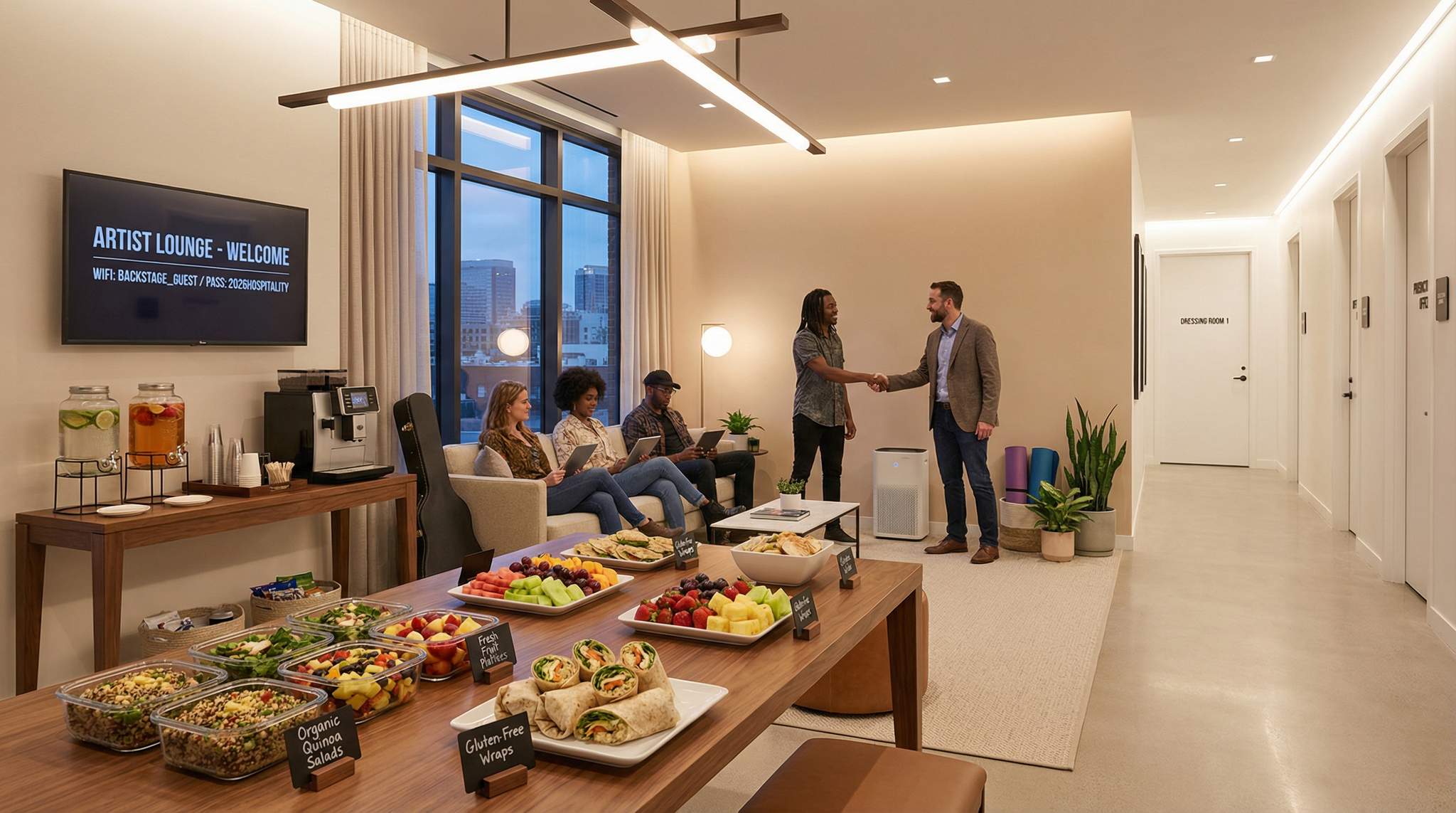
Finally, consider sound and entertainment in the room. Not all artists want distractions, but having the option is nice. A small stereo or dock to play music can allow them to set their preferred pre-show vibes. Or simply leave a cable so they can plug in their phone to house speakers if installed. Some venues put a TV in the green room – if you do, it’s a nice touch to have a feed of the stage (so openers can watch the crowd) or local TV channels, but keep the remote handy so they can turn it off if they want quiet. Wi-Fi access is almost expected these days; if your venue has Wi-Fi, post the network name and password clearly. Artists often use downtime to catch up online, call home, or even do work, so a reliable internet connection is a form of hospitality too. If you really want to go extra, have some entertainment ready: a deck of cards, a board game, or a games console if you know the band is into gaming (Nintendo Switch or classic SNES mini consoles have been hits in some green rooms). These can help artists unwind or bond with each other between sets.
Once you’ve covered comfort, cleanliness, and ambience, you’ve set the stage for artists to feel at ease. One way to double-check your work is to step into the artists’ shoes: sit in the green room yourself and imagine spending hours there. Is it too hot? Too dark? Does it smell weird? Is there nowhere to put your drink? Run through those questions and adjust accordingly. Often, venues spend millions on stage and sound but neglect the low-cost basics backstage. Don’t make that mistake. A modest budget and some empathy can transform even a shabby changing room into a cozy oasis performers appreciate. The best venues maintain their backstage areas almost like bed-and-breakfasts for artists – clean sheets (towels) and all! Below is a quick checklist of backstage setup essentials and simple upgrades to maximize comfort:
| Green Room Amenity | Why It’s Important / Tips |
|---|---|
| Comfortable Seating | Touring is tiring, so provide a place to truly relax. Soft couches or padded chairs let artists unwind. If space is tight, even a few floor cushions or beanbags can offer a cozy spot to lounge. |
| Mirrors with Good Lighting | Artists often need to check costumes, fix hair, or do makeup. A full-length mirror and a lighted vanity mirror are ideal. Soft, even lighting (like LED bulbs around a mirror) helps them get stage-ready without straining. |
| Climate Control | Maintain a comfortable temperature. If no central AC/heat, offer a fan in summer and a safe space heater in winter. Fresh airflow is key – a stuffy room can be uncomfortable and impact a vocalist’s throat. |
| Clean Restroom & Shower | If available, a private or backstage-accessible bathroom is a huge plus. Stock it with toilet paper, hand soap, towels, and basic toiletries (shampoo, etc.). After a sweaty set, a clean shower with soap and clean towels lets artists refresh and feel human again. |
| Power Outlets & Charging | Ensure multiple electrical outlets are accessible. Artists and crew will charge phones, wireless packs, laptops. Provide a power strip or two. If you really want to impress, have a couple of phone charger cables (USB-C, Lightning) plugged in and ready to use. |
| Snacks & Drinks Station | Set up a small table or counter with refreshments. Even if catering is coming later, have water, coffee/tea, and some light snacks ready on arrival. A hot kettle or coffee maker (with guidance if needed) allows them to make tea/coffee on their schedule. |
| Privacy Options | Make sure doors close and can lock if the artist wants privacy. A simple “Artist Only – Do Not Disturb” sign to hang on the door can help prevent random walk-ins by venue staff or guests. Security staff should be instructed to keep the backstage clear of anyone not on the artist’s list. |
| Atmosphere & Decor | Small touches = big impact. A few plants or fresh flowers add warmth. Throw rugs or wall drapes can cover up an aging floor or ugly wall color. Keep decor neutral and pleasant. Bonus: local artwork or posters can spark conversation and give the room character, but avoid anything that could be controversial or distracting. |
If you are looking for specific backstage green room ideas to elevate your space, consider thematic or modular upgrades. Venue managers are increasingly moving away from the dive-bar stereotype—nobody wants their venue known on the latest sticky carpet gig guide for having a neglected backstage room. Instead, try implementing a “living room” concept with vintage rugs, warm floor lamps, and modular seating that can be rearranged depending on the size of the touring party. Another popular green room backstage concept is the “local gallery” approach, where you feature rotating artwork from community artists on the walls, giving the backstage room a unique, boutique feel that sparks conversation.
When planning your overall backstage decoration strategy, remember that flexibility is just as important as aesthetics. Touring parties vary wildly in size and vibe, so your green room decor should be adaptable. Opt for modular design elements—like movable partition screens, interchangeable throw pillows, and dimmable LED uplighting—that allow tour managers to customize the space upon arrival. As a veteran operator, I’ve found that investing in high-quality, durable textiles (like washable slipcovers and heavy-duty vintage rugs) provides that premium, residential feel while standing up to the wear and tear of a 100-show season. Effective backstage styling isn’t about cluttering the room with expensive art; it’s about curating a clean, cohesive environment that feels like a sanctuary rather than a sterile holding pen.
By covering these bases, you create a backstage environment where artists can truly relax and recharge. The difference between walking into a well-prepared green room versus a barren, messy one is night and day. One feels like a welcoming haven, the other like an afterthought. In 2026, artists talk to each other about venues’ backstage vibes – some even rate them informally. Aim to be the venue that gets remembered for awesome hospitality and comfort, not the one known for “that dingy closet of a green room.” Clean, comfortable, and inviting – that’s the trifecta for designing a five-star backstage experience.
Privacy, Security, and Safety Backstage
A truly welcoming backstage isn’t just comfortable – it’s also secure and safe. Artists need to know that once they’re in the green room or dressing area, they’re in a protected bubble away from the public eye. Ensuring privacy is paramount. One of the biggest hospitality blunders is allowing unauthorized people to wander backstage. In 2026, security protocols at venues of all sizes have tightened, and artists expect a certain level of enforcement. As a venue operator, make it crystal clear to all staff and local crew which areas are off-limits without a pass or permission. Typically, only the artist, their touring crew, and specifically approved venue staff (like a hospitality runner or production manager) should be backstage. If you’re in a smaller venue where there isn’t a physical barrier to backstage, consider creating one – even a simple curtain and a sign that says “Artist Area: Do Not Enter” helps, along with a staff member near that area. It spares the artist from random barbacks or opening band friends accidentally strolling through their space.
Keep Tickets in Fans' Hands
Our secure resale marketplace lets attendees exchange tickets at face value, eliminating scalping while keeping you in control of the secondary market.
In practical terms, give the artist control over who can access their zone. Provide wristbands or laminate passes for their personal guests and enforce that security checks them. It can be awkward, for example, if a sponsor or local promoter brings people backstage unexpectedly – always clear such plans with the artist’s tour manager. Many artists have had uncomfortable experiences with strangers popping up in the dressing room, which can feel like an invasion. Don’t let your venue be the one where someone’s cousin’s friend “just wanted to say hi” by slipping past a lax security person. Not only does that violate privacy, it can be a serious safety issue. We live in a time where artists unfortunately face threats from overzealous fans or stalkers. Taking backstage security seriously is part of hospitality: it shows you prioritise the artist’s personal safety and headspace.
Safety isn’t only about people, though – it’s also about the physical environment. Make sure your backstage passes basic safety standards. Are cables taped down or routed away from walkways so no one trips? Is the area free of hazards like loose flooring, exposed nails, or wobbly furniture? Are exits (including emergency exits) clearly marked and unobstructed? Conduct a quick risk assessment: if the power suddenly went out, could the artist find their way out safely (have an emergency light or flashlight handy)? If there was a fire alarm, do they know the route (a venue staffer should be ready to guide them)? While that sounds like overkill in a hospitality context, these are part of the venue’s duty of care that indirectly make artists feel secure. Some artists travel with personal security who will inspect these aspects, and it reflects well if you’ve already addressed them. Additionally, ensure any pyrotechnics or special effects setup is well away from the green room if you have such shows – no one wants a surprise whiff of stage pyro smoke filling their lounge due to shared ventilation.
This principle applies to outdoor events and wilder productions as well. If your event features messy special effects—like a compressed air foam cannon, a “soap” bubble machine, or even a festival snow truck—ensure the backstage green room remains a pristine, dry sanctuary. Touring crews often read industry blogs detailing nightmare scenarios where stage effects ruined their personal gear; guaranteeing a secure, weather-proofed backstage room prevents these costly disasters.
A common request from artists is control over their backstage environment, including who can come in. It’s good practice to designate one venue point-person (like the hospitality lead or production manager) to be the gatekeeper so the artist isn’t disturbed by a parade of different staff. This person can knock and enter if needed to bring food or communicate schedule updates, but otherwise, even staff should knock and wait for approval to enter the dressing room. Privacy also means leaving them be when they want solitude – e.g. if an artist is taking a nap on the couch, do not disturb unless absolutely necessary for show timing. Noise control is another aspect: keep any loud work (like hammering stage setup or soundchecking another act) to reasonable hours so it’s not overwhelmingly noisy backstage during rest periods. If multiple artists share a green room (common in small venues), do what you can to give each some private space/time or a separate corner. Even a foldable divider screen can offer a modicum of privacy if two bands must share quarters. Communicate clearly to all artists involved how the sharing will work – maybe assign different areas of a larger room to each, or schedule use of a sole dressing room (headliner gets it at certain times, etc.). Transparency helps avoid any awkwardness.
Regarding belongings security: artists often leave personal valuables (instruments, laptops, stage wardrobe) in the dressing room during the show. It’s the venue’s job to ensure those don’t “walk off.” Limit backstage access, and ideally lock the dressing room while the artist is on stage (with their approval, and ensure a key is with security or the artist’s tour manager). Many venues provide a lockbox or safe for small valuables like wallets and passports – offering that is a professional touch if you can. At minimum, a sign that says “Venue not responsible for lost items” won’t protect you if something does happen – prevention is better. Double-check that stagehands or local crew exit the room once set-up is done; sometimes well-meaning crew might hang out where they shouldn’t. Train everyone that backstage is a privilege, not a hangout unless required.
In summary, a secure backstage lets artists drop their guard and truly relax. They can’t do that if they’re worried about prying eyes, interruptions, or safety hazards. By implementing firm but artist-friendly privacy policies, you create a trustworthy zone behind the scenes. Many top venue operators are known for being almost protective “den mothers” of the backstage – firm about rules, but doing so to create a safe haven for performers. And artists appreciate it immensely. When they feel safe, they can be themselves, conserve energy, and mentally prepare for the show. That calm confidence often translates directly into a better performance on stage. It’s all interconnected. So, treat backstage privacy and security as a core part of hospitality, not an afterthought. It’s one more way of saying to the artist: “We’ve got you. You’re safe here.”
Accessibility and Inclusion Backstage
Creating a welcoming backstage means welcoming everyone, including performers and crew with disabilities or special needs. In 2026, accessibility is an essential piece of venue operations – and that extends behind the curtain as well as in front. Many venues have improved front-of-house accessibility for audiences, but backstage areas in older buildings can be notoriously inaccessible (think narrow staircases up to the green room or stage). It’s important to identify these barriers and address them proactively. If an artist using a wheelchair, for example, can’t physically get to the stage or the dressing room in your venue, that’s a serious issue that needs a solution before it becomes an awkward day-of-show scramble. Start by assessing your backstage: Is there step-free access from load-in to stage and green room? If not, can you provide a temporary ramp or alternate route (such as a freight elevator) when needed? Keep portable ramps on hand if your venue has only a small step or two – they’re not very expensive and can be literal lifesavers. If the backstage is upstairs with no lift, and a key performer can’t climb stairs, consider how you might rearrange spaces (maybe convert a ground-floor office or a quiet corner of the venue into a temporary dressing room). Some smaller venues have done just that when needed – it’s not ideal, but it shows willingness to accommodate.
It’s not only mobility issues to plan for. Visual and hearing impairments should be considered too. Simple things: clear signage in large print (or braille if possible) for dressing rooms and stage doors can help visually impaired crew. Make sure pathways are well-lit and free of tripping hazards, which benefits everyone but especially those with low vision. For performers who are Deaf or hard of hearing, ensure your communication system can adapt – writing down important info, having a designated person who will give stage cues visually, etc. Flexibility is key. An example: a festival backstage guide noted that providing an on-stage interpreter or visual cue system for a Deaf performer’s set was arranged after discussing needs in advance, ensuring attention goes toward making the backstage accessible. While that level of accommodation may be rare in typical venues, being open to ask and adjust is the mentality to have, which includes adopting an inclusive scheduling mindset.
One smart policy many veteran promoters follow is what some call “ask and accommodate.” Simply put: when advancing the show (in the weeks or days prior), ask if any of the artists or crew have accessibility needs or medical conditions the venue should know about. You might phrase it as, “We want to ensure everyone on your team has a safe and comfortable experience here. Do any performers or crew require special accommodation (e.g. mobility access, dietary, sensory needs)?” Artists or their tour managers will then feel welcome to disclose things they otherwise might have hidden. As noted earlier, a large number of musicians historically haven’t disclosed disabilities due to fear of avoiding opportunities because of access barriers. By asking proactively in a supportive way, you normalize the conversation. If someone says, “Actually, yes, our drummer has epilepsy; could you avoid strobe lights directly in the green room area?”, you can then plan accordingly (perhaps by not using certain flickering fluorescents or by informing them if any fire alarms will flash during tests, etc.). Or perhaps a touring crew member uses a wheelchair – you’ll then arrange ground floor accommodations or book portable ramps and an ADA toilet in advance. It’s far easier to meet needs when you know about them ahead of time. And the artist camp will appreciate your inclusive attitude, seeing that you truly aim to make backstage work for everyone involved.
In terms of inclusive amenities, consider adding a few features that benefit those with accessibility needs (and often everyone else too). For instance, having at least one sturdy chair with arms in the dressing room can help those with mobility issues to sit and stand more easily (and older or pregnant performers as well). Install a grab-bar in the backstage restroom if you can, or at least have one portable if needed. If your backstage has a television or monitor, ensure it has closed-caption capability – useful if someone is hard of hearing and wants to follow stage announcements or needs to see cue subtitles. On the sensory front, providing a low-sensory space could be a boon for artists who might be on the autism spectrum or just overwhelmed – basically, that quiet room concept with low lighting and minimal noise doubles as a “sensory retreat.” At big festivals, we’ve seen sensory-friendly artist lounges popping up, with things like noise-cancelling headphones available for a break, creating accessible backstage environments for everyone. A small venue might not have dedicated space, but understanding the principle means you can accommodate if asked (like finding a calm corner away from the hustle if someone’s feeling overstimulated), leading to a stronger, safer production.
Lastly, make inclusion part of your backstage culture. Train staff to avoid assumptions – not every disability is visible. If an artist says they need extra time for soundcheck or that they cannot perform at a certain time of day due to a medical condition, be as flexible as you can. A supportive approach could mean adjusting the schedule slightly or providing a stool on stage for an artist who can’t stand for long periods. These aren’t “hospitality” in the traditional sense of food and comfort, but they are absolutely part of making the artist experience positive. Inclusion is the new normal in 2026. The venues that excel are those where any artist – regardless of physical ability, age, or condition – can walk in and feel like everything’s been done to empower them to perform their best. And an important side effect: when you accommodate performers’ needs backstage, it often improves overall safety and efficiency. A ramp that lets a wheelchair-using guitarist roll onto stage also helps crew load heavy gear more easily, proving that efforts to include everyone lead to better operations. In making things better for some, you usually make things better for all. Embrace that philosophy, and your backstage will truly be a place where every artist feels they belong.
Elevating Backstage Catering and Nutrition
Quality Catering on Any Budget
Feeding artists well is a core element of hospitality, but it doesn’t always require a five-star chef or expensive catering contract. The key is quality and care in whatever you provide, whether it’s a simple home-cooked meal or a catered spread for dozens. Start by understanding the scale: for a single touring act and their small crew, you might handle meals in-house or via a local restaurant. For multi-artist bills or bigger productions, you may need professional caterers. In all cases, aim for fresh, tasty, and timely food that meets the artists’ preferences. There’s a reason it’s often said, “an artist plays better when well-fed.” A nutritious meal can rejuvenate a tired band, while a junky or non-existent meal can leave them lethargic or cranky (and constantly thinking about rushing out for drive-thru after the set!).
One effective strategy is to partner with local eateries that are known for great food. Many independent venues build relationships with a nearby café or restaurant to supply artist meals at a reasonable rate. For example, an indie club might have a deal with the neighborhood Italian restaurant to deliver trays of pasta, salad, and bread for each show’s headliner – it’s more wholesome and satisfying than generic fast food, and often cheaper than hiring caterers. Plus, artists get to taste a bit of local flavor. If you take this route, rotate the cuisines to keep it interesting for frequent touring acts and always confirm dietary needs (e.g. include a veggie or vegan dish by default). Some venues give artists a choice: a meal buyout (an allotted cash amount per person to buy their own meal) or the home-cooked/local option. Surprisingly often, artists will opt for the home/local cooking if they’ve heard good things or if it smells great when they arrive! A famous example is the 9:30 Club in Washington D.C., where the in-house catering became legendary among touring bands for its deliciousness – many artists would choose eating there over catering at fancier venues because it felt like a hearty family dinner.
To further elevate nutrition for touring acts, consider reaching out to a local smoothie & juice bar. Setting up a pop-up juice station during load-in provides a massive energy boost and shows a commitment to wellness that goes far beyond standard venue fare.
For example, a regional venue operator recently partnered with a popular smoothie and juice bar in Mount Barker to provide fresh, locally sourced wellness shots for a touring indie band. This low-cost collaboration not only supported a local business but also delivered a premium hospitality experience that the artists raved about online.
Timing of meals is critical. Coordinate with tour managers about when the band and crew prefer to eat. Typically, artists might want a light bite during load-in or soundcheck (fruit, sandwiches, etc.) and a hot meal either pre-show (at least 2 hours before stage time) or post-show. Post-show meals are increasingly common, as many singers don’t like performing on a full stomach and will appreciate a hot meal waiting for them right after the encore. If going the post-show route, make sure to keep the food warm and safe (use chafing dishes or warming trays if possible, or time the delivery for just before they come off stage). Nothing is sadder than a stone-cold “hot” dinner at midnight. If pre-show, schedule it such that they’re not rushed – e.g. have dinner ready no later than an hour before doors open, so they can eat in peace before meet-and-greets or other duties.
Now, let’s talk about what’s on the menu. Balance indulgence with nutrition. Comfort foods (think mac & cheese, burgers, pizza) are fine if the artist is into it, but also include lighter fare (grilled chicken, fish, vegetables, salads) so there’s choice. One trick: separate elements buffet-style – for example, instead of heavy pre-made burritos, have a build-your-own taco bar with fresh tortillas, grilled veggies, meats, and toppings. That way someone wanting to eat light can make a salad or just have protein and veg, while someone starving can load up everything. Always have vegetarian proteins (tofu, beans, lentil stew, etc.) even if no one specifically requested vegetarian – tastes can change day to day, and going plant-based for one meal might appeal to even meat-eaters in the group. Also, consider the local climate and cuisine. A hearty stew or curry might be great in a cold city in winter, but on a sweltering summer day, lighter cold options and hydrating foods (watermelon, cucumber, salads) make more sense.
Freshness is a marker of quality. Even on a shoestring budget, opt for fresh ingredients over processed whenever possible. A platter of cut veggies with hummus, freshly baked bread, and a pot of homemade soup beats a stack of microwave burritos in both nutrition and perceived effort. If you or your staff cook for the artists, play to your strengths – if your venue manager makes a killer chili or pasta, that home-cooking can create a memorable experience for the band (many indie bands fondly recall venues where the owner’s family cooked a special dish). Just be sure the cooking conditions are sanitary and the food is handled safely; getting an artist sick from food poisoning is a nightmare scenario. If you’re not confident in cooking, it’s absolutely fine (and probably safer) to source from a professional kitchen.
To ensure quality, taste-test everything you offer. Would you be happy eating this meal as a guest? If the answer is no, don’t serve it to artists. Stale sandwich platters or wilted salad sends a message that you don’t care. Better to have fewer options that are fresh and good, than an abundant spread of mediocre fare. Pay attention to small details: provide seasonings and condiments (salt, pepper, hot sauce, dressings) on the side so artists can flavour to their taste. Label foods clearly, especially if vegetarian, vegan, or containing allergens (“contains nuts”, “gluten-free” etc.) – this not only helps those with dietary needs but also shows a level of professionalism that artists notice. Be mindful of presentation: you don’t need fancy china, but avoiding a messy layout goes a long way. Keep hot foods in warmers or covered in foil, cold foods chilled if needed, and refresh items like coffee or tea when they run low.
So what if you truly have almost no budget? You can still show effort in small ways. Perhaps arrange a potluck among trusted staff: each brings one homemade dish (cleared of any allergens) to contribute to the band’s dinner. Ensure quality control though – all dishes should be fresh and safe. Or focus on one standout item: maybe you can’t provide a full meal, but you surprise the artist with a specialty dessert from the best local bakery or a birthday cake if it’s someone’s birthday. Communicate with tour managers if you’re doing minimal hospitality – often for very small venues, artists understand and might prefer a buyout of $15 each to go grab what they want. In that case, you can still make a kind gesture like providing a list of nearby restaurants (with your personal recommendations marked) so they don’t have to search themselves. One independent venue survival guide noted that even small venues can thrive by banding together and sharing resources – for instance, negotiating a deal with a local catering service to cover multiple small venues in town at a discount, a key part of independent venue survival strategies. If a few clubs coordinate, a caterer might happily deliver to each at a rate you all can afford, saving everyone money and improving meal quality.
Ultimately, artists talk about catering perhaps more than any other hospitality element, because food is visceral and memorable. When done right, backstage catering can earn glowing reviews: artists might rave in interviews about “the amazing curry they fed us in [Your Venue]” or how “[Your City] always hooks us up with great barbecue backstage.” These stories bolster your venue’s reputation in the touring community. And as a bonus, well-fed artists are less likely to skip soundcheck to go find food, or dash off early after the show – meaning a smoother schedule for you. It’s a win-win. So, whether your budget is $50 or $5000, focus on quality, freshness, and meeting dietary needs. If you do that, you’re elevating backstage catering from a mere contractual obligation to a genuine highlight of the artist’s day.
Local Flavor and Sustainable Choices
One way to really delight performers is to infuse your backstage catering with a taste of the local flavor – both in terms of cuisine and conscious choices. Artists on tour often lament that all venues start to blur together, especially when the food is the same generic pizza or sandwich platter every night. By offering something unique to your city or region, you not only give them a memorable culinary experience but also showcase local culture (which many artists love to explore). For instance, if your city is famous for its tacos, why not have a popular local taqueria cater the meal? If you’re in a region known for barbecue, treat them to the best smoked brisket in town. In New Orleans? Some spicy jambalaya or po’ boys can bring that local spice. Of course, always mix in some milder or alternative options, since not everyone will want the local specialty (e.g. have some simple grilled chicken or pasta available alongside that super spicy curry your town is famous for). The idea is to surprise and delight their taste buds, not force-feed them something they won’t enjoy.
Local flavor isn’t just about mains; it can be in snacks and beverages too. Stocking local craft beers, sodas, or artisanal coffee gives artists a fun sampling of the area. Many bands geek out over trying a local microbrew that they can’t get elsewhere. Non-alcoholic craft beverages (like regional kombucha, yerba mate, or specialty juices) are also hits in 2026, aligning with the trend of artists drinking less alcohol on tour. And don’t forget desserts – maybe a box of those famous local donuts or a regional pastry as a post-show treat. The Montreux Jazz Festival became legendary in part because founder Claude Nobs would personally cook Swiss fondue and other local dishes for artists at his chalet, proving how caring for festival artists improves their sets. While you likely can’t invite artists to a mountain chalet, you can bring a bit of your hometown’s soul into the green room. These personal touches stick with artists far longer than another deli tray. It’s not uncommon to hear “Which city was it that gave us those amazing empanadas? We gotta play there again!”
Another important dimension to modern hospitality is sustainability. Many artists today are eco-conscious and appreciate venues that are striving to reduce waste and source responsibly. In backstage catering, this can translate to a few practical actions. First, try to minimize single-use plastics and disposables. Instead of plastic water bottles, provide reusable bottles or a water cooler with compostable cups, helping in reducing plastics in artist areas. Billie Eilish famously demanded plastic-free backstage environments on her world tour, and festivals like Glastonbury have cut out disposable bottles entirely, and organizers have installed water refill stations. If superstar tours can do it, small venues can too. Use real plates and metal cutlery if you have a dishwasher or the ability to wash up; if not, opt for replacing disposables with sustainable options. Provide recycling bins backstage (and label them clearly) so that cans and bottles from drinks don’t end up in the trash. These steps not only cut your garbage costs but also send a signal to artists that you share their environmental concerns. Some artists have even started adding “green clauses” to their riders, asking venues to avoid plastic or provide recycling – beat them to the punch and mention your eco-friendly setup in advance, and you might just win some accolades.
Sourcing food sustainably is another way to shine. Where budget and seasonality allow, use local farms and bakeries for backstage meals. Maybe you have a connection with a local farm for fresh produce, or a bakery that uses organic flour. You can’t always source everything locally, but even a portion helps. If you manage to get, say, local farm-fresh fruits or a dessert from a nearby organic bakery, consider leaving a little note: “The strawberries are from Bob’s Farm just outside town – we thought you’d enjoy the local harvest!” Artists appreciate knowing the care behind the food, giving artists a taste of the region. At Øya Festival in Norway, for example, they serve only organic, locally sourced food to artists and crew, which has become a selling point as much as the festival itself, where they serve organic, locally sourced food. On a smaller scale, a club can still adopt that ethos. Going plant-forward is another eco-friendly move: offering delicious vegetarian options not only caters to veggie band members, it also reduces the carbon footprint of the meal. Some events have even made all default catering vegetarian unless meat is specifically requested, providing vegetarian meals to reduce carbon footprint, finding that many performers didn’t mind the change when the veggie food was tasty, even when accommodating dietary needs or rider requests.
Sustainable hospitality also means thinking about waste reduction. Backstage catering can produce a lot of leftovers and trash. Coordinate with tour managers about headcount to avoid drastically over-ordering. It’s better to run out of one side dish (with everyone fed) than to throw away trays of uneaten food. And for any leftovers that do occur, have a plan: are there local crew or venue staff happy to take some home (reducing waste and boosting staff morale)? Some venues partner with food rescue programs to donate untouched surplus food to shelters the same night – it requires quick logistics and adherence to health codes, but it’s a fantastic practice if feasible. Also, consider composting organic waste from backstage if your city has that facility or if you can set up a compost bin. It may seem extra, but some artists notice and will give kudos for it – it aligns with many artists’ public commitments to sustainability. When the electronic duo ODESZA played a festival, they publicly thanked the team for adopting eco-friendly hospitality measures, as an example of how it’s becoming part of artist relations.
Overall, embracing local flavor and sustainability in backstage hospitality isn’t just about doing the right thing – it’s also a savvy way to differentiate your venue. It creates talking points and fond memories. Artists will leave not only remembering how good the food was, but also that your venue cares about the community and the planet. It transforms a routine meal into something meaningful. For instance, providing a reusable water bottle with the venue’s logo as a gift (instead of disposable bottles) addresses both a need and serves as a tour souvenir that artist might carry on the road, inadvertently promoting your venue. And when you lay out a spread that includes beloved local treats or farm-fresh goodies, you’re essentially saying, “Welcome to our town, we’re proud of it and we want you to experience it.” That warmth resonates. It’s hospitality in the truest sense – being a gracious host not just to the artist, but also introducing them to the best your community offers and the values you stand for.
Dietary Restrictions, Allergies, and Special Diets
In the modern era, accommodating dietary restrictions and allergies backstage is an absolute must. Chances are high that at least one person on any tour has a specific food restriction, whether for health, ethical, or religious reasons. As mentioned, hospitality riders will usually spell these out – common ones being vegetarian, vegan, gluten-free, nut-free, dairy-free, or specific allergies like shellfish or soy. It’s the venue’s responsibility to take these seriously, both to keep the artist safe and to show professionalism. “No, the vegetarian guitarist cannot just ‘pick the pepperoni off’ the pizza” – that kind of dismissive attitude is a fast track to a bad reputation. Instead, plan menus that naturally include options for those diets, or provide equivalent substitutes so no one feels overlooked.
For example, if the main catering is a chicken stir-fry with rice, also have a tofu or vegetable stir-fry version for vegetarians and vegans, prepared with separate utensils if needed. If you’re serving sandwiches and one member is gluten-intolerant, pick up some gluten-free bread or wraps and make a few of those special (and keep them separately wrapped and labeled). It’s not very costly to integrate these needs – most grocery stores stock gluten-free and dairy-free products now. The key is to avoid cross-contamination for serious allergies. If someone has a nut allergy, absolutely ban nuts from their meal and ideally from the entire backstage that day to avoid residue on shared surfaces, a practice adopted by forward-thinking festival producers. Use separate, clean cookware for their food if you’re preparing it in-house, and inform catering staff or restaurant partners clearly: e.g. “One person has a severe peanut allergy – no peanut oil or nuts in any of the food, please.” People’s lives can literally depend on this, so double-check everything. If in doubt, talk directly to the tour manager or individual about their comfort level – some severely allergic folks even travel with their own food to be safe, in which case just make sure you have storage (like a fridge space) and maybe offer to heat it up for them.
Beyond allergies, consider religious diets. If you have an artist who keeps kosher or halal, you may need to source from specific vendors or ensure certain foods are prepared appropriately. It might be impractical to fully cater kosher in a non-kosher kitchen (they might bring their own), but at least provide pre-packaged certified snacks and avoid mixing meat/dairy in their meals. For halal, use halal-certified meat or stick to vegetarian options if you’re unsure. If an artist is observing fasting (like during Ramadan, or fasting for health reasons), be mindful of their schedule – they might need their meal at a very specific time (like right after sundown) or need a to-go container for later.
Communication is your best friend here. A week or two before the show, when you advance hospitality, confirm all dietary restrictions in writing. Then on show day, label foods clearly backstage. For instance, make small tent cards or sticky notes: “Gluten-Free Pasta (rice flour penne)”, “Vegan salad – no egg in dressing”, “Contains nuts (do not eat if allergic)” on a dessert if it has nuts. This helps artists and crew navigate safely. It also demonstrates that you took their instructions to heart. Artists have shared horror stories of requesting vegan food and getting fish (hint: fish isn’t vegan), or telling a venue about a severe dairy allergy only to find cheese on everything. Don’t be that venue. Listen and execute accordingly.
One trend in 2026 is that more artists are trying specialty diets for health reasons – keto, paleo, low-FODMAP, etc. You might see these in riders occasionally. While it can be hard to cater something like keto (very low carb, high fat) if you’re also serving others, you can ensure there are components of the meal that fit the diet. For keto, have plain grilled meats, green veggies, and healthy fats (like avocado or nuts) separate from carb-heavy sides. For paleo, similar idea (they won’t eat grains or dairy usually, so have meat/veg options available). Low-FODMAP is trickier (it limits certain carbs found in common veggies, garlic, etc.), but if someone requests it, often they’ll specify safe foods. In such cases, you might actually want to speak directly to the person or their nutritionist if they have one, just to be safe in preparing something they can eat.
The great news is that fulfilling special diets no longer requires exotic ingredients or massive expense. Health food and gluten-free products are mainstream. There are also apps and services now where you can find nearby restaurants that cater to specific diets; you could order from those places if cooking it yourself is too tricky. For instance, if a band member is strictly vegan and your kitchen skills in that domain aren’t strong, maybe order a batch of vegan dishes from the best vegan café in town. It ensures they get something made by experts and shows you care about quality. In the era of postmates and UberEats, even last-minute needs can be met if something was overlooked (though try not to let it come to that – plan ahead to avoid scrambling while the show is ongoing).
One very budget-friendly tip: stock some snack items that cater to common restrictions. Things like gluten-free crackers, vegan protein bars, dairy-free milk (oat or almond milk) for coffee/tea, and fruit are nice to have on hand. Even if the main meal doesn’t suit someone, these ensure nobody goes hungry. And often, other band or crew members will enjoy them too (you’ll notice that vegan cookies tend to vanish whether people are vegan or not, if they taste good!). Diversity in snacks covers your bases and doesn’t cost much.
In essence, handling dietary restrictions with care is about trust. If an artist sees that you prepared a separate gluten-free sauce for them, or that you took the cheese off half the salads because they asked for dairy-free, they’ll trust you more and feel relaxed. If they see you disregarded their needs, they’ll be annoyed at best, or genuinely endangered at worst. And trust me, tour managers keep mental notes of venues that are good with this stuff. Being known as “the venue that always has the vegans covered” or “the place that triple-checks for nut allergies” will earn you repeat business and praise in the touring community. It’s a facet of hospitality that has become non-negotiable in 2026 – inclusive, safe food for all. And when you deliver it seamlessly, it integrates into the overall impression that your venue is professional and cares about its artists.
Prioritizing Health and Wellness Amenities
Quiet Spaces and Chill-Out Zones
Concert days are full of stimuli – booming soundchecks, bustling crew, meet-and-greets, and the adrenaline of the show itself. By the time artists step off stage, they’ve been through an emotional and sensory rollercoaster. That’s why providing quiet spaces and a calm atmosphere backstage is one of the kindest things a venue can do. We touched earlier on crafting a tranquil green room, but let’s dig deeper into establishing true chill-out zones for performers. One concept gaining traction is the idea of a dedicated “wellness room” or “decompression space” at venues. This doesn’t have to be a large area – even a small, dimly lit room with comfortable seating, some pillows, and zero equipment or work-related clutter can serve as a haven for an artist needing to escape the chaos.
If your venue has multiple rooms backstage, consider designating one as the official quiet room where no loud conversations or visitors are allowed. Make it cozy: think warm lamps (no harsh lights), maybe a diffuser with a gentle lavender scent, and if possible, some sound dampening so outside noise is minimized. If you only have one green room total, you can still create a chill corner within it. Use a curtain or room divider to section off a part with a comfy chair or yoga mat on the floor, encouraging its use as a meditative nook. A pair of noise-cancelling headphones left out on a side table can be an invitation for an artist to plug in some soothing music or just enjoy silence. It signals, “It’s OK to take some quiet time for yourself here.” Some venues will even put up a sign like “Quiet Zone – please keep voices low in this area” to remind crew and other band members.
Timing matters too. Keep the backstage relatively quiet in the hour leading up to the show – many performers have pre-show rituals that involve focusing or warming up in silence. If you have an opener and headliner sharing space, coordinate so that if one act needs quiet while another is pumping themselves up with loud music, they have separate areas or times to do so. After the show, once adrenaline crashes, that quiet room can be a godsend. A singer might want to just sit in peace for a few minutes with a cup of tea, or a drummer might do a post-show stretch routine in the mellow lighting. Give them that space without pressure.
Beyond designated rooms, consider how you schedule backstage activities. Avoid unnecessary disruptions like loud maintenance or interviews in the immediate backstage vicinity when artists might be unwinding or prepping. If press or VIP meet-and-greets must happen, host them in a separate area if possible (like a lobby or side room) so the green room stays a retreat. Essentially, think of backstage like a spa amidst an amusement park – one oasis of calm in the middle of all the excitement. And if you can’t spare an entire zone, even small touches help: turn off any blaring TVs once the artist is off stage, dim the lights a bit, speak softly when checking in on them. Respect the fact that their nervous system might be fried and in need of a reset.
One common scenario: multiple people (band members, crew) crammed in one backstage. Not everyone may want quiet at the same time, which can be tricky. Encourage a bit of courtesy among the group. For instance, if one member is clearly resting with eyes closed and headphones, maybe the others can take their chat outside or to the side stage for a bit. As venue staff, you can facilitate by gently reminding or by providing alternative hangout spots for those who want to keep the party going. Is there a crew hospitality room or even just the main bar area after the show where they can be rowdy while one or two band members chill in the dressing room? The more you can accommodate both sets of needs, the better.
It’s also worth mentioning the power of silence. In a world of constant noise, giving an artist a moment of silence can be incredibly rejuvenating. Some venues have begun scheduling short “quiet time” windows – say, 30 minutes before doors open, the backstage goes into silent mode: no soundchecks, no unnecessary chatter, just final mental preparation. Artists have given positive feedback on that practice, as it let them collect themselves. Obviously, this requires coordination and might not always be feasible with tight schedules, but it’s an interesting idea to consider for gigs where you have more control (like a single-band headline show where you can say, “6:30-7:00pm is quiet time, then doors at 7:30”).
At the end of the day, the artists’ backstage should feel like a shelter from the storm of the concert. Quiet spaces are a huge part of that. They allow artists to reconnect with themselves, manage pre-show jitters or post-show come-down, and simply breathe. Remember that performers are “on” for hours dealing with people and noise – giving them permission and space to be “off” for a bit is a profound form of hospitality. It costs you next to nothing, but it is deeply valued. We’ve heard entertainers say things like, “That venue had this little cozy corner where I meditated for 15 minutes – it saved my sanity on tour.” That’s what you want: to be the gig that not only rocked on stage, but also rejuvenated backstage.
Fitness and Recreation Backstage
Staying physically active and loose on tour is important for many artists – after all, performing is a demanding physical act, and long hours in vans or airplanes can leave musicians stiff and fatigued. That’s why some forward-thinking venues provide fitness and recreation amenities backstage. Now, not every venue can have a fully equipped gym in the green room (nor is that expected!), but even small additions can help artists get the blood flowing or unwind in a fun way. At minimum, consider stocking a few basic workout tools: a yoga mat or two, some resistance bands, maybe a couple of light dumbbells or a kettlebell. These are inexpensive, take up little space, and can accommodate a quick pre-show stretch or strength routine. A lot of vocalists, for instance, like to do yoga or bodyweight exercises to warm up their bodies and breath control – having a mat ready saves them from doing downward dog on a dirty concrete floor.
If you have a bit more space, you could set up a small area for exercise: perhaps an empty room or corner where artists can do some jumping jacks, push-ups, or use a pull-up bar mounted in a doorway (those portable ones work well). Cardiovascular equipment is rarer to find, but some larger venues or arenas do have stationary bikes or treadmills in backstage wellness rooms. For a club or theatre, that’s likely overkill, but you might be surprised – a compact foldable exercise bike isn’t too pricey and could be a perk that touring crew also love (they need to stay fit on the road too). Even offering to arrange a local gym visit can show care – for example, if an artist requests a gym, perhaps you have a relationship with a fitness centre nearby to allow a quick session, or you provide day passes if time permits. A number of artists travel with jump ropes or simply jog around the venue’s vicinity; you can assist by recommending a safe nearby park or route if they ask.
Recreation isn’t just about formal exercise – it’s about fun and relaxation, too. Some artists love when a venue has a bit of entertainment backstage, as it helps them bond with bandmates or blow off steam. Games are a popular choice. A simple dartboard on the wall, a deck of cards, or a board game like Jenga or Scrabble can spark joy. You don’t have to break the bank: many venues just have a chest or shelf of random games collected over time. If you have a TV and a little more budget, a video game console can be a hit (pun intended). Old-school systems (Nintendo, Sega) or something like a PlayStation with a couple of sports or racing games often go to use, especially if there are competitive souls in the touring party. We’ve heard of entire tour traditions forming around specific venues with a legendary ping-pong table or vintage arcade machine – bands would talk up their “high score” from last time and eagerly anticipate a rematch. The O_2 Arena in London once installed a games room with table tennis and foosball specifically because so many artists and crew enjoyed unwinding with friendly matches.
A lot of these recreation options double as fitness in their own way. A ping-pong match gets the heart rate up, stretches the legs, and improves hand-eye coordination – all good pre-show. If you have outdoor space (like a fenced backstage parking lot), consider keeping a football (soccer ball) or basketball around. Artists from Mick Jagger to Post Malone have been known to kick around a soccer ball backstage to stay limber. There’s that famous story of Foo Fighters playing charity softball games on tour in city parks – again, not something the venue provided, but it shows artists often want some physical play to break up the routine. If your venue happens to have a private outdoor area, enabling a little playtime (even just a game of catch or frisbee) is awesome. At one Australian venue, the crew started bringing a cricket set backstage after discovering a British band loved the sport. It turned into an impromptu mini-match in the loading bay that the band spoke about on social media afterward, delighted.
Of course, gauge the vibe: not every artist wants to exercise or play games. Some prefer solitude or quiet (as discussed above). The trick is to provide options without forcing anything. Lay out the game console but don’t insist they use it; have the yoga mats visible in case they’re needed. If space is limited, choose multipurpose items (like resistance bands that can be used for stretching or strength, and take no space). Safety note: if you provide equipment, ensure it’s in decent condition. You don’t want a dumbbell with a loose plate or a frayed jump rope causing injury. Also, keep any active area clear of hazards – nobody should slip on a cable while dribbling a basketball.
One more angle: mental fitness. Recreational activities like puzzles or coloring books might sound silly, but some artists really enjoy these to relax the mind. Adult coloring books, sketch pads, Sudoku/crossword puzzles – these can be low-cost additions to the backstage lounge. They’re especially helpful for artists who don’t necessarily want physical exertion but need a mental break. Having a few of these items scattered on a coffee table with some markers or pencils invites creativity. Touring is a creative endeavor but ironically can become monotonous; a little artistic play can reignite inspiration. A famous example: at the Bonnaroo festival, they set up an entire artist “Artists’ Tent” with crafts and painting supplies, and big stars were painting and drawing in between sets – a testament to how even world-touring musicians relish simple creative play when given the chance.
In conclusion, think of fitness and recreation amenities as boosters for performers’ well-being and camaraderie. They show that you understand artists are people who might want to play a bit, work up a sweat, or challenge their tour mate to Mario Kart. By facilitating that, you help make the long tour a bit more enjoyable. Plus, a band that just had a fun ping-pong tourney backstage is going to walk on stage in a great mood, energized and smiling, which means a better show for everyone. And if they leave saying “that venue was awesome – they even had my favourite game!” or “I loved being able to do yoga before the set,” you’ve elevated yourself from a mere venue to a memorable stop on the tour. That’s the goal: when artists remember not just the crowd, but how well they felt taken care of behind the scenes.
Mental Health Support On Tour
The conversation around mental health in the music industry has thankfully become much more open in recent years. Artists face intense pressures – from the high of performing to the lows of isolation and exhaustion on the road. As a venue operator, you’re not expected to serve as a therapist, but you can create an environment that’s sensitive to mental health needs and even provide small forms of support. Start with a culture of respect and empathy backstage (something we’ve been weaving through all these topics). Ensure your staff are friendly but not overbearing, helpful but not invasive. A little kindness goes a long way; a stressed-out tour manager or artist might feel comfortable confiding a need if they sense you’re approachable. For instance, if an artist is having anxiety before a show and asks for a bit of extra time or privacy, do what you can to accommodate – maybe delay doors 10 minutes if viable, or find them that quiet room we discussed. Flexibility and understanding in those moments are a huge part of supporting mental health.
Some venues, particularly larger ones, have started to include mental health resources in their info packets for artists. This could be as simple as a one-pager pinned on the green room wall listing emergency numbers for medical or mental health crises locally, or contacts for organizations like MusicCares (in the US) or Help Musicians (UK) which offer mental health support to artists. Seeing that information readily available normalizes seeking help and signals that you care about their well-being beyond just the gig. At festivals nowadays, it’s not uncommon to find on-site counsellors or a quiet “respite tent” for artists and crew feeling overwhelmed, as festivals embrace mental health and mindfulness. While a single-night venue show doesn’t warrant having a counsellor on site, you could quietly let tour managers know, “If anyone on the team feels unwell or needs medical help, let us know – we have a medic on call and know where the nearest clinic is.” Many tours travel with their own personnel for this, but smaller acts don’t, and it’s comforting to them to know you have their back, which builds trust and prevents last-minute cancellations.
Be mindful of post-show crashes. It’s very common for performers to experience a down mood or restlessness after the adrenaline of the show fades and the late-night loneliness kicks in (they’ve coined the term “post-show blues” for a reason). You can soften this by making the immediate post-show environment positive and low-stress. For example, ensure settlement (the process where you pay them, etc.) is smooth and quick so it doesn’t add anxiety. Maybe have a small treat ready – some venues hand the artist a Polaroid photo of the crowd or a local souvenir as a keepsake, ending the night on a thoughtful note. Even a sincere compliment – “That was a fantastic show, thank you for playing here!” – can buoy an artist’s mood as they wind down. If you observe an artist pacing or looking particularly down afterward, gauge if they want to talk or be left alone. Some will appreciate a bit of normal banter to come down to earth, others want solitude. Don’t take either approach personally; just read the room.
Privacy ties in a lot with mental health. If an artist is known to have had struggles (say, publicly took a break for depression or similar), be extra respectful of their space and needs. For instance, some have strict no meet-and-greet policies or limited media engagement to avoid extra stress – honour those absolutely, and run interference if someone is trying to push those boundaries. Your role can include gently educating any overeager local personnel: e.g. “This artist isn’t doing photos tonight, let’s give them their space.” Protecting them from unwanted interactions is a relief for artists who might otherwise feel pressure to please everyone at expense of their own mental calm.
A newer amenity some venues and festivals are offering is a wellness basket or care package. It might include things like herbal teas for relaxation, Epsom salts for a calming bath (if their hotel or your backstage has a tub), aromatherapy oils, or stress-relief gadgets like a fidget spinner or stress ball. These little items can encourage moments of self-care. If you know an artist is celebrating sobriety or trying to stay substance-free, ensure you have enticing non-alcoholic options and maybe some literature or contact info for local support groups if relevant. More broadly, watch out for crew or band dynamics that might raise red flags; if you see someone having a panic attack or meltdown, discreetly offer help (ask if they need water, a quiet area, or if you should call someone). Train your staff on basic mental health first aid – i.e., how to remain calm, who to contact in an emergency, and how not to escalate a situation. Often, just providing a calm presence and quick access to a solution (like calling a tour manager or medics if needed) is the best course.
To sum up, supporting mental health backstage is about cultivating a safe, supportive atmosphere. It’s recognizing that performers are humans with ups and downs, and that a night on tour can bring specific emotional challenges. By being considerate, prepared, and compassionate, you make your venue stand out as one that genuinely cares about the artist as a whole person. That reputation travels fast. Artists have tight-knit communities; if your venue earns a whisper that “they really take care of you there, they get it,” you’ll find more tours eager to work with you. And most meaningful of all, you’ll be contributing positively to the well-being of those who bring music and joy to so many – a gratifying legacy for any venue operator.
Adding Personal Touches and Cultural Awareness
Local Welcome Gifts and Gestures
One of the most effective ways to make artists feel genuinely welcome is through personalised local touches. Remember, these performers roll into a different city each night – it can be disorienting and impersonal. But you can give them something unique to remember your place by. A simple and popular gesture is preparing a “welcome pack” or small gift bag with local goodies. This might include things like a few snacks or treats made in your region (local craft chocolate, packets of specialty coffee from a nearby roaster, a bottle of a famous local hot sauce, etc.), a postcard or tiny booklet about your city (with perhaps a note from the venue saying “We’re glad to have you in [City]!”), and possibly a piece of venue merchandise (like a shirt or enamel pin with your venue logo). It doesn’t have to be lavish – even a couple of items with a handwritten welcome note can stand out amidst the monotony of touring. For example, a venue in Memphis might leave some Memphis BBQ-flavored chips and a note that says “Dig in y’all – welcome to Memphis!”, whereas a Seattle venue might offer local organic granola and coffee with a note “Fuel up with some Seattle flavors. Have a great show!”. These little gifts say, “we put thought into your visit.”
Another personal touch is acknowledging any special occasions or milestones. Does your show happen to fall on a band member’s birthday or the final date of their tour? If you catch wind of it (tour announcements or social media can tip you off), doing something to celebrate will earn you a golden reputation. Maybe it’s a surprise birthday cupcake delivered to the green room with candles, or a banner card signed by all your staff. If it’s the tour-closer, a chilled non-alcoholic sparkling cider (or champagne if appropriate) with glasses ready for a toast post-show could be amazing. One venue read in an interview that the headliner’s album just went gold that week, so they presented a cheap party store “gold record” trophy on stage after the encore – the band was both amused and touched. Such moments often get shared online, putting your venue in a glowing light for being cool and caring.
Name recognition is a powerful personal touch as well. Ensure all key venue staff interacting with the artist know the artists’ names (and preferred pronouns). There’s a big difference between “Hi, welcome, let me show you your room” and “Hi Sarah, welcome to our venue, let me show you your room”. Obviously, don’t overdo it to a creepy level, but using names in moderation makes the interaction human. Also, if you can, customise the dressing room itself. Many venues do the classic star-on-door with the artist’s name or a printed sign with their logo – it’s basic, but artists often take those signs as souvenirs, which tells you they appreciate it. Some places get creative: for instance, if a band is named “The Green Elephants” maybe you put a small toy elephant or green decor in their room as a cute nod. Or if you know an artist loves a sports team (maybe gleaned from their Twitter feed or past hospitality requests), and your city just played that team, you could lightly acknowledge it (as long as it’s positive – e.g. if their team won, maybe a banner that says “Congrats on last night’s win, [Team Name]!”). The key is to make them feel seen as individuals.
Embracing your local cultural hospitality traditions can be memorable too. In some places, it’s customary to welcome guests with a particular item – like in Hawaii, guests often get a lei, or in some parts of India, a garland of flowers. While you shouldn’t appropriate something that’s not authentic to your locale, think of parallels: maybe your staff simply line up and clap as the band arrives (some festivals do a “clap in” for headliners to pump them up and say thanks). Or perhaps, if your city has a famous motto or slogan, you incorporate it humorously in a note. The idea is to connect them with a sense of place – your place. Artists can arrive feeling like every day is Groundhog Day in a new venue; by highlighting this venue’s character, you break that cycle. One small-town theater, for example, had a tradition where the mayor (if available) would personally stop by to welcome artists to the town – it was corny but endearing, and artists often mentioned it as a standout memory of the tour because it was so unique and community-driven.
Make sure personal touches are genuine. They should come from a place of hospitality, not marketing. For instance, giving a band member a baby onesie with your venue logo for their newborn can be sweet if you know they just had a kid, but giving them a stack of venue stickers and flyers for your next events – not so much (that’s more for the promoter, which they’ll handle if needed). The boundary is: gifts and gestures should be primarily for their benefit or enjoyment, not yours. If they happen to then shout out your venue onstage or online because they were touched, great – but that’s a byproduct, not the main goal.
In conclusion, personal touches and local gestures are those above and beyond elements that stick in an artist’s mind long after the tour. They transform a routine tour stop into a warm encounter. Many artists keep a mental (or literal) scrapbook of all the cool, thoughtful things venues have done – and when routing the next tour, guess which venues they lobby to return to? The ones where they felt the love. By infusing your hospitality with local flavour, genuine care, and a bit of creativity, you’re not only delighting performers in the moment – you’re building an ongoing relationship and reputation that positions your venue as a favourite in the touring circuit. And that is worth its weight in gold records.
Celebrating Milestones and Achievements
When artists achieve something noteworthy during their time at your venue, sharing in that celebration can create a truly special moment. Keep an ear out for any milestones that might coincide with the show date. Common ones include it being the first show of a tour, the last show of a tour, a hometown return (if any band members are originally from your area), or even a significant anniversary (say the 100th show they’ve ever played, or the 10-year anniversary of their first album). A quick scan of their social media or press can reveal these things, or simply asking the tour manager in advance, “Any special occasions we should know about?” might prompt them to share, “Actually, this will be the biggest headline show we’ve done yet,” etc. If you discover something, even at the last minute, marking it will set your venue apart.
How to celebrate? If it’s the first night of the tour, a “kickoff” cake or a ceremonial ribbon to cut backstage can be fun and make nerves turn into excitement. For the final night of a tour, consider doing something on stage after their set – many tours have pranks or traditions on the final show, and you can coordinate with the support acts or crew to partake. For example, sometimes crew will bring out a surprise banner or douse the band with silly string; if you supply the silly string, you’re part of the lore. One internal example: a festival guide noted that producers often arrange a brief on-stage recognition for a career milestone – e.g. presenting the artist with a plaque for selling out a run of shows, illustrating how caring for festival artists improves their sets. On a smaller scale, your venue could present a framed poster or a signed photo from the show to commemorate an achievement, like “sold-out 3 nights in a row at our venue!” That frame might end up on their studio wall, reminding them of your place.
For larger multi-date runs or high-profile bookings, such as the kickoff of a major Latin music tour, some venues go as far as hosting private opening night receptions. Serving elegant hors d’oeuvres and inviting key industry personnel or local promoters to a brief backstage mixer can turn a standard tour stop into a premier networking event. Even if you are managing offsite sessions or a daytime poster session for a music conference, extending your hospitality to include these specialized gatherings proves your venue’s versatility and commitment to the artist’s broader career milestones.
When budgeting for these expanded events, operators often wonder about the true financial impact of hosting such elaborate gatherings. While the overall Latin music tour cost can escalate quickly if you rely solely on in-house premium catering, savvy venue managers offset these expenses by co-hosting with industry sponsors. For instance, if your venue is simultaneously hosting an association meeting or conference alongside the tour kickoff, you can pool hospitality budgets. This strategy allows you to deliver top-tier artist hospitality and VIP networking experiences without breaking your venue’s bottom line.
Birthdays deserve a special mention. If an artist or crew member has a birthday on show day (or even within a day or two), do something to make them feel celebrated. A cake with their name, a chorus of “Happy Birthday” led by the crowd (if the artist is into that – always ask if they’d like that or prefer low key), or a funny gift (one venue gave a drummer who turned 40 a walking cane with drumsticks attached to it as a gag) can bring a lot of joy. Artists sacrifice typical birthday parties due to touring – your effort can fill that gap. In one legendary instance, Foo Fighters were playing a show on Dave Grohl’s birthday, and the venue arranged for a giant group of fans to hold up “Happy Birthday Dave” signs at once – not something an everyday venue can orchestrate spontaneously, but it shows how fan engagement in the milestone can amplify the experience (in that case, it became a viral moment). For smaller venues, even inviting the audience to sing if appropriate connects everyone in a shared celebration.
Speaking of fans, consider if any fan-related milestones can be integrated. For example, if you know someone in the crowd is attending their 50th show of that artist (yes, super fans do keep count!), maybe facilitate a quick meet-and-greet or shoutout. Or if it’s the venue’s milestone – say, the 1000th artist to play on your stage – why not let the artist know and gift them a little trophy or plaque as “You are the 1000th performer to grace our stage”? It makes them part of your venue’s history in a tangible way. Artists love being woven into narratives like that; it’s an honour and a cool story to tell from stage too.
Another approach: commemorate the night with something for the artist to keep. Some venues will print out a high-quality photo of the performance that same night and frame it for the band before they leave (this requires a good photographer and a quick print shop or good printer on hand, but it’s magic when it works). It could have text like “Sold Out – [Venue Name], [City], [Date]” or “First Night of Tour – [Tour Name]” etc. It’s a bit of work, but imagine the artist’s reaction receiving a framed memory at the end of the night. Even unframed but in an envelope with a note is great. In the streaming era, some venues record live audio or a video snippet and give it as a digital memento. If your tech allows, a simple live recording of their hit song mixed from the soundboard that you email them later with “In case you want a keepsake of the night” could blow them away – especially if it was a meaningful show (just be mindful to get permission for any usage, etc., this is more for private memory, not public release unless agreed on).
The overarching principle: make the band feel like you’re proud of them and that you’re proud they achieved what they did at your venue. When you show that enthusiasm, it resonates. Many artists suffer imposter syndrome or just plain exhaustion, and a venue taking a moment to say “Hey, you did something awesome here and we acknowledge that!” is validating. It strengthens your relationship from a business transaction to a shared success story. They’ll remember that when their agent asks how the show went, and likely respond “Fantastic – they treated us like kings when we sold out!” or “They really made our tour-closer special.” And that feedback makes its way through industry channels, benefiting your reputation.
One caution: keep milestone celebrations artist-centric and optional. Some performers are shy or private; forcing a big to-do could embarrass them. Always gauge or outright ask (discreetly via their manager or crew) if they’re okay with a public mention. If not, you can still do something privately backstage (like the cake just with the team). The aim is to uplift, never to discomfort. When in doubt, a sincere private congratulations is a safe minimum. It’s better than ignoring it altogether, which can feel a bit clinical.
In summary, treating milestones as special while artists are under your roof turns a regular show night into a lifelong memory for them – and for you. It’s these moments that give a venue soul and lore. Years later, that band might say “Remember that gig where we got our gold record on stage, or the crowd sang happy birthday to me? That was at [Your Venue].” They might even come back purposely to relive the magic. In the end, you’re not just running a venue, you’re hosting chapters in artists’ careers. Help write those chapters with a flourish when the opportunity arises.
Respecting Cultural and Personal Etiquette
In an increasingly global touring circuit, it’s vital that venue hospitality is culturally aware and respectful of each artist’s background and personal values. This goes beyond dietary needs (which we covered) and into the realm of etiquette, communication style, and general respect for traditions or sensitivities. A great venue host does a bit of homework and pays attention to cues. For instance, if you’re hosting an artist from Japan, it’s polite to exchange greetings with a slight bow and offer business cards with two hands if you do that kind of exchange. They might be too polite to mention it, but noticing and honoring those customs makes interactions smoother. If a band is from the Middle East, you might want to ensure any dogs or pets at the venue are kept away from areas they’ll be in (as some cultures have different views on dogs). Small adjustments like these show cultural intelligence.
Language is a big part of cultural etiquette. When English isn’t an artist’s first language, speak clearly, a bit slower (but not condescendingly like they’re children), and avoid using too much slang or localized idioms that might confuse. Better yet, learn a couple of greetings or thank you phrases in their language. If you say “Gracias por estar aquí” (thank you for being here) to a Spanish-speaking crew, or “Arigato gozaimasu” to a Japanese artist after the show, you bridge a gap. It’s a sign of respect for their culture. One caution: ensure you’re using the right phrases in the right context (nobody expects perfect pronunciation, but try to be correct). These attempts often bring smiles and create goodwill.
Be conscious of personal space and physical contact, which can vary by culture or individual preference. Some artists might be huggers, others prefer a handshake or just a nod. Take their lead – upon meeting, if they extend a hand, shake it; if they bow, you bow slightly too; if they go in for a hug, fine. In some cultures, genders might interact differently (e.g. a male artist from a conservative background might not be comfortable with a female staffer hugging him, even if well-intentioned). Professional courtesy and reading body language go a long way. Always err on the side of formality until the artist indicates otherwise. It’s easier to relax your manner once you see they’re comfortable than to dial it back if you accidentally overstepped. A useful trick: ask the tour manager or rep ahead of time, “Anything we should be mindful of in terms of cultural preferences or do’s and don’ts?” They might say, “Oh, yes, the singer doesn’t drink alcohol and is rather private, so keep things low-key,” or “They’ve been on a long flight from Asia, they might be jet-lagged and not very talkative – don’t take offense.” This kind of intel helps you tailor your approach.
Religious customs fall under this umbrella too. If you have artists who pray at certain times, provide a clean, quiet space for them and accommodate schedule shifts if needed. For example, a Muslim artist during Ramadan might need the sunset break to eat and pray – factor that into set times or soundcheck planning. I’ve seen venues provide a simple prayer rug when hosting artists from predominantly Muslim countries – a thoughtful gesture. Similarly, avoid scheduling things that conflict with important religious observances if possible. If an Orthodox Jewish musician doesn’t perform on Friday nights, obviously you wouldn’t book that, but in subtler cases like providing only non-alcoholic options for a straightedge punk band, it’s these adjustments that show you respect who they are.
Another aspect is confidentiality and personal boundaries. Some artists strongly value privacy – they might not want any photos taken backstage, or their real name used publicly if they have a stage name, etc. Make sure your team knows what’s off-limits. A big no-no: don’t snoop or let others snoop through their stuff or rider items. It sounds obvious, but I recall cases of venue staff posting images of riders to social media (“Look what so-and-so demands!”) – that’s a breach of trust and can be a cultural misunderstanding too (what’s humorous oversharing in one culture is disrespectful in another). Maintain a professional discretion. If you say you won’t allow press or fans backstage and that’s important to the artist, enforce it strictly. If the guitarist’s family is visiting and they want a separate space, accommodate that without making it awkward. Each artist or group has its own micro-culture too; learn it quickly by observing and asking the tour manager what they prefer.
Finally, consider communication style differences. Some people (often Brits, or Aussies, etc.) use a lot of sarcasm or humor – if you’re not from that culture, don’t be afraid to laugh along even if you’re not 100% sure (it’s usually obvious, but occasionally humor can be misread as complaints). Conversely, some cultures are more direct and might come off as brusque even if they don’t mean to. Don’t take offense – a short “This is not okay” from a German tour manager, for instance, is just efficient communication, not a personal attack. Focus on resolving the issue. Meet everyone with an assumption of positive intent unless proven otherwise. And if something does go sideways due to a cultural misstep, apologize sincerely and quickly, correct course, and move forward. People are generally forgiving if they sense respect.
In essence, cultural sensitivity in venue hospitality is about being observant, adaptable, and respectful of differences. It’s the ultimate form of personalization – recognizing that what makes one artist comfortable might not work for another due to who they are or where they come from, and adjusting your default hospitality playbook accordingly. This not only prevents any awkwardness or offense, it actively makes artists feel truly welcomed for who they are. They’ll remember that and reciprocate with respect and appreciation for you as hosts. In a line of work built on human art and connection, those cross-cultural connections are incredibly enriching – both for the artist and for your venue’s team, who get to learn something new and broaden their own horizons with each international act that comes through.
Smooth Communication and Coordination with Artists
Advancing Hospitality Needs Proactively
In the touring world, communication is king. Ensuring an artist’s hospitality needs are met starts well before they roll up to your loading dock. The process of “advancing” – where the venue and tour management coordinate details in the weeks prior – is your golden opportunity to clarify and prepare everything related to hospitality. A veteran venue operator knows to reach out early, typically 2-4 weeks in advance of the show, with a comprehensive hospitality advance email. This message should politely ask for the artist’s hospitality rider (if you haven’t received it already) and pose any venue-specific questions. For example, confirm how many people you’re feeding (band members, plus any crew, plus drivers if on a bus?), whether there are any new dietary requests or allergies beyond what’s listed, and what time they’d like meals served, following best practices for smooth event planning. It’s also wise to verify critical details like arrival time (so you have snacks out by then), dressing room allocation (how many separate rooms they need, e.g. one for band, one for crew, etc.), and any unusual asks on the rider that might need discussion – perhaps they requested a very niche item that is hard to get locally, or equipment like a private espresso machine. If something in the rider is impossible or outside your standard provision, communicate that up front and offer a solution: “We don’t have a smoothie blender on site as requested, but we can source fresh smoothies from a nearby café for your arrival if that works.” Being transparent early builds trust and avoids disappointment on show day.
Once you’ve got their needs, coordinate internally so all departments at your venue are informed. The chef or catering team should get a copy of the final hospitality plan (with notes like “Gluten-free meal needed for 1 person” or “Band arriving late, wants post-show hot food only”). The backstage manager or runners should know if they’re picking up special items, say a particular brand of kombucha or a birthday cake. A detailed hospitality checklist can be invaluable – many seasoned venues literally have a checklist for each show, listing every item to set in the green room, every meal component, etc., with assigned responsibilities. That reduces last-minute scrambles. A tip: double-check items that often go missing or are overlooked. For instance, if an artist requested 3 specific types of juice and you only have 2 stocked, catch it the day before, not when they’re walking in. Cross things off as they’re done – it’s basic but effective.
On show day, have a brief communication huddle with the tour manager upon arrival. Introduce yourself (or your hospitality point person) and confirm the plan: “We have your dinner scheduled for 6pm in the catering room, per your advance. Does that still work? Also, after the show, we’ll have those pizzas you wanted delivered – should we bring them to the bus or keep them in the green room?” This double-check accounts for any day-of changes, ensuring one person handles the venue hospitality. Tour managers appreciate when you take initiative to reconfirm, because plans can and do shift. It also opens a channel for them to voice any new requests: maybe on the drive in someone developed a sore throat and they need honey and lemon – you can jump on that. By laying out the evening’s hospitality timeline together, everyone gets on the same page, literally.
Another crucial element is giving the artists and crew a venue briefing for hospitality. Let them know who their go-to person is for any needs (“This is Alex, our hospitality host – he’ll be around if you need anything at all”). Point out where things are: “The tea and coffee station is here, fridge is stocked with your drinks there, restrooms/showers are down the hall, we’ve put some fresh towels on the sofa.” Some venues even tape up a little welcome note in the green room listing Wi-Fi passwords, meal times, emergency contacts, etc. – it sounds like overkill, but artists love not having to ask for these basics, covering hospitality rider comforts and essentials. It empowers them to settle in comfortably without hunting someone down for minor questions.
Flexibility and problem-solving are vital when coordinating hospitality. Perhaps an item you advanced becomes unavailable last minute (supplier ran out of that vegan cheese). Rather than quietly substituting and hoping they don’t mind, inform the tour manager ASAP and offer alternatives: “We couldn’t get Brand X cheese, but we have Brand Y or we can do a hummus platter instead – which would they prefer?” Being solution-oriented shows professionalism. Likewise, if an artist’s schedule changes – say they decide to do a last-minute radio interview during the planned dinner – adapt. Pack their food to-go or shift timing as needed; coordinate with your kitchen on the fly. The motto is over-communicate and anticipate. Always have a backup plan for key elements (what’s our plan B if the oven dies and we can’t cook the vegan lasagna? Who runs to get takeout in that scenario?). It’s a live-event environment; things happen, but clear comms will get you through it.
In summary, smooth communication and coordination are about laying the groundwork early (via thorough advances), executing to plan while staying agile to changes, and maintaining open, honest lines of dialogue with the artist’s team throughout, ensuring quality catering options and a smooth experience. When done right, it’s almost invisible – the artist never has to think about these logistics because everything just flows. And that’s exactly our goal: to free them from worrying about the little things so they can focus on the big thing – their performance. By being an organized, communicative host, you build trust with artists and crew, making them feel they’re in competent hands. That not only makes this show a success, but it makes them far more likely to want to work with you again in the future because they know you’ve got your act together.
Day-of-Show Logistics and Flexibility
When show day arrives, even the best-laid plans need a steady hand and a flexible mindset to steer them. As much as you meticulously advanced hospitality, real-time logistics management is what ensures everything actually happens as promised. A wise venue operator treats the hospitality schedule as a living document that might shift by the hour. Let’s break down some critical day-of elements: timing, staffing, and adaptability.
First, timing is everything on show day. Keep a detailed timeline of hospitality tasks relative to the artist’s schedule. For example: band load-in at 3pm (have water/soft drinks and a light snack setup by then), soundcheck at 4:30 (maybe a fruit platter or energy bars put out right after to refuel them), dinner at 6pm (served on time and cleared by 7pm before doors), show at 9pm (have post-show hot food ready by ~10:30). Share this timeline with your hospitality runner or backstage team so everyone knows where they need to be and when. And pad your timings – aim to have things ready a bit early in case schedules move up. If the band is running late, adjust accordingly: don’t plate hot meals at 6 sharp if they’re not even on site yet; coordinate with the tour manager whether to hold off or to-go the meals. One veteran tip: use code words over radio (if you use walkies) for sensitive things so as not to broadcast “the vegan chili is getting cold!” to the crowd. Maybe “Green Room package is ready” means the meal is set. Little professional touches like that avoid any embarrassing overheard chatter.
Next, ensure you have dedicated staff or a runner for hospitality duties. On a busy show day, there will be countless tasks – from picking up that extra soy milk the artist requested, to pouring drinks for meet-and-greet guests. Assign one person (or a small team) whose main focus is artist hospitality that day, taking ownership of the venue experience. They should be personable and discrete – the type who can be present without hovering. This is the face of your venue’s hospitality, so choose someone with good people skills and attention to detail. Brief them thoroughly: they should know the artists’ names, dietary notes, the schedule, and who to call if something’s needed. They should also keep the backstage area managed – meaning, tidy up used dishes, replenish ice or towels as needed, and keep unauthorized folks out. When artists see a clean, well-run backstage continuously through the night, it subtly impresses them. Conversely, a pile-up of dirty plates or a missing coffee refill can cause frustration. A tip from high-volume nights: have a rolling cart or tray near the green room to quietly collect empties and trash whenever the band is on stage or out. A quick sweep can reset the space nicely for their return.
Flexibility on show day often comes down to solving last-minute requests or hiccups calmly. Perhaps the crew miscommunicated and thought the venue would supply a certain adapter or piece of gear in the green room (like an HDMI cable to hook their game console to the TV) – if you can source it on the fly, do it. I recall a scenario where an artist wanted to play music from their phone but the green room speaker had only Bluetooth and their phone’s Bluetooth was acting up. Our runner quickly grabbed an aux cable from the production stash and boom, problem solved (happy vibes saved). Some requests can be unusual: maybe an artist spontaneously craves a very specific local dish at 11pm post-show. If it’s within reason and any restaurants are open, why not try to get it? These are the hero moments they’ll remember: “We casually mentioned late-night tacos and the venue somehow delivered them – amazing!”. Use your judgment; obviously some demands could be too outlandish or impossible, but a lot falls in the realm of “we can make that happen”. Always communicate transparently: “We’ll do our best to get those tacos! Just letting you know most places are closed now, but I have one spot in mind to call.” That sets expectations yet shows effort.
Emergency preparedness is part of logistics too. If something goes awry – say a catered dish is accidentally spilled or burnt – have a backup plan ready. It might be calling a partner restaurant to urgently send some pizzas, or tapping into the venue’s concessions for some quick bites if needed. Keep the tour manager informed in crises, but ideally with a solution in hand. For example, “Our oven just died and the lasagna won’t finish cooking – we’ve already ordered five pasta dishes from the Italian restaurant down the street, they’ll be here in 20 minutes.”. This approach shows you’re on top of it rather than just presenting a problem. Similarly, if the show is running late (perhaps a long delay due to technical issues), adjust hospitality: maybe push that post-show food pickup back an hour by contacting the vendor, or if the band is stuck doing a longer meet-and-greet, make sure some extra snacks or drinks are waiting for them afterward since dinner was a while ago. Being proactive is a big part of day-of hospitality: anticipate where the night is heading and keep the hospitality aligned.
As part of flexibility, remember to accommodate any unforeseen personal needs. Artists are human – someone might be feeling ill, or have a wardrobe malfunction needing a safety pin or sewing kit (keep one handy!). Perhaps a crew member mentions they haven’t had a chance to do laundry in ages and wonders if any laundry service is around – maybe you can toss a few key items into your venue’s washer if you have one, or direct them to a laundromat that’s open late. These aren’t typical “hospitality rider” things, but fulfilling them greatly eases their life on tour. I’ve even known venues who drove a band member to a pharmacy mid-day because they needed a prescription pick-up. It’s not “required,” but if you can spare the resource and help, that goes into the lore of “above-and-beyond” that distinguishing venues from the pack.
In essence, day-of logistics and flexibility are about executing the plan flawlessly yet bending without breaking when reality throws curveballs. Keep communication flowing among your team via headsets or group chat (whatever you use) with regular check-ins: e.g. “Band on stage, time to fire up the post-show grill” or “runner leaving now to get the extra almond milk – back in 15.” These updates ensure nothing slips through cracks. And maintain a calm, can-do demeanor with the artist team throughout. If they sense you’re in control (even if paddling furiously under the waterline like a duck), they’ll remain at ease and happy. Logistics isn’t glamorous, but it’s the backbone of making artists feel they’re in good hands at your venue. When you nail that, it recedes into the background of their memory – which is what you want, because it means they never had to worry about a thing.
Post-Show Wrap-Up and Feedback
The moments right after the performance are a crucial, and often overlooked, part of artist hospitality. The post-show wrap-up is your last opportunity of the night to leave a positive impression – and possibly gather insights to improve. First, as soon as the artist comes off stage, ensure any promised post-show food or drink is ready and waiting. If the singer walks off sweaty and exhausted, and there’s a cold sports drink or their preferred beverage in hand from your staff, they’ll be grateful. Coordinating with stage crew to time this is smart: a lot of top venues have a runner just offstage with water and towels. For a club show, you might not be doing that literally offstage, but definitely have the green room stocked anew – fresh ice bucket, maybe a few hot snacks or their favorite comfort foods warming, etc. It’s a great time also to present any special keepsakes. Perhaps you printed a high-quality photo of the show during the set (some venues with onsite printers do this) and can hand it to them framed as they come off – they’ll be wowed. Or even something simple: a “Thank You” card signed by your team, placed where they’ll see it post-show. It can say, “What a show! Thank you for making tonight unforgettable – from all of us at [Venue].” That kind of gesture, after the adrenaline, can really touch them when they’re riding that post-show high or crash.
As the night winds down and the artist is packing up, it’s good to gently ask if everything was satisfactory. Something like, “How was everything for you? Anything we can improve for next time?” Keep it casual and positive. You’d be surprised – many artists or tour managers will offer appreciative comments or minor pointers in that moment. Maybe they’ll say “It was great – honestly one of the best hospitalities we’ve had!” (frame that compliment in your mind), or “All good, though next time if we could have dinner 30 minutes earlier that’d be ideal for us.” If they do mention a small issue, don’t become defensive – take note and simply thank them for letting you know. Not only does asking show that you care about their experience, it also gives you actionable feedback for future shows. Ensure to share any insights with your team later, especially if it’s repeating – e.g., if a few artists say the green room could use a mirror or better Wi-Fi, invest in that.
Part of wrap-up might involve settling any outstanding items: making sure they got all their rider items (some contracts have merch buyouts, etc.), or perhaps giving them leftover hospitality supplies. Many venues let bands pack up remaining beers or snacks for the road – after all, you paid for it as part of the rider and if it helps them on that overnight drive, good on you. I’ve seen bands rave about venues that proactively brought a small cooler to their bus with the remaining drinks and some fresh fruit for the long haul ahead. That kind of foresight is next-level. Also, handle any payments (if you’re paying out a hospitality buyout or catering settlement) efficiently and clearly. The less hassle at the end, the better. And definitely send them off with well-wishes: a friendly goodbye, maybe a venue t-shirt or poster if they’d like one as a souvenir. Some venues have a tradition of taking a Polaroid of the band to stick on a backstage wall of fame and giving a copy to the band. Fun traditions like that cap off the night memorably.
Finally, consider doing a post-show debrief with your own team once the dust settles (perhaps the next day). Document what went well and what hiccups occurred. This doesn’t directly involve the artist, but it’s crucial for institutional knowledge. If the artist or their manager provided feedback, note it in a database or even a simple spreadsheet that tracks artist preferences and quirks. Next time they come, you can impress them by already knowing, “Hey, last time you mentioned liking X – we got that again for you.” That level of recall is gold, as discussed earlier regarding independent venue survival strategies. If an issue happened (say, dinner was later than they liked), you can preempt it next time by scheduling better or communicating differently in advance.
Also, sending a thank-you email after the show can be a nice touch. Usually, the promoter or booking contact handles the main follow-up, but a short note from the venue hospitality side via the tour manager can leave a warm afterglow. “Thank you for an amazing show last night! Safe travels and we hope to host you again. Let us know if you ever need anything from our end.” Keep it simple, but it closes the loop graciously. Tour managers talk, and an attentive venue that’s still courteous even after the show (and after getting paid) stands out. If anything was amiss, they might reply with it, giving you a chance to make amends or clarify. But usually, it’ll just cement the positive vibes.
In conclusion, how you end the night is just as important as how you begin it. Strong finishes ensure that when the artist’s bus drives off or they fly out the next day, the last memory of your venue is a positive one – not a rush or a frustration. Many an artist has said, “It’s not what you do, it’s how you make people feel.” By paying attention to those final moments and beyond, you make them feel appreciated, cared for, and genuinely excited to come back. And that’s the ultimate goal of hospitality: building lasting relationships where artists look forward to their next gig with you as much as you do.
Budget-Friendly Hospitality Innovations
Big Hospitality Impact on a Small Budget
Not every venue has an arena-sized budget for hospitality – in fact, many don’t. But a limited budget doesn’t have to mean limited hospitality. With creativity and smart planning, even small grassroots venues can make artists feel like a million bucks without spending it. The trick is to focus on high-impact, low-cost touches. Cleanliness, for example, is free (or very cheap) yet absolutely essential – a sparkling clean green room and bathroom already sets a positive tone. It’s shocking how many venues miss this: no matter how humble your space, scrubbing the shower, vacuuming the carpet, and airing it out costs next to nothing but yields big comfort points. Another inexpensive asset is friendliness and effort. As one independent venue operator puts it, “We might not have fancy furniture, but we treat artists like family.” A warm greeting on arrival, a genuine handshake or smile, and staff who show enthusiasm to host the artist create an atmosphere money can’t buy. Many artists will take an eager volunteer helping them over a jaded paid crew any day, for instance, a strategy often used in independent venue survival.
When money is tight, spend strategically on a few signature items instead of trying to do everything. Identify what artists value most: decent food, a couple of cold drinks, and a comfortable place to relax top the list. You may not be able to provide a gourmet spread, but you can still source quality local takeout or home-cooked meals affordably (often much cheaper than standard tour catering). For instance, instead of an expensive catering company, maybe your friend or a staff member loves cooking and can whip up a big pot of hearty chili or curry – one that covers vegans and meat-eaters by keeping meat on the side. A big homemade meal not only saves cost, it often tastes better and feels more personal than mass-produced trays. Complement it with a loaf of fresh bread from the local bakery (cheap and delicious) and you’ve fed an entire band and crew on a budget. Bulk snacks like a large bowl of popcorn or chips, cut veggies with dip, etc., cost little and fill stomachs. Buy in bulk from wholesalers for rider staples (water, soda, chips) to cut costs per unit, and stock up when sales happen.
Let’s talk rider fulfillment: if an artist requests pricey stuff you can’t swing, focus on the spirit of the request. Maybe they listed an assortment of top-shelf craft beers and organic juices – you can’t afford all that, but you could provide a couple of local microbrews (doubles as giving them a taste of your town) and a jug of fresh juice from the farmer’s market. Most artists are reasonable; they know when they play a smaller venue that budgets scale. It’s far better to provide something within that category than nothing. A veteran tour manager once advised, “We’d rather get a thoughtful substitution with a note than to show up and see our requests ignored.” So, if you had to swap the $50 premium whiskey for a decent $20 bottle, leave a note saying, “We couldn’t get [Brand], but hope you enjoy this local distillery’s whiskey – it’s a staff favorite!”. That context turns a shortfall into a personal touch. Always prioritize a few items that matter most: good coffee/tea for example – one bag of quality coffee or box of nice tea is a small spend that scores big with caffeine-loving musicians. A coffee maker or electric kettle and a small fridge are one-time investments that enable lots of inexpensive hospitality (artists can make their own hot drinks, preserve leftovers, etc.).
Multipurpose solutions stretch budgets too. Instead of costly single-serve bottles of water, a water cooler or refillable pitcher with reusable cups not only saves money but signals eco-friendliness (something many artists appreciate) and helps in reducing plastics in artist areas. You can get 5-gallon jugs of water for a fraction of equivalent bottled water costs. Same goes for snacks: a big basket of assorted fruits is cheaper and healthier than stocking every candy bar requested (plus it covers gluten-free/vegan needs naturally). Fruit like bananas, apples, oranges are practically rider currency – they’re always appreciated and whatever’s leftover can be given to crew or even donated. If you can get a local grocery to sponsor or donate some items in exchange for some social media love or comp tickets, do it – that’s common for independent venues teaming up with local businesses to reduce costs.
A huge budget-friendly resource is community goodwill. Tap into your network or local scene: is there a popular lunch spot that might occasionally provide artist meals for a shout-out on stage? Or a fan who is a baker and would love to drop off some homemade cookies for the band? Grassroots hospitality often impresses artists more than expensive riders in corporate venues. I’ve seen indie venues coordinate with a fan club to provide a surprise cake for the band’s album release show – no cost to venue, band was overjoyed, fans felt involved. If doing this, of course coordinate carefully to maintain professionalism and not overwhelm artists, but used smartly it’s a win-win.
In essence, creativity and heart substitute for cash. Use handwritten signs or art to decorate (one venue had volunteers paint a mural in the green room – brightening it up at no cost and artists loved taking pics with it). Provide a handwritten local guide: jot down your team’s favorite late-night eats or record stores nearby – that’s local insight that doesn’t cost a dime. Or consider simple entertainment: you might not afford a new PlayStation, but a deck of cards or a second-hand board game from a thrift shop ($5 maybe) can still spark joy and kill time backstage. Even a cheap acoustic guitar lying around backstage has led to jam sessions that musicians remember fondly.
It’s cliche but true: it’s the thought that counts. By focusing on thoughtful hospitality – anticipating needs, adding personal flourishes – you can make up for budget constraints tenfold. Artists play big and small venues; many actually prefer the charm and personal touch of small venue hospitality to the sometimes overblown but impersonal arena setups. When they sense that you’ve done the very best with what you have, and maybe even given them a slice of home or local flavor, that fosters a deeper appreciation than just ticking every rider item at high expense. So no matter your budget bracket, you can always deliver value in hospitality – because value is measured in comfort and care, not dollars spent.
Partnering with Local Businesses and Sponsors
When budgets are tight, partnerships can be your best friend. Local businesses often jump at the chance to get exposure to touring artists and their fanbases, and you as a venue can capitalize on that to enhance hospitality at minimal cost. For example, say there’s a beloved local brewery – you might invite them to supply a case of their beer for the green room in exchange for some social media shoutouts or a note of thanks in the show’s advertising (provided your agreements with artists and promoters allow sponsor mentions). The band gets to try the town’s craft beer (cool experience for them), the brewery gets bragging rights “Band X drank our IPA at [Venue]!”, and you didn’t have to pay for those drinks. We used to have a local bakery deliver a fresh loaf of sourdough and pastries for big shows – the bakers were thrilled to feed famous musicians, the bands raved about the bread, and we simply listed the bakery as the “Official Hospitality Partner” in our newsletter. This kind of arrangement works for all sorts of items: juices from a juice bar, pizzas from a pizzeria, even things like fresh flowers for dressing rooms from a florist wanting exposure.
Approach businesses that align with typical rider requests or needs. Emphasize the mutual benefit: they provide product at reduced or no cost, you provide acknowledgment (and possibly tickets so they can see the show or meet the artist briefly which many find exciting). Ensure to manage this tastefully – you don’t want the hospitality room looking like a Nascar vehicle plastered with logos, but a discreet thank-you sign (“Tonight’s backstage catering courtesy of Joe’s Pizza – thanks Joe’s!”) or social media post does the job. Always clear with tour management if any sponsor recognition is okay; most local food/bev is fine if not a conflict with an official tour sponsor. Actually, speaking of tour sponsors, sometimes artists come in with free product from their endorsements (like an energy drink). If you know that, you can save money by not double-buying those items and maybe even ask the tour rep “We’re a smaller venue – will the tour supply those Monster Energy cans for the band? Happy to set them up.” They often will. Communication can save bucks.
Also think of partnering with local services that aren’t goods. For example, maybe a local massage therapist would volunteer a short massage session for the touring crew in exchange for a photo with the band or a mention (some tours have masseuses but smaller ones definitely don’t). Or a local gym might offer a day-pass if they know artists want to work out. It never hurts to ask – the worst is they say no; best is you score a perk. We once arranged a tie-in with a local vintage clothing store: the band mentioned loving thrift shopping, so the store owner gave them a private after-hours browsing session with a discount, and in return the band tagged the store on Instagram. Didn’t cost us or the band anything, made the band happy, and the store got promotion.
Another avenue: sponsorships from larger companies. This usually applies if you’re a notable venue or festival; but even indie venues sometimes get beverage companies (like Red Bull, or a liquor brand) to furnish the green room with freebies. If a liquor rep supplies a few bottles for artist hospitality, they hope it influences endorsement or at least gets seen on socials. As long as it doesn’t conflict with artist preferences (be mindful if the band is sober or underage obviously), it can reduce your spend significantly. Just ensure you still meet the artist’s needs – don’t forgo buying their favorite beer because you got a free keg of something else that they might not drink. Use freebies to supplement, not replace, unless you know it aligns with their tastes. Leveraging collaborative relationships can reduce your spend significantly.
Finally, there’s community support. Live music folks often have tight networks. Perhaps fans or street team members will gladly step up to provide a homemade meal or run errands if you put out feelers. In some cities, there are even host families or volunteers who pride themselves on taking care of touring acts (cleaning laundry, cooking a dinner). Exercise caution and professionalism here – never compromise safety or comfort just to save money by bringing in random people. But occasionally, especially for smaller emerging bands, these communal gestures are what keep touring viable (the classic image of the punk house where traveling bands sleep on couches and get fed – it’s still alive in DIY circuits). If you formalize it a bit, you could have a list of trustworthy “friends of the venue” who on rotation bake cookies or lend a van for airport pickups, etc. Reward them with free concert tickets or merch to keep it reciprocal.
By engaging local businesses and community in your hospitality efforts, you spin a web of support around your venue. Everyone gets invested in the show’s success: the pizza place brags about feeding the band, fans feel proud their town treated the artist well, and the artist leaves with a genuine taste of your community’s hospitality. It’s not just cost-saving; it’s also building relationships and reputation. Artists frequently remember and even shout out local businesses that treated them great (“Shoutout to Lucy’s Tacos for those amazing burritos!”). That gives your whole scene a boost. Plus, it’s quite satisfying to rally local pride in service of a great artist experience, which is what venue hospitality at its heart is all about.
DIY Solutions and Personal Effort
When money is scarce, the DIY ethic truly shines in venue hospitality. Personal effort and a bit of elbow grease can substitute for purchased convenience. Take cleaning and repairs: instead of renting expensive furnishings, maybe you or a handy staffer can refurbish thrifted furniture to make a cozy backstage lounge. I’ve seen green rooms decked out with old lamps and rugs that staff brought from home or found cheap; add a bit of creativity (like reupholstering a cushion or repainting a side table), and it feels bohemian-chic rather than budget-sparse. If the walls are drab, you don’t need a professional decorator – a weekend painting party with staff and volunteers could do a new color or mural for the cost of paint and pizza. The artists stepping in won’t know if it was DIY or a pro, they’ll just feel the vibe is cool and cared-for.
Handmade touches are another high-value, low-cost technique. Instead of buying expensive signage or custom gifts for artists, you can hand-craft small things that mean a lot. For instance, one volunteer-run venue I visited had a tradition of making a unique show poster or card for every artist (hand-drawn or designed by local art students), and all the staff would sign a thank-you message on it. They’d present it at the end of the night – it probably cost them a dollar of printing, but many bands said those went straight into their scrapbooks or studio walls. If someone on your team is artistic, leverage that talent. Similarly, a DIY photo booth area or Polaroid camera backstage can capture memories cheaply. Take instant photos of the band with the crew and pin one to a “Hall of Fame” board and give one to them. It fosters a sense of belonging and legacy at your venue.
Using your venue’s resources creatively falls under DIY too. Maybe you don’t have a fancy commercial kitchen – but you have a popcorn machine or a grill used for concession stands. No rule says you can’t grill burgers or veggies for the band on that same equipment; it might be more personal than catering anyway. Or whip up popcorn fresh for them (almost no cost) – a surprising treat if they come off stage wanting a salty snack. Did the rider ask for a “hot appetizer”? Instead of buying pricey hors d’oeuvres, toss some frozen fries or mozzarella sticks into your concession fryer shortly before the show ends. It’s about using what you have in unconventional ways to meet needs.
Time investment often replaces money investment in DIY hospitality. For example, running errands yourself (or with an intern) to various shops to get the best deals instead of one-stop ordering off an expensive service can cut costs. Yeah, it’s more effort to go to the supermarket, the beverage depot, and the bakery separately, but you might save 30% and get exactly what you need at quality. Investing time in planning meals can also help. A smart DIY hack: cook one big meal that serves double-duty. Make a large batch of pasta with a bolognese sauce on the side – feed the band for dinner, and the leftover can be baked with cheese for a late-night snack. Or repurpose hospitality leftovers for crew breakfast next morning (e.g., extra fruit becomes a fruit salad). Waste not, want not – an old DIY motto.
Encourage a culture where everyone contributes their skills and ideas. If someone on staff loves baking, maybe they can bake a simple cake if there’s a birthday show (ingredients cost little). If someone’s into mixology, they can create a special cocktail from basic bar well stock to welcome the artist. During quieter times of year, build or fix something for backstage rather than buying anew: e.g., turn scrap wood into shelves or cubbies for storage so the space stays neat (organization = good hospitality, indirectly). Document your DIY successes so you can repeat them – perhaps a certain stew you cooked got rave reviews from two different bands, so that becomes your go-to house meal recipe.
DIY does mean do-it-yourself, but it doesn’t mean do it all alone. Rally your team, volunteers, even fans. People in music scenes often love to pitch in when they know it’s helping artists have a great time. Host a volunteer day – “Help spruce up the band green room – we’ll provide lunch and you’ll get a shoutout on social media and our eternal thanks.” You’d be surprised how many folks might show up to paint walls or sew curtains. It fosters community and pride in the venue. As a result, when artists arrive, there’s a sort of intangible warmth – they’re stepping into a space built with love, not just money, a core tenet of independent venue survival strategies.
In short, with DIY hospitality, imagination outranks budget. It’s about the personal stamp you put on everything. Of course, maintain standards of professionalism; DIY doesn’t mean sloppy. But a handwritten sign that says “Welcome [Artist Name]!” on the door, even if not professionally printed, can feel more real. A homemade casserole carefully prepared can beat catered chafing-dish food in taste and heart. It reminds artists why they fell in love with gigging in the first place – the human connection, the authenticity. When you make something for someone, it conveys care on a deep level. That’s the spirit of hospitality at its core – showing care. And you don’t need a big budget to show you care; you just need to show up, do your best with what you’ve got, and put your heart into it. That resonates louder than any expensive rider item could.
Frequently Asked Questions About Artist Hospitality
What is the core purpose of artist hospitality in a venue setting?
At its core, artist hospitality is about creating a secure, comfortable, and supportive backstage environment that allows performers to focus entirely on their show. For venue operators and promoters, investing in high-quality backstage care builds industry reputation, encourages repeat bookings, and fosters strong relationships with talent agents.
How can independent venues provide great hospitality on a tight budget?
Independent venues can excel by focusing on high-impact, low-cost touches. This includes ensuring impeccable cleanliness, offering a quiet decompression space, fulfilling dietary requirements accurately, and partnering with local businesses (like a neighborhood bakery or coffee roaster) to provide authentic local flavor without the premium price tag.