Event parking is often an afterthought in planning, yet it shapes your attendees’ first and last impressions of your event. We’ve all been there – circling a full lot or inching through gridlock, frustration mounting. In fact, about 80% of concertgoers drive their own vehicle to shows according to a concert travel study by Reverb, so traffic and parking logistics affect the majority of your audience. When parking goes wrong, it can be disastrous: reports show fans blaming parking gridlock for missing shows, and others have been “left stranded for hours” in post-show parking lot chaos as seen when Pink fans were trapped in car parks. On the flip side, a well-run parking operation sets a positive tone that carries into the show. Top festivals and venues know that every touchpoint matters for guest satisfaction – even the parking lot is part of the guest experiences that boost loyalty and spark rave reviews.
The good news: with thorough planning and smart strategies, event parking doesn’t have to be a nightmare. Here are five essential steps (drawn from real-world experience and industry best practices) to help you create a seamless parking experience at your next event.
1. Strategize Parking Around Your Event Venue
The foundation of smooth event parking is early, detailed planning around your venue’s layout and surroundings. Start by studying every ingress and egress: the venue map, nearby streets, traffic patterns, and potential bottlenecks. Put yourself in your attendees’ POV: How will they approach the venue? Which highway exits, surface streets, or intersections lead in? Could confusing turns or lack of signs cause delays? Visit the site at a similar time as your event to observe traffic flow. Also consider the event schedule – for a concert with a single start time, nearly everyone arrives within a short window, creating challenges for single start time events, whereas an all-day festival or expo has more staggered arrivals. Use any pre-sale ticket data or past event history to estimate the number of vehicles. Always err on the side of overestimating your parking needs – it’s far easier to have a few empty spots than to deal with overflow cars and angry attendees when lots fill up.
Warning: Underestimating capacity is a recipe for chaos. If you expect 500 cars but 600 show up, the overflow could spill into roads or illegal spots. Plan extra buffer parking (10–25% more space than projections) or backup lots to avoid turning away drivers by calculating peak parking occupancy correctly.
If your main venue lot can’t handle the crowd, arrange overflow and satellite parking solutions well in advance. Scout nearby open fields, schools, parking garages, or shopping centers that could serve as additional lots. Coordinate with property owners and secure permits or rental agreements for those areas. Be sure to plan shuttle transport if the overflow lot isn’t within walking distance – a free shuttle bus to the venue gate can save the day when on-site parking maxes out. Also create a dedicated rideshare and drop-off zone to separate Uber/Lyft traffic from personal cars. Many veteran festival organizers geofence rideshare zones and assign traffic marshals to master rideshare and drop-off coordination and prevent drop-offs from clogging entry lanes. If public transit or train service is available, promote it to attendees as a hassle-free alternative.
Don’t forget the wider community around your event. Meet with local authorities early on – city officials or police can advise on traffic control and may even adjust signal timing or temporary road closures on event day. (For a major concert in New Delhi, for example, police announced special traffic diversions and parking plans beforehand to help fans arrive smoothly.) If your venue is in a residential area, consider notifying neighbors about event day traffic and perhaps station staff at key junctions to keep overflow cars from blocking driveways or side streets. It’s wise to designate emergency access lanes as well – keep fire lanes and routes for ambulances clear at all times, even if space is tight.
Ready to Sell Tickets?
Create professional event pages with built-in payment processing, marketing tools, and real-time analytics.
Pro Tip: If you’re using grassy fields or dirt lots for overflow parking, prepare for bad weather. Lay down ground protection mats or gravel in high-traffic areas so cars don’t get stuck in mud, and have tow straps on hand for emergencies to ensure festival parking without wrecking streets. A bit of prevention not only avoids headaches but also protects the grounds and your neighbors’ curbs from getting torn up by vehicle tires.
Finally, integrate your parking plan with your overall event operations strategy. Steal a page from large venues like theme parks and stadiums: they meticulously plan how vehicles flow in and out, separating entrance and exit routes and using staff (or even digital signs) to direct drivers at every turn. Map out multiple entry points if possible – for instance, assign different parking zones to different ticket holders or arrival times to disperse traffic. The goal is to avoid one massive queue. With careful planning, you can prevent the dreaded single-file crawl that kills excitement before guests even get inside.
When dealing with non-traditional venues—such as coordinating event destination parking management for a remote festival or figuring out how to handle parking issues for a large house event or private estate gathering—your strategy must adapt. These locations often lack paved lots or clear infrastructure. You will need to evaluate the safest way to route traffic on narrow access roads, secure temporary permits for street parking, and potentially lease neighboring land to create makeshift lots. Seamless event planning in these unique scenarios relies heavily on clear communication with local municipalities and hiring specialized valet or shuttle services to keep residential roads clear.
Similarly, implementing effective cultural venue parking solutions for heritage sites, botanical gardens, or historic museums requires a delicate touch. These locations prioritize aesthetic preservation and often prohibit heavy vehicle traffic on their immediate grounds. To protect the site’s integrity, organizers should establish remote staging areas and deploy eco-friendly shuttle fleets. Partnering with nearby commercial garages or municipal lots allows you to handle high attendee volume without compromising the cultural landmark’s atmosphere or violating strict preservation guidelines.
Free Tool: Split Tickets for Max Gross
Given capacity and a target price, the optimizer proposes Early Bird / GA / VIP allocations and prices — with projected gross at 100%, 80% and 60% sell-through.
When organizing corporate summits or multi-day conventions, you might wonder what to consider for conference hotel parking. Unlike dedicated festival grounds, hotels must balance your attendees with their regular overnight guests. Effective event parking solutions in these environments require negotiating dedicated room block parking rates, securing a separate valet queue for VIP speakers, and ensuring clear signage directs your attendees to designated convention center garages rather than standard guest lots.
2. Create Accessible Routes and Assistance for Those Who Need It
A seamless parking experience must work for everyone, including attendees with disabilities, seniors, families with small kids, and others who might need extra help. Prioritize accessible parking and routes from the outset – this isn’t just good hospitality, it’s often a legal requirement. In the U.S., for example, the ADA sets firm minimums for accessible parking spaces based on lot size (see table below), and at least one of every six of those must be van-accessible according to ADA accessible parking requirements. The accessible spots should be as close as possible to the venue entrance via a smooth, step-free path based on temporary event accessibility guides that ensure accessible parking spaces are usable. If your main lot is far or there’s a steep grade, it could be better to locate all accessible spots in a closer lot to minimize travel distance for disabled guests, even if other attendees park farther away.
| Total Parking Spaces (Lot) | Minimum Accessible Spaces (ADA) |
|---|---|
| 1 to 25 | 1 |
| 26 to 50 | 2 |
| 51 to 75 | 3 |
| 76 to 100 | 4 |
| 101 to 150 | 5 |
| 151 to 200 | 6 |
| 201 to 300 | 7 |
| 301 to 400 | 8 |
| 401 to 500 | 9 |
| 501 to 1000 | 2% of total |
| 1001 and over | 20, plus 1 for each 100 over 1000 |
(ADA guidelines for minimum number of accessible parking spaces based on lot size according to ADA parking compliance standards)
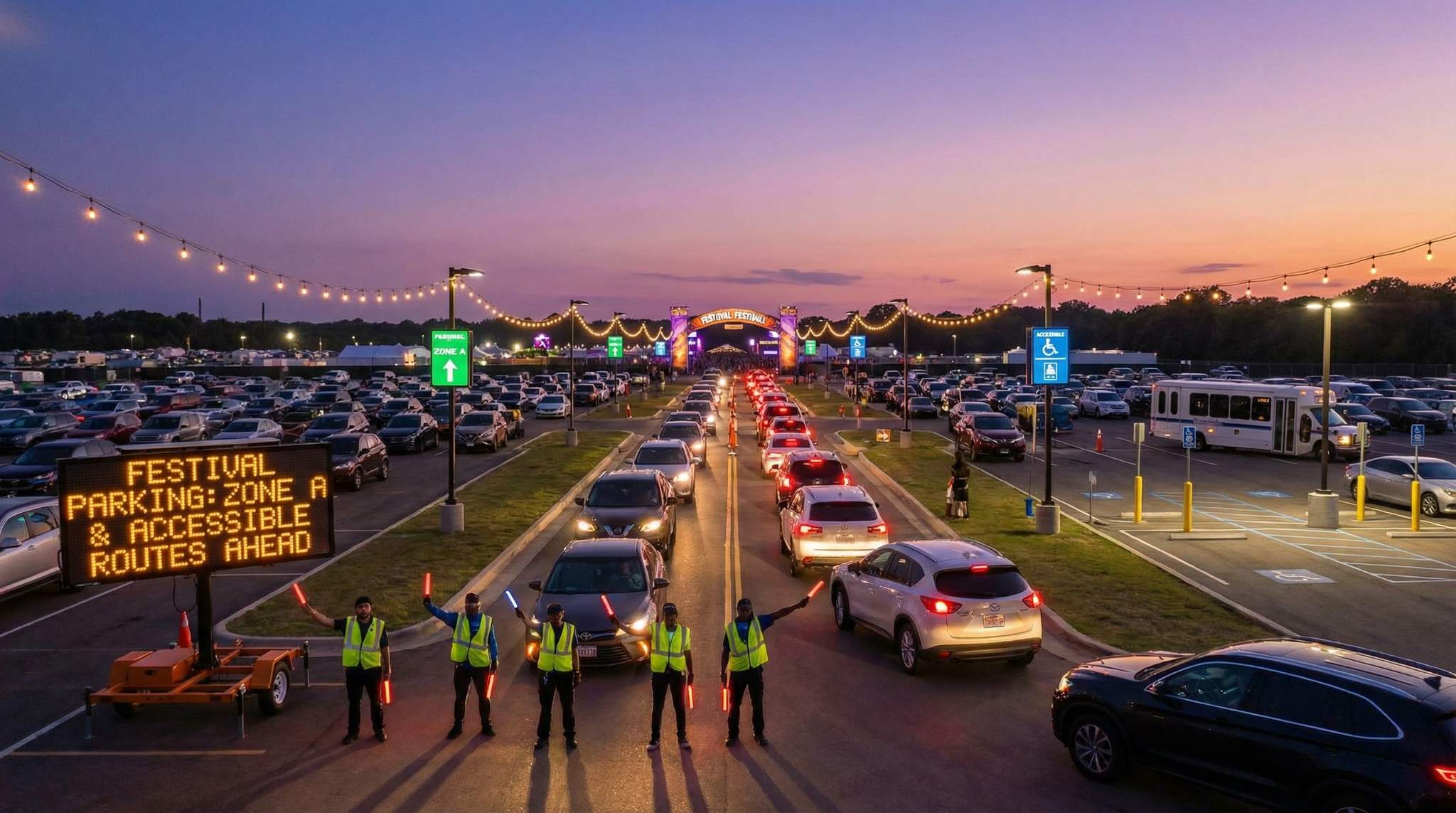
Ensure these accessible spaces are properly marked with the wheelchair symbol and extra-wide access aisles. Signage is critical: clearly direct drivers to the accessible parking area with large, easy-to-read signs (including the universal accessibility symbol) placed on the approach roads so drivers can easily locate accessible areas. If your event has separate entrances, indicate which entrance is accessible on your map and signs. Also, think beyond just parking spots – the route from parking to the event must accommodate wheelchairs, walkers, or strollers. This could mean temporary ramps over curbs, avoiding gravel or grass paths that are not wheelchair-friendly, and adequate lighting along walkways. Many events set up golf cart shuttles or courtesy shuttles to ferry guests with mobility challenges from distant parking lots right to the gate.
Providing assistance on the ground is a strong trust signal to attendees that you care about their well-being. Assign a few volunteers or staff as “Accessibility Ambassadors” in the parking areas. In practice, these team members can help carry equipment, push wheelchairs, or simply offer directions to those who look like they need guidance. Make sure your website and pre-event emails inform attendees how to request assistance if needed – for instance, provide a phone number or text line they can use upon arrival for help. This kind of concierge-level touch not only helps those in need but also showcases your event’s inclusivity.
Pro Tip: Go above and beyond compliance. If you know a portion of your audience will include, say, elderly fans or expecting mothers, reserve some close-up spots for them even if they don’t have official placards. Simple additions like a family parking area (for those with strollers) or a dedicated drop-off zone for accessible unloading can make a huge difference in comfort and safety.
Finally, train your team on disability etiquette and emergency protocols. Everyone directing traffic should know the location of accessible routes, elevators, or ramps, and understand that some attendees may need more time or vehicle space. If someone arrives in an oversized accessible van, for example, staff should guide them to a spot with extra clearance. By planning for guests of all abilities, you’re signaling experience and care – and ensuring no one is left out of your event due to logistics.
3. Form a Dedicated Parking & Security Team
Don’t try to “wing it” with parking on event day – build a team specifically tasked with parking management and security. Assign staff (or hire professional attendants) whose sole job is to run the parking operation: directing cars, managing lot capacity, answering questions, and handling any incidents. This allows them to focus fully on parking flow while your other crew members handle stages, vendors, and patrons. A good rule of thumb is to have at least one parking attendant at each key decision point (entrances, lot intersections, and exits), plus roving staff if the lots are large or spread out.
Grow Your Events
Leverage referral marketing, social sharing incentives, and audience insights to sell more tickets.
Your parking team will essentially be the first on-site representatives of your event that attendees encounter. Equip them to succeed: bright safety vests, flashlights for night events, whistles, and two-way radios so they can communicate instantly. Before gates open, brief the team on the parking layout and who should park where. For example, make sure they know if VIPs or staff have a separate lot, or if any sections are reserved for vendors, performers, or delivery trucks. Many large festivals create completely separate parking and transport plans for artists, crew, and vendors to keep operations running smoothly by managing festival artist and crew parking logistics. You don’t want a situation where the band’s tour bus gets stuck in general attendee traffic, or vice versa!
It’s also wise to integrate security functions into this parking crew. Parking areas can be chaotic and are unfortunately a spot where minor accidents or security incidents (like a fender-bender or an unauthorized vendor tailgating out of their trunk) might occur. Train your parking attendants on how to handle small emergencies – for instance, have a couple of security personnel or medically trained staff on standby near the lots, and ensure the team knows how to immediately radio for help if needed. In case of anything serious (a pedestrian accident, suspicious activity, etc.), they should pause parking in that area and alert event security command. For larger concerts or sports events, organizers often hire off-duty police officers to direct traffic on public roads near the venue. Coordinate with local law enforcement if your crowd will impact city streets; their authority and experience in traffic control can be invaluable for safety and smoothing out jams.
For mega-festivals or multi-day outdoor gatherings, bringing in a specialized agency for event car park management can alleviate a massive operational burden. These professional teams come equipped with their own traffic control infrastructure, automated ticketing scanners, and capacity-tracking software. Outsourcing your car park operations ensures that high-volume vehicle ingress is handled by dedicated experts, allowing your core production crew to remain focused on the festival grounds and attendee safety.
Pro Tip: Develop a quick reference sheet for your parking team. Include lot capacities, radio channels, key contact numbers (event chief of security, emergency services, tow truck on call), and a reminder of customer service basics. For example, a friendly wave and clear hand signals from an attendant can dramatically reduce driver confusion. Empower your team to not just direct cars, but to welcome attendees with a smile – it sets the tone that your event is organized and attendee-focused from the get-go.
Lastly, make sure your parking crew is prepared to manage the exit flow as well. It’s common for events to have staff helping cars park before the show, but then no one guiding traffic when everyone leaves at once, which is when gridlock and road rage peak. Schedule your team in shifts so that enough people are also on duty at the end to direct outgoing lanes, answer questions (e.g. helping people find the highway or rideshare pickup zone), and handle any post-event issues like a car that won’t start. A well-drilled parking and security team working in sync will drastically cut down waiting times and confusion, bookending your event with positive experiences.
4. Design a Detailed Parking Map (and Communicate It!)
Creating a parking map is one of the most important preparations for event day. Once you’ve strategized the layout and assigned parking zones, translate that into a clear, visual map. This map should highlight all key information for attendees and staff alike:
- Parking entrances and exits: Mark the routes drivers should use to enter each lot and how they exit back to main roads. Use arrows to show one-way flows if applicable.
- Different parking zones: If you have VIP parking, staff/crew parking, accessible parking, or general admission sections, label them clearly (using colors or symbols). For example, Zone A for VIP (blue lot), Zone B for GA (green lot), etc.
- No-parking or restricted areas: Clearly X out or color-code fire lanes, loading zones, or any areas where parking is not allowed. This helps prevent creative but dangerous parking by attendees.
- Pedestrian paths & shuttle stops: Show the footpath from each lot to the venue entrance. Indicate any shuttle pick-up/drop-off points for remote lots or golf cart shuttle stops, so attendees know where to wait.
- Ancillary info: Consider adding icons for things like restrooms near the parking, info kiosks, or first aid stations if any are by the parking area. Also mark the location of the rideshare pickup zone or taxi stand if you have one set aside.
Once your map is ready, it’s time to share it far and wide. Don’t wait until attendees arrive to reveal the parking plan – you want people to show up already knowing where to go. Include the map (and written directions) on your event website, in the ticketing portal, and send it out via email a few days before the event. It’s a great idea to send a “Know Before You Go” email to all ticket holders outlining parking locations, parking fees or permits (if any), what time parking lots open, and any other instructions (“Use Exit 24 off I-95 and follow signs to Lot C,” etc.). It would actually be very helpful to email all parking details together – entrance routes, the map image, pricing, and instructions – so attendees can save it on their phones. Platforms like Ticket Fairy have an in-built messaging feature that allows you to blast an email to all your event attendees (or specific groups, like VIPs who need special parking info) at no extra cost. You can even send the parking map as an attachment or image in these emails.
Make sure to also coordinate messaging on social media and apps. On the event day, use Twitter/X or Instagram Stories to post live updates like “Main Lot is 70% full, overflow Lot B still has space – use Maple Street entrance.” If your event has an app, push notifications can remind attendees where to find parking or transit info. The more proactively you communicate, the fewer confused phone calls and last-minute jams you’ll deal with.
Pro Tip: Leverage technology to streamline parking. For example, you can offer pre-booked parking passes during ticket checkout (so attendees have a guaranteed spot), or use a service that provides real-time parking availability. Some venues use electronic signs or apps that show how many spots remain in each lot. If your budget allows, digital parking solutions – such as mobile payments and scanning license plates at entry – can speed up the process and eliminate cash handling, as smart stadium parking pre-payment becomes the industry standard. And don’t forget to put the venue’s address and parking lot GPS coordinates in your communications; a Google Maps pin or Waze link that directs drivers to the exact lot entrance is gold for reducing day-of confusion.
If you are wondering how to use Google Maps for event parking guidance effectively, the process starts with creating custom maps. Organizers can drop specific pins for each lot entrance, layer custom routing lines to avoid road closures, and generate shareable links. Embedding these customized maps directly into your ticketing confirmation emails ensures attendees are routed to the exact ingress point rather than the venue’s generic mailing address.
Free Tool: Size Your Festival Site
Zoned capacity planning for arena, campsite, parking and entry lanes — against UK Purple Guide and NFPA density standards. Finds your bottleneck zone.
Taking technology a step further, investing in event parking automation can drastically reduce ingress bottlenecks and lower your staffing overhead. Modern automated systems utilize license plate recognition (ALPR) cameras, smart barrier gates, and contactless tap-to-pay kiosks to process vehicles in seconds. By integrating these automated access controls with your primary ticketing platform, attendees who pre-purchased parking can drive straight through without rolling down their windows. This frictionless approach not only accelerates traffic flow but also provides organizers with real-time data on lot occupancy and peak arrival times.
Selecting a comprehensive event parking system is crucial for scaling these automated efforts. A robust software platform allows organizers to manage parking inventory dynamically, issue digital permits, and track revenue in one centralized dashboard. When evaluating different event parking systems, look for integrations that sync directly with your primary ticketing provider. This ensures that when a fan buys a festival pass, they can seamlessly add a parking upgrade, keeping all their access credentials in a single, easily scannable barcode.
For specialized locations, deploying dedicated cultural venue parking software can bridge the gap between modern convenience and site preservation. These specialized platforms often include features like timed-entry reservations and dynamic capacity caps, ensuring that delicate heritage sites or botanical gardens are never overwhelmed by sudden influxes of vehicles. By integrating this technology, operators can offer a seamless digital experience while strictly adhering to local conservation limits.
Lastly, ensure internal alignment – give all staff and volunteers copies of the parking map and info well before the event. Everyone from your front gate crew to the merch sellers should generally know “Oh, Lot A is by the east gate and is for VIP; Lot B is general parking off Maple Street,” in case attendees ask. When your whole team is informed, it reinforces trustworthiness – guests get consistent answers no matter whom they ask. Designing a great parking plan and map is only half the battle; communicating it clearly is what guarantees a seamless experience.
For massive urban arenas and immersive entertainment spaces, zoning is critical. Take cues from modern mega-venues—for instance, directing premium ticket holders specifically to a designated zone like a “Sphere parking lot A” while routing general admission to off-site garages. Using distinct alphanumeric naming conventions for your lots prevents GPS confusion and helps traffic marshals quickly filter arriving vehicles into the correct lanes.
5. Be Fully Prepared on Event Day
All your planning will pay off on event day – but only if you execute it well. This means making sure you and your team are fully prepared when the day arrives. Start early: on event morning (or even the night before), set up all your parking signage, cones, and barriers according to the plan. Do a drive-through of your own route markings if possible, to confirm that signs are visible and make sense from a driver’s perspective. There’s no substitute for a real-world dry run – you might catch last-minute issues like an arrow sign that fell over, or a road construction crew that unexpectedly closed a turn lane (always have a Plan B for rerouting if such surprises occur!). Double-check that the technology is working too: walkie-talkies charged, mobile payment scanners or parking apps tested, and lighting in the lots is functioning if the event goes into the evening.
No Hidden Fees, Just Honest Pricing
One all-inclusive fee covers the platform, payment processing, support, and every feature. Free events are always free. No setup costs, no surprises.
Gather your parking and security team for a final briefing before the gates open. Ensure everyone is on the same page about the plan and has the most up-to-date info (Did one overflow lot change last minute? Is there a VIP list they should check at the entrance? Make sure to communicate any changes clearly). Encourage your team to proactively approach drivers with a friendly greeting and instructions. Attendees will feel more at ease when they see staff confidently directing traffic. Remind the crew to keep an eye out for any attendees in distress – for example, someone pulled over with a car issue – and have a protocol to assist or escalate the call for help. It could be as simple as having a few jumper cables and a tool kit at the info tent, or a towing service on standby for bigger problems. These contingency tools reflect your experience and foresight, even if they end up not being needed.
During the event, monitor the parking situation continuously. Assign someone to periodically radio in how many spaces remain in each lot, or if any lot needs attention (trash, lighting, an illegally parked car, etc.). If an issue arises – say an exit gate arm malfunctions or an impromptu storm floods part of a lot – act swiftly and communicate to attendees. For instance, if you must divert everyone to a different exit, send a push alert or have staff verbally inform drivers to avoid confusion. Attendees will forgive a lot if they see the organizers responding quickly and keeping them in the loop. This adaptability on-site is a hallmark of seasoned expertise.
When the event is winding down, don’t pack up the parking operation too soon. As we highlighted, the egress (exit) phase is just as critical to get right. Keep your staff on post to direct traffic out of the venue in an orderly way. Typically, this might mean holding some cars while others go (to merge streams), or directing all vehicles to turn right out of the lot to prevent backups at an intersection. Little tweaks like that can dramatically speed up the exit. It helps to announce exit tips from the stage or in an end-of-event message (“Thanks for coming! If you’re parked in Lot C, best exit is via 3rd Street.”). And ensure lighting stays on until the last car is gone – a dark exit is a safety hazard and not a good final memory.
Warning: The event isn’t truly over until the last attendee has left the parking lot. Many organizers focus on the show and neglect post-event traffic flow. Don’t dismantle cones or signage prematurely, and have staff stay until even stragglers have found their cars and exited safely. Aside from being good hospitality, this vigilance can prevent accidents in the lot and ensure emergency access is maintained until the end.
In the aftermath, evaluate how the parking plan performed. Gather feedback from your team (and even check attendee comments on social media) about what went well and what could improve. Maybe Lot B always filled first and caused a jam – next time, you’ll know to stagger the fill or improve the entrance there. Continuous improvement is key; even seasoned pros learn new lessons from each event. By treating parking as an integral part of the event experience – and giving it the same level of attention as your stage production, artist lineup, or catering – you demonstrate professionalism and care. Your attendees may not consciously notice when parking goes right, but they will absolutely remember when it goes wrong. Implement these five essentials, and you’ll drastically reduce parking pains and set the stage for happy, energized guests ready to enjoy your event from the moment they step out of their cars.
To properly evaluate the best way to handle event parking post-show, send out a brief attendee survey specifically asking about their arrival and departure times. Cross-reference this feedback with your team’s incident reports to identify which access routes experienced the most friction. This data-driven approach ensures your next production benefits from truly seamless event planning, turning logistical headaches into a streamlined, professional operation.
Free Tool: Price Your Venue Like a Pro
Capacity, city tier, day of week and amenity mix produce a suggested rate band and a full day-by-day rate card for your space. Free estimator.
When you systematically evaluate ways to improve event parking year over year, you build a historical dataset that becomes invaluable for future venue negotiations and municipal permit applications. Comprehensive event parking solutions don’t just solve day-of traffic; they provide the analytics needed to scale your festival’s footprint safely and sustainably.
You May Also Like:
- Knowing The Nuances Of Venue Booking: How An Artist’s History With A Community Impacts An Event’s Success
- 2024 Music Festival Trends: Shifting Attendance Patterns Revealed
- 10 Smart Ways to Cut Music Festival Costs Without Sacrificing Quality
Frequently Asked Questions
How does parking logistics impact the event attendee experience?
Event parking shapes the first and last impressions, with 80% of concertgoers driving to shows. Poor logistics lead to frustration and missed performances, while a well-run operation boosts guest loyalty. Seamless parking requires detailed planning to prevent gridlock and ensure a positive start and end to the event.
How much buffer space is needed for event parking planning?
Event organizers should plan for 10–25% more space than projected to accommodate unexpected vehicles. Underestimating capacity causes overflow chaos and illegal parking. Securing backup lots and arranging shuttles for these overflow areas prevents the need to turn away drivers when the main venue lots reach maximum occupancy.
How many accessible parking spaces are required for events?
The number of required accessible spaces depends on lot size, such as 2% of the total for lots with 501 to 1,000 spaces. ADA guidelines state that at least one of every six accessible spots must be van-accessible. These spaces must be located closest to the venue entrance on a step-free route.
What is the best way to manage rideshare traffic at festivals?
Organizers should create dedicated drop-off zones separate from personal vehicle traffic to prevent clogged entry lanes. Using geofencing for Uber and Lyft pickup areas and assigning traffic marshals helps coordinate movement. This strategy keeps rideshare drivers away from general parking queues and ensures a smoother flow for all attendees.
What details should be included on an event parking map?
An effective parking map must clearly mark entrances, exits, and specific zones for VIP, staff, or general admission. It should also identify restricted areas, pedestrian paths to the venue, shuttle stops, and rideshare locations. Sharing this visual guide before the event helps attendees navigate directly to their assigned spots.
How can event organizers prevent traffic jams after a show?
Managing exit flow requires scheduling parking staff to direct outgoing traffic and merge lanes efficiently. Organizers should keep lot lighting on and maintain a presence until the last vehicle leaves to assist with dead batteries or confusion. Directing cars toward specific highway exits or turns significantly reduces post-event gridlock.
How do you handle parking issues for a large house event or destination venue?
Managing parking at non-traditional locations requires securing off-site satellite lots and running shuttle services to keep narrow residential streets clear. Effective event destination parking management also involves hiring professional valets, obtaining temporary municipal permits, and communicating strict arrival routes to attendees well in advance.
What are the best practices for event car park management?
Effective event car park management relies on proactive capacity planning, clear directional signage, and deploying a well-trained traffic control team. Utilizing digital pre-booking systems and real-time capacity tracking software helps organizers prevent bottlenecks, ensuring a smooth arrival experience that sets a positive tone for the entire festival.
How does event parking automation improve traffic flow?
Event parking automation utilizes technologies like license plate recognition (ALPR), smart barrier gates, and contactless payment kiosks to process vehicles rapidly. By allowing attendees with pre-purchased passes to enter without stopping to speak with an attendant, automated systems significantly reduce ingress bottlenecks, lower staffing costs, and provide organizers with real-time occupancy data.
What are the best cultural venue parking solutions?
Effective cultural venue parking solutions focus on preserving the aesthetic and historical integrity of the site. Organizers should utilize remote off-site lots, partner with nearby commercial garages, and deploy shuttle services to transport guests. This approach prevents heavy vehicle traffic from damaging sensitive grounds while still accommodating large attendee volumes.
What features should organizers look for in an event parking system?
A reliable event parking system should offer real-time inventory tracking, digital permit issuance, and seamless integration with your main ticketing platform. Advanced platforms also provide automated access control, such as license plate recognition and tap-to-pay kiosks, which drastically speed up vehicle ingress and reduce staffing requirements.
What should organizers consider for conference hotel parking?
When planning a corporate summit or convention, organizers must balance event attendees with regular hotel guests. The best event parking solutions for these venues involve negotiating dedicated parking rates, establishing separate valet queues for VIPs, and using clear signage to direct attendees to specific convention garages.
How do mega-venues use zoned parking effectively?
Large-scale arenas use distinct alphanumeric naming conventions—such as directing premium ticket holders to a specific “Lot A” while routing general admission elsewhere. This zoning strategy prevents GPS confusion, allows traffic marshals to filter vehicles quickly, and streamlines the overall arrival experience.
How can organizers use Google Maps for event parking guidance?
Organizers can use custom Google Maps to drop specific pins at exact lot entrances rather than the venue’s main address. By generating shareable links and embedding these custom routes into pre-event emails or ticketing apps, you ensure attendees bypass road closures and arrive directly at their designated ingress points.
What are the benefits of cultural venue parking software?
Dedicated cultural venue parking software helps operators manage vehicle flow at sensitive heritage sites or botanical gardens. These platforms typically offer timed-entry reservations and dynamic capacity caps, allowing organizers to provide a modern, frictionless arrival experience while strictly adhering to site preservation guidelines.